Book EN

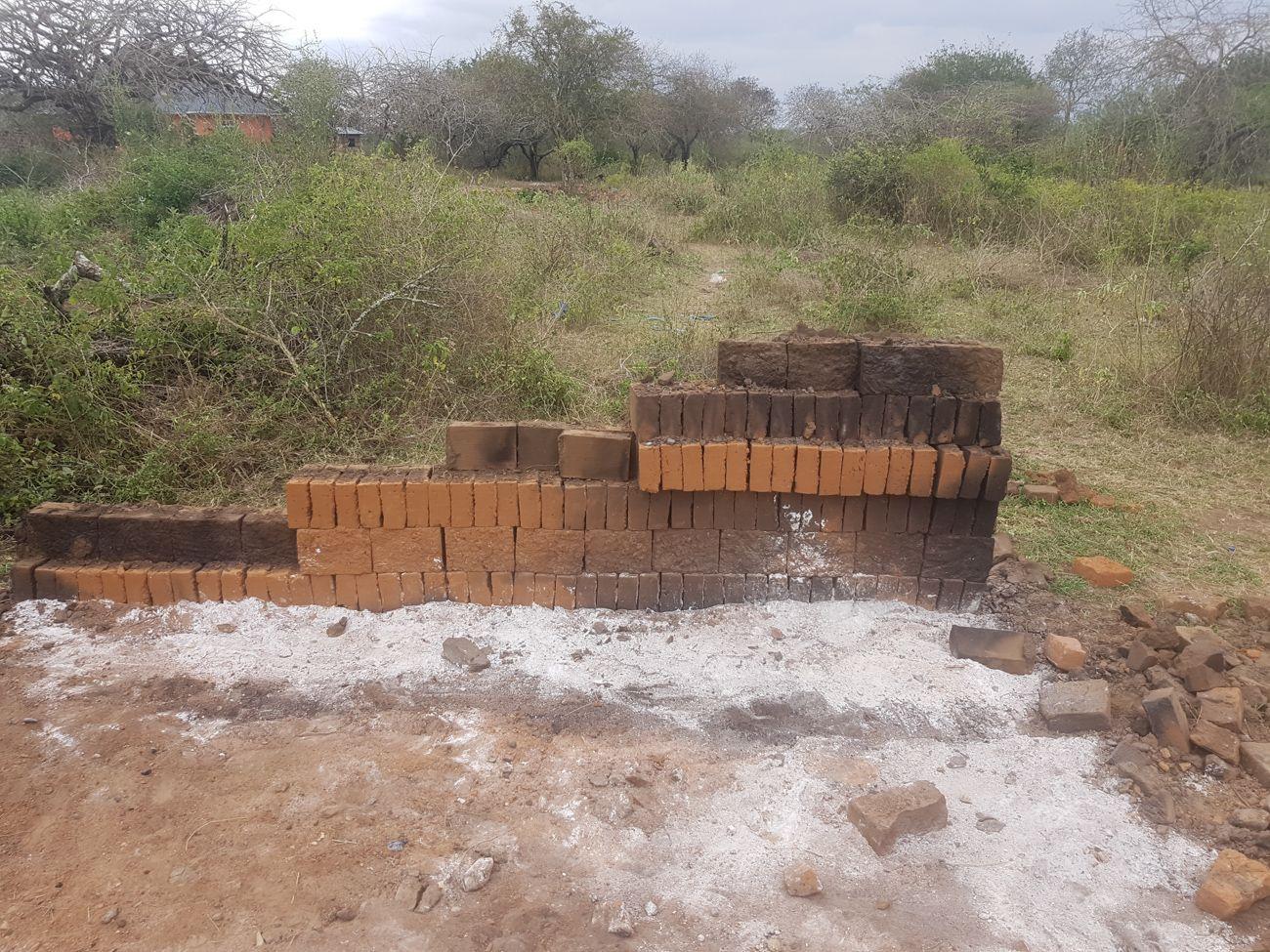
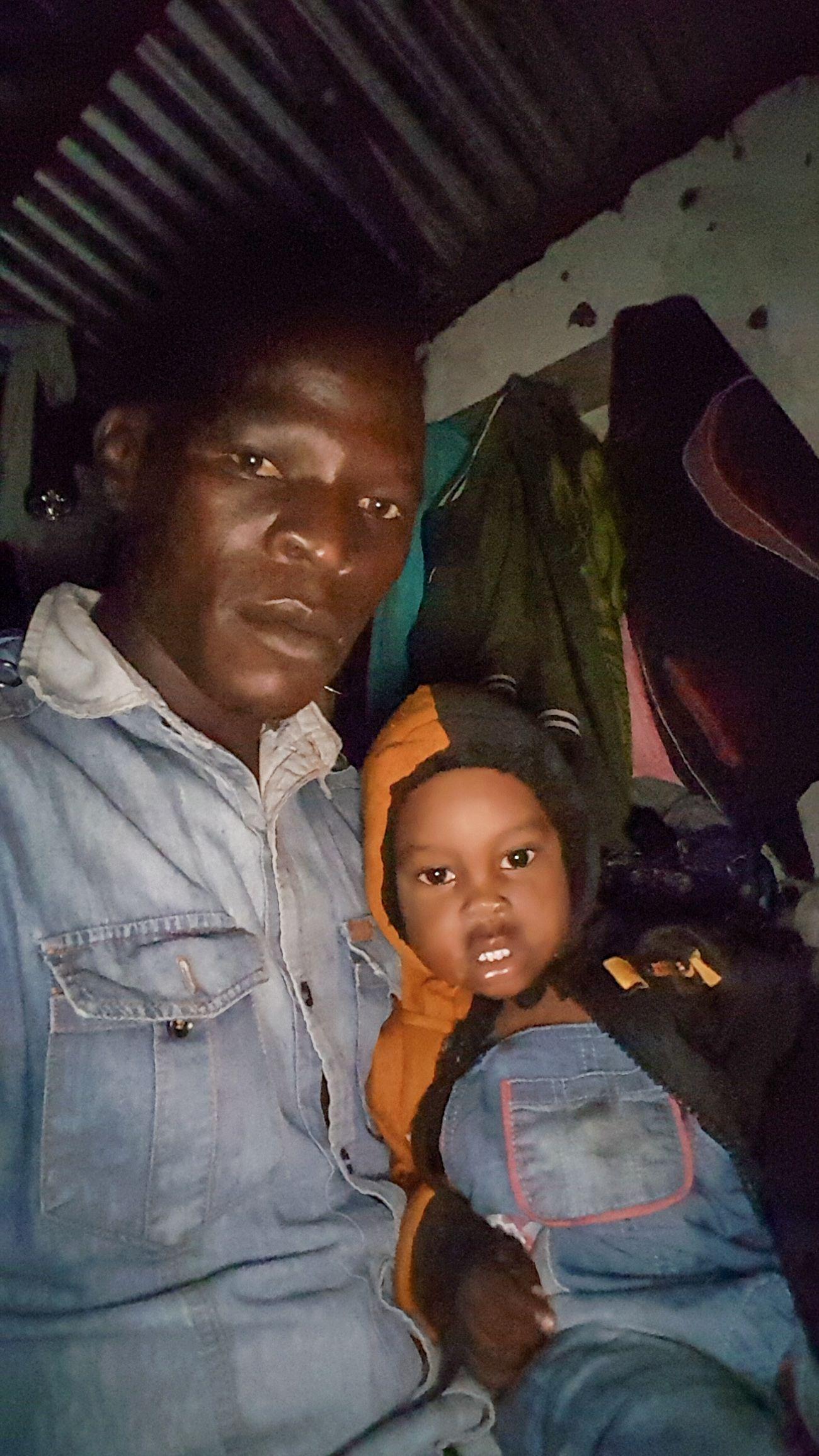
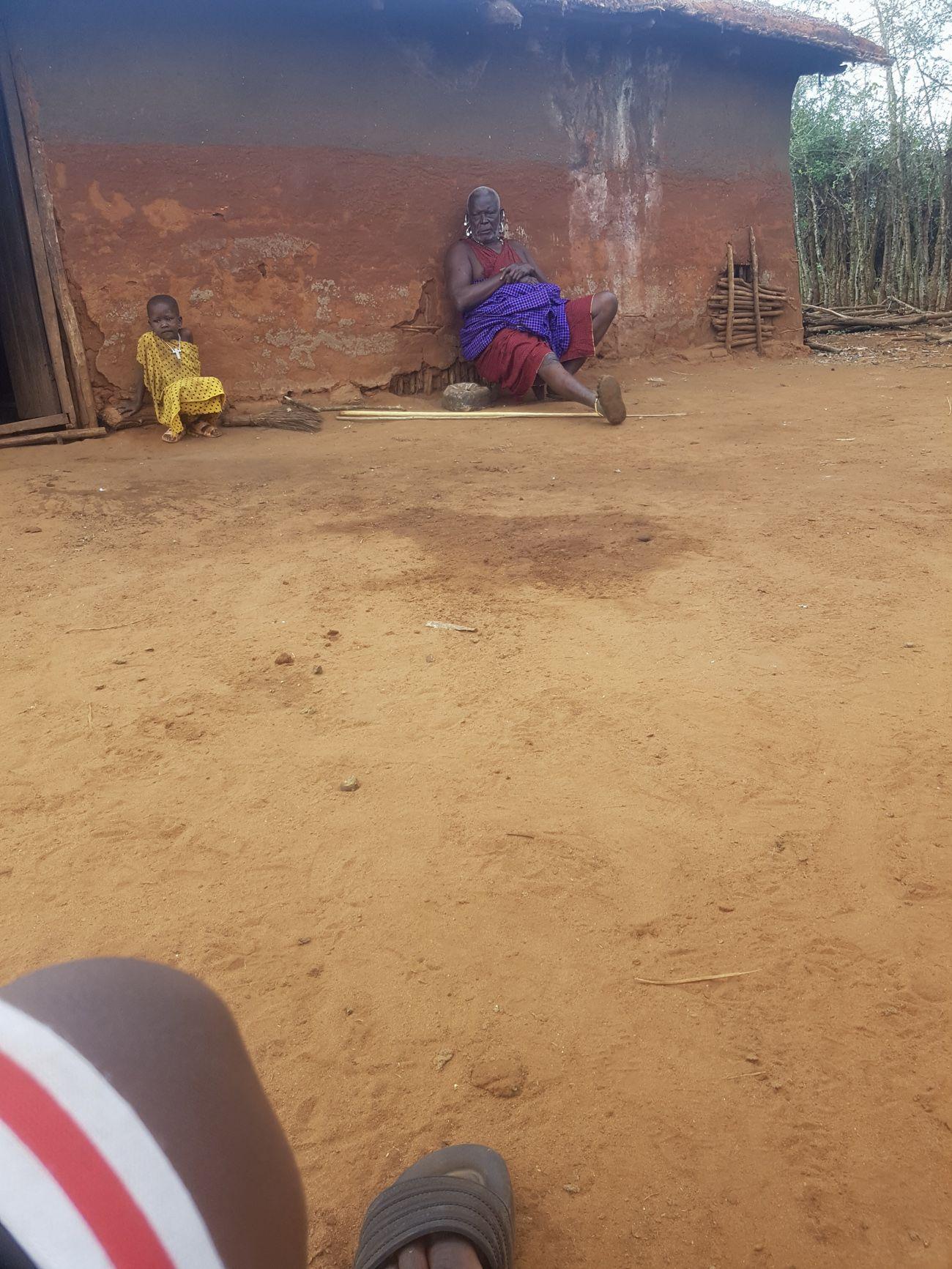
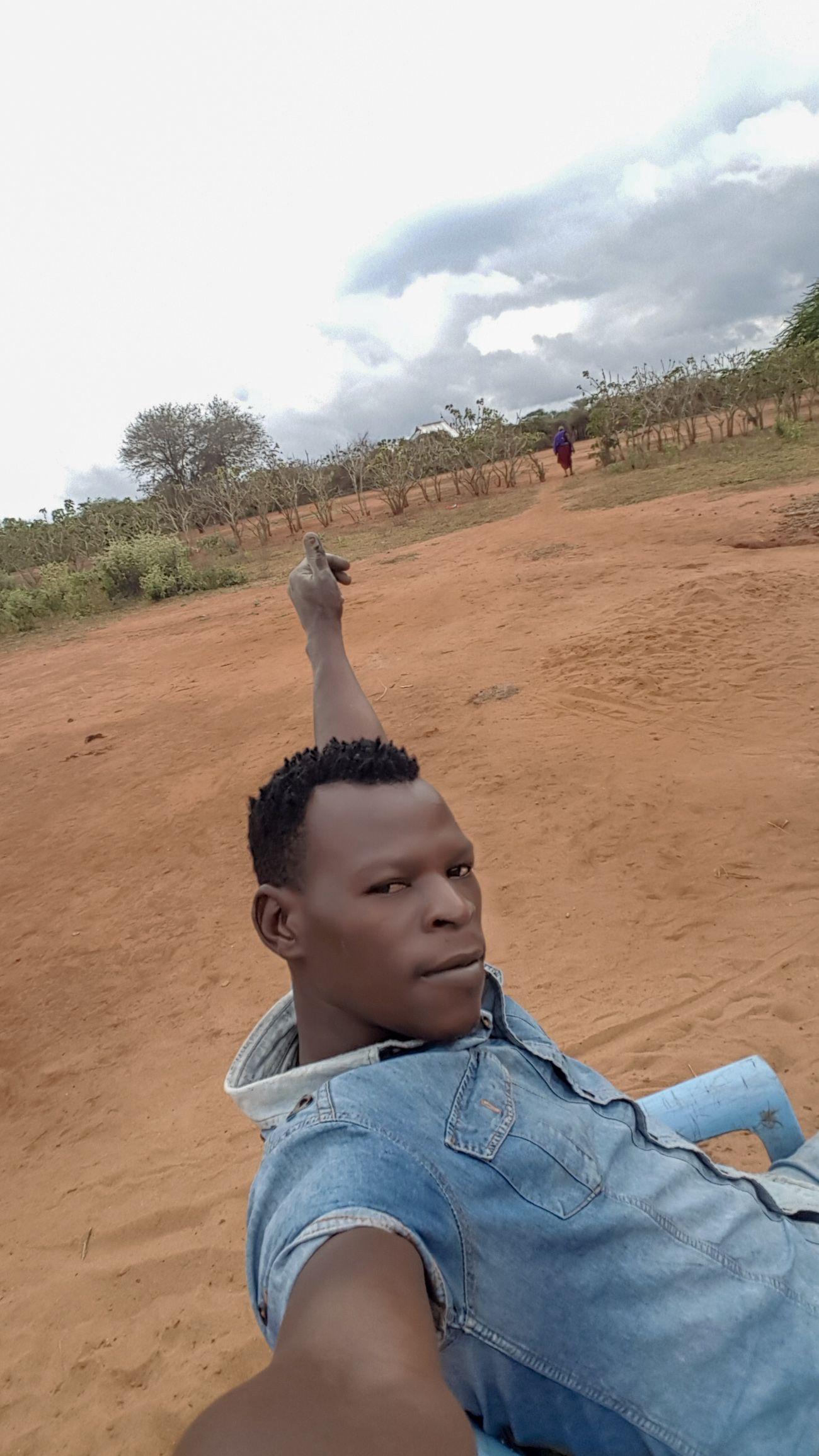
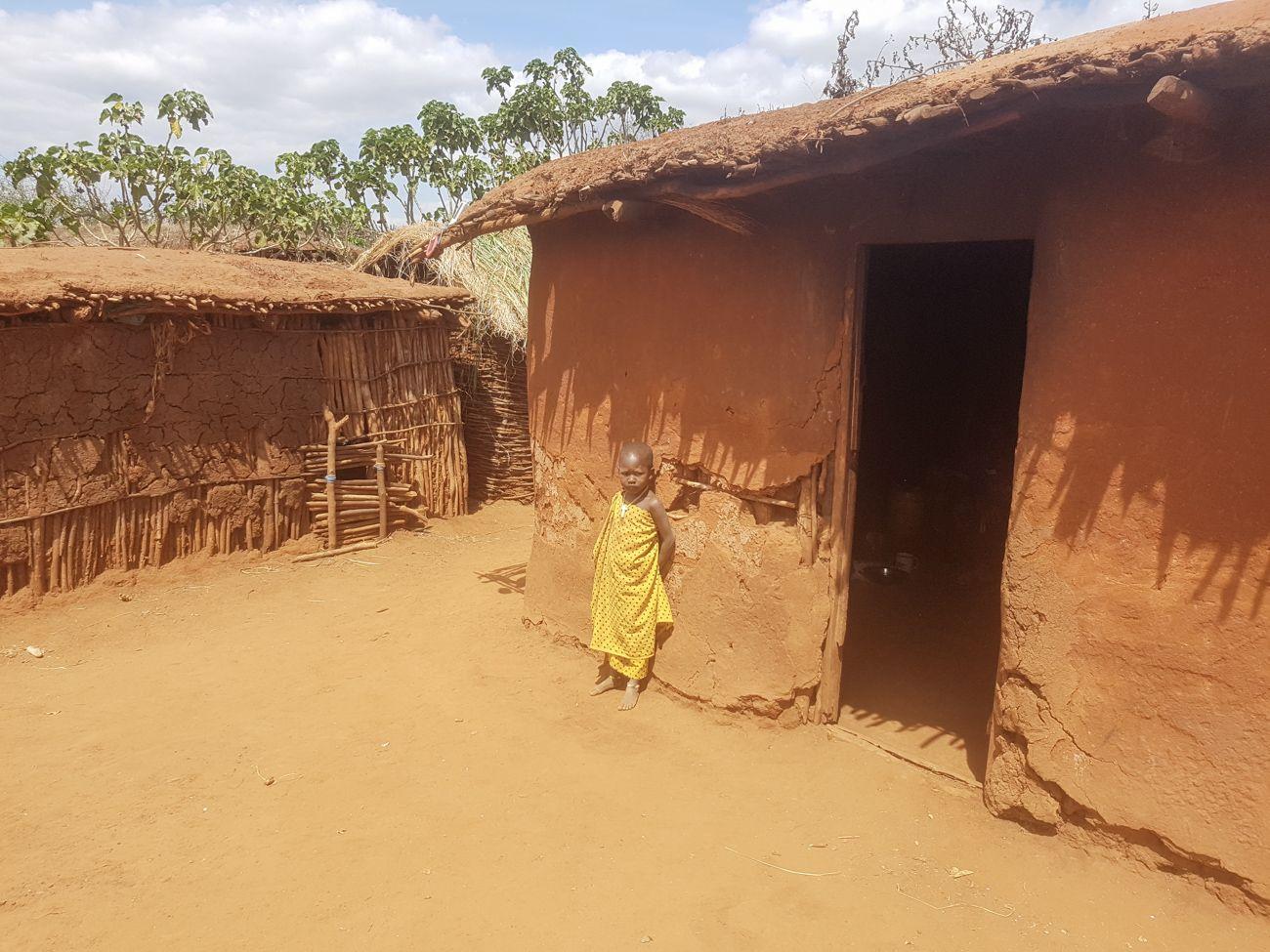
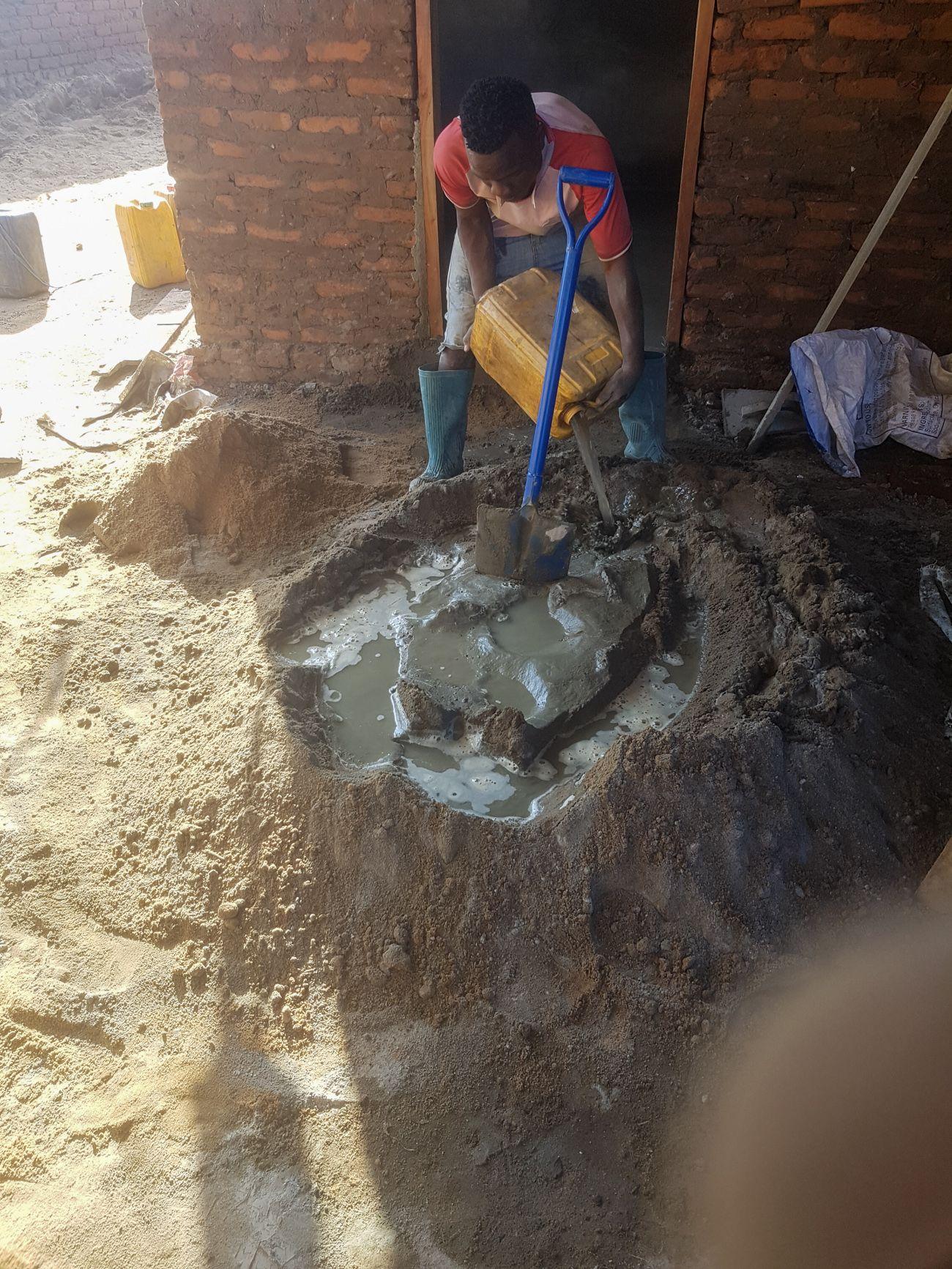
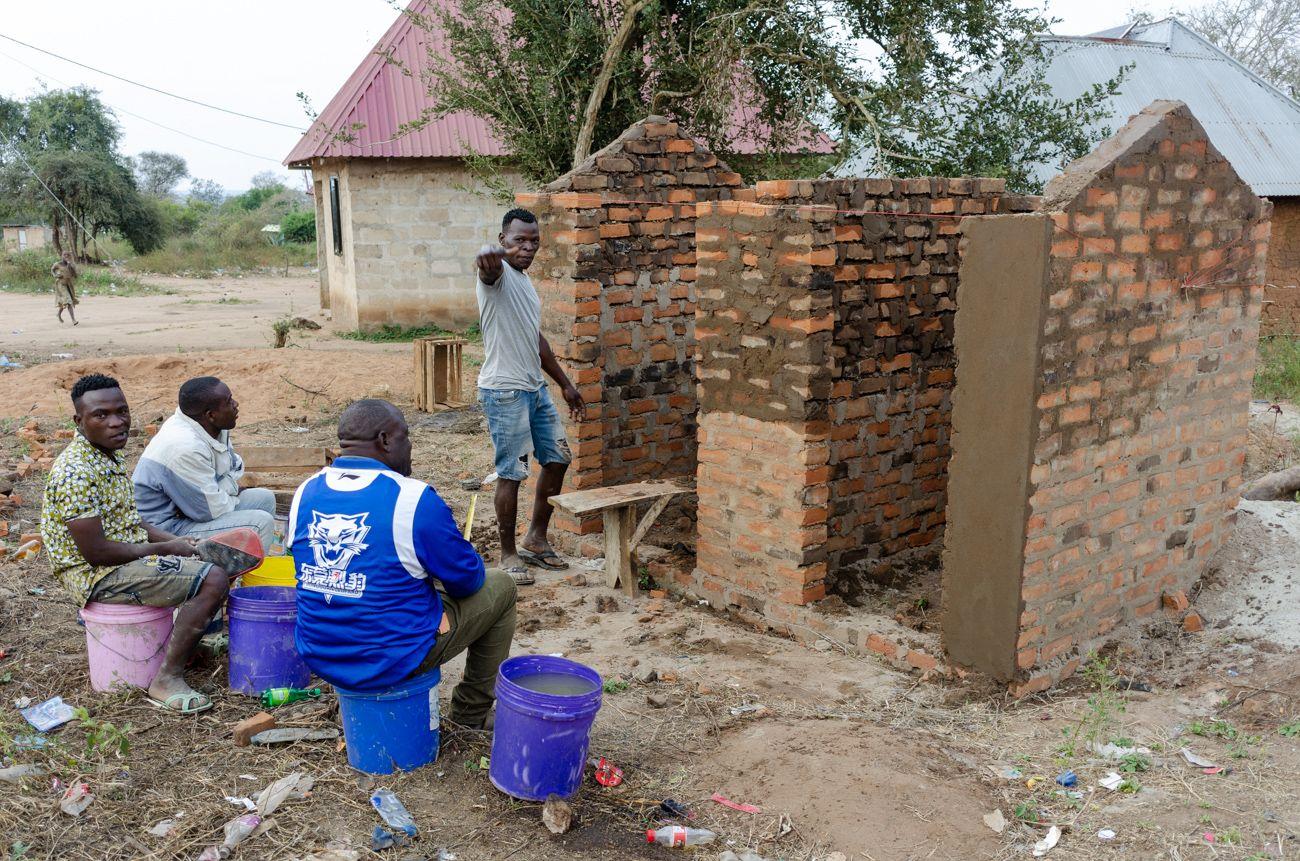
Another local I entrusted with a camera to photograph his life, or simply whatever he felt like showing a mzungu, was Ali. He wasn’t Maasai but Swahili. He was a fundi, a skilled builder who fired bricks and worked on construction sites. He worked from morning till night, every day except Friday, because he was Muslim. He didn’t drink alcohol at all. His house stood on Renča’s land, because he had built Renča’s entire house.

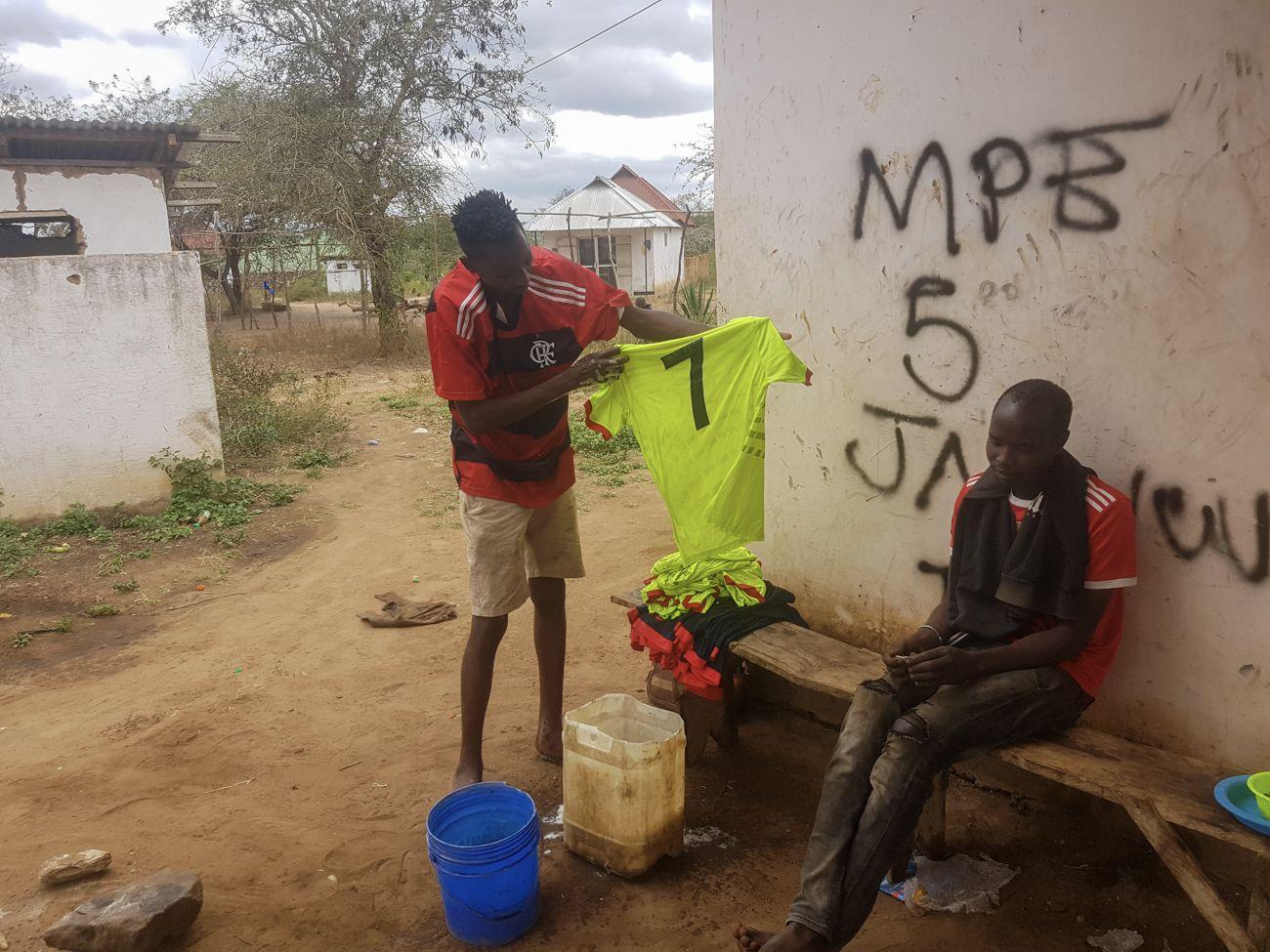
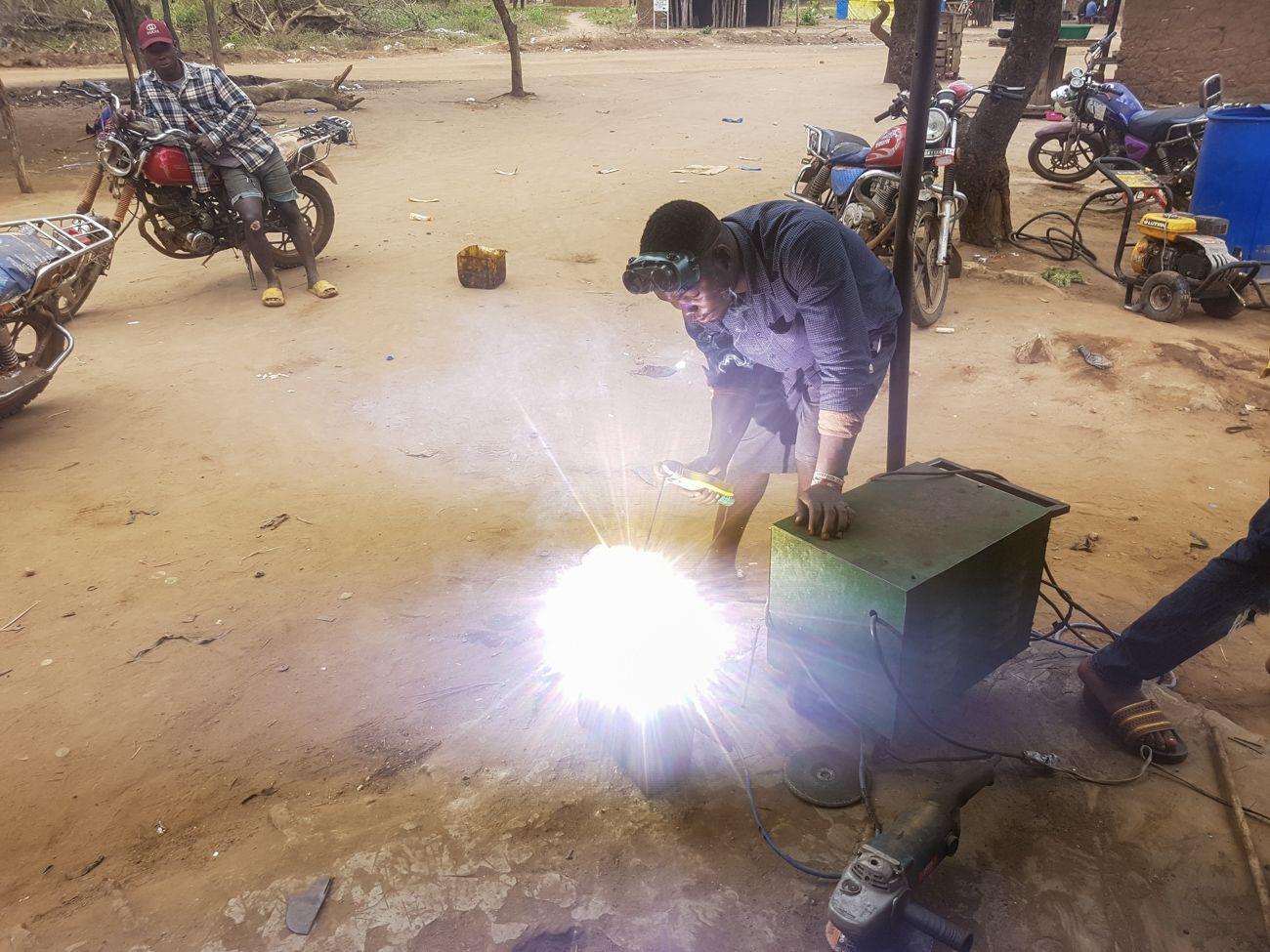
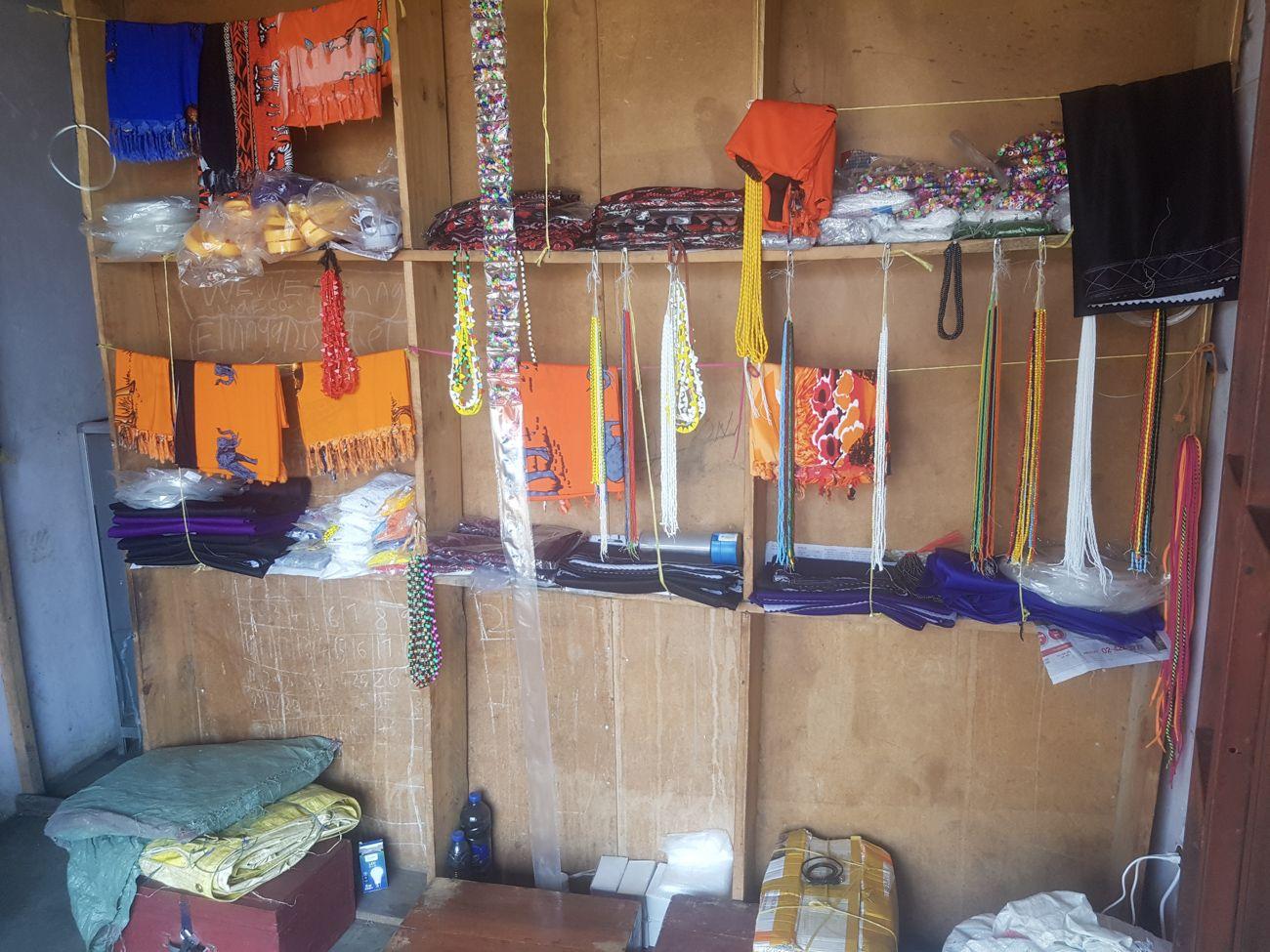
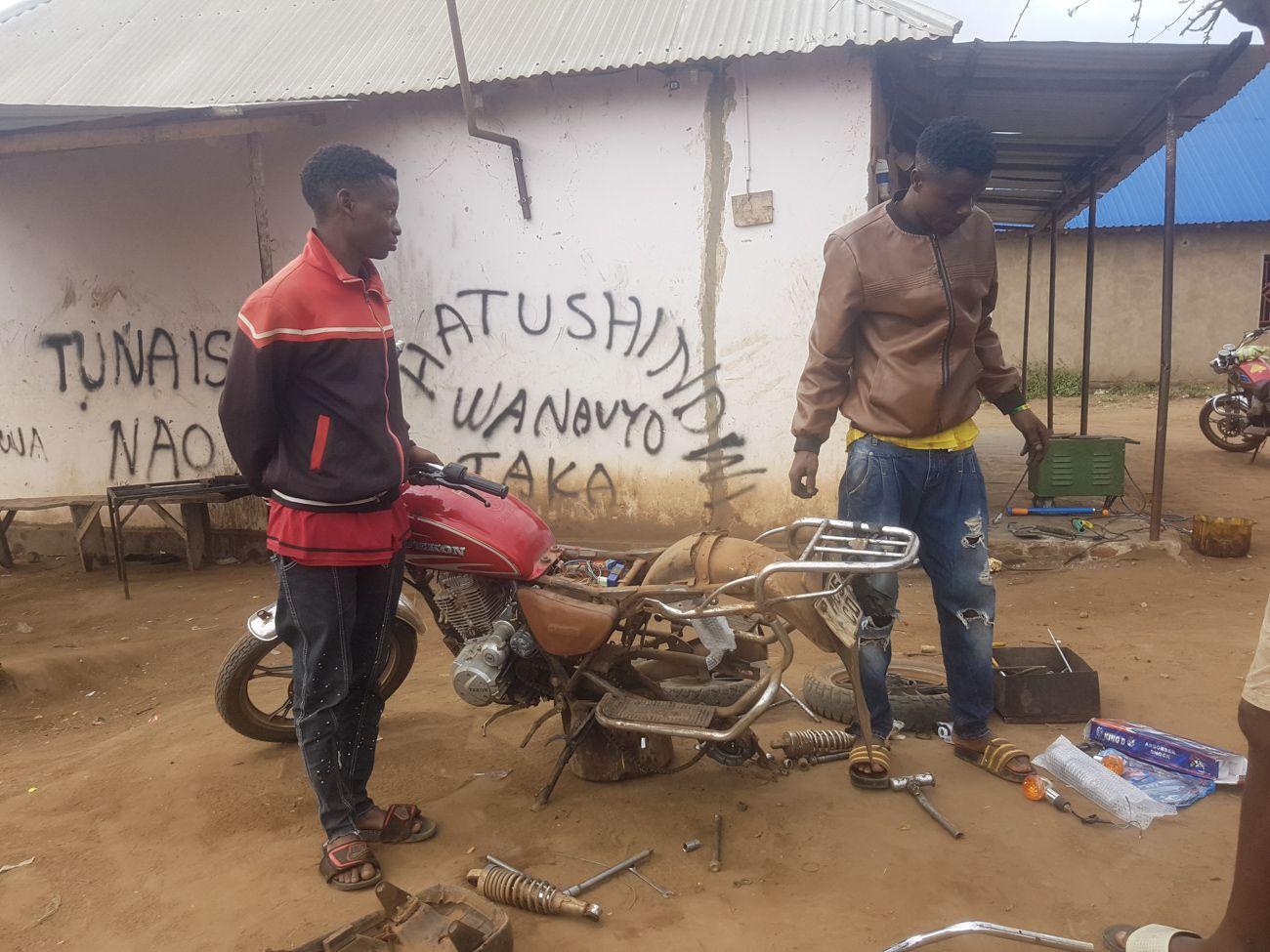
Men at work.

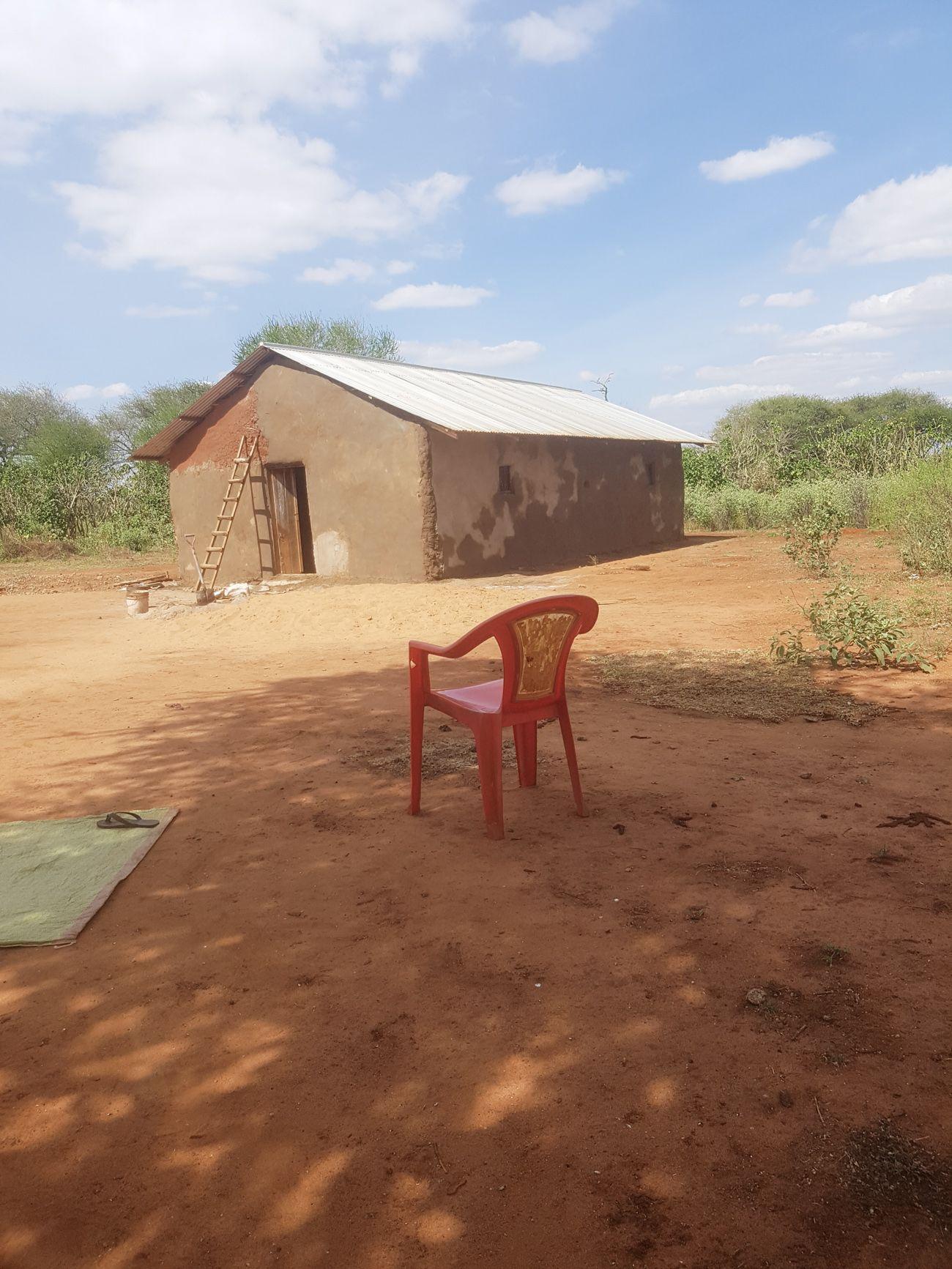
He belonged to the local avant-garde – his house had a window and a metal roof. While I was in Tanzania, he decided to become independent, buy his own plot of land, and build a house on it. The whole project cost him about 150 euros. When I heard that number, I decided not to tell him how much the shoes I was wearing had cost. If I hadn’t bought them, he could have had a house for the same money.

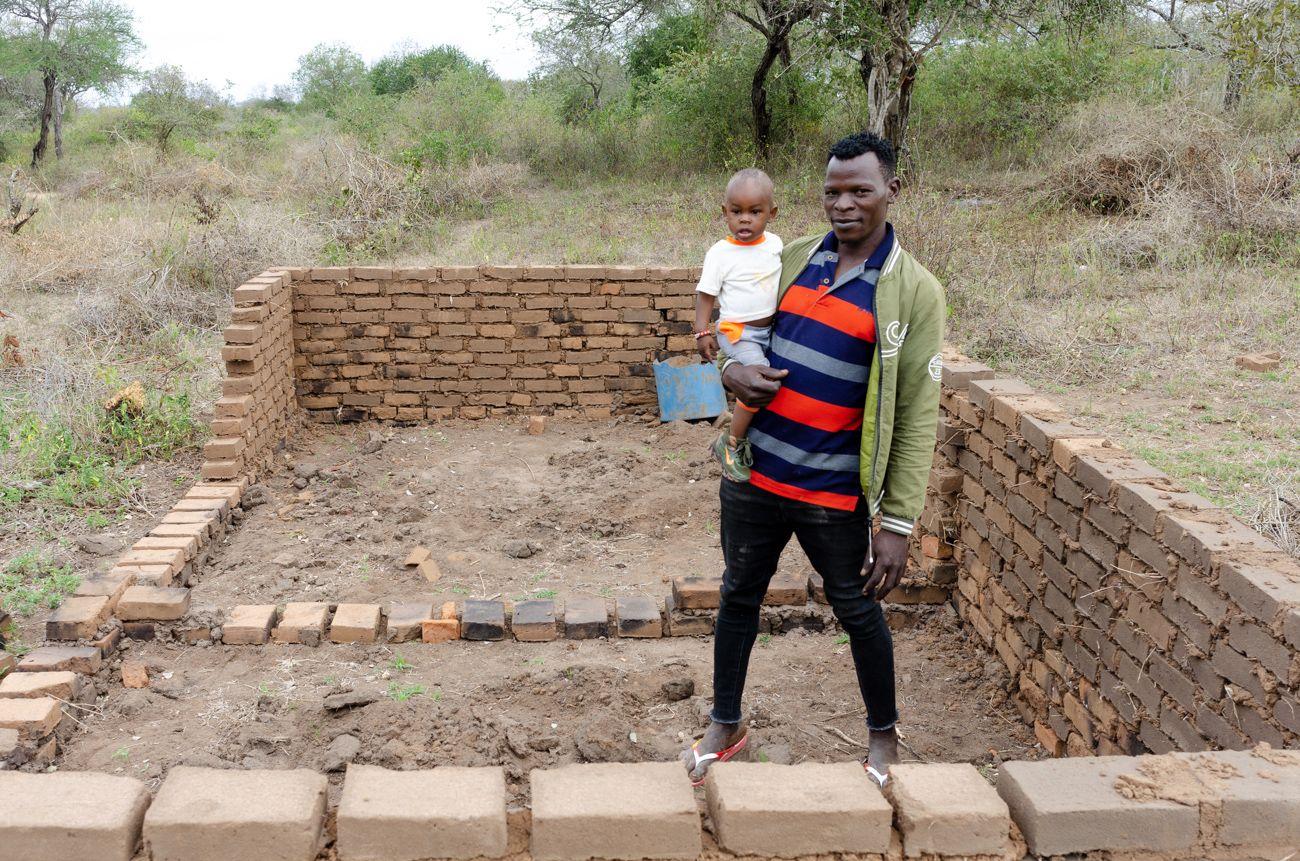
Besides giving him the camera to photograph his life, I decided to photograph him as well – in his new house, which he was in the middle of building. I had a clear idea: stand in the hallway, then in the living room, then the kitchen, then the children’s room – and I’d take a photo of him in each one. Just look at how that turned out.

Ali, his son, and his future house were still in the convertible stage.

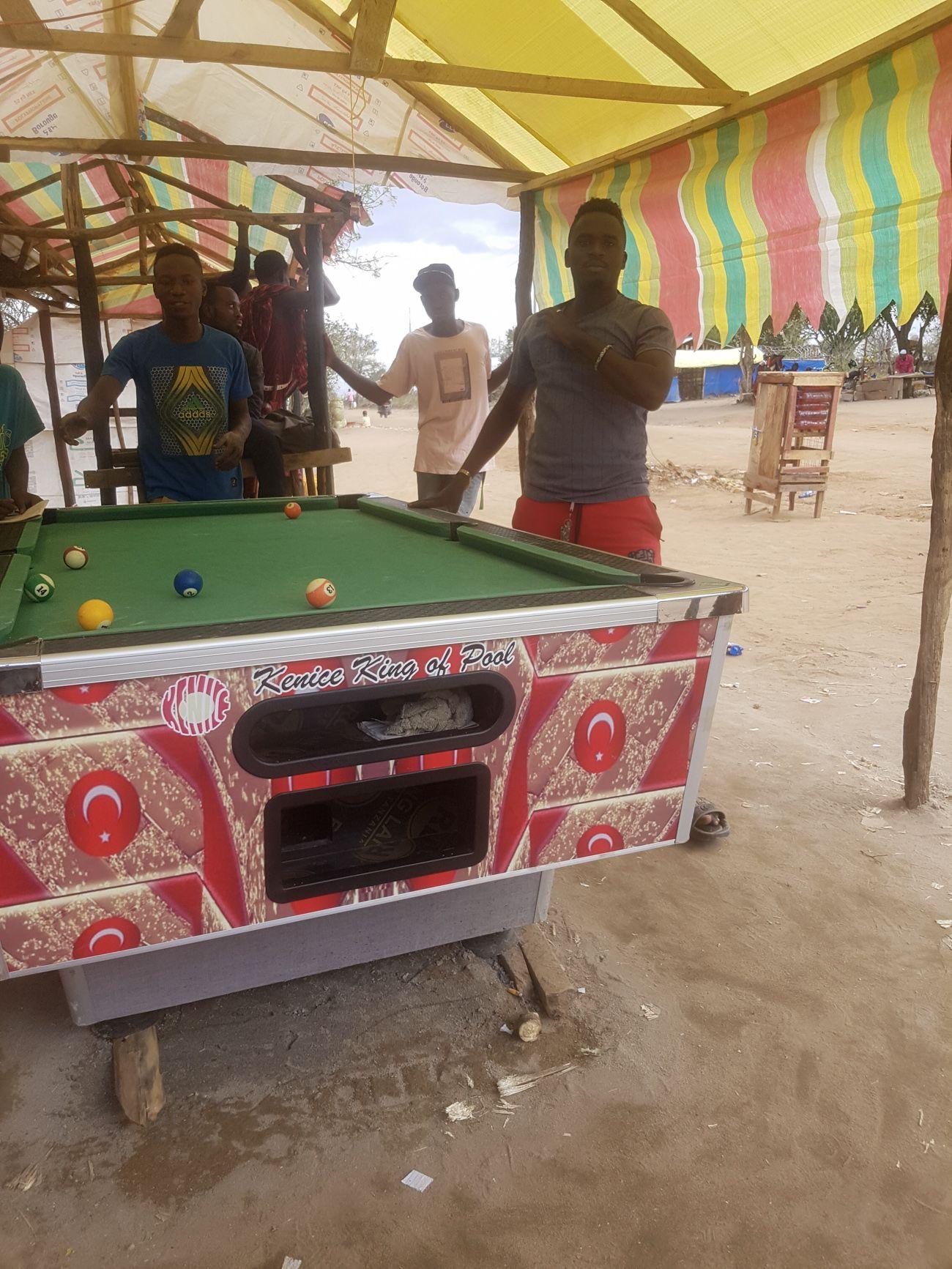
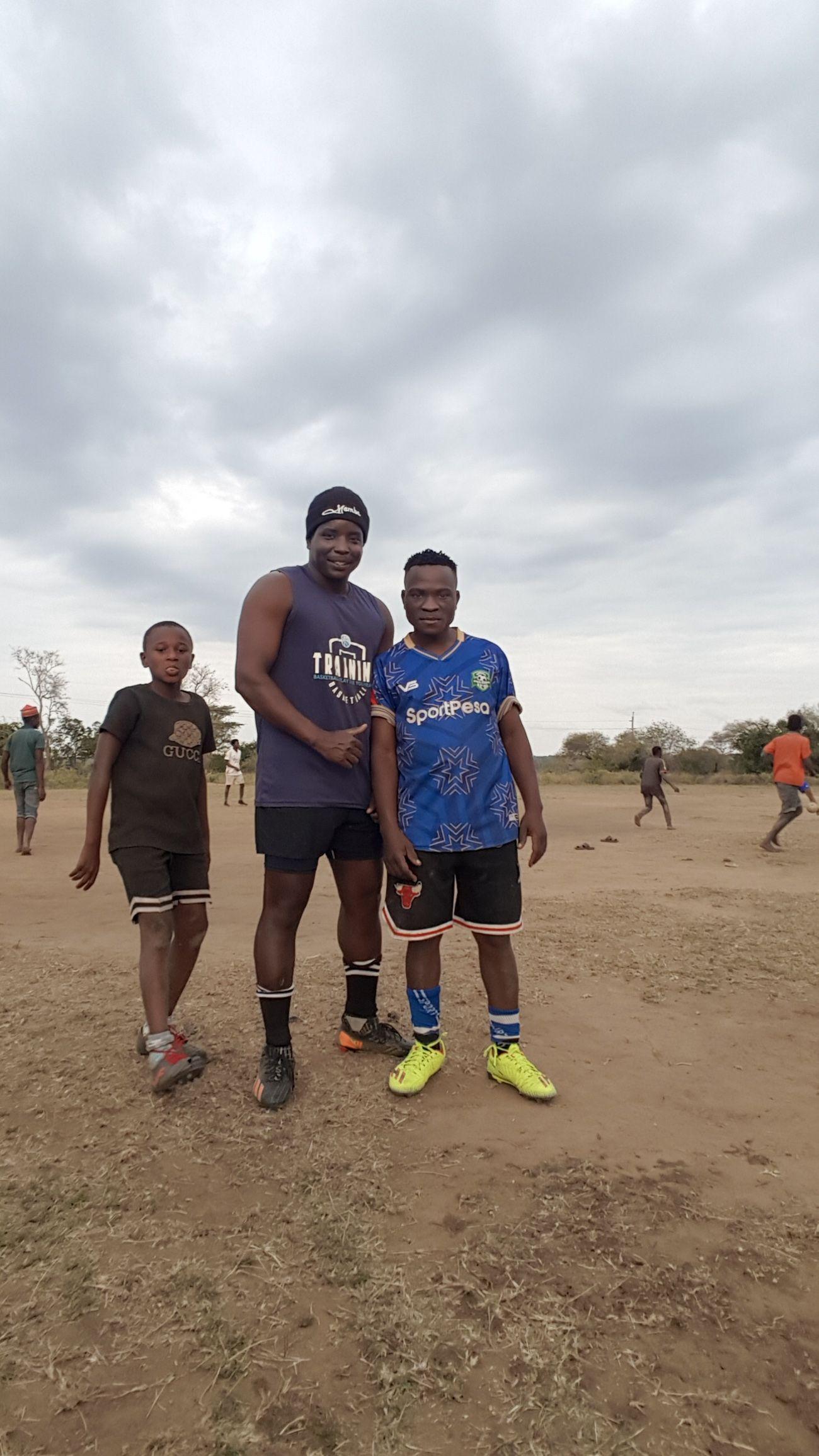
When it was his turn to take photos, he wasn’t in any hurry. It took him about a week to return the phone. And when he finally did, it was full of suspicious software and games.Here are Ali’s photos straight from the phone, unedited. The greasy lens is part of the package.

Share this

Laziness is the driving force of progress. I’m not entirely sure how I’d explain “driving force” to the Maasai. Laziness would be a problem too. And the word progress isn’t exactly popular or widely used either. I admit it—bad start. So again. I decided I’m not that lazy.

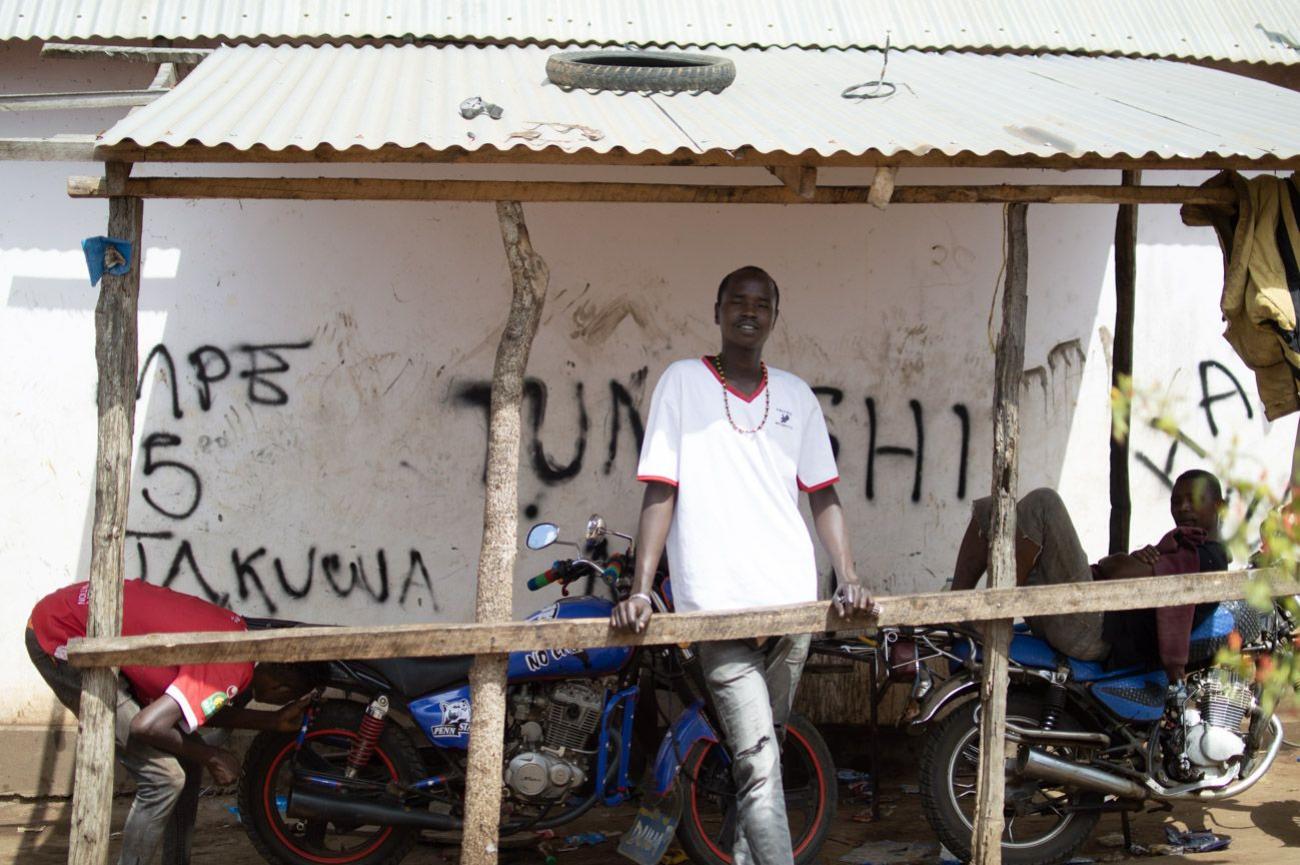
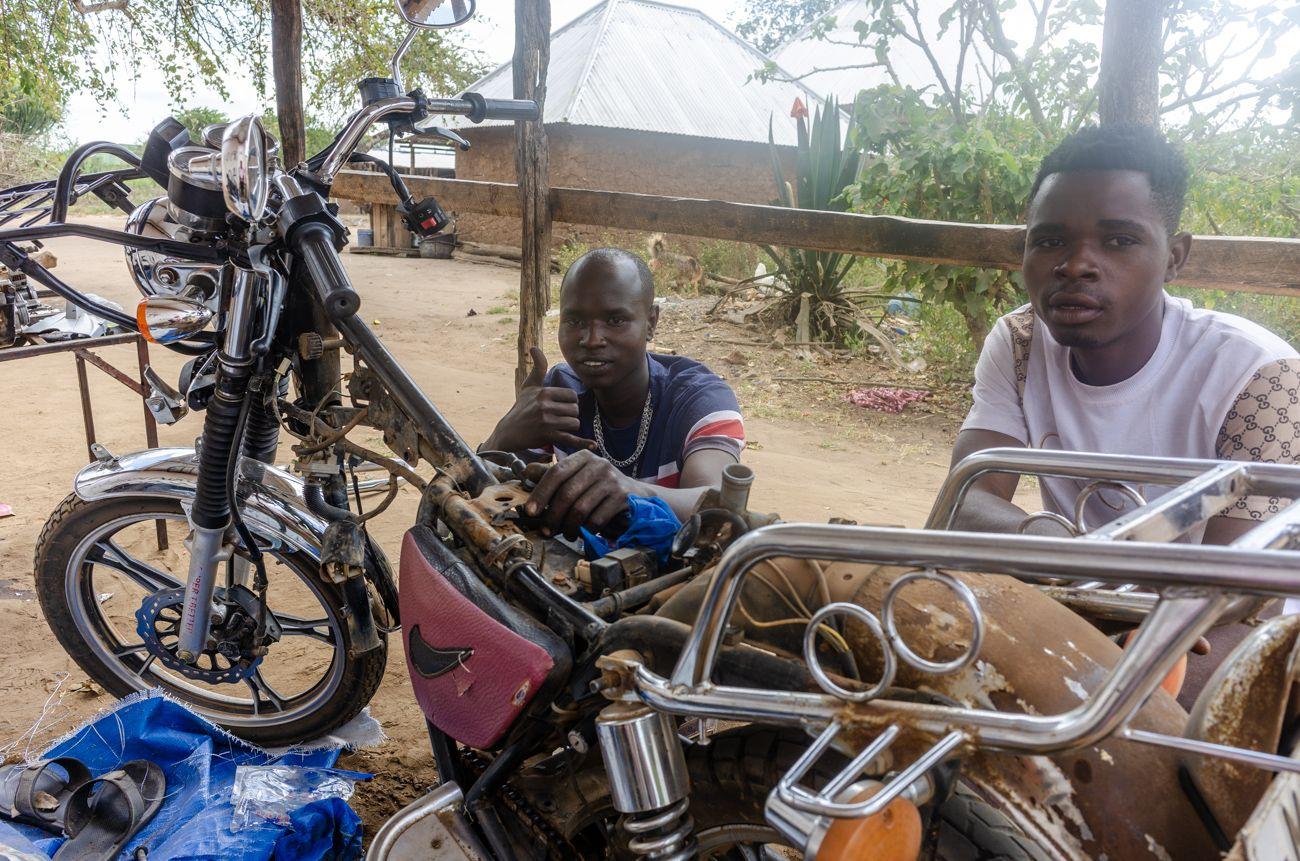
Koikai, piki-piki fundi (motorbike mechanic), and his natural habitat.

I got—how else—a brilliant idea: why should I drag myself around and take photos when I can hand the job over to the locals? In theory, it could even be more interesting. They’d photograph their own lives, and if some mzungu wandered around, he’d only disrupt the whole operation. The only problem was choosing people with at least some chance of returning my phone in a condition suitable for future generations. The first victim of my hyper-creative idea was Koikai. Koikai is a special case among the Maasai—as the only one, he wears a T-shirt and trousers. As one of just two Maasai widely known around here, he was a proper fundi master. As one of the few, he had lived somewhere other than his home boma. As one of “two and a half” Maasai, he lived in the village, not in a boma.

Koikai spent about a year in the capital, Dodoma, working in a motorbike repair shop. That’s where he learned the trade. But he didn’t last long—Dodoma has too little bush and too many houses. So he returned to Mbogoi and made a living repairing motorbikes there. So here are Koikai’s photos, straight from his phone. Unedited. The dirty lens also remains unedited. And this time, I’ll refrain from commentary as well.

Share this

The bush, despite occasionally looking rather romantic—especially at sunset—is a pretty inhospitable patch of land. By the end of winter, it dries into kindling, and if a plant wants to survive, it has to be a true enthusiast. Plants with gentler dispositions just bow out. And never come back. Which basically means: vegetables and fruit don’t grow in the bush. Sekenoi showed us various berries you’re supposed to eat when you’re thirsty. They said you could make a broth from different roots.
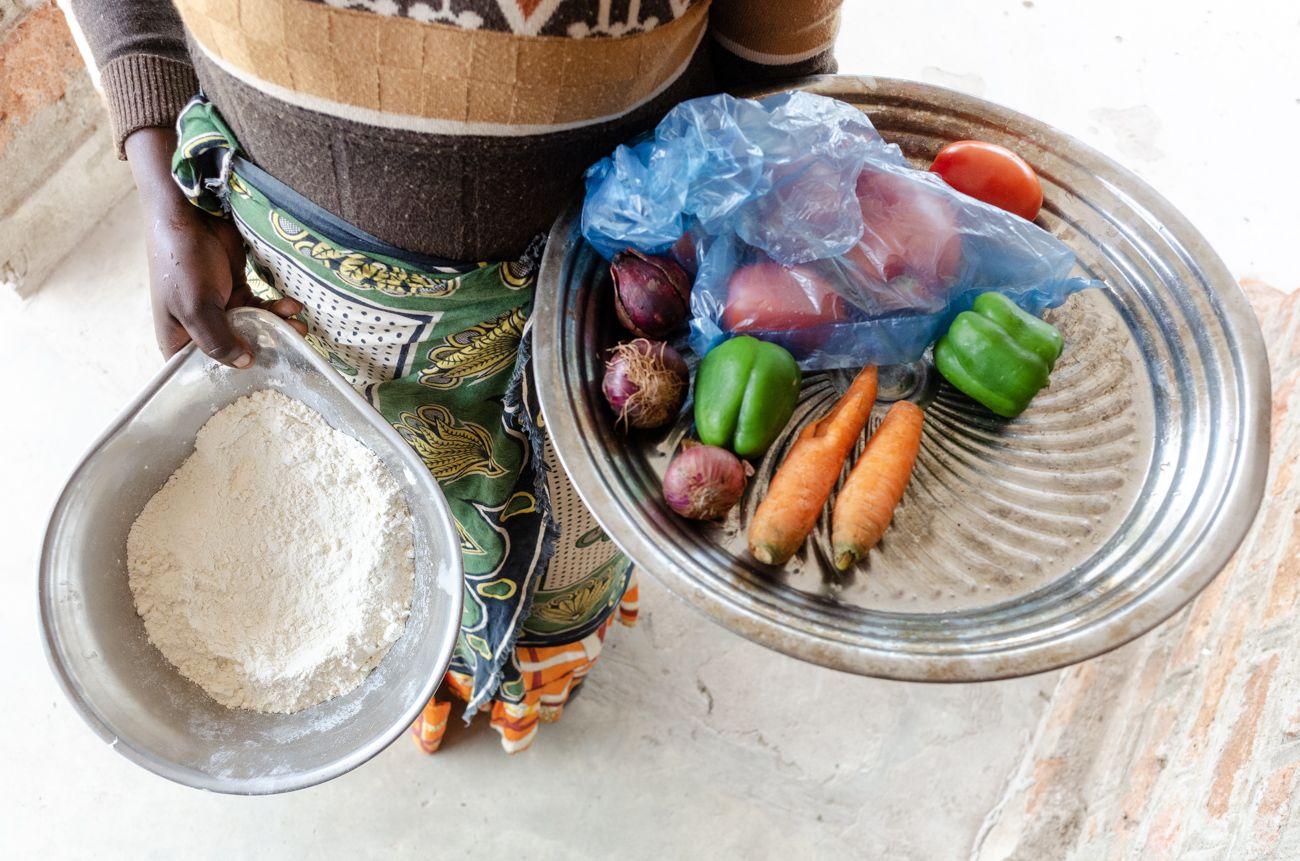
It tasted roughly like a broth made from roots. And that was about it. That probably also explains the Maasai enthusiasm for vegetables and fruit. Before I went to Africa, I pictured myself buried under baskets and thousands of varieties of cheap exotic fruit. So much fruit that even the locals wouldn’t know it all. They knew all of them. There weren’t many. And they almost never ate them.

No exotic fruit. No exotic vegetables. Nothing to see here.

This recipe is out of sequence because it deserves special attention—and absolutely zero skill. Presenting: the recipe for bean soup with sausage. A beloved late‑morning dish. Step one: hop on a motorbike and ride forty kilometres to Handeni, where they sometimes have beef sausages. They do have them fairly often—about every second visit. Then hop back on the bike and return to Mbogoi with your precious sausage cargo. Ideally, complete this mission in real time while only losing half the day to beer and chats with your mates. The next morning, when it’s time for a hearty breakfast and a hot soup, send one of the local Maasai—Logoi or Sekenoi—to the village to buy cooked beans. It’s quite a distance, around fifty metres, so he takes a motorbike and sets off with a joyful sense of duty.
In record time—say, thirty minutes—he returns with three portions of beans, boiled in salted water. Since spices are pricey and rarely used, the beans have a distinct local flavour: lightly burnt. But in an artistic way. By now, the beans are cold. So you slice up the sausage and reheat the mix on the electric stove. About three minutes after turning it on, umeme cuts out. Enter the djiko—a little charcoal stove. The full algorithm is detailed in the chapter on tea. But since the process is long and fiddly and you’re starving like a lion, you give up on the djiko and eat the soup nearly cold. I know, it doesn’t sound like a reason to dance with joy, but in a place like this, that faint breeze of something resembling home cooking is priceless.

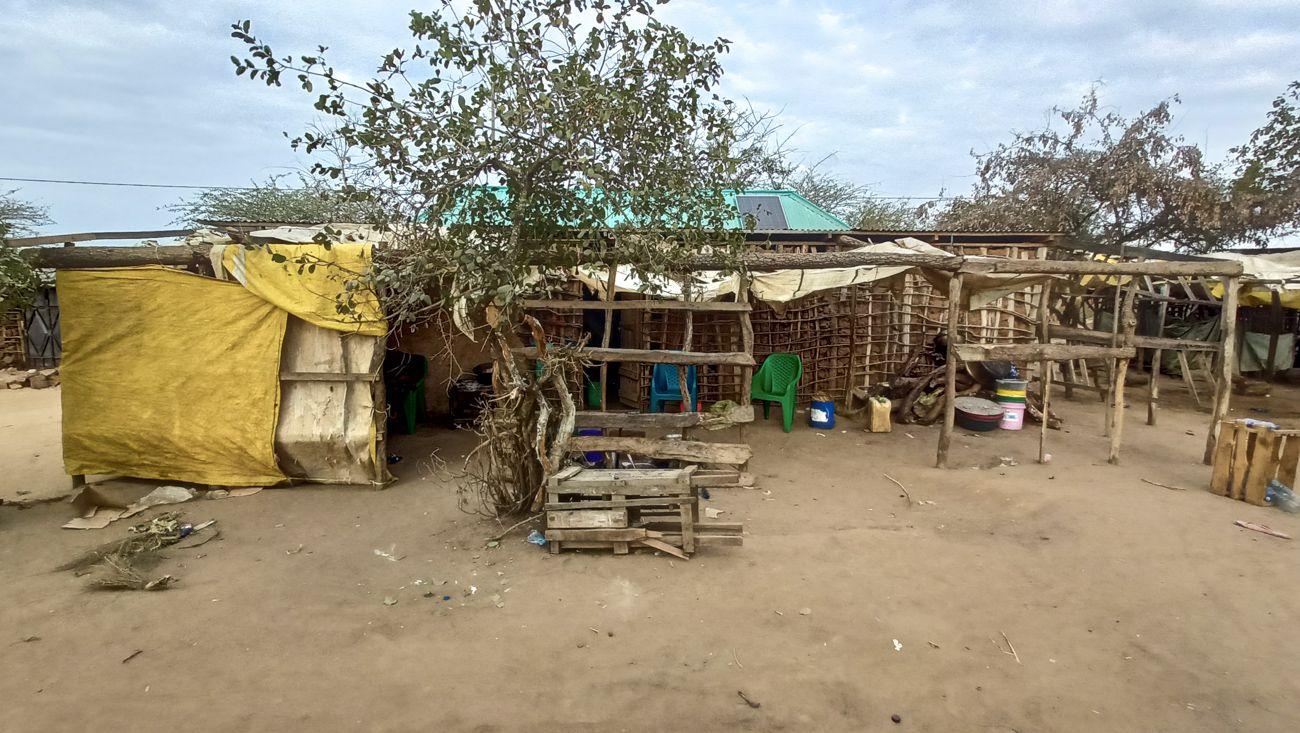
In my not‑so‑humble opinion, the local street food scene deserves its own TV series. Per capita, this place probably has the highest concentration of street food in the world. Although the term “street food” suggests food served in the street, it’s a bit misleading. There are no actual streets here. A “road” or “sidewalk” is basically any patch of land not covered in bushes and slightly longer than it is wide. A more accurate name might be “food served somewhere in the bush where no shrubs happen to be growing right now.”
Locals spend most of their time outside. Not necessarily because they adore nature, but when ten people share a five‑by‑five‑metre room, it’s not quite the nonstop party you’d imagine. So they’re always wandering around the village. The Maasai, when they have a free moment, stroll into the village—the local hotspot—where they run into friends and catch up. And in Africa, there are a lot of free moments. Really, a lot. So many that if you added them all up, the total would probably exceed time itself

Probably the most beautiful street food in Mbogoi. The cooks and their far‑flung advisory team are playing hide‑and‑seek with the camera.

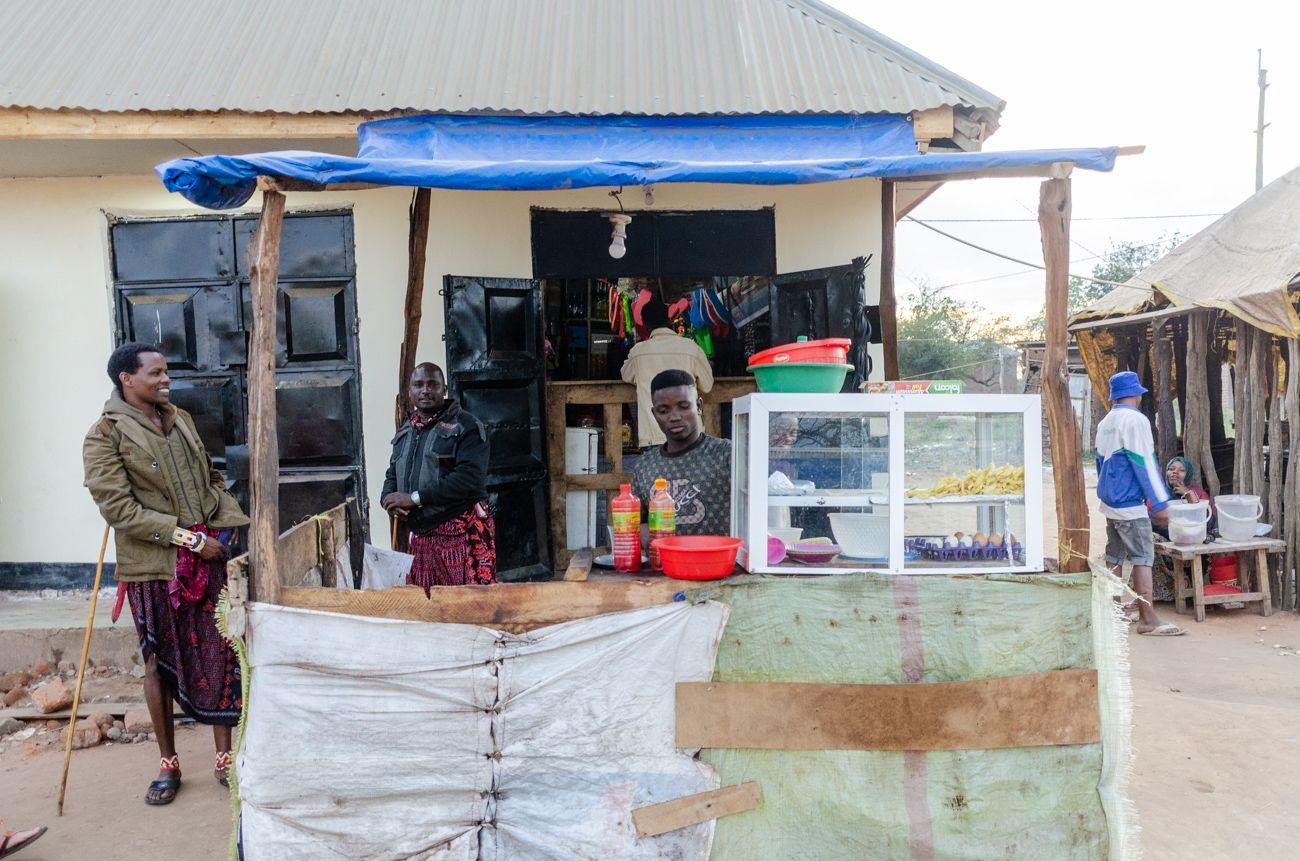
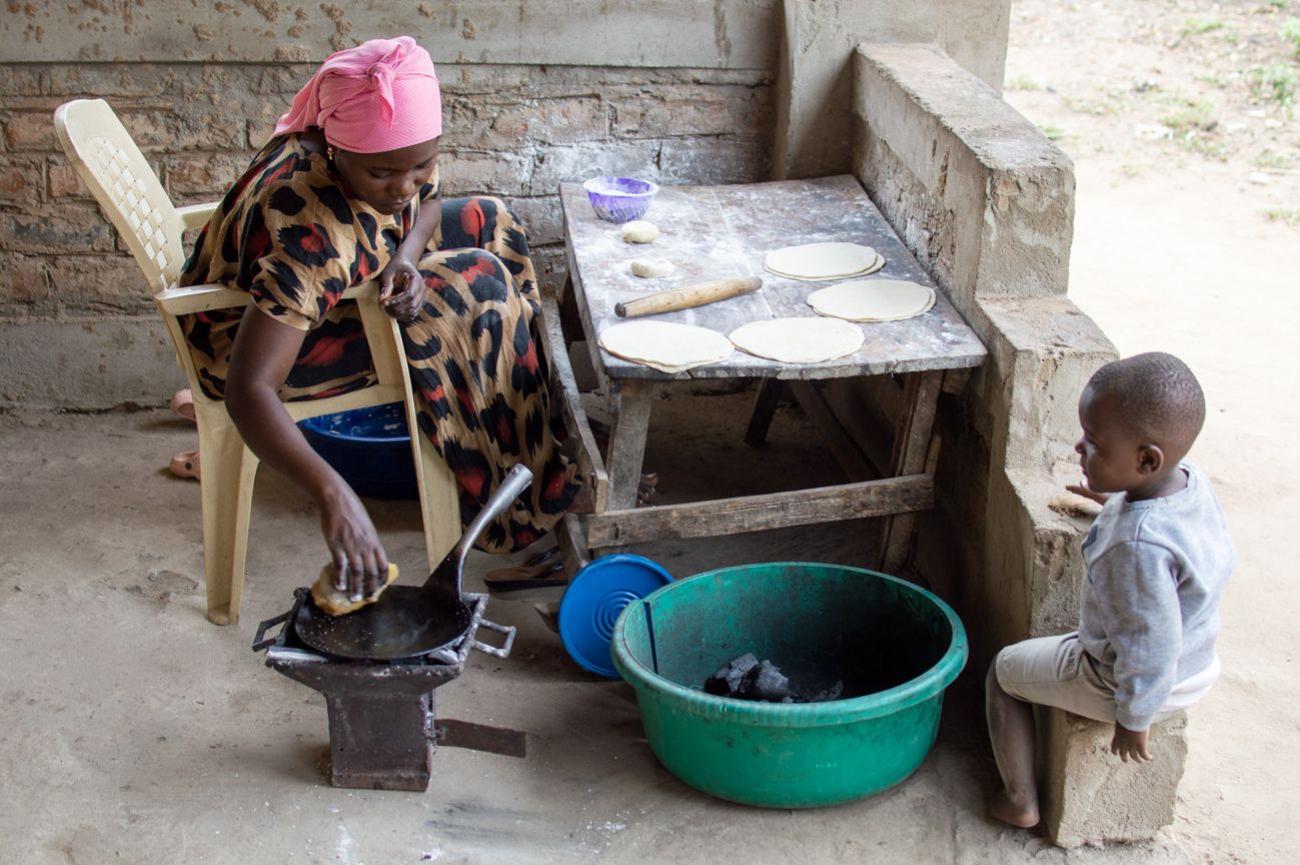
So the kitchens never lacked customers. Naturally, such fierce competition demanded a diverse menu. Which is why everyone offered chapati, pilau, and beans. If you looked at it from the other side, they were cooking beans, pilau, and chapati. When the pilau ran out, it was plain rice—usually in the evening. When the beans ran out, it was pilau or rice. Or chapati. You really didn’t know what to choose. There were, however, two bright exceptions. A couple of Swahili guys had a stall where they made eggs and fries. So if you wanted something other than pilau or beans, you could get an omelette with fries mixed in. The famous jaja na chipsi.
One time they even had chicken feet deep-fried in oil. Not thighs or wings—feet. And since they looked like props from a food-themed horror movie, I decided—with the help of my remaining sanity, taste, and survival instinct—not to risk it.

Local avant-garde.

The second exception was Renča’s restaurant, proudly called a “hoteli.” The concept of a restaurant here, however, was something else entirely. The setting felt more like a lunch break for tilers waiting on a delayed delivery at a construction site. But once they got umeme and installed a freezer, the “hoteli” started offering meat. The Maasai’s enthusiasm for meat might have even surpassed their enthusiasm for conversation. As a result, I had goat soup every single day for two months.
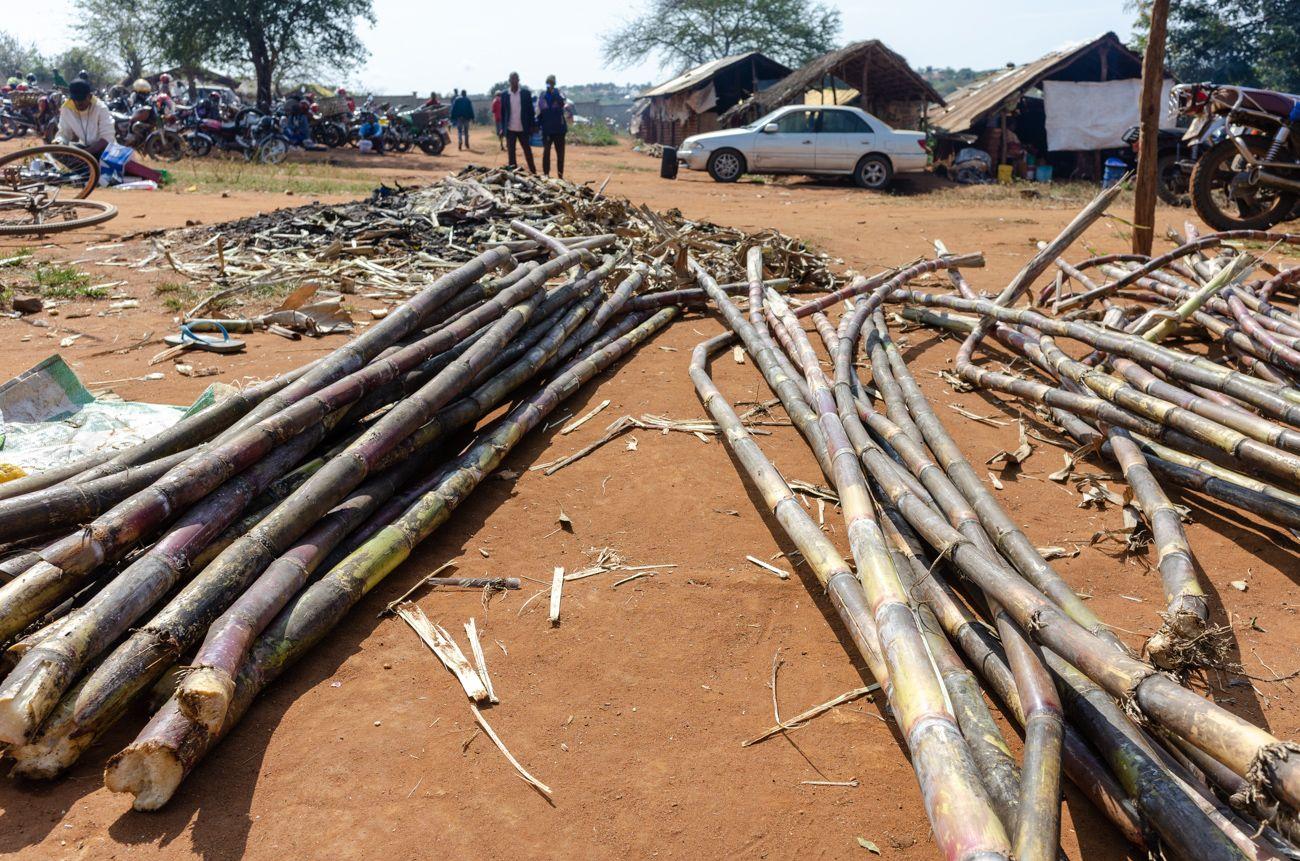
They also served pilau, surprisingly, with a heap of meat and vegetables on top. And of course—chapati, like everywhere. Once, and I choose to believe it was an accident, they plucked a sheep instead of a goat and tossed it into the pot. It was genuinely hard to tell the difference—they both dressed the same. But to be fair, now and then these canteens had mandazi too. Slightly sweet wheat flour buns, deep-fried over fire. The only sweet thing they had, apart from sugarcane. Sugarcane was a chunk of stick which, when you tried to gently bite it, was incredibly sweet. I’m speaking, of course, from the perspective of my underperforming, tiny, yellow, non-Afro teeth.

The “hoteli” had an almost Euro-Atlantic vibe to it.

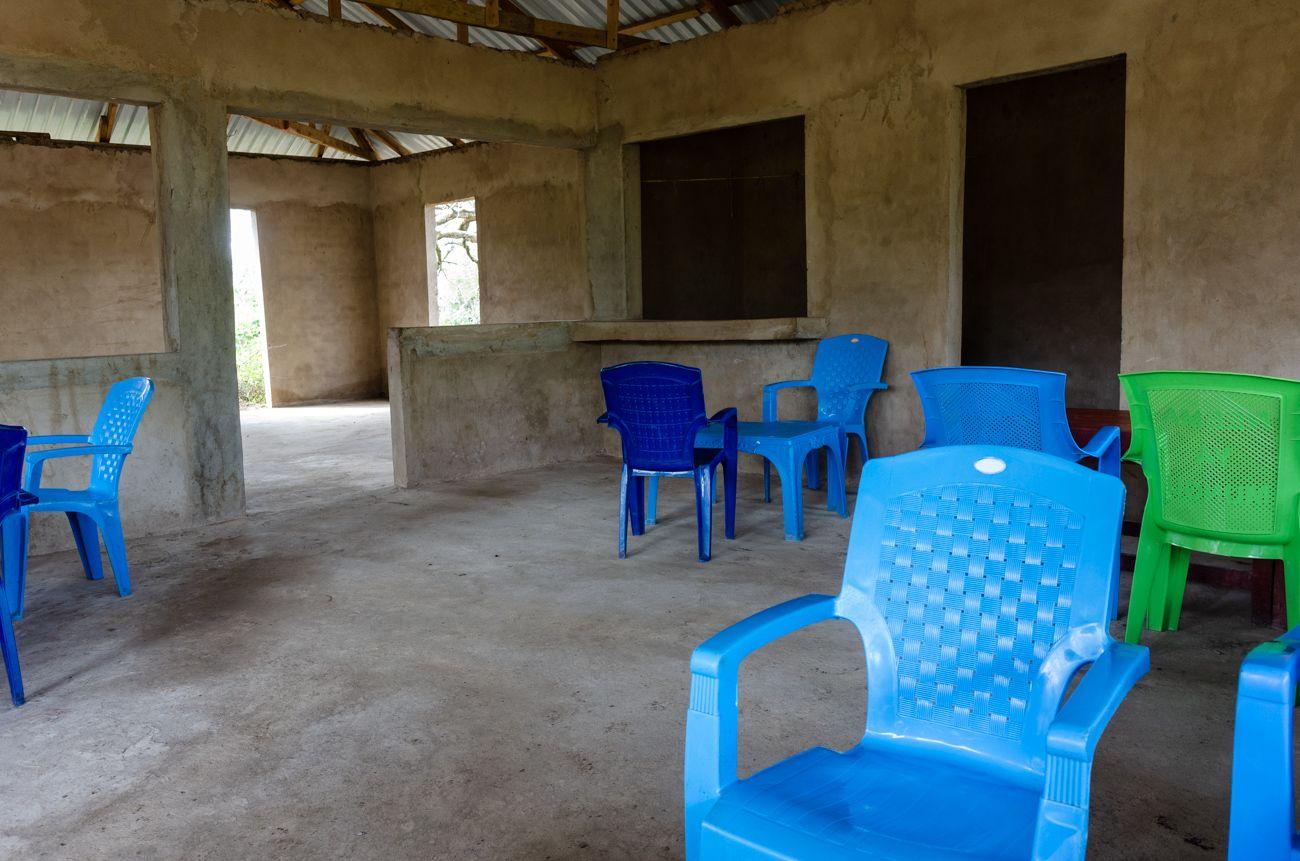
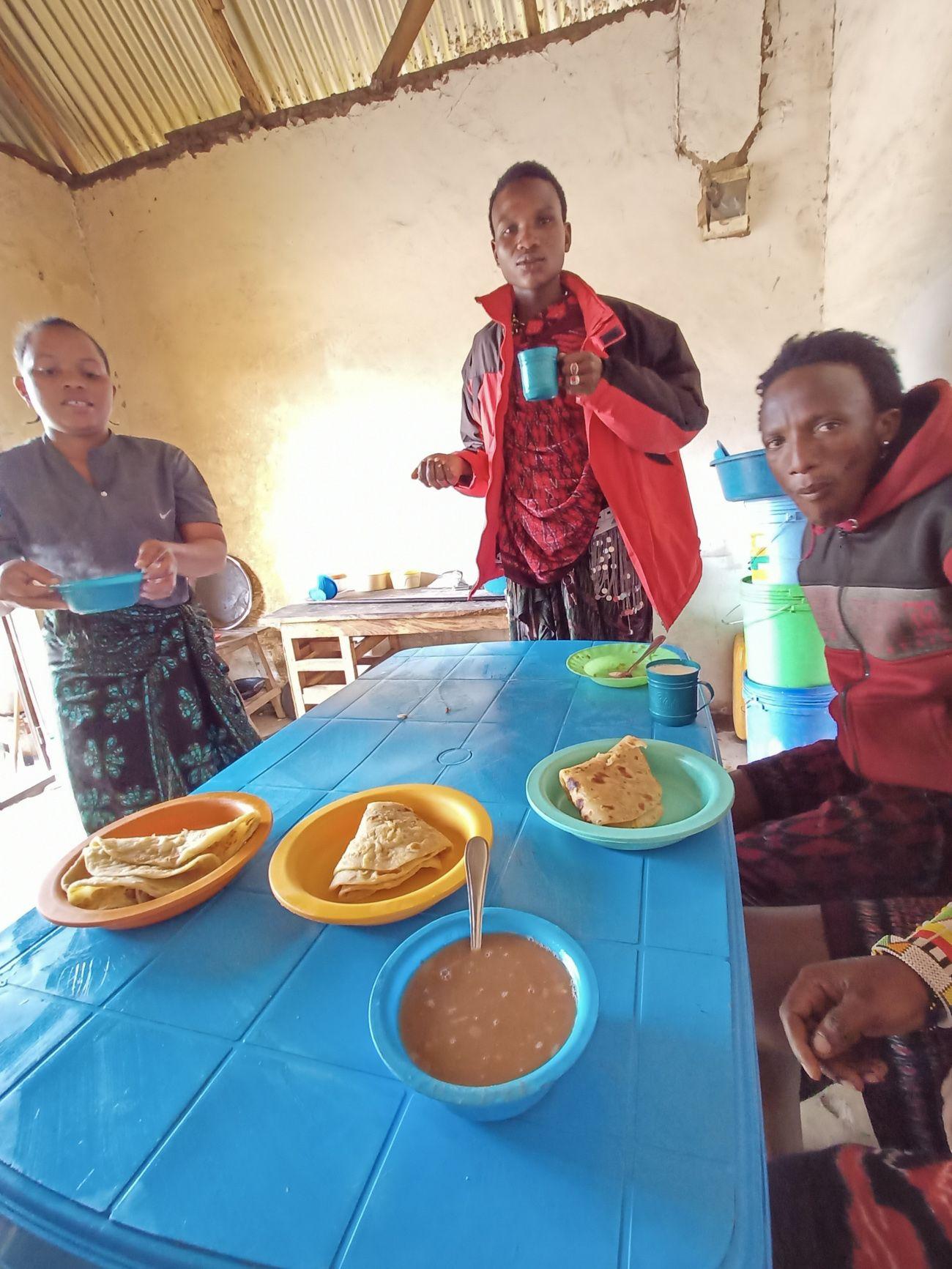
Some of these dining establishments even had indoor seating. Three, to be exact. I tried out two of them, and it was a proper spectacle—watching them watching me. I’m not sure what category a white guy with a camera, surrounded by Maasai and shovelling in pilau, falls into, but I’d guess it’s something like socks. They know what they are, but you almost never see them around here. One more thing. If it can be eaten by hand, it is eaten by hand. I never saw anyone eat soup, but I’m convinced that with the level of local ingenuity and dexterity, it’s absolutely possible. Accordingly, the table looks exactly like you’d expect after lunch. Fortunately, the staff cleaned it up in three swift wipes—done.
I was curious about how these canteens functioned organisationally. The variety, like everything in Africa, is wild. Some people cook at home for a large family or group of housemates, so they just make more and sell the leftovers. Others rent a space and start cooking there—especially if they’ve got enough mouths to feed. And then there are the pure investors: they rent a room, hire people to cook, and never touch a spoon.

Indoor street food.

Two food‑related events definitely deserve a closer look. The first was the weekly market held every Thursday, and the second was the big livestock market—goats and sheep—in Nderema, in the Handeni region. The official market time was around ten or eleven, but many food vendors were already setting up by eight in the morning. The admirable dietary variety of households living solely on pilau and chapati was clearly reflected in the fact that they cooked pilau and made chapati. But there were other things on offer too—shelf-stable foods like dried sugarcane juice, chewing tobacco, or fish. And of course, lots of vegetables and fruit. If a big crowd was expected, they’d roast a cow and brew some medisin—a local bush tea I write about elsewhere.

Another chapter in the local dining saga was Nderema—the livestock market held every Saturday in Handeni, about 40 km away. I went once, and honestly, it’s the kind of experience made for tourists. Hundreds of cows, possibly thousands of Maasai, goats, sheep. The eating zone was way down below, and I didn’t see anything on offer except meat. It was grilled over fire, skewered on twigs from local bushes. Naturally, it had to be perfectly undercooked so it could be chewed for hours. The atmosphere was enhanced by concrete platforms where cows were slaughtered and butchered. Around these slabs, intestines and all sorts of inedible scraps lay scattered across the ground, instantly turning fragrant in the local heat. Me, a seasoned African by now, wisely abstained. Based on prior experience, I figured I’d be chewing that meat until Monday. Or possibly still. Who knows what the customs officers would say.

Nderema – vegetarian street food with a side of sugarcane.
Share this

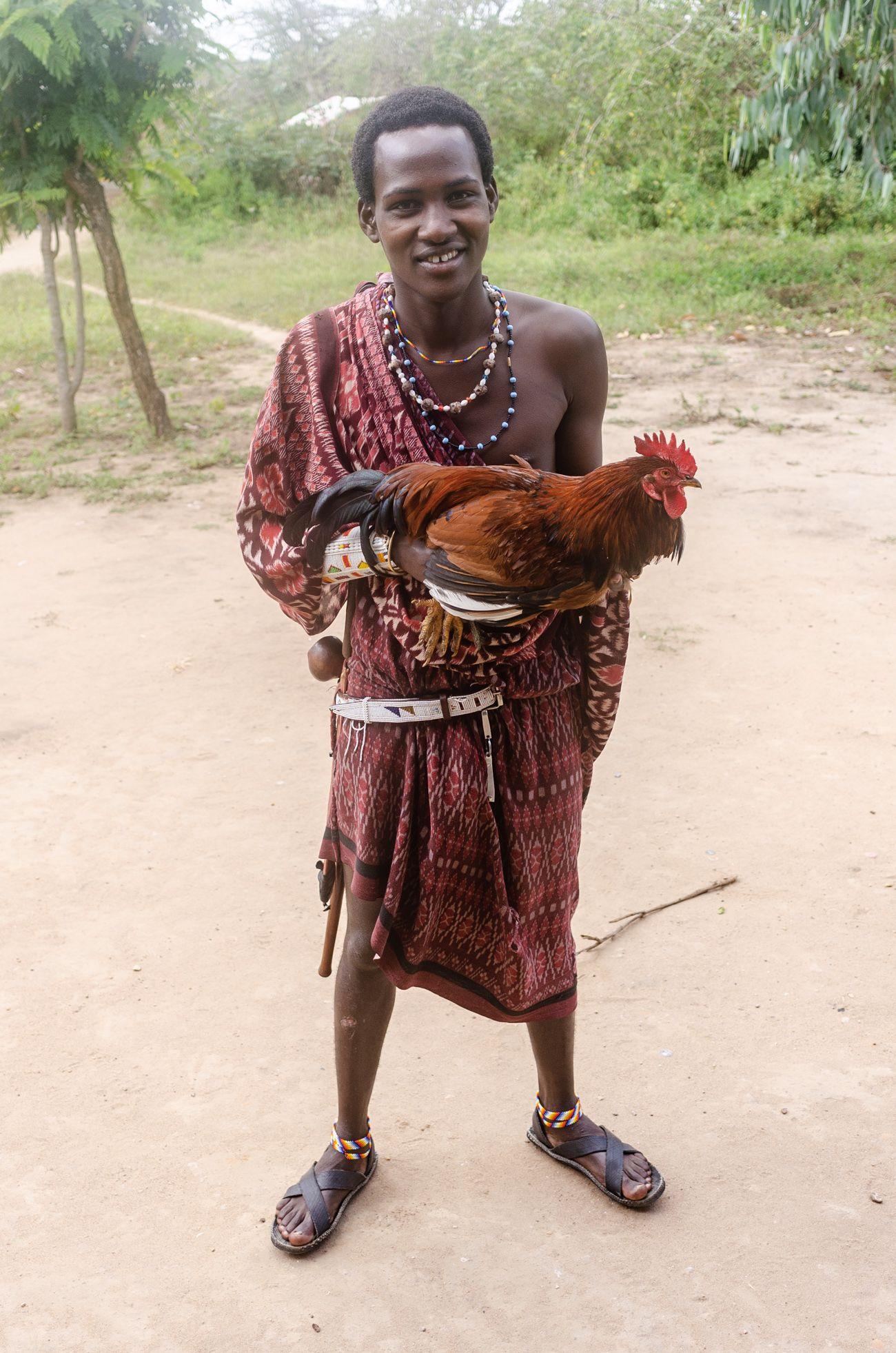
The evening before last, over a cheerful beer session, Munikiti—buoyed by a fine mood—promised us a chicken. Said he had loads. I didn’t believe him, but lo and behold—next morning, there he was at the door, grinning proudly, chicken tucked under his arm.Shame he doesn’t raise sausages. That would’ve thrilled me a bit more than poultry. Still—praise be, praise be, praise be. I do believe goat soup is healthy and all, but I’d like to stay healthy without bleating. Since goat stew was on the menu every single day, I was beginning to sound distinctly four‑legged. The best part? The Maasai don’t eat chickens. Or eggs. For them, it’s like someone in our world saying, “Let’s make rat stew.” But I have a theory. Long ago, the Maasai and chickens made a pact: Maasai won’t eat chickens, and chickens won’t eat Maasai. It didn’t make it into any folklore, but I know it happened.
So we put modern science to work, fired up our trusty two‑burner electric stove, and soon the smell of paprika‑chicken was wafting through the house. To the Maasai, this aroma might as well have been a UFO landing. Then—bam—power cut. No more umeme. It got me wondering: why is the Swahili word for electricity umeme, when it doesn’t sound like “electricity” in any other language? The answer is obvious: electricity is something that’s always on. Umeme is something that works when the gods feel like it.
So we fired up the little charcoal djiko and resumed cooking an hour later. Well—Renča did.

Mama Imlan, Imlan, and a batch of chapati in the making.

Yesterday, Ndari promised me that, despite strict Maasai doctrine, he’d try the forbidden fruit: chicken. So—paprika chicken cooked, pasta boiled, time to plate up.Ndari says he doesn’t want any, that he’ll take the meat himself. He helps himself—sort of. The portion is so minuscule I have to ask him to hold it closer so my ancient eyes can confirm he’s actually holding anything. And yes—on the fork, and swiftly in his mouth, is a morsel of chicken thigh roughly 2 × 2 millimetres in size. His face suggests he’s about five seconds away from projectile regret, but he swallows. Like a hero.
“Want some more?”
“No, thank you. I’m full.”
Ten seconds later—he polishes off the pasta and sauce. Hunger’s a beast. Oh—and pigs? The Maasai don’t eat those either.

Ndari won’t eat the chicken Kuku, and Kuku won’t eat Ndari. Ndari will just have a little taste..

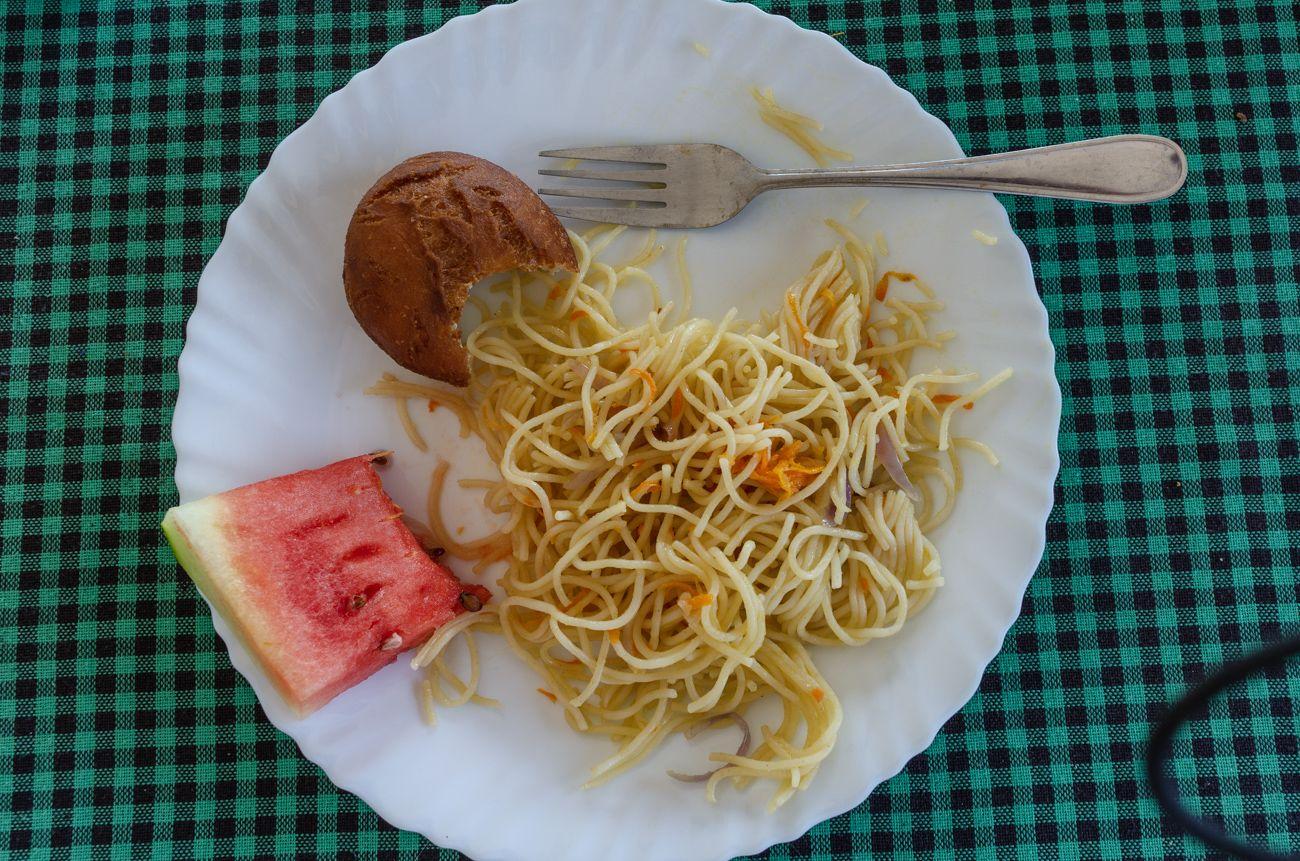
My first encounter with Tanzanian cuisine happened right after I landed in Dar es Salaam, during breakfast at the hotel. It was a buffet, and since I’m a fan of exotic dishes, I was genuinely looking forward to it. The trays held potatoes with peppers, sweet spaghetti, and deep-fried dough balls called mandazi. I loaded up my plate and tucked in eagerly. Well—eagerly might be pushing it. Let’s go with “curiously.” As I later discovered, even by local standards, this was a fairly unorthodox combo—but no one batted an eye. White folks, mzungu, are always up to some nonsense. They do odd things and hand out money, which they apparently possess in infinite supply.

To keep it woke—my first ever Afro‑African meal.

Since we spent a few days in Dar es Salaam, we ended up having dinner at the same hotel each night. I ordered whatever Sekenoi was having—he’d already joined us by then. The part that claimed to be meat proved unchewable by my underperforming European molars. My taste buds are still working through the trauma, trying to figure out what it tasted like, what it might’ve been seasoned with, whether it even had a flavour, and whether the cook was, in fact, a cook. The kitchen was on the rooftop terrace—open air, beer on tap, pleasant breeze. You placed your order by stepping up to a set of imposing metal bars behind which the cook dozed. She’d gesture at the contents of her fridge, and you’d negotiate what she’d cook. Two to three hours later—voilà! Dinner appeared. By then, time had already begun bending. Either that or the beers were working their magic. Hard to say—off the top of my foggy head.

Ugali is eaten strictly by hand. Right or left, your choice. I haven’t seen anyone go at it two‑fisted, but I firmly believe that style exists too—somewhere out there, a true ambidextrous champion of starch.

What do the Maasai eat most? Ugali. I could honestly stop right there. But my deeply twisted sense of irony won’t allow it, so let’s treat that as our beginning.Because fruits and vegetables aren’t exactly bursting from the bush, traditional Maasai cuisine is rooted in meat. Quick detour—Lengusero. The reserve I stayed in is called a reserve for one big reason: you’re not allowed to cultivate the land. Each resident of Lengusero has the right to only one hectare of arable land. Most Maasai use it to grow maize. I did spot the odd sunflower here and there—presumably for oil.
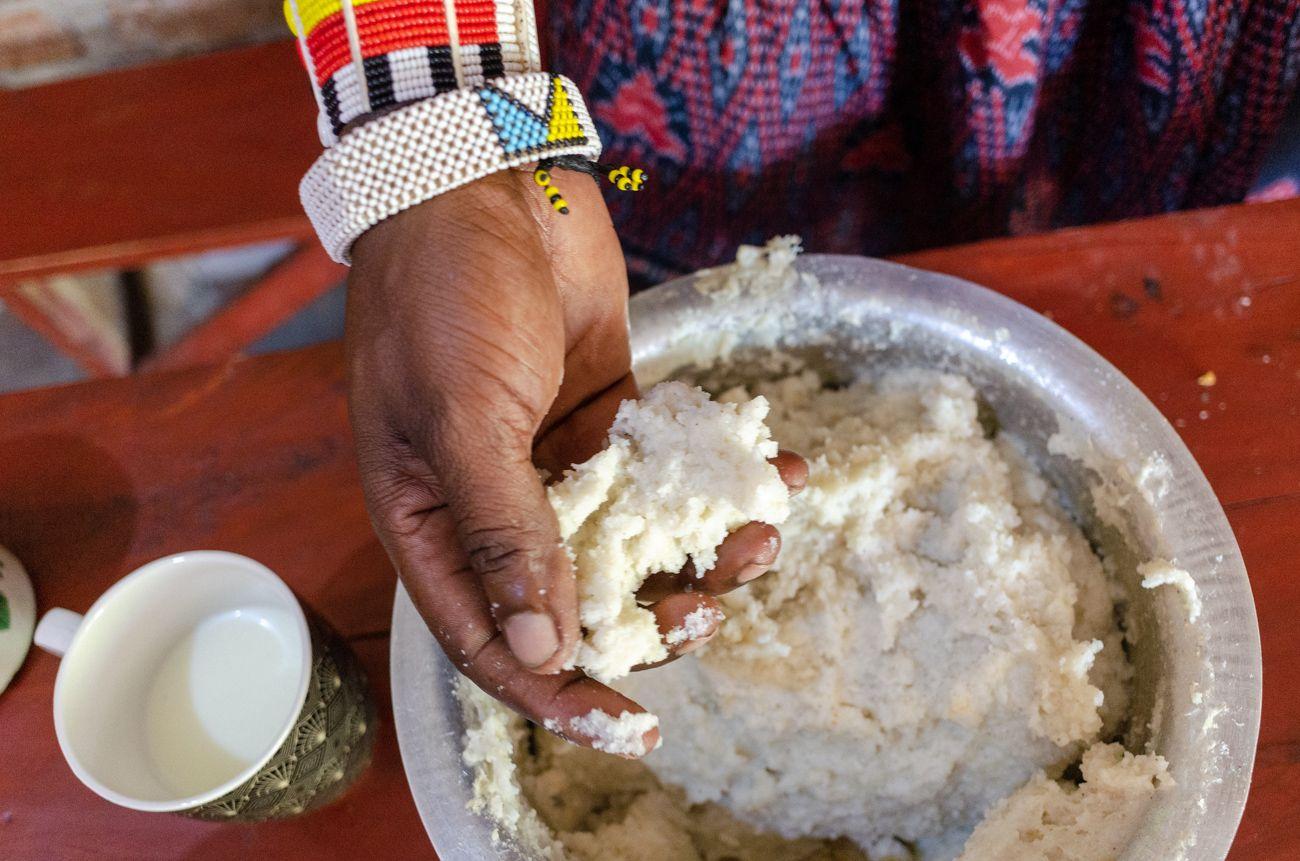
And since cows are relatively expensive and maize is relatively cheap, ugali wins. It’s basically cornmeal cooked in salted water until it becomes a stiff, doughy mass. Somewhere in this travelogue there’s even a recipe—look in the Recipes section, though don’t be shocked if it turns up in Motorbikes. We’ll see.

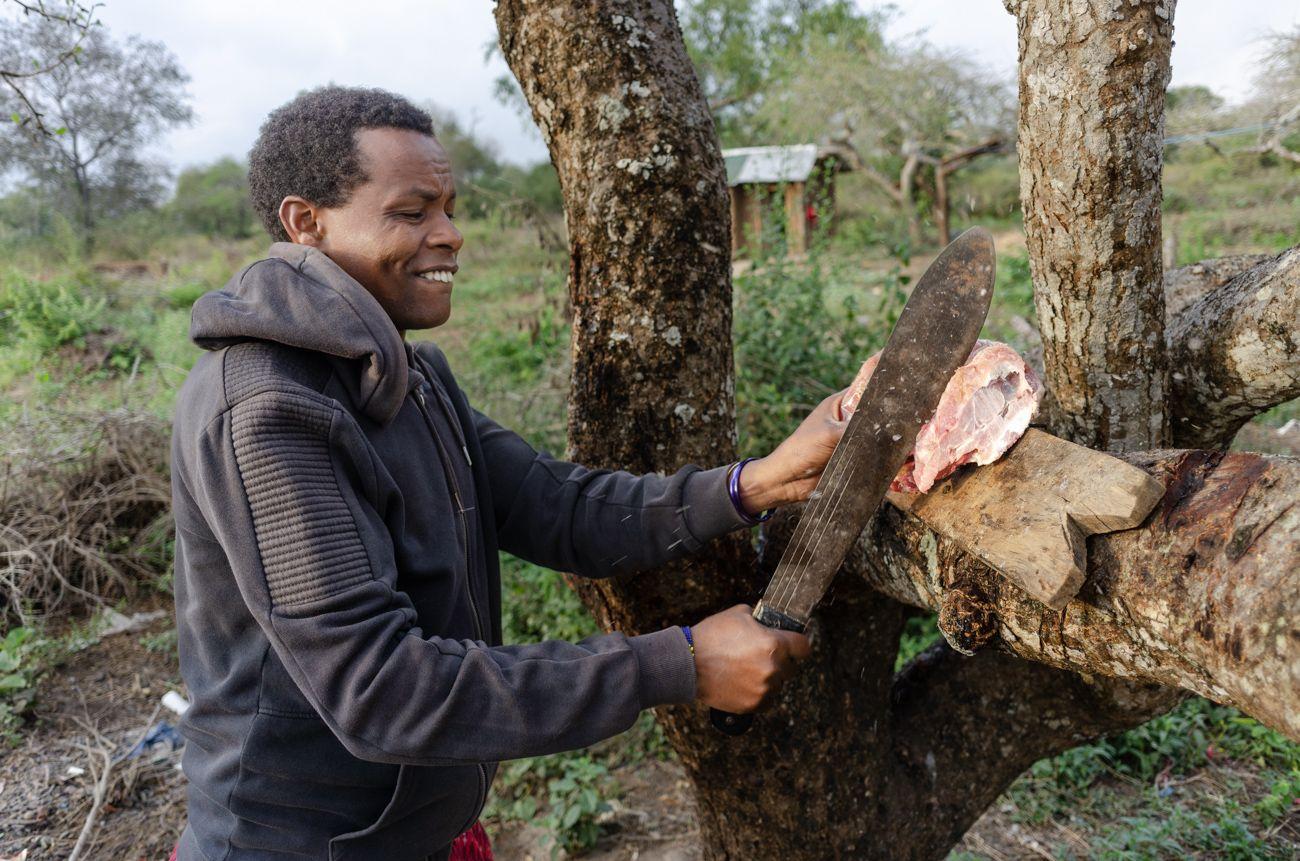
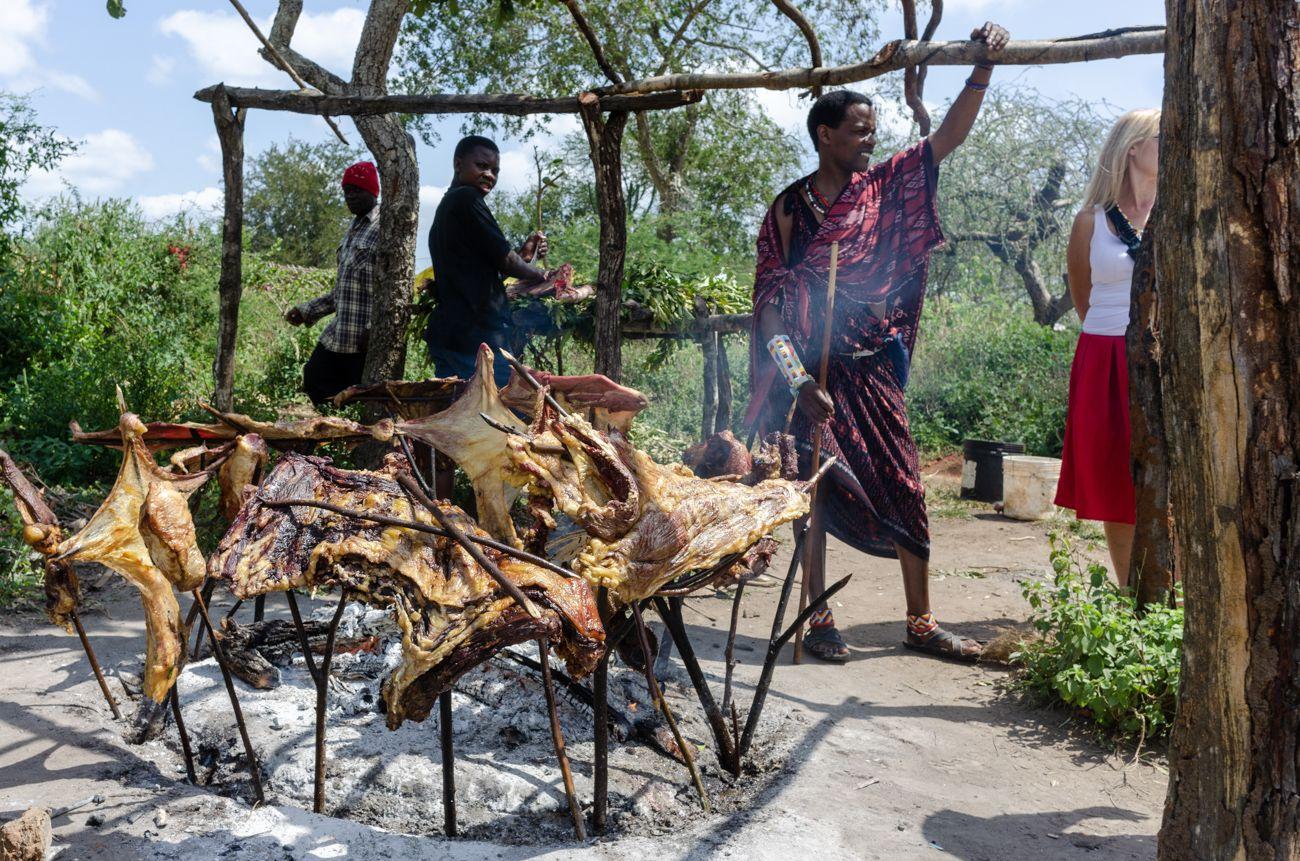
Sekenoi attempts to impress the grilled market meat with a dominant stance. Renča tries to figure out what’s lurking in the tree.

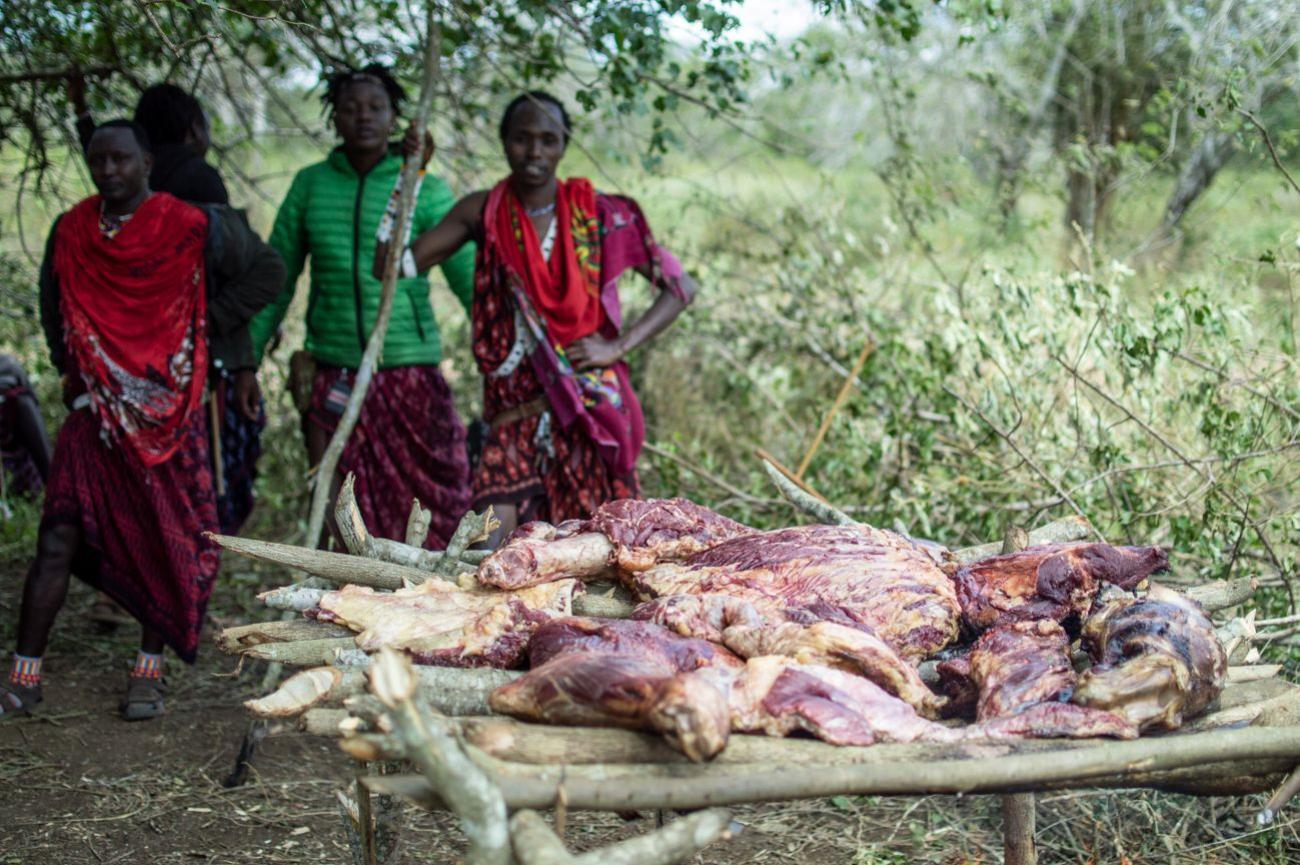
The Maasai are absolutely mad about meat—but only the holy trinity: cows, goats, and sheep. In that order of popularity. They don’t eat chicken, pork, or fish. As I’ve mentioned before, they once made a non‑eating pact with chickens: mutual survival guaranteed. I’m quite sure similar peace treaties were signed with pigs and fish as well. I’d give a lot to know how the fish negotiations went. The Maasai definitely don’t like fish. And it seems the fish feel the same—because they drank all the water in the region and moved to the sea. Their favourite above all is beef roasted over an open fire. Which, in practice, presents a small problem: once a cow is slaughtered, it has to be eaten quickly before it spoils. After all, fridges are still a sizzling novelty. And if the fridge is hot news, then the stove is cool news.
So roast cow is reserved for bigger celebrations or, occasionally, for the market. Even then, the meat was grilled only when there was a reasonable suspicion that more people might show up.

Every proper celebration deserves a cow—smoked and very, very, very gently roasted over a wooden rack.

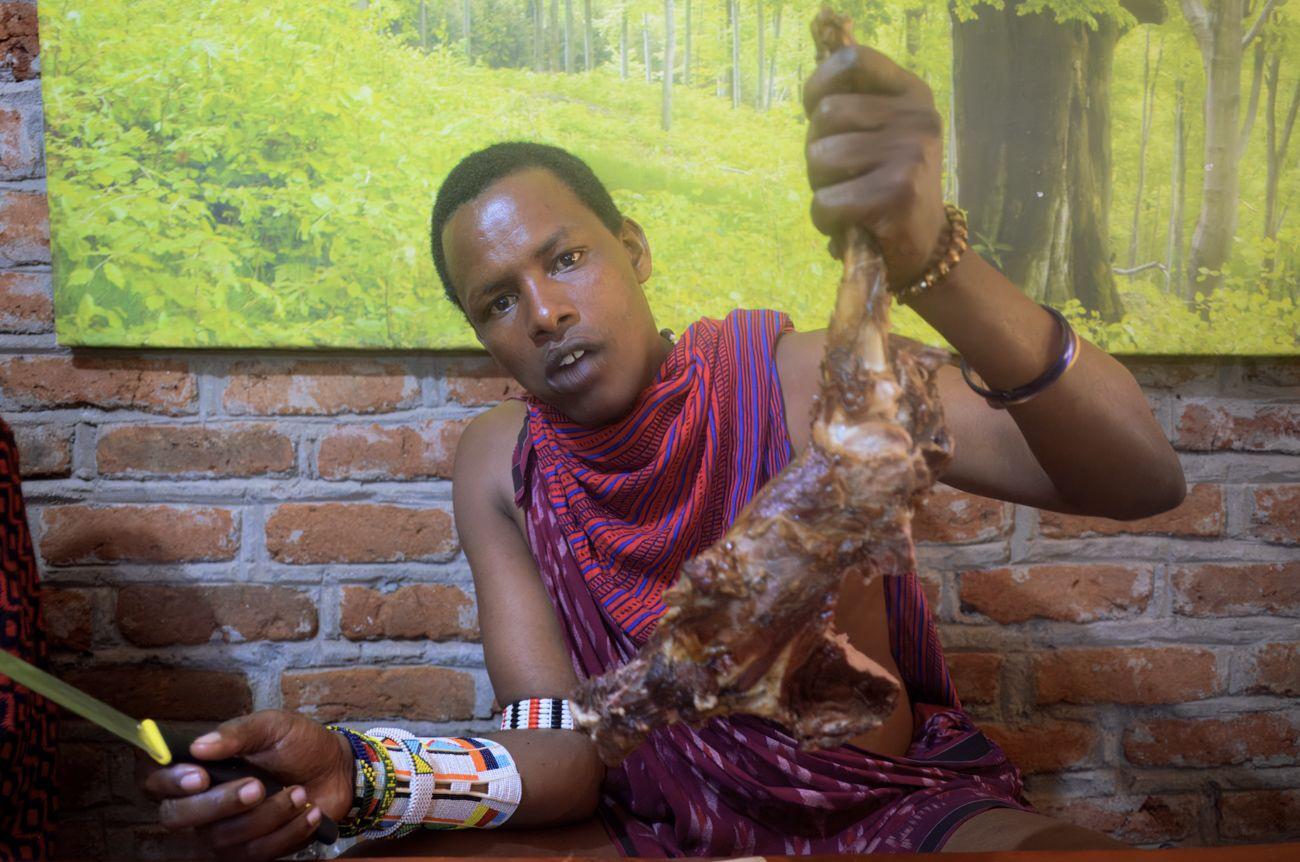
The unifying rule behind every meat recipe was simple: don’t you dare cook it all the way through. Or, alternatively, roast it until it’s good and tough. Just like proper pasta is al dente, proper meat here is al rubber. That’s why all Maasai have massive, powerful teeth. Teeth so white that when a Maasai rides his motorbike at night, he just opens his mouth—and voilà, better visibility. A Maasai can easily down a whole kilo of half‑raw cow or goat meat in one sitting. One person. One kilo. One sitting. No side dishes. Of course, they feel terrible afterwards, so they wash it down with soda. Ginger soda. It was called Tangazi.

Up next on the programme: the desynchronized goat.

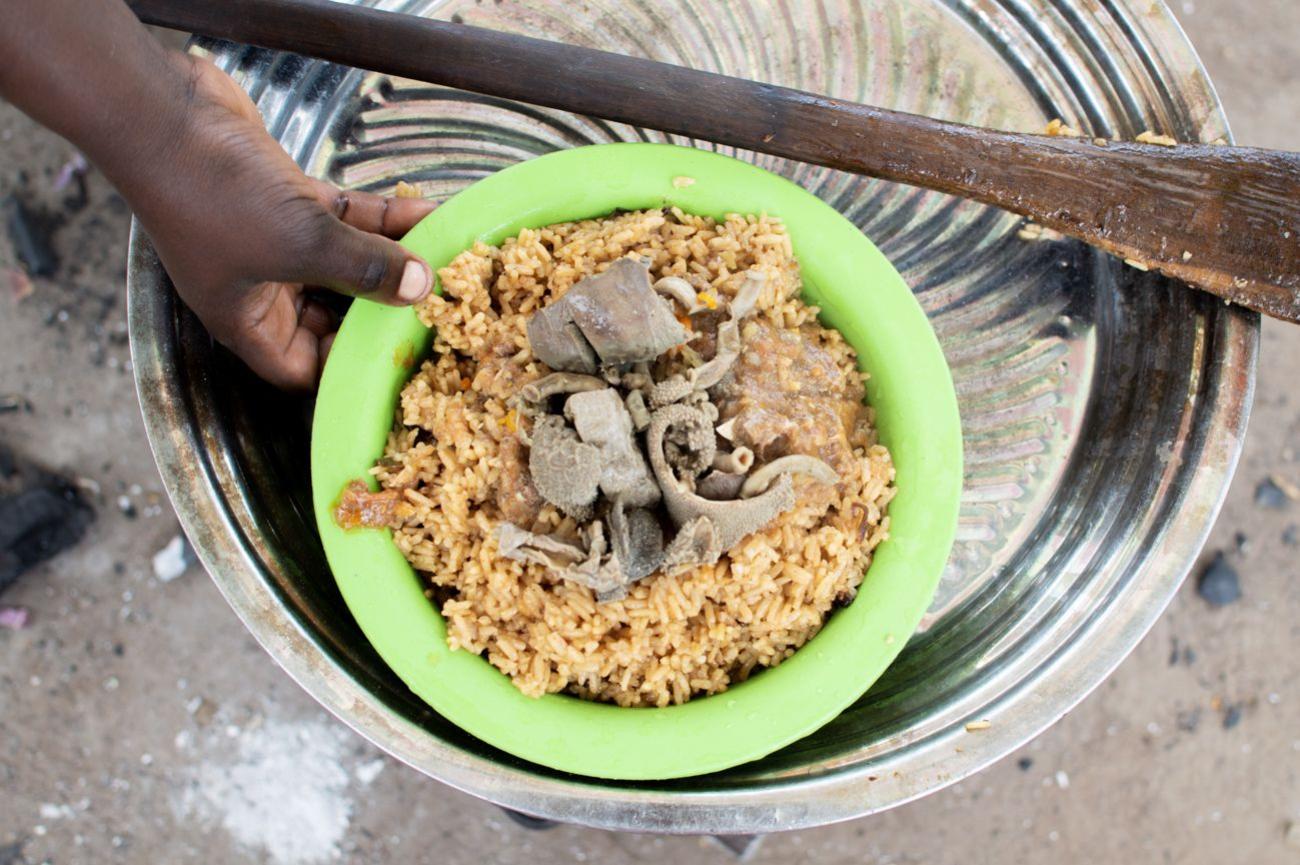
Probably the most beloved mildly fancy dish was pilau. It was rice with oil, sometimes blessed with a few bits of vegetables and generously seasoned with pilau spice mix. The exact recipe can be found somewhere in the chapter about shoes. Or in the recipe section. We’ll see. Pilau was always flavoured with a distinctive, unmistakable blend of spices. It was there every day. Always. Everywhere. For the first month, we got along splendidly. Then we had a falling out.

Something about that spice mix just stopped working for me. I could imagine goat soup without pilau spice, ugali without pilau spice, ice cream without pilau spice, the Mediterranean Sea without pilau spice, the Declaration of the Rights of Nations without pilau spice, the entire planetary system without pilau spice. Everything was better without pilau spice. I didn’t hate it so much that I’d never eat it again. But the magic was gone.

Pilau with tripe. Tripe and pilau. Me and pilau. Me and tripe.
Share this

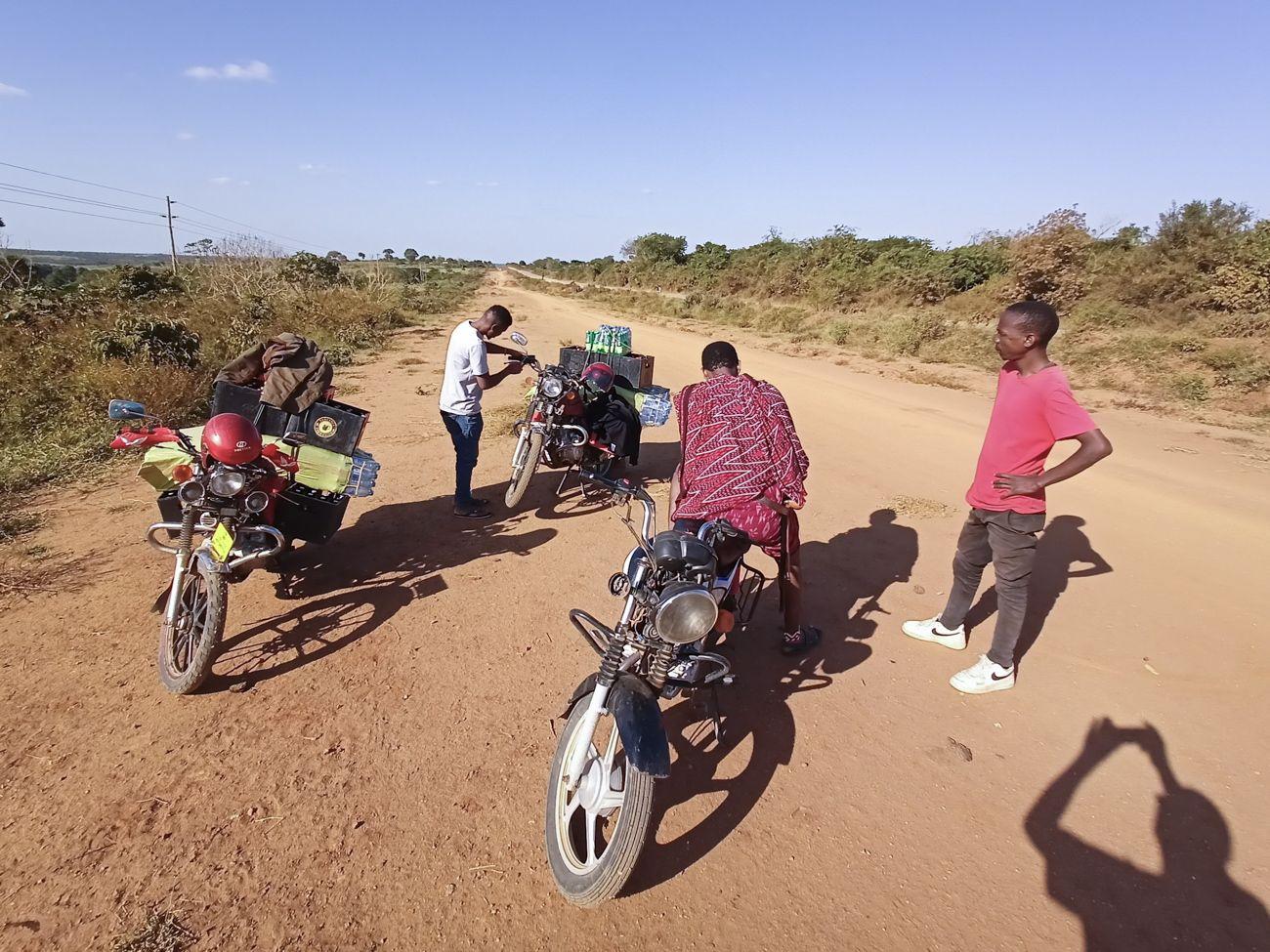
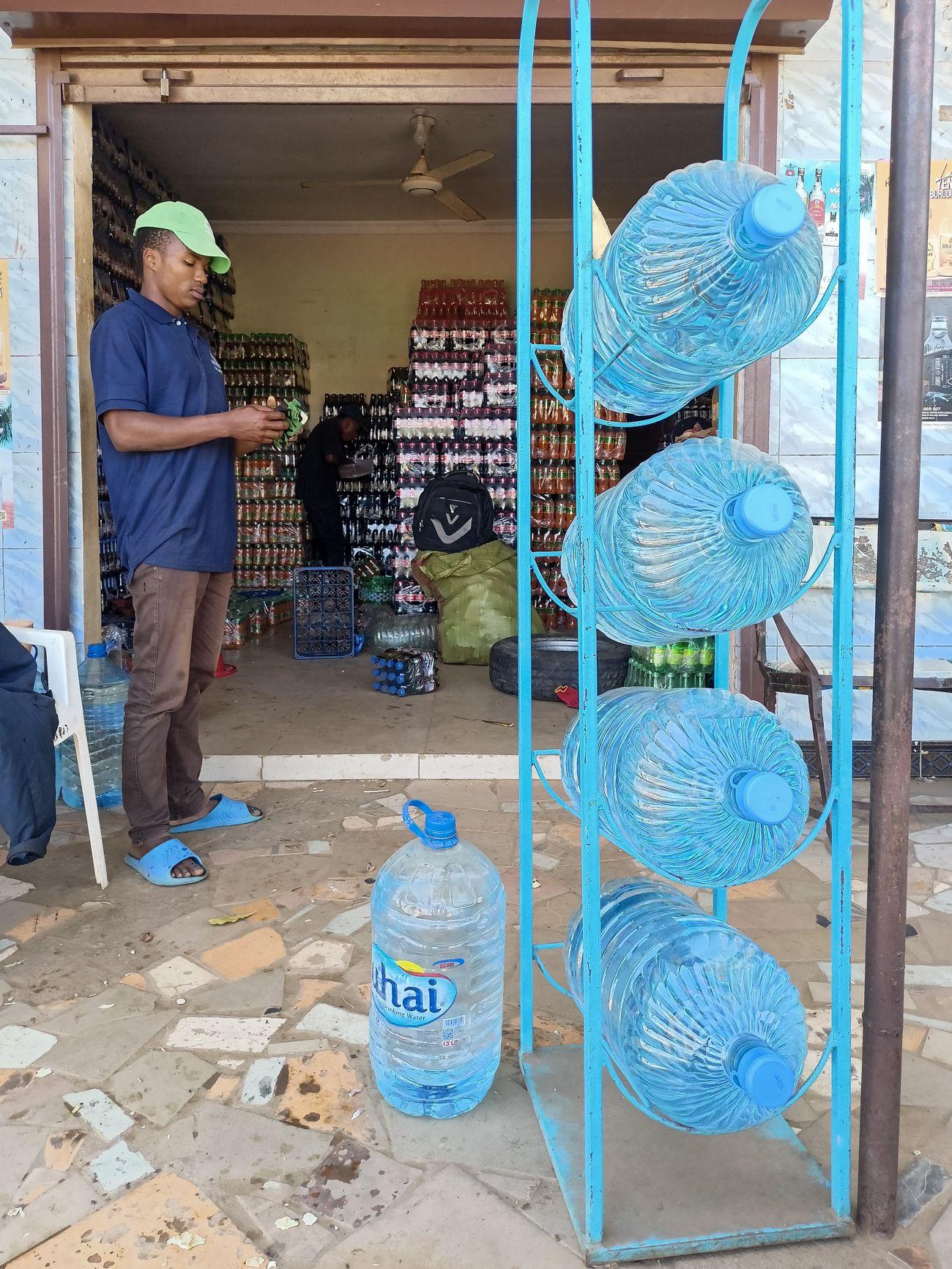
We finally roll up to the wholesale drink depot. At last, I can take a proper gulp of water, and my voice no longer sounds like I’m two minutes post-stroke. While they’re prepping the order, two guys grab our motorbikes and ride off to get them refueled. They return about half an hour later. I don’t know if they went to fill up in New York, but honestly, I couldn’t care less—the world is once again beautiful and glowing pink.
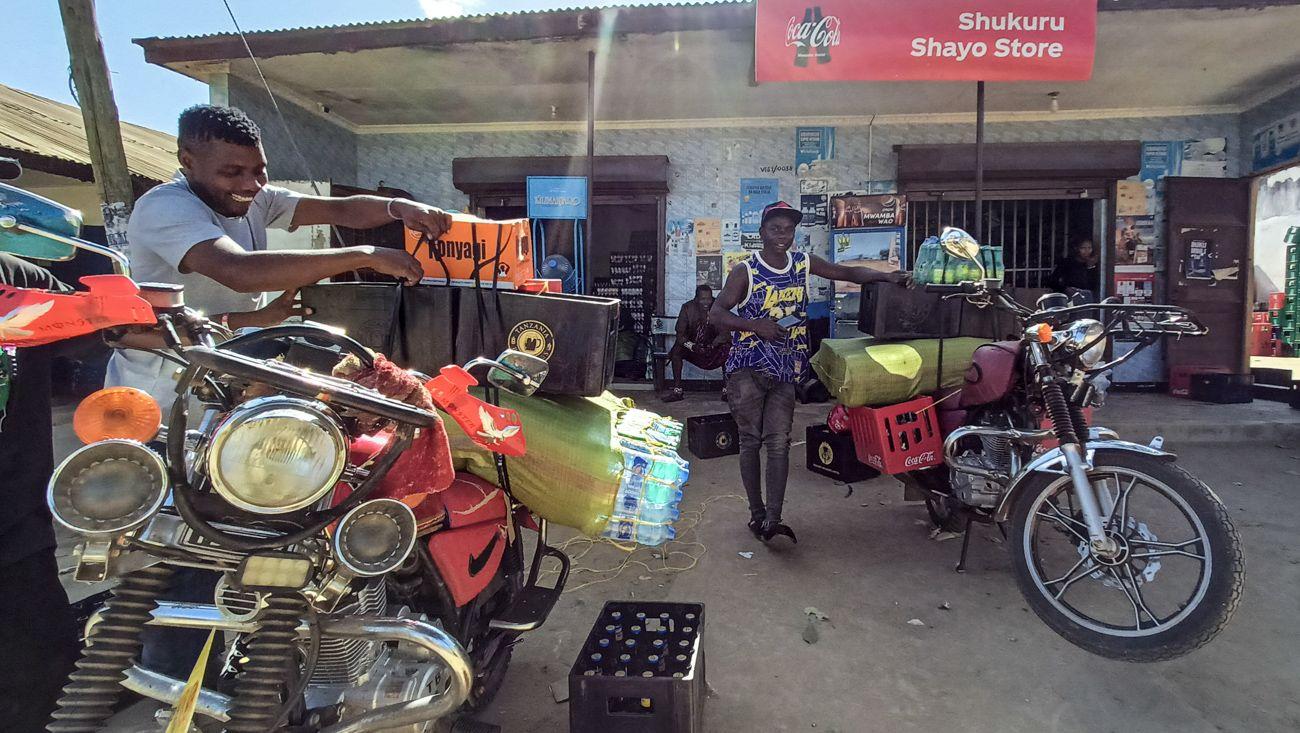
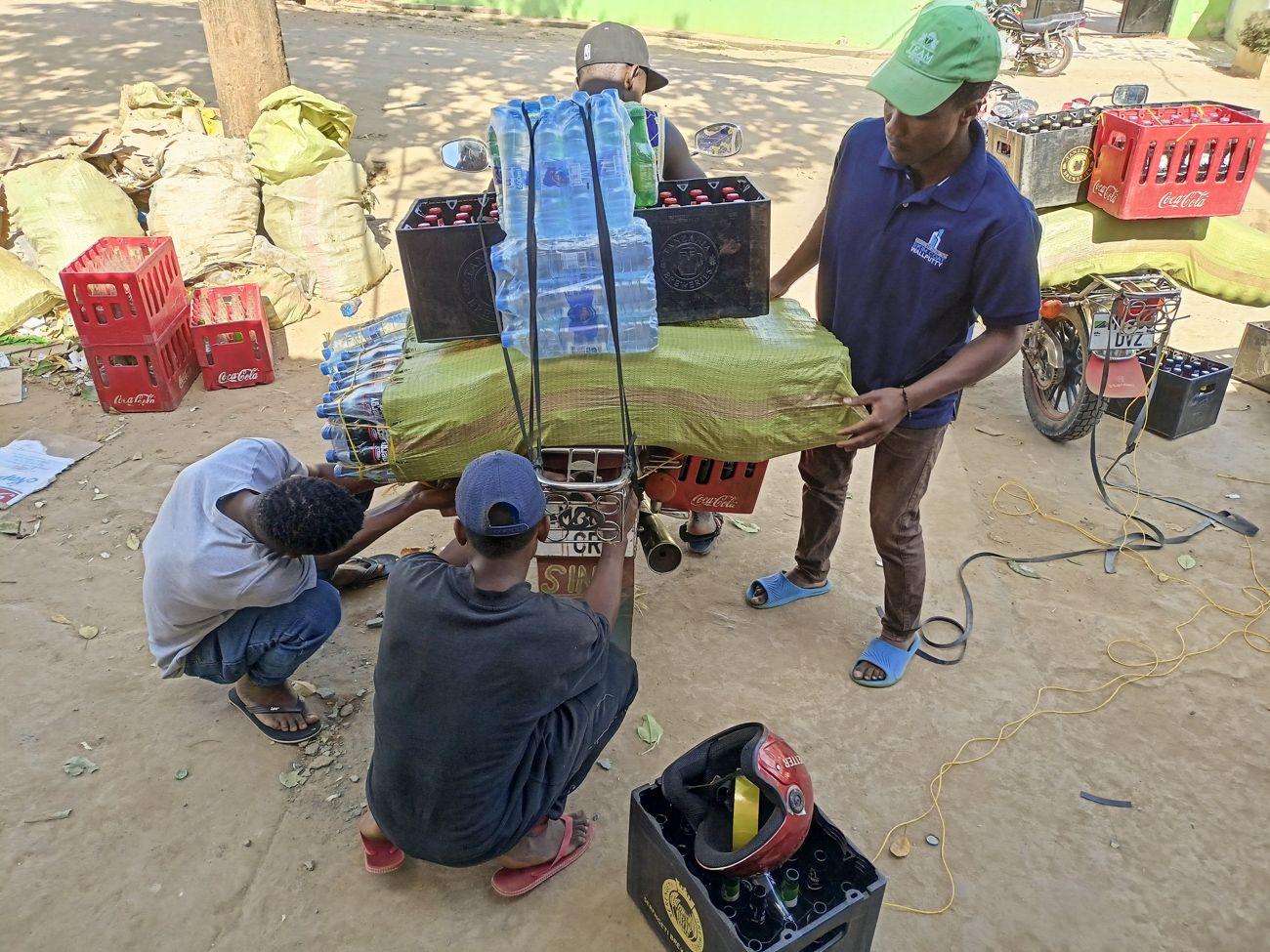
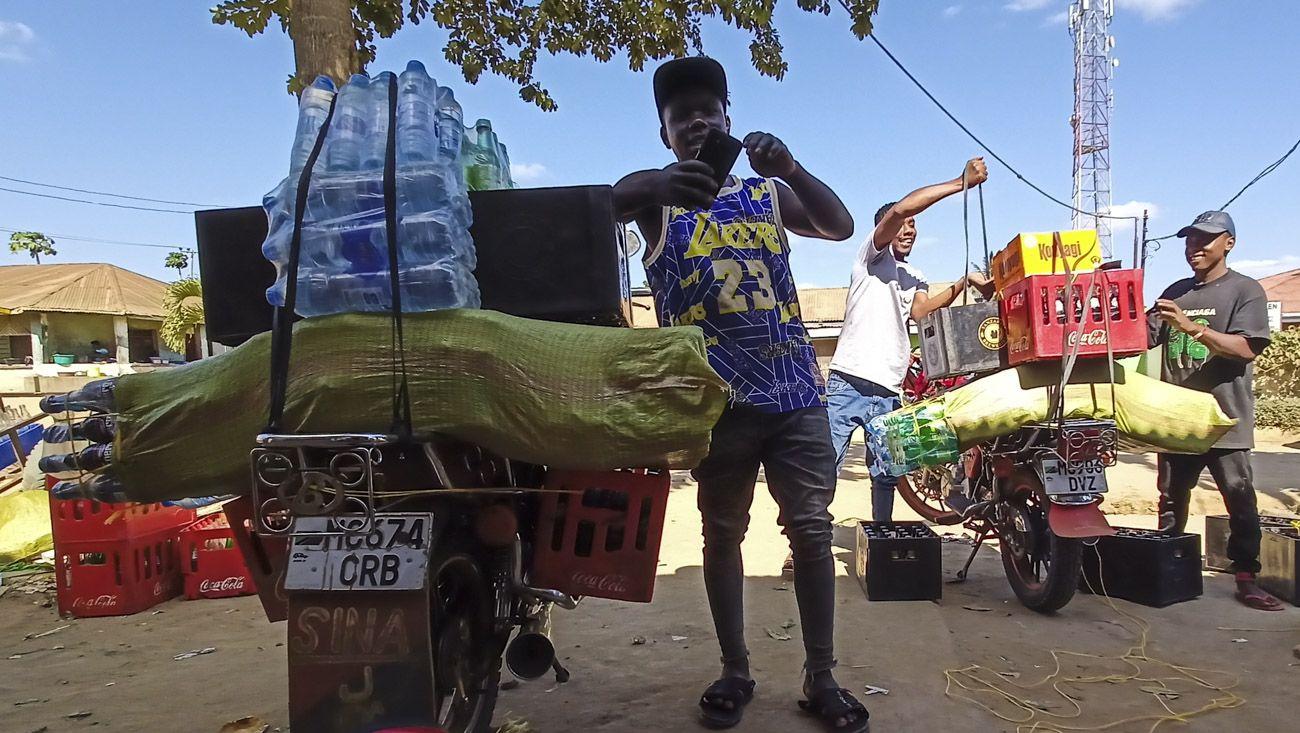
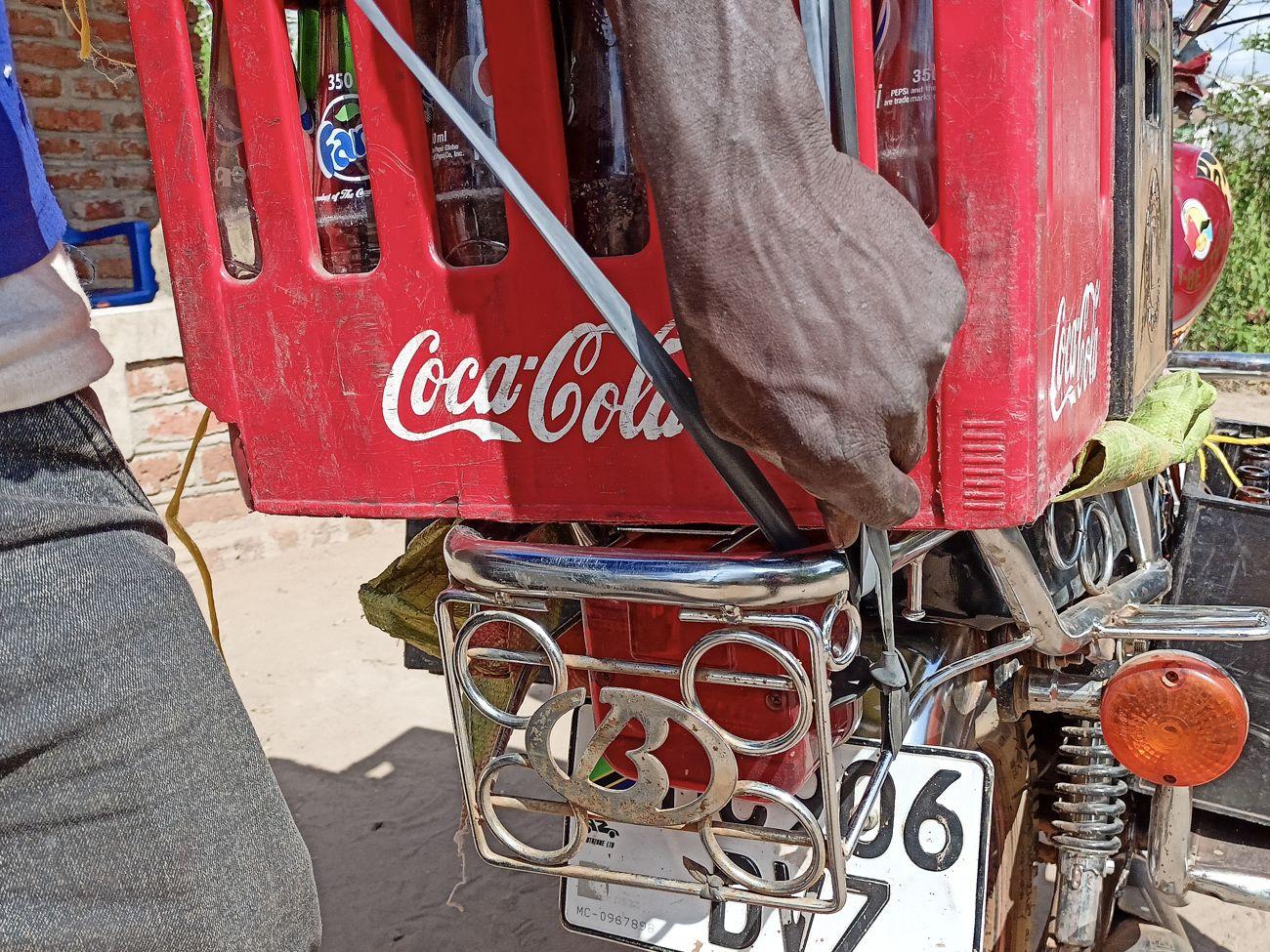
With professional flair, they begin strapping crates of sodas and beer onto the motorbikes. For two days straight, I’d been telling everyone—strangers included—not to overload my bike the way they usually do, because riding busted Tanzanian roads on a beat-up motorcycle without a footrest isn’t exactly my strong suit yet. And, to my great relief, they actually load my bike with a reasonable amount. I’m satisfied.
Then two guys show up with what looks like a fifty-kilo sack stuffed with sodas and strap it right on top of my motorbike. I’m no longer satisfied. I don’t show it, but somewhere deep inside, a faint twitching begins. The road back has three stretches—each about 100 meters long—of deep sand. Even without any cargo, I’d barely make it through those bits with only minor trauma. No matter. I’m a hero, a man, a rock, a machine. We climb on the bikes and hit the road.

Let’s pile on a bit more—let the mzungu really have some fun.

The asphalt ends right behind the sign that says “Welcome to Handeni.” But that’s not really a problem—we’re riding on a nice, wide road, about three lanes across. Down the middle of it runs a narrow, thirty-centimeter strip, clearly worn in by motorbikes. Cars don’t drive on it—mostly because every two or three kilometers the road is blocked by a giant mound of dirt. You see, when they build such a beautiful wide road, they won’t just let cars go and ruin it. There are small, narrow passages worn into the mound just wide enough for motorbikes, while cars are forced to take a parallel old dirt track—dusty and full of potholes. Honestly, we should adopt this system back home—if no one uses the new road, it stays nice and new for ages. Sometimes, though, there’s no passage at all, and we’re forced to veer off onto the side track. The detour leads us over a half-meter-deep ditch—a proper motocross jump. I’ve got about 120 kilos loaded behind me, no space to sit, and my right leg is mostly just dangling in the air. Tanzanian motocross, baby.

At one of these jumps, I have to slow down, lose balance, and instinctively try to regain it the usual way—by yanking the handlebars. The throttle grip comes off clean in my hand, and I gently, with all the dignity I can muster, lay the bike down into a bush. I already knew the throttle was busted. But everyone around pretended like it’d hold. Hakuna matata. That’s the power of undying African optimism. So here I am, standing next to some bush and a toppled bike somewhere deep in the Tanzanian wilderness, frantically waving at Sekenoi riding ahead of me. I try to signal that if he goes much farther alone, he’s really going to be alone. But there’s one thing that actually cheers me up about the whole situation—I’ve burned my leg on the exhaust pipe. I now carry the most common injury of a Maasai warrior. I feel proud. And oddly enough, I’m starting to feel the urge to go herd some cows.

Some random bystander happened to film my glorious departure, and—by some cosmic accident—the video actually found its way back to me.

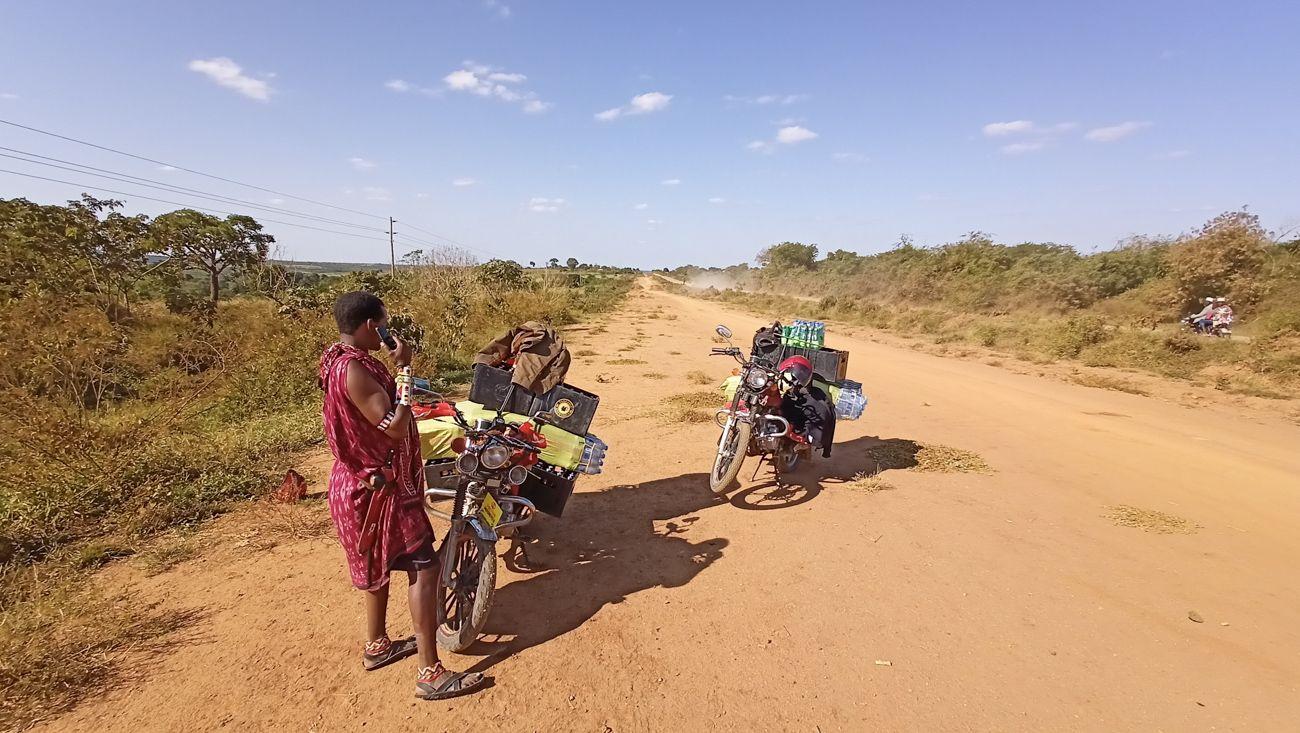
So here we are, sitting by the roadside, waiting for Jafar—the hero who promised to fetch the necessary parts and tools and come to our rescue. I did try to fix the issue myself for a while, but we needed a Phillips screwdriver. Naturally, we didn’t have one. When I suggested we stop a passing motorbike or car and ask if they had any tools, the response was hearty laughter. I take that as proof of yet another African theorem: the older a motorbike or car, the less it breaks down. So we lounged in the shade, and I watched offline YouTube videos on Sekenoi’s phone with him. We started with animal fight mashups—classic interspecies gladiator showdowns. Then came a short clip of two Chinese guys chasing down a green Avatar. Next up, a demonstration of a flying car that openly mocked gravity. When the animal fights showed up again, I lost interest. I didn’t even want to imagine the cognitive soup this kind of programming stirs up.
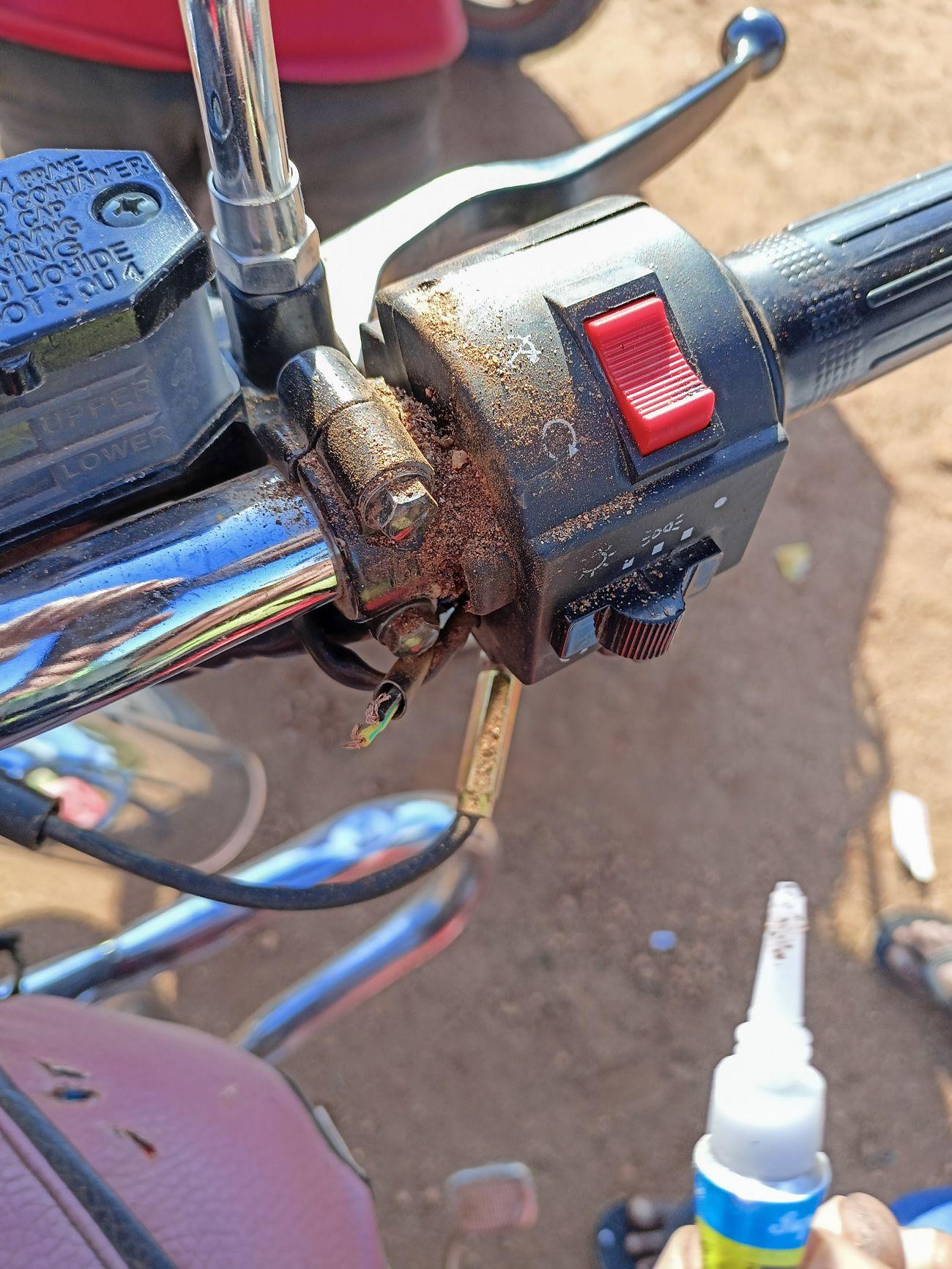
And then—barely an hour and a half later and after a few phone calls—Jafar finally arrived. Our savior. Owner of several motorbikes and a bona fide boda-boda mogul. As soon as he whipped out his service tools, it was obvious this man was prepared for frontline interventions. Rumor had it he had just bought a fresh Phillips screwdriver with a handle decked out in the colors of the American flag and a tube of something grandly named Super Glue. He also had a passenger riding pillion—some friend whose exact purpose remained mysterious both during and after the repair. I wouldn’t have believed it if I hadn’t seen it myself, but Jafar actually mixed the super glue with dust from the road and managed to restore the throttle grip to working condition. And not just barely—it held strong for at least another month. Magnificent. Problem solved. We fire up the engines and move on. After a while, we stop tiptoeing along the main road and take a right turn toward Handeni.

The man in the red T-shirt came and went. Utterly misunderstood.

We’re cruising along, and things are going surprisingly well. I tackle the first stretch of deep sand with surprising grace. There’s just one minor issue—in thick sand, I have to paddle with my legs like a deranged frog on wheels just to keep the balance. Problem is, right behind the foot pegs are crates full of soda or beer. On the way there, the crates were empty, so when I accidentally kicked them, they budged a little. Now, fully loaded with bubbly beverages and topped off with a charming 70-kilo sack, they don’t move an inch. Every time I thrust my legs out for balance, I slam the same exact spot on the back of my calf. I’m pretty sure the bruise is now roughly the size of Greenland. I’m not checking, though—better not to know. We dodge a few broken bridges, and then there’s another long stretch of deep sand ahead. That’s where, with all my signature elegance, I go down. Bike and all. The cargo scatters across the road like we’re in a slapstick heist scene. I’m lying there, my leg trapped under the bike, and I can’t move. Sekenoi fades into the distance.
I’ve got a helmet on my head, gloves on my hands, and I’m wearing a black jacket. The African sun is definitely having me for lunch. I once read that the Sahara is spreading fast. Yep—true story. I’ve now got my own personal patch of Sahara lodged in my mouth. I start trying to figure out what actually hurts. I basically fell while standing still, just sinking into the sandy trap. Looks like Sekenoi has finally noticed I’m missing—he’s way off in the distance, trying to prop up his motorbike and making his way back.

I wanted to take a photo of my fall—document it for science, for posterity, maybe even for insurance—but my arm was inconveniently wedged under the motorbike.

It’s really not that easy. The ground is all sandy, and the load is so heavy that without support, the bike would instantly topple. Later, I noticed that all the boda-boda guys delivering goods to shops always leaned their bikes against a wall or a post—never left them freestanding. But back to the present. I’ve been lying there for about five minutes when suddenly—out of nowhere—a Swahili boy, probably around ten years old, materializes next to me. He definitely wasn’t there a second ago—and then, just like that, he is. He stands there for a moment, silently and thoughtfully admiring the sight of an elderly mzungu sprawled out in the sand, pinned under a motorbike, surrounded by a poetic scatter of Coca-Cola and beer bottles. It’s like he’s afraid to disrupt the composition. This new school of art might be called African Mzungu-Boda-Boda-ism.
Apparently, he’s soaked in enough artistic inspiration—because he sets me free. At the same time, Sekenoi is approaching fast, having managed to park his bike about half a kilometer away. And suddenly—out of the empty space—more Swahili folks begin to materialize around us. I have no idea how they do it. Probably teleportation. I also don’t know how they know where to teleport to—but honestly, I don’t care. I rush into the shade, peel off my jacket, and pour about two liters of water into myself. From a distance, the whole scene looks oddly picturesque—motorbike on its side, bottles everywhere, soft golden sand. There’s just one thing missing. Me. I seriously consider lying back down just to complete the aesthetic. After a few gulps, the fluids kick in, and my brain slowly crawls back into my head.

The illustrative photo illustrates the situation about half an hour earlier.

I return to the scene of the incident and start helping gather the bottles scattered all over the ground. Some local Swahili folks pitch in too—very carefully and very slowly, because apparently, teleportation is quite exhausting. Sekenoi, upon seeing the chaotic mess, has a brilliant idea. He waves down a passing motorbike, and right before our eyes, we witness a miracle: a humble piki-piki transforms into a full-fledged boda-boda. All it takes is a few thousand shillings. This means my load is now reduced by half, and misadventures like the one we just experienced—unfortunately—probably won’t repeat themselves. At least, that’s what we’re all hoping. The next fifteen kilometers go by without a hitch. With only half the cargo, I glide through the next sandy stretch without incident. Well—apart from the fact that I’m in Africa, on a motorcycle, having recently crashed, handed over enough cash to the police to fund a small house... and I’m somehow in a great mood.
To the cheerful backdrop of Romanian folk songs with subtle undertones of collective suicide, we make it back home. Well—except for the part where my motorbike toppled over one more time. But the cargo stayed securely strapped on, and there just happened to be a generous cluster of helping hands nearby who got me upright in no time.

No road movie—just road photo.

In the evening, during the traditional beer-drinking debrief, I try to tally the damage I’ve done. Aside from the fact that the whole delivery ended up costing—thanks to the charmingly corrupt Tanzanian police—about five times more than it would’ve if we’d just had it delivered the normal way… well, nothing too serious happened.I mean—if you don’t count the bruised ribs, the bashed wrist, and the second burn from the exhaust pipe, which I probably acquired while lounging artfully in the middle of the road. But otherwise—totally chill.
The postscript was especially entertaining: the burn got infected, my leg swelled up to about twice its usual size. I was a hero for a while, sure—but then I whipped out the heavy-duty, broad-spectrum antibiotics, and a week later I was back in action, all geared up for the next round of glorious self-destruction. But hey, it had its perks. Ever since that day, if a Maasai didn’t know me, I’d just say, “I’m the mzungu boda‑boda”—and bam, instant recognition.

Superglue and road dust—the two most beloved tools in motorcycle repair.
Share this

I’ve probably already rattled on about the hair‑thin difference between a piki‑piki and a boda‑boda. A piki‑piki is a plain motorcycle ridden by a plain human. A boda‑boda is—hold on to your crash‑helmet—the exact same motorcycle ridden by the exact same human. The crucial twist is that the boda‑boda bills its cargo or passenger for the privilege of bouncing along. In practice the alchemy works like this: a piki‑piki putters past, you wave it down, offer a fistful of shillings, and the rider whisks you away. In that instant the humble piki‑piki transmogrifies into a bona‑fide boda‑boda. In the next chapter the patient reader will behold this everyday miracle with their own literary eyeballs. I repeat: patient reader.

The hen after its showdown with a motorbike - and the battle‑hardened boda‑boda pilot Jaffar.

Boda‑bodas are Tanzania’s de facto national wheels. In every town—grand, dinky, or half‑imaginary—knots of riders lounge on the corners, happy to whisk you anywhere for a fistful of shillings. Even in my speck‑sized Mbogoi—population one‑hundred‑and‑a‑bit—about ten bikes sat perpetually at attention: fetching jerrycans of water from Bondeni, lugging two‑or‑three sacks of maize, or dropping a random Maasai back to his boma. Imagination here hits no speed limits, and the locals are lavishly supplied with it. Need a 170‑centimetre fridge hauled forty kilometres from Handeni? Easy—strap it on and twist the throttle. And forget the polished‑shoe taxi vibe. No one is a “professional driver” until his fuel money runs out; then - abracadabra - he’s a boda‑boda. The gig economy, African edition.

Boda‑boda hot‑shot Mau could never keep “Jano” in his memory bank, so he rechristened me Jóna. And please, do feast your eyes on that top‑tier biker “safety” footwear..

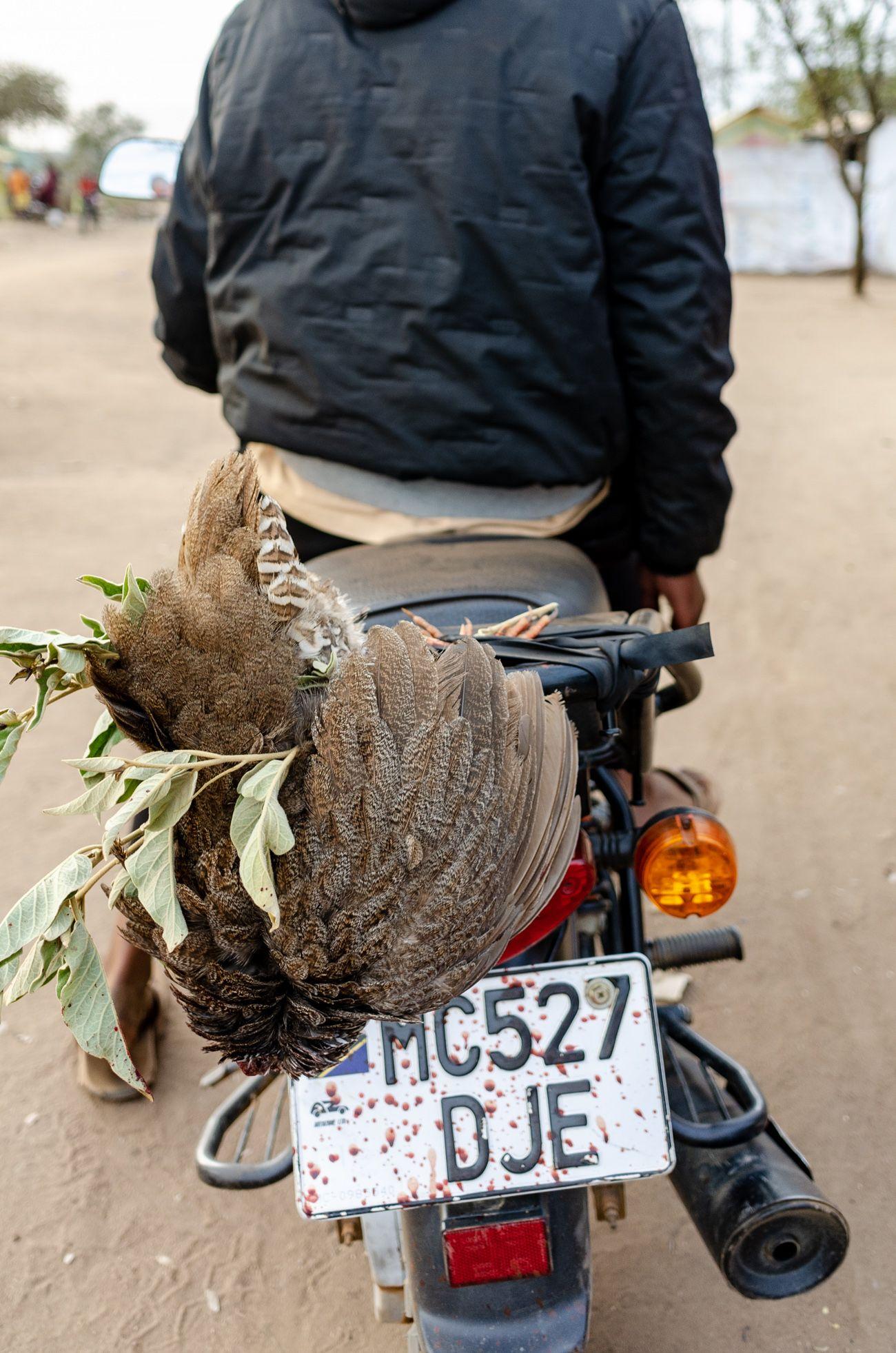
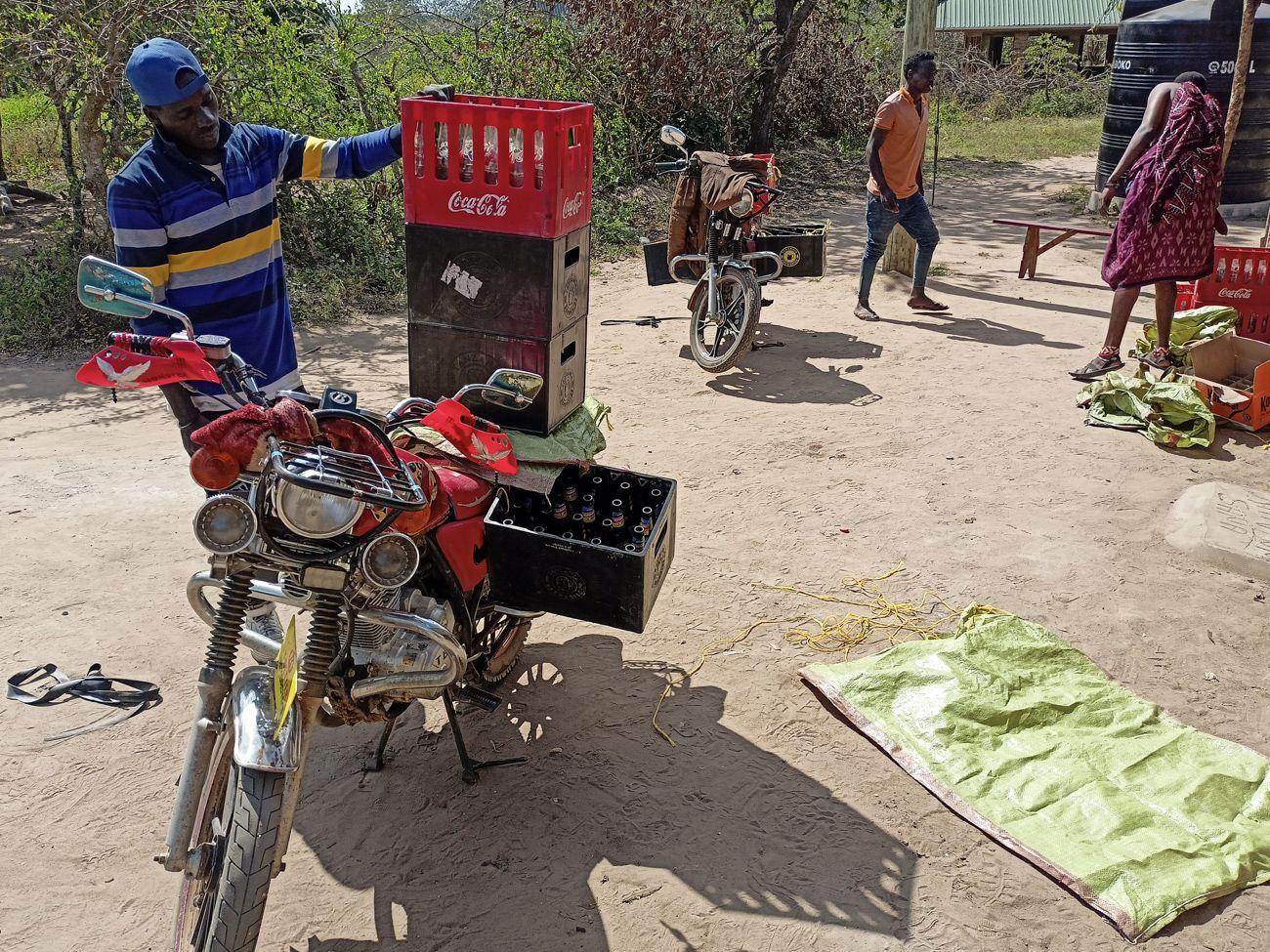
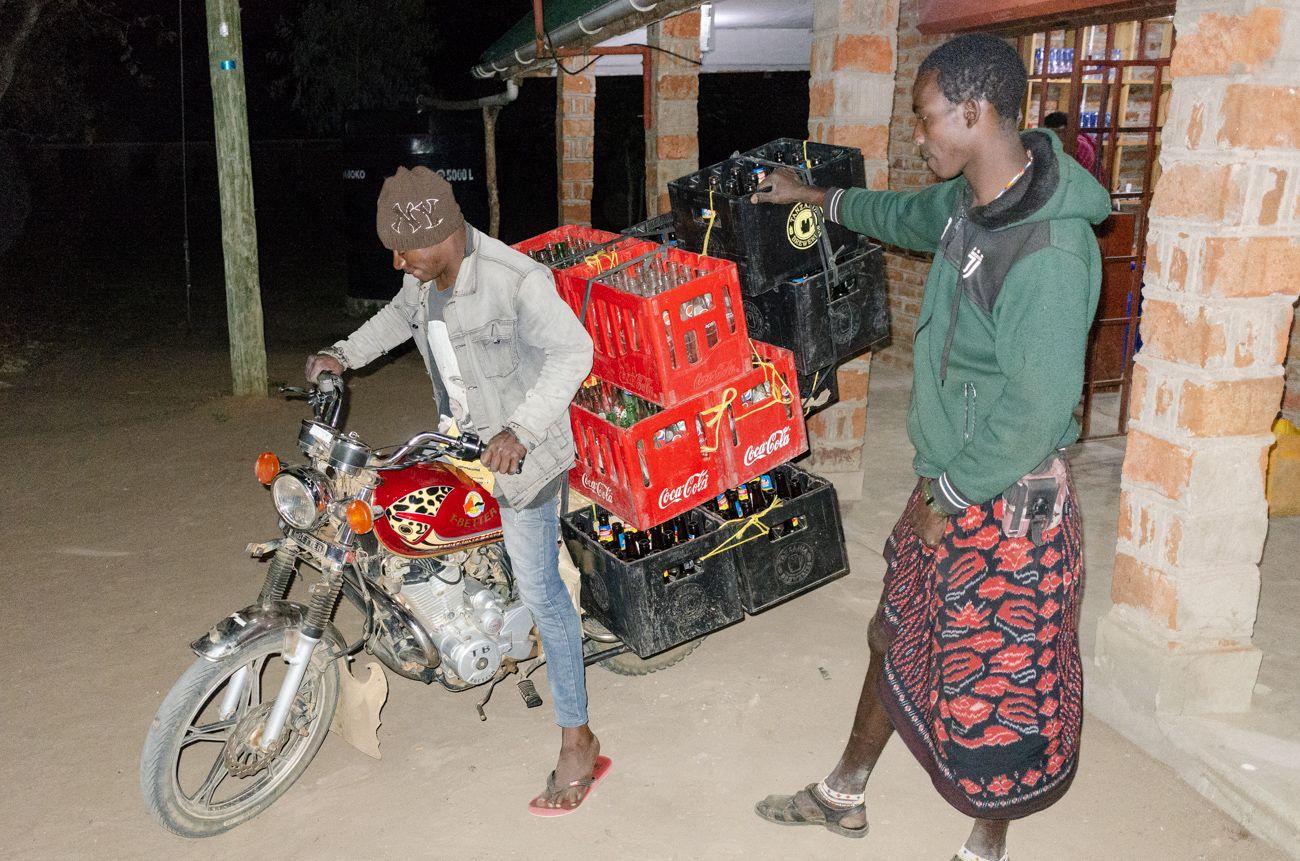
For example, every speck of stock for our in‑house shop turned up on a boda‑boda. Renča had a gentleman’s agreement with a wholesaler in Handeni: the rider got paid not when he collected the goods, but the next time he swung by. The system was beautifully elastic—call at four in the afternoon and, by half past seven, a boda‑boda would growl into the yard, motorbike sagging under mountains of fizzy pop and hard liquor. The loads were so ludicrous that, had a European traffic cop witnessed them, he’d have pulled the rider over and carried out the death sentence on the spot.
These lads blitzed forty kilometres of pulverised dirt track out and the same distance back, often in the dark. Technically the bikes had headlights, but a lone birthday candle would have offered comparable illumination. Clearly, the Handeni region specialises in breeding humans with built‑in night‑vision goggles.

Motorbike? Night. Crates of beer stacked to the ceiling. That sounds like a solid binge. Not like hard work.

My scandalously over‑talented brain—already groaning under the weight of its own brilliance—hatched yet another shimmering idea. Sekenoi spends most of the day orbiting the house, the motorbike gathers dust, so why not fire him off to Handeni whenever the shelves go bare? Easy peasy: we save cash, we make cash, everybody beams like a toothpaste advert.I got so smitten with this stroke of genius that I suggested we tackle the maiden run together—two riders, two bikes, maximum shopping haul. I’d snag a joy‑ride, Sekenoi would get a field test in the noble art of boda‑boda logistics, and the shop would be bursting at the seams. If this were a movie, the soundtrack would now drop into ominous, rumbling cello mode. But it’s only ink on a page, so hum along with me: la‑la‑la‑la‑la‑la‑la‑la‑la‑la‑la‑la‑la‑la‑la‑la‑la.

The boda‑boda jockey is off‑camera doing pre‑race stretches—and yes, that heroic athlete is me.

Right then—game face on. Morale’s sky‑high, the air practically crackles with optimism. Sekenoi has magicked up a second bike from somewhere; I’m borrowing his own steed. Never mind that the throttle grip is split like an overripe banana and the right foot‑peg is a half‑melted pretzel. We load crates of empty bottles while the peanut gallery fires off helpful wisecracks. Everything gets lashed down with the universal Tanzanian cargo system: rubber straps—probably sliced‑up inner tubes—plus a length of plain old string. I’ve noticed everybody uses this rig, from iron‑bottomed pros who rack up hundreds of kilometres a day to flailing amateurs of my distinguished calibre.
Bike packed, I attempt to mount. There’s maybe twenty centimetres of seat left, so half my backside ends up on the fuel tank. Down at foot level the crates crowd the pegs so tightly I’ve got about ten centimetres to spare—just enough room for a token heel. I’ve seen circus bears ride bicycles on TV a few times. With this seating position I reckon I could give the lad a run for his money.

No worries. A glorious day of adventure lies ahead, so off we go. The load behind me—secured with nothing but rubber straps and twine—has a mind of its own. The straps plead for obedience, but the cargo wriggles like a hundred kilos of drunken jelly, desperate to stagger back home. First sizeable pothole: wham. I lose my balance and cling on with tooth‑and‑nail heroism. Just—just—save it, but only by sideswiping an acacia bush. My left sandal, once radiantly yellow, is now fashion‑week crimson.
I pull over to catch my breath and wonder whether I shouldn’t donate this blood to a worthier cause. Giving blood is noble, after all; the lucky recipient could even spend a moment chewing on my gore‑soaked sandal. Still parked—but here’s a fresh snag. I can’t prop the bike on its stand: the centre of gravity’s sky‑high, the track is pure sand, and the stand itself wobbles like a pensioner on rollerskates.

They may be mere illustrative frames, but it was at this very right‑hand fork that I managed to lose myself completely.

No harm done—the blood on my foot crusts over in record time and I chug onward. Somewhere up the track Sekenoi has vanished into the heat shimmer, but a minute later I spot “him” again and bravely keep pace. Second right turn: my leader pulls up outside a random Swahili house—and only then do I realise it isn’t Sekenoi at all. Bravo. Lost again. I’ll be writing to the IOC: let’s add Competitive Disorientation—finally a sport where I’m podium material. I attempt to query a gaggle of bystanders for the way to Handeni, armed with exactly four Swahili words: “good‑day”, “good‑night”, and the numerals “one” and “two”. Unsurprisingly, conversation stalls. After creative head‑scratching I cobble together a question: “Masai, Masai, boda‑boda?” Blank stares. Their eyes say it all: Mzungu may be infinitely rich, but he’s also infinitely dim.
Fine—there aren’t that many main roads; surely even I can’t get more lost. I rumble on toward Handeni until I spy two elderly Maasai by the verge. Skidding to a halt I ask, “Masai, boda‑boda, Sekenoi, Saramba, Lengusero, lala salama?”—punctuating the sentence with a victory‑sign so vigorous I nearly gouge out an eyeball. The old gents regard me with something closer to pity than curiosity and shake their heads. I shake mine in reply—only to notice Sekenoi parked right behind me. Hallelujah! Tales of the mzungu’s razor‑sharp brilliance will clearly not remain a Mbogoi‑only secret; they’re now roaring across the countryside at the speed of a wandering, bottle‑laden boda‑boda.

These clips aren’t from my actual boda‑boda escapade—they’re just illustrative. Though frankly, nothing illustrates the vibe better than Alojz himself, confidently manning the motorbike.

The ride rolls on, almost all the way to Handeni, and everything is peachy. The sloshed jelly wobbling behind me—lashed down with rubber straps—seems to be sobering up, or maybe I’m just getting used to its hangover sway. Half‑metre potholes around half‑built bridges? Child’s play. The breeze is warm, the road slides past, and I’m convinced the whole planet is about to turn bubble‑gum pink while towns embrace villages in a global cuddle‑fest. Just outside Handeni, a smiling police duo—one male, one female—flag us down. Sekenoi gets zero airtime; they make a beeline for me and ask for a licence. With my mouth full of dust I manage only gravelly gargles, so I chug some water and grin like a toothpaste ad. Works a charm. Their English stretches past ten words—shockingly long sentences pop up, possibly even in past tense. I hand over my Slovak licence; nobody else round here even owns one (reading and writing not exactly the national hobby).

The officer‑in‑charge—she—studies it, then declares it expired, waving a Tanzanian licence photo that actually has an expiry date. Mine only sports a “date of issue”. Renča swore I didn’t need an international permit; she’s driven for years on her Slovak one and nobody blinked. (Later I’ll learn Tanzania technically wants the international version, but right now my conscience is spotless). Five minutes of lion‑hearted arguing later the officer caves, hands back the blue plastic card, and I mentally fist‑pump: Mzungu vs. Tanzania, score 1–0. Classic “good‑cop/bad‑cop” vibes: the bloke offers me a stick of sugar‑cane—just fuel for round two, I suspect. I toy with playing my own split‑personality game: “good me / bad me”. Maybe if I fake schizophrenia they’ll wave us through. Still, the whole scene stays weirdly friendly—plenty of smiles, plus side chatter between Sekenoi and the guardians of whatever their official title is today.

Round two: machine fitness. Around here the official safety checklist boils down to three items: engine rumbles, wheels spin, tank holds at least a sniff of petrol. Busted lights, severed indicators, half‑a‑peg, a kilo of rust—no one bats an eyelid. No one except my new best friends in uniform. The bike I’m riding—buried under crates of empties—barely scrapes through even that lenient test. Everything apart from the head‑light is smashed or missing, and there’s more oxide than chrome. The “bad” cop taps each fatal flaw in turn and fixes me with a look of pure accusation. I’m still unsure what result she’s after—confession? Weeping?
Then they demand the bike’s paperwork. Paperwork? Out here? If such a thing ever existed it was lost around the time the dinosaurs clocked off. We’re still waiting for Africa’s own Gutenberg to be born.
The duo confer, beckon Sekenoi, mutter. He returns: they want 1.5 million Tanzanian shillings. For context, that’s two‑and‑a‑half years of a herder’s wages—or enough for Ali in Mbogoi to buy a plot and build his house three times over. Roughly €400 at today’s rates. Scoreboard update: Mzungu vs. Tanzanian – 1 : 1.5 million. I joke that perhaps they’d prefer a freshly harvested kidney. Three blank faces: humour clearly pays the same duty as the bike’s indicators—none.

Handeni’s looming on the horizon, and the traffic jam is reaching full absurdity levels.

So there we were, crouched in the scrub, pretending to confer in hushed tones. We were playing a game I’d seen a dozen times here: “I know you’re there, but I’ll pretend I don’t because I don’t much care for you.” Many a dispute plays out that way—silent standoffs, sidelong glances. The cops do the same: they pretend we don’t exist, loitering at the roadside, stalking their next victim. After about ten minutes I sent Sekenoi in as our envoy, waving an imaginary white flag. Made me wonder—do they use a white flag in Africa, or is it black? I watched, tense. Our ambassador reappeared with a new offer: 150,000. One zero gone and the score suddenly seemed friendlier. Only hiccup: I didn’t have that much cash. I’d saved 100,000 for the fine—and 30,000 strictly for petrol.
So I unleashed a tactic they probably hadn’t seen before: drama. I strode up to the officers, tipped my entire haul (130,000) onto the bonnet, and declared, “That’s everything I’ve got. Jail me or take it and let us ride on.” The members of the Tanzanian  police blinked in astonishment—this wasn’t their usual routine. Within moments they were grinning, pocketing the money, and the female officer told me, “Alright, you’re free to go. But don’t let us catch you again—or next time it’s prison and a 1.5 million bill.” Apparently that’s some magical figure. Nine out of ten African shamans swear that 1.5 million shillings brings good luck.

Tiny road for giant trucks, and a highway just for motorbikes. That’s how it should be everywhere.

One last technical hiccup to sort out before we ride off into the dust. The officers had just about promised me capital punishment if they caught me on a motorbike again—and in a few moments, that’s exactly what’s going to happen, since we’ll be heading back down the same road. If they’re still lurking there, I have precisely zero interest in reliving this cheerful little saga. Fortunately, our two Tanzanian constables gladly granted me an exemption. A few seconds later, we leave them coughing in our dust, and my adventure skips happily into the next chapter.

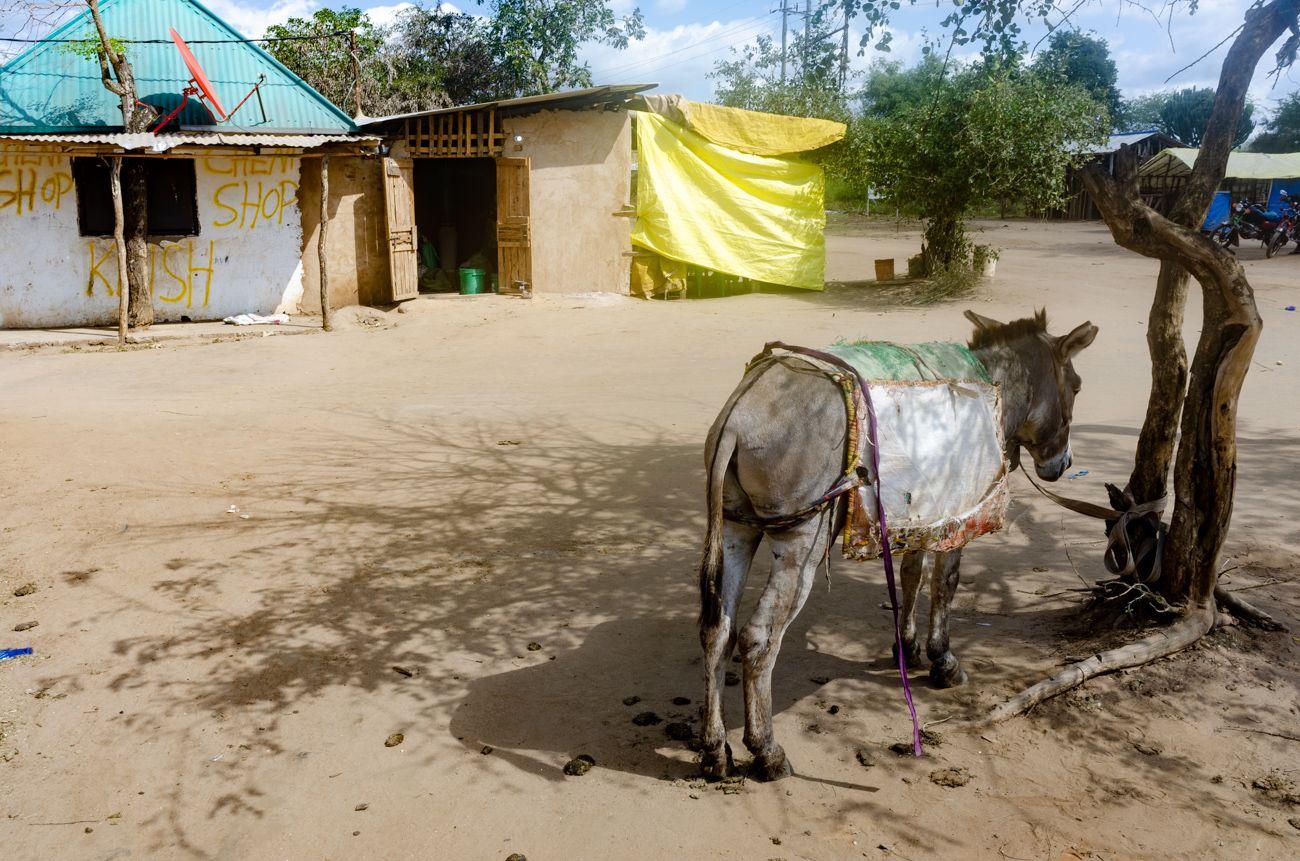
I’m convinced a donkey is just a boda‑boda motorbike that hasn’t realised it yet.
Share this

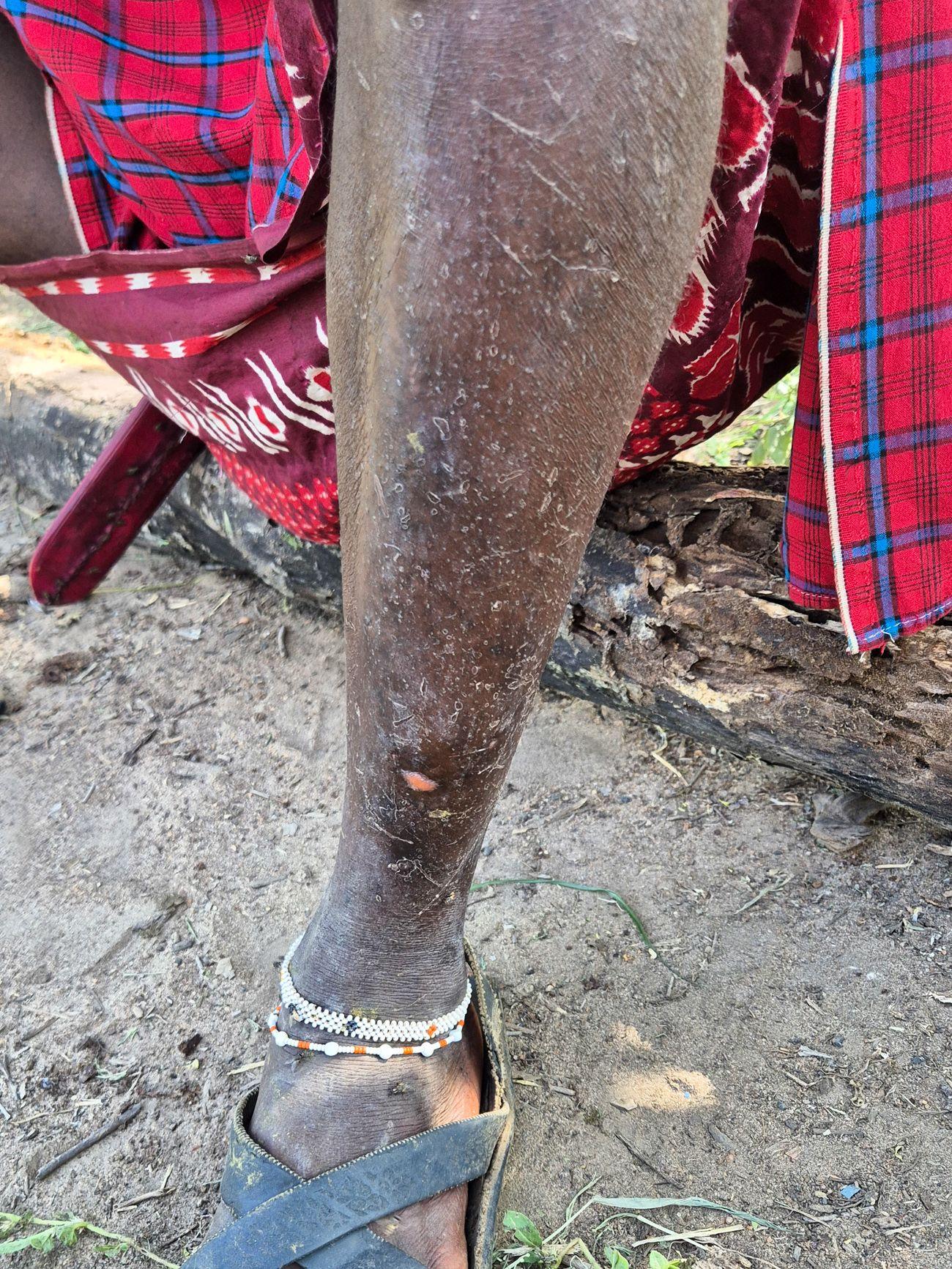
The most common war wound in Maasai country is a dainty exhaust‑pipe burn. Almost every day a proud warrior would swing by, hitch up his shuka and show off a fresh bacon‑strip on his shin. This happened with such clock‑like regularity that I started to suspect the motorbikes had joined the Great. Machine‑vs‑Human Uprising and were quietly slow‑roasting Maasai for lunch.Naturally, my theory has a few loose bolts. If the bike actually ate its rider, who would sit on the saddle next? More to the point—who would pour in the petrol? The poor thing would keel over from hunger. I’m taking that as solid evidence that the artificial brainpower of Chinese motorbikes isn’t quite up to scratch. Yet.

The leopard goes for your skull; the motorbike settles for your shins.

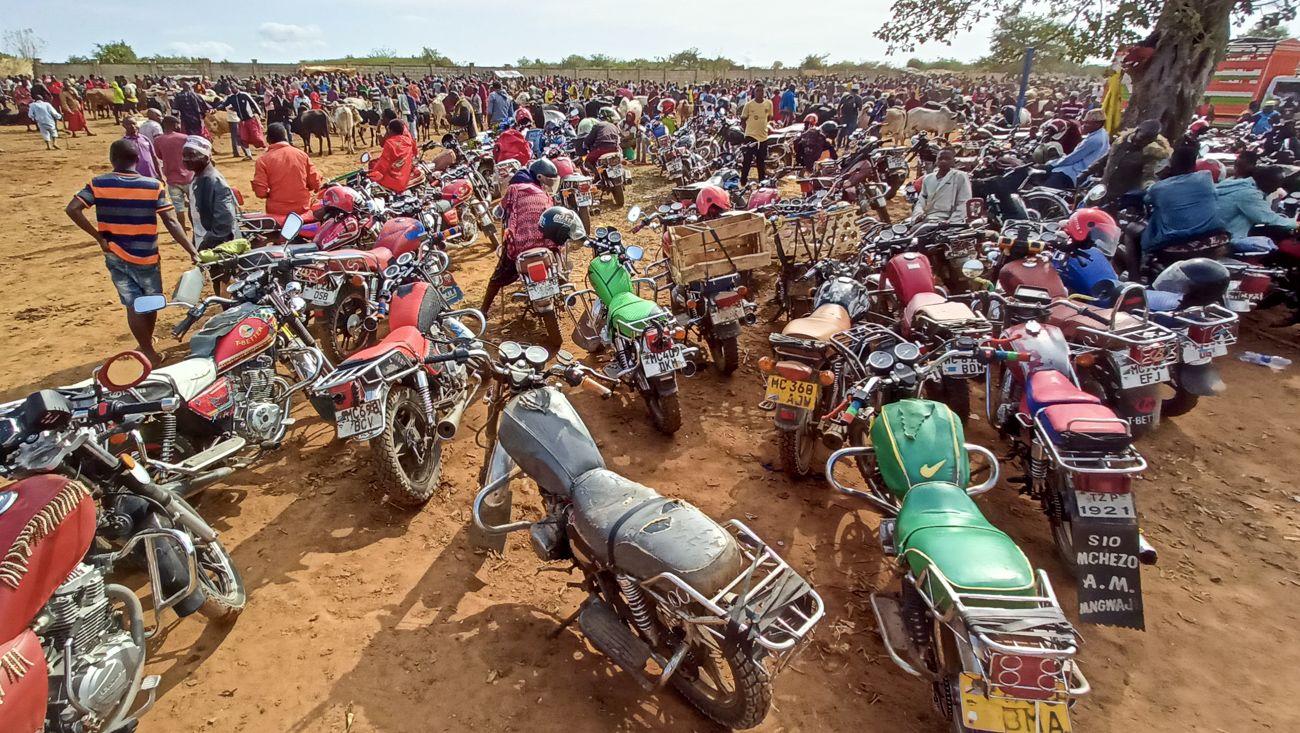
There were roughly four flavours of non‑motorised transport in Mbogoi: the bicycle, the donkey, the trusty foot, and small humans who shot downhill on homemade carts hammered together from a few planks. Otherwise, everyone, everywhere, buzzed around on motorbikes. I did bump into the odd car. Each Thursday a lorry called Fuso lumbered in for market day. Now and then a passenger car materialised—as if it had parachuted in. I even saw a yellow Jeep Wrangler parked in one boma, a three‑litre six‑cylinder monument to self‑indulgence. With Tanzanian petrol prices, that beast is so thirsty its owners had to take a cow to Handeni, sell the cow in town, and bankroll the fuel for the trip home.
Motorbikes reign for one brutally obvious reason: the potholes are deep enough to swallow mid‑sized mammals. A truck needed eight shovel‑wielding diggers on board; a family saloon travelled with at least two, just in case it disappeared into the abyss. While I was in Africa, the Chinese—handsomely aided by local Swahili—widened and smoothed most of the main road to Handeni. They even finished five of the eight bridges, so you could finally drive straight across instead of playing scenic detours. I’m itching to see how the whole show copes once the rains start hammering. So - motorbikes. They make perfect, pothole‑proof sense.

Motorbike, motorbike, motorbike, motorbike, motorbike, motorbike, motorbike, motorbike, motorbike, motorbike, motorbike…

I may be repeating myself, but motorbikes – identical down to the last bolt – actually come in two flavours: piki‑piki and boda‑boda. A piki‑piki is just a plain, garden‑variety motorcycle. A boda‑boda is the very same plain, garden‑variety motorcycle – with one crucial upgrade: the rider hands you a bill at the end. Think family car versus taxi. Because rules in Tanzania (especially in Mbogoi) are as scarce as penguins in the Sahara, any piki‑piki can morph into a boda‑boda the instant money changes hands – no atomic miracles or million‑and‑a‑half regulations required.

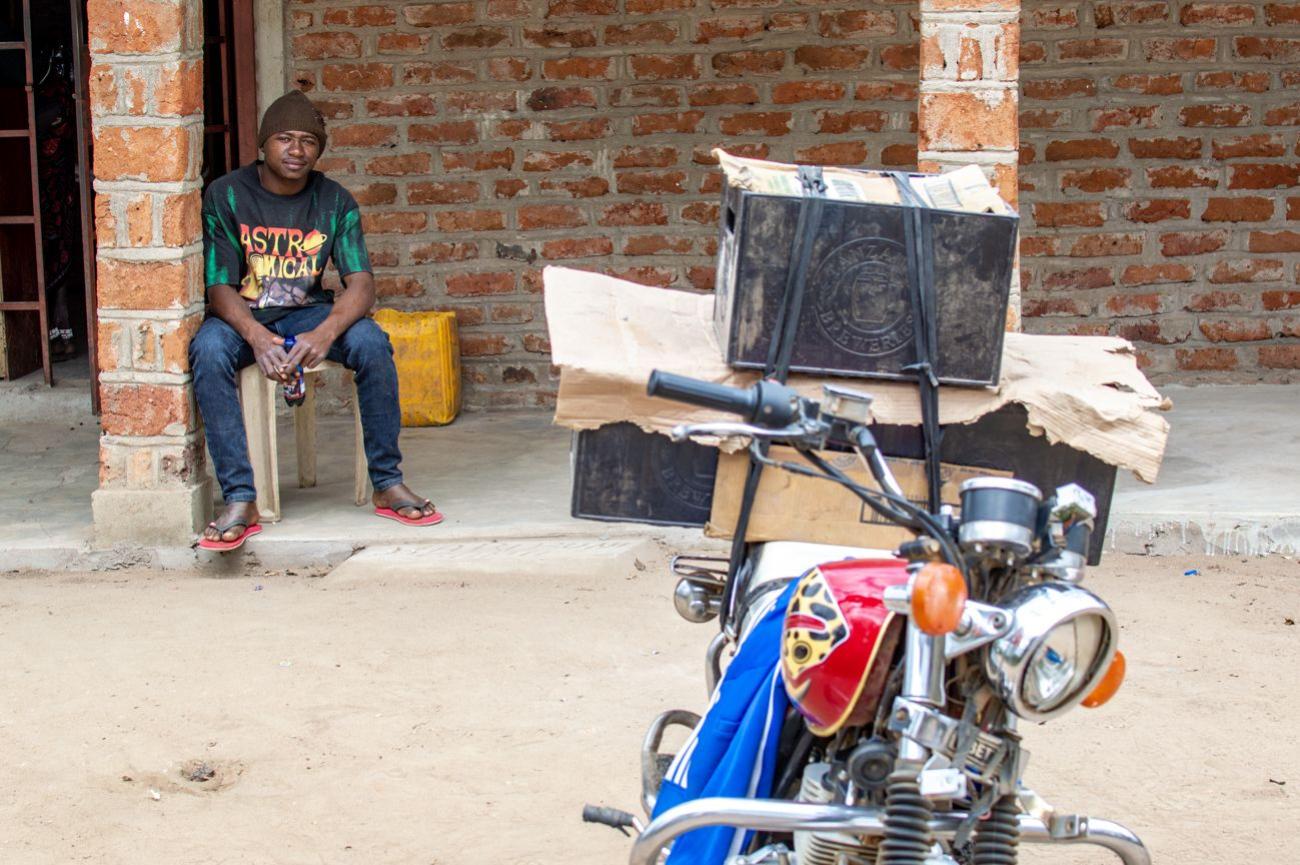
The standard head‑count per bike is two or three. Four is nothing special, and I once clocked five – though three of them were children, which probably doesn’t count. Besides hauling people, bikes double as delivery trucks. Picture a scene from a slice‑of‑life art film: a battered track shoots down a dusty, potholed lane. Up front is the driver; behind him two fifty‑kilo sacks of maize flour. On top of the sacks perches a beaming Swahili lad, poking a full metre into the sky. Each time the back wheel drops into a crater, the passenger – sacks and all – cheerfully trampolines thirty or forty centimetres. It looks like terrific fun from a safe distance. Or try this on for size: a refrigerator delivered to our house from Handeni, forty kilometres away – by motorbike, over a dirt road.

Mau lugged the beer in after dark. Forty kilometres of dusty dirt track there, forty kilometres of dusty dirt track back.

Nobody out there pretends safety is a thing. Helmets, gloves, knee‑pads, exhaust shields—why bother, when the key protective measure is that the rider spends at least three‑quarters of the journey actually looking at the road? That’ll do nicely. To be fair, on trips to Handeni everyone does slap on a helmet—the police nag them into it. Failing that, they blast the horn for a heroic age before every third blind bend. Same effect, apparently.
William is the textbook proof that all those safety gadgets are surplus to requirements. Minus helmet and body‑armour he managed to meet another bike head‑on in a corner, lounge for several painfully expensive days in hospital, total his motorcycle, spend a fortnight puffed up like an inflatable hippo, limp about theatrically—and still grin because he wasn’t dead. Tiny life pleasures like that would only be spurned by a madman. Or by a mzungu white bloke.
 

Motorbike versus motorbike. Bike No. 1 lost, Bike No. 2 likewise bit the dust. And, as an encore, William lost too.

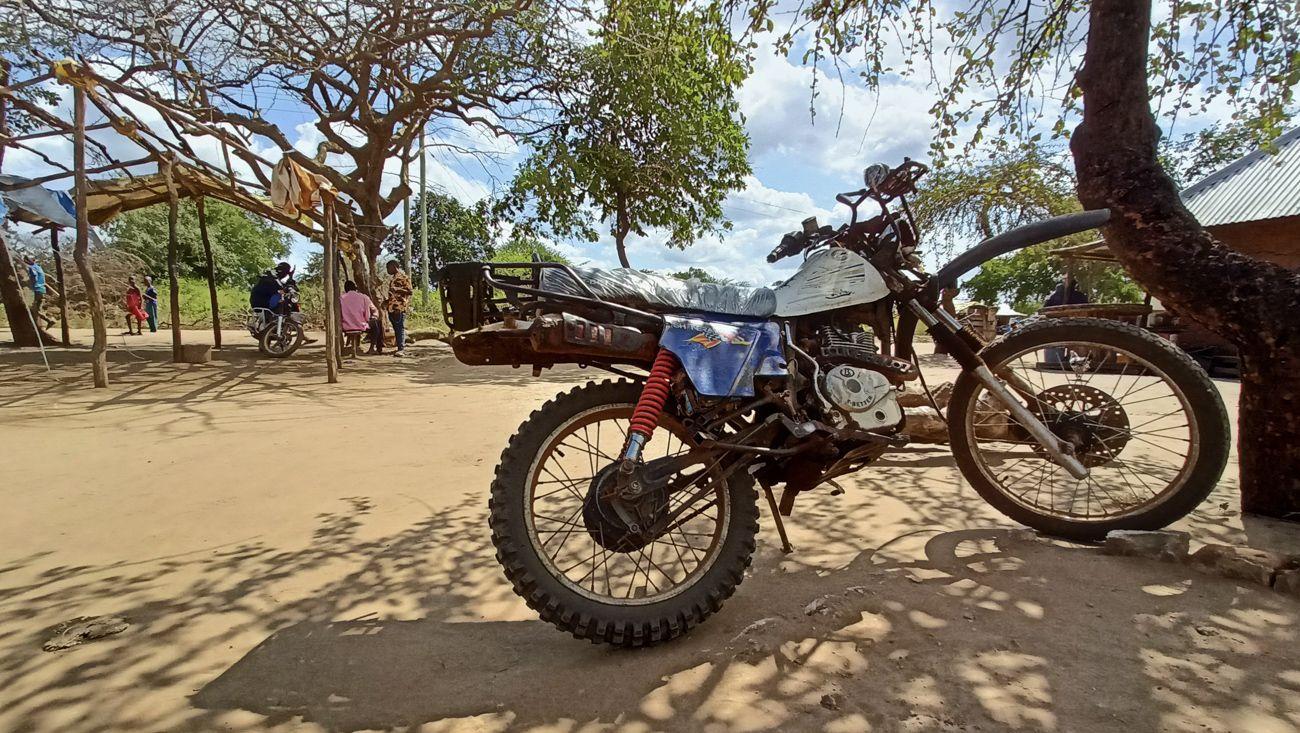
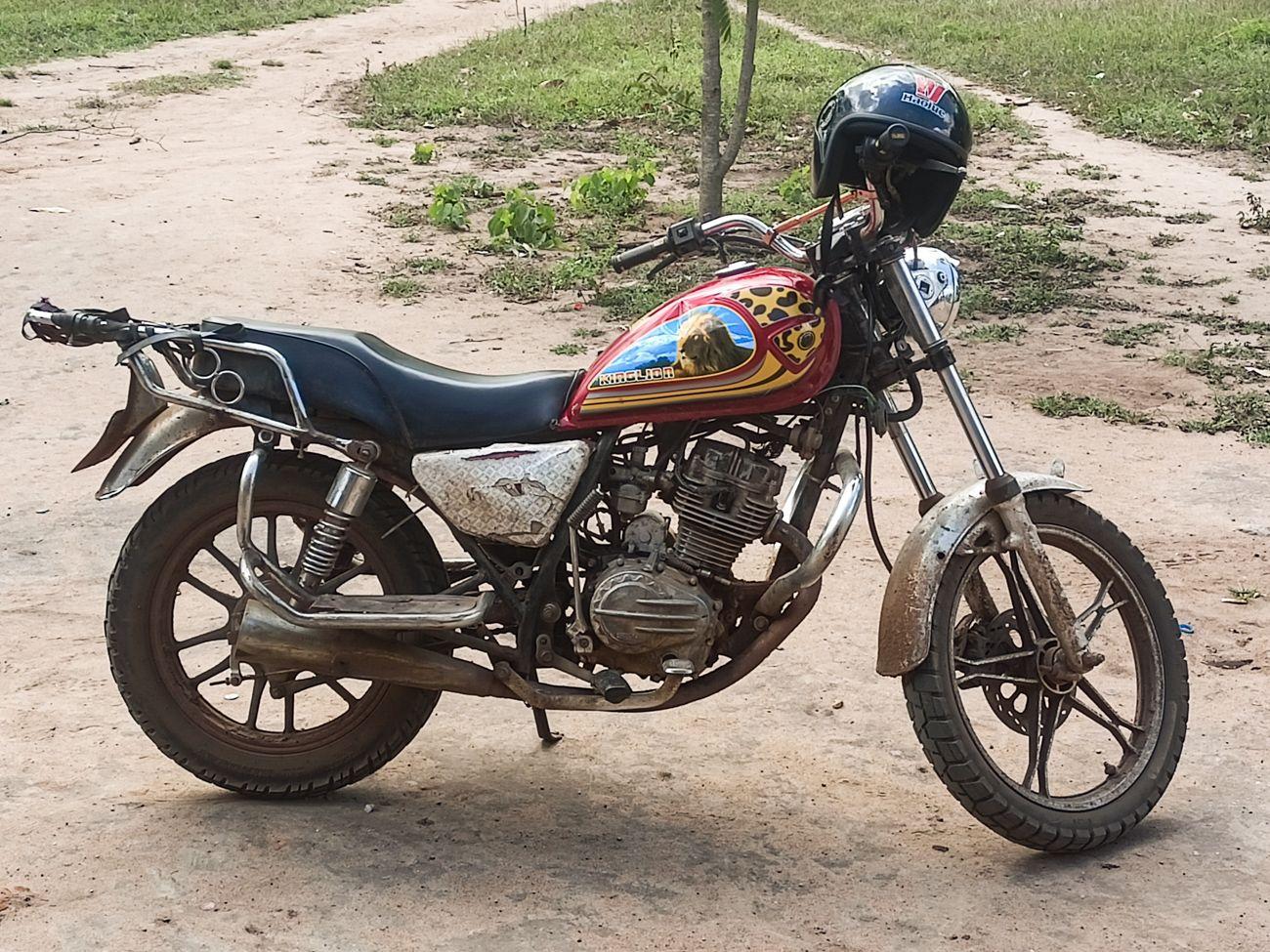
There were hordes of motorbikes buzzing about, each one dressed up in its own quirky paint job—yet every single bike was the exact same model. Same engine, same frame, all packing a mighty 125 cc, which back home we reserve for kids who’ve outgrown pedal bikes but aren’t tall enough for the big leagues. Despite the shrimp‑sized engine, the bike itself was a whopper: extra‑long seat, purpose‑built for moving more humans than the manual politely suggests. One rider? Fine. Two? Sure. Three? Why not. Four? Now we’re talking Maasai car‑pool.
Just as the district boasted only one breed of dog—the universal brown, medium‑sized, one‑style‑fits‑all African mutt—so every motorcycle was a clone of its neighbour. I assume this was nature’s way of balancing out the riot of clothing and ideas Africa otherwise throws at you…

Naturally they were Chinese machines: brutally simple and, as I discovered, absurdly durable. A shiny new one cost about a grand in euros; a pre‑dented veteran could be yours for three hundred. My favourite feature was the soundtrack—each bike chugged like a tractor fresh from its annual spa day. I kept cracking the same hilarious joke: whenever a rider puttered past, I’d ask why he’d come on a tractor instead of a motorbike. Comedy gold, right? Wrong. Nobody laughed except me. First, they didn’t get it. Second, irony is a language they simply don’t speak.

A tractor in Swahili is trekta. A motorcycle? Pikipiki. But judging by the sound—it’s safe to say that a pikipiki is also a trekta.

We finally booked Sekenoi’s bike into the spa—bits were bailing out mid‑ride and the poor thing was starting to look like a yard sale on wheels. No trouble finding a workshop: Alojz runs a parts store, and propped against his shop front is an awning under which our mate Koikai keeps his one‑man garage.
Koikai treated the machine to a full makeover: new valves, engine out, frame straightened, handle fixed, oil changed, chain greased, whole lot bolted back together. Price tag for parts and labour?  ighty‑thousand Tanzanian shillings—about twenty‑five euros at the time. Back home you pay more than that just for saying “Good morning” at the reception desk of a car service. One last tech titbit: when Koikai swapped the air filter, a dead mouse fell out. A quality‑control inspector if ever I saw one.

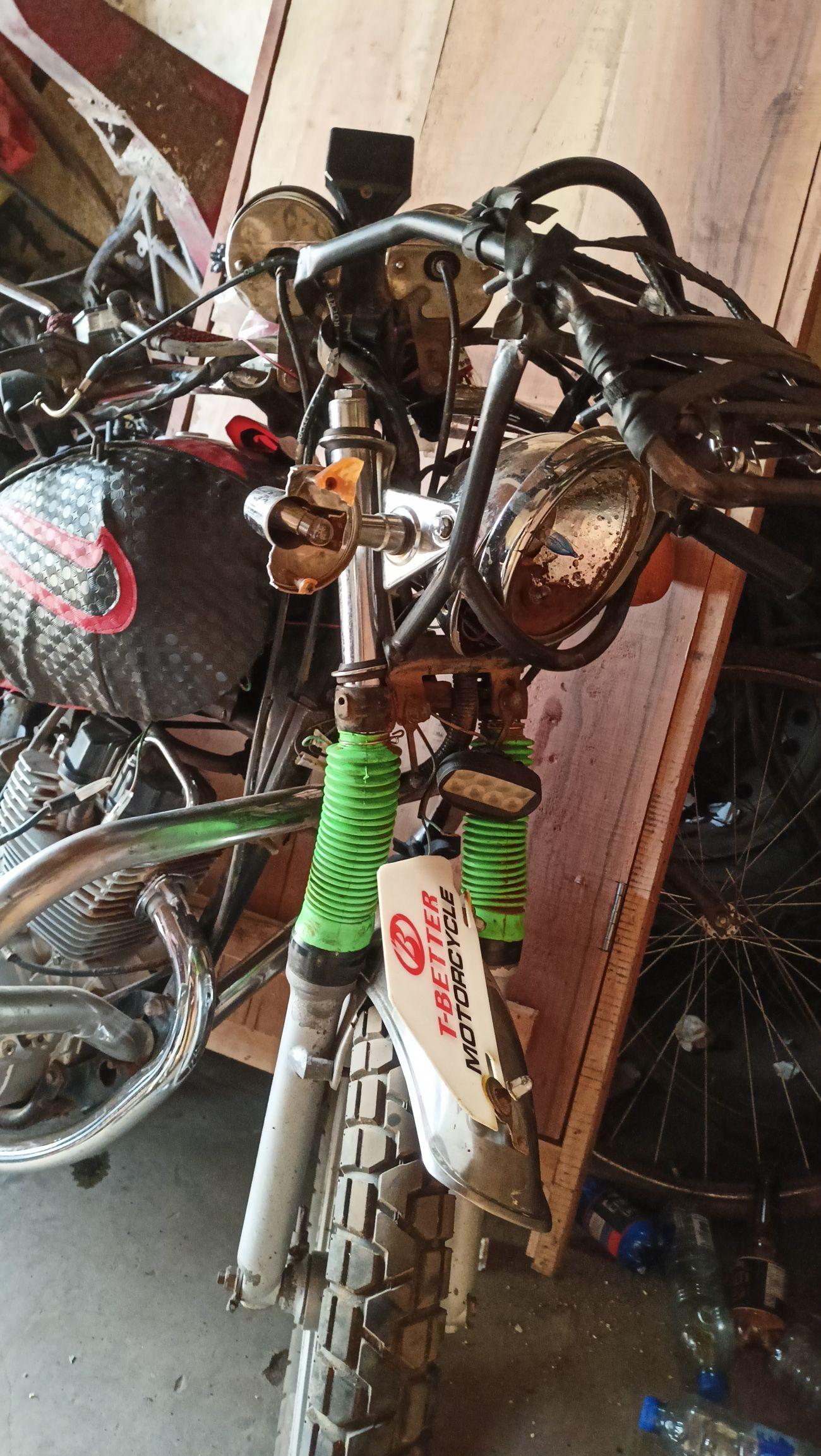
Back home a typical Saturday‑afternoon biker—provided it isn’t too chilly or, heaven forbid, too warm—wheels his machine out of the garage, the same bike he’s polished fifty times this month alone, thunders a whole forty kilometres, sinks three cappuccinos, tucks the bike back into its shed and resumes polishing for another month. Should he fancy an upgrade, he’ll drop half the bike’s value on what is essentially a different exhaust pipe. Or a bit of plastic in a mood‑lifting colour. In Tanzania things leaned gloriously the other way. Swahili ingenuity, Maasai flair, Chinese pragmatism—and, judging by some details, possibly the local poultry—all pitched in. The hardcore centre‑piece was a hand‑painted fuel tank: subjects varied, usually boldly figurative. Most bikes sported a little plastic maker’s plate on the front mudguard, facing forward like the mascots on Edwardian automobiles. The most popular badge boasted the proud name T‑Better.
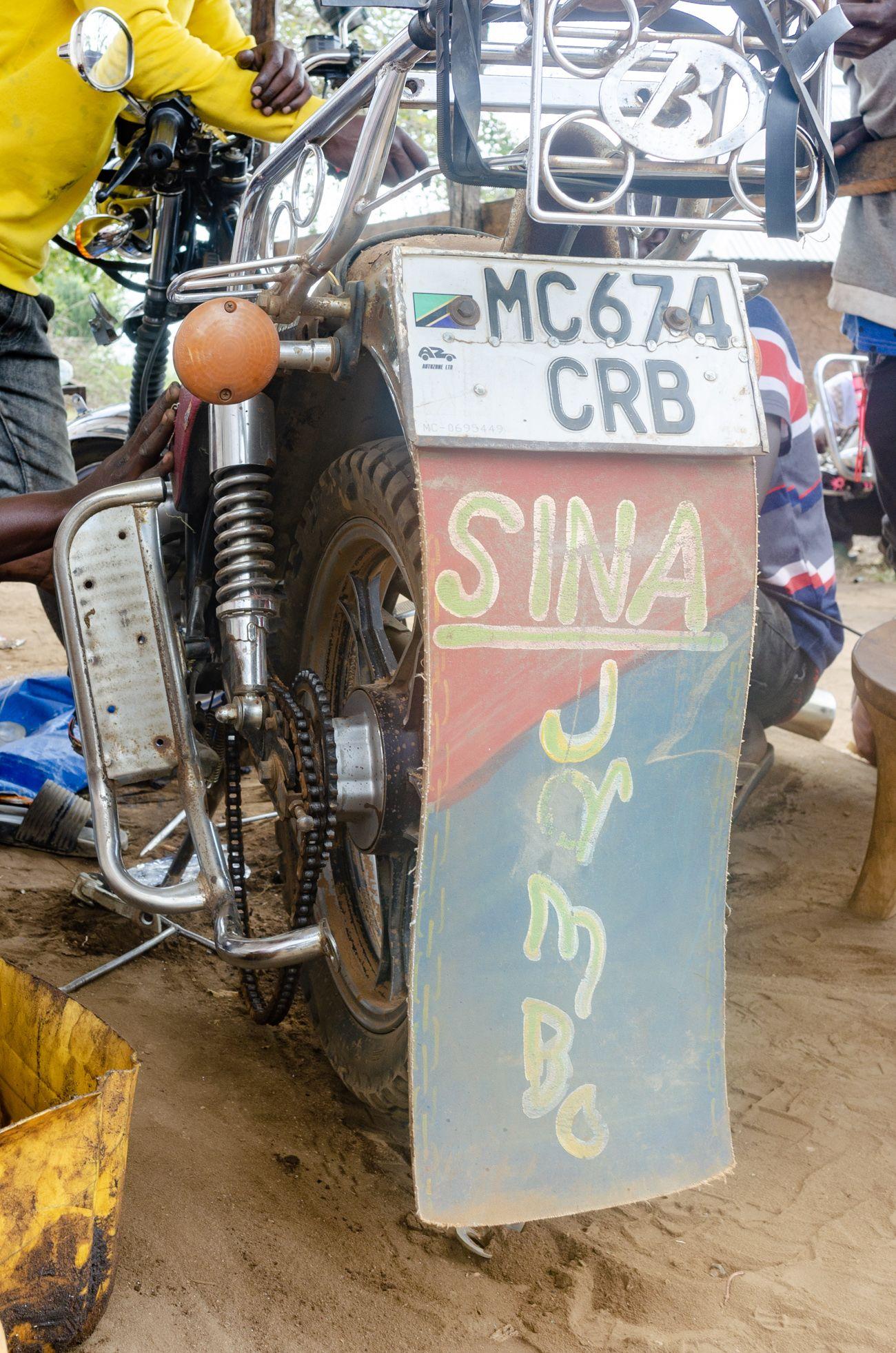
Curiously, those plates—utterly pointless save for advertising—were almost never redesigned by their owners.The runaway tuning cliché was a plastic zip‑tie fastened to the front rack, fluttering in the breeze like a budget victory ribbon. Boundaries? None whatsoever. My favourite mod was the supersized rear‑mudguard extension meant to keep flying muck off following traffic. Some were ten times bigger than the original part and carried war‑paint slogans. Top of the pops: “THIS IS A MOTORBIKE.”
 

Take, for instance, the line “I couldn’t care less”—it’s practically enshrined as one of the golden rules of the road.

The big guns—and I do mean big, the sort of chaps who measure their charisma in centimetres of ground‑clearance—like our friend Munikiti rode “lifted” bikes propped up on giraffe‑leg shock absorbers. They looked like lean, mean off‑roaders; in reality they were the exact same Chinese 125s everyone else thrashed to death. His mate Simba owned the identical show‑pony until his English girlfriend accumulated a distressing collection of leg fractures. After that he bought a stock machine, melted into the polyester grey of mediocrity and was never heard revving above the herd again.
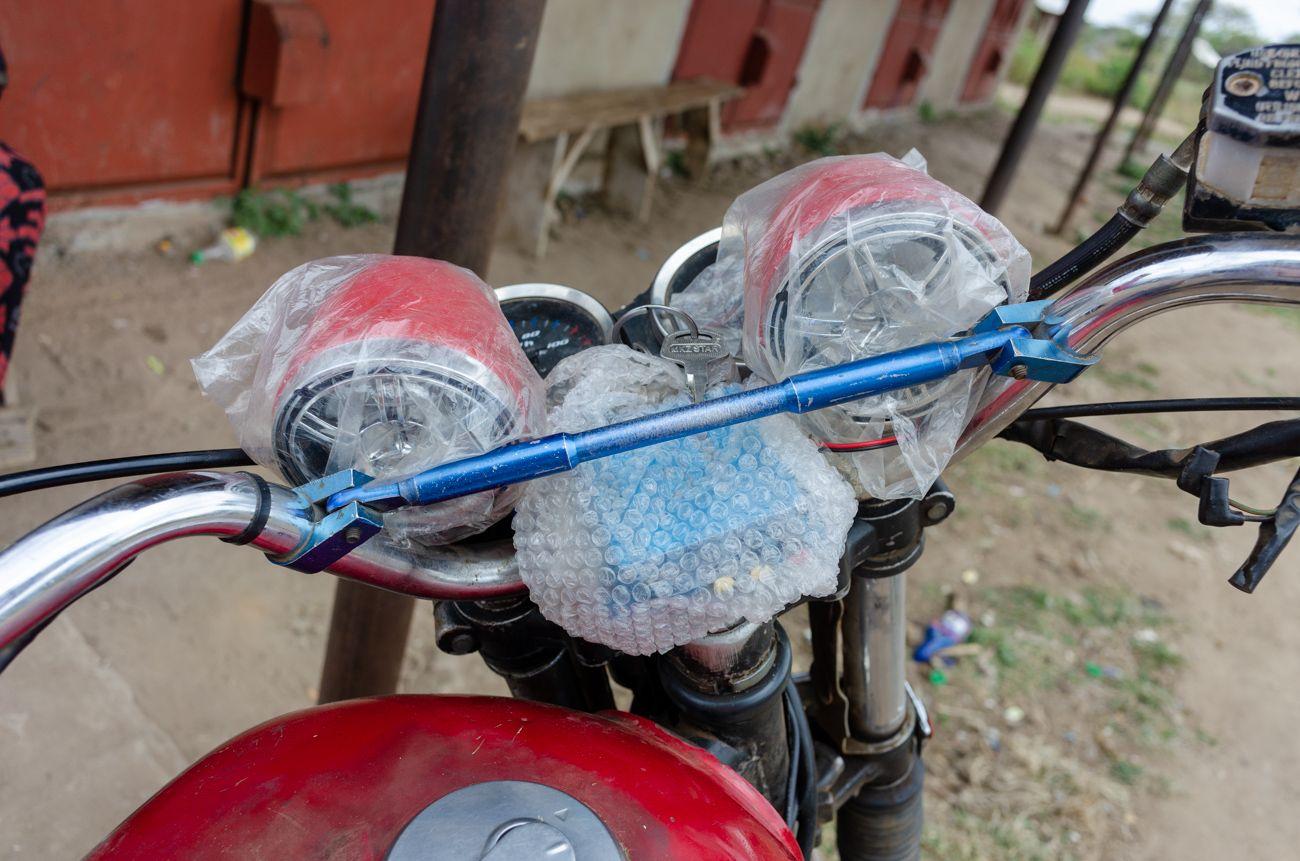
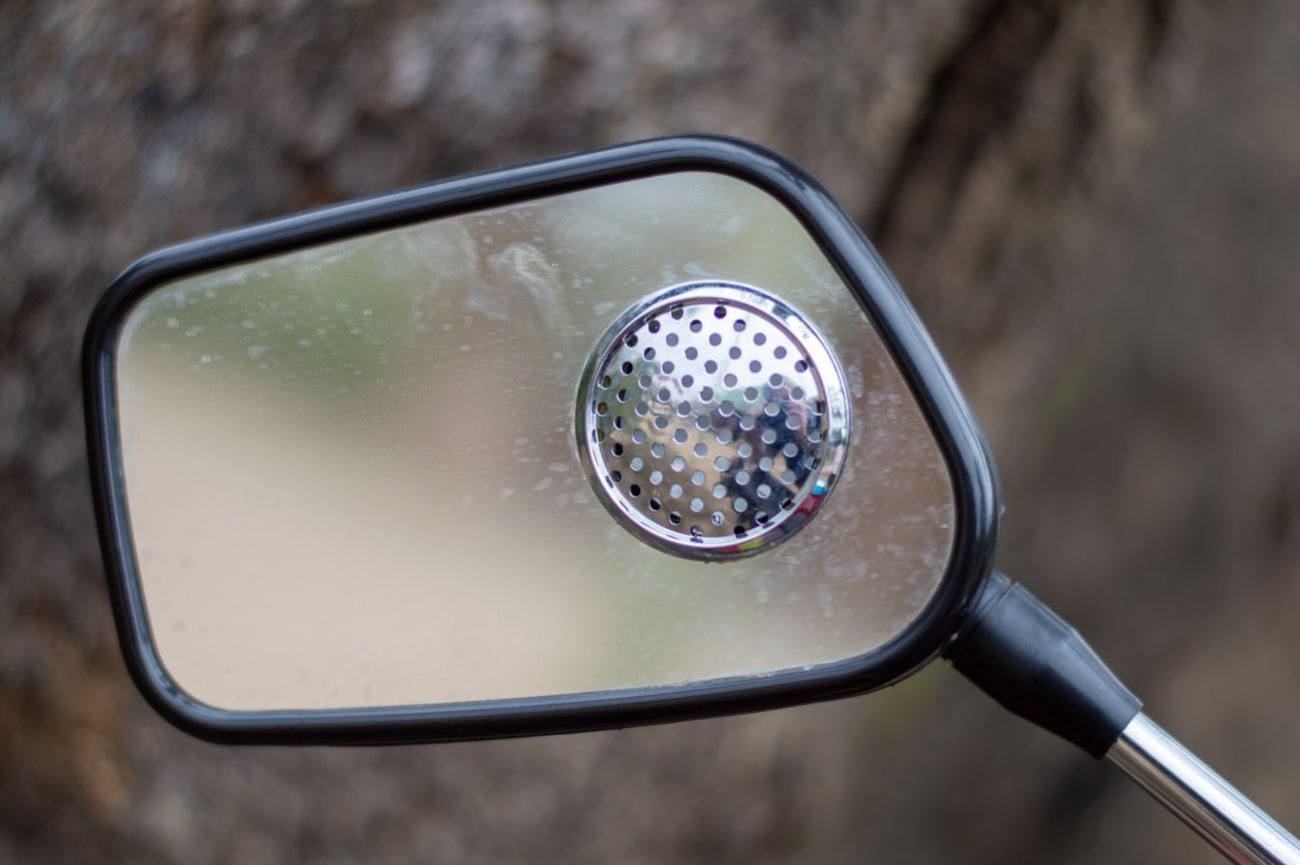
Naturally the new wheels still flaunted half‑bald knobbies and the usual plastic tassels, because tradition matters. And the real heavy‑hitters—really heavy, monstrously heavy—like Munikiti equipped their rear‑view mirrors with built‑in loudspeakers. Because if your exhaust note doesn’t say “legend,” your Spotify playlist will.

Speaker‑equipped mirrors – the latest twist in active safety.

I’m a card‑carrying bike nerd and love snooping around for the latest two‑wheeled gimmicks, but I’d never clapped eyes on anything this bonkers. After all, who needs rear‑view mirrors when you can wedge loudspeakers into them? The next deluxe flourish was a talking motorbike. I blame the Chinese for that stroke of brilliance—the machine rolled out of the factory already fluent in English. And because it’s better to see once than sprint to the loo twice, I insisted on a full demonstration.

With a T‑Better motorcycle, life shifts up a gear. Picture a chatty, artificially intelligent tractor‑bike.

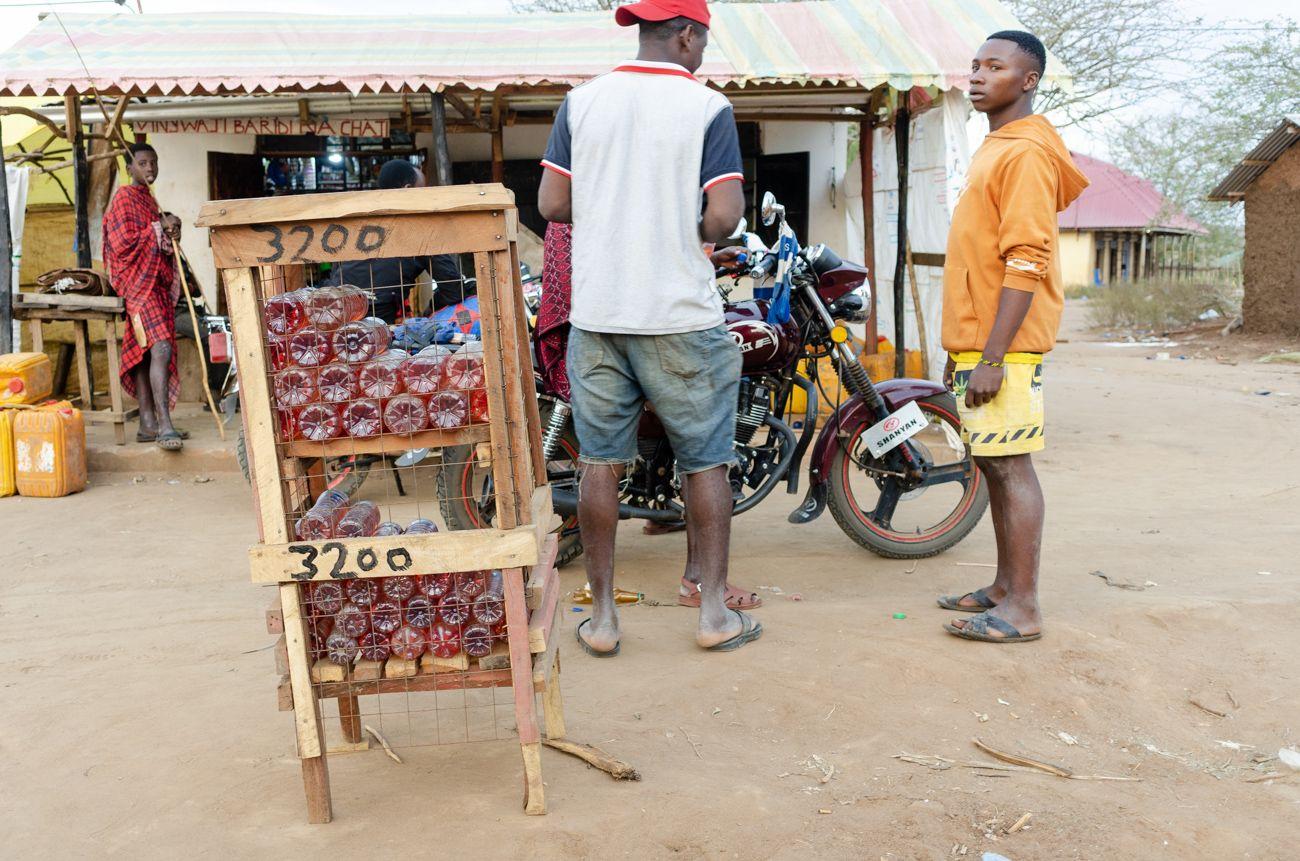
Because the nearest petrol station lurked forty kilometres away in Handeni, the locals solved the fuel problem in their own inimitable style. Wire cages stuffed with one‑litre bottles of petrol lined the verge, which meant every shop and street‑food stall doubled as a miniature filling station. All motorised life shared a charming habit: they bought just enough petrol to get somewhere. I witnessed this first‑hand on a run to Handeni. We packed an entire litre—an extravagantly low reading on the gauge—and set off. About five kilometres outside Mbogoi we found a bike parked by the track. We stopped; two minutes later a Maasai bloke burst out of the bush waving a mobile phone.
Running out of fuel on the open road happens all the time, but it’s ridiculously easy to sort. And no—you’re right—there’s practically zero signal out here, so the phone is about as useful as a snorkel in the Sahara. It’s possible the Maasai possess an inner map for mobile‑friendly clearings, the same way they can feel prime grazing land in their bones—how much signal there is, and where. Can’t swear to it; never asked.
When your tank finally wheezes dry, you simply flag down the next person heading into the nearest village, tell him to track down your mate, and ask that mate to find someone on a bike coming your way—who then brings you a splash of petrol. Sorted.

A hefty bottle foretells a long haul.

Fuel prices, first the arithmetic. In Mbogoi, a take‑home of 100 000 Tanzanian shillings already counts as a fat paycheck. A litre of petrol costs about 3 700 shillings. Result? Our “well‑paid” hero can spend an entire month’s wage on a princely 27 litres of fuel. Do the same trick with your own salary: divide it by twenty‑seven and—tada!—you’ve got your very own “Lengusero pump price.” Let’s low‑ball it: if somebody back home made a neat thousand euros a month, a single litre would ring up at €37. Pretty sure Western civilisation would fold faster than a cheap deckchair.
Not the Maasai. No drama, no flailing, no meltdown. They’ll ride a motorbike for a 50‑metre errand without blinking. Run out of petrol? Then there’s no petrol. Nothing breaks. Cash will show up one day, petrol will follow, and off they’ll zoom the hundred metres to a mate’s place, engine growling like a pampered tractor.
 

It’s worth noting that the filling station meets the earth at something like a ninety‑degree angle. I stress: something like.

I took the motorbike out now and then, but not too often. Short trips from the village to the boma and back—with three people jammed on a trail full of half‑metre craters—I usually left to trained professionals.
Longer journeys to Handeni sparked a philosophical disagreement. On one side: the police, who held the firm belief that a mzungu—white guy—is infinitely wealthy and therefore should contribute generously to their personal financial well‑being. On the other side: me, firm in my conviction that I was broke, skint, and not handing over a single shilling.So most of my scenic tours around Lengusero were enjoyed from the pillion seat.
We rode to Handeni several times to shop or sort things out, and I always rode with Alojz. On our very first ride I discovered that Alojz is, in theory, a very sensible man—until he climbs onto a motorbike and hits open road. At which point, his common sense stays behind with the chickens.We bounced along to the strained roar of an overworked engine, while his weapon of choice—a rungu, the traditional club every self‑respecting Maasai carries—kept trying to crawl into my shoe.Then, as we crested one of the many glorious humps of the natural road, the rungu's rounded tip smacked me squarely between the legs. Twice. Masochists of the world, unite. And please—enlighten me: what exactly is the appeal?

Alojz and Valentino Rossi - my two favourite African motorbike heroes.

But honestly, it wasn’t all that bad. That evening, as we sat around sipping beer, Sekenoi asked why I hadn’t told Alojz to slow down. I said I’d actually enjoyed the ride—so why would I?
Bad move. Alojz was sitting right there.The next trip to Handeni went fairly smoothly. Getting there.
The way back? Punishment, pure and simple.Alojz had knocked back five beers, night had fallen, but to him that just screamed perfect riding conditions. He swung onto the saddle, fired up the bike, and off we roared. I clung on for dear life, the bike bucked like a caffeinated goat, and Alojz purred along contentedly as ever. I purred less. After a few kilometres, I couldn’t feel anything. Anywhere. I mean it—masochists of the world, please write in. What is the appeal here, seriously?
 

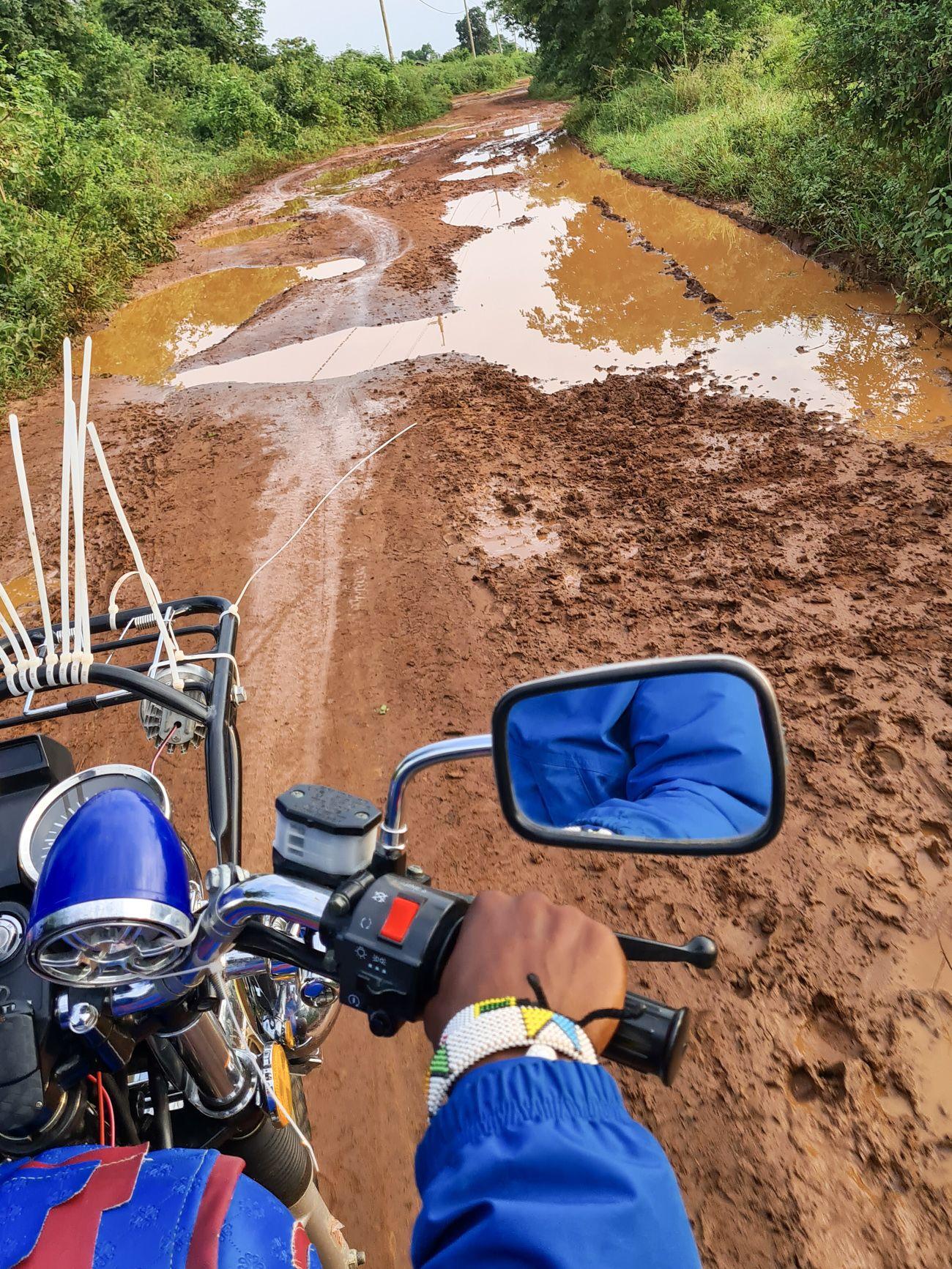
This is what the road looks like in summer after a rainfall. Back home we’d call it a swimming pool.
Share this

Time in our Western culture was simply struggling to survive. Nobody ever had enough of it; people stole it from each other, paid with it, envied it. In short, it wasn’t doing well here. One day, it got properly fed up and left for Africa. The whole lot of it. Here, time became our master, and it didn’t enjoy being a slaveholder at all. It wasn’t the slave-driving type. Many people here don’t even realize that time has left, and that’s why we don’t have it. But I found it in the bush. There’s so much time there that nobody even notices it. They have so much of it, they could throw it at each other, swim in it, breathe it like air, and there’d still be plenty left. Time is thriving there. It no longer has to be a slave driver, nor does it have to hide all day to avoid being stolen. Simply put, we shouldn’t have chased it away.

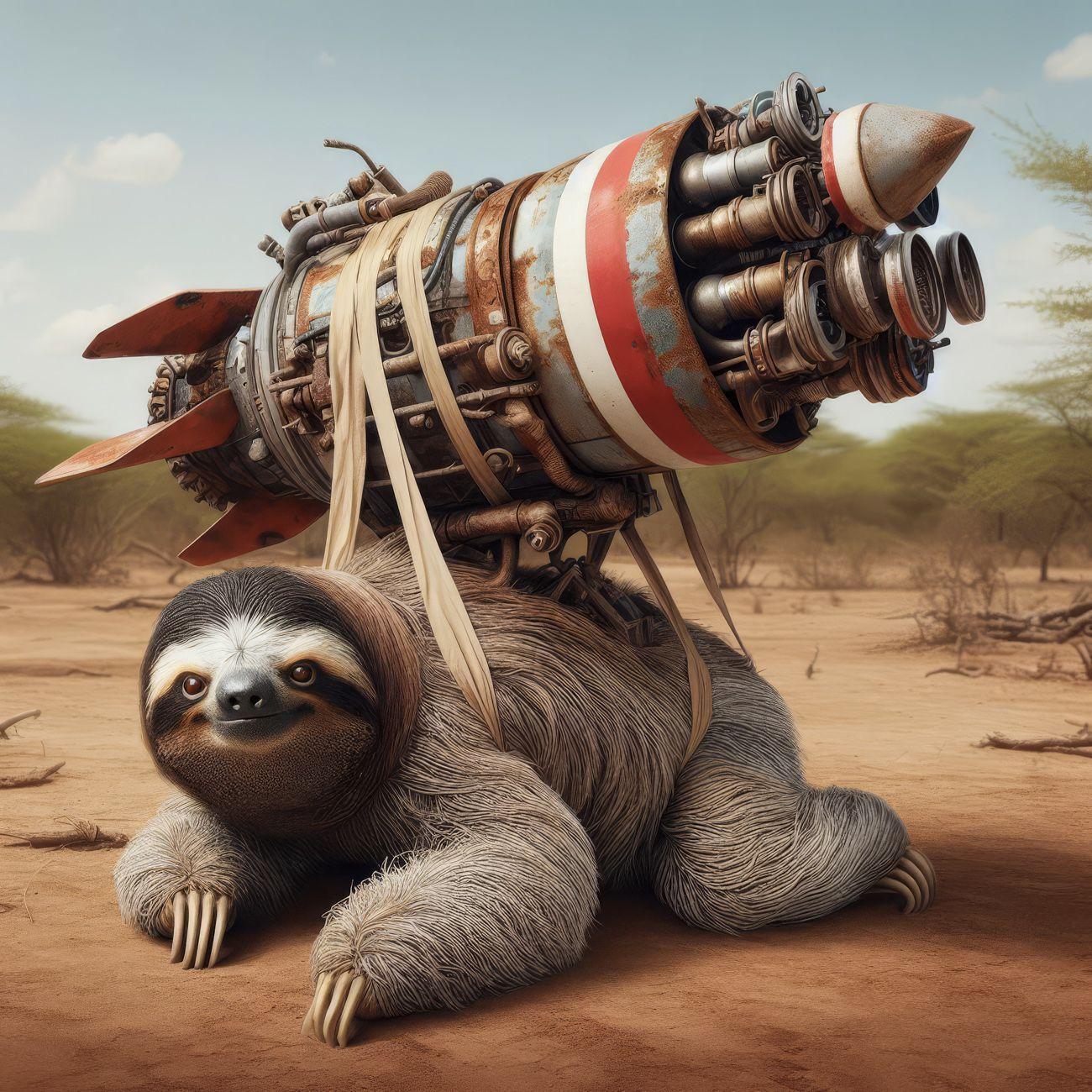
Artificial intelligence also struggles with time, but not so much that it couldn’t generate this image for me

Imagine if there were a god of time in Africa. He’d be like a sloth with a rocket engine strapped to his back. They say there were originally two of them, but one got kicked out for laziness. They wanted to kick out the other one too, but he had a cousin working at the ministry. Young Maasai, for example, didn’t know the names of the days of the week in their own language because they simply didn’t need them. They didn’t have a special day that stood out from the rest.

This approach to time worked the other way around too. The cook at work always stayed as long as needed – sometimes she left at two, other times not until seven. She never complained that it was too long or too late. Once, we joked about it. I told Renča, “Tomorrow morning, we’re going to Handeni.” There was a brief silence, and then we both burst out laughing. Their attitude toward time reflects the great, universal African “maybe.” In this case, it’s more like “maybe yes,” but “probably not now.”

Sekenoi’s English and his quirks gifted us with many memorable lines, and this one summed up African time perfectly.
The closer a person gets to the speed of light, the slower their time becomes. The closer one gets to a Maasai, the more their time also slows down. Is a Maasai the speed of light?
Share this

Don’t forget this name – Sekenoi. I started remembering the "S" after about two days. I hope you’ll do better. I’d like to introduce you to Sekenoi and Renča right at the start because they’ll be appearing quite often in this local travelogue.
Sekenoi is a local Maasai (one of the few who permanently live in the village) who stayed in the house with us. He’s a partner, boyfriend, Maasai-style husband. According to his own words, he has three mothers and fourteen siblings. Compared to him, Renča, with just one mother and one sister, looks like an only-child orphan.

Renča is rather energetic, Sekenoi is rather African.

Renča is Sekenoi’s partner, girlfriend, and Maasai wife. In Zanzibar, they had a nice expression – “Masai Mama.” Sekenoi is the same, just from the other side, except for the “Masai Mama” part. Maybe “Masai Papa.” Renča spends a lot of time in Africa. She goes back home to Europe to earn money, which she then invests in useful things, like me. Living with them was very cheerful because Renča is a typical organizer and loves to take charge. On the other hand, Sekenoi is always smiling and carefree, like almost all Africans I met.

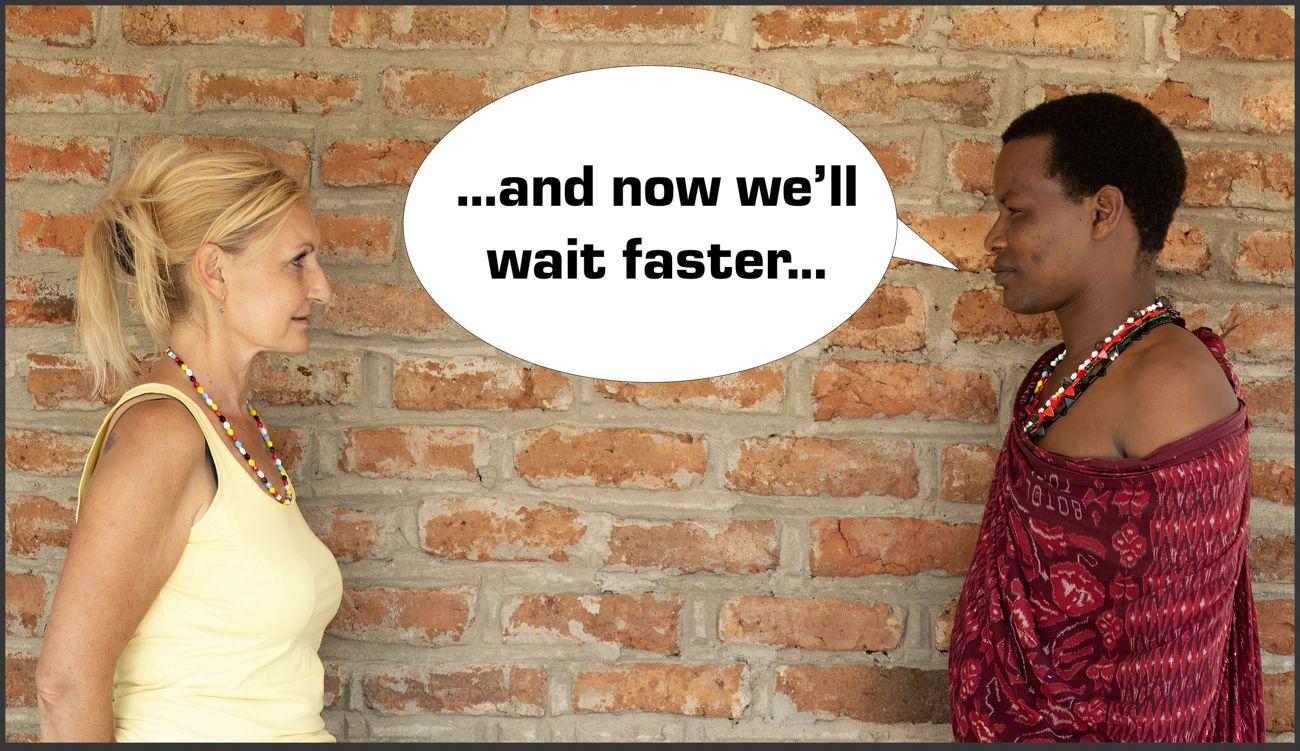
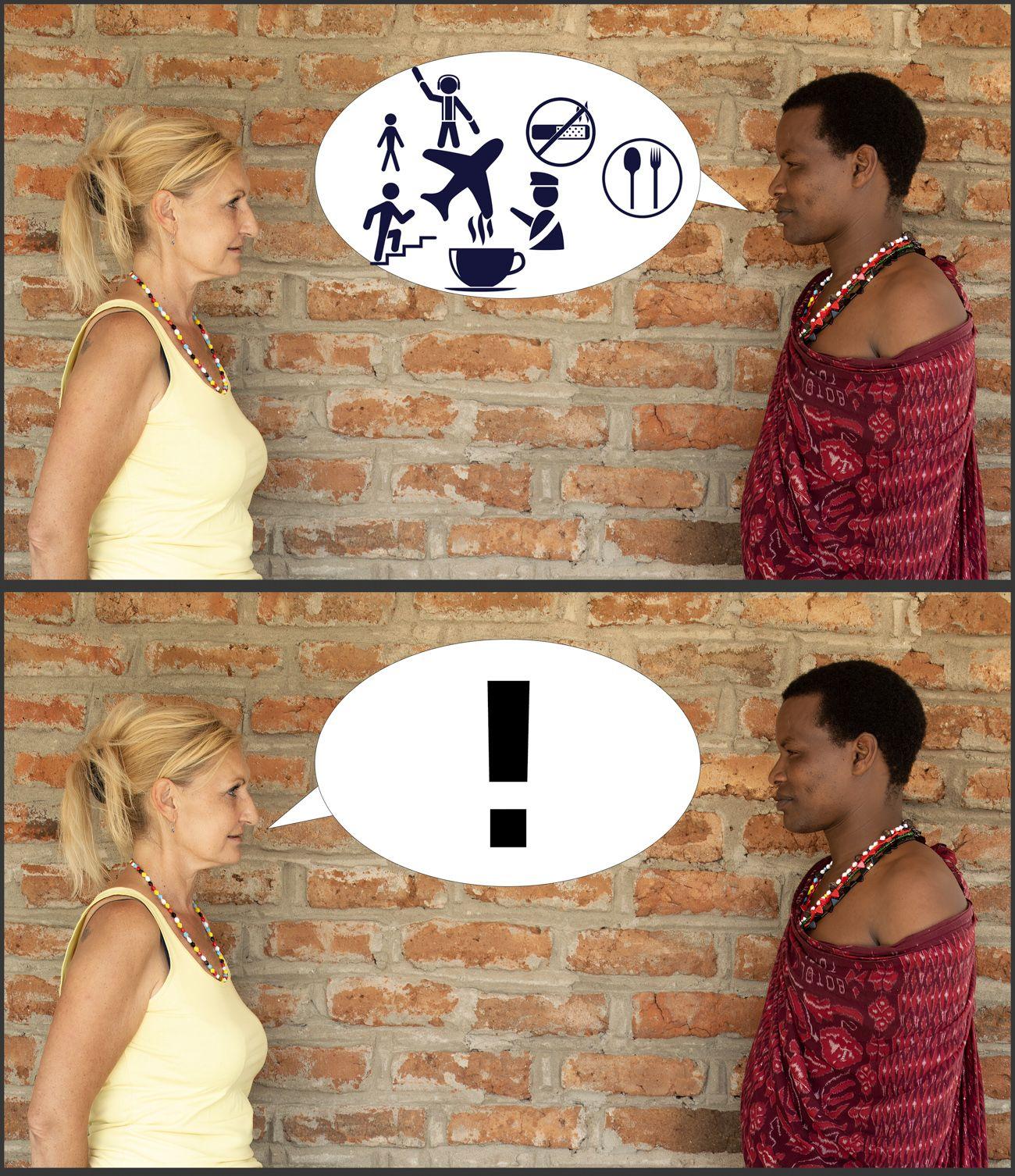
I mustn’t forget the two extra-loud cats, into which some local fundi (master craftsman) must have installed an amplifier, a speaker, and the soul of the most annoying person in the world. They talked to each other in a mix of simple English and Swahili, which was very amusing because I didn’t understand them at all. The conversations went something like this: Renča said something to Sekenoi, then told me what she had said to Sekenoi, and then told Sekenoi what I had said. Sekenoi then said he didn’t quite understand what I said, so Renča asked me to repeat what I had said. I elaborately repeated it, and suddenly it got dark, and it was evening.

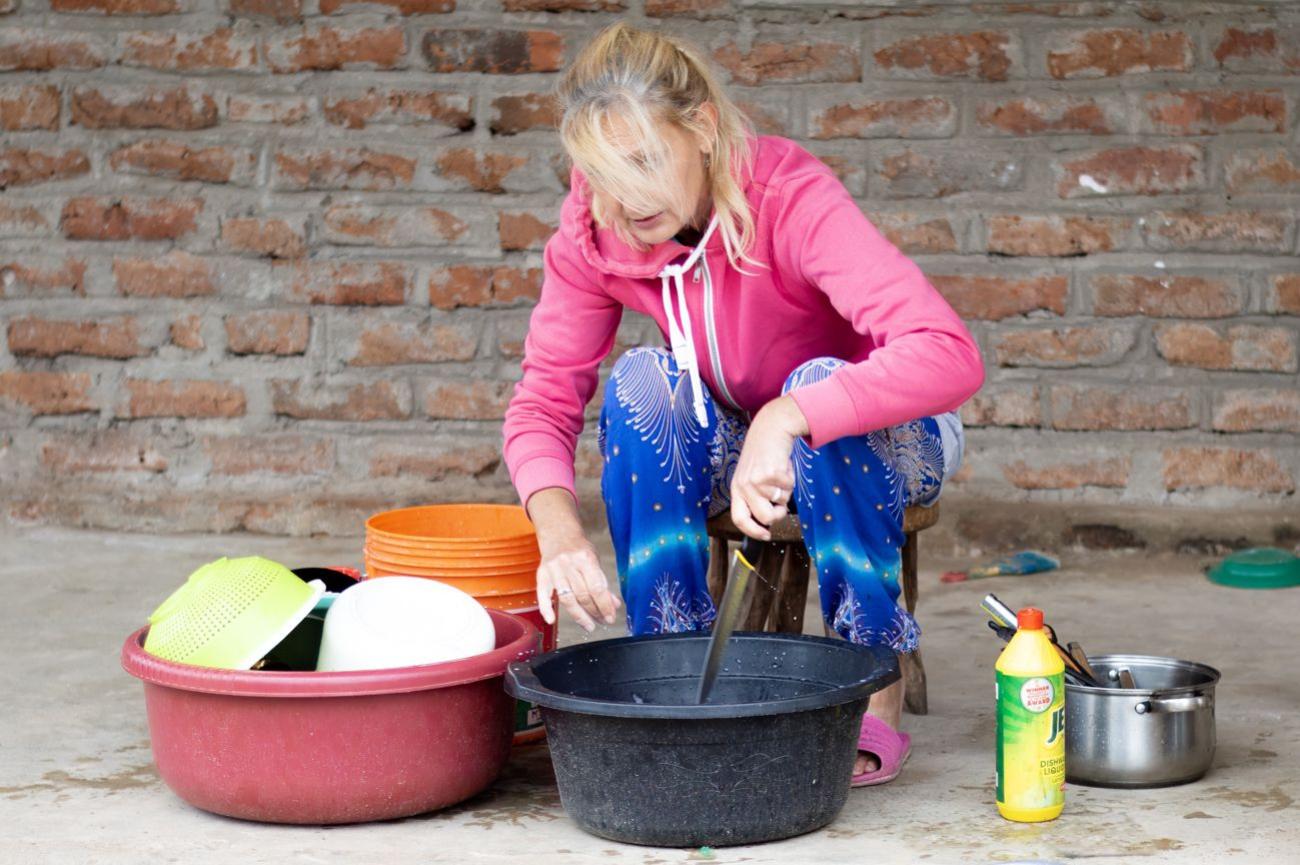
Renča is trying to kill the dirty dishes instead of Sekenoi.

Renča, for example, was always kindly helping Sekenoi clarify his daily plans. For instance: “Stand here for a moment,” or “Now go there and there.” Sekenoi often resolved this by going to stand in a spot that had absolutely nothing to do with either “here” or “there.” There, he would spend several hours with other Maasai in friendly, world-problem-solving conversations. Tracking down a Maasai who is neither “here” nor “there” is impossible. And it’s not just a Maasai specialty. Tracking down anyone who isn’t “here” or “there” is a very complicated matter.
One day, Renča rang me up and asked if I’d be interested in going to Africa. I would have said no, but… you know how it goes. She probably chose me because I’m old, ugly, lazy, and a good-for-nothing loafer who likes wearing boxers and just happened to be slightly above the bottom of her list. Apparently, I’m supposed to tell my two poor friends to chip in money so we can teach the Maasai to read and buy them some big water containers. I didn’t want to dig too deeply into it, fearing she might send me walking back home. After all, Tanzania is far, and the road gets pretty dusty.

Share this

What happened next ranks among my most powerful experiences in all of Africa. Being part of a big Maasai celebration, one where we were just two mzungu—white folks—yet it was crystal clear the whole thing wasn’t staged for tourists. It was for us.

Assistant director.

So after the ceremonial celebrations, we headed back home for a bit of rest.  After prolonged observation of the locals, I honestly couldn’t tell where work ended and relaxation began.  Maybe if I spent a couple more years doing some serious ethnographic snooping, I’d start spotting subtle differences between those two states. But for now, I was still a sana mzungu—very white and very clueless. A few hours later, around ten-ish, Sekenoi barked: “Let’s go to the show.”  Now this was something I hadn’t seen before. And just thirty minutes after the first command, we were already perched on a motorbike, speeding off to who-knows-where. A full-blown Maasai mobilization in under half an hour. It’s official: I’m signing Sekenoi up for Formula 1.

Riding through the night bush, the three of us squeezed onto a motorbike, turned out to be way more pleasant than our earlier lunchtime crawl to the ceremony. We didn’t crash into every shrub along the road this time, which was a nice change. When we arrived, it was pitch black. The only light came from the stars and maybe five solar-powered bulbs. The bulbs shone with the same blinding power as the stars—which is to say, not at all. Honestly, they could’ve saved themselves the trouble.

The boma was roaring with noise—everyone was chanting their minimalist Maasai melodies, and the place sounded like Mordor on karaoke night. My first thought? Everyone's probably thrilled the two mzungu have shown up. You know, fresh meat. Whether they were happy or not, I’m not sure. But they didn’t eat me. At least, I think they didn’t.

Because the roar of hundreds of voices was coming from all directions, I sensed the people before I saw them. Most of them were warriors, though there were a few elders sprinkled among them. They stood in a circle and sang. There were about a hundred of them in that one ring. Still treading carefully—just in case I accidentally became part of the Maasai food chain—I edged closer and peeked inside. Right in the middle, two warriors were taking turns leaping straight up, clearly trying to outjump each other.
As I later gathered, there was someone inside the circle acting as the unofficial judge, occasionally deciding who had jumped higher. But often, the audience made the call—cheering, stomping, or jumping into the circle themselves, all while the singing kept on. And that was just the opening act. There were still two more circles, each about the same size, because one simply wasn’t big enough for everyone.

If I understood the structure of these singing circles correctly, it worked like this: people stood in a circle and sang. Behold the genius at work. Inside the circle, young girls would sometimes dance, adult women sang and swayed, or two warriors would square off in a vertical showdown. Meanwhile, someone was always zipping through the ring, parodying the dancers with ridiculous flair. It was chaos. A light, entertaining kind of chaos. But later, it turned out the lead singer-slash-organizer-slash-ringmaster had things firmly under control. He decided which song would be sung next. And if the circle got too tight, he’d stop the show, whack the crowd apart with a stick, and carry on like nothing happened.
There weren’t always just three circles, though. Occasionally, a rebel faction—clearly unimpressed by the ringmaster’s playlist—would break away, form their own mini-circle, and launch into a fresh round of singing. Though honestly, it always sounded like the same song to me. People from the old, tired circle usually joined the rebels, caught a second wind, and kept singing, dancing, cheering, and hopping around like the night was still young.

After a while, though, the hypnotic chanting—endlessly repeating the same melody and the same words—and all that zigzagging between circles started to wear me down a bit. I’d finally gotten my bearings and spotted Alojz sitting on a parked motorbike. Being a proper Slovak, I hadn’t come empty-handed—I’d brought a little something from home. Unsurprisingly, I was very warmly welcomed. Still, I didn’t notice anyone at the celebration who seemed drunk or high on anything else. A few characters looked a bit... questionable, but nothing major. Apparently, instead of drugs, they manage to hypnotize themselves with hours of minimalist singing.
When I joined Alojz and sat down, I realized I had a flock of about fifteen kids trailing me. My first thought? “Kids are always the hungriest. This is it. The end.” But nope—they didn’t eat me either. Maybe it was because I was white, and in that darkness, I stood out like a flashlight at a rave. They followed me like I was the light. But the light had a few shots, shooed the kids away, and the evening suddenly became a whole lot more pleasant. Late dinner postponed.
Share this