Maasai – the fundamental unit of the Maasai nation
Listen to this text
The basic unit of the Maasai nation is one Maasai man or one Maasai woman. A typical Maasai has a physique that is as if some giant grabbed him by the legs and head and stretched him slightly upwards. He is slender and tall for the local conditions. He’s also identifiable by the fact that if he remains silent or doesn’t spot a cow for an hour, he plunges into deep sadness.
Ndari, too, is one of the fundamental units of the Maasai nation.
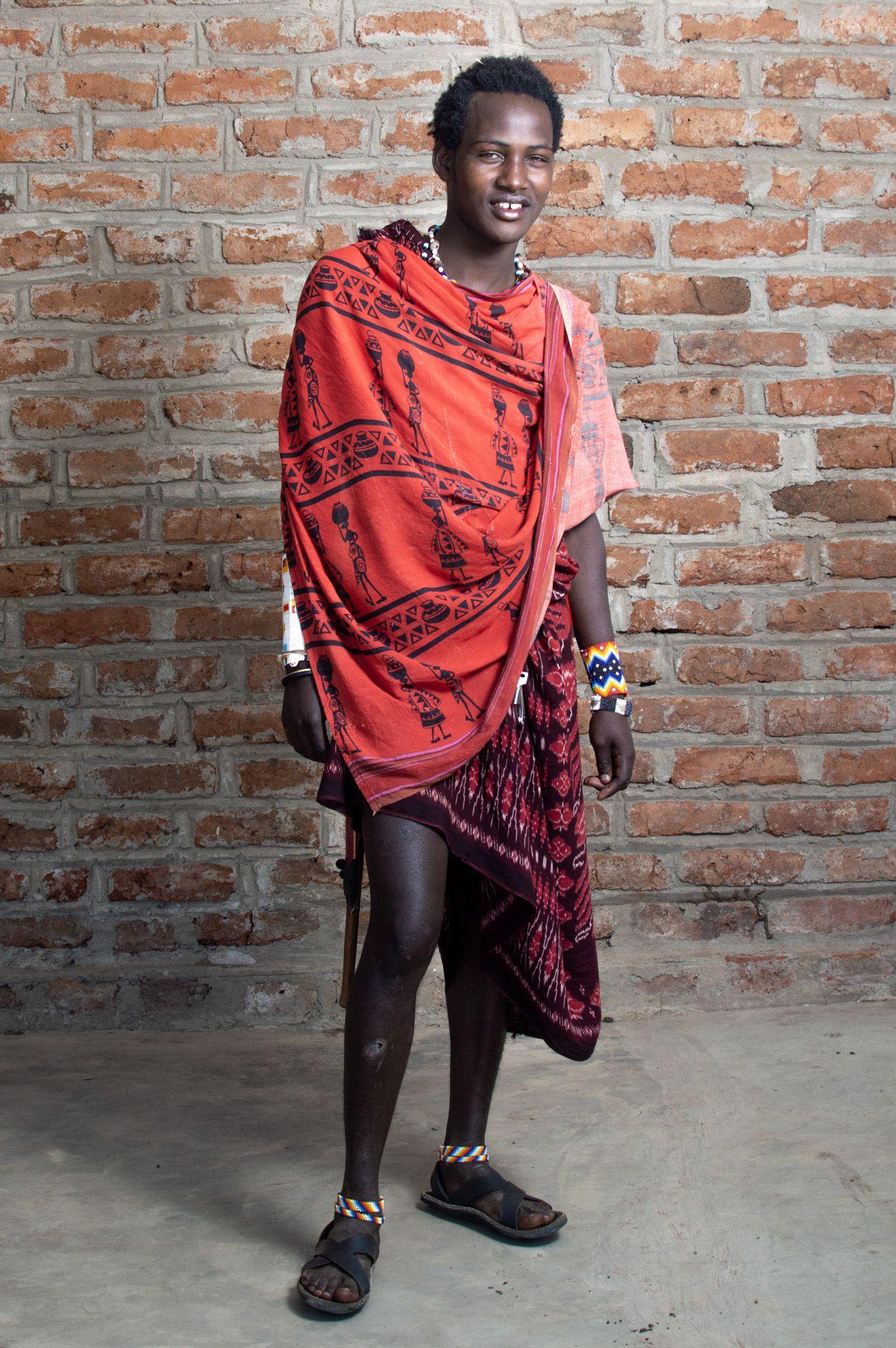
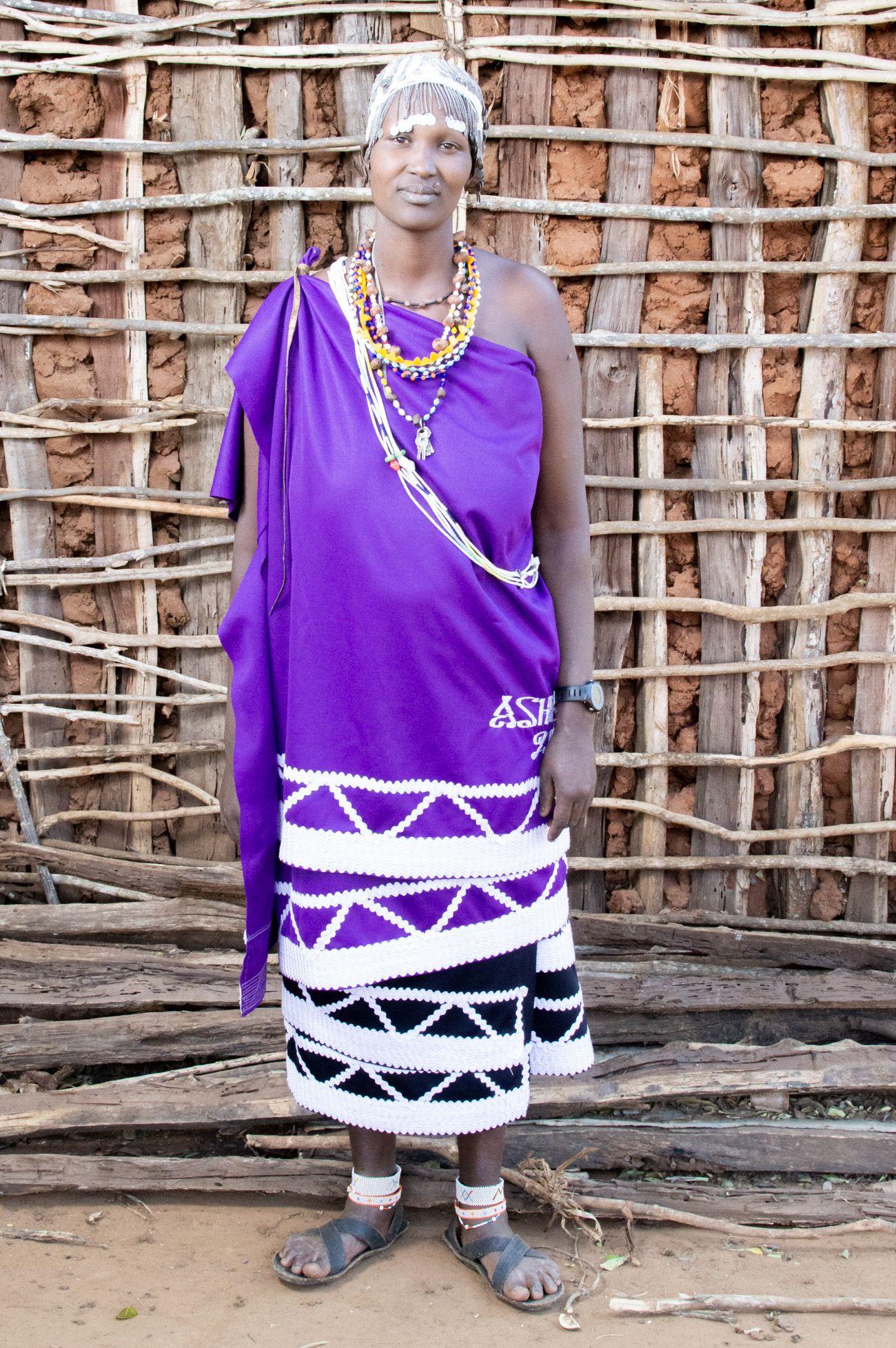
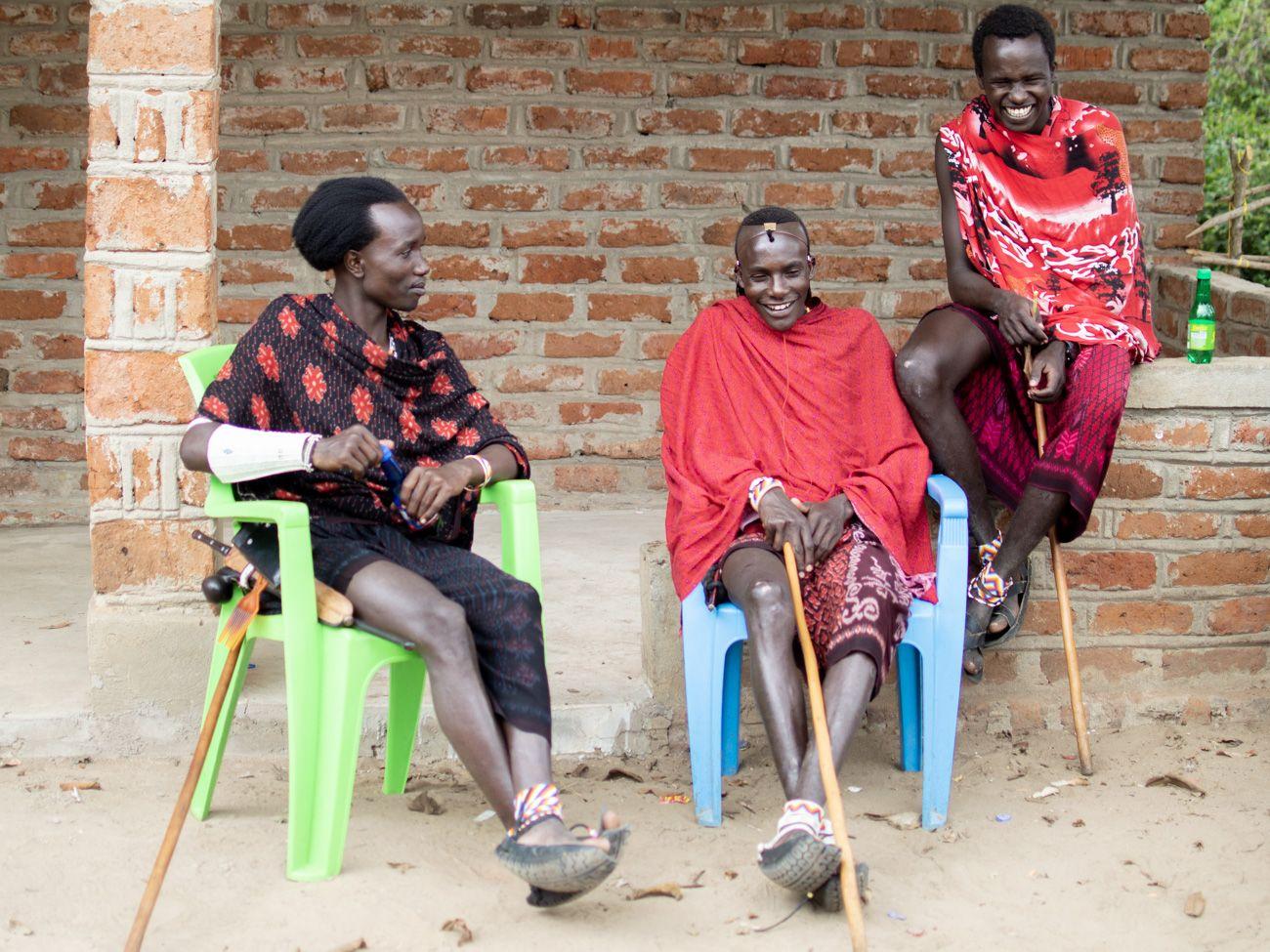
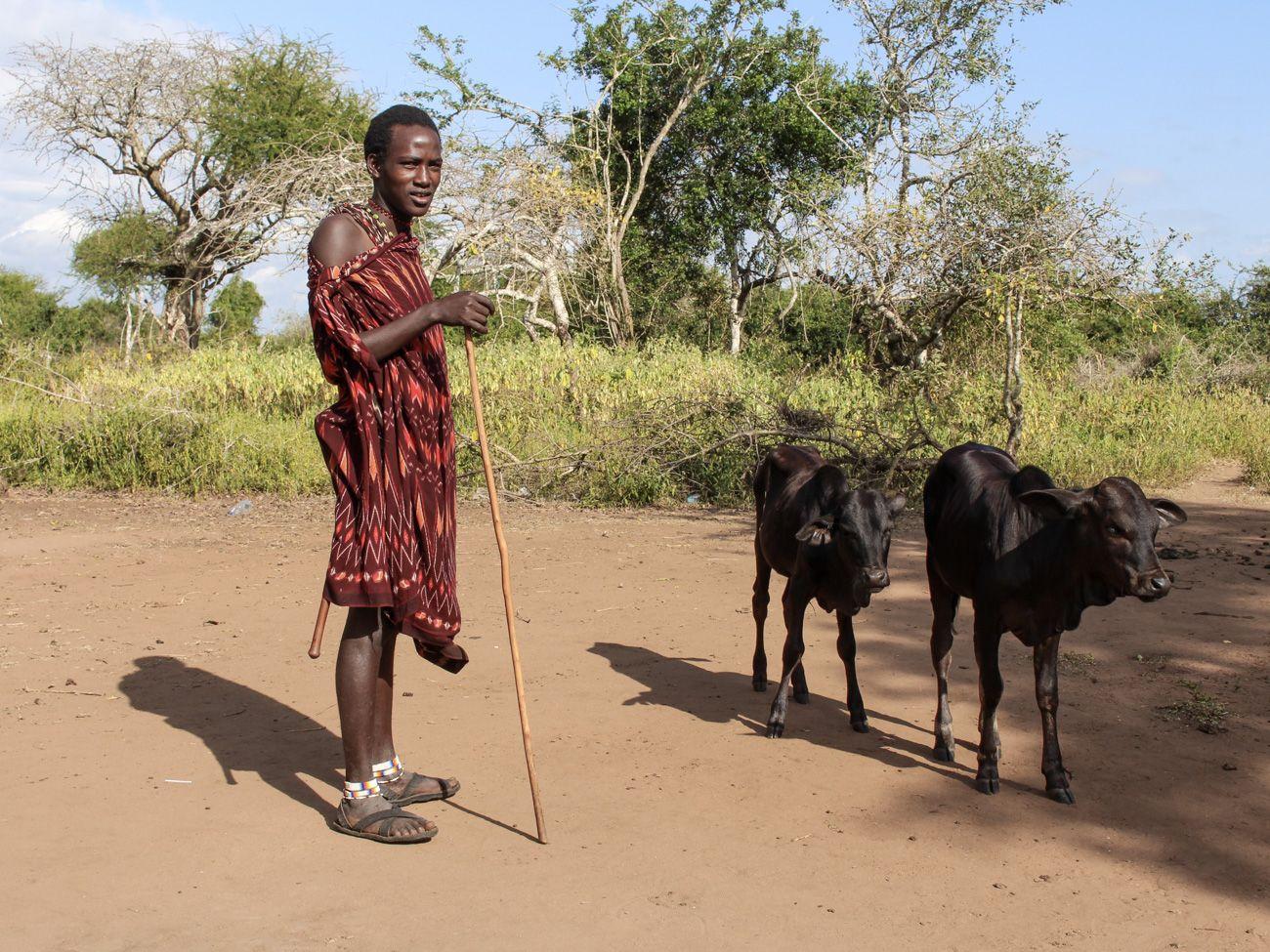
The Maasai dress simply and uniformly. Men's attire consists of two cloths: one sewn into a long tube, while the other is casually draped over the body. Women typically wear one-piece dresses made of purple synthetic material, all in the same cut, color, and, as I observed, likely the same size.An integral part of a Maasai’s outfit is their weaponry, which they strap on in the morning and carry throughout the day. This includes a short machete or a longer knife (which, as far as I can tell, are pretty much the same thing) and a wooden hammer called a rungu. These weapons are incredibly practical when a Maasai is wandering around the house—they can be used to knock anything within reach off the table.
The Maasai uniform also features shoes made from old tires. In many photos, they’re wearing yellow or white sandals. However, those are ceremonial footwear reserved for special occasions. Since most pictures are taken at such events, the Maasai are often seen wearing different sandals than the ones made from tires. Naturally, some “show-offs” wear these fancy shoes even outside of ceremonies, though it’s a rare sight. Maasai men’s clothing is usually red, but I’ve seen designs in blue and green too, from plain hues to giraffe motifs.
Roda.
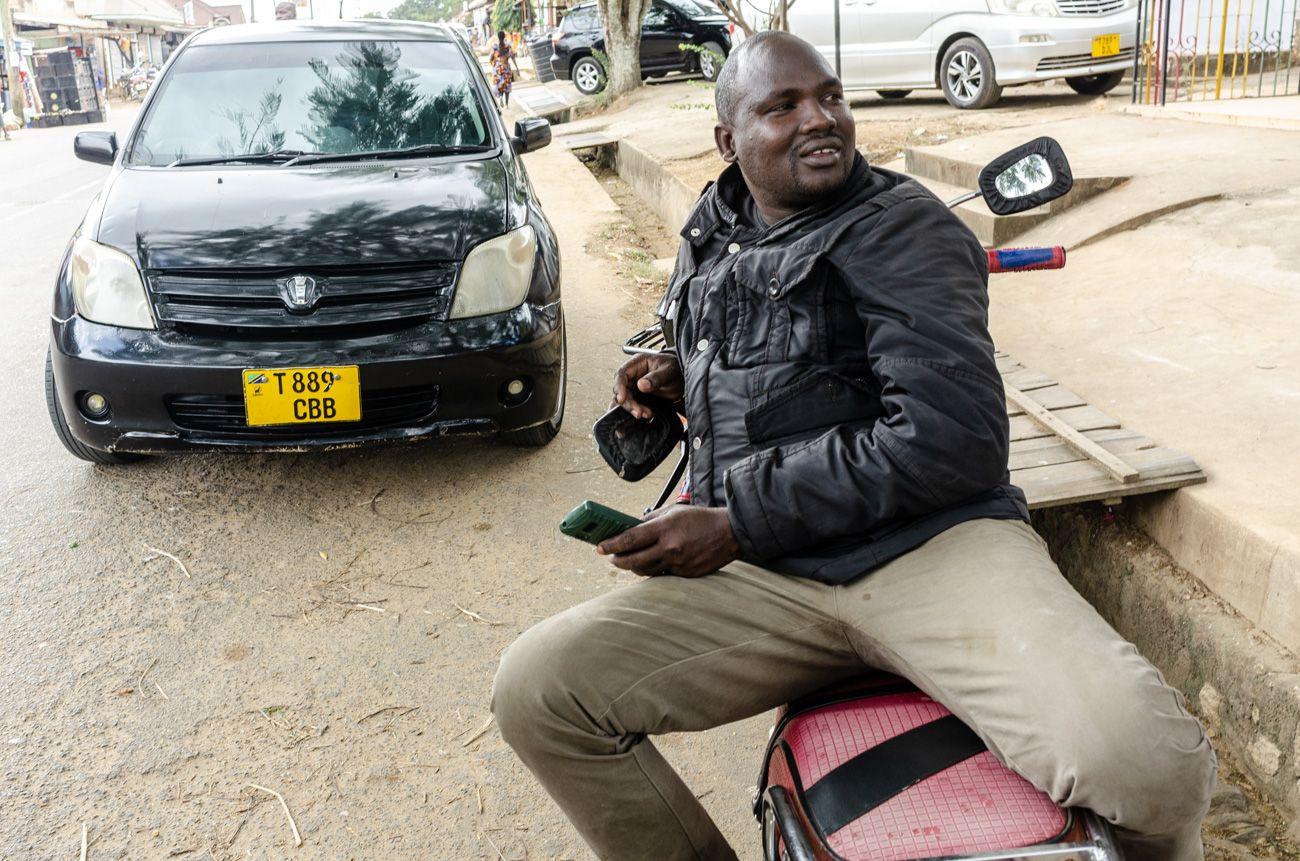
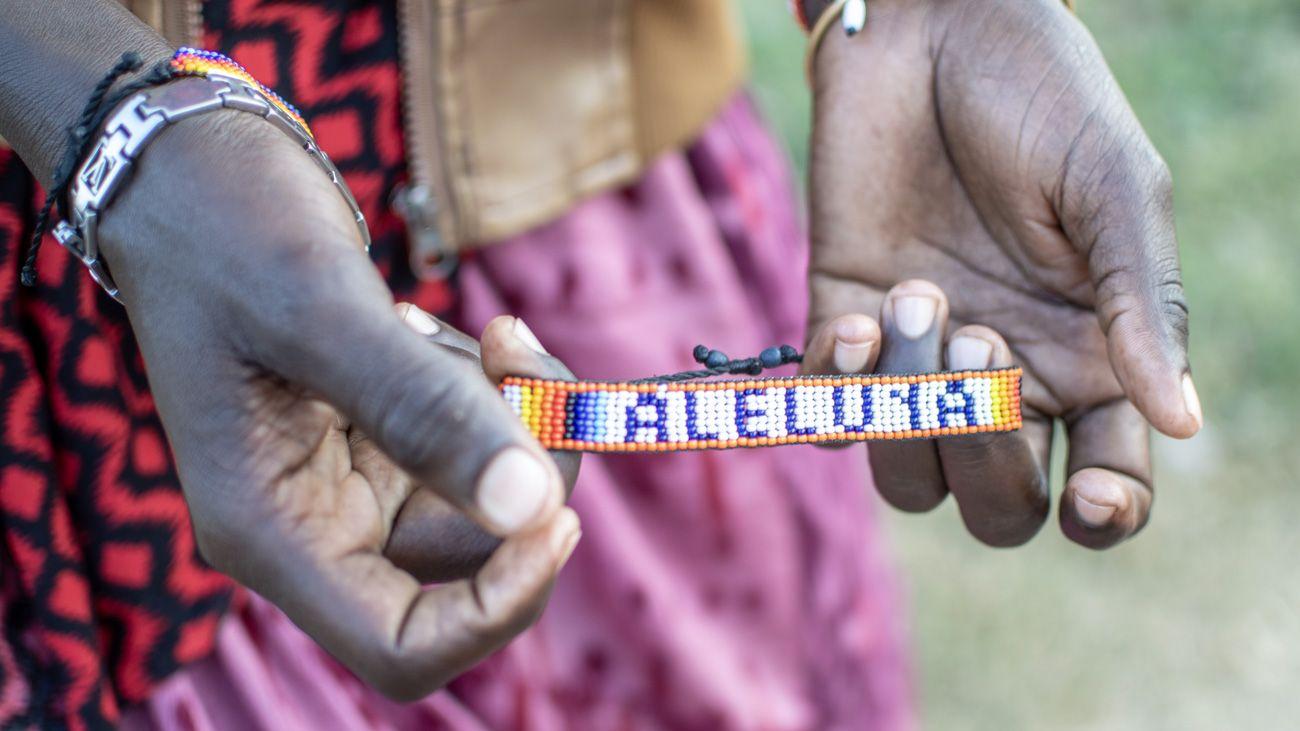
Beaded necklaces and bracelets are an essential part of Maasai attire for both men and women. Here, Kojkaj is the only Maasai who wears pants on a regular basis, as he’s busy fixing motorbikes for everyone. Once, even my friend Alojz decided to wear pants. When I saw him in them, I joked that he finally looked like a proper human being. I said it in English, but Alojz, unless he’s had a few deciliters of cognac, doesn’t understand English. That was fine, as our host Maasai, Sekenoi, took ten minutes to explain it, and we all laughed for at least ten more.
When Alojz puts on pants, he actually looks like a person.
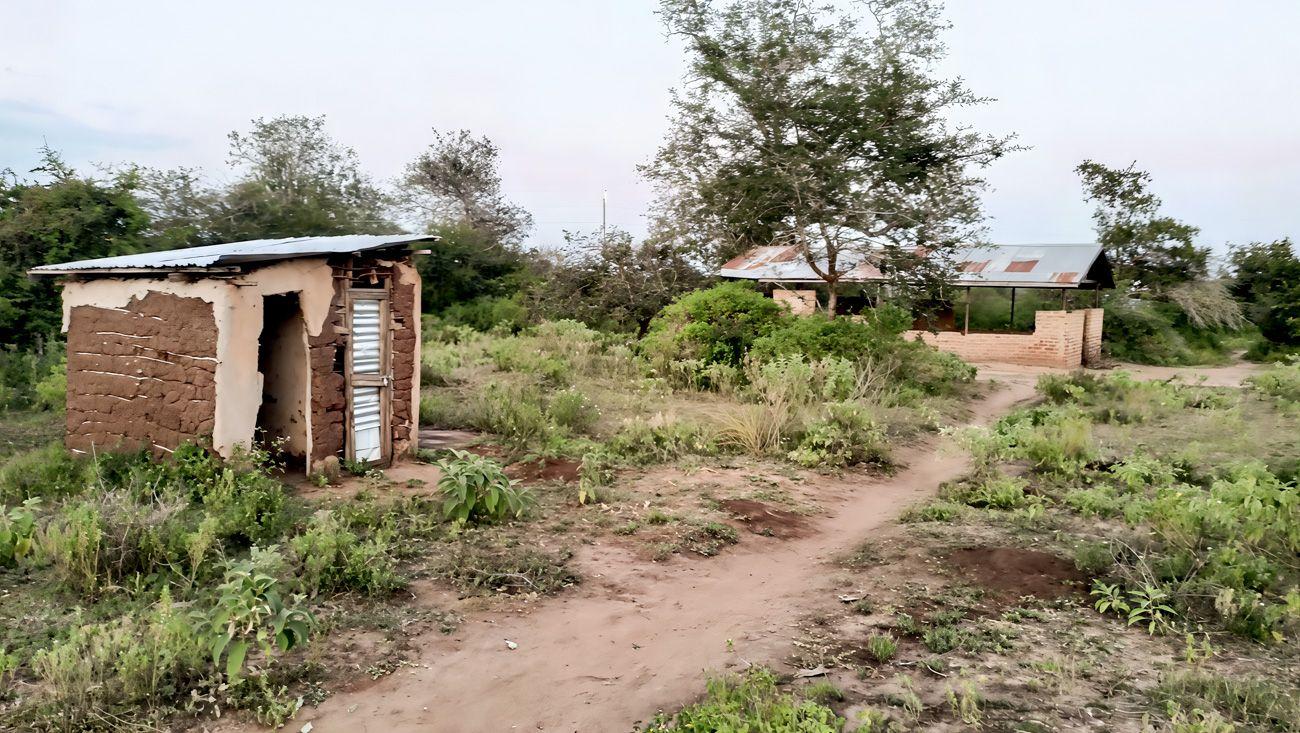
Tanzania is predominantly a Muslim country, though there are many Christians as well. The Maasai aren’t particularly fond of Islam. Apparently, in Handeni, a nearby city, there’s one Maasai who is a Muslim, but he lives alone because no one likes him due to his faith. In Mbogoi, however, there were many Christians. It was said there were two churches, but I only spotted one, near the house I stayed in. During our endless evening talks over beer, we also discussed this topic. My black friends joked that the Christian God is amazing—you have no idea who he is, but he promises you whatever you want.
A Christian church in the background, with a decidedly non-Christian toilet up front.
The Maasai have their own beliefs. They believe that the sun is the father and the moon is the mother. They believe in the evil eye, but no supernatural abstract religion has reached them yet. It’s kind of entertaining. I asked them about the tales mothers tell their little ones. They don’t have any favorite stories. Mothers make them up on the spot. The tales are based on things they can imagine—like a goat meeting a leopard. There are no flying horses or other fantastical creatures. This leads to weaker abstract thinking among the Maasai. They struggle with math because numbers are inherently abstract. They can calculate that if one beer costs 1,000 shillings and another beer also costs 1,000 shillings, together they cost 2,000 shillings. But the question of what 1,000 plus 1,000 equals is an unsolvable puzzle for them.
The Christian God is amazing—He promises you whatever you want.
A Maasai who isn’t standing in a group, chatting, or listening intently feels like only half a Maasai to me. It’s as if he’s suddenly thirty centimeters shorter and ten kilos lighter. I believe that just as breatharians are said to survive on air, Maasai live off constant conversation. They can spend a week, ten hours each day, discussing problems we’d consider simple. I imagine they even talk in their sleep. If Maasai ever have a parliament, their discussions on the first agenda item might not end before the sun itself goes out. I have a funny story about this. We were at the playground to make some calls. Renča was phoning home, handling something online, and Sekenoi was on a call too. After about thirty minutes, Sekenoi finished his call, came over to me, and noticed that Renča was still talking. He asked me, “What on earth do women talk about for that long?” I couldn’t help myself and asked what he had been talking about and with whom. He revealed that he’d called some relatives and a Maasai who had just returned from Kenya. So I asked him to share a story. What did he do there? How did he come back? Just anything. “To be honest, I don’t know. We didn’t have time for that,” Sekenoi replied.
One more mystery of the universe, resolved with success.
I almost forgot about the indispensable part of a Maasai’s life—the staff called mudi. For every Maasai, it’s practically a third leg, and no, I don’t mean that in any suggestive way. It’s more like a loyal companion, akin to a dog. A mudi is something the Maasai always have close at hand. I’m even convinced they sleep with them, although I’ve never seen a Maasai sleep directly in a boma. I imagine them placing their mudi next to them at night, then arranging the other mudi belonging to family members. Perhaps the whole family even sings them a lullaby. The mudi truly proves to be an excellent “third leg” in practice.Maasai lean on it while walking, especially during long hours of standing. It’s almost always in action.