You need a permit from Munikiti to build a house in the village. The other day, he got all riled up because someone had built a house there without his knowledge. I started wondering what it might look like if you wanted to build a house out in the bush. Whose permission would you need? You’d probably have to pay a visit to the nearest leopard. It would either eat you alive or hand over the permit—just like our bureaucrats back home. Village houses, though similar at a glance, come in a whole variety of styles. It depends on who built them, which tribe they hail from, and what building methods they favor. You’ll see some with plaster, some without, some crooked, some even more crooked, made of fired bricks or unfired ones—some reinforced with wood, some not at all. Roofs can be made of metal sheets, tarps, or just shrubs—basically whatever’s handy.
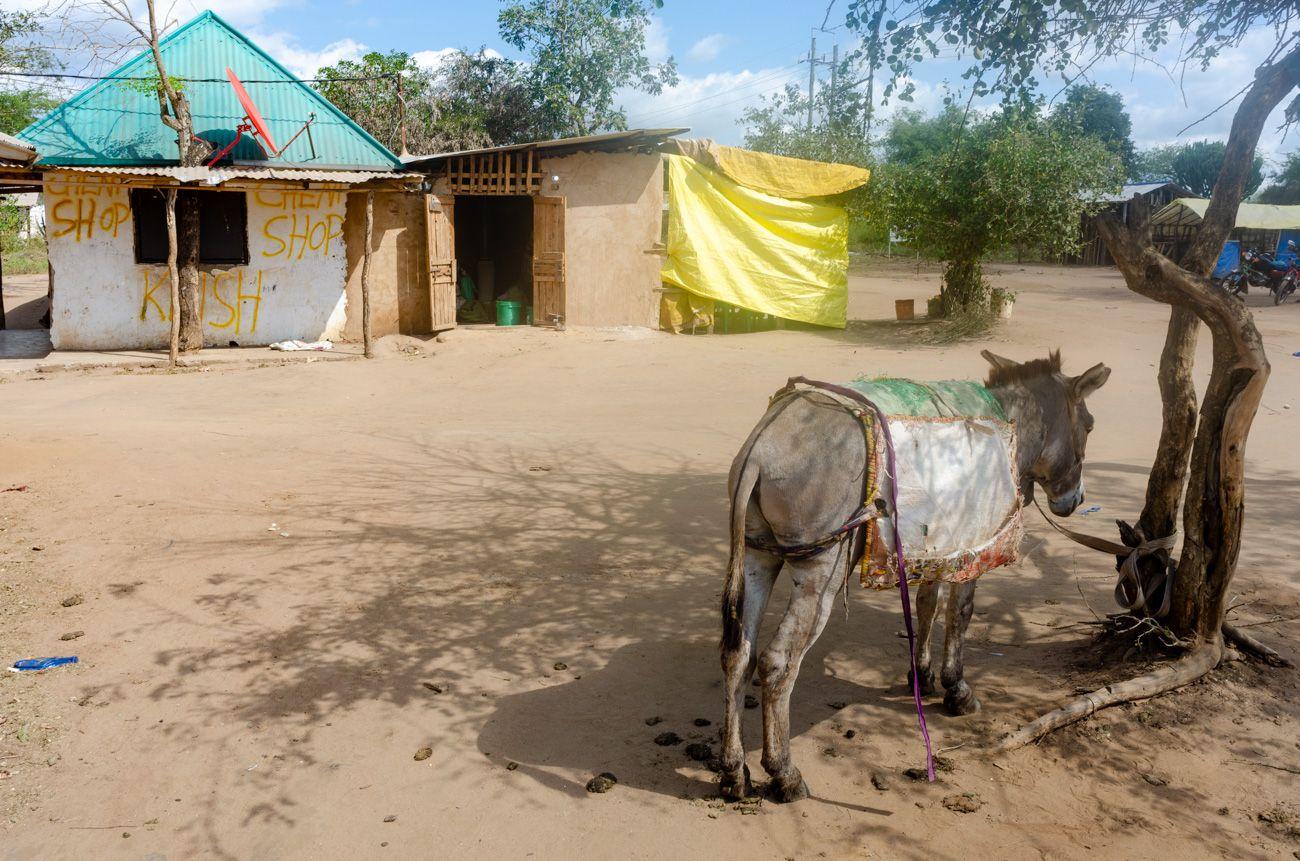
Proper men own motorcycles or donkeys.
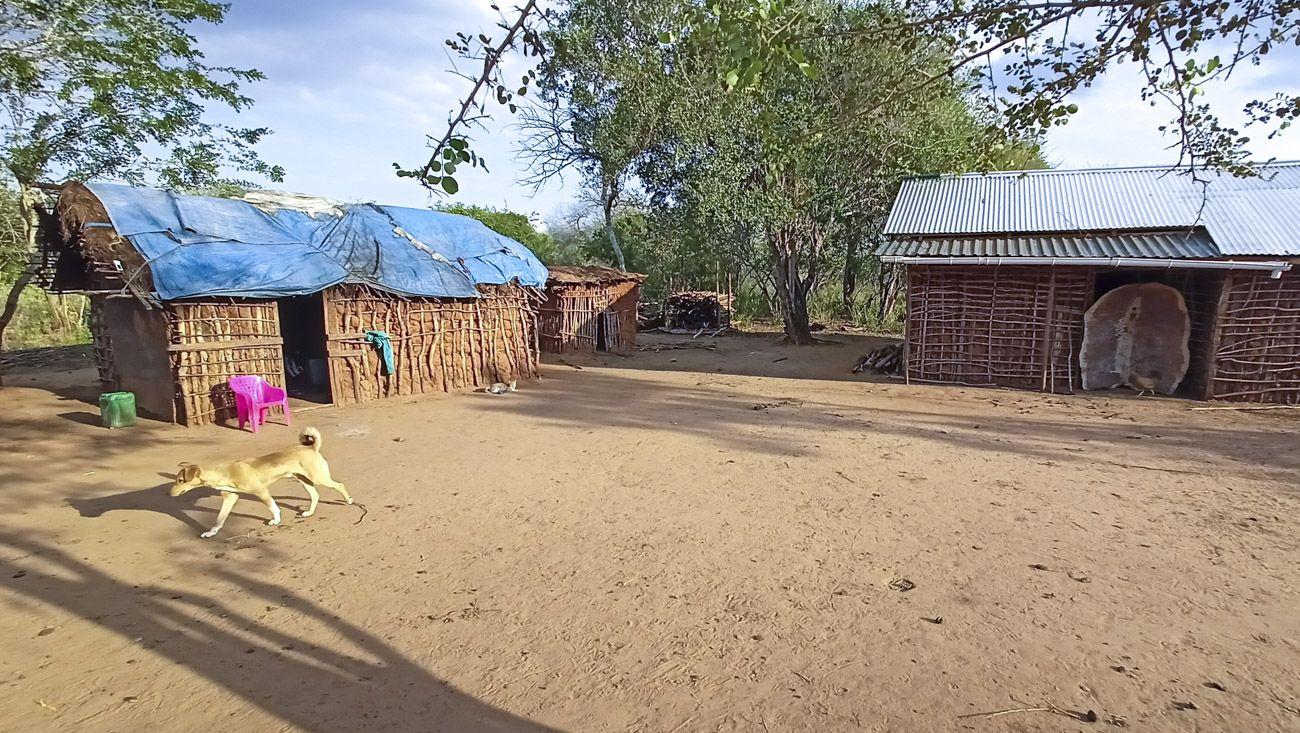
Traditional Maasai houses in a boma (a homestead typically consisting of a few family huts plus enclosures for cows and goats) look a bit different. They start by setting up a frame made from what they call “thicker” trees—though in their case, “thicker” means trunks about 5 centimeters in diameter. Then they weave thinner shrubs horizontally through these upright posts, creating a kind of basket. Into that “basket,” they toss some mud, and presto, the house is complete. They end up with a sort of woven basket, pack it with mud, and voilà—instant home. The roof is made of shrubbery but covered with a thick plastic tarp—something like the canvas used on cargo trucks.
Boma.
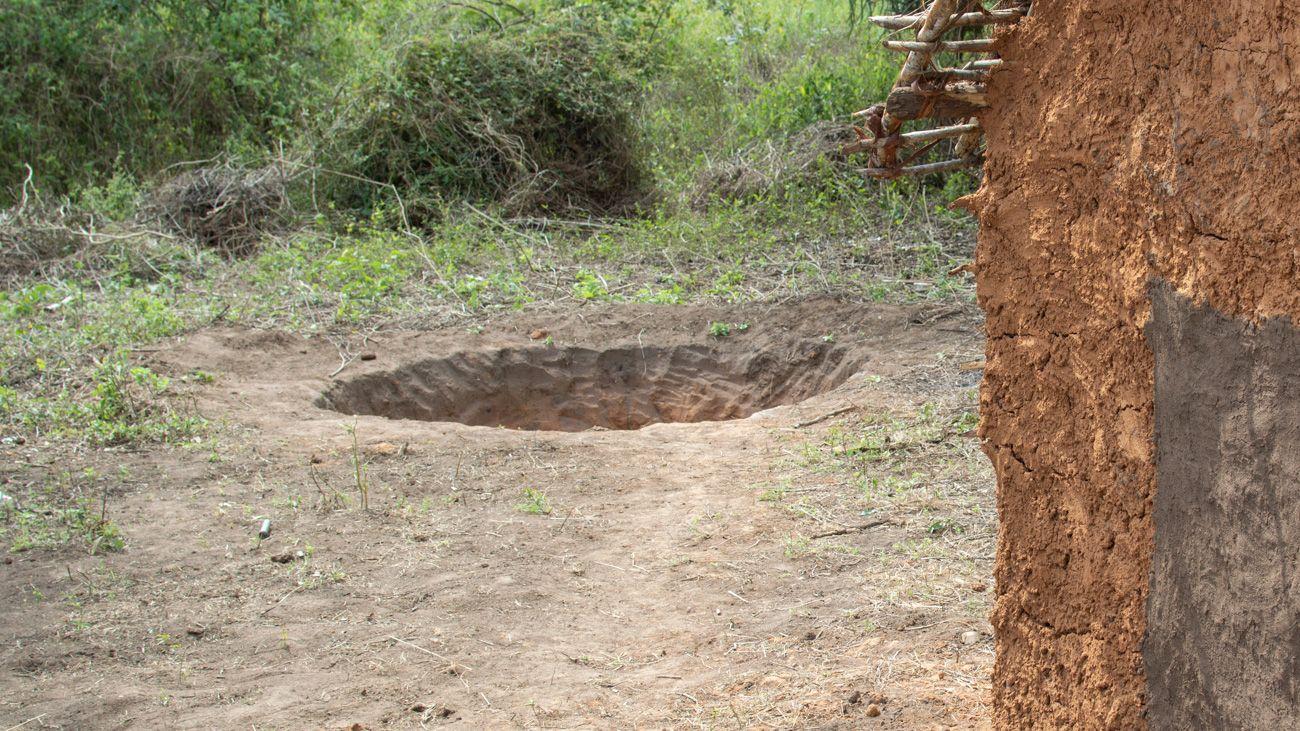
Behind every house, there was a pit stocked with material for fixing the place up. The surrounding soil was sandy, but once they dug down, they found a layer of rich, clay-like earth. If part of the house fell off, they simply jumped into the pit—only about three meters away—scooped up some clay, and patched whatever was damaged. Things got interesting when the beams finally failed, sending the entire home toppling over—but honestly, nobody seemed to mind. Building such a house took a single person about a month, and they still managed to herd cows and handle other chores in between. If multiple folks teamed up, the house could be done in just a few days.
A typical Maasai house has no windows. It has only a small opening, something you might call a firing slit. I can’t tell if they shoot arrows through it, hurl spears, or just fling filthy looks at the great outdoors. Inside, there’s a single room. Two beds along the sides sleep everyone. There’s also a shelf with pots and a handful of basic tools. At the end of the short hallway are the water containers. That’s practically the entire property of a Maasai family—besides their cows, of course. In the boma, I also spotted a small hut used to store corn and whatever else they don’t currently need. By that, I mean everything except the pots, water containers, a motorbike, a phone, and their cows.
Source of construction materials.
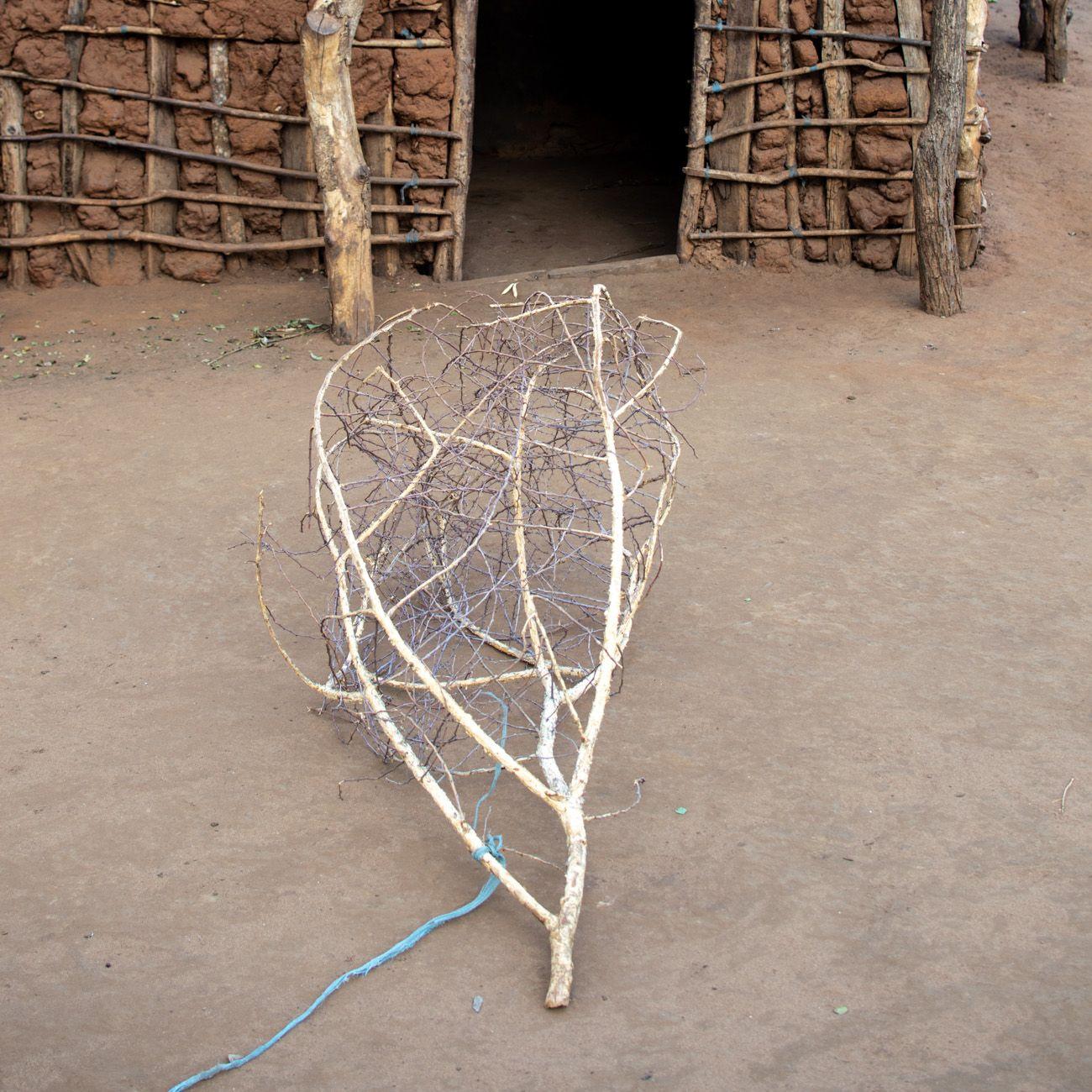
Some houses had plaster and cheerful lettering. Others had none at all and gave off a temporary vibe. In the old days, all houses were temporary anyway, because the Maasai frequently roamed with their cows in search of fresh pastures, tearing down their homes and rebuilding them over and over. The doors were quite a spectacle. They stayed wide open all day—what with women and kids constantly passing through—but in reality, they weren’t doors at all. The more traditional option was simply a strip of dried cowhide. The top prize for door creativity goes to the acacia shrub molded into a squash-racket shape. Lean this “racket” over the opening, and you’ve got yourself an instant door.
Doors that require manual opening and closing, known as manual doors.
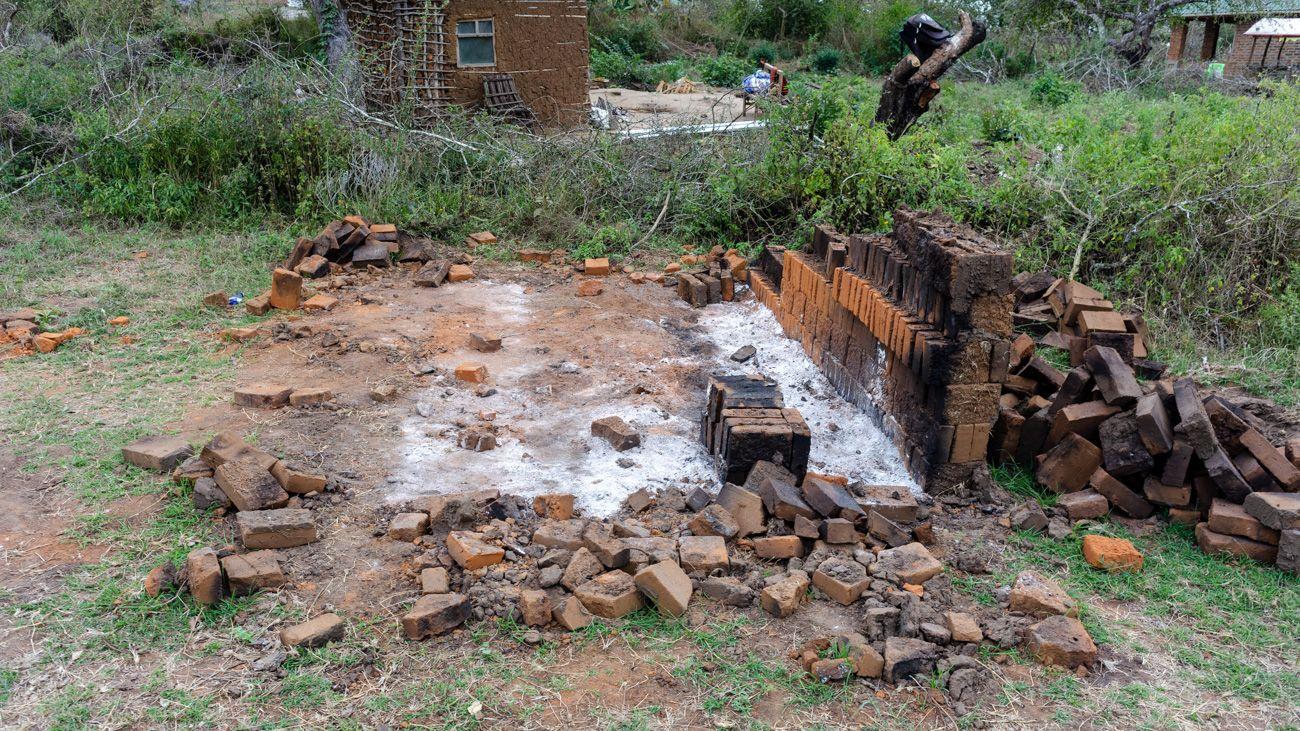
Some of the wealthier folks in the village built their houses with fired bricks. A few of these bricks were only fired at the bottom—so the water wouldn’t wash them away—while the top half remained unfired. Ali, who lived on Renča’s land, made bricks himself. He built his own place and also built one for her. Since his wife worked as a cook in a local restaurant, they often hung around there. That meant I had plenty of chances to snap pictures of how people fire bricks at home in Africa, but there simply wasn’t time. I was so acclimatized that I just had to sit around, stand about, and chat. It never really worked out, but I did manage one shy snapshot of the furnace where they fired the bricks. They actually build the kiln using unfired bricks. A fire is lit inside, firing the bricks, and then the whole kiln gets dismantled. Sure, these bricks crumble a bit—brush against a wall and you’ll end up with dusty clothes—but in principle, they withstand the rain and don’t dissolve like the unfired kind. They might shed a little dust—lean on a wall and you’ll look like you’ve wrestled a chalkboard—but at least the rain won’t reduce them to mush like the unfired variety.
Besides the brick kiln, I also recommend a point of interest in the background—Ali's house has a window.
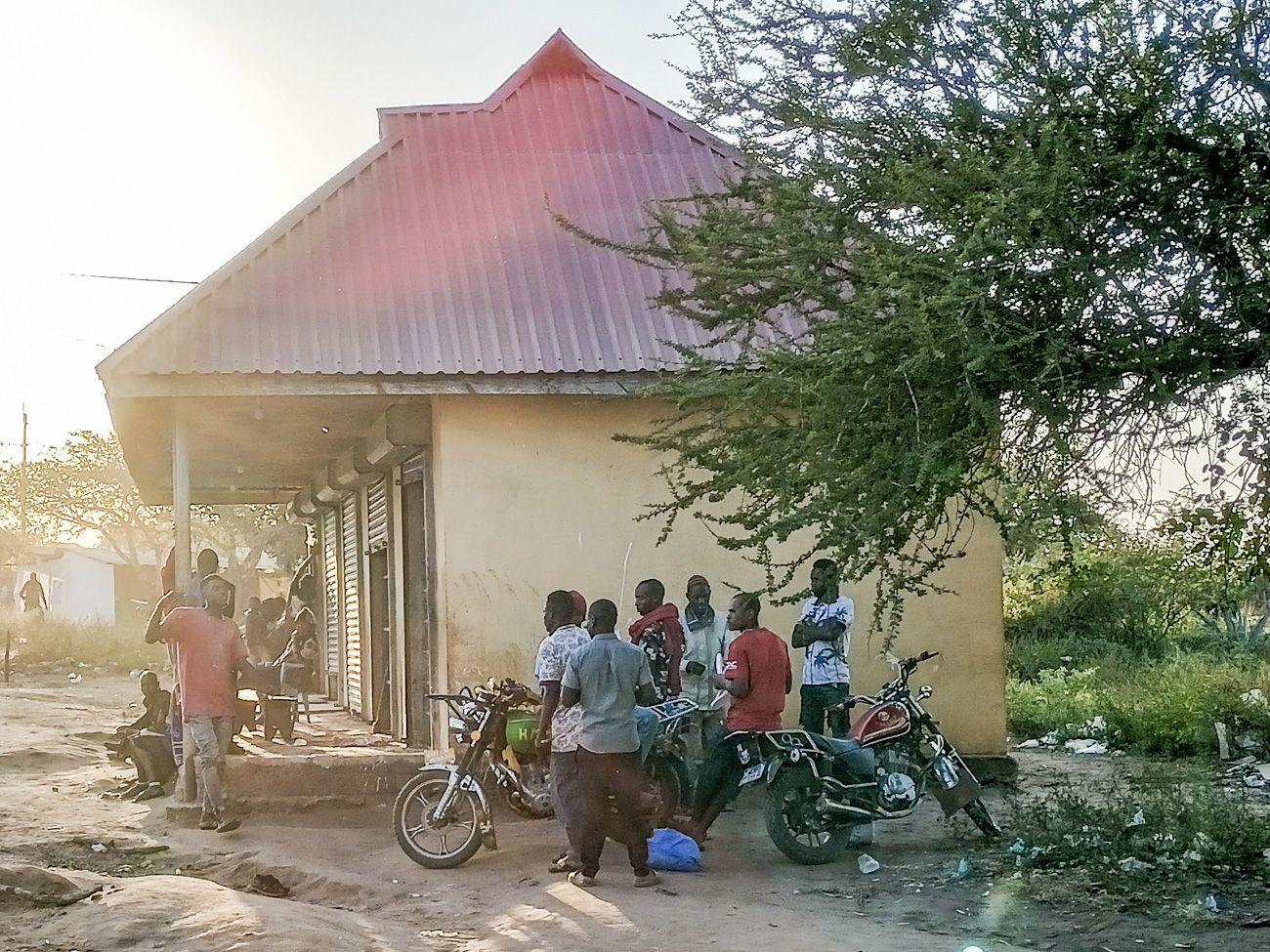
One peculiar category of buildings in the village bore a passing resemblance to prefab garages. They were, however, built of bricks and always sat on a raised platform to protect them from rainwater. Sometimes there were several of them side by side in a single block—five, four, or three units—but occasionally there’d be just one standing all by its lonesome.
Garages, apartments, shops, workshops, Swahili people – all rolled into one.
They couldn’t really function as garages, if only because cars rolled into Mbogoi about as often as cell signals did—and then there was that raised floor. These “garages” generally served as rental spaces for shops or street food stalls. If someone decided to rent one as a place to live, that worked too. Close to our house, Swahili folks lived in a double-garage setup. During the week, they were hardly around, but come the weekend, they made full use of their “garage.” These structures add a unique Mbogoi vibe—complete with idly loitering Maasai looking on.