Mzungu Boda‑Boda, a.k.a. the Cargo‑Class White‑Rider part 1 - The Outbound Leg
Listen to this text
I’ve probably already rattled on about the hair‑thin difference between a piki‑piki and a boda‑boda. A piki‑piki is a plain motorcycle ridden by a plain human. A boda‑boda is—hold on to your crash‑helmet—the exact same motorcycle ridden by the exact same human. The crucial twist is that the boda‑boda bills its cargo or passenger for the privilege of bouncing along. In practice the alchemy works like this: a piki‑piki putters past, you wave it down, offer a fistful of shillings, and the rider whisks you away. In that instant the humble piki‑piki transmogrifies into a bona‑fide boda‑boda. In the next chapter the patient reader will behold this everyday miracle with their own literary eyeballs. I repeat: patient reader.
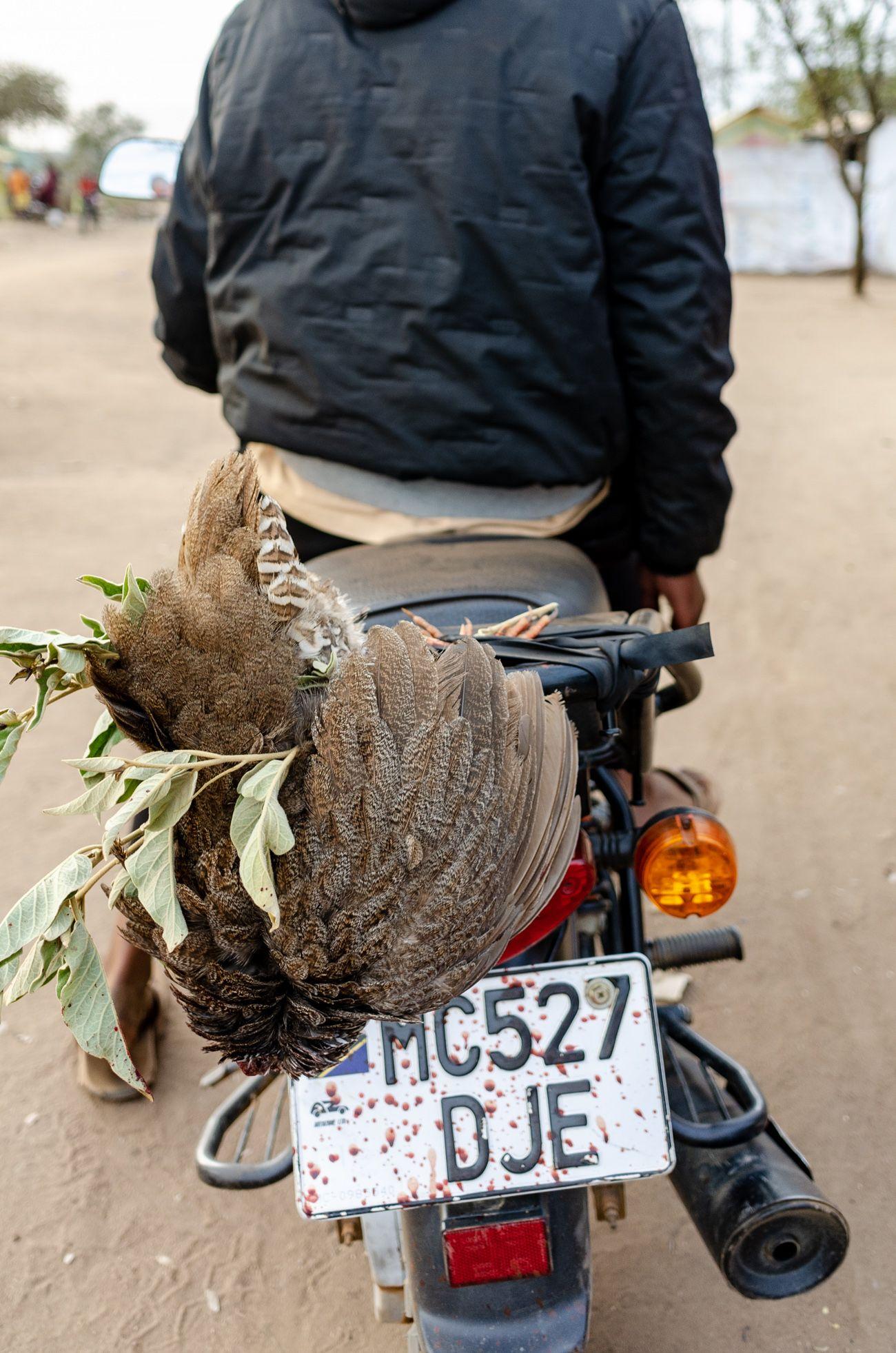
The hen after its showdown with a motorbike - and the battle‑hardened boda‑boda pilot Jaffar.
Boda‑bodas are Tanzania’s de facto national wheels. In every town—grand, dinky, or half‑imaginary—knots of riders lounge on the corners, happy to whisk you anywhere for a fistful of shillings. Even in my speck‑sized Mbogoi—population one‑hundred‑and‑a‑bit—about ten bikes sat perpetually at attention: fetching jerrycans of water from Bondeni, lugging two‑or‑three sacks of maize, or dropping a random Maasai back to his boma. Imagination here hits no speed limits, and the locals are lavishly supplied with it. Need a 170‑centimetre fridge hauled forty kilometres from Handeni? Easy—strap it on and twist the throttle. And forget the polished‑shoe taxi vibe. No one is a “professional driver” until his fuel money runs out; then - abracadabra - he’s a boda‑boda. The gig economy, African edition.
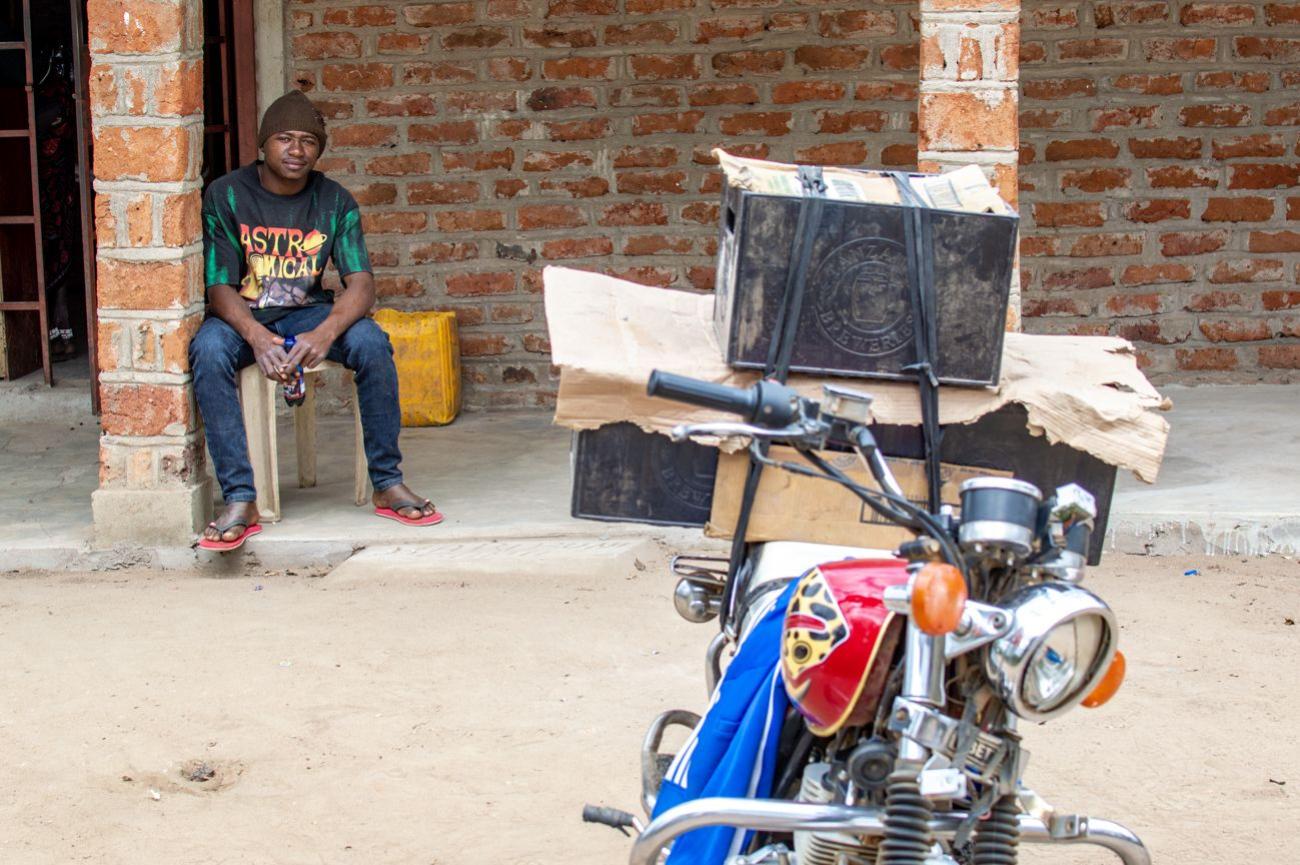
Boda‑boda hot‑shot Mau could never keep “Jano” in his memory bank, so he rechristened me Jóna. And please, do feast your eyes on that top‑tier biker “safety” footwear..
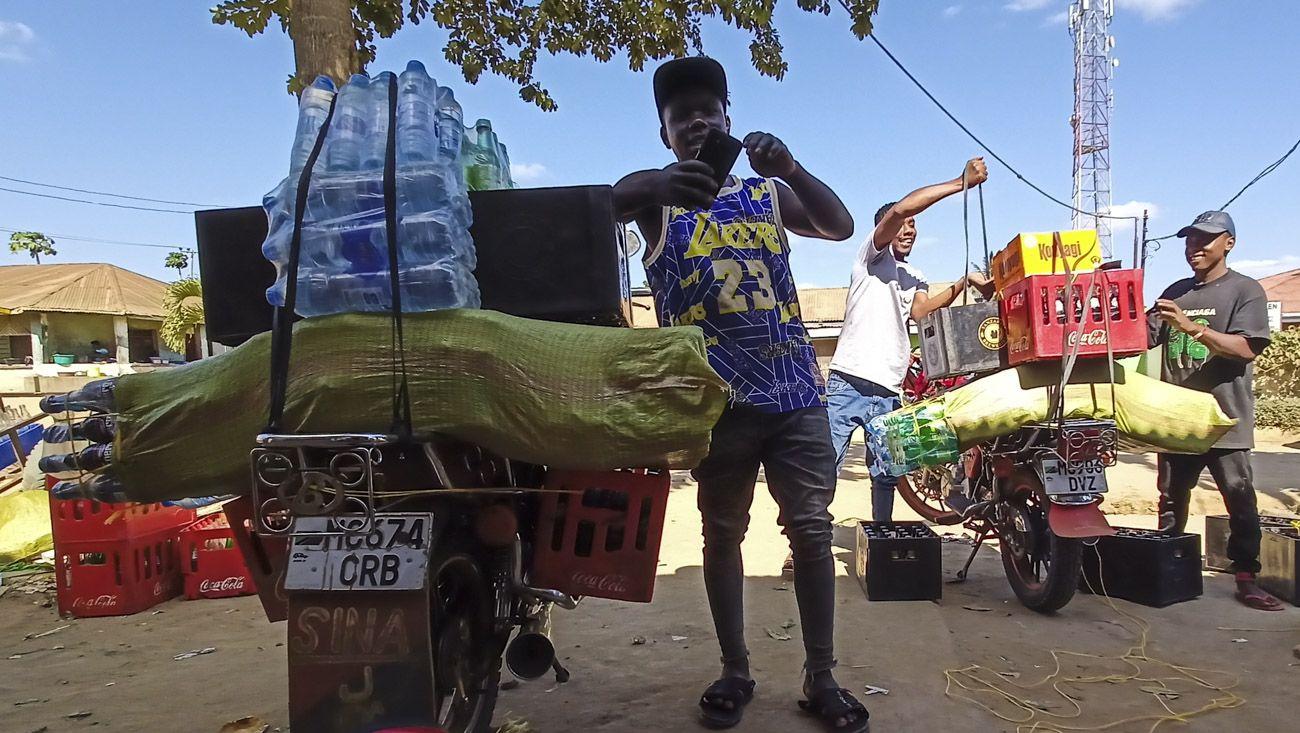
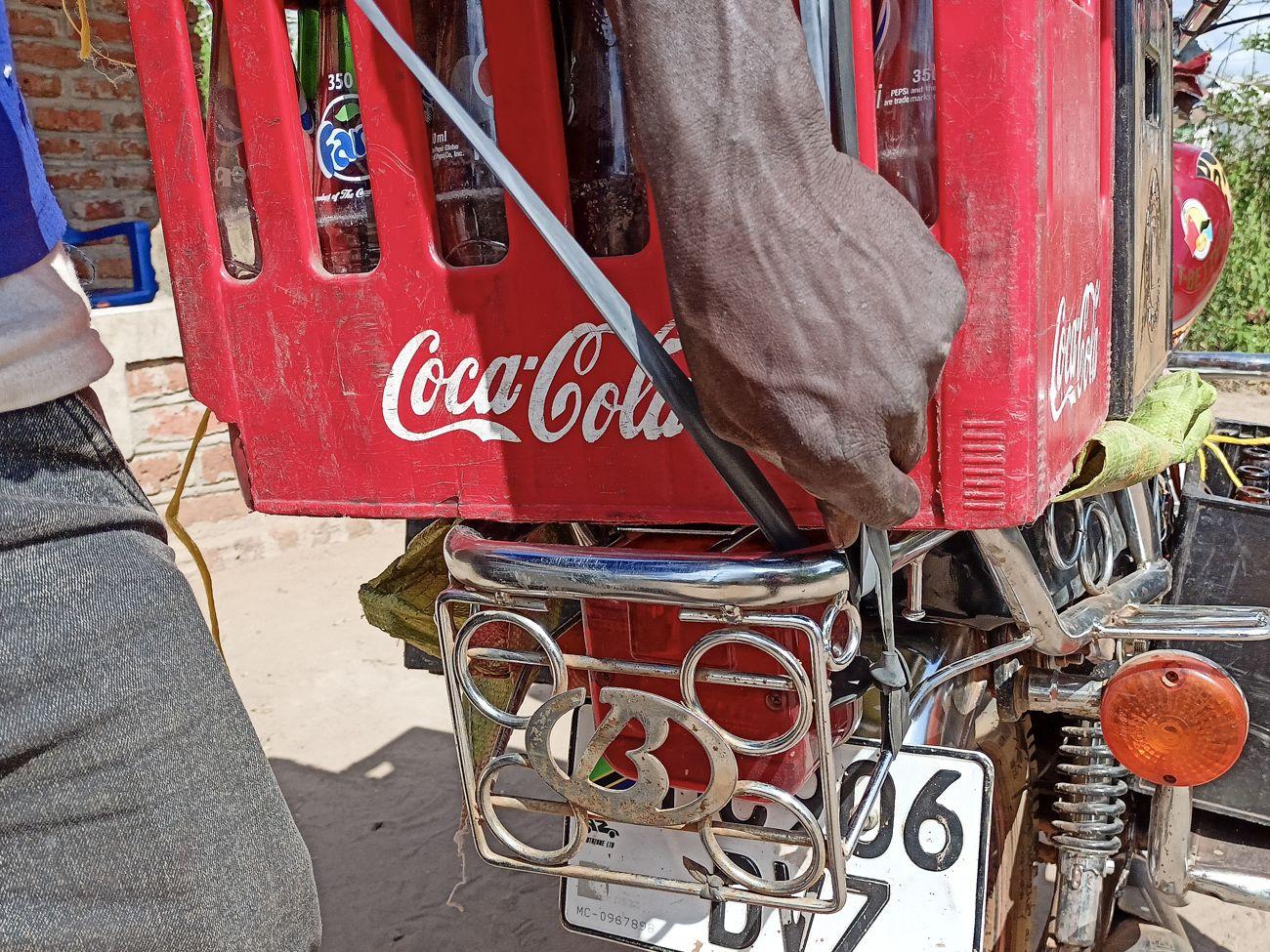
For example, every speck of stock for our in‑house shop turned up on a boda‑boda. Renča had a gentleman’s agreement with a wholesaler in Handeni: the rider got paid not when he collected the goods, but the next time he swung by. The system was beautifully elastic—call at four in the afternoon and, by half past seven, a boda‑boda would growl into the yard, motorbike sagging under mountains of fizzy pop and hard liquor. The loads were so ludicrous that, had a European traffic cop witnessed them, he’d have pulled the rider over and carried out the death sentence on the spot. These lads blitzed forty kilometres of pulverised dirt track out and the same distance back, often in the dark. Technically the bikes had headlights, but a lone birthday candle would have offered comparable illumination. Clearly, the Handeni region specialises in breeding humans with built‑in night‑vision goggles.
Motorbike? Night. Crates of beer stacked to the ceiling. That sounds like a solid binge. Not like hard work.
My scandalously over‑talented brain—already groaning under the weight of its own brilliance—hatched yet another shimmering idea. Sekenoi spends most of the day orbiting the house, the motorbike gathers dust, so why not fire him off to Handeni whenever the shelves go bare? Easy peasy: we save cash, we make cash, everybody beams like a toothpaste advert.I got so smitten with this stroke of genius that I suggested we tackle the maiden run together—two riders, two bikes, maximum shopping haul. I’d snag a joy‑ride, Sekenoi would get a field test in the noble art of boda‑boda logistics, and the shop would be bursting at the seams. If this were a movie, the soundtrack would now drop into ominous, rumbling cello mode. But it’s only ink on a page, so hum along with me: la‑la‑la‑la‑la‑la‑la‑la‑la‑la‑la‑la‑la‑la‑la‑la‑la.
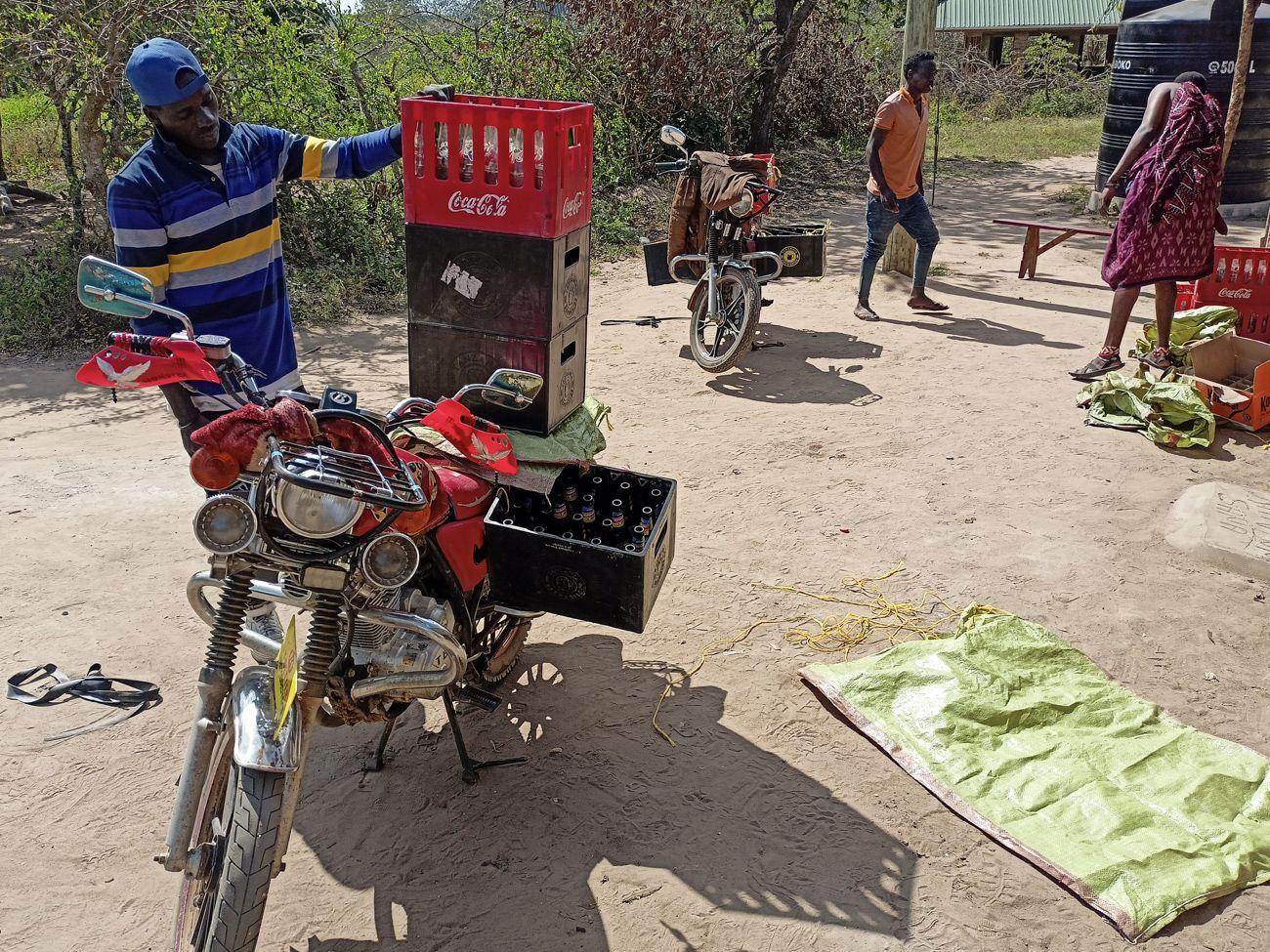
The boda‑boda jockey is off‑camera doing pre‑race stretches—and yes, that heroic athlete is me.
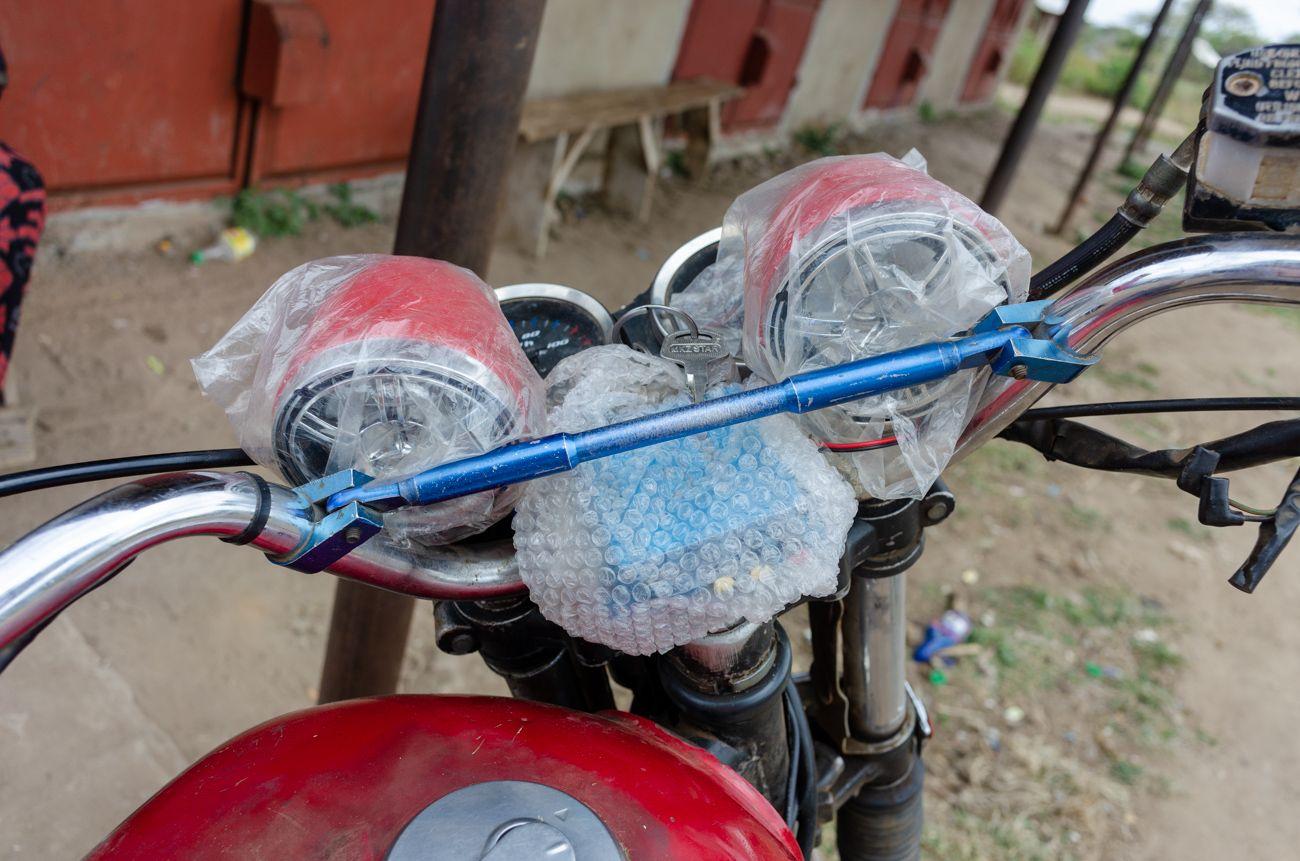
Right then—game face on. Morale’s sky‑high, the air practically crackles with optimism. Sekenoi has magicked up a second bike from somewhere; I’m borrowing his own steed. Never mind that the throttle grip is split like an overripe banana and the right foot‑peg is a half‑melted pretzel. We load crates of empty bottles while the peanut gallery fires off helpful wisecracks. Everything gets lashed down with the universal Tanzanian cargo system: rubber straps—probably sliced‑up inner tubes—plus a length of plain old string. I’ve noticed everybody uses this rig, from iron‑bottomed pros who rack up hundreds of kilometres a day to flailing amateurs of my distinguished calibre. Bike packed, I attempt to mount. There’s maybe twenty centimetres of seat left, so half my backside ends up on the fuel tank. Down at foot level the crates crowd the pegs so tightly I’ve got about ten centimetres to spare—just enough room for a token heel. I’ve seen circus bears ride bicycles on TV a few times. With this seating position I reckon I could give the lad a run for his money.
No worries. A glorious day of adventure lies ahead, so off we go. The load behind me—secured with nothing but rubber straps and twine—has a mind of its own. The straps plead for obedience, but the cargo wriggles like a hundred kilos of drunken jelly, desperate to stagger back home. First sizeable pothole: wham. I lose my balance and cling on with tooth‑and‑nail heroism. Just—just—save it, but only by sideswiping an acacia bush. My left sandal, once radiantly yellow, is now fashion‑week crimson. I pull over to catch my breath and wonder whether I shouldn’t donate this blood to a worthier cause. Giving blood is noble, after all; the lucky recipient could even spend a moment chewing on my gore‑soaked sandal. Still parked—but here’s a fresh snag. I can’t prop the bike on its stand: the centre of gravity’s sky‑high, the track is pure sand, and the stand itself wobbles like a pensioner on rollerskates.
They may be mere illustrative frames, but it was at this very right‑hand fork that I managed to lose myself completely.
No harm done—the blood on my foot crusts over in record time and I chug onward. Somewhere up the track Sekenoi has vanished into the heat shimmer, but a minute later I spot “him” again and bravely keep pace. Second right turn: my leader pulls up outside a random Swahili house—and only then do I realise it isn’t Sekenoi at all. Bravo. Lost again. I’ll be writing to the IOC: let’s add Competitive Disorientation—finally a sport where I’m podium material. I attempt to query a gaggle of bystanders for the way to Handeni, armed with exactly four Swahili words: “good‑day”, “good‑night”, and the numerals “one” and “two”. Unsurprisingly, conversation stalls. After creative head‑scratching I cobble together a question: “Masai, Masai, boda‑boda?” Blank stares. Their eyes say it all: Mzungu may be infinitely rich, but he’s also infinitely dim. Fine—there aren’t that many main roads; surely even I can’t get more lost. I rumble on toward Handeni until I spy two elderly Maasai by the verge. Skidding to a halt I ask, “Masai, boda‑boda, Sekenoi, Saramba, Lengusero, lala salama?”—punctuating the sentence with a victory‑sign so vigorous I nearly gouge out an eyeball. The old gents regard me with something closer to pity than curiosity and shake their heads. I shake mine in reply—only to notice Sekenoi parked right behind me. Hallelujah! Tales of the mzungu’s razor‑sharp brilliance will clearly not remain a Mbogoi‑only secret; they’re now roaring across the countryside at the speed of a wandering, bottle‑laden boda‑boda.
These clips aren’t from my actual boda‑boda escapade—they’re just illustrative. Though frankly, nothing illustrates the vibe better than Alojz himself, confidently manning the motorbike.
The ride rolls on, almost all the way to Handeni, and everything is peachy. The sloshed jelly wobbling behind me—lashed down with rubber straps—seems to be sobering up, or maybe I’m just getting used to its hangover sway. Half‑metre potholes around half‑built bridges? Child’s play. The breeze is warm, the road slides past, and I’m convinced the whole planet is about to turn bubble‑gum pink while towns embrace villages in a global cuddle‑fest. Just outside Handeni, a smiling police duo—one male, one female—flag us down. Sekenoi gets zero airtime; they make a beeline for me and ask for a licence. With my mouth full of dust I manage only gravelly gargles, so I chug some water and grin like a toothpaste ad. Works a charm. Their English stretches past ten words—shockingly long sentences pop up, possibly even in past tense. I hand over my Slovak licence; nobody else round here even owns one (reading and writing not exactly the national hobby).
The officer‑in‑charge—she—studies it, then declares it expired, waving a Tanzanian licence photo that actually has an expiry date. Mine only sports a “date of issue”. Renča swore I didn’t need an international permit; she’s driven for years on her Slovak one and nobody blinked. (Later I’ll learn Tanzania technically wants the international version, but right now my conscience is spotless). Five minutes of lion‑hearted arguing later the officer caves, hands back the blue plastic card, and I mentally fist‑pump: Mzungu vs. Tanzania, score 1–0. Classic “good‑cop/bad‑cop” vibes: the bloke offers me a stick of sugar‑cane—just fuel for round two, I suspect. I toy with playing my own split‑personality game: “good me / bad me”. Maybe if I fake schizophrenia they’ll wave us through. Still, the whole scene stays weirdly friendly—plenty of smiles, plus side chatter between Sekenoi and the guardians of whatever their official title is today.
Round two: machine fitness. Around here the official safety checklist boils down to three items: engine rumbles, wheels spin, tank holds at least a sniff of petrol. Busted lights, severed indicators, half‑a‑peg, a kilo of rust—no one bats an eyelid. No one except my new best friends in uniform. The bike I’m riding—buried under crates of empties—barely scrapes through even that lenient test. Everything apart from the head‑light is smashed or missing, and there’s more oxide than chrome. The “bad” cop taps each fatal flaw in turn and fixes me with a look of pure accusation. I’m still unsure what result she’s after—confession? Weeping? Then they demand the bike’s paperwork. Paperwork? Out here? If such a thing ever existed it was lost around the time the dinosaurs clocked off. We’re still waiting for Africa’s own Gutenberg to be born. The duo confer, beckon Sekenoi, mutter. He returns: they want 1.5 million Tanzanian shillings. For context, that’s two‑and‑a‑half years of a herder’s wages—or enough for Ali in Mbogoi to buy a plot and build his house three times over. Roughly €400 at today’s rates. Scoreboard update: Mzungu vs. Tanzanian – 1 : 1.5 million. I joke that perhaps they’d prefer a freshly harvested kidney. Three blank faces: humour clearly pays the same duty as the bike’s indicators—none.
Handeni’s looming on the horizon, and the traffic jam is reaching full absurdity levels.
So there we were, crouched in the scrub, pretending to confer in hushed tones. We were playing a game I’d seen a dozen times here: “I know you’re there, but I’ll pretend I don’t because I don’t much care for you.” Many a dispute plays out that way—silent standoffs, sidelong glances. The cops do the same: they pretend we don’t exist, loitering at the roadside, stalking their next victim. After about ten minutes I sent Sekenoi in as our envoy, waving an imaginary white flag. Made me wonder—do they use a white flag in Africa, or is it black? I watched, tense. Our ambassador reappeared with a new offer: 150,000. One zero gone and the score suddenly seemed friendlier. Only hiccup: I didn’t have that much cash. I’d saved 100,000 for the fine—and 30,000 strictly for petrol. So I unleashed a tactic they probably hadn’t seen before: drama. I strode up to the officers, tipped my entire haul (130,000) onto the bonnet, and declared, “That’s everything I’ve got. Jail me or take it and let us ride on.” The members of the Tanzanian police blinked in astonishment—this wasn’t their usual routine. Within moments they were grinning, pocketing the money, and the female officer told me, “Alright, you’re free to go. But don’t let us catch you again—or next time it’s prison and a 1.5 million bill.” Apparently that’s some magical figure. Nine out of ten African shamans swear that 1.5 million shillings brings good luck.
Tiny road for giant trucks, and a highway just for motorbikes. That’s how it should be everywhere.
One last technical hiccup to sort out before we ride off into the dust. The officers had just about promised me capital punishment if they caught me on a motorbike again—and in a few moments, that’s exactly what’s going to happen, since we’ll be heading back down the same road. If they’re still lurking there, I have precisely zero interest in reliving this cheerful little saga. Fortunately, our two Tanzanian constables gladly granted me an exemption. A few seconds later, we leave them coughing in our dust, and my adventure skips happily into the next chapter.
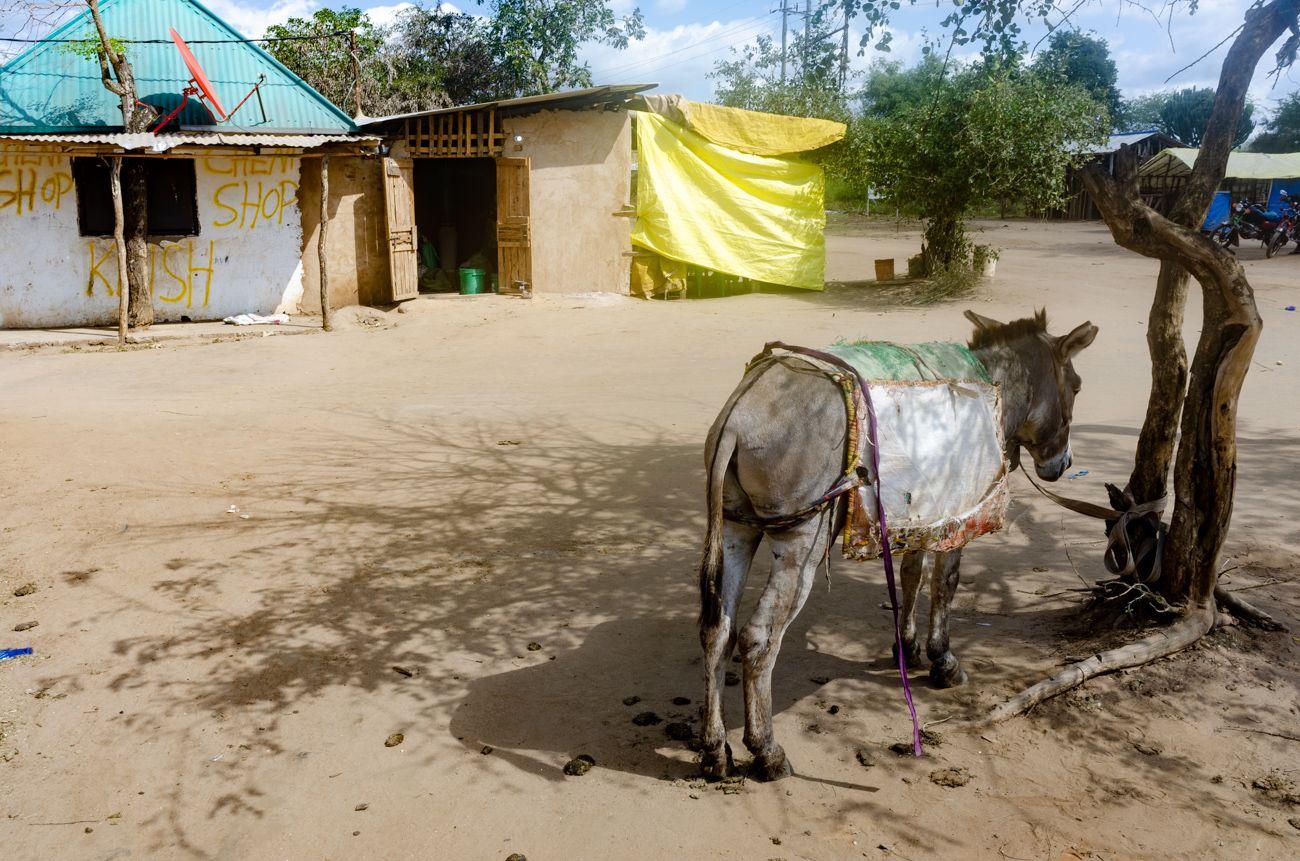
I’m convinced a donkey is just a boda‑boda motorbike that hasn’t realised it yet.