Book EN

One morning, the mayor of Munikiti came by and borrowed a rake. No laughter? That doesn't strike you as funny? Okay, let me try again: one morning, the mayor of Munikiti came by and borrowed a rake. Still nothing? I get it—this story didn’t seem funny to me either, not until I understood the full context.
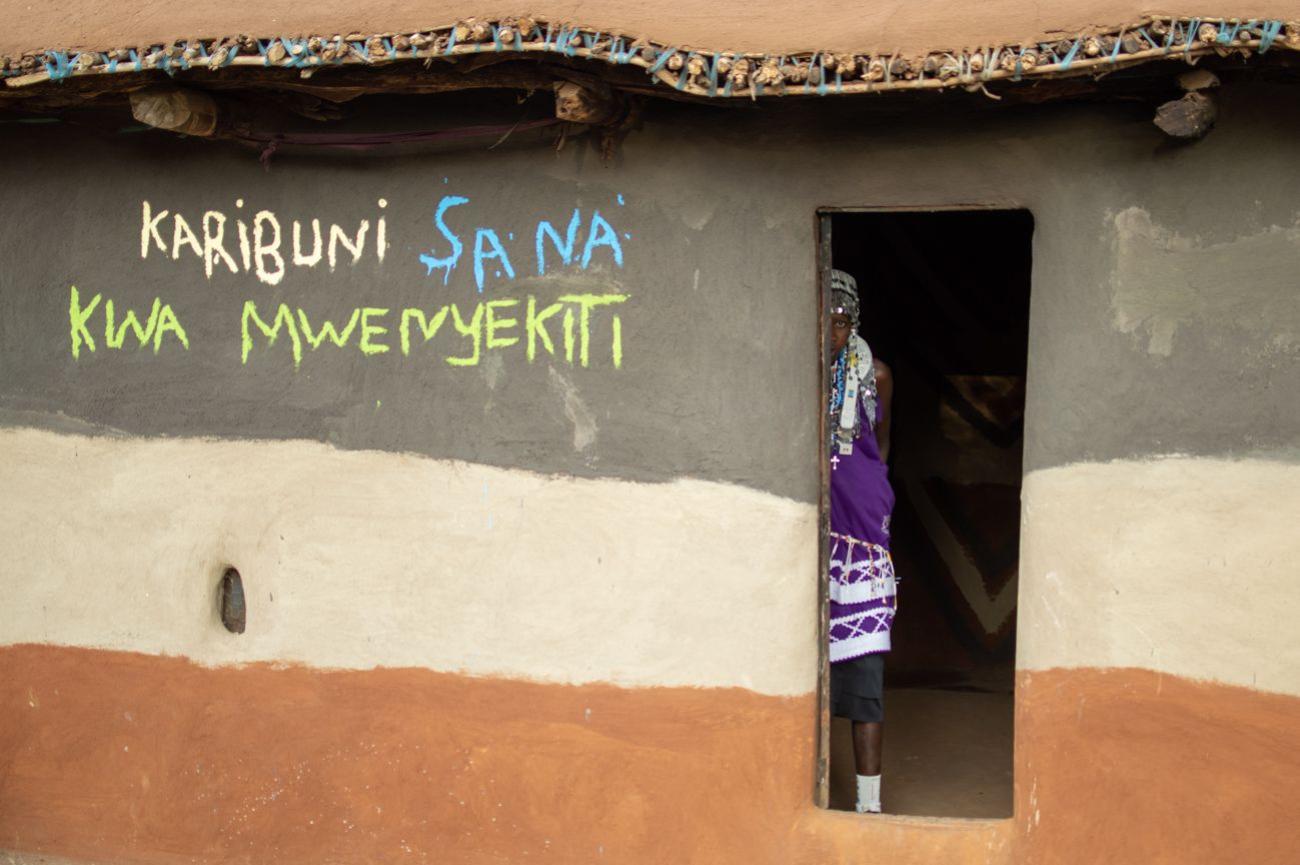
Munikity lives in a fairly large boma. I think they own hundreds of cows, not counting sheep and goats. Back home, even people in apartment buildings probably have a rake. Ten million years ago: the Big Bang. And now—rakes! These innovations will be the end of us.
I don’t know if the rake served its purpose. I don’t think it ever came back. It was probably taken by Nagitok—the non-existent spirit-thief. So once more, for the record: one morning, the mayor of Munikiti came by and borrowed a rake.

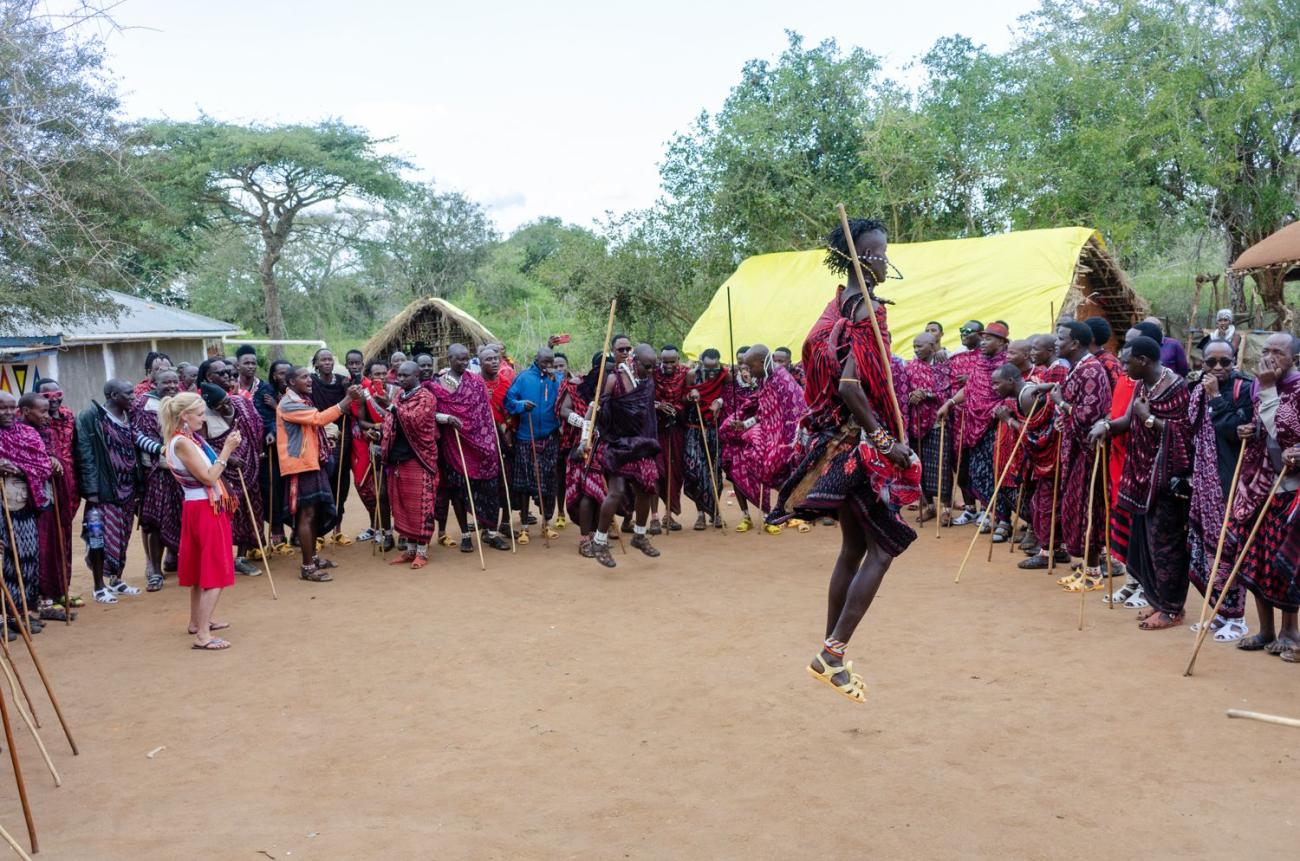
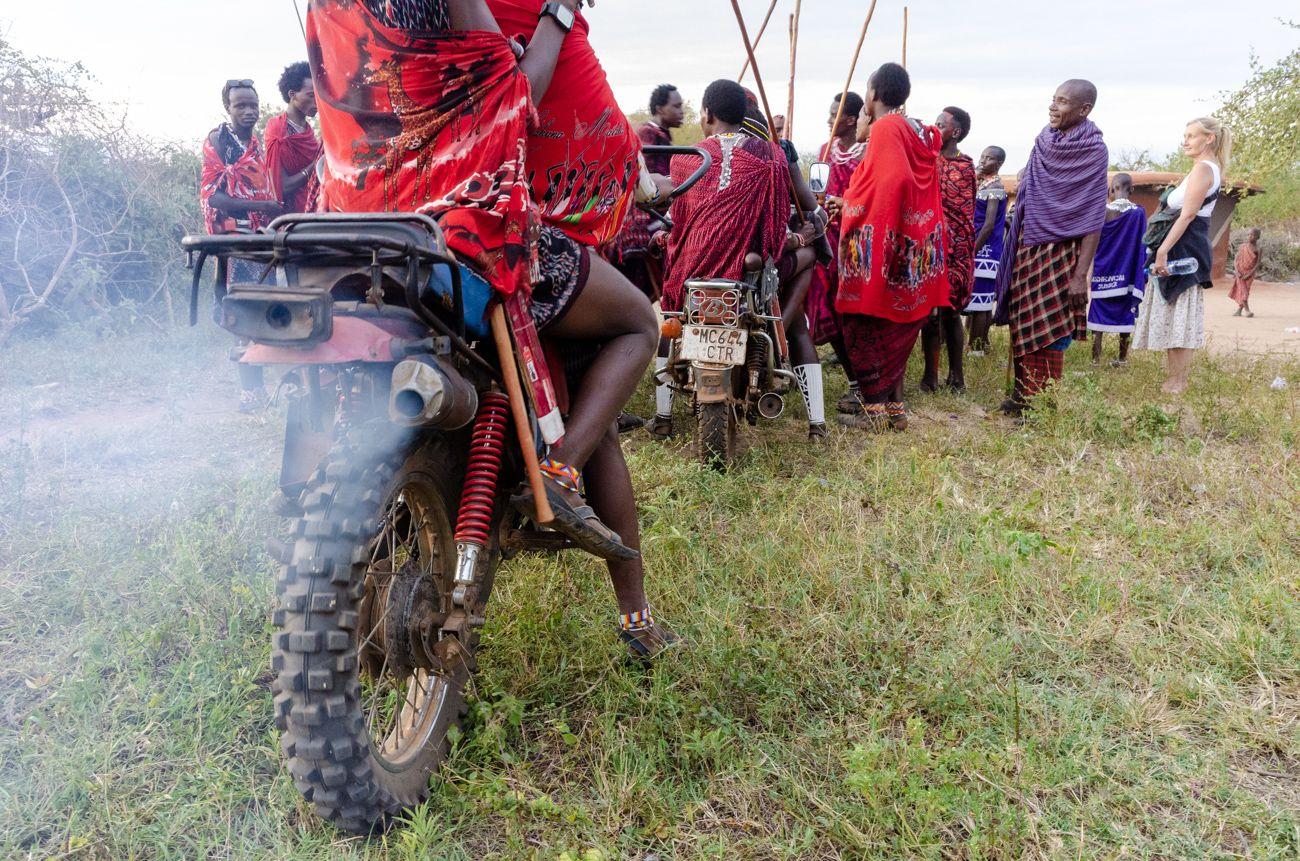
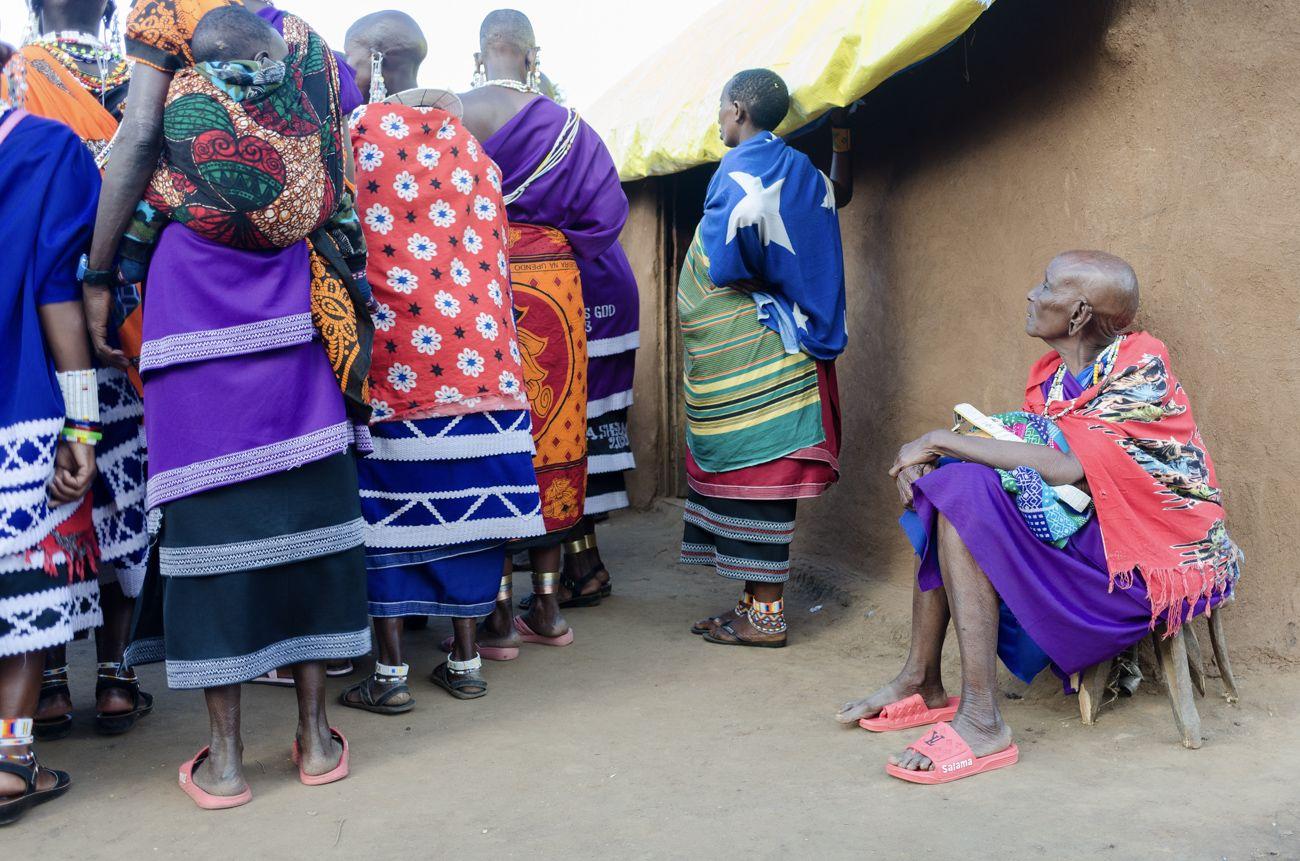
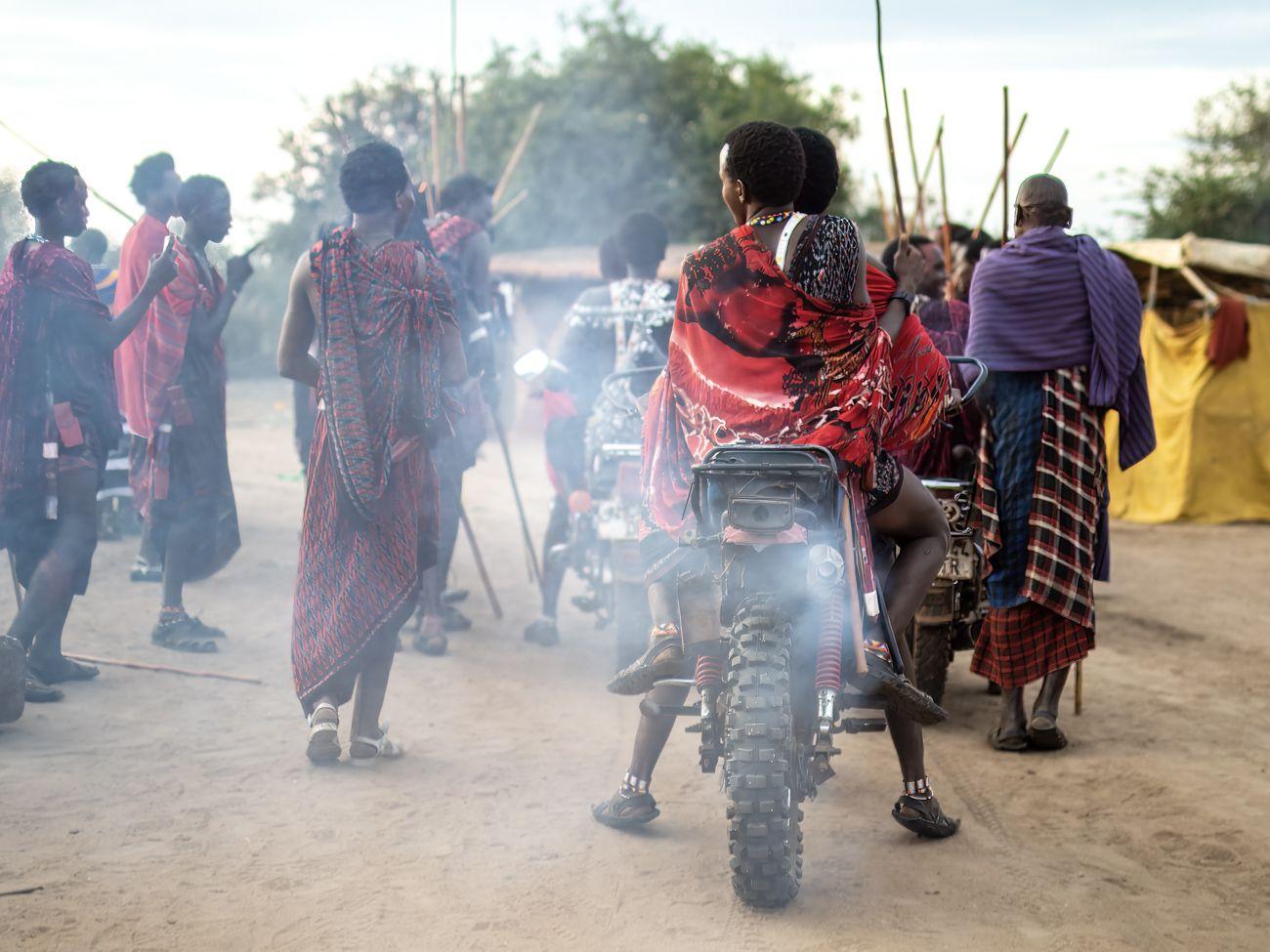
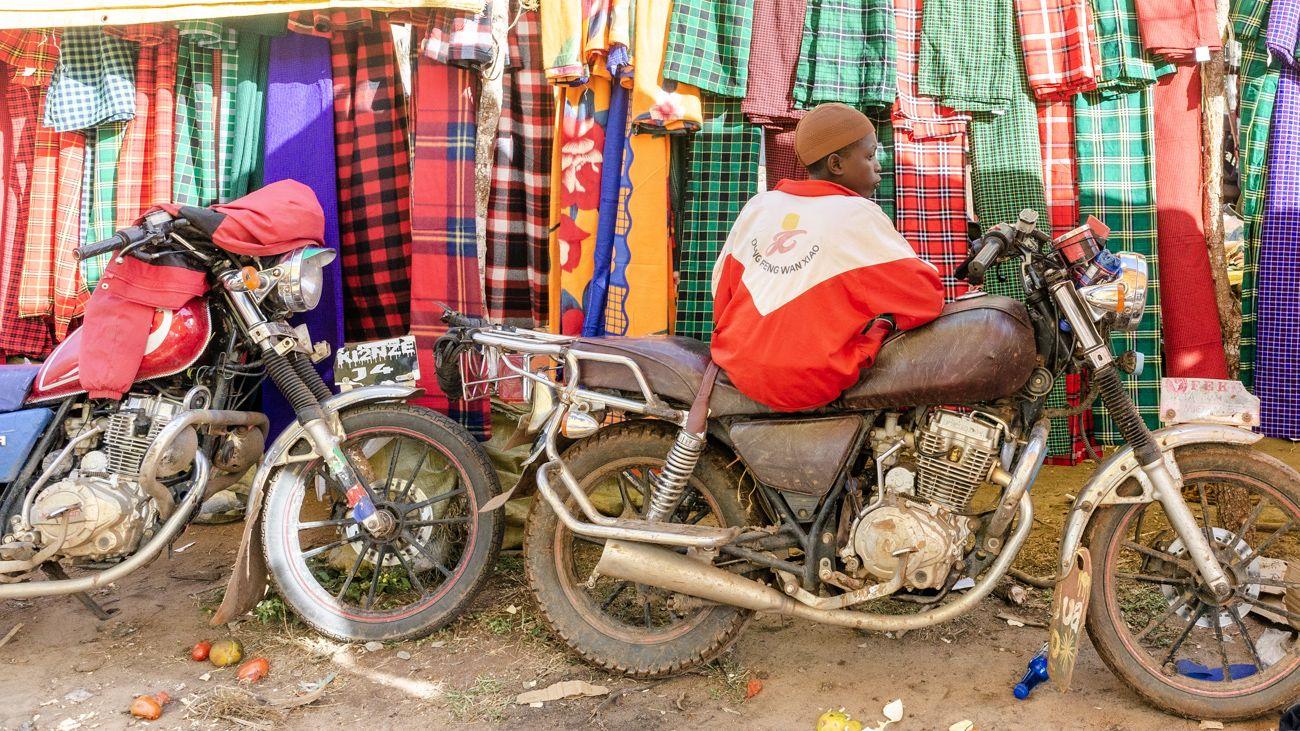
I arrived in Mbogoi right at the start of ball season. Their celebrations, called sikuku, were just beginning—because the heavy rains had finally stopped, the corn had dried, and they had their own maize flour again. The young Maasai hadn’t yet left to work in Zanzibar.Everyone was really looking forward to sikuku, mostly because there would be lots of food—mainly nyama, which is lightly roasted beef—and a show. This show was something like their version of a disco, but without a single musical instrument or recorded music. Everything was created by the Maasai themselves using just their voices. They simply don’t have instruments. No one back home believed me, and to the repeated questions—“Not even a whistle? Not even a drum?”—I kept giving the same answer: nope. But I was slightly wrong. At one sikuku, I saw a motorcycle being used as a musical instrument. The owner sat on it, started the engine, and revved it in rhythm with the music. So it turns out, the only Maasai musical instrument is a motorcycle.

The fact that the celebration season was beginning revealed several signs. As I mentioned earlier, Munikity borrowed the rakes as well as all the chairs that were in the house and around it, along with all the batteries meant to power the solar system. An undeniable sign was when Sekenoi, at nine in the morning, announced, “Get dressed, we're heading to sikuku right away.” Goodness, really. At 12:00, we set off. The three of us went on a motorcycle, as is customary there, but along the way we met another Maasai on a motorcycle, so I was told to catch up with him.

That good man, whenever we encountered someone going to the celebration on foot, felt compelled to talk to them or shout something at them without slowing down. Every time, that meant he was pulled into the bushes. After checking nearly all the bushes along the road to see if any of them wasn’t an acacia, we finally reached a larger local boma where the event was to take place. It's simply a joyful nation whose people have completely worn-out feet.

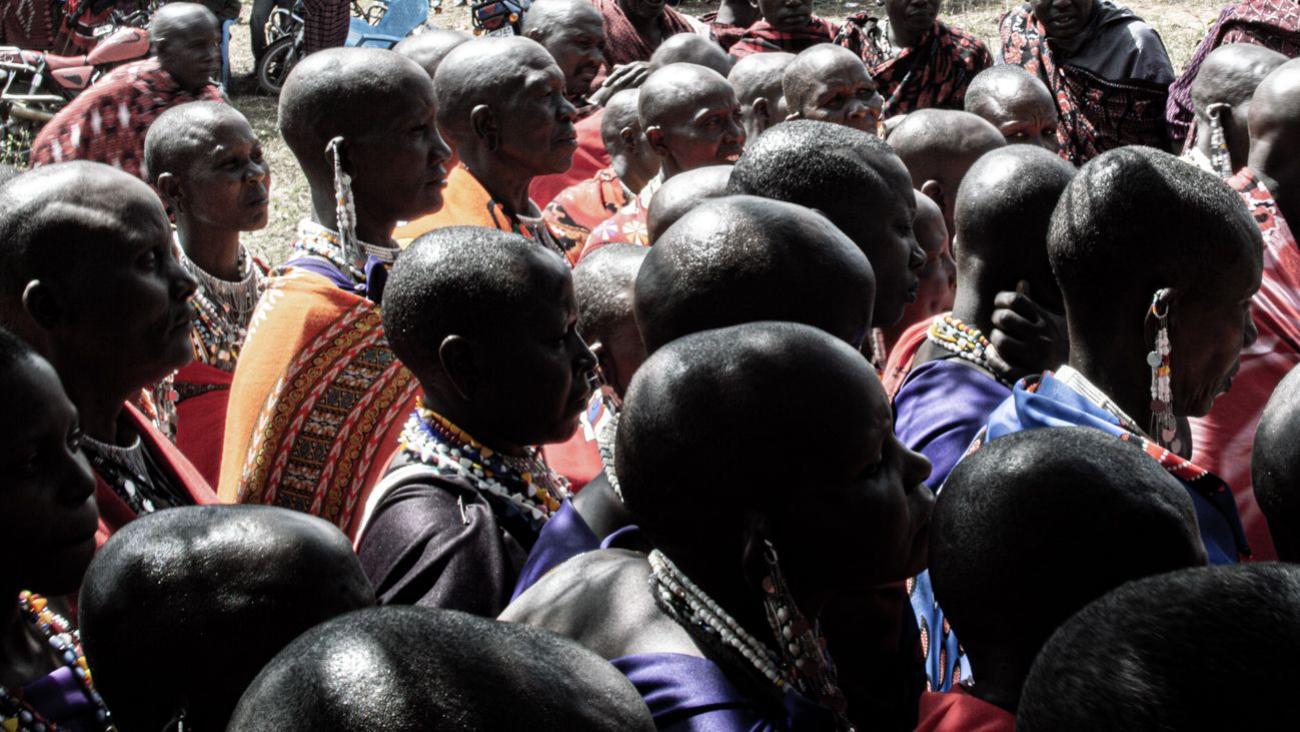
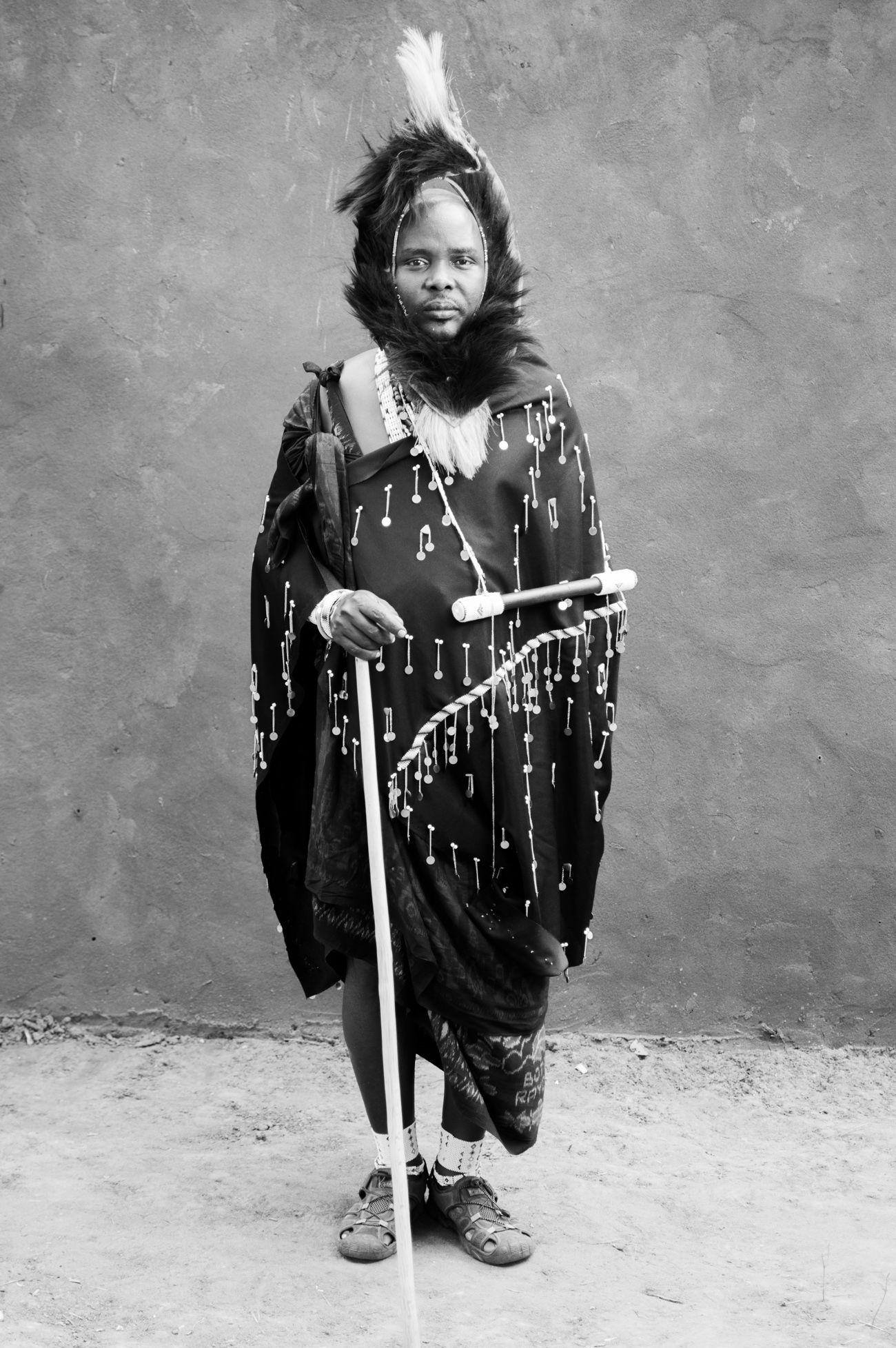
Since they haven’t discovered the delightful tradition of celebrating things for no reason at all, this particular event was held in honor of Munikiti’s daughter, who had just come of age and was now eligible to marry, and a man named Simba. Simba had come of age long ago—so long ago, in fact, that he had stopped being a warrior and officially become a man. I later tried to find out what that change actually meant in real life, but all I managed to learn was that he could no longer have hair—which meant they shaved his head—and he wasn’t allowed to do as many stupid things as he used to when he was still a warrior.

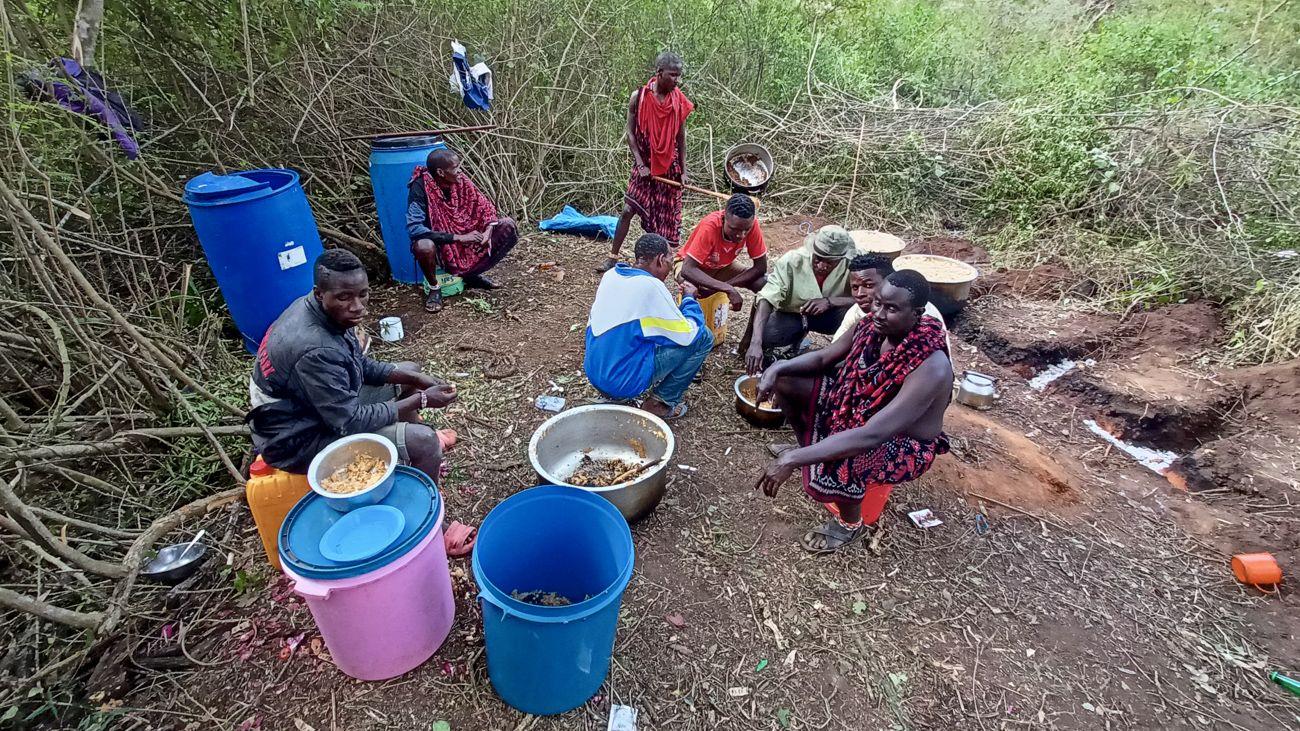
To start off, we were immediately taken around the back, into the trees, where the kitchen was. In this case, “kitchen” meant a narrow, shallow trench dug into the ground with fires burning inside it, and enormous pots placed on top, cooking rice. It wasn’t plain rice, of course, but the ever-popular pilau—rice with special spices. When the rice was done, they poured it into a huge 200-liter barrel. Word was that Munikiti had bought 600 kilos of rice just for this sikuku. Each of us got a big bowl filled with what must have been a full kilo of pilau. And since we were the honored guests, we even got chairs.

There were no tables, and the local habit is to eat everything—anything even vaguely edible—with your hands. The bowl of pilau sat on the ground in front of us, and we scooped up the food by hand and brought it to our mouths. Where else would we bring it? Since the distance from ground to chair is considerable, about half of it ended up on the floor. Everyone else, the civilized locals, sat on the ground and ate with their hands straight from a plate placed on the earth.

Pilau. Pilau. Pilau. Pilau. So much pilau.

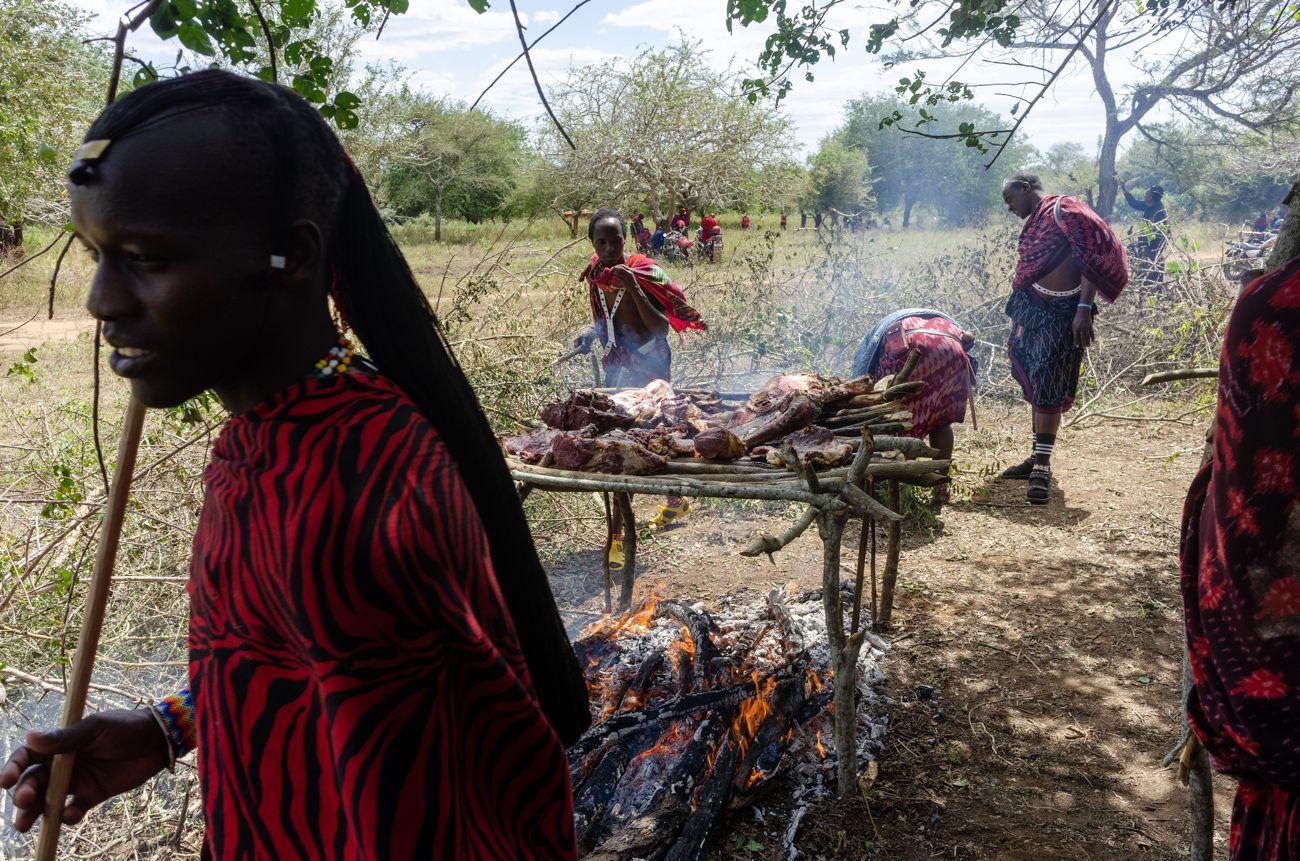
The next course, served only after a several-hour delay, was the golden highlight of every sikuku day. The meat was roasted and smoked on makeshift tables built from bushes, with a fire burning underneath. All the guests had already been waiting impatiently for hours, hoping it would finally be ready.
Personally, I thought “ready” might happen in about four or five days, but eating undercooked, half-raw, chewy meat is a beloved local tradition.
As honored guests of foreign white complexion, we were given the best cut and led aside so nobody else would snatch it from us. After several failed attempts to chew a piece of cow that, in my humble opinion, was still alive and softly mooing, I gave up and we discreetly donated the meat to those who had been looking forward to it the most.

Ňama. Ňama. Ňama. Málo ňama.

The entire cow-roasting operation—people waiting for their lightly grilled nyama and cooks trying their best to lightly grill a cow—took place inside a makeshift enclosure made of acacia branches. It was a circular fence, roughly fifteen meters in diameter. Just like some restaurants display pictures of their dishes, at the entrance to this enclosure, the innards and head of the unfortunate cow were proudly on display. I’ll spare you the photo—those with weaker stomachs might call it quits here. Bon appétit. The enclosure, protecting both the worshippers of nyama and the nyama itself, was placed a fair distance away from the boma, the settlement. Around seventy meters, even though there was plenty of space nearby. I don't need to understand everything—why things are the way they are.
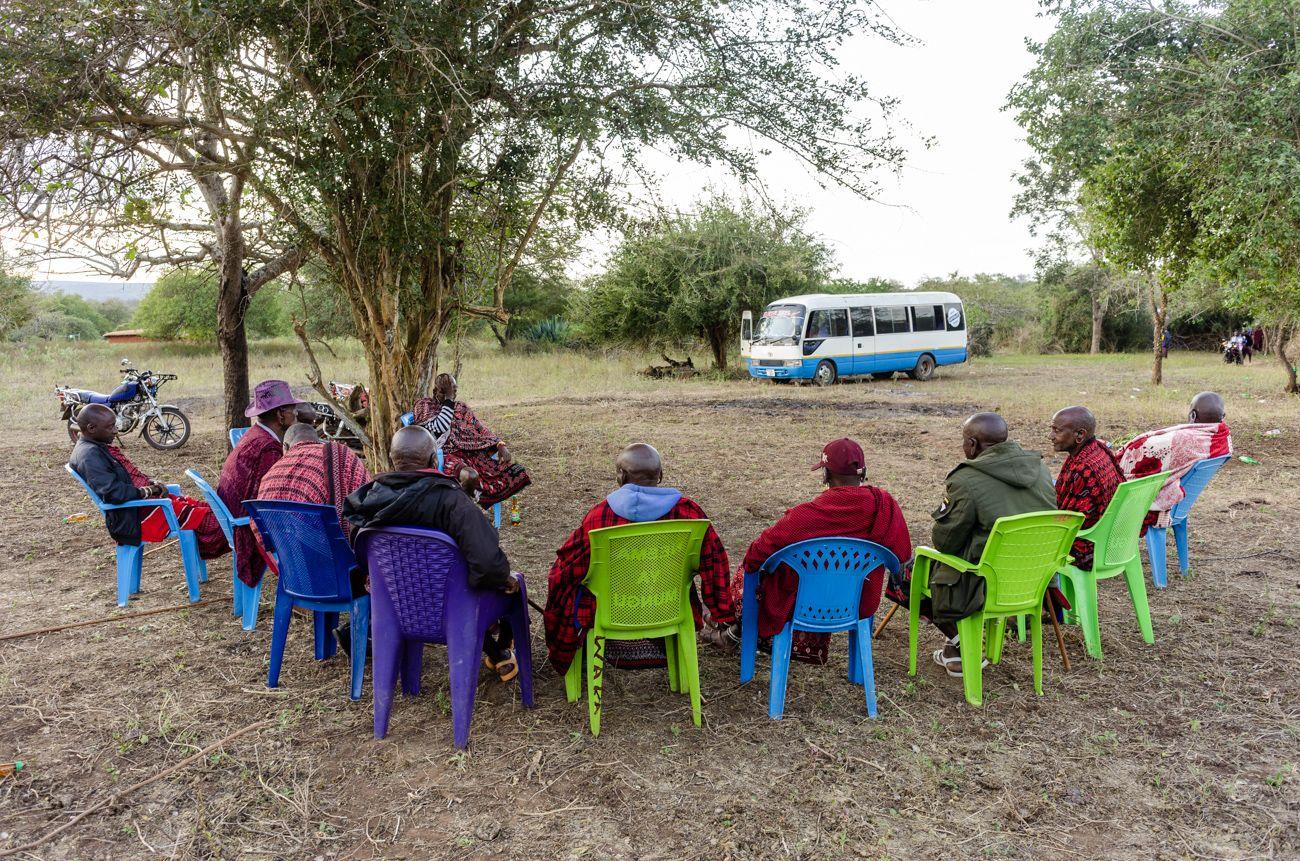
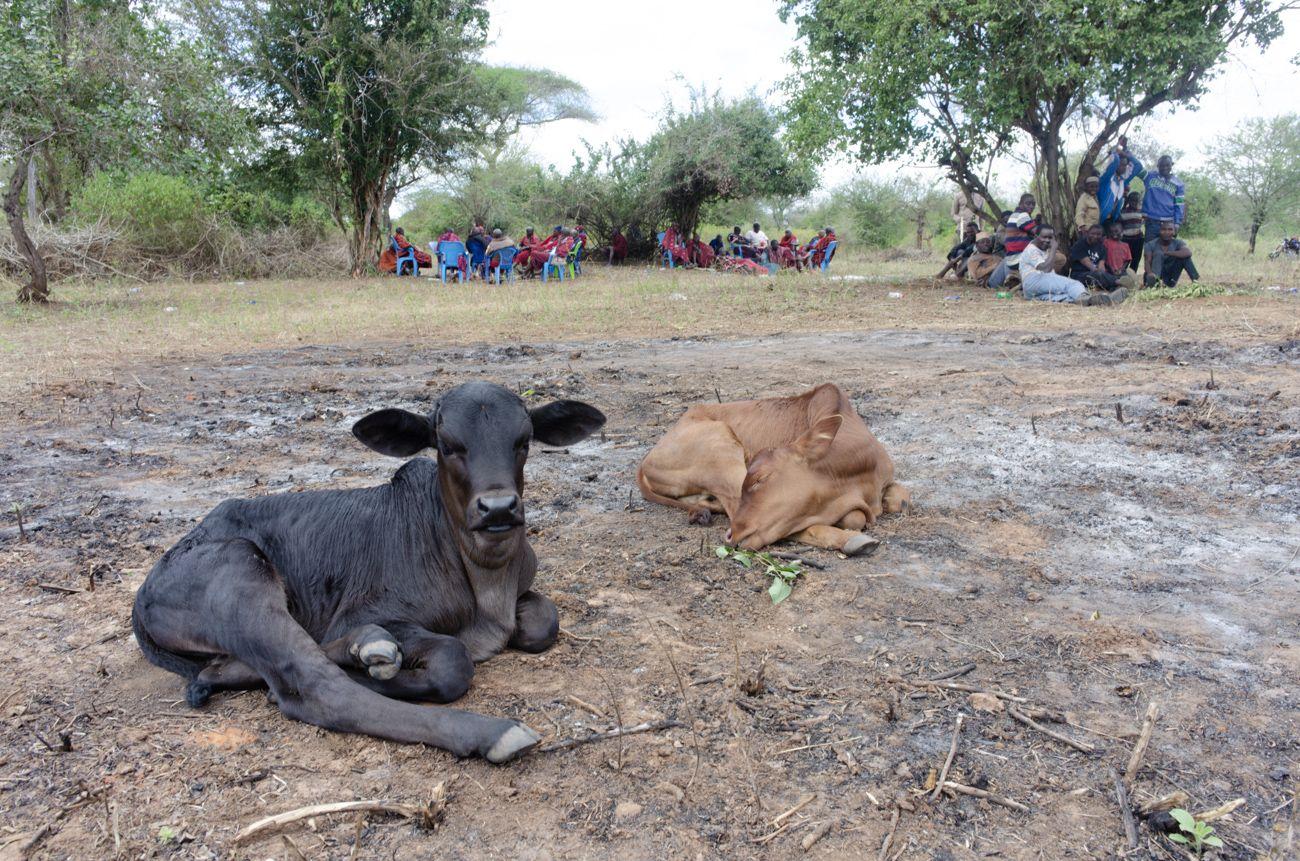
Around the enclosure, at varying distances and under the tallest trees, chairs were arranged in concentric circles. There were about four such circles, and sitting in them were the babas. Baba means an old man, a grandfather. From what I could tell, they were grouped by family ties or who knew whom. And naturally, as always, they were calmly—or passionately—debating matters that definitely called for persistence and a second round of dialogue. Like the composition of Jupiter’s moons, vegetable stew, and—I'm quite sure—my beloved Eskimos.

And it’s getting closer. The guests are on their way. In the distance, the roar of motorbikes can be heard, and those already present are turning their heads toward the noise with curiosity. Just to be clear—everyone here rides the exact same motorcycle: 125 cc engine. Back home, that’s considered a very small bike. Almost laughably small. But it doesn’t sound like an angry mosquito—it sounds like a tractor. To a foreigner, the rumble of those distant engines might resemble a convoy of angry tractors barreling in. You’d think the farmers were coming to protest.
And now they’re here. The first motorbikes enter the boma and perform their ceremonial one to five loops. The Maasai riding them are easily spotted from a distance—they look foreign, dressed in a fashion that’s just subtly off from the usual. And then—an actual bus. A bus. I haven’t seen anything like it here, and I doubt I’ll see another one next year—especially since I won’t be here. The bus carries women and three Swahili guys taking turns trying to drive it.

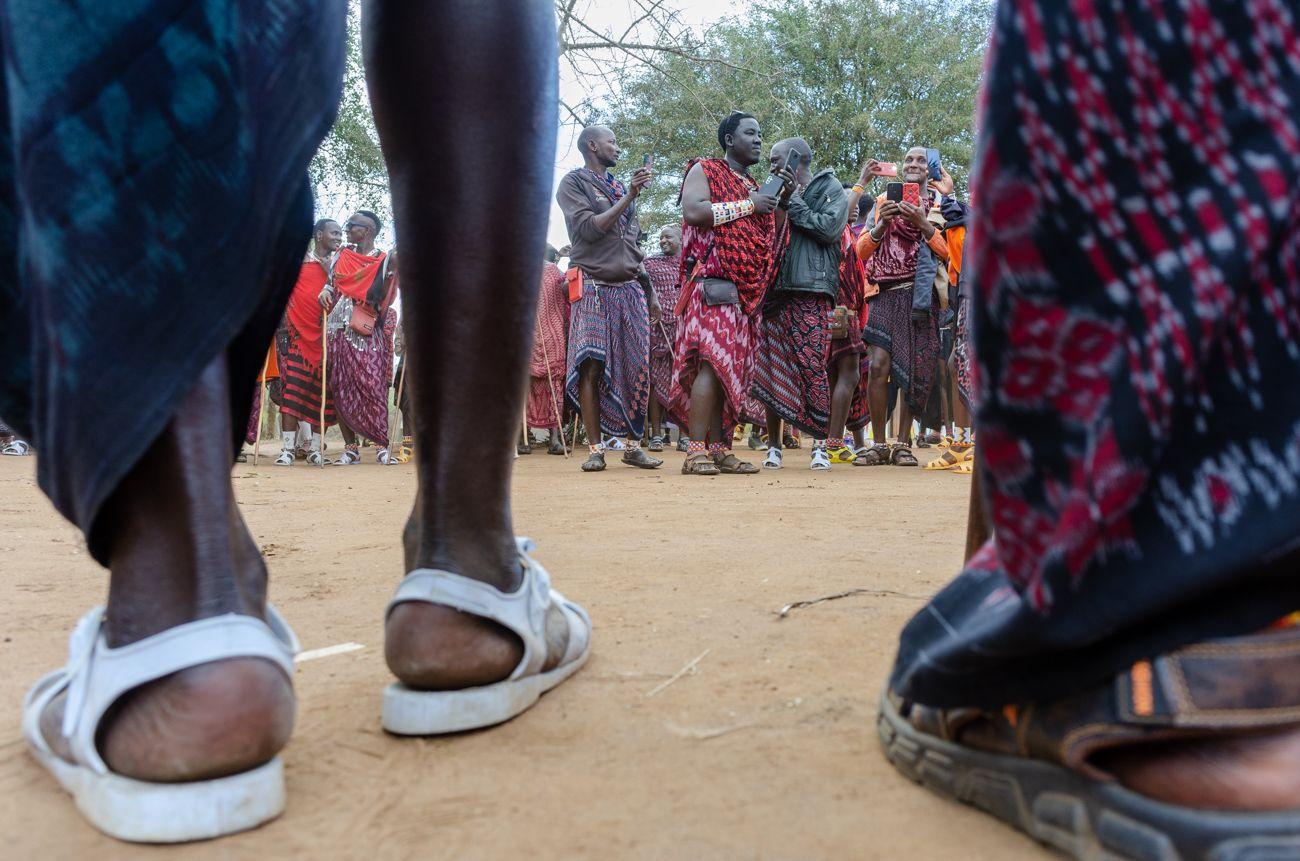
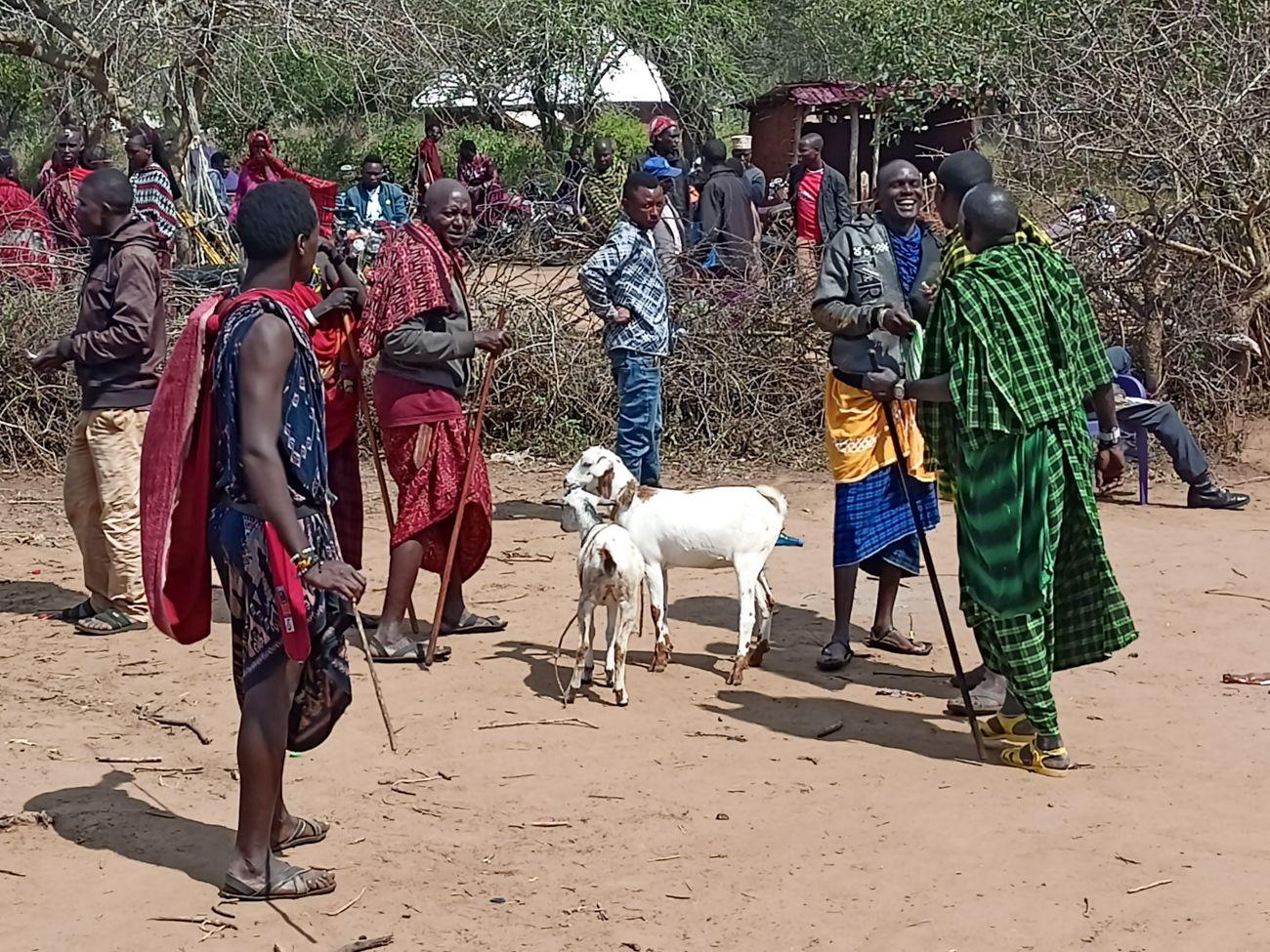
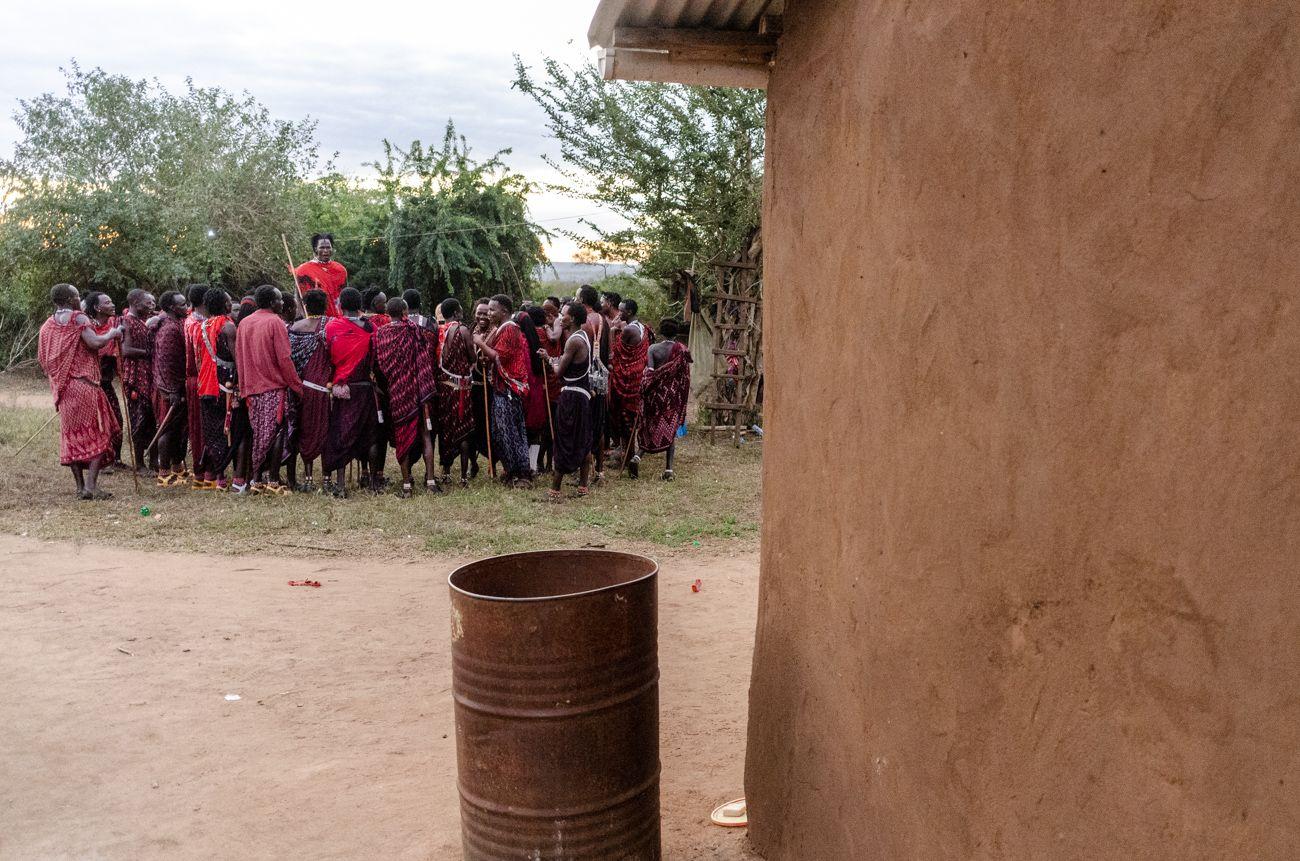
The celebration can begin. The women are still gathered around the bus, dancing, shouting, but sticking close together in a tight group. The men have formed a circle, in the middle of which stands the man of the hour—Simba—with a strip of hide tied around his head. That’s to make him look like a lion, in case someone accidentally confused him with, say, a dentist. Everyone in the circle is happily shouting, occasionally breaking into fragments of song. There are yells, even screeches here and there. The less disciplined ones dash through the circle or jump into it, which prompts the organizer to shout at them, and so on. It’s loud, colorful, cheerful—like something from a tourist brochure.
But we’re the only two mzungu there, so I’d like to believe it’s all real. Eventually, the circle merges and turns into a procession, heading… well, I honestly have no idea where. The procession frequently pauses as everyone sings, squeals, and bursts into laughter.

The ceremony continues with Simba driving a herd of cows somewhere, and then—very dramatically—driving them back. The only symbolism I think I understood was that this marked the end of his days as a warrior, as he was now herding cows for the last time. But I’m probably wrong, as usual.
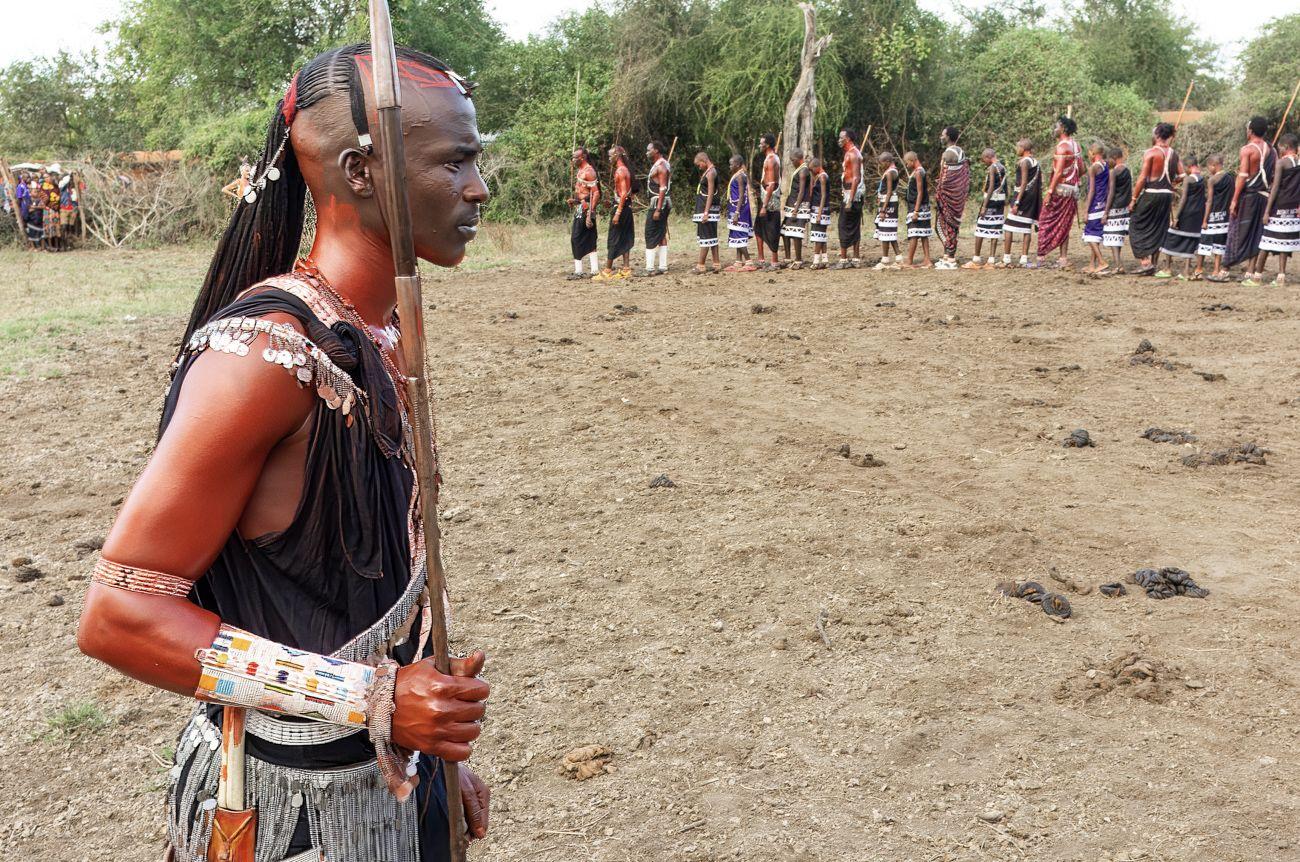
The next part of the tradition was quite intriguing. Inside a cow enclosure roughly 50 by 50 meters, men and women silently walked in slow circles. They made about three laps at that solemn pace, and in the deep silence, everyone wore an incredibly serious expression. Their heads, faces, and necks were boldly painted with red ochre.
Something peculiar happened while I was watching this scene. Like any good mzungu, I was darting around with my camera, trying to capture it from the perfect angle. Suddenly, I couldn’t lift my foot. I looked down—and I had stepped straight into what may have been the largest cow pie in the world. It was about a meter wide and had the consistency of quicksand. Or maybe the cows had set a trap for tourists.
How did they know tourists would be there, when no tourists ever come? I suppose that part of the plan wasn’t very well thought out.

When the circling ended, the men formed a semicircle, and opposite them stood a group of young girls—probably between nine and thirteen years old, maybe even younger. Honestly, I’m terrible at guessing. The young Maasai men stood singing their traditional songs. Across from them, a flock of girls stood watching, and now and then two would step forward and do a funny little shoulder-shaking dance toward the boys. When they got too close, a small cluster of boys would leap out of the semicircle and jump in front of the girls, wildly waving sticks in the air. Both groups—men and women—would then calmly return to their places, and the whole thing would repeat again and again. Meanwhile, I was diligently scraping cow dung off my shoes.

After I personally confirmed that the old saying “You can’t step into the same dung twice” is absolute nonsense, the next stage began. Everyone had to go and eat roughly a kilo of pilau rice. A special tent was set up for serving it. I didn’t manage to get inside. First, there were too many people and too much pushing. Second, I had already eaten my personal kilo of rice for the day. Only men eat here. When they’re done, they have to hide. One of the few Maasai customs still strictly observed is that women must never be seen eating. This rule applies even at home, in private. I hadn’t even noticed it before. Roda, Sekenoi’s sister, helped in the shop for a while. Whenever we ate, she’d take her bowl somewhere to the side and secretly finish her meal there. I expressed myself poorly just now — she didn’t eat the bowl, just the food in it. Once everyone was fed, things calmed down. I thought it was over. It wasn’t — I was wrong.
The best part was still ahead.

Share this

At home, everything is quite simple. For example, a person wakes up on a Sunday afternoon, feels that something isn’t quite right, and just heads to the store to buy a hat. In Mbogoi, my favorite little village, a person wakes up on a Sunday afternoon, realizes there’s no way to buy a hat, and can therefore relax until Thursda

If you wanted to buy something, like clothes, not just basic groceries, beer, or Konyagi, or if you wanted to get an idea of the prices of cows, sheep, and currency rates, or simply stand around in groups and watch the unusual hustle and bustle, you had to wait until Thursday. That’s when the market, called Soko, took place. The marketplace where it all happened started about 20 meters from the house where I lived, so I really wasn’t far from the market. At first, when I wanted to go to the market alone, Sekenoi suggested I’d better not go because I was still sana mzungu.

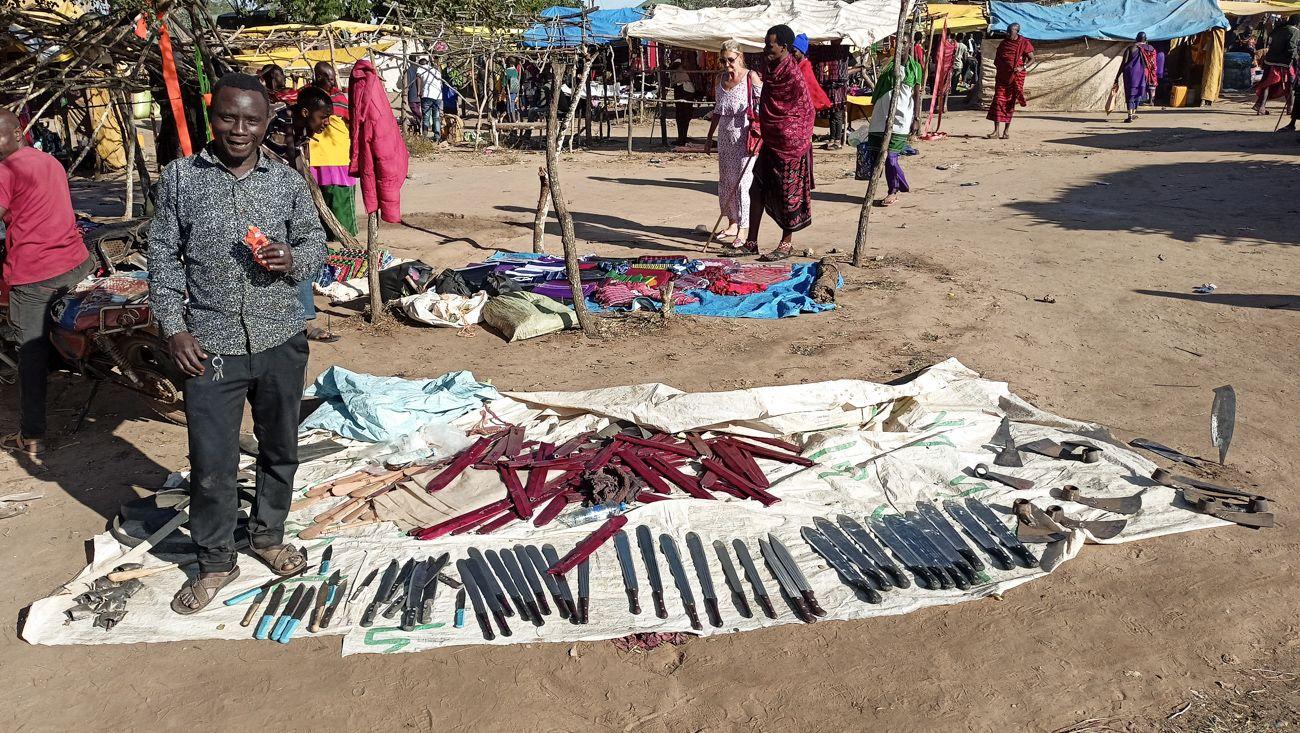
Machete fundi.

Going to the Soko market with a Maasai was actually very useful because the Maasai are world-renowned misers. Well, not exactly—they are poor and really hate paying extra. For example, I needed a hat, so I gave Sekenoi some money, and off we went to buy a hat. When I spotted the perfect one—black, with a Chinese puma logo—I asked the good man selling hats, using my best hands-and-feet sign language, how much it cost. The good man gave me a good price—12,000 shillings, which is about 3.5 euros. And Sekenoi said, “I’ll give you 2,000. Take it or leave it. Otherwise, we don’t want anything.” He took it.

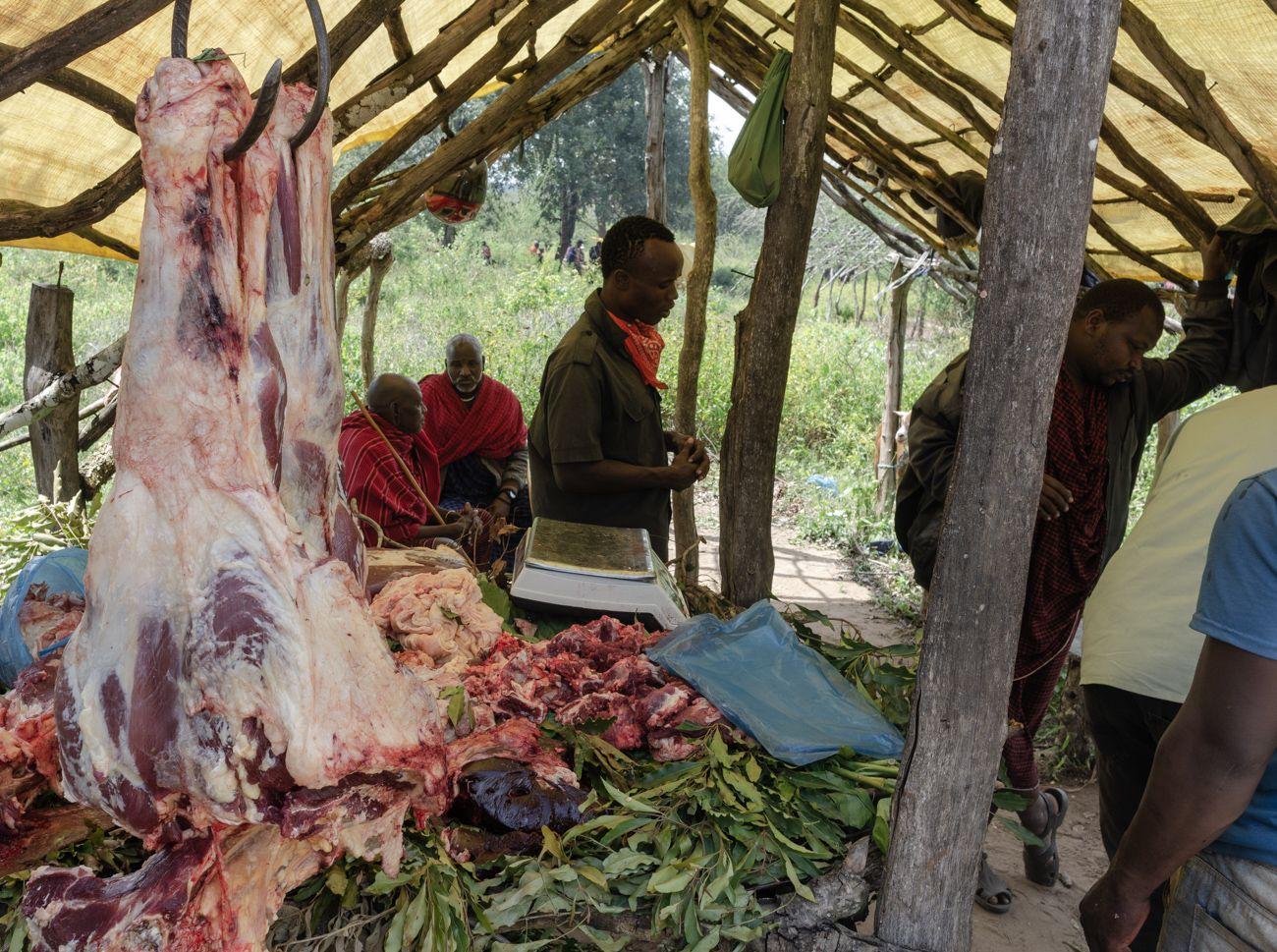
Beef, properly stored, well guarded.

Every time it was market day, our house was surrounded by Maasai in large numbers. The market attracted Maasai men and women from all over to shop or just to come by, greet friends, and discuss the serious issues of the world. They gathered around Renča’s house because it had the only Maasai shop in the village where they could buy Konyagi, soda, or beer. During those times, Renča and I preferred to sit inside the house and wait for the rush to pass. I did so because, although everyone had likely heard about me, I didn’t speak Swahili or Maasai. Renča stayed inside because if she went out, everyone would want to greet her and invite her to join a conversation circle for a chat.

And so it always happened that when she did, everyone would start speaking Maasai. Maasai is a secret language that the Maasai use to communicate. Since she didn’t understand it, she would stand there, smile, and think about how to escape. So, we took preventive measures, stayed inside, and waited for nightfall.

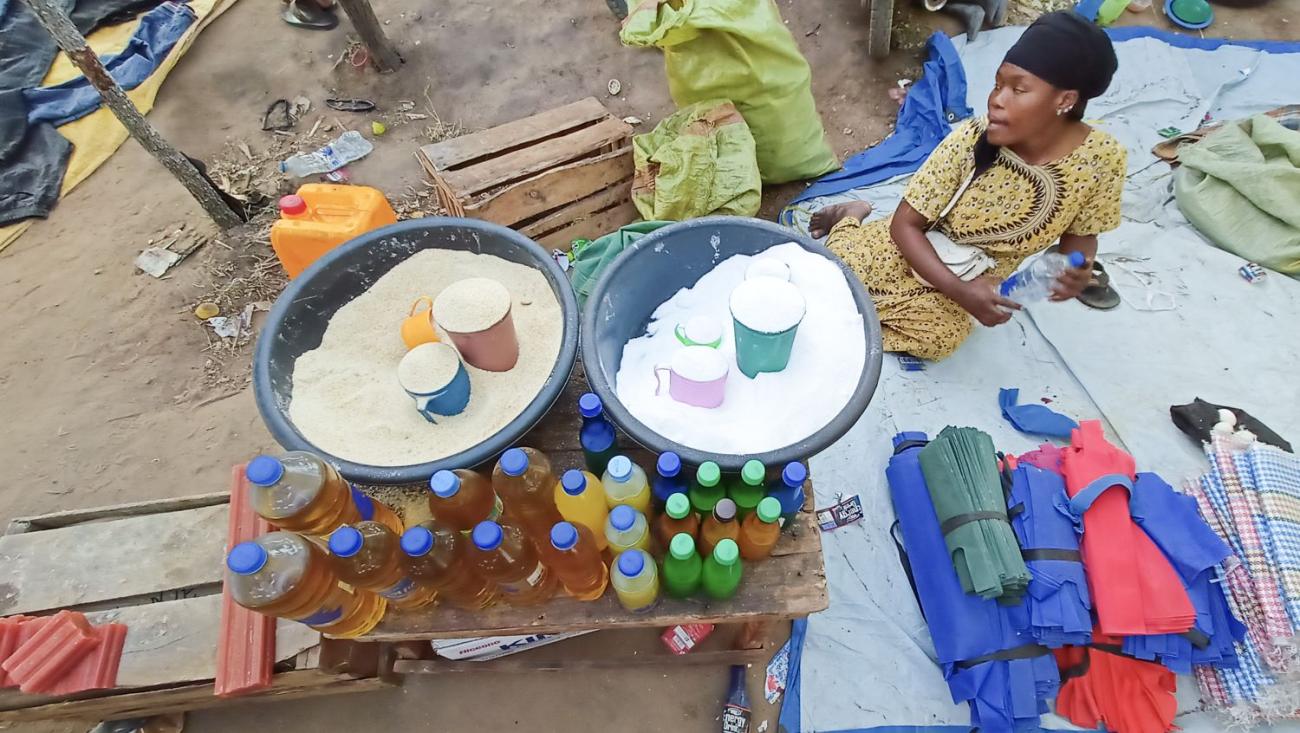
Oil, sugar, flour — and off you go.

The first market vendors started trickling in between eight and nine in the morning. But the Fuso trucks full of goods and traders hadn't arrived yet. These early birds were mostly vendors who baked, cooked, fried, or smoked food. The most tempting food at the market was the so-called nyama—beef, smoked or roasted, stretched over sticks by the fire. For me, it was absolutely unchewable because my small teeth were no match for their enormous ones. So, I kept my teeth hidden. But nyama wasn't available every Thursday. It depended on how well the cooks who prepared it predicted the turnout since nyama was quite expensive.
If someone decided it was a good time to buy nyama, whether to celebrate an occasion like selling a hide or just because they had plenty of money, the vendors would neatly wrap the nyama in twigs and leaves from bushes instead of plastic bags.

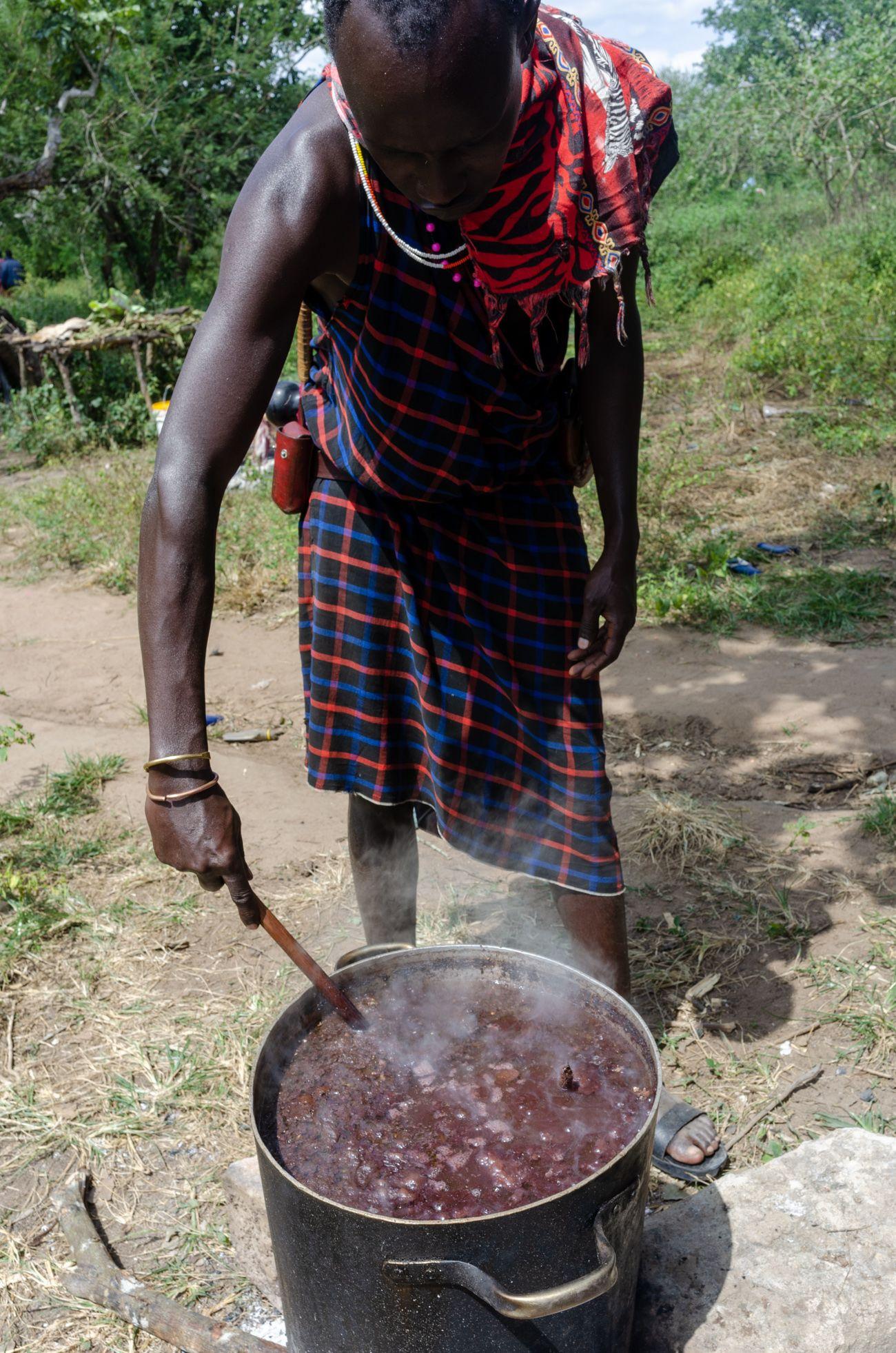
The Alchemist.

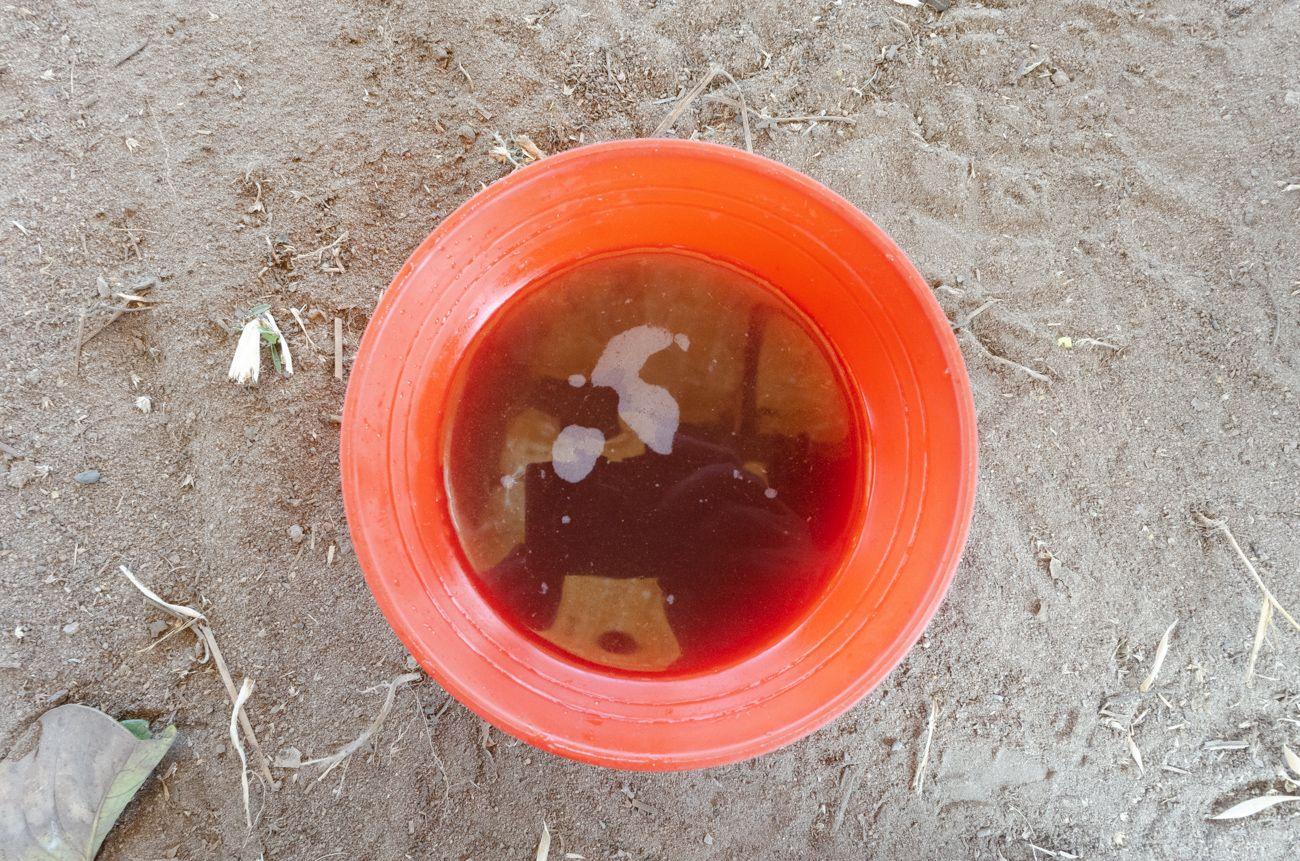
My biggest experience from the market called Soko was drinking the so-called medisin. Everyone around knew I was a natural-born stuntman, so they insisted I try their medisin—a drink they brew from roots in the bush when they’re out with the cows for a long time. The local alchemist had been cooking up this potion since the morning, claiming today’s batch would be an extra treat.
He poured about 3 deciliters of this elixir into a plastic bowl for each of us. Naturally, we sat in a circle, pretending to chat. I said my goodbyes to life and drank the medisin. It had an interesting bitter taste, and if you added sausage, sugar, and fried it, you could almost eat it. It vaguely resembled coffee and had a similar energizing effect. Since I appear to still be alive, I got through the whole medisin adventure without any harm to my health.

Medisin. For me, currently a matter of life or death.

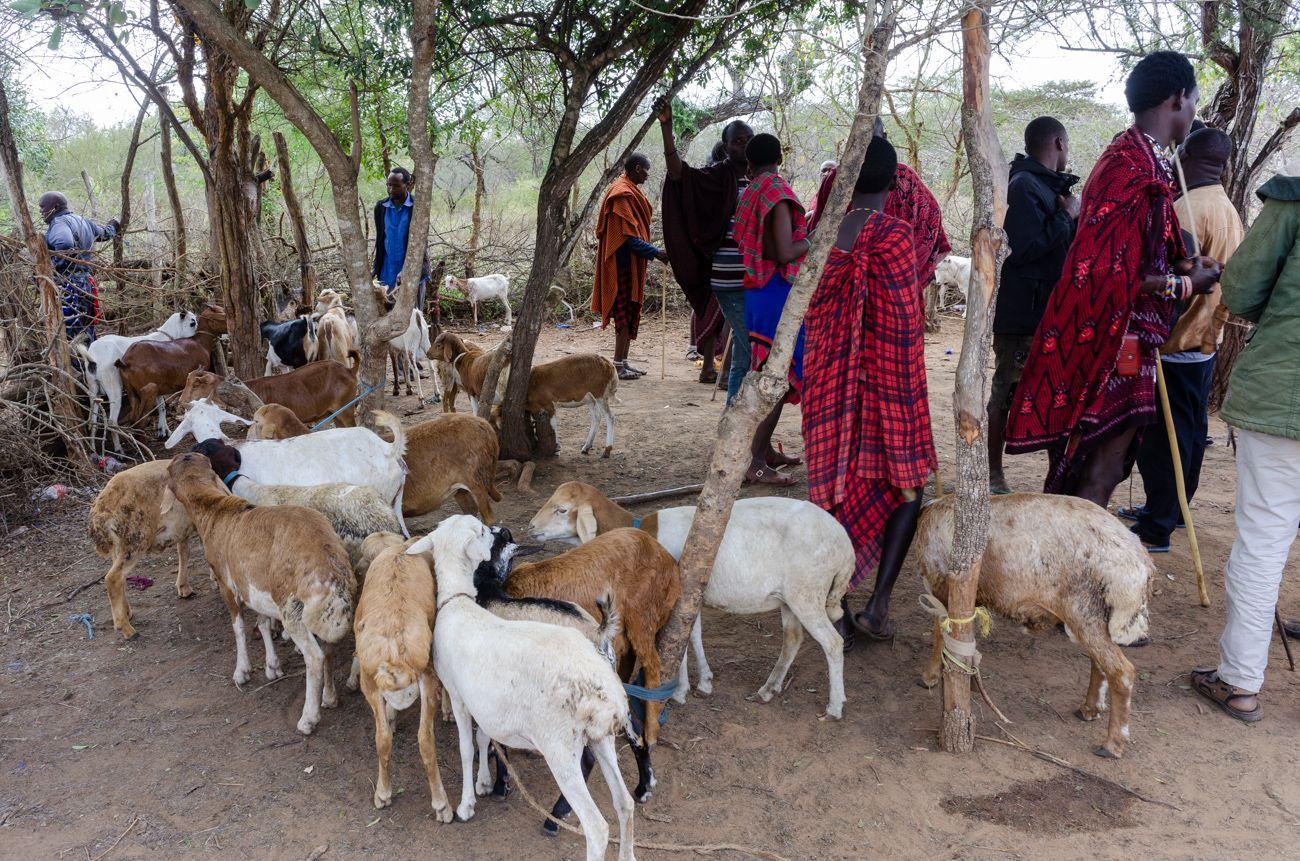
Cows, goats, and sheep were also sold at the market. This was where I first encountered the mighty hand of the Tanzanian state. A typical example: A Maasai sold a cow and had to go with the buyer to a man—a Swahili—in a blue jacket who had a cash register. This official calculated the tax, which the buyer had to pay on the spot. Then both went to Amos. Amos was not a world-famous founder of education but rather a Swahili man, approximately 321 years old, who knew how to write. He wrote down who sold the cow and who bought it. He added a stamp to the paper and handed this document to the buyer.
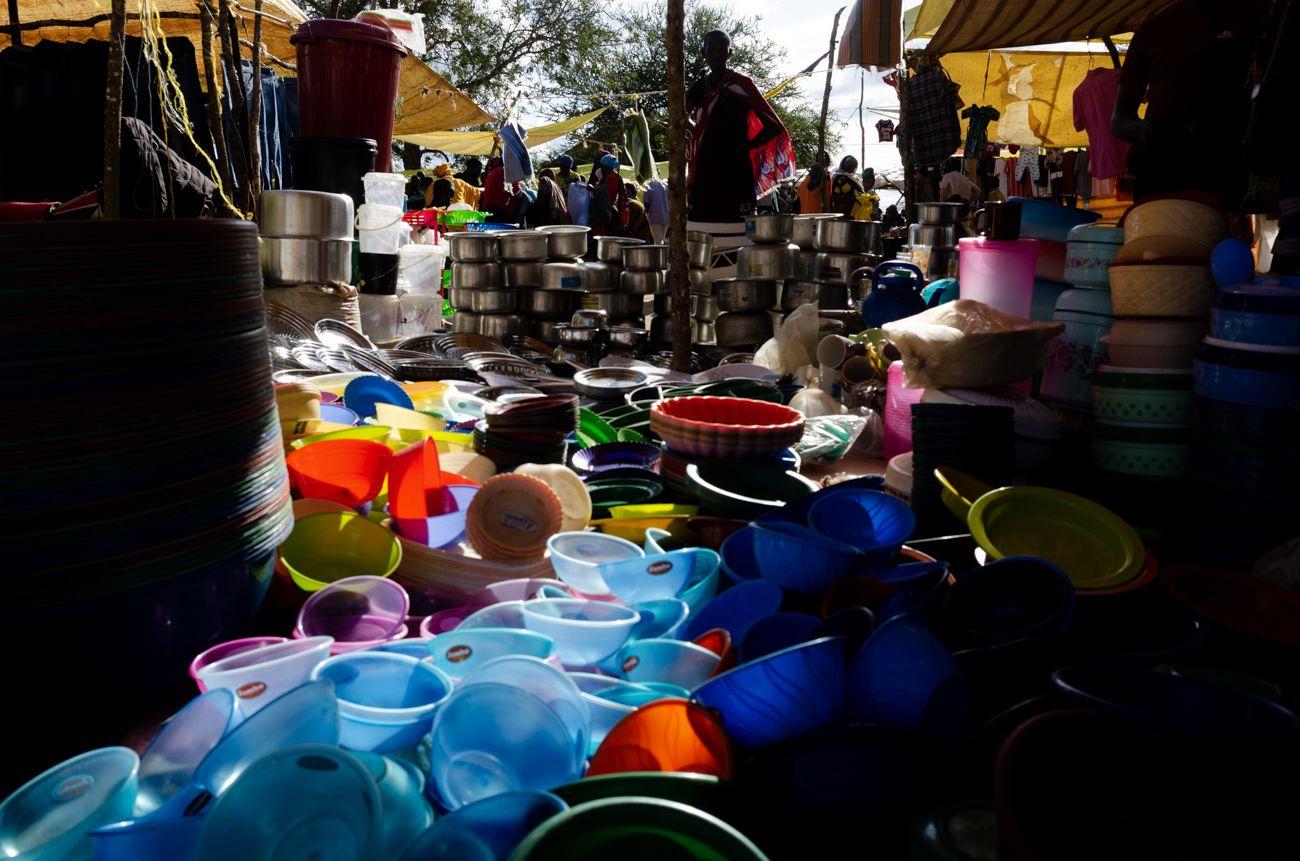
Apparently, this confirmation of sale and purchase was done because the seller, having made a good deal and sold a cow, felt rich. He went to the buffet, probably ours, and drank a lot of Konyagi. In the morning, since he remembered nothing, he searched in vain for the cow he had taken to the market. Apart from livestock, everything was sold at the market. Fabrics in qualities, colors, and patterns that probably don’t exist anywhere else. Dried sugarcane juice, chewing tobacco, super-cheap Chinese electronics, animal medicines, fried sweets, fruits, vegetables, plastic and aluminum dishes. I can’t even remember everything, but there was truly everything you could think of. And the market was full of buyers. Maasai women had finally come from the boma to civilization.

One of these soup goats will stay untaxed.

It was quite amusing to go with Renča to buy a goat at the market. Well, Renča went to buy the goat, and I walked two steps behind her because I was looking forward to the soup. Renča knew about goats about as much as I did, so she always found a friend at the market to help her choose. Prices fluctuated a lot because when there were many celebrations—sikuku—all the goats were eaten, and the price went up. Sometimes it was possible to buy a goat outside the market, directly in a boma, but then Sekenoi had to run around for two or three days, and he was nowhere to be seen.
When Renča, after thorough touching, examining, and discussing, finally chose a goat suitable for goat soup, she went to the black man with the cash register to pay the tax. Then she went to Amos to issue a sales document for the soup goat for the white Renča. We found out that if we didn’t want to keep the goat but planned to eat it right away, we didn’t need a document or to pay tax. So we asked for the tax back; I don't remember if they returned it or not. We took the goat home and placed it in the shade of a large bush to let it settle down a bit.

A well-balanced tree is less likely to fall than a poorly balanced tree.

At first, I didn't pay much attention. But when I realized how much food costs there compared to their income, I couldn't understand how they managed to survive. How they managed to eat. I already mentioned that the locals' income is fantastically low. Considering the exchange rate of the euro to the Tanzanian shilling, it ranges between 15 to 45 euros per month. However, a cook or a herder usually earns those fifteen euros. I don't know how much skilled workers (fundi) earn, but it could be several times more.
And now, food prices. You always have to keep in mind that the average income there is around 25 euros, but more likely less. It's as if a kilo of flour in our stores cost 100 euros. Social unrest would probably bring down this system in about two days. Yet in Mbogoi, there was a fierce social calm.
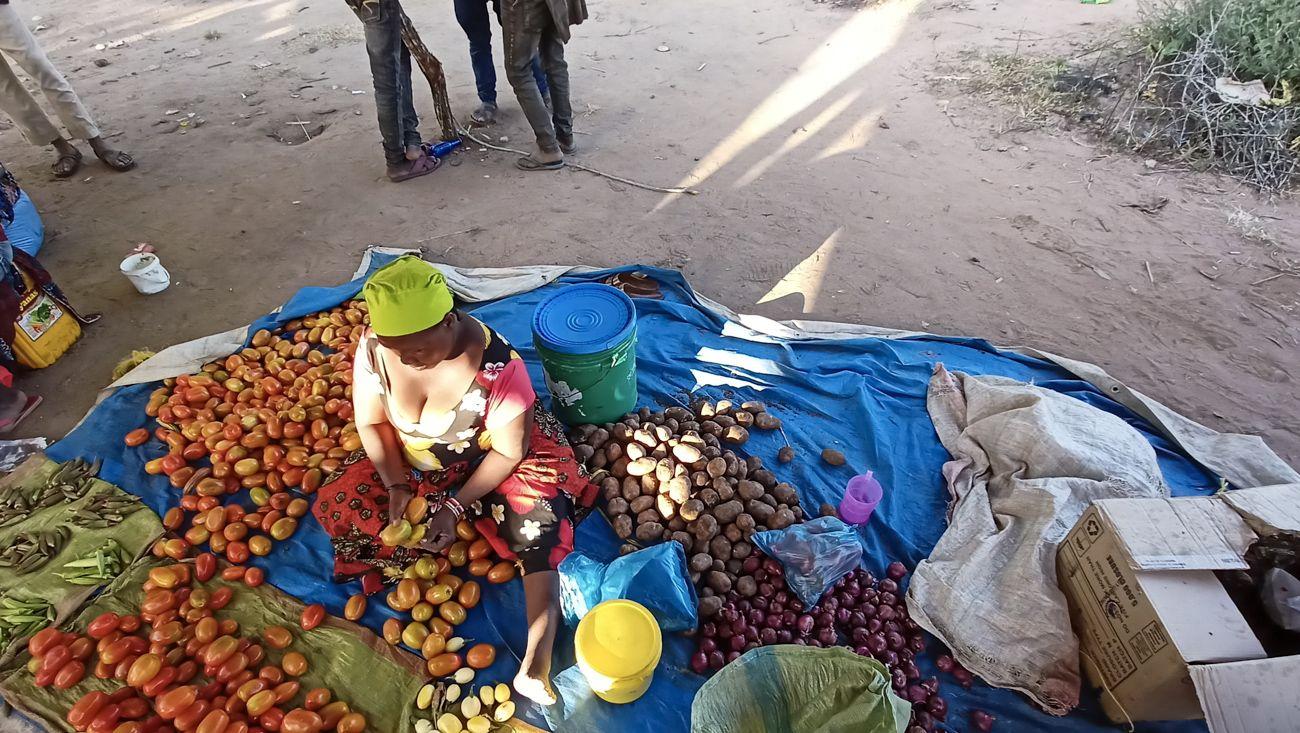
Food prices: A liter of oil about €1.5. Flour €1. Petrol around €1.2. Rice €1. Maize 100 kg from €32-€52 depending on drought. Sugar per kilo €1–1.5 depending on weather. Cabbage (medium) €0.5. Five tomatoes (about a kilo) €0.35. Eight potatoes €0.35. One banana €0.04.
These are the prices in the summer (their winter) of 2024.

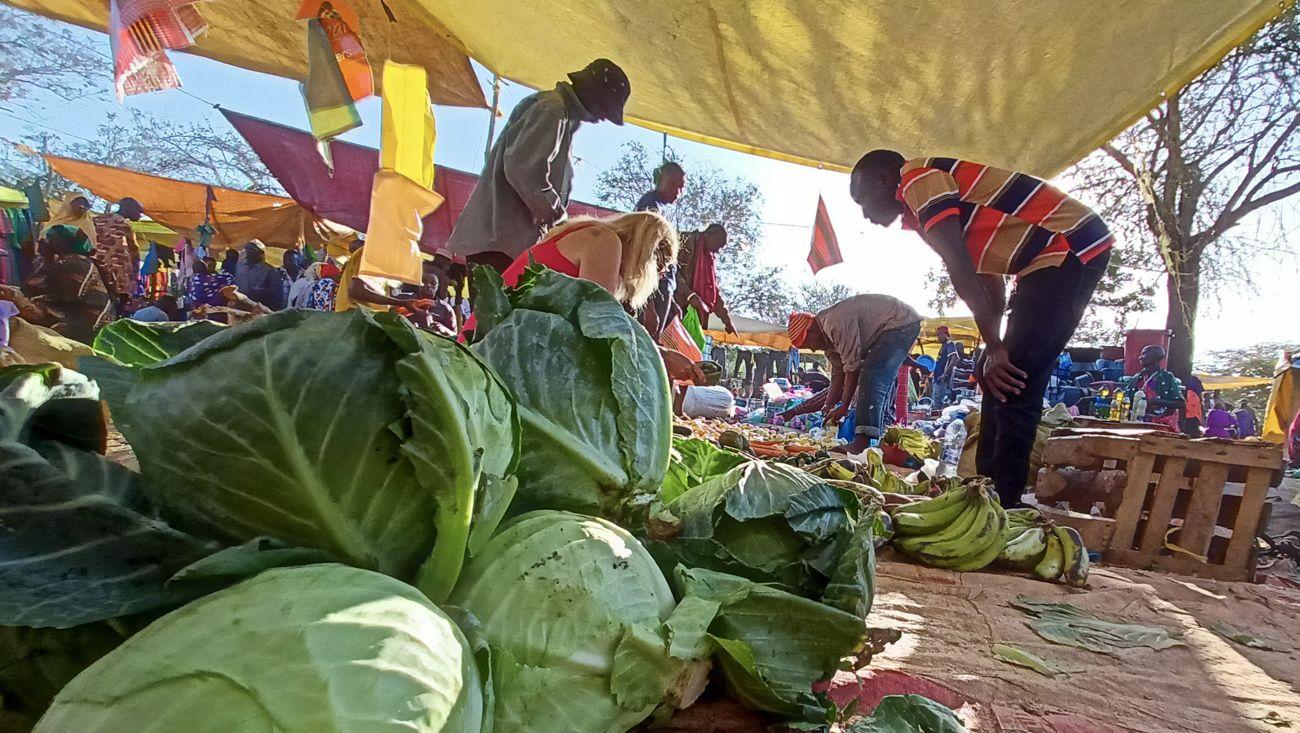
Afro cabbage.

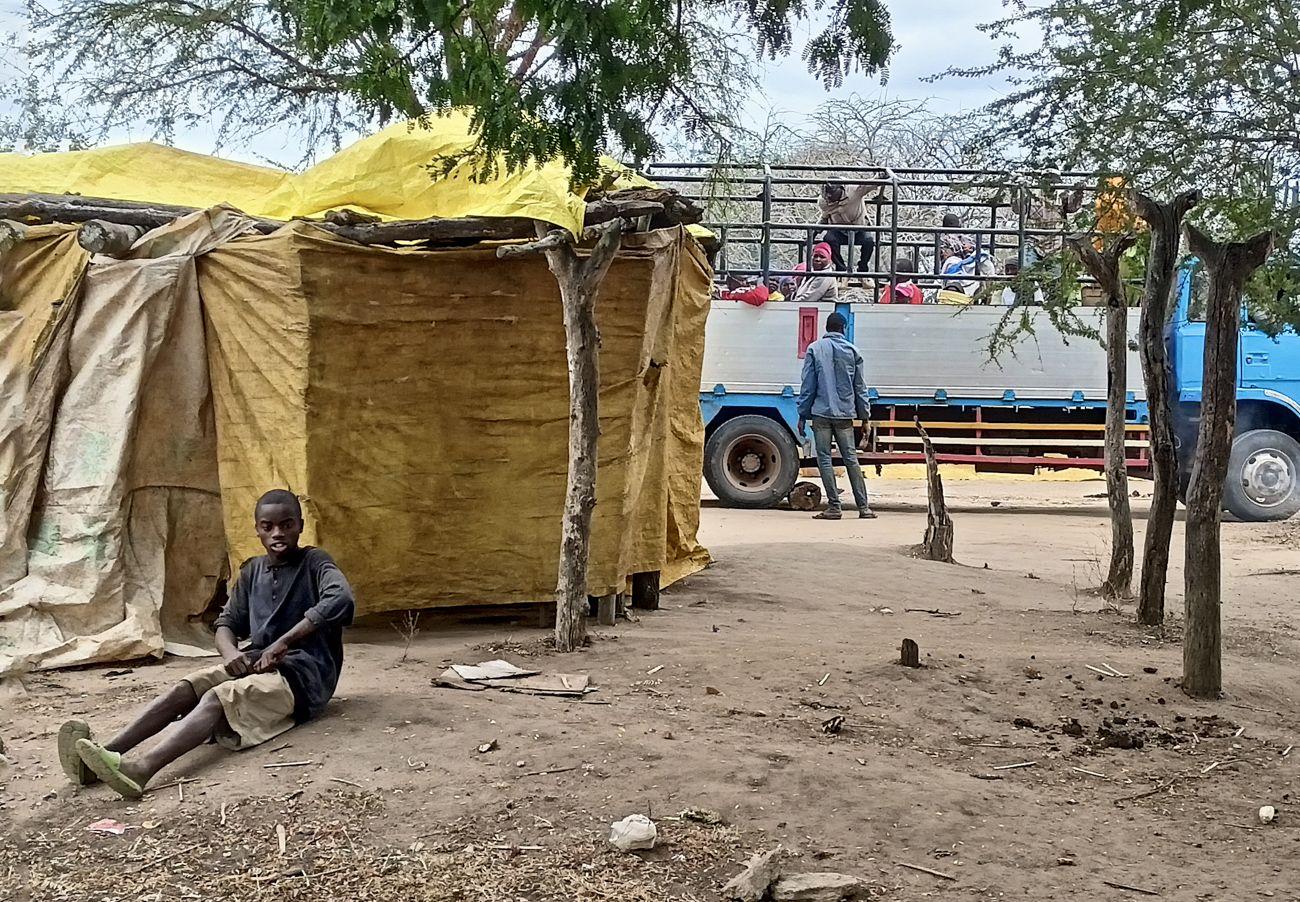
But it's time for things to get started because the village has welcomed Fuso trucks full of goods, vendors, and shovels. The shovels were ready in case the Fuso got stuck some where so they could dig it out.
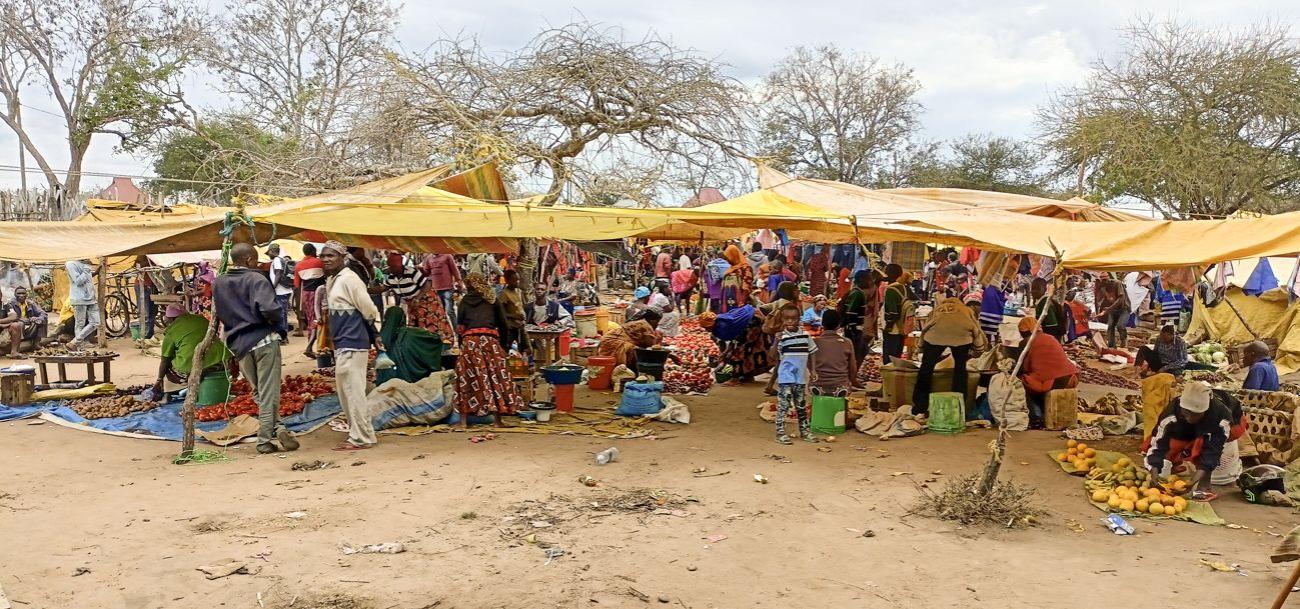
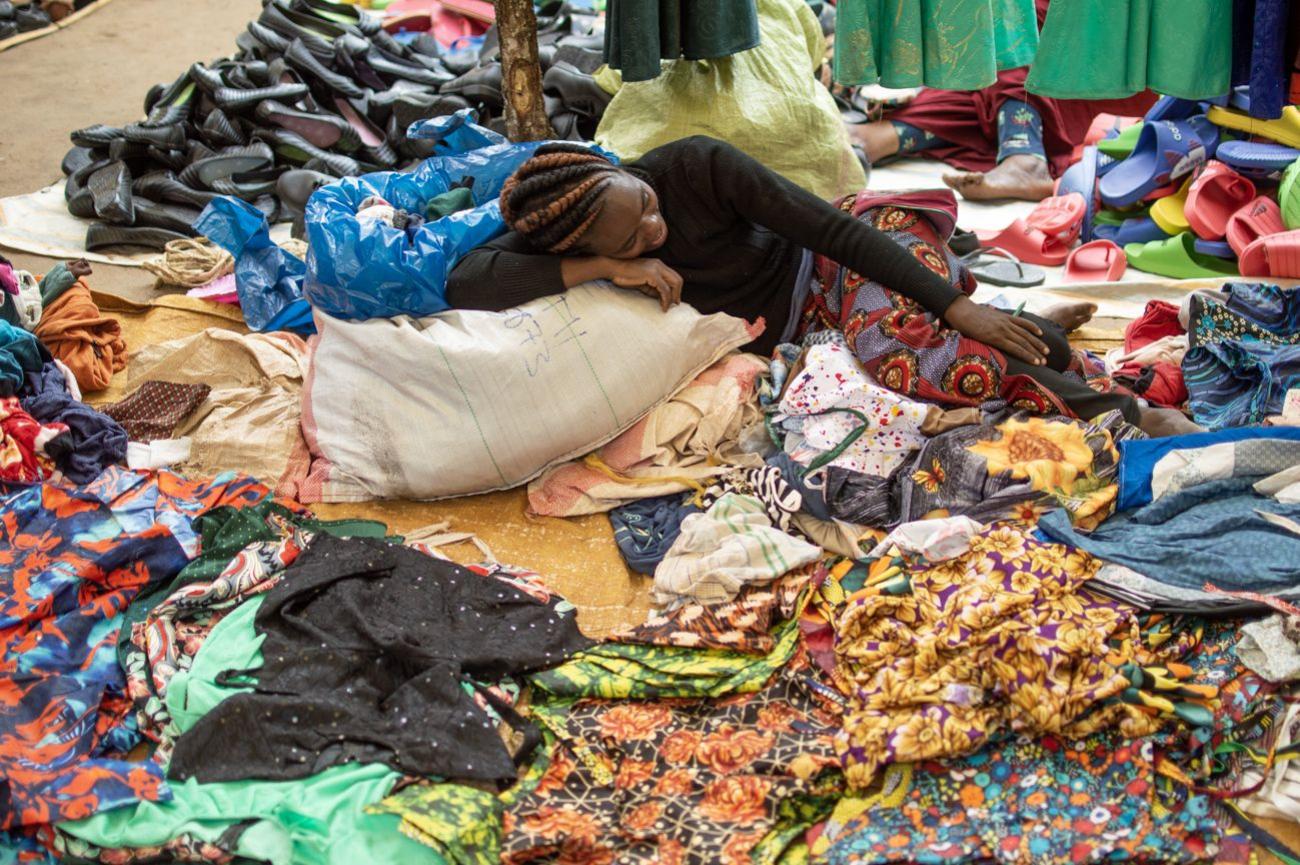
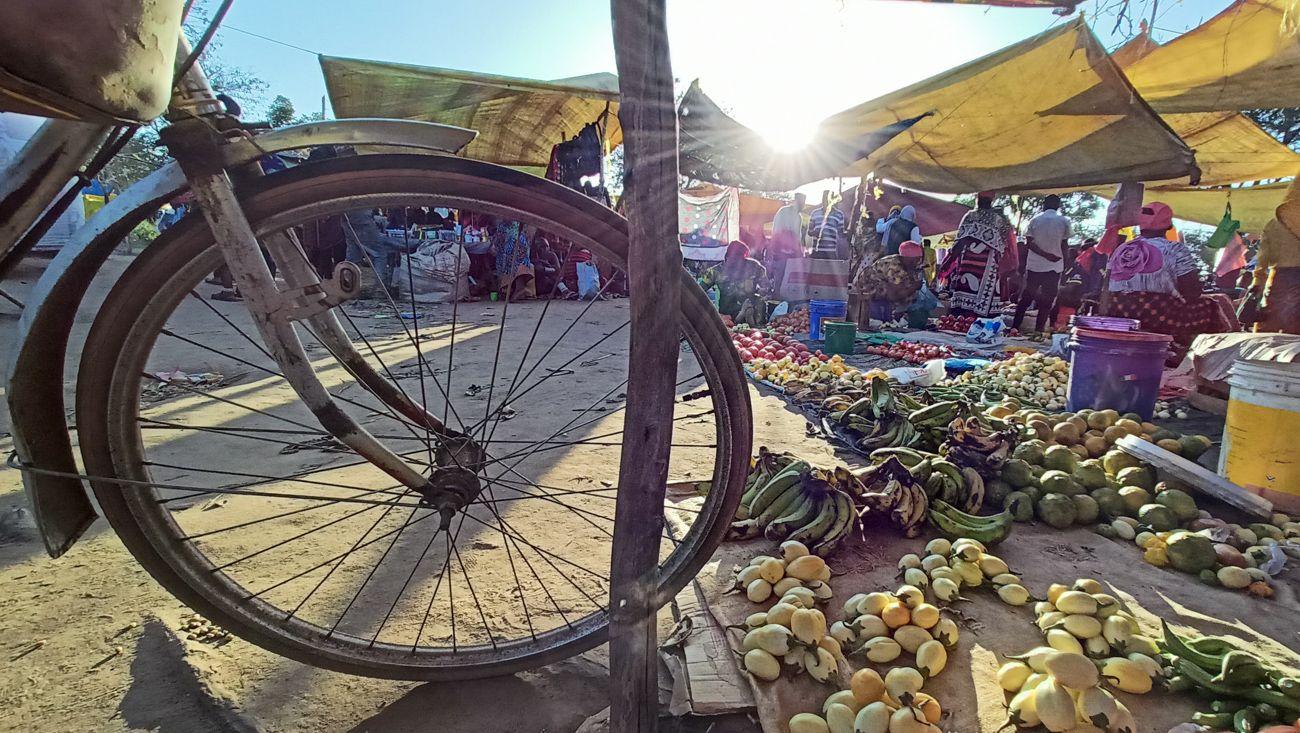
And they're already setting up their stalls. The stall frames are already prepared at the market; all they need to do is stretch a yellow tarp over them. It's sometimes an almost terrifying mix of noise, colors, smells, and movement. The stalls are filled with goods—colorful fabrics stacked on top of each other, clothes piled up, shoes arranged just as chaotically, often with napping vendors nearby, vegetables, fish, electronics, mobile phones, animal medicines, chewing tobacco, dried sugarcane juice, eye test charts, hats, and even bicycles. 
 

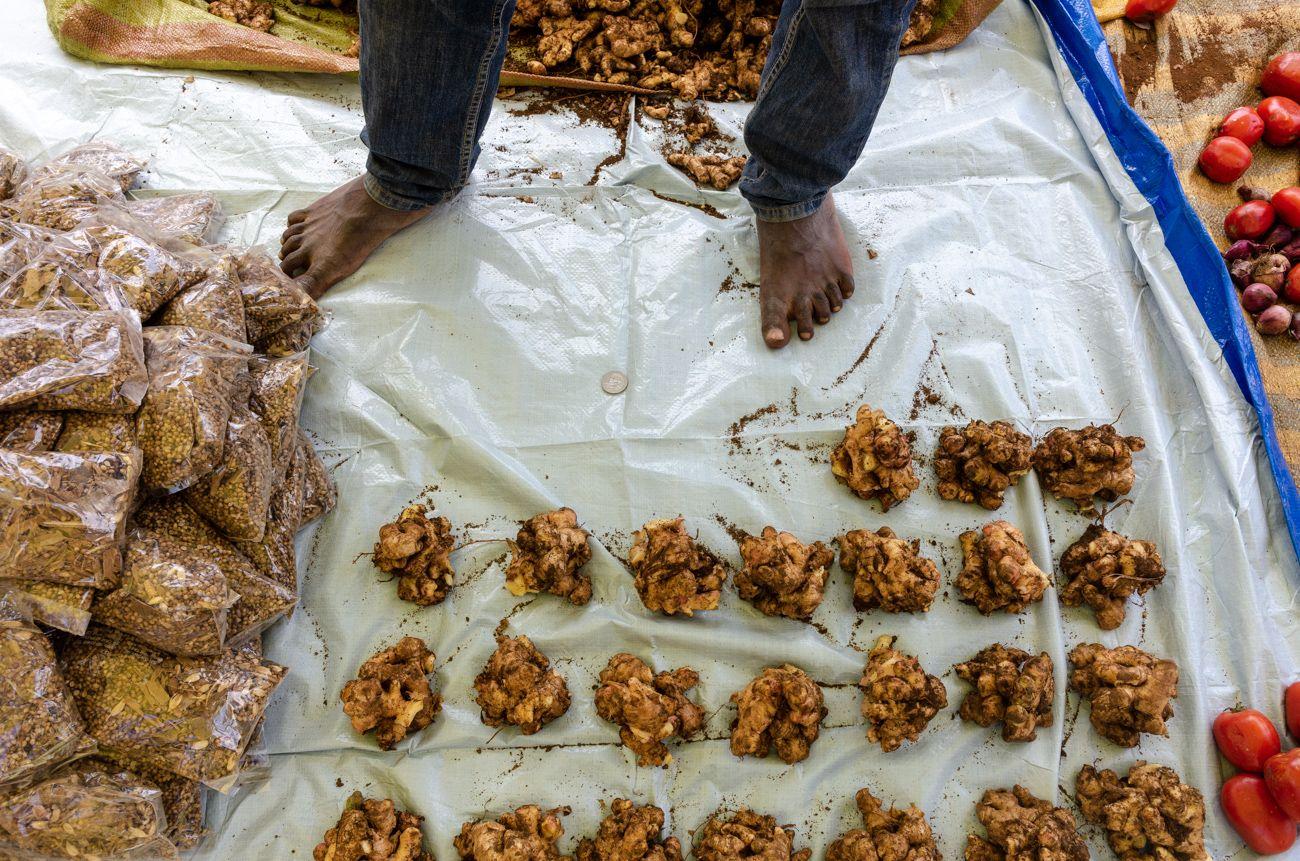
Ginger and chicken legs were sold piece by piece.

On the edge stood the inconspicuous and rickety stalls of Maasai with a knack for business. Cheerful groups of Maasai stood by, chatting away. Sometimes they surrounded the stall so tightly that you couldn't tell who was buying and who was selling. Sometimes, of course, with the company of someone familiar, I found myself as the only white person in the entire market. The vendors' eyes lit up when they saw me. The thought that I might buy something from them for ten times the normal price excited them because, to them, I was an endlessly wealthy mzungu.  But the joyful spark died immediately when they saw I was with a Maasai.

Sitting on a tomato, not sitting on a tomato?

An entire chapter could probably be dedicated to a part of the market that felt like a live teleshopping show. There, a well-dressed Swahili man with a microphone and a speaker shouted that no one could possibly live without the miracle product he was selling. A fairly large crowd formed a circle around him, and inside, along with the seller, there was always a tractor. That was my subtle way of suggesting that Mbogoi has a tractor. A blue one. The funniest super-action teleshopping product was probably a bottle filled with purple liquid. The seller poured about a quarter of the contents into another bottle and then topped it up with regular water. According to his own words—and there was no reason not to believe him—both tasted the same. It was an endless soda. Later, Charles was sitting by the house with one of these magical sodas, so I tried it.  It was sugar water with copper sulfate. How could anyone resist buying such a miracle?

Endless lemonade.Teleshopping doesn't even come close.
Share this
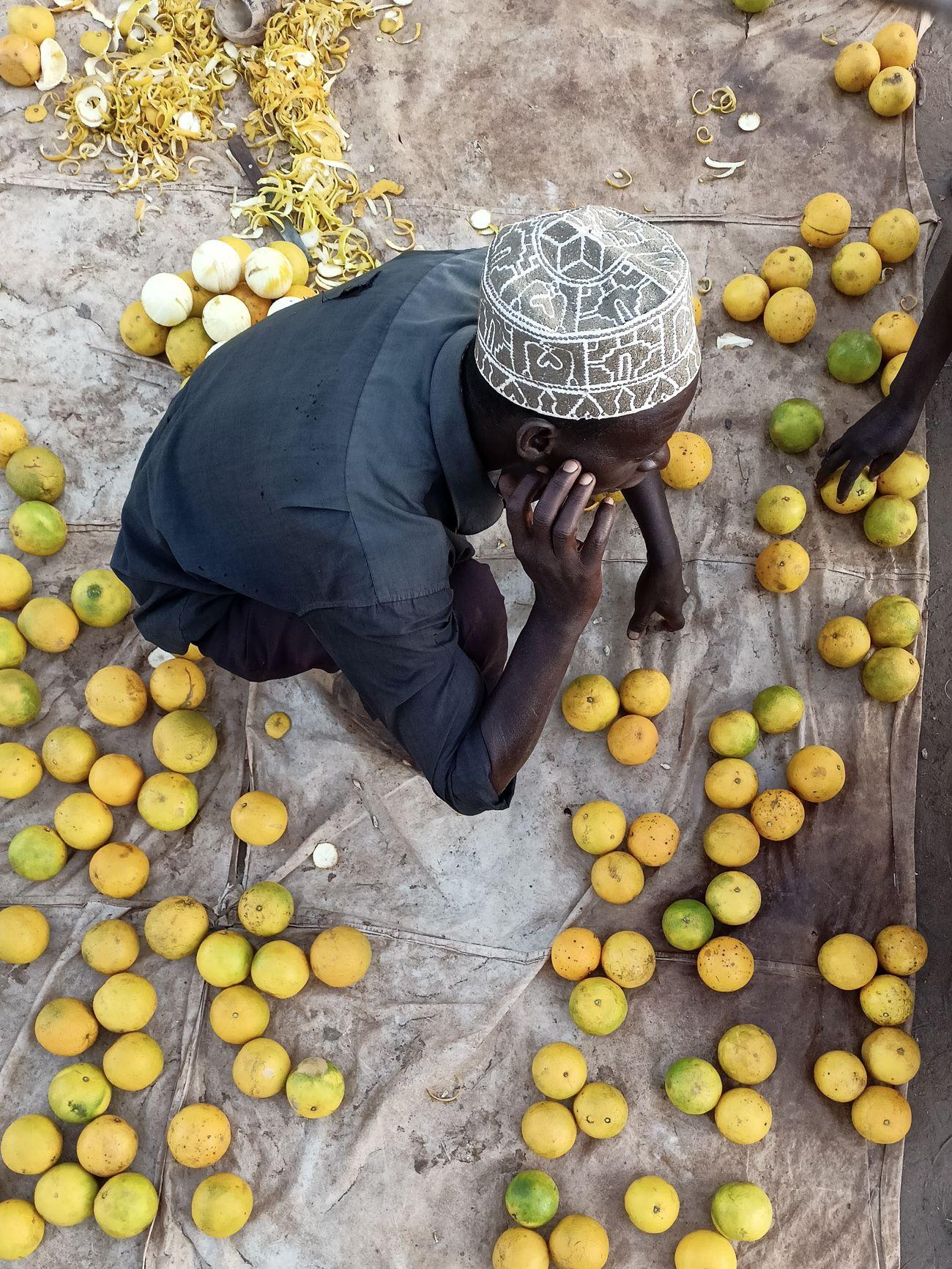
Local market. Peeled oranges scented the whole place.
Local market.
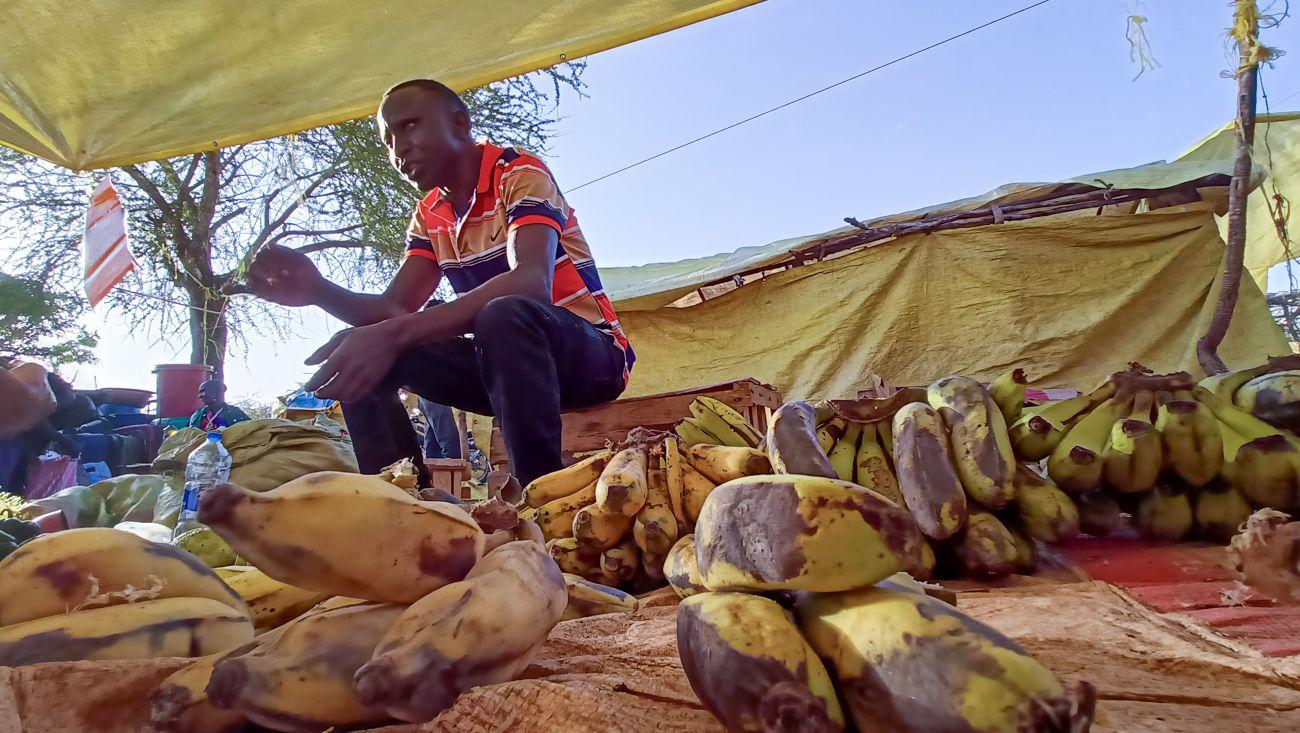
Local market. Vendors sometimes take a nap.
Lots of colors, lots of trash. Old machines well past their lifespan. Plenty of kids — simply Africa.
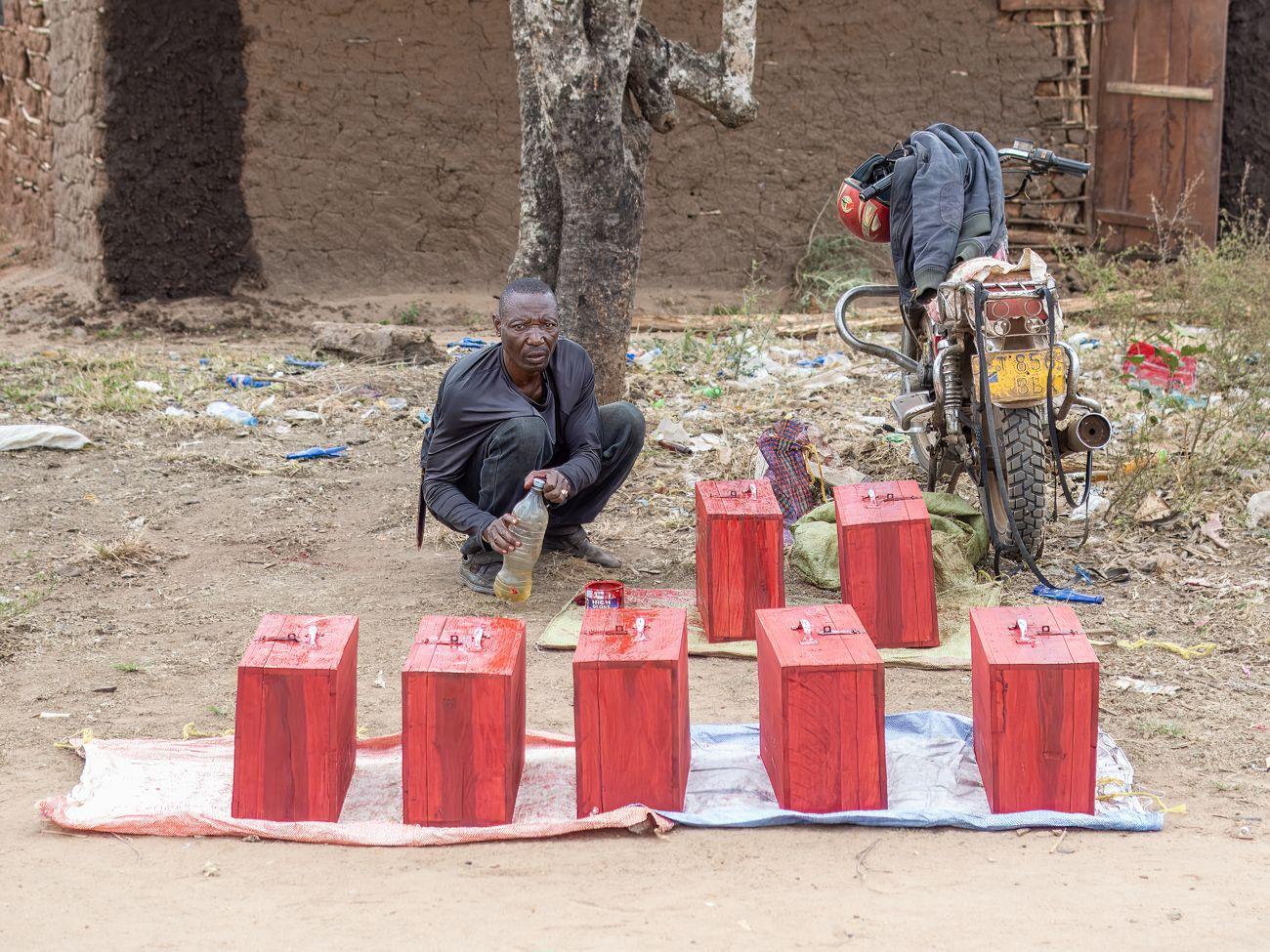
Local market. Red suitcases are used to store the family valuables.
Local market. Colorful, noisy, fragrant.
Local market. The vendors have just arrived.
Local market. Plastic and aluminum containers last far longer than glass ones.
Share this

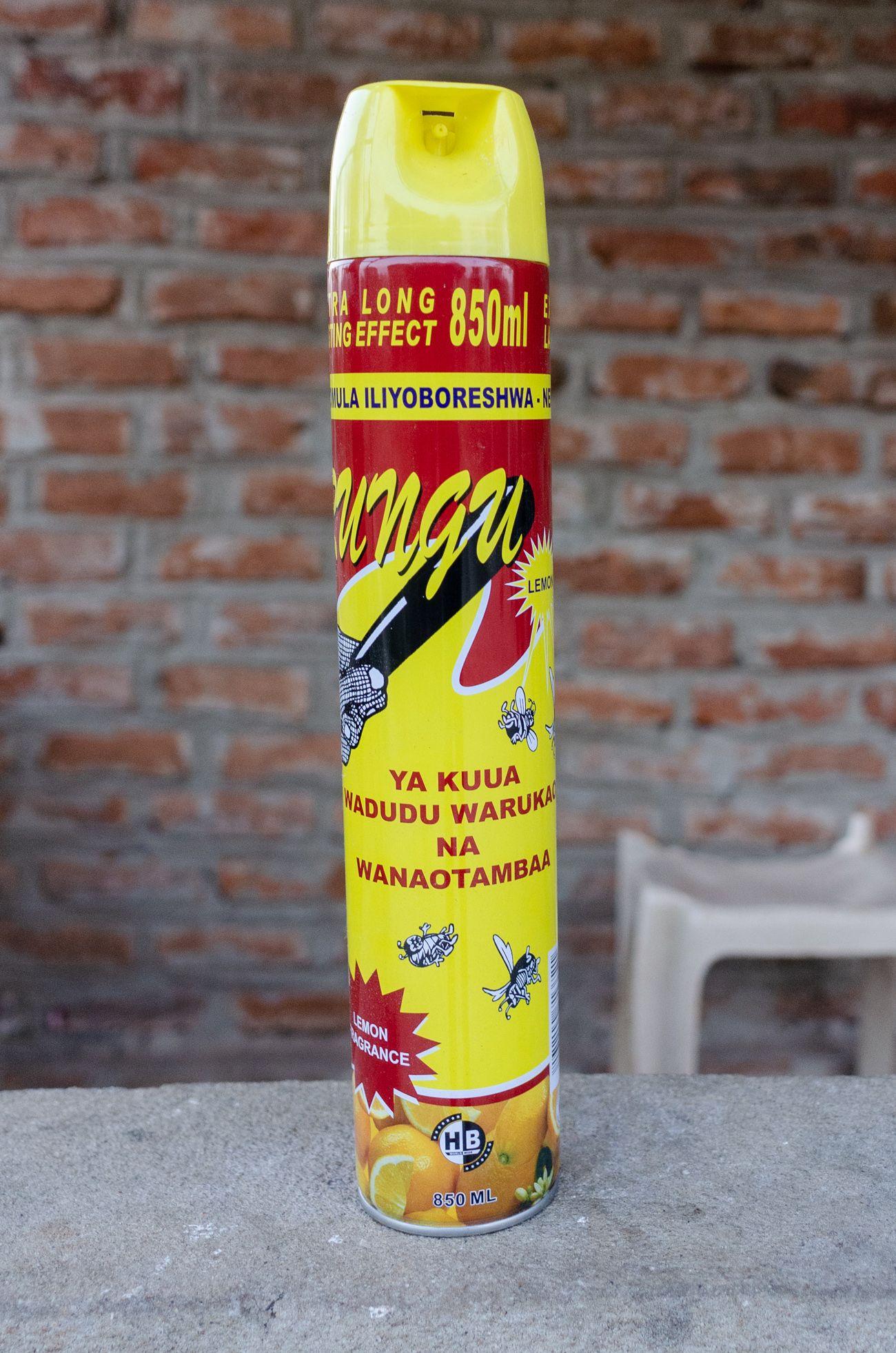
I was probably most afraid of scorpions before coming to Tanzania. Their sting is said not to be fatal, but it hurts. A lot. I even had orders to thoroughly check and shake out my shoes every morning before putting them on, just in case a tired scorpion was sleeping inside after a wild night. It never happened, for two reasons. The first was that Sekenoi sprayed my room every few days with a Chinese all-purpose insect spray, so it always had a pleasant lethal fragrance. The second was that there had once been a scorpion nest near the house, inside an old hollow stump, which had been destroyed. My one and only encounter with a scorpion? Renča told me one lazy afternoon that a chicken had dispatched a small, see-through scorpion.

A Chinese spray that kills everything and leaves behind a strangely pleasant deadly aroma.

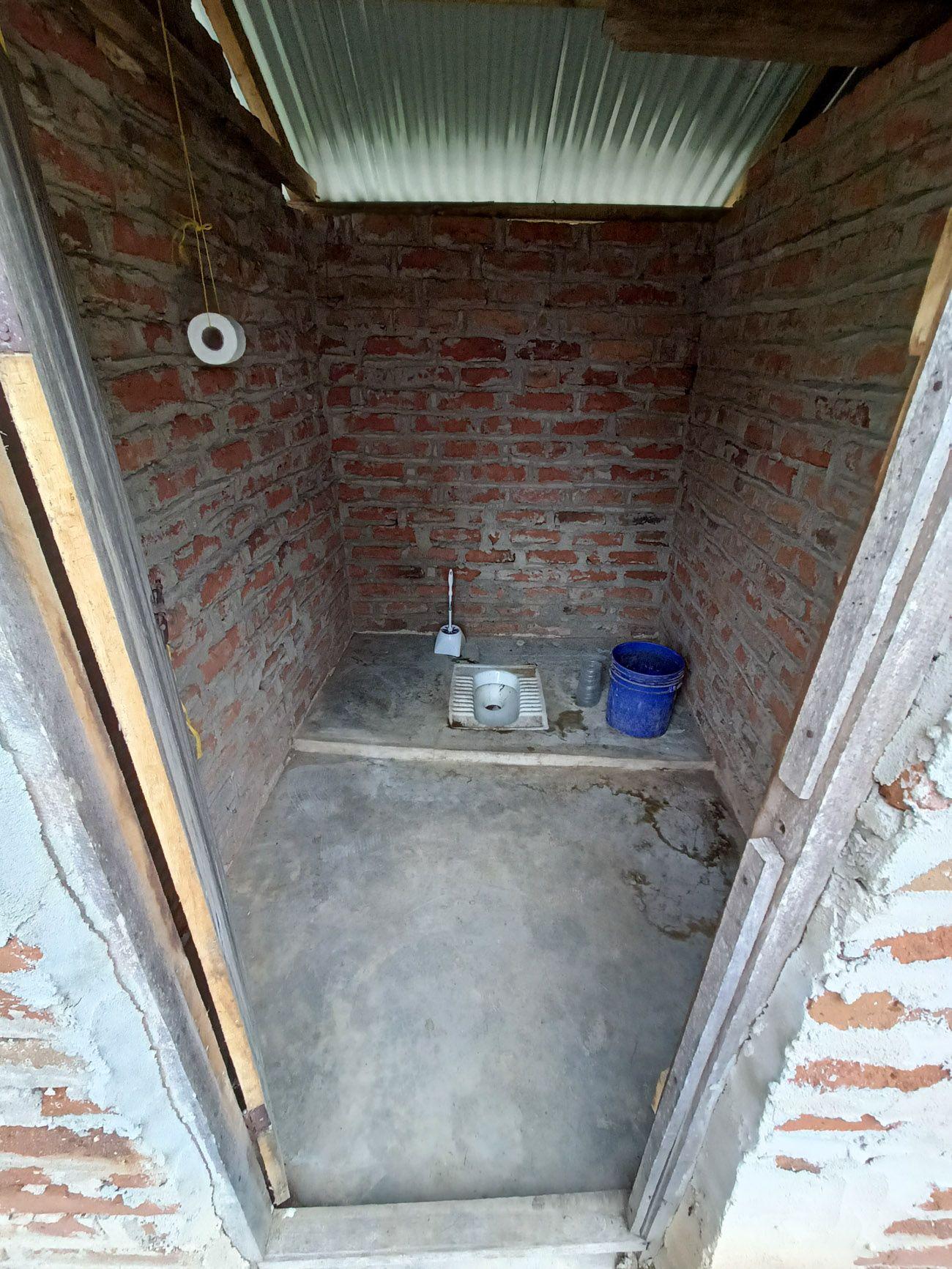
Apparently, there are many snakes. I know this only from hearsay, because I might have seen one, but it was dark. It was a black snake, so it probably wasn’t a snake. That’s why we had bare dirt without grass in front of the house, and all the bomas are completely cleared of vegetation, because they say a snake is afraid to leave the grass – this is their protection. For example, near the toilet, which was by the house, there was grass nearby, and I always had to check to see if there was a snake. I even checked above, under the roof, and inside the door when I closed it.
Once, there had already been a snake on the door, thankfully about a year before I got there. The Maasai deal with snakes in a highly practical way.Whenever they see a snake, whether it’s venomous or not, they immediately beat it to death. Apologies to all self-proclaimed nature protectors who might be traumatized by this. But who knows what trauma they’d suffer if a deadly venomous snake bit them. And how would they inform others that this snake is highly venomous?

That specific toilet had a snake wrapped along the inside of the door.

Our idea of Africa, as Europeans, is that it’s full of animals. There are supposedly so many of them that they can’t even move, and in some places, they create huge piles. I don’t know – where I was, the animals could move freely, they had plenty of space. The only problem was that there weren’t any animals there. Among all the wild animals, leopards are the undisputed legends. At least once a day, someone mentions them. Leopards, they say, are not fans of fair fights – they sit in trees and attack from behind, trying to bite their victim’s neck. Often, though, they end up biting the head instead. That’s why the Maasai, who hold warrior status and mostly herd cattle, are allowed to grow long hair. They don’t need to shave their heads like everyone else – it’s so the leopard bites the hair, not the person.

Sometimes, as some said, a lion from the north might occasionally wander down. I don’t know more details, but I learned that the Maasai from a neighboring tribe would form a circle around the lion and sing a special song just for this occasion. The lion gets dizzy from it, falls, and they can safely kill it. I’m convinced that the song must be country – because country music can take down any healthy individual, let alone a lion.

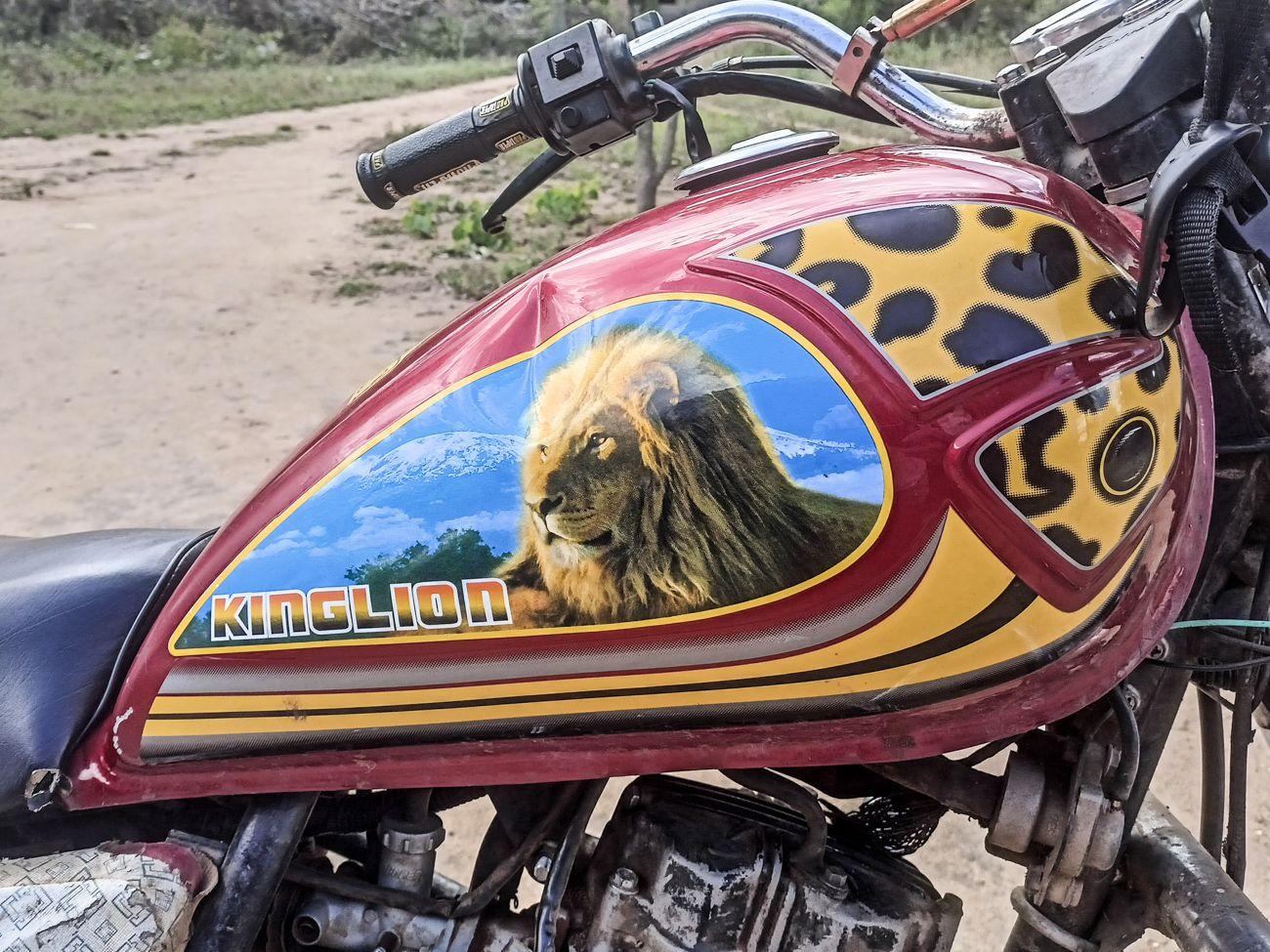
The only lion I encountered was drawn on the side of a motorbike.

Aside from these friendly creatures, elephants also roam the bush. They have the advantage of being large and can calmly push through dense bushes. The downside is that they can devour an entire field. When I was there, this happened to a man named Lamarai. The elephants came and grazed down his entire cornfield, known as shamba, in one night. There’s supposedly a way to protect against this – you plant chili peppers, known as pili pili, among the corn. But who would bother? After all, the elephants are far away, planting pili pili is extra work, and the elephants haven’t been here in ages. And what if it doesn’t work? And a million other excuses – you know how it is.
Apparently, you can’t kill an elephant since every single one is tagged with a chip tracked by government satellites. When I suggested they could kill an elephant, have meat for a month, remove the chip, and stick it in one of the cows, no one reacted positively.

Battling leopards with hair.

The only wild – truly wild – creature living in nature that I saw up close was a wild tortoise. It suddenly appeared on the porch. I couldn’t tell if it had a wild look in its eyes, as it was mostly tucked inside its shell. Then, all at once, it fiercely stuck out both legs, thrust out its head with a fiery gaze, and wildly crawled away. Of course, all of this must be viewed from the perspective of African time. From the point of view of the African god of time, it was definitely wild enough. Whether it had a wild glint in its eyes was anyone’s guess – it was mostly hiding in its shell.

The wildest wild animal I’ve ever seen in the wilderness.
Share this

When the Maasai found out that we often compare people to animals, they became curious about what each animal is supposed to mean when used about a person. For them, animals are in a completely different category than for us, because they’re part of everyday life. So expressions like “you pig” or “you work like a horse” caught their attention. But what they liked the most was “you’re such a cow.”

Meow meow kuku.

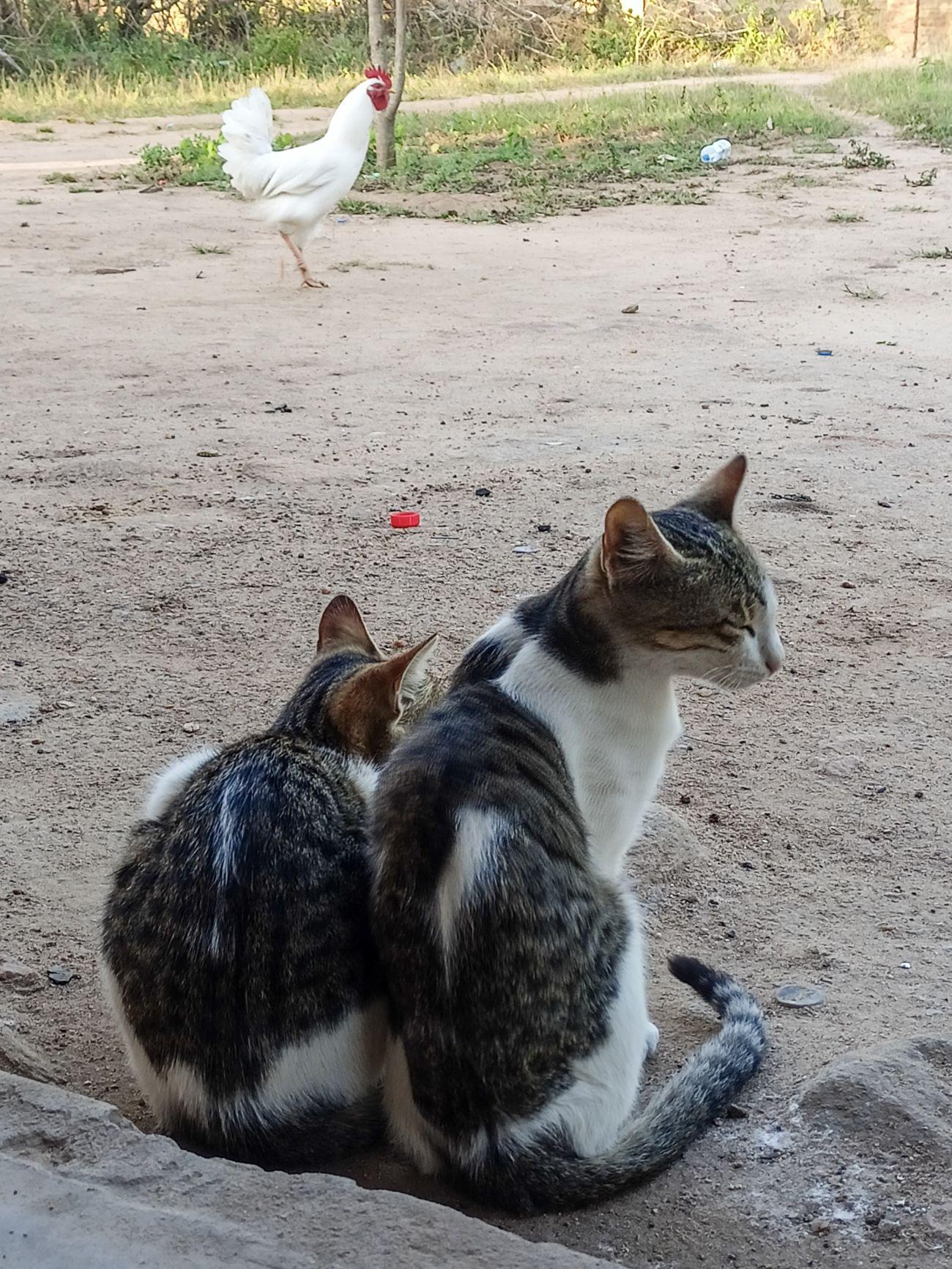
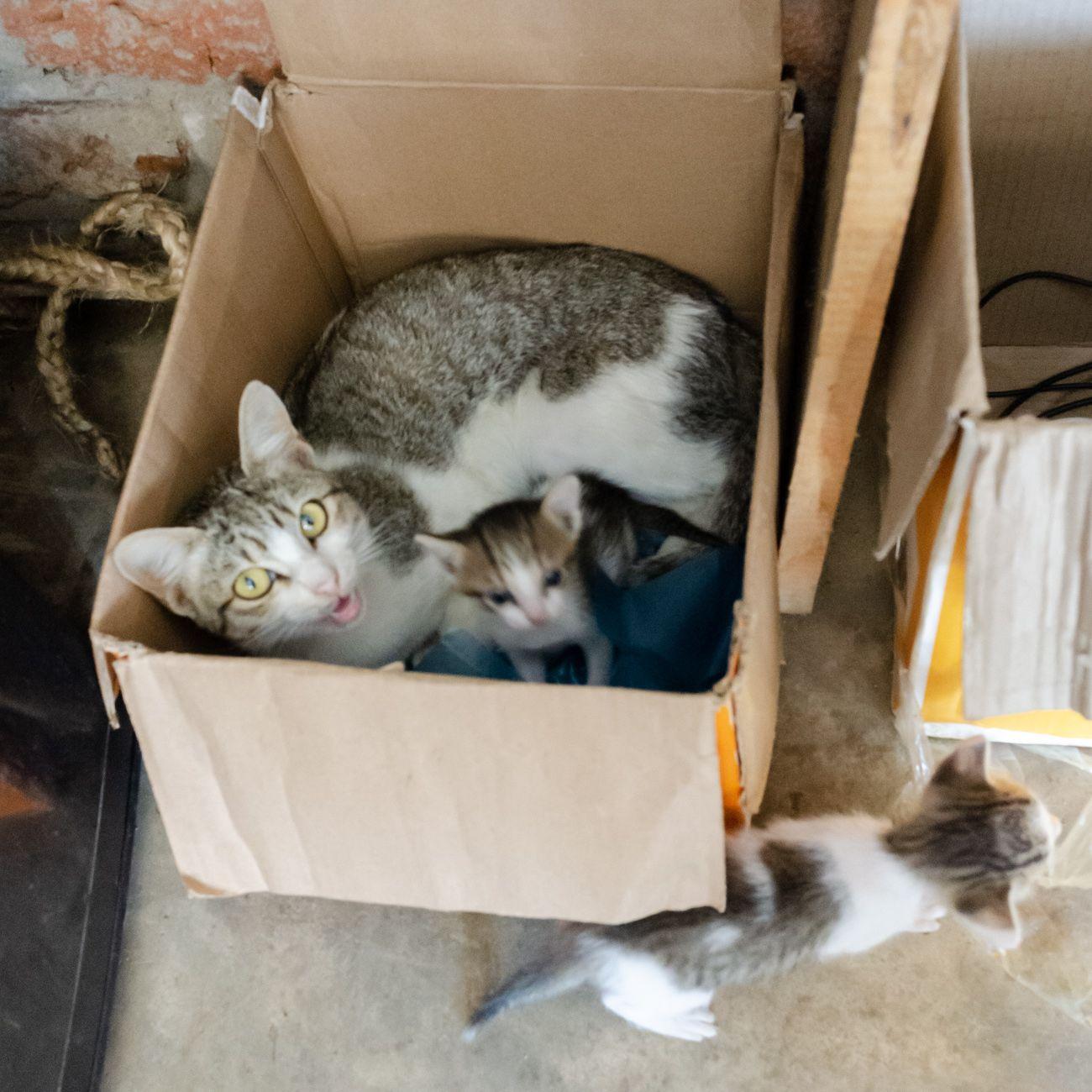
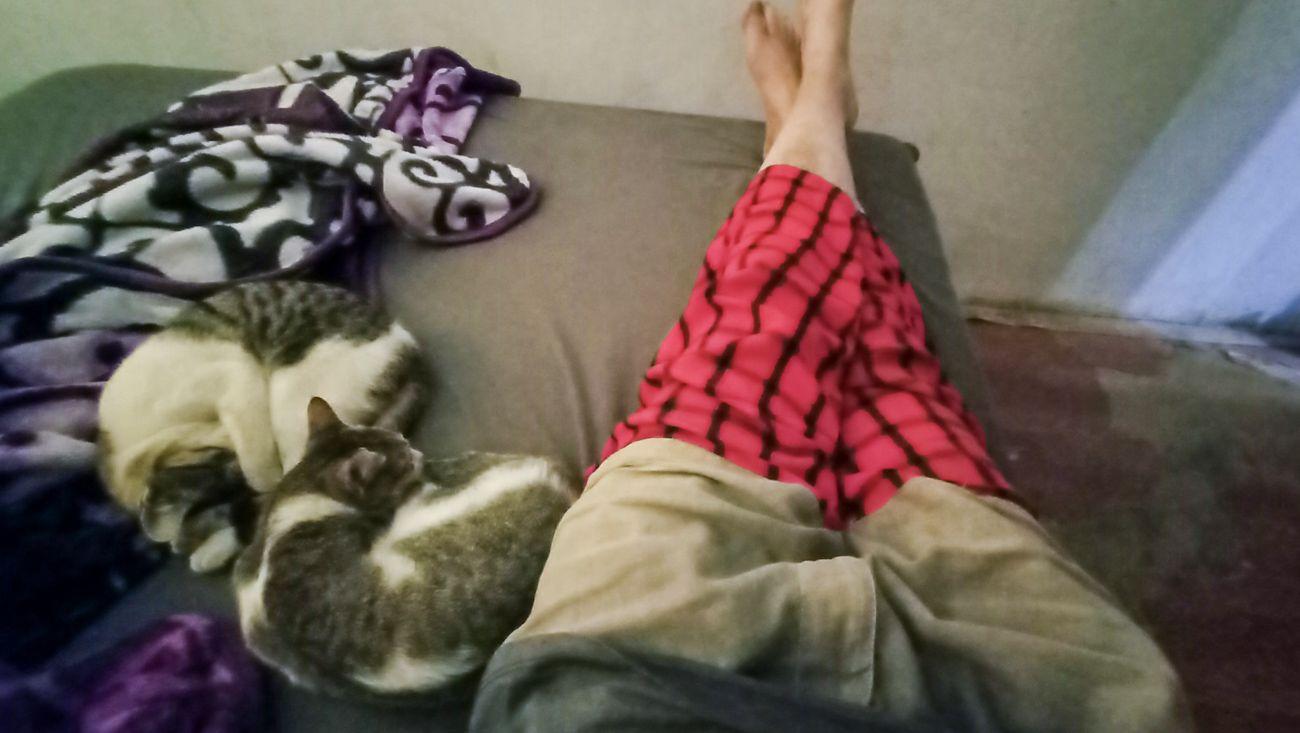
An inseparable part of Renča’s house were the cats, called meow in Masai. There were three of them, so mňau, mňau, mňau. Shortly after my arrival, however, one stopped participating in social life—it had kittens. I suggested names: Orkuči One and Orkuči Two, translating to Dog One and Dog Two. It wasn’t approved. Oh well. Maybe next time I’ll go with Eskimo One and Eskimo Two.Following the model of racially perfectly balanced American movies: What better way to balance an African Masai than with an Eskimo from the North Pole? Suggestions welcome in my mailbox at home.

Without kittens, it probably wouldn’t work.

The two remaining cats spent their entire day wandering around the house, searching for something to eat. If they found anything, they devoured it, regardless of whether it was wrapped in a plastic bag or covered in a pot. And if a person made the mistake of not closing the door at night — by person, I mean myself — they would sleep with me in bed. It wasn’t very pleasant, as I kept waking up all night to make sure I didn’t accidentally crush one or both of them. Hungry and freshly awake in the morning, both cats would stomp on me with their front paws, as though demanding food with every step. 

They didn’t think this through, because if they decided to meow me to death, they’d probably succeed about a hundred years sooner. They often meowed loudly, like a jackhammer or a jet engine. A two-kilogram cat could scream so loudly that all the glass windows in the house would shake — if there were any. They could be used as a defibrillator. Imagine a cat stored in a wall cabinet, ready to revive anyone nearby in clinical death with its ear-piercing cry. It screams, the person wakes up, and gladly walks away on their own. This tiny creature, roughly the size of a large rat, could let out a roar as if it had encountered a living Hitler. And, mind you, there were two cats in the house.

A funny story: The cat, as usual, was screaming at the door like her life depended on it. So, I went and let her out, clearly thinking she wanted to go outside. I closed the door, and the cat turned around and screamed from the other side, wanting to come back in. Sometimes, murder doesn’t seem all that inhumane. Masai allegedly keep cats because they are very useful—for example, they can catch mice. I don’t know how I could confirm that since I didn’t see any mice in the house.  According to them, cats can deal with scorpions effectively by eating them. How am I supposed to know if it’s true when I didn’t see a single scorpion during my stay?
Some claim cats are skilled at dealing with snakes. In my opinion, Masai keep cats as a substitute for radio because they’re constantly yelling. The dogs in Lengusero aren’t very diverse. They’re all about 40 centimeters tall, beige-colored, and of the same build. Since the locals have never seen another type of dog in their lives, they believe this is what all dogs look like. This brings me to the point that I have directly and personally proven the educational benefits of whiskey. I bought a bottle of Scottish whiskey, Black & White, which had two dogs on the label—a black and a white Scottish terrier. But the Masai thought they were some kind of strange cats. Slowly, patiently, day by day, I managed to explain to them that these were dogs. That elsewhere in the world, dogs can look very different, not just like they do here. So, as you can see, whiskey and education go hand in hand.

Cats.

Dogs had almost no practical use, except for their keen hearing, which served to alert visitors long before anyone suspected something was approaching. Masai have no idea that dogs can be trained to search for cows, sheep, or goats, which was likely the favorite sport of the Masai in Lengusero—searching for them at night.
For instance, the idea that a dog can serve as a companion is foreign to them. Once, we decided to take Labko on a trip to the neighboring village of Ndukai. We took Labko along for an outing, thinking it might do him good, since he spent his entire life locked in the open bush. The whole village stared, wondering why on earth the dog was walking with us. Why is it doing that? How is it doing that? Such a thing simply isn’t customary here. Yet, when Labko reached the edge of his known world, roughly halfway, he froze. It took a lot of convincing to get him to continue into unknown territory.

Labko and his Terra Incognita.

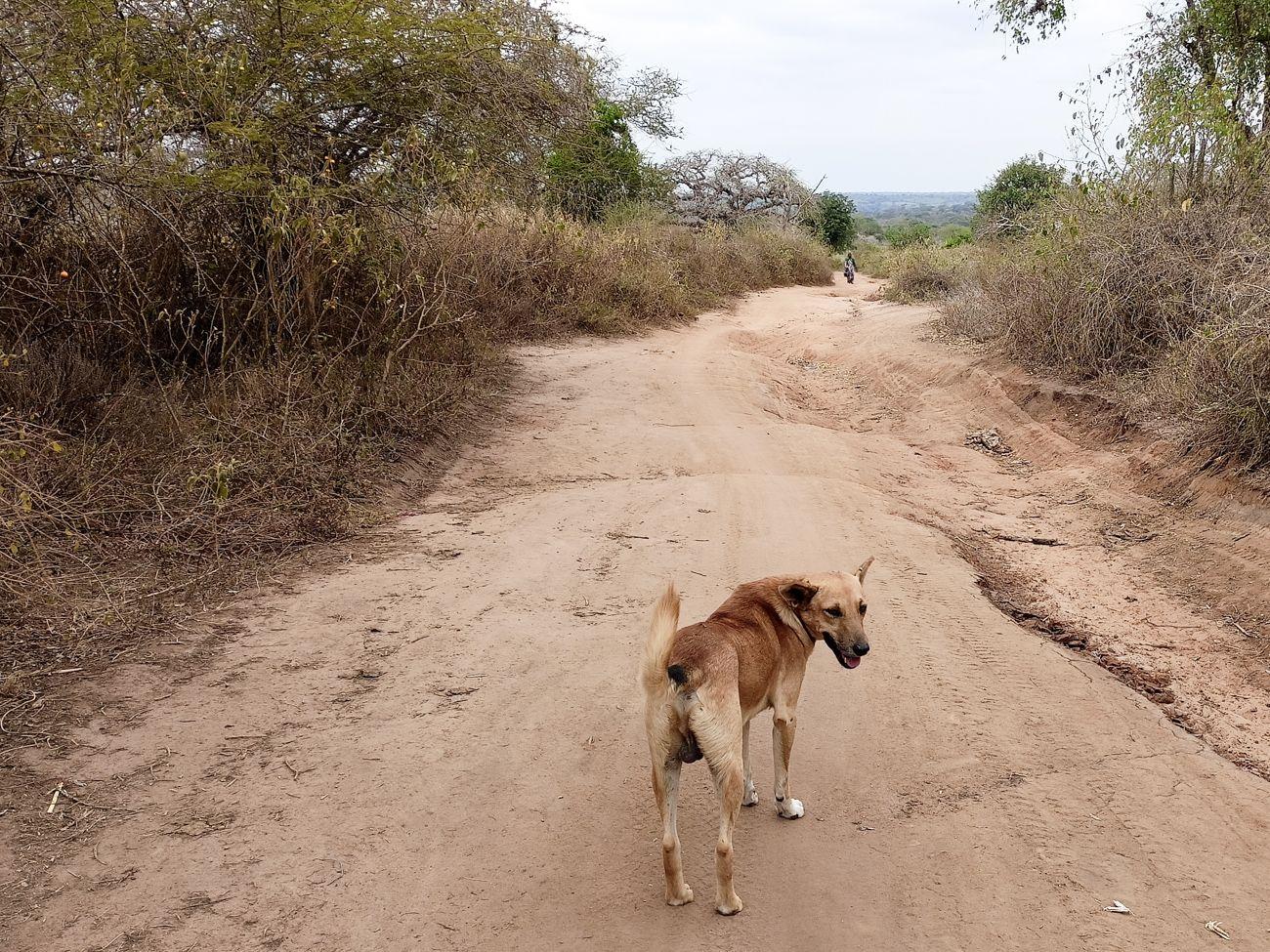
So, in Mbogoi and the surrounding bomas, the dogs just wandered around. If they found something to eat, they devoured it, took naps, and stared into the void—just like us. Occasionally, there was trouble because during the day, the dogs were mostly loners or moved in pairs or threes. By evening, however, they would band together into packs and roam around. They hyped each other up until they attacked a donkey, which, fortunately, managed to defend itself. But it was only a matter of time before they would seriously harm it. The solution was simple: locals always eliminated the pack leader, and peace was restored for a few months.
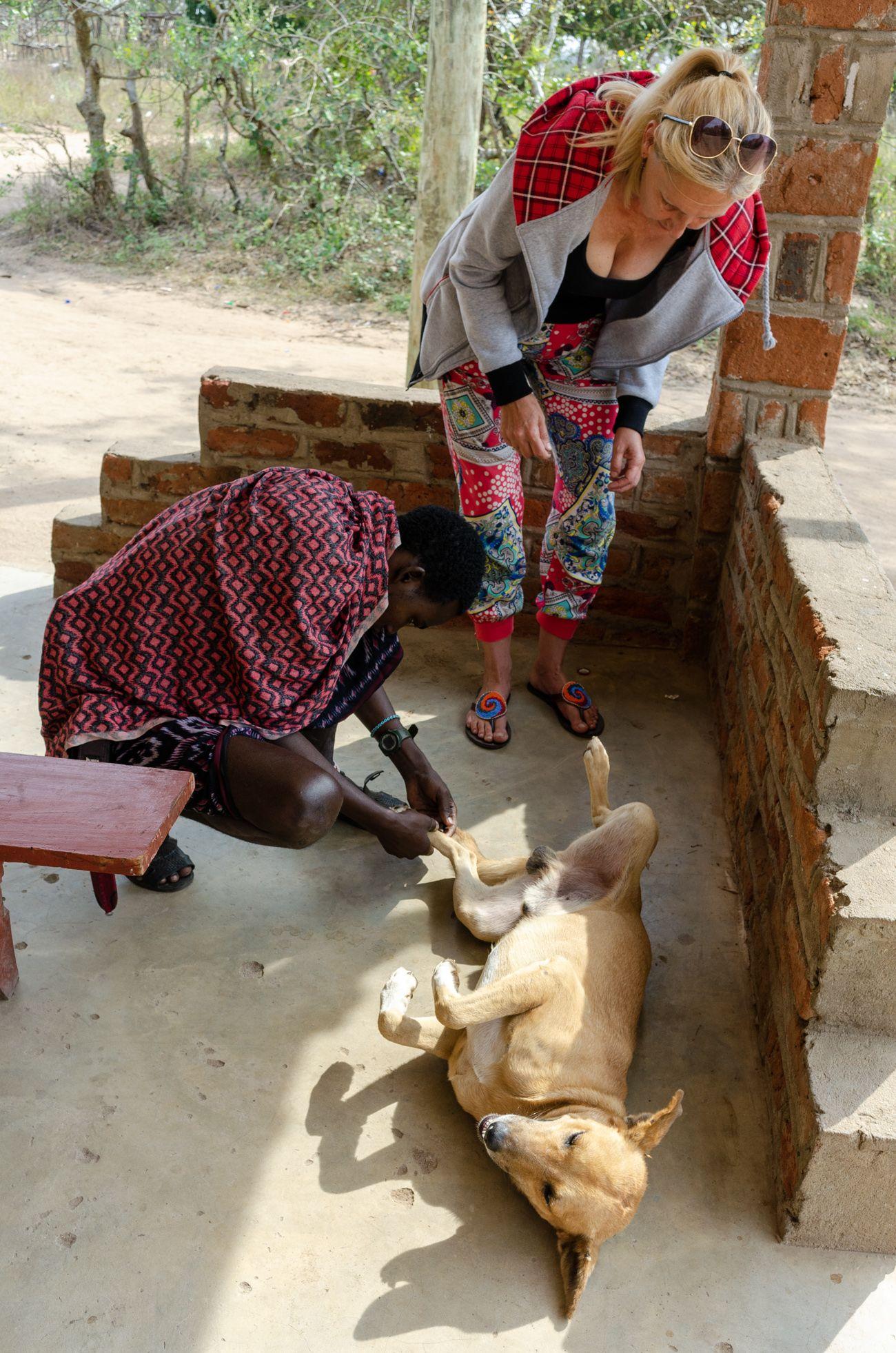
A special case was a dog named Labko. Physically, he looked like any other universal, brown, medium-sized, skinny, aimlessly wandering African dog. But when Renča and her daughter were here a few years ago, Labko was just a puppy, and they took him into their home, fed him, and played with him. This made him more accustomed to people than the other universal, brown, medium-sized, aimlessly wandering African dogs. I even heard that one of the Masai liked the name Labko so much that he gave it to his newborn child. I know I talk a lot about Labko, but after Renča and Sekenoi, he was my third favorite animal. When no mzungu was in Africa, Labko often stayed in the boma. When we were there, he sometimes came by to visit, eat, sleep, and then wander off again. Once, he came limping noticeably on his hind leg—apparently with an acacia thorn stuck in it.
How Labko knew that Sekenoi was skilled at extracting thorns from hind legs, I'll never understand.  Without much protest, he endured the "operation" and happily hopped back to the boma with a smile on his face.

Labko, this time, skipped the anesthesia.

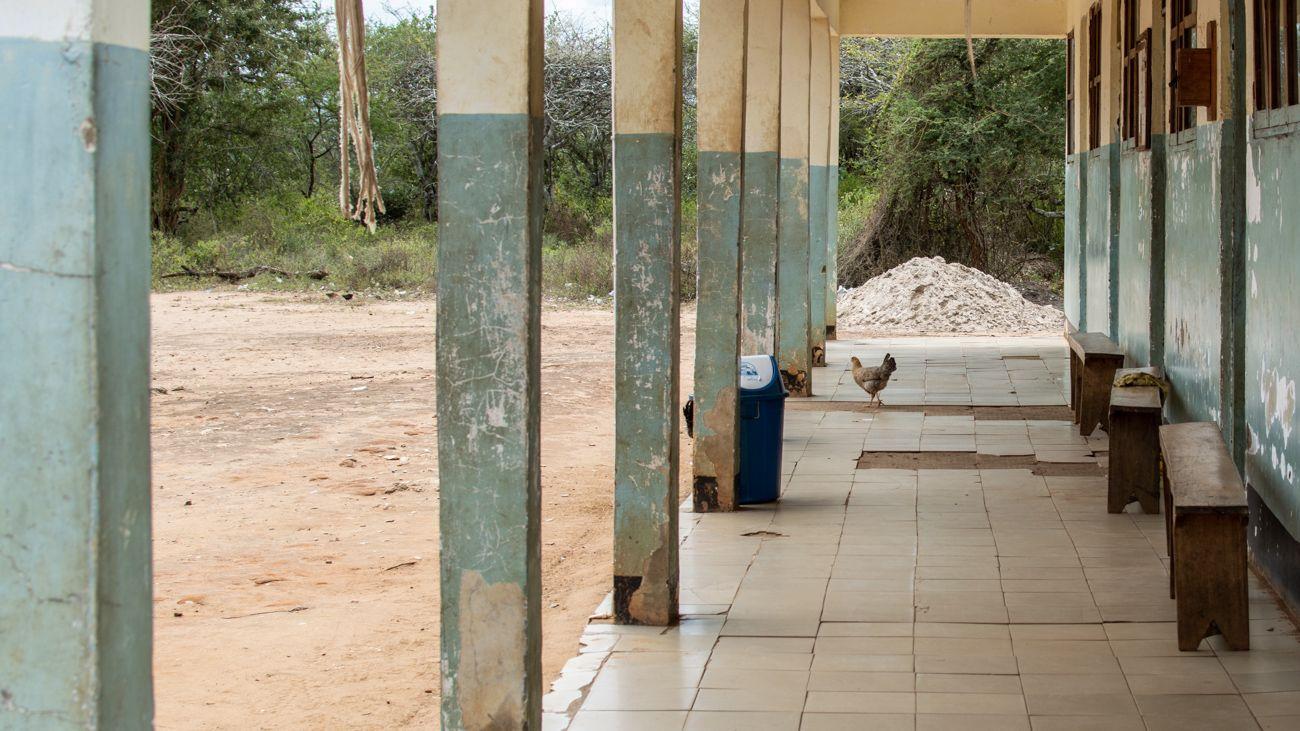
The residents of the village in Mbogoi and the surrounding area have an extraordinary talent for leaving a mess wherever they go. Trash, mostly plastic bottles and wrappers, is simply tossed on the ground. Occasionally, if they find a convenient wall, they’ll throw themselves on the ground for a nap before continuing on their way. Around Renča’s house, however, strict order was maintained, and garbage was gathered in one spot, which we called the dump. In Mbogoi, the term "dump" wouldn’t make sense, as it would describe the entire village—and let’s be clear, Mbogoi isn’t a dump; it’s Mbogoi. Since our trash was concentrated in a single pile, including household waste, chickens from the neighborhood often paid us a visit. Chickens are incredibly useful; they peck through all the mess that can be pecked and even catch scorpions. It was amusing to watch, during our diligent porch sitting, as an African bird of prey—its exact name unknown—circled above the chickens, attempting to catch one.
Once, a chicken made a nest in the shop and began laying eggs there. She clucked as if her life depended on it, though it was really just about eggs. In Masai, a chicken is amusingly called kuku, and eggs are jaja. Masai categorically refuse to eat kuku or jaja. Once, we managed to convince Dary to try some chicken prepared by Renča, with paprika, which was absolutely delicious. He took about a gram of it, thanked her for the excellent dish, and said he’d had enough. We tried to figure out why the Masai don’t eat chickens, pork, or fish. They mostly didn’t know and came up with various excuses.
The most logical excuse seemed to be that chickens just roam the yard and eat whatever they come across, like dung. And surely a person who eats an animal that eats dung cannot be healthy. In their eyes, chickens might be in the same category as rats are to us. Or there’s another possibility—they think chickens are a type of fruit, which they also don’t eat.

There was even a chicken assisting at the local hospital.

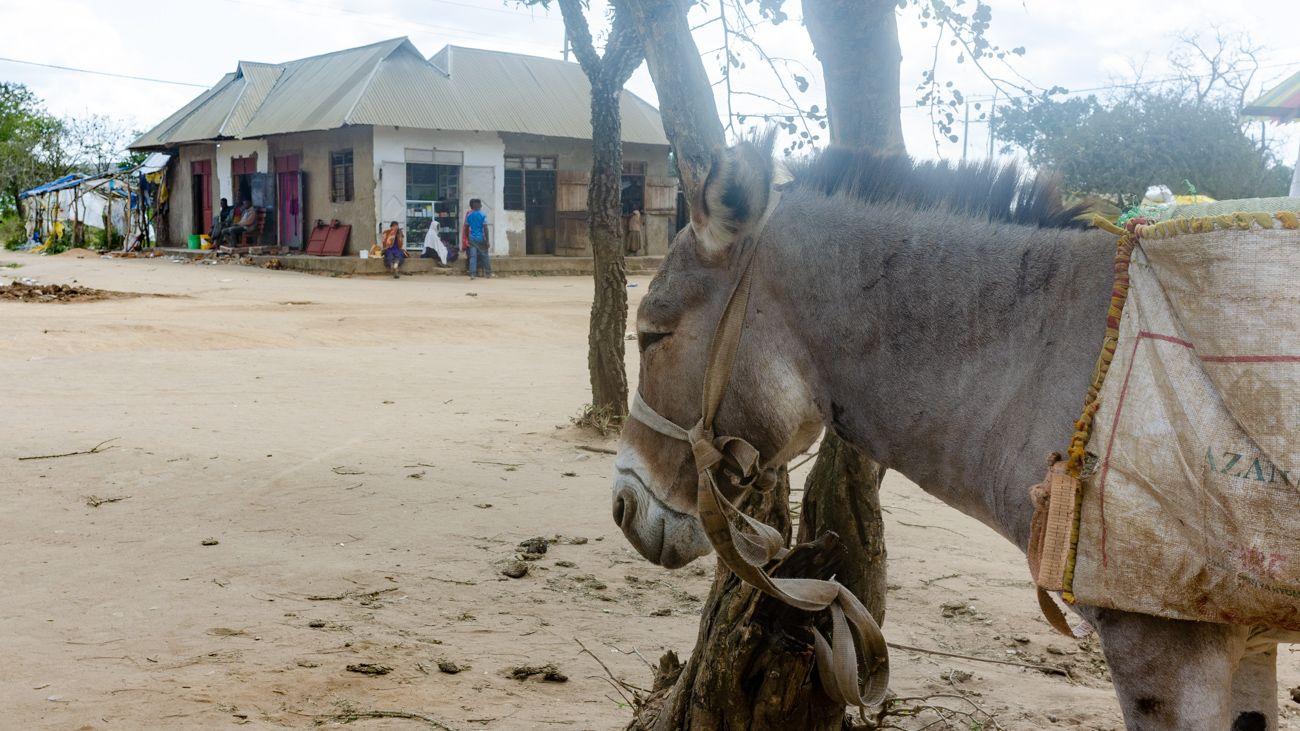
Unmistakable—or perhaps more unmissable by sound than sight—was the donkey. It essentially functioned as a living motorbike that didn’t need fuel—at least, I hope no one tried pouring gasoline into them. Unlike in our culture, where donkeys are often considered stubborn and foolish animals, in Africa, they’re seen as very smart, resourceful, affordable, and hardworking. Except for the fact that at night, they bray as if they just received notice of an in-depth tax audit. The braying sounded terrifying, at least at first, until I realized it was just their version of a bedtime lullaby. Listening to a donkey’s desperate call felt like hearing a cold-stricken opera singer on meth trying to perform The Sorrows of Young Werther in Romanian and in a  C minor. Here’s a closing piece of wisdom about donkeys: Don’t stand behind one unless you have a death wish.

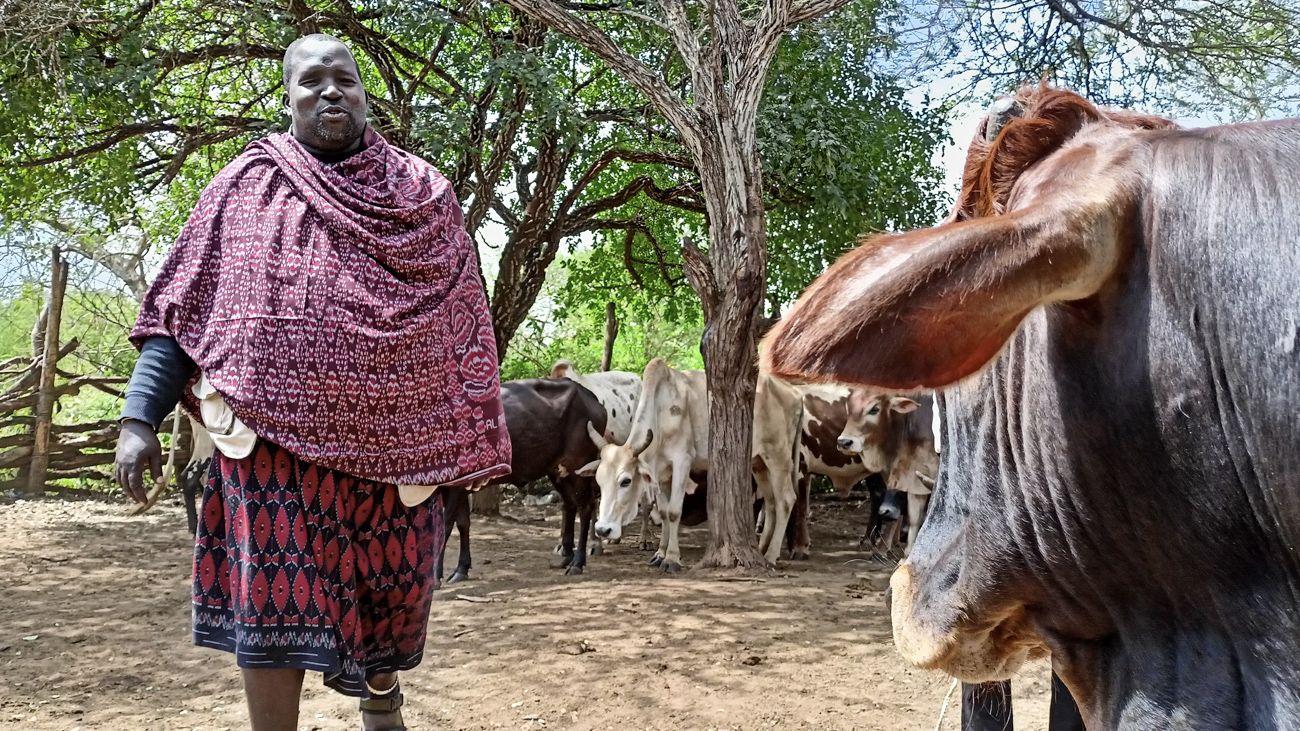
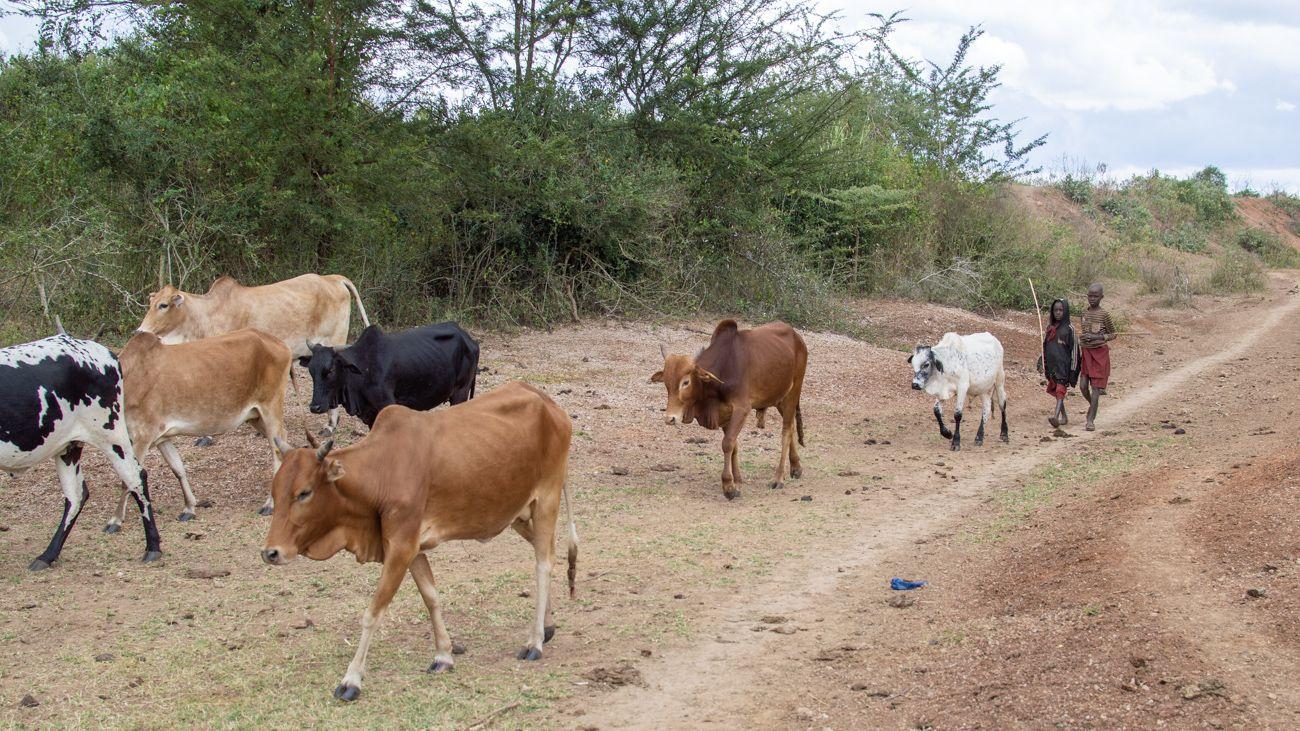
Cows are such an essential part of Maasai life that they deserve half of this story. Unfortunately, I’ve had far more friends among the Maasai than among cows. You know how it is with cows – what can you do with them? The Maasai are known worldwide as nomadic cattle herders. Their relationship with these animals is fascinating, though it took me a while to understand it. Cows aren’t raised for milk, nor for meat—they’re raised to have calves. Considering the meager grazing available in the bush, fattening a cow to the size we imagine would be nearly impossible. Masai cows have humps like camels, presumably to store water. Besides that, they have four legs, a body, a head, and horns—but we’re all familiar with those, so no need to elaborate. 
What’s truly entertaining about Maasai cows is that they’re considered the ultimate form of wealth. When we think of wealth, we picture a house, a car, or money. In short, a person’s riches are measured by these things. For the Maasai, wealth means cows. Since the Maasai traditionally lived a nomadic lifestyle, a family’s possessions consist of a few pots, maybe a motorbike, and a couple of mobile phones. Still, the Maasai are relatively wealthy—at least compared to the Swahili people in the villages. Wealth, for them, is measured in cows, sheep, and goats. The richer someone is, the more cows they’ll have grazing. Of course, every now and then, they’ll roast and eat a cow, but cows primarily symbolize wealth and prosperity, and the goal is to breed as many as possible.

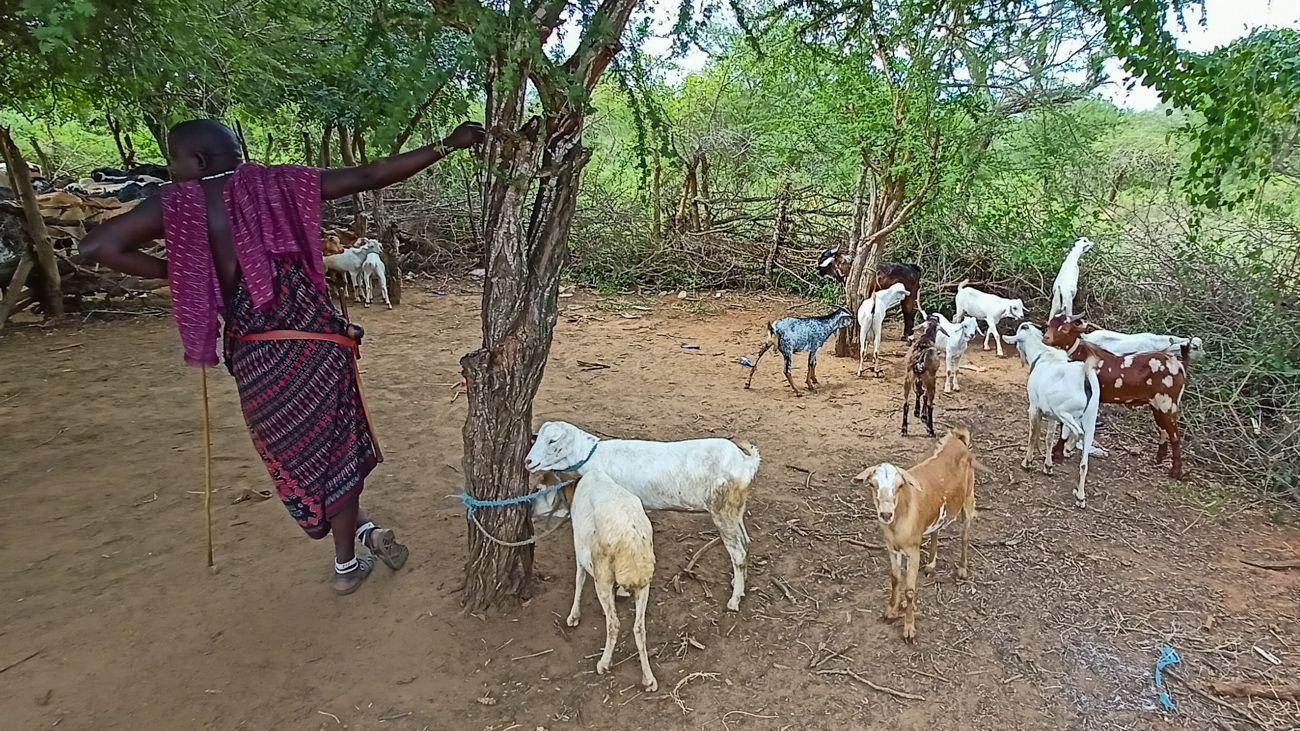
Apart from cows, the Boma is also home to plenty of sheep and goats. They’re not as valuable as cows, but they’re incredibly practical animals. I mean, try turning off your fridge and eating an entire cow in one sitting. Goats and sheep look almost identical here—the only real difference is that sheep have a fluffy, wide tail, while goats sport a slim, narrow, and longer one. My relationship with goats started out strong, but a steady diet of goat soup for a month shifted my loyalty to Sekenoi. Since they’re not as valuable as cows, smaller children often herd the goats and sheep. But you know how kids are—they often manage to lose a sheep in the bush and come back empty-handed.
It happens quite often, even to older children, who sometimes lose a cow in the bush. Afraid to return home after losing a goat, sheep, or cow, the kids stay out late. That’s when the grown-ups grab flashlights and head into the bush to find the missing animals. They often search late into the night, leaving them exhausted the next morning, while the kids head out again with the cows, goats, or sheep. I think this system isn’t exactly perfect and could use a little fine-tuning. 

The first half of the night, Alojz was after the goats. The second half, the goats were after him. Sleep? Not a chance.
Share this
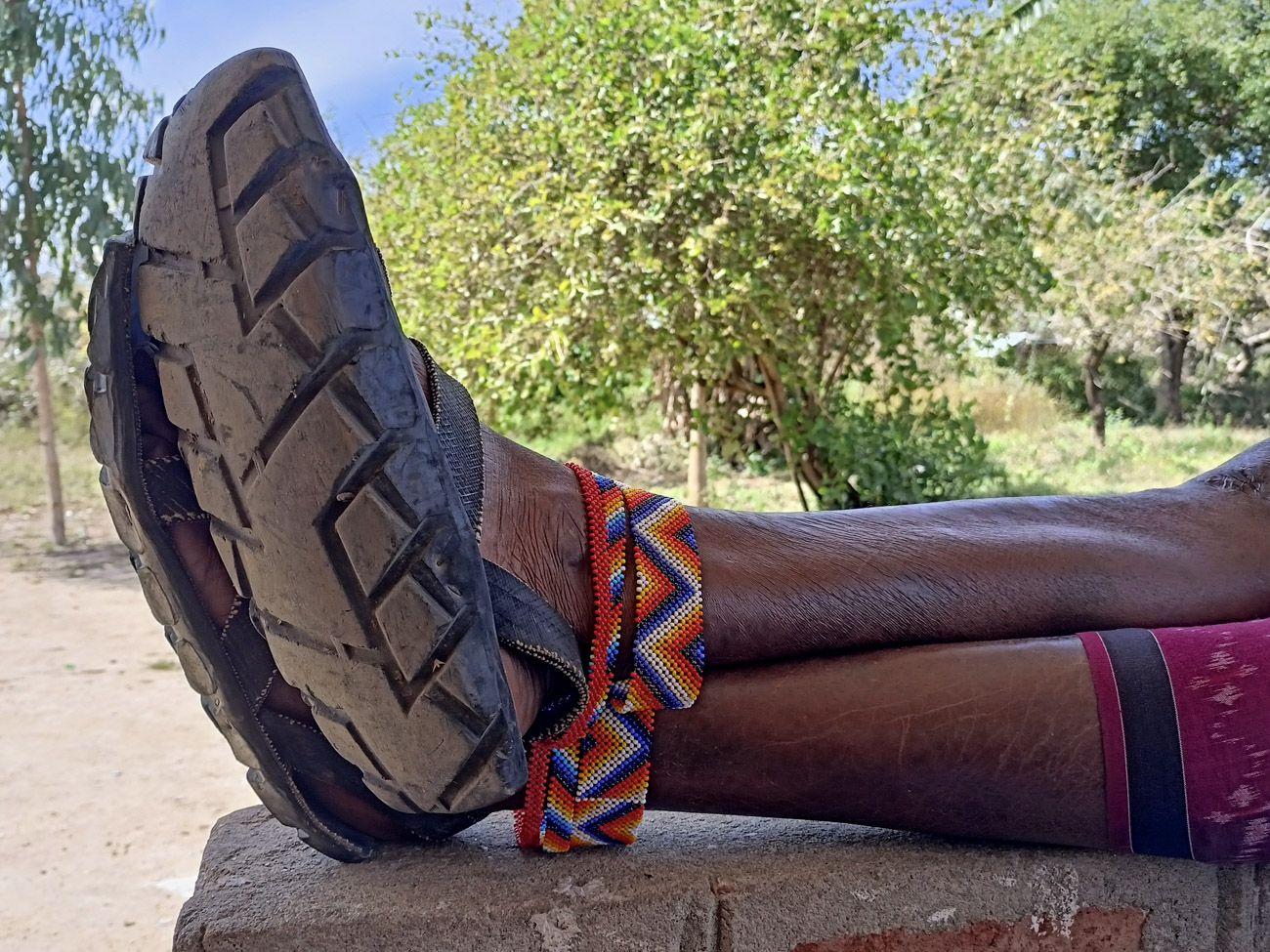
Thoughtful feet in thoughtless shoes.

I think Sekenoi has thinking legs—kind of like an octopus that has part of its brain in its arms. Sekenoi seems to have part of his intelligence in his legs. Right now, his left leg is probably thinking, “There’s a motorcycle rumbling in the distance. What if I went for a ride?” Meanwhile, the right leg ponders, “The sun is shining, it feels so nice lying here. Why would I want to move?” And the left leg responds, “Hmm, I wonder what the right leg is thinking. I’d really like to know.”
The left leg keeps thinking, “If I went somewhere, I might meet another pair of legs—someone else’s left and right legs. They could chat, and I could just stand there contentedly.” The right leg, however, has a different thought: “Good thing I can’t talk to the left leg. If the Maasai were chatting and I was chatting with the left leg, that would be way too much conversation. Better to just rest here on this little wall.”
The left leg hatches a plan: “To Koikai’s workshop! There’s bound to be excitement. Oh, and look, a chicken—I’ll chase it!” 
And then, the legs fall into a profound silence. Legs usually stay quiet, but this time, they’re profoundly quiet. This silent dialogue continues until nightfall. After all, it gets dark early—around seven. Once more, the right leg muses: “What a pity Maasai don’t use watches. They could wear them on their legs—I’d know the time instantly. What’s on the left leg’s mind now, though?”

Choosing a pair of shoes was really no problem for anyone

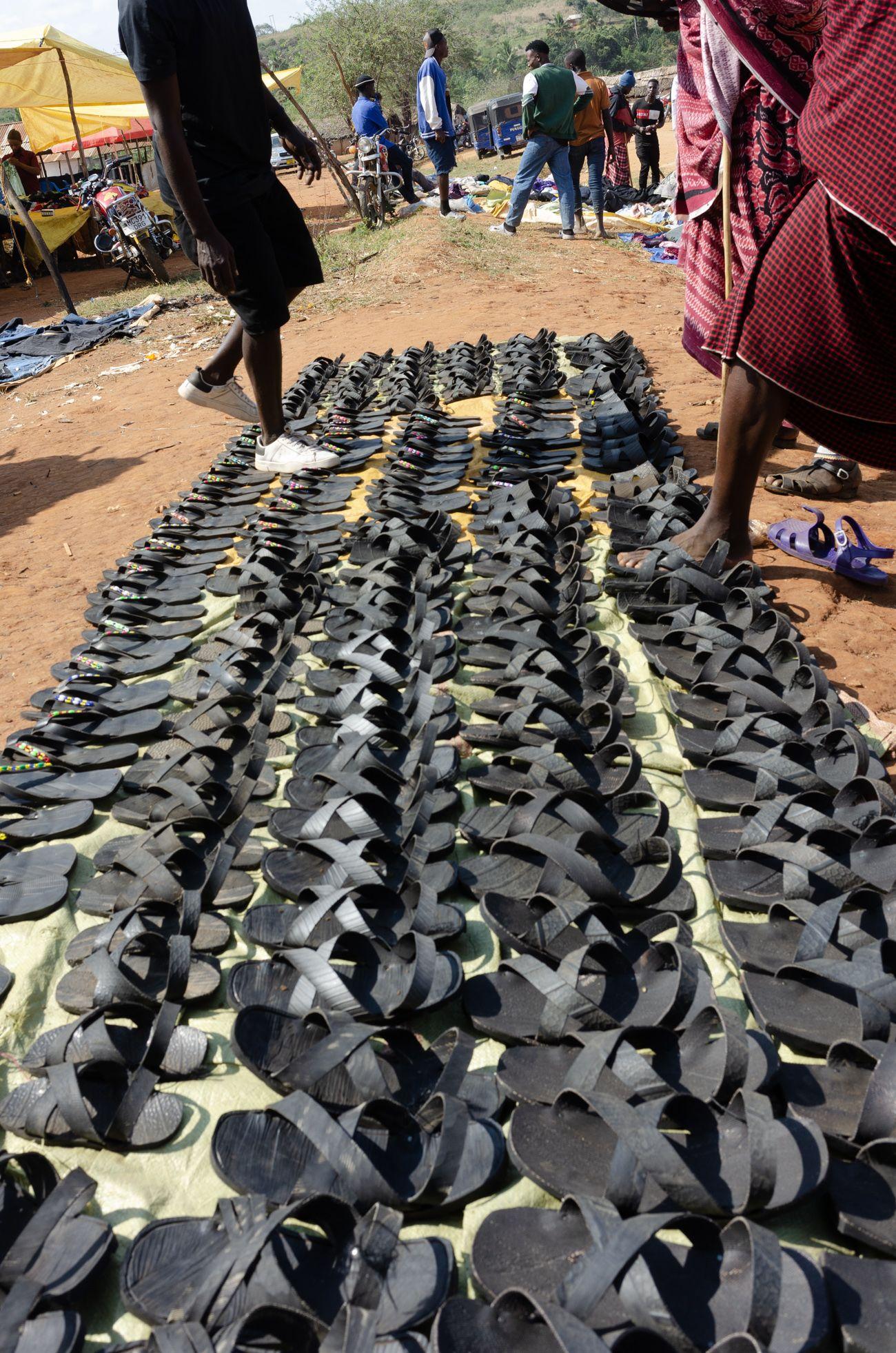
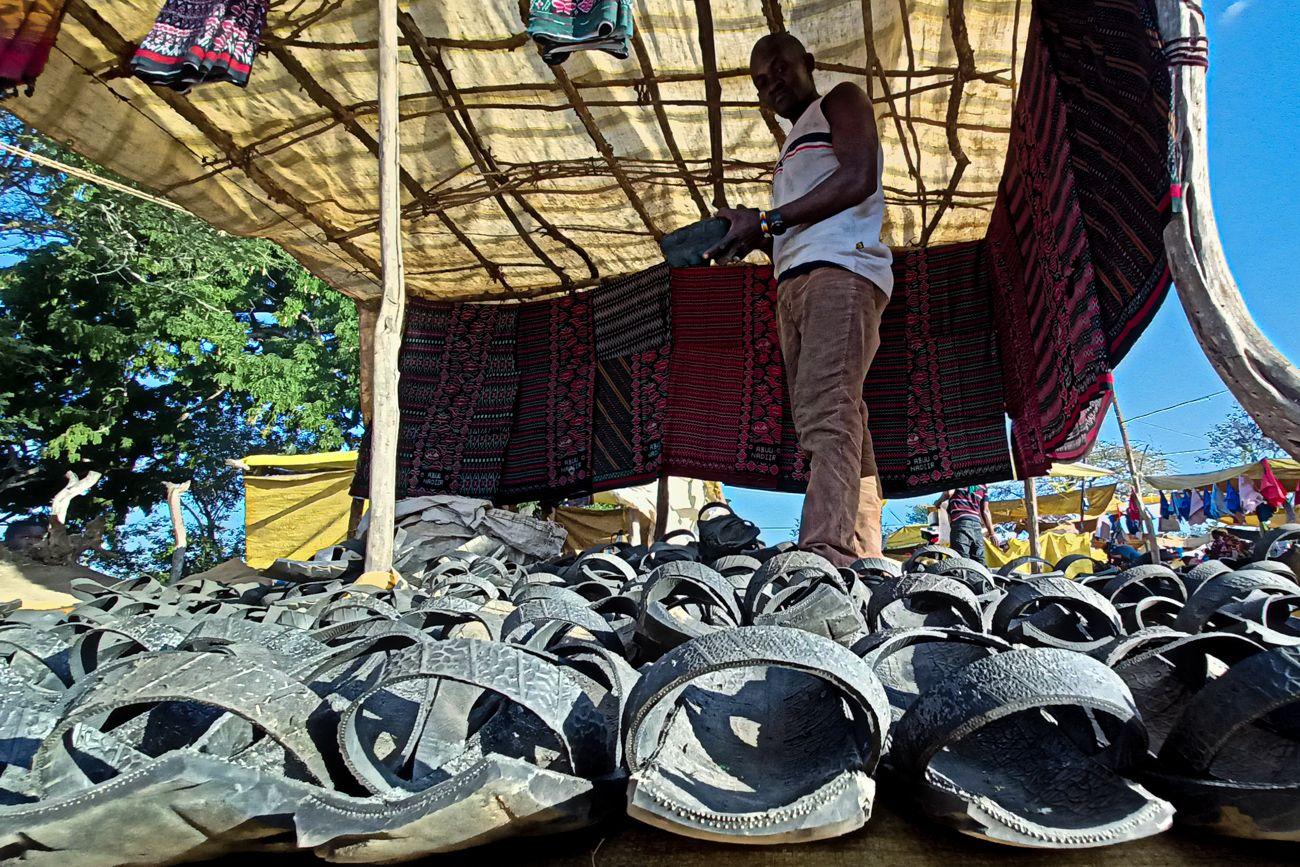
In Mbogoi, cars rarely make an appearance. Every Thursday, a few trucks arrive, bringing goods and vendors for the market. Occasionally, a passenger car shows up, but the potholes on the road make it quite the challenge to get here. That’s why all the Maasai wear sandals made from old car tires—to give the road and bush the impression that there are plenty of cars around. These shoes are crafted by a local artisan and can be bought at the market, where the selection is... colorful. “Colorful” in quotation marks, because they’re all gray. It’s more of a “gray selection,” but at least there are different sizes.
I wanted to buy a pair of these shoes, but after trying several, they were all the same small size. Maybe the Maasai are simply born with identical feet. Evolution seems to have stepped in and adapted their feet to the single size of available sandals. That’s why all Maasai wear sandals crafted from old car tires—to make it seem like the roads and the bush are teeming with cars. Perhaps Maasai are just born with identical feet.

Shoe fundi (master craftsman).

There’s a small issue here. The “Ministry of Transport and Goat Soup of the Republic of Tanzania” issued a regulation on the movement of sandal-wearing Maasai on public roads. According to this regulation, their sandal treads must be deeper than 1.5 millimeters. However, the sandals are made from used tires, which means their treads are already worn down. So, how to solve this? If the police were responsible for checking, they would have to be stationed in Mbogoi, but there aren’t any police there.
Officials therefore amended the regulation, and it now states that whenever one Maasai meets another, they must inspect each other’s sandal tread depth. If one of them has a tread depth of less than 1.5 mm, the inspecting Maasai must issue an on-the-spot fine to the inspected Maasai. The sight of two Maasai checking sandal treads often looks like an impromptu Charleston performance. There’s one more minor issue. I made the whole thing up. But I truly believe that once our civilization reaches Tanzania, this is exactly how it will work.

Yellow is a new gray.

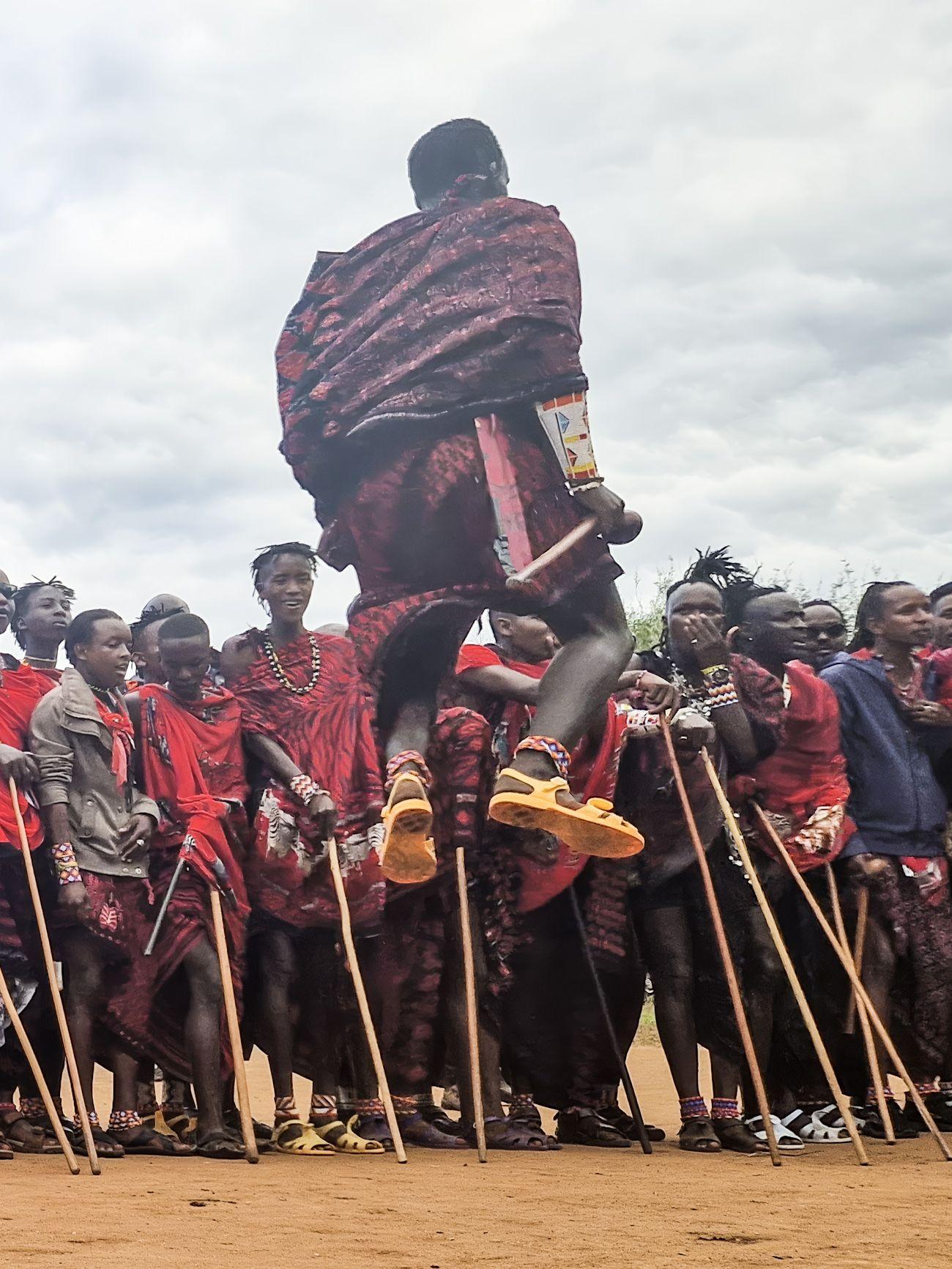
Of course, not everyone necessarily wears sandals made from tires, and looking stylish is one of the most important instincts for a young Maasai. The basic and simplest sandal upgrade involves attaching a plastic zip tie, which then sticks up and cheerfully flaps around. The next level features sandals not made from tires but molded from plastic, usually in yellow or white. I couldn’t quite grasp the symbolism behind which ones are better, who wears which color, or which color is meant for which occasion.
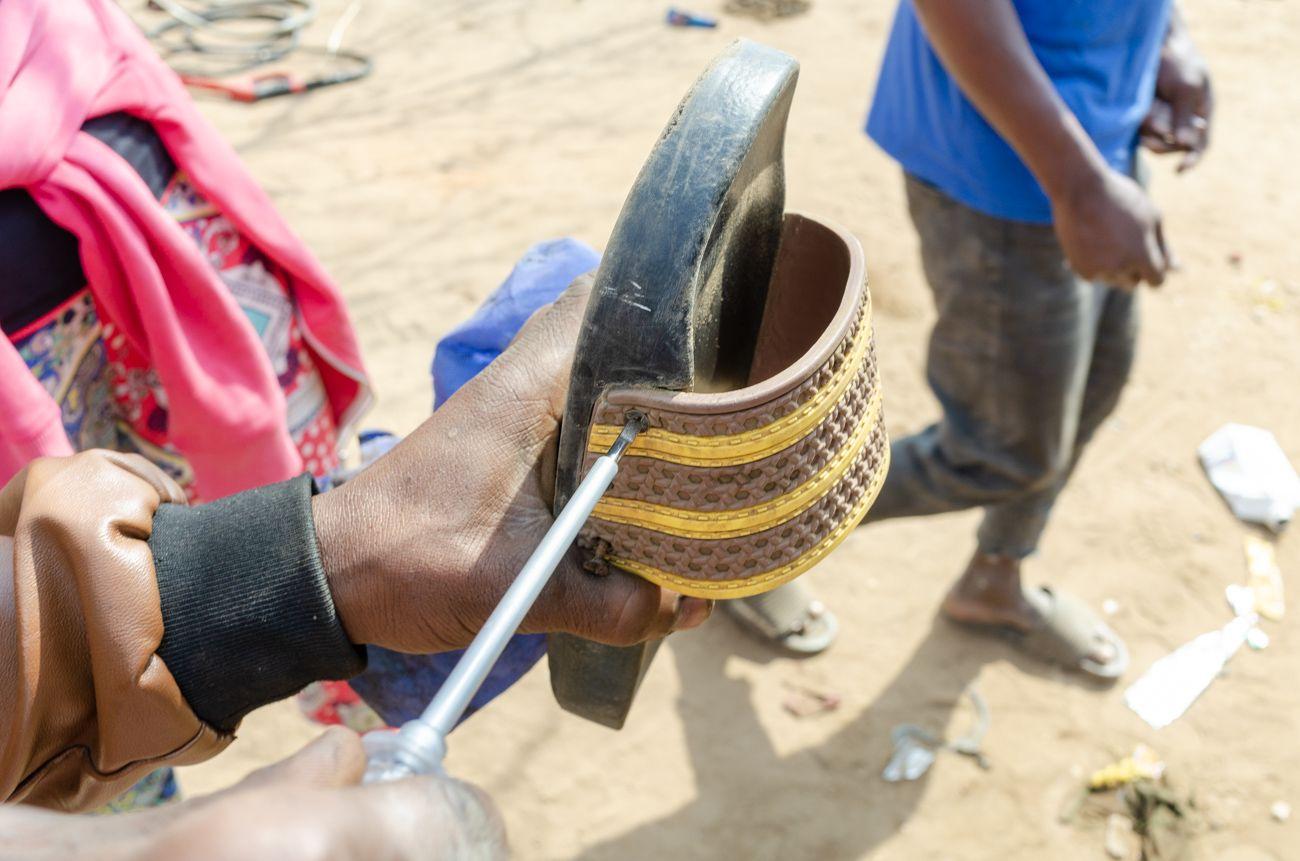
I have another very amusing story about footwear, but this one concerns the Swahili people living in the village. They didn’t roam the bush and preferred ordinary flip-flops. When Koikai and I were installing a socket for Alojz, we needed a wood screw. We wanted the socket on the wall to hold better, so the first strong, all-capable fundi wouldn’t yank it out of place. After a short explanation of what a self-tapping wood screw is, I mentally grouped it with things like Eskimos, credit cards, televisions, and pork chops—things that simply don’t exist in the village and likely won’t anytime soon.

Suddenly, Koikai gestured to a friend, someone who spent most of his days loitering around and occasionally lending a hand, and asked him to hand over one of his sandals. On closer inspection, the plain flip-flops revealed an unexpected touch of flair—self-tapping screws used as ornaments. We unscrewed the screws from the sandals and used them to secure the socket. Strangely enough, the sandals didn’t fall apart because they were glued, and the screws had only been there for decoration. Neither did Koikai’s friend fall apart, though maybe he was there just for decoration too. And the socket didn’t fall off the wall either because it was held firmly by the amazing Tanzanian sandal screws.

Self-tapping screw sandals.

Classic tire sandals could be purchased from the shoemaker known as the "Pneumatic Umeme Footwear Fundi," who also sold and repaired them at the market as needed. He always had hundreds of them displayed in front of him—a veritable sea of sandals that, to my untrained eye, all looked identical: gray, with the same shape and size. When a customer arrived, the fundi would expertly estimate their shoe size and almost instantly find a pair that fit them perfectly—like a glove for their feet. However, this wasn’t always the case, especially when a mzungu of my dimensions arrived. None of the sandals fit me. Despite this, I bought a pair anyway. Now they’re sitting at home in a closet, waiting for my feet to evolve into a shape that fits the sandals. The thought of 183-year-old Sekenoi wistfully reminiscing about the good old days of hassle-free shopping crosses my mind whenever I think about Lengusero getting its first shopping mall.

Share this

In countries where every government institution displays portraits of the president on the walls, I’d suggest replacing them with images of cow backsides. It would likely be far more soothing.

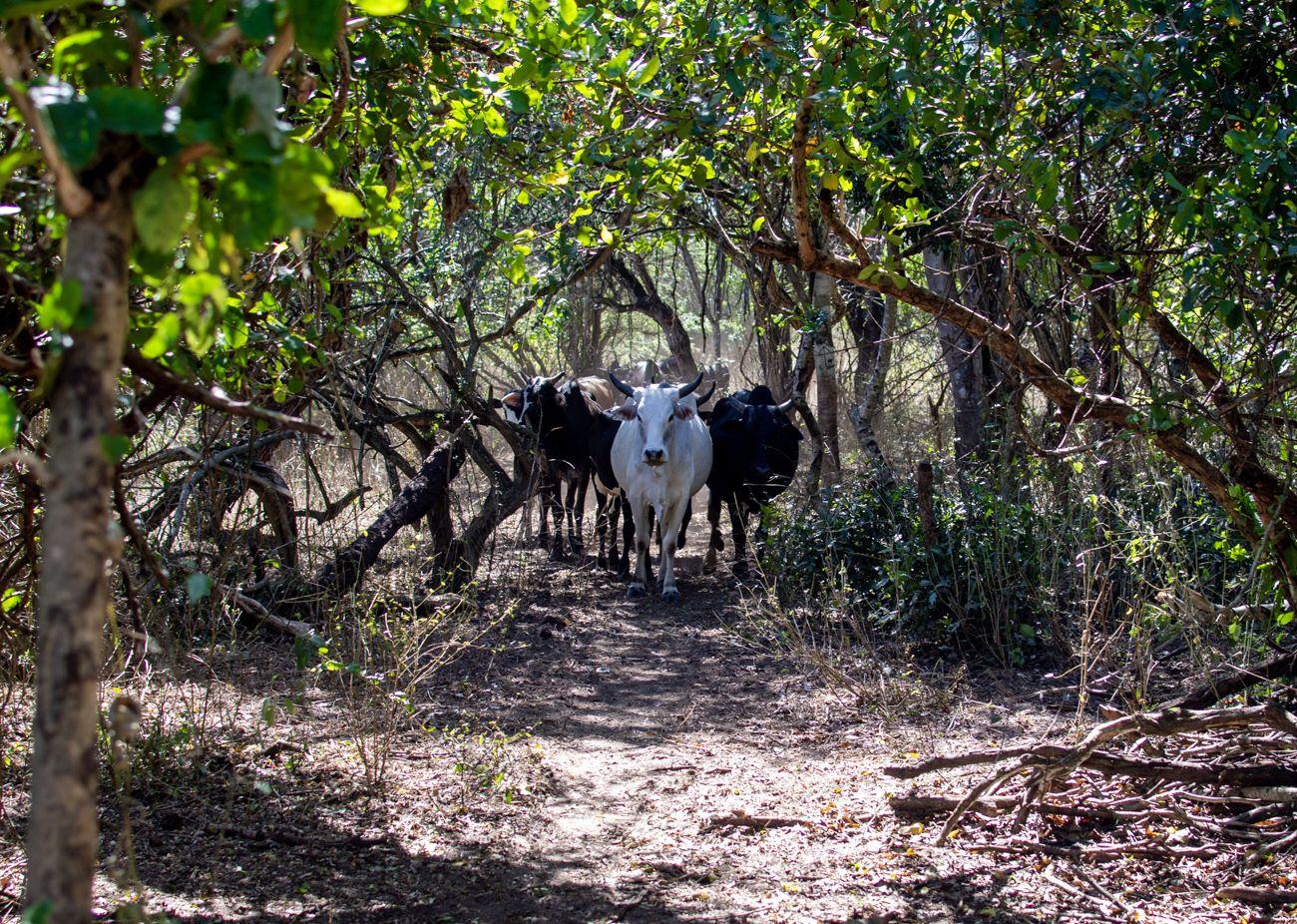
Sisoine and cow buttocks – a quiet moment in the bush.

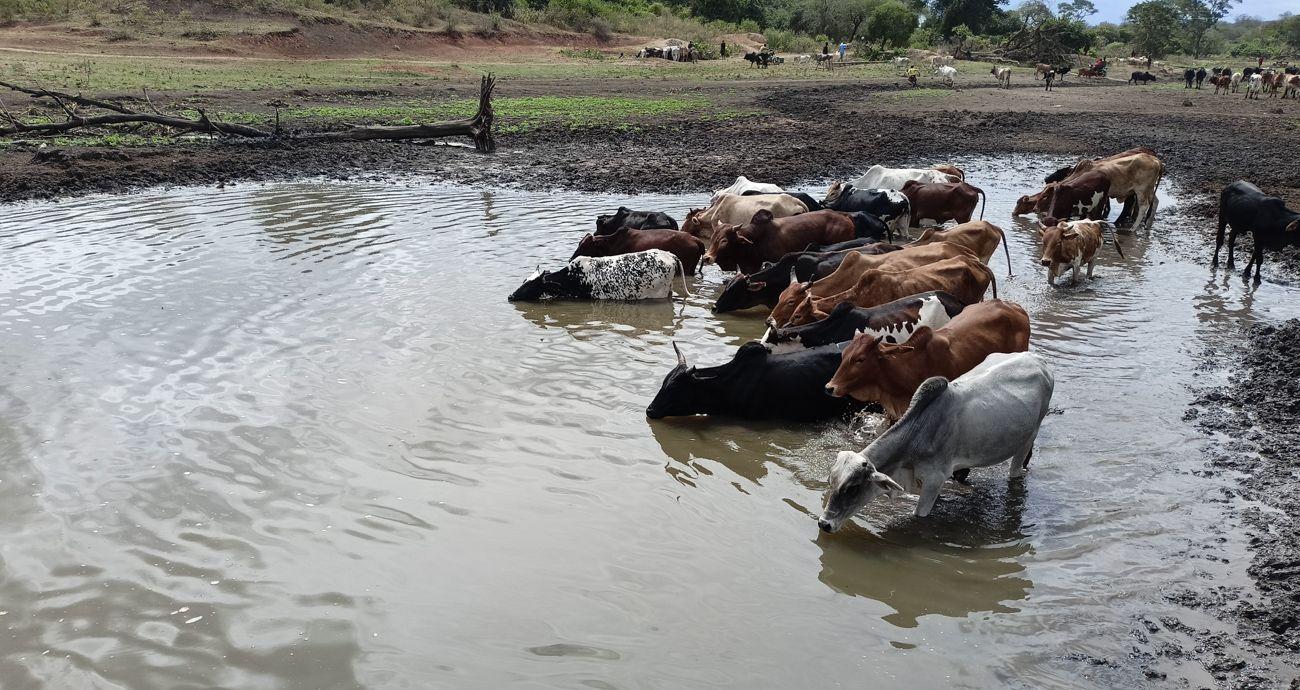
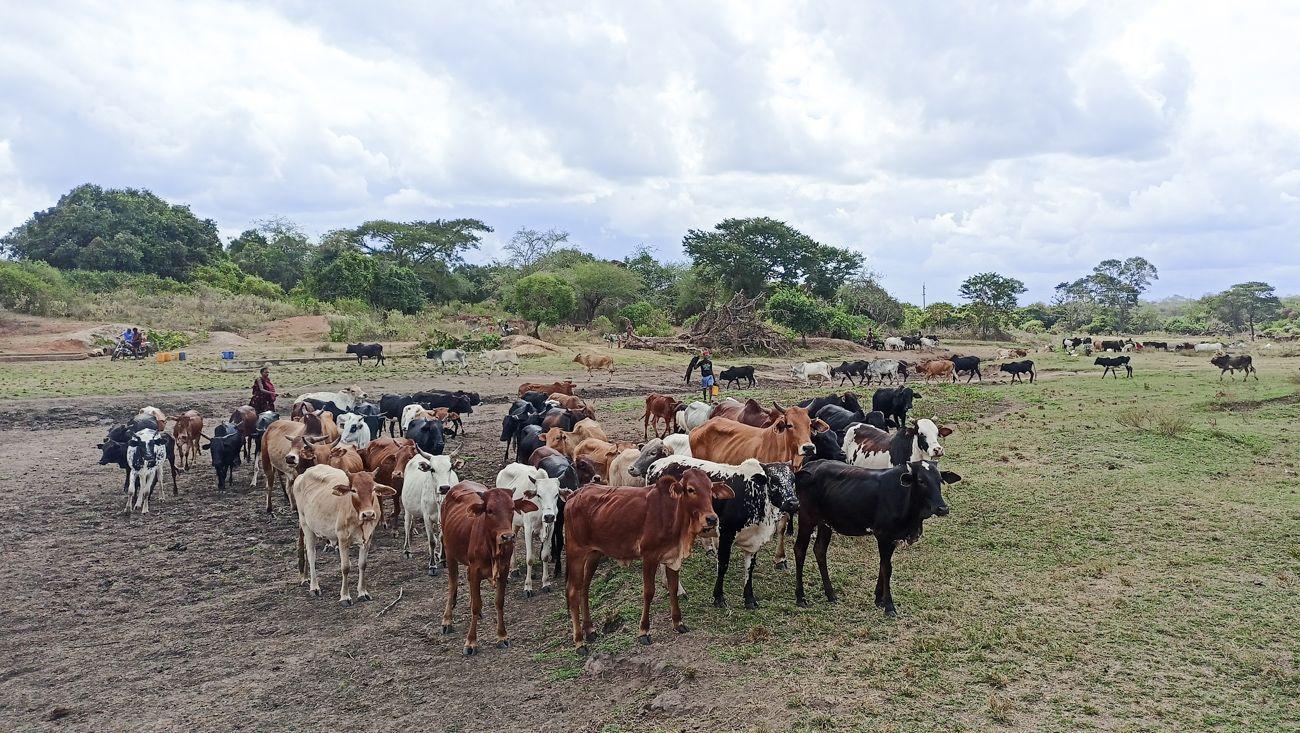
The Lengusero region has always faced severe water problems. In summer, heavy rains wash away roads, a few people drown, and by the end of winter, the drought becomes so harsh that the Maasai have to move their cattle closer to water sources, or the livestock would die of thirst. Someone once tried drilling a well there. But at 100 meters deep, the water was so heavily mineralized it was undrinkable.The only effective solution appeared to be building a dam. About five to six kilometers from the village where I stayed, there’s a watering hole called Bondeni. However, by the end of winter, it completely dries up. Building a dam there would solve the issue. The goal was clear—build the dam. Renča even contributed a significant sum toward it. Unfortunately, the execution went exactly as you might expect in Africa, filled with experts and practical solutions.
Once Mayor Munikiti had raised sufficient funds and deemed it time to construct the dam, he traveled to Handeni, the closest major city.There, he found a man who had both a bulldozer and confidence. The man promised to build the dam. Aside from a few amusing incidents—like how the bulldozer broke down more often than it worked, and the operator’s motorcycle was in equally bad shape—everything proceeded as expected. The bold builder designed, calculated, measured, and constructed the dam himself. He simply brought the bulldozer and piled up a 5-to-7-meter-high earth embankment to block a small valley. Great celebration! They would have water! It’s a shame Tanzania didn’t declare the day a national holiday. But soon, a small problem arose. Two weeks later, a major flood came and broke through the dam. Since then, it’s been back to the usual routine—drawing water from deep pits with buckets for the cattle. And when the water runs out, the cows migrate to wherever the water is.

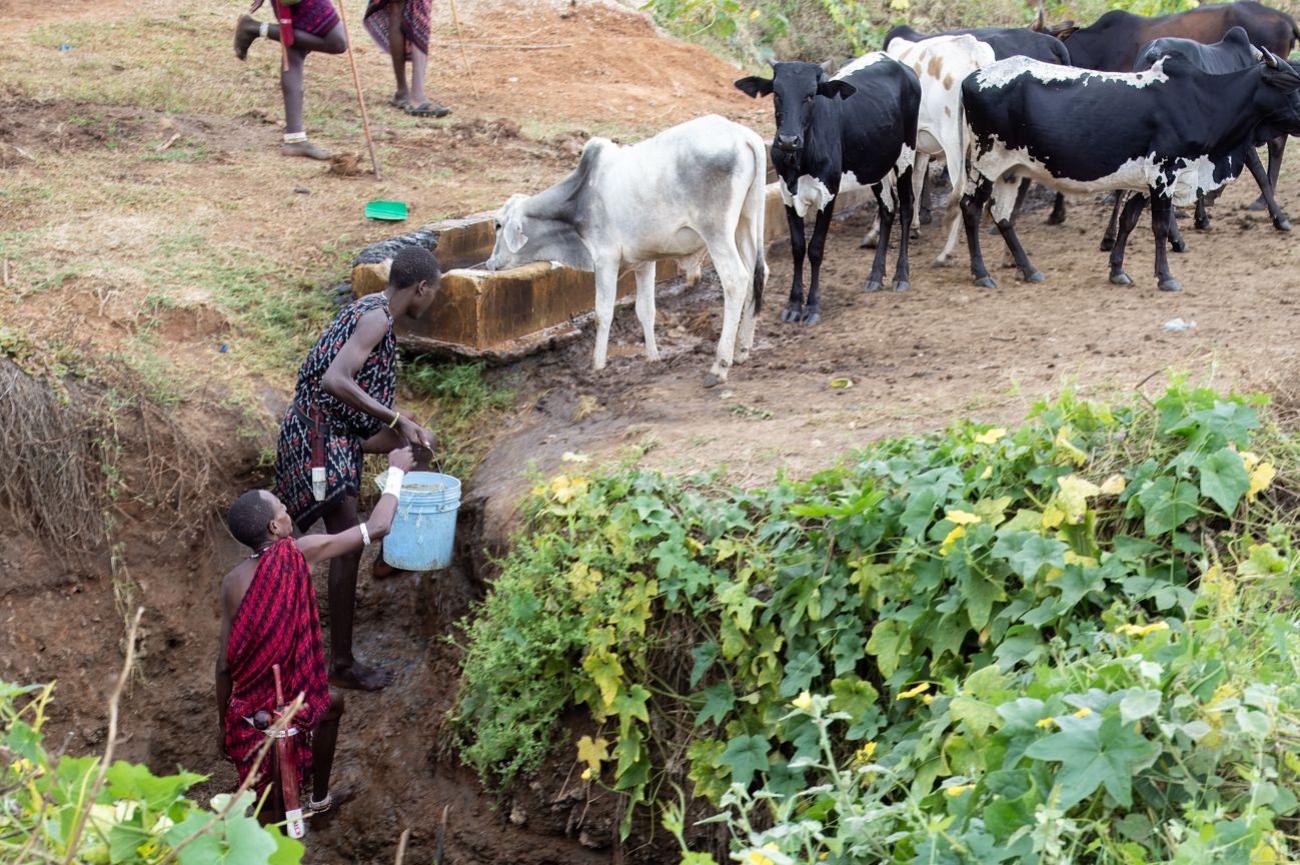
Hand-operated water system.

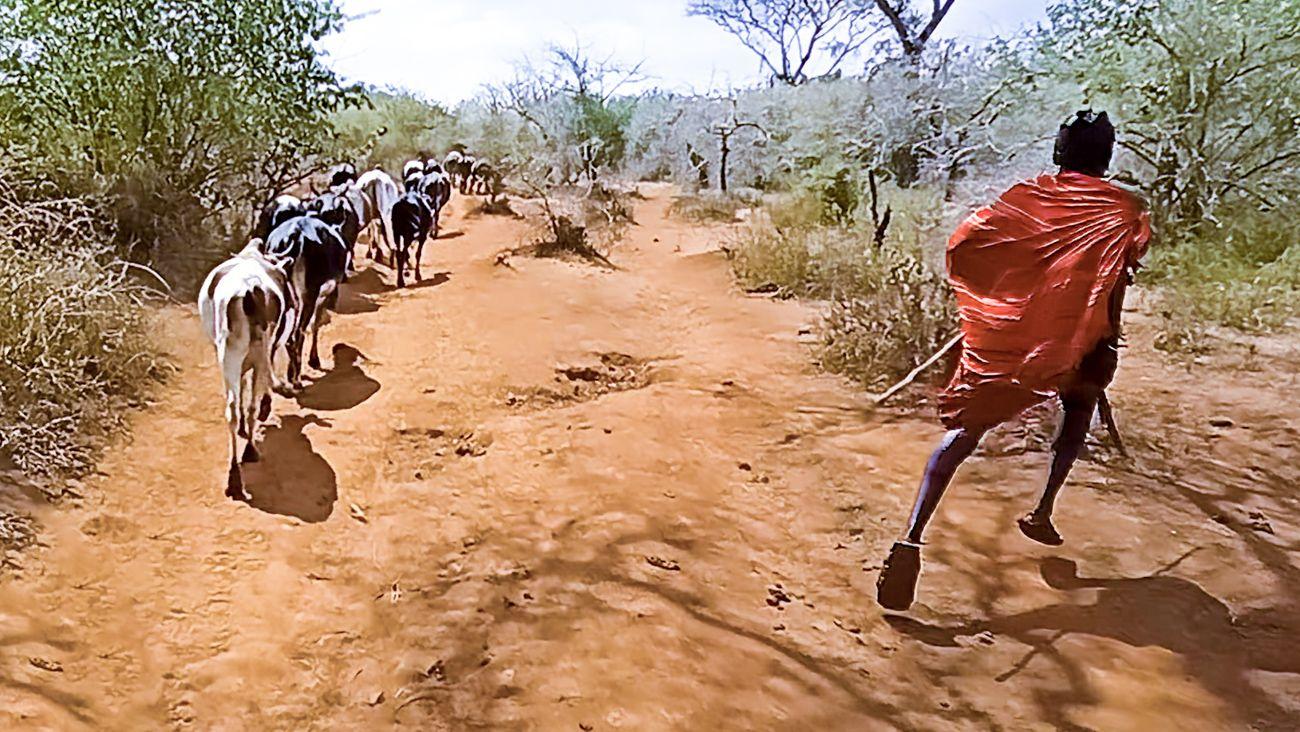
When I was there, of course, I wanted to try what the Maasai do all day—herding cows. Be a Maasai, breathe like a Maasai, eat like a Maasai, sing like a Maasai, herd cows like a Maasai. If I say "Maasai" one more time, I’ll definitely put a period there. Maasai. It all started innocently enough. Sekenoi said, “We’re taking the cows to Bondeni to drink. Come with us.” I thought, why not? I was feeling a bit thirsty myself. So, off to Bondeni we went. Naturally, on a motorcycle.  There, we waited for a little while—about an hour in one spot, then twenty minutes in another—until the cows arrived. Buckets were used to pour water into a makeshift trough. The cows drank their fill. Suddenly, Sekenoi said to me, “Jano, GO COWS.” I’m Jano; cows are, well, cows. Like coffee to go. Cows to go. And with a cheerful heart, eager to finally herd cows, I thought, “GO COWS!”. But then, a minor, inconspicuous, barely noticeable flaw found its way into the plan.
The cows headed home by a different route than Sekenoi had expected. So, I got a little lost. Unaware of this, I happily strolled along a wide, dusty red clay road, observing the cows’ rear ends and enjoying their calming effect. It’s truly amazing—there’s something about the sight of swaying cow rumps that clears your mind completely.  Your thoughts calm down, you come to terms with fate, time, the world, and the universe itself.

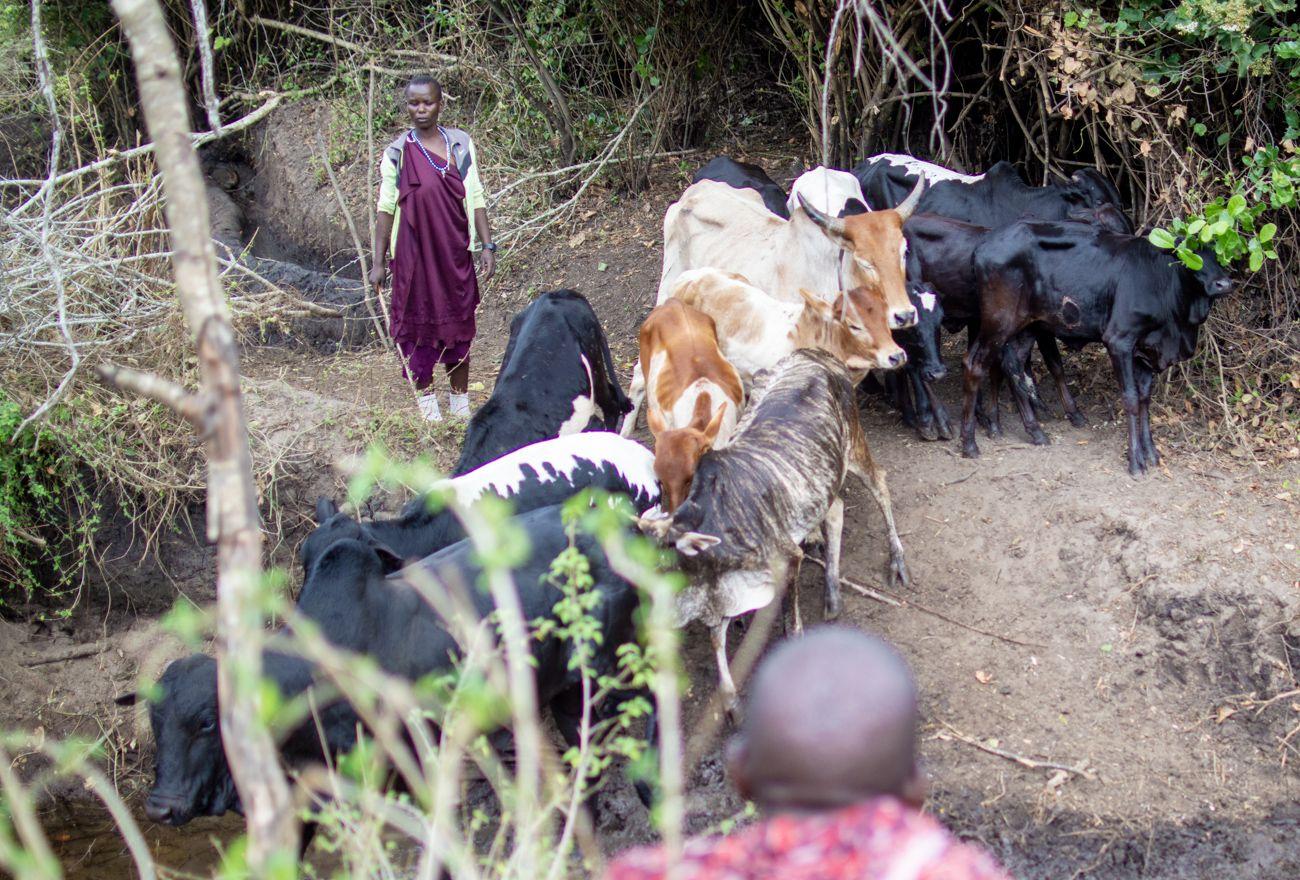
The cows are well hydrated now.

As I returned to my challenging journey in the company of cow backsides, I couldn’t help but notice the beautiful, slightly taller trees near the watering hole. They thrived thanks to the abundance of water, yet the area was also packed with bushes, much like the rest of the bushland. The beginning of this journey was definitely the most amusing, as numerous paths, wide and well-trodden by cows heading to the watering hole, seemed easily navigable. At least to the Maasai, who passed through without a second thought. Unlike me. 
A small bush branch crossing the path was all it took—sharp hooks lay in wait, ready to ruin your day and delay you as much as possible. Trying to move a branch of acacia out of the way seemed simple enough. But it demanded careful examination—what exactly was sticking out onto the path, what type of prickly menace awaited you, and how could you safely remove it? Once you concluded the branch was harmless and pushed it aside with a light heart, another branch—lurking to the left or right—would be ready with jagged hooks to snag your shirt, yank off your hat, and stop you in your tracks. Perhaps those bushes liked me tIt took me roughly 20 to 30 minutes to cover that 50-meter stretch.
In the bush, paths that appear 10 meters long can, in reality, feel endless. After passing one, you might find yourself just 15 meters ahead. Often, you double back because the path becomes impassable, opting for a different, seemingly shorter 5-meter trail, which, of course, ends up being 30 meters long. Looks can be deceiving—whether it’s the bush or politicians. The bushes with their backward-facing hooks worked tirelessly to strip me of my clothes. I tried explaining that I wasn’t a stripper, and even if I were, they wouldn’t gain anything from it—because this interspecies striptease simply doesn’t work.

Kind of like a jacuzzi.

I picked my cap off the ground about 300 times, but that’s fine. The worst is behind me, and I’m moving on. As I stroll along, it’s neither too hot nor too cold, I’ve got everything I need in my backpack, and the world feels beautiful. From a distance, I suddenly hear someone shout, “We!” In Maasai, this translates to “Hey!” or “You there!” or… well, I’m not sure. Even on the phone, they just greet you with a simple “We!”.
At first, I ignored it. There were plenty of people at the watering hole, and I wasn’t about to let every random “hey-you-there” distract me. But curiosity got the better of me. I turned around and saw Sisoine, Sekenoi’s younger brother, waving at me from afar. I stopped, and his horizontal, side-to-side waving quickly changed to vertical, up-and-down waving, which in Maasai sign language means “Come here.” So, I abandoned my “Go cows” mission and walked over to Sisoine. 

Not knowing any English, he grins broadly, gestures behind him toward Bondeni, and cheerfully repeats, “Sekenoi, Sekenoi!” Why is he telling me this? I know exactly who Sekenoi is. I see him every day and talk to him regularly. It only took me five days after we first met to remember his name. After about five minutes of this nonsensical back-and-forth, I finally understood that Sekenoi was there, and I was supposed to go to him. So, “Go cows” ended, and I switched to “Go Sekenoi.” Sekenoi, ever the action hero, was sitting on a motorcycle in Bondeni and had sent his brother on foot to find out where I’d wandered off to.
We got home safely, and later that evening over beers, as we dissected my little adventure, I confessed that I actually quite enjoyed being lost. I’m one of those adventurous lost types. As it turned out later, this was, indeed, a truly tactical mistake.

Kids and cows. I’m in Africa.

When I first tried "Go cows," I was captivated by the peace—the endless time to marvel at cow backsides. It was so divine that I decided to film a slow TV-style video, at least 40 minutes long, to share that heavenly experience with you. So, we set off for Bondeni again, and Sekenoi assigned Sisoine to accompany me. Sekenoi is just that type—always busy, always doing something, never stopping. Armed with a tripod I planned to use as a stabilizer, a fully charged phone battery, and a cheerful outlook, we embarked on our slow-Maasai TV project. With a gesture toward Sisoine, Sekenoi gave the order: “GO cows!” I immediately understood that I was supposed to go with Sisoine and then follow the cows, which had wandered off into the bush about ten minutes earlier.
I assumed Sisoine would guide me through the bush, clearing away any obstructing branches. Wrong. Apparently, someone let it slip that I enjoyed getting lost the last time, and they told Sisoine to let me wander solo in the bush again. Guess who spilled the beans? Whoever figures it out gets a reward—I’ll stare at them intently for 10 minutes. So, Sisoine disappeared into the bush, leaving me alone.
Plus, I was carrying a tripod about a meter and a half long and a camera, which left me with only one hand to deal with branches.The outcome was that the first stretch of herding cows was nothing but me huffing, stumbling, wrestling with thorny bushes, and spreading a dry cough to anyone or anything nearby. 

After a while, my cow-herding colleagues took pity on me. From about 30 meters away, I heard a shout: “We!” Which roughly translates to: “Hey you, mzungu, stuck in the bushes! Don’t worry, we’re here, come to us.” I’m not sure how you’d detect a cynical tone in the word “We!”, but I’m convinced it was there.
In these conditions, a 30-meter direct line is more like 130 meters for a bushman like me. Endless attempts to push through thorny hooks and creeping branches hanging across the path, doubling back, and starting the fight all over again. There were times when “We!” echoed not just ahead of me but also behind me. It felt like I was surrounded, but it turned out I’d just turned my back on them for a moment. As an eternal optimist, I was convinced my suffering would never end. The bush was a vast prison, and I’d wander through it even after death.
But since unbelievable things happen in this world, I eventually spotted a flash of Maasai red clothing through the bushes. Moments later, I saw the glint of enormous white teeth, which, I swear, were bigger than their heads.Sekenoi was laughing, probably at me—an old mzungu stumbling out of the bush, torn to shreds, yet oddly cheerful, as if drunk. The end of my wandering. Go cows. We spent the next quarter of an hour admiring the majestic rhythm of the cows’ rear ends swaying ahead of us. I had no idea where they were going, but honestly, I didn’t care. All the prickly and thorny nuisances were at a safe distance now. Never would I have guessed that swaying cow backsides under the African sun could have such hypnotic effects.

Bondeni watering grounds.

Here’s the revised translation with appropriate variants: Of course, Sekenoi had already told Sisoine to stay out of the camera shot and not to talk to me while I was filming. My goal was to create one continuous, uninterrupted 40-minute take. Since I also wasn’t supposed to speak to avoid ruining the shot, how could I tell a Maasai, standing 30 meters away, that it was perfectly fine for him to whistle at the cows, say something to me, and even appear in the shot—while I held a tripod with a camera in one hand and had only the other hand free? I waved my hand up and down until I managed to distract him. He forgot he wasn’t supposed to whistle or appear in the shot and slowly, hesitantly, emerged in the frame, running a step ahead.
When it comes to cows, Maasai skip conversations entirely and rely on an intricate system of whistles. They have about 1,451 different types of whistles, none of which I’ve understood to this day. Maybe if I spent 100 years there, I’d learn. The cows gradually wandered off the wide, red-sand-covered road and disappeared into the bushes at the edge. And just like that, I was back where I started—thorns, hooks, panting.
Sisoine alternated between whistling joyfully while standing still and sprinting to catch a wayward cow. Sisoine occasionally stood still, whistling cheerfully. Sometimes he ran when a cow went astray, moving with his trademark comic-book style: bent forward at a right angle, incredibly fast, and almost impossible to spot. At last, I understood why the cows were relatively small and produced so little milk. They grazed on bushes with maybe twenty half-dried leaves hanging on them. But about 10 meters away, I heard the sound of a motorcycle stopping. Sekenoi. I headed in that direction, and after a few minutes, I reached him. We were heading home. I think the cows gave me sad looks from the dense bushes behind, knowing they’d probably never experience another Jano Go Cows like this again.

Share this

Just as owning a smartphone has become almost mandatory for us, having a mobile phone is a major trend in Mbogoi too. It’s not a phone by our standards—a smartphone—but a basic feature phone with a modest screen and limited resolution. For a long time, I wondered why they bothered owning phones. The mobile signal was only available outside the village in specific spots, and with no electricity, charging the phone was impossible. What use I’m talking about a phone with a dead battery and no signal. But these are trivial musings of an overthinking mzungu. The important thing is to have a mobile phone, known as simu. Its screen was truly low-quality, the camera barely had enough resolution to make out what was in the photo, and the music it played sounded like someone stepping on a pregnant earthworm’s tail.
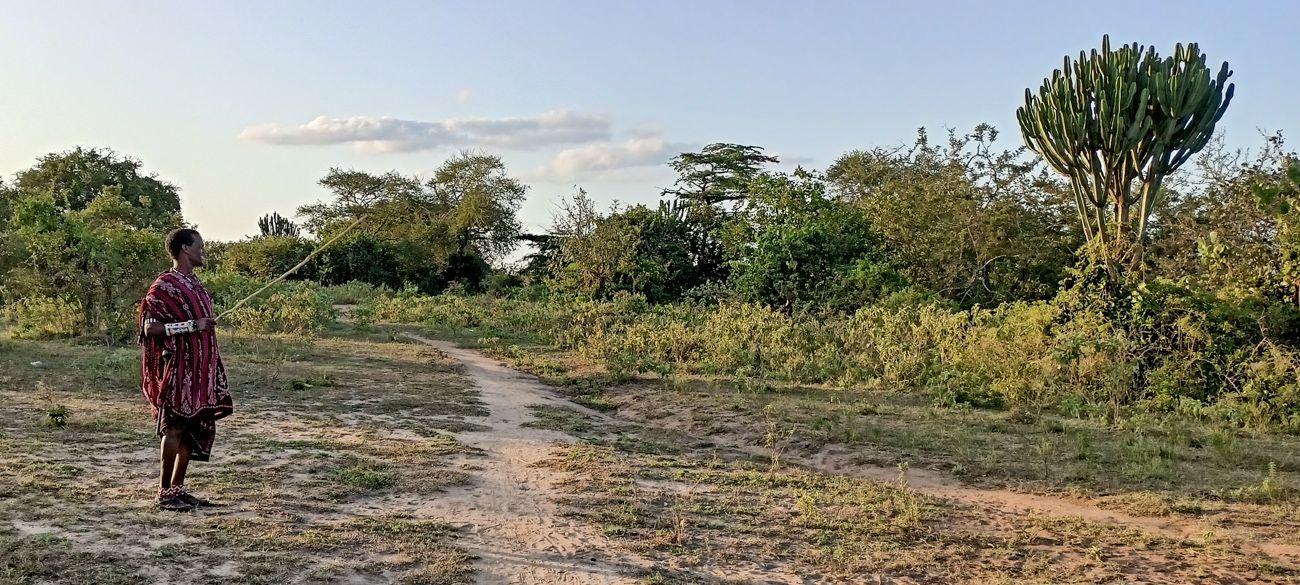
None of that matters. A typical image of a Maasai leaning his entire body against his staff, holding a mobile phone in the other hand, watching a song or scrolling through pictures of cows, was very common.
 

Simu and umis. Front and back.

Since there was no mobile signal for calls and no mobile signal for internet, Bluetooth reigned supreme. Songs were transferred from phone to phone, spreading faster than a dry-season cough. Once a new track surfaced—such as the techno fused with the Tanzanian favorite, bongo flava, with its pronounced electronic beeps—it quickly caught on. By evening, it was playing from every direction. I’m clueless about the origin of all these songs, pictures, and short clips—most of them pulled from YouTube—but there’s surely a shrub in the bush where it all begins. I’d really like to find this spot in the bush, as that shrub clearly has amazing reception.

Ciao, mzungu! Ciao, mzungu! Ciao, mzungu! Ciao, mzungu! Ciao, mzungu!

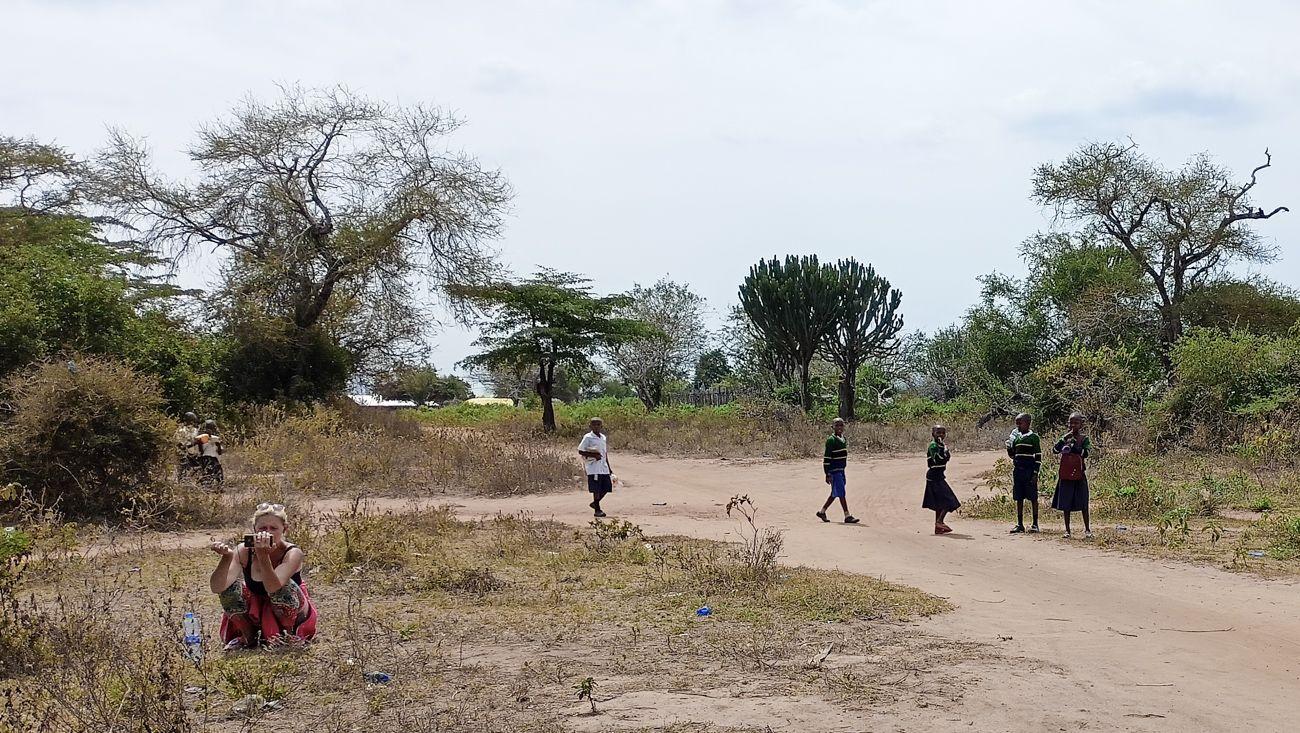
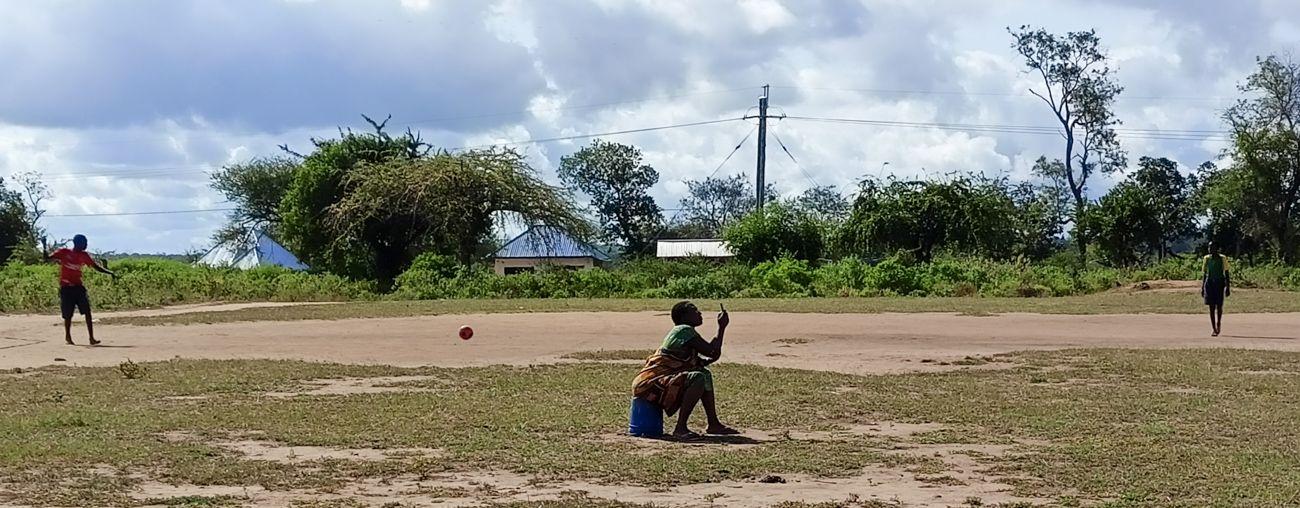
Catching a phone signal in Mbogoi was about as rare as spotting a Maasai in proper shoes. Roughly a kilometer away from home, there were two places where signal was available. One was near the school. We didn’t go there often because if the kids were on break, they’d cheerfully yell things into your call, like “Ciao!” or “Mzungu!” It always made me smile since those were the only two Swahili words I knew. The second place was by the village football pitch.There, you could reliably get a signal for calls, but the internet was hit or miss—mostly miss.

I imagined calling someone in Tanzania with my Tanzanian number just to use Tanzanian internet.I randomly dial a Tanzanian number, hear a string of incomprehensible words, and reply, “Hello, Tanzania speaking!” The voice on the other side continues in a mix of Swahili words I don’t understand. Being a well-mannered person, I try to keep the conversation friendly: “So, how’s the weather there? Sunny, or is it raining?” Not the smartest question for Tanzanian winter, considering it never rains there during that season. But it doesn’t matter—they don’t understand me anyway. The conversation continues awkwardly until the person on the other end hangs up. I have no idea who these people are, nor do they share how they’re doing. That’s the end of my virtual conversation with Tanzania. Let’s get back to our spot by the football field, where we hunt for internet signal.

Simu and football - the most popular sports.

So there I am, running around the field, watching my phone to see if three or more bars magically appear. Without three bars, the internet doesn’t work. I always thought the internet ran on electricity, but I was wrong—in Tanzania, the internet runs on bars. And it takes at least three.
Glory, glory, I’ve got three bars! And suddenly, I can’t remember what I even wanted to do online. I think... nothing. Maybe I should just call someone in Tanzania instead? It dawned on me later that if the person you’re calling has no signal either, the call just isn’t going to happen.
You could plan ahead and agree on a time to call, but for that, you’d have to visit them in person. And at that point, you might as well just tell them what you wanted to say.

At the football field, Sekenoi uses his stick to snag signal bars

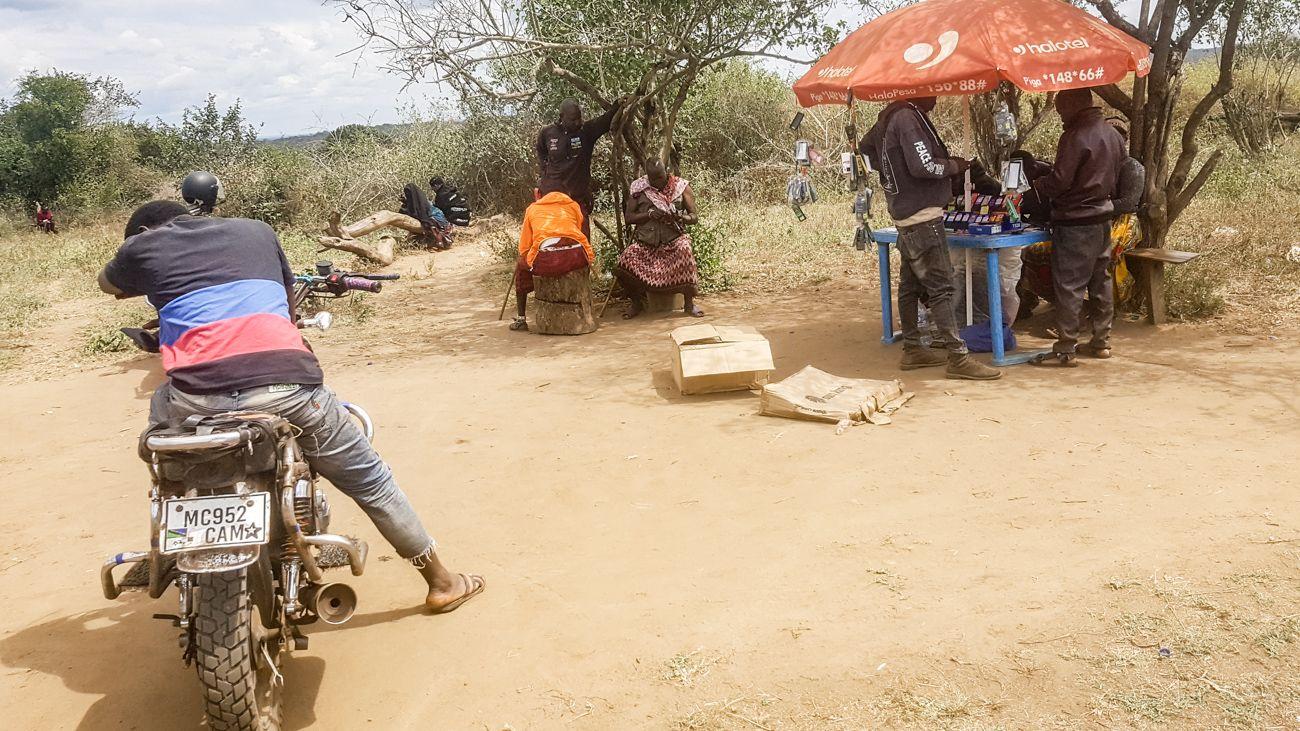
So, one of the most practical uses for a simu phone in Tanzania is money transfers. Payment cards aren’t popular, the bank is 40 kilometers away, and since Maasai have to surrender their weapons upon entering, You can pay for all cashless transactions using your simu. And it works like this: you send an SMS with a roughly 845-digit number to another, far shorter number, and voilà—the payment goes through. Sounds simple, right? Not so fast—nothing in Africa is ever that simple.
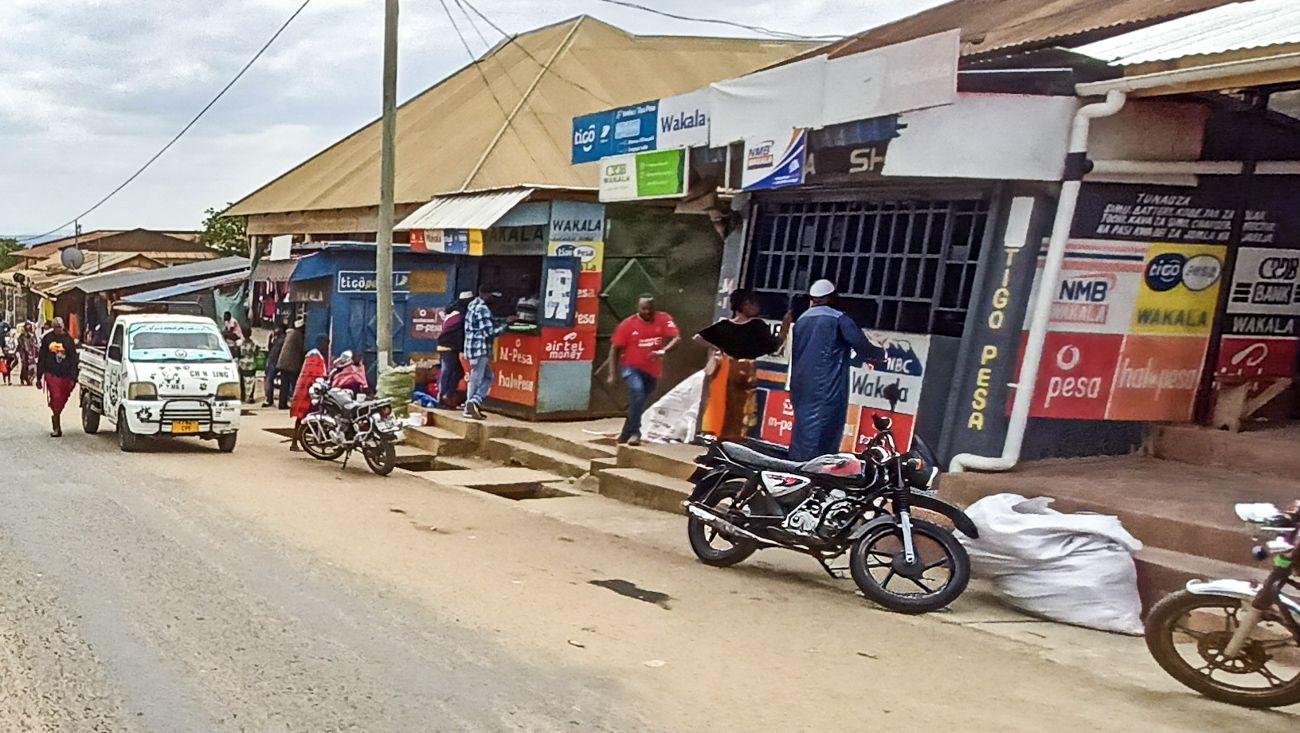
For starters, you need an account with the mobile operator, and you need money in that account. Secondly, you must be able to read and write. Thirdly, you can’t forget what you’re paying for, to whom, For these situations, there are booths everywhere—even in Mbogoi, there were one or two—called things like M-Pesa. They don’t always go by “M-Pesa”; instead, the name usually starts with the operator or something completely random, followed by “Pesa.” For instance, “Airtel-Pesa” or something like “The Booth Made of Old Wooden Planks Where a Person Sits, and You Give Them Money, and They Pay It for You—Pesa.” By the way, pesa means money in Swahili. Just a little detail to prevent any future confusion.

A call center right next to the school.

So, let’s take the simplest example. You need to send money to your second cousin, who’s stuck on Zanzibar, broke, and without a way to get home. You grab your cash, your phone—where you’ve saved your second cousin’s number—and head to a booth called “The Booth Made of Old Wooden Planks Where a Person Sits, and You Give Them Money, and They Pay It for You—Pesa.” You tell the person in the booth how much money you want to send, show them your second cousin’s number on your phone, and this kind soul takes your cash and transfers it to your cousin’s mobile number. Meanwhile, you vividly imagine your second cousin’s joy, and your cousin vividly imagines their journey Things get tricky when the booth “Anything Transferred Anywhere Quickly—Just Give Me the Money—Pesa” has no mobile signal. The service provider has to take their phone, a slip of paper with all the details, and walk to a spot with signal to complete the transaction.

Handeni, “Send Any Amount Anywhere Anytime Booth Here—Pesa,” four lined up side by side.

There’s an even more sophisticated method. You go to a booth called “I’m Here, Give Me Money, I’ll Send It to Your Phone, and You’ll Have It—Pesa.” You deposit cash, and they transfer it to an account linked to your phone number. After that, you’ve got money in your account and can pay for things anytime—as long In practice, mobile operators fill the role of banks, amassing great wealth and wielding significant power in a country as corrupt as Tanzania.Now, this intersects with the fact that Starlink internet from Elon Musk is available in all neighboring countries—except Tanzania. This method even works for paying in restaurants through a simple SMS. On the table, there’s a menu with a number listed. You send money to that number, and your bill is paid.

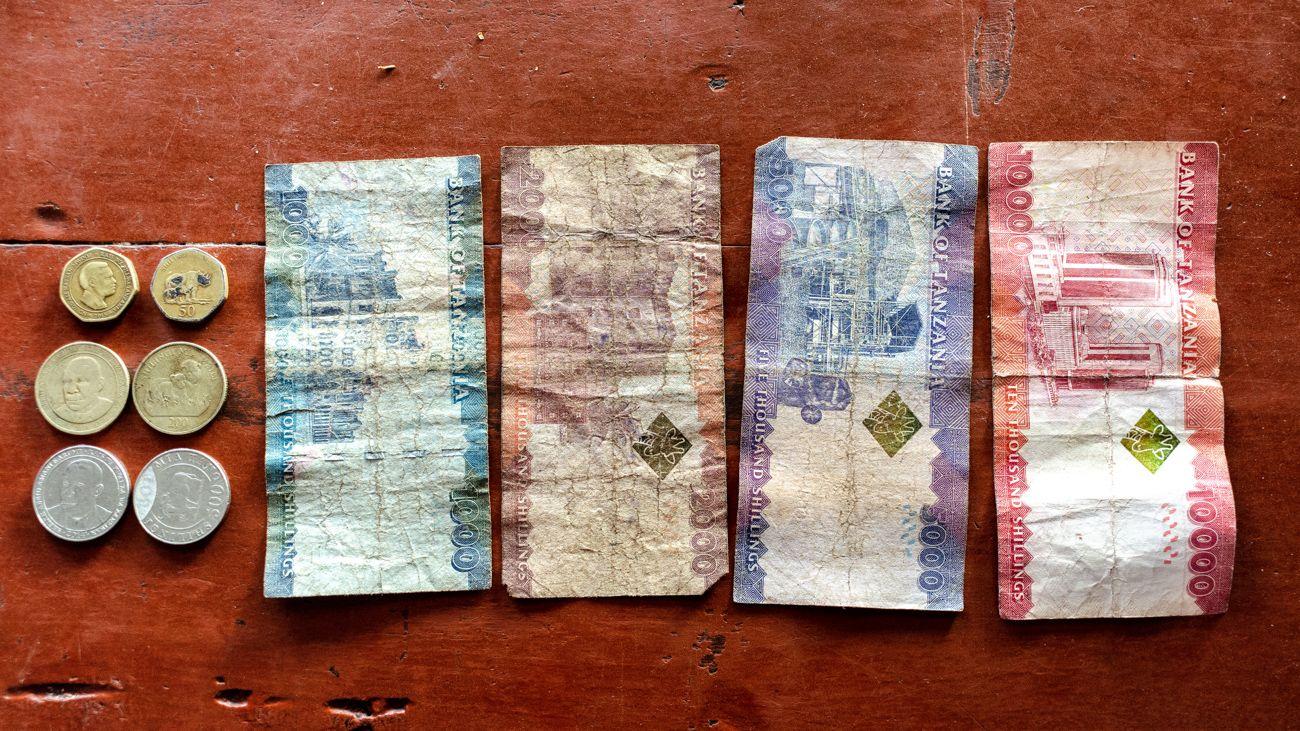
Pre-chewed Tanzanian shillings.

The Tanzanian shilling is a currency whose exchange rate, during my time in Africa, fluctuated between This currency is unique for its banknotes, which look as though they’ve been chewed on by cows.
I suspect that the National Tanzanian Banknote Printing Press is located right next to a massive herd of cattle, where freshly printed, pristine notes are given their rustic patina before circulation. You know how people buy jeans that are already worn or ripped? It’s kind of like that.

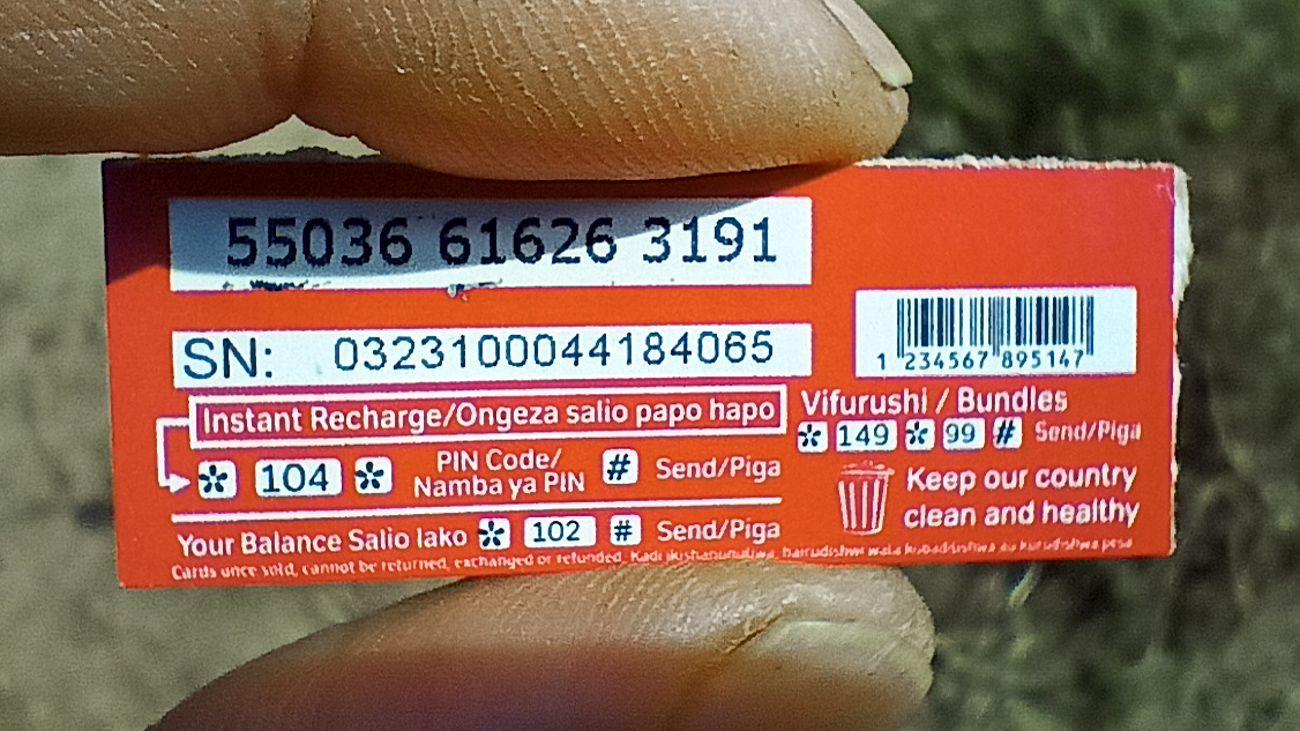
The face of the Fotyah, with the number still legible.

Paying for calls on a Simu phone is a rather fascinating process. If someone wants to make a call but has no credit, they need to buy a scratch card called a Fotyah at a shop. After getting your Fotyah, you scratch it with a fingernail to uncover an intricate number hidden beneath the surface.
This complicated number must then be sent via SMS to another complicated number. To keep things clear: these are numbers one and two. From number two, you’ll receive an SMS containing number three and number four. You then have to send number four via SMS to number three—make sure not to do it the other way around! Both numbers are ridiculously long and absurdly complicated.

Fotyah scratched, the number is illegible.

The message reads: “Scratch another Fotyah—number five—and text the number from Fotyah number two to number six. In return, we’ll send you number seven. Enter it here to extend your call time.”
Bear in mind, we’re still dealing with small phones featuring keypads and tiny, low-resolution screens, where reading anything is a challenge. If, after 15 minutes of entering 83-digit numbers, you succeed, another strange menu appears. It reads:
It says: “Great, you can make calls or choose internet. But the internet will only work for three hours, during which you must use up 50 gigabytes. However, if you scratch another Fotyah, you’ll get internet for a whole week and calls for two weeks.” And how do you do that? You scratch Fotyah number three, send number seven to number eight, and you’ll receive number nine, which you enter into your Simu. And so the cheerful setup process continues. I believe somewhere in the instructions, there’s a mention of having to sing a verse of the Tanzanian anthem, tango with a goat, compose the missing 32nd Bach symphony, and, of course, spell “endoplasmic reticulum.” I’m not sure if I’ve described the process exactly as it is, but honestly, it’s not much different in reality.

Simu wants me. Should I be scared?
Share this

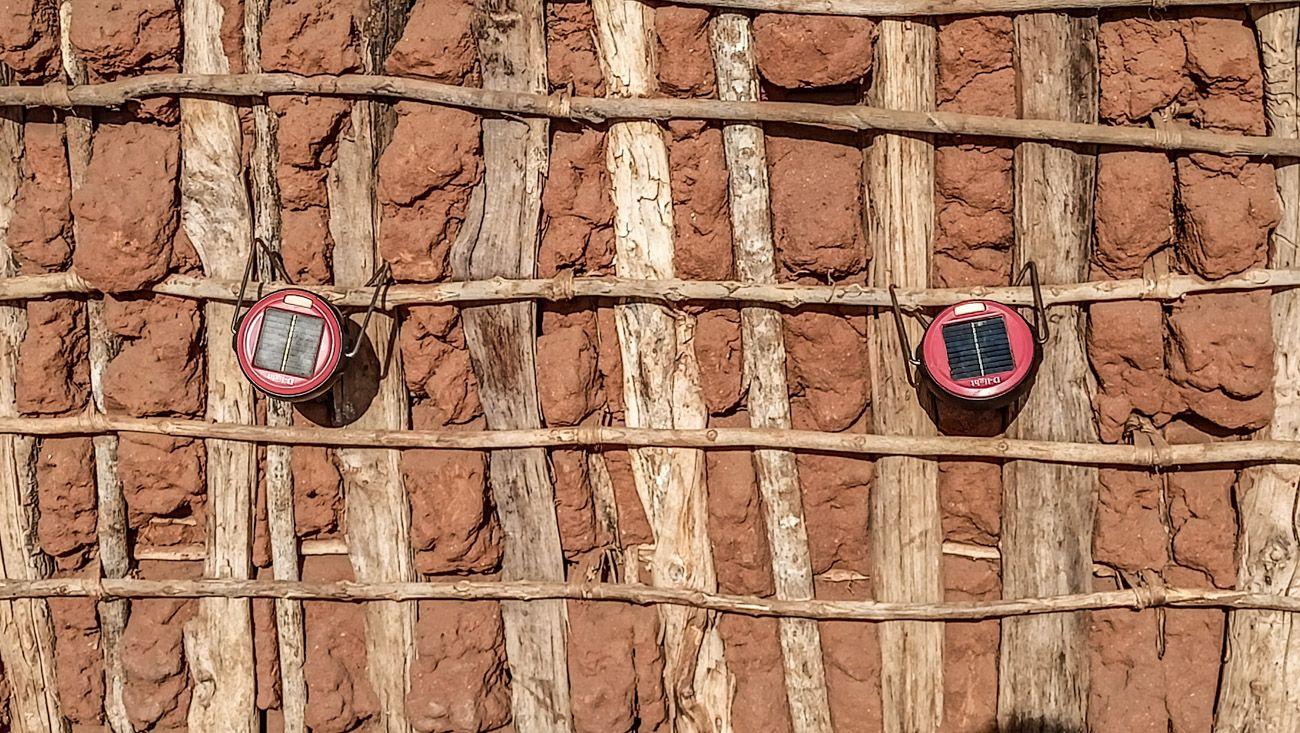
Mbogoi wasn’t exactly untouched by electricity, but until now, it only had solar power, known locally as just “solar.” With it, a few phones could be charged, and in some shops—including ours—a large fridge for drinks ran on solar. While the sun shone during the day, the fridge worked—at night, it didn’t bother. So, it’s high time for umeme. That’s Swahili for electricity—remember this word, as it’ll come up often.

Boma Solar—it sounds like a rapper’s name.

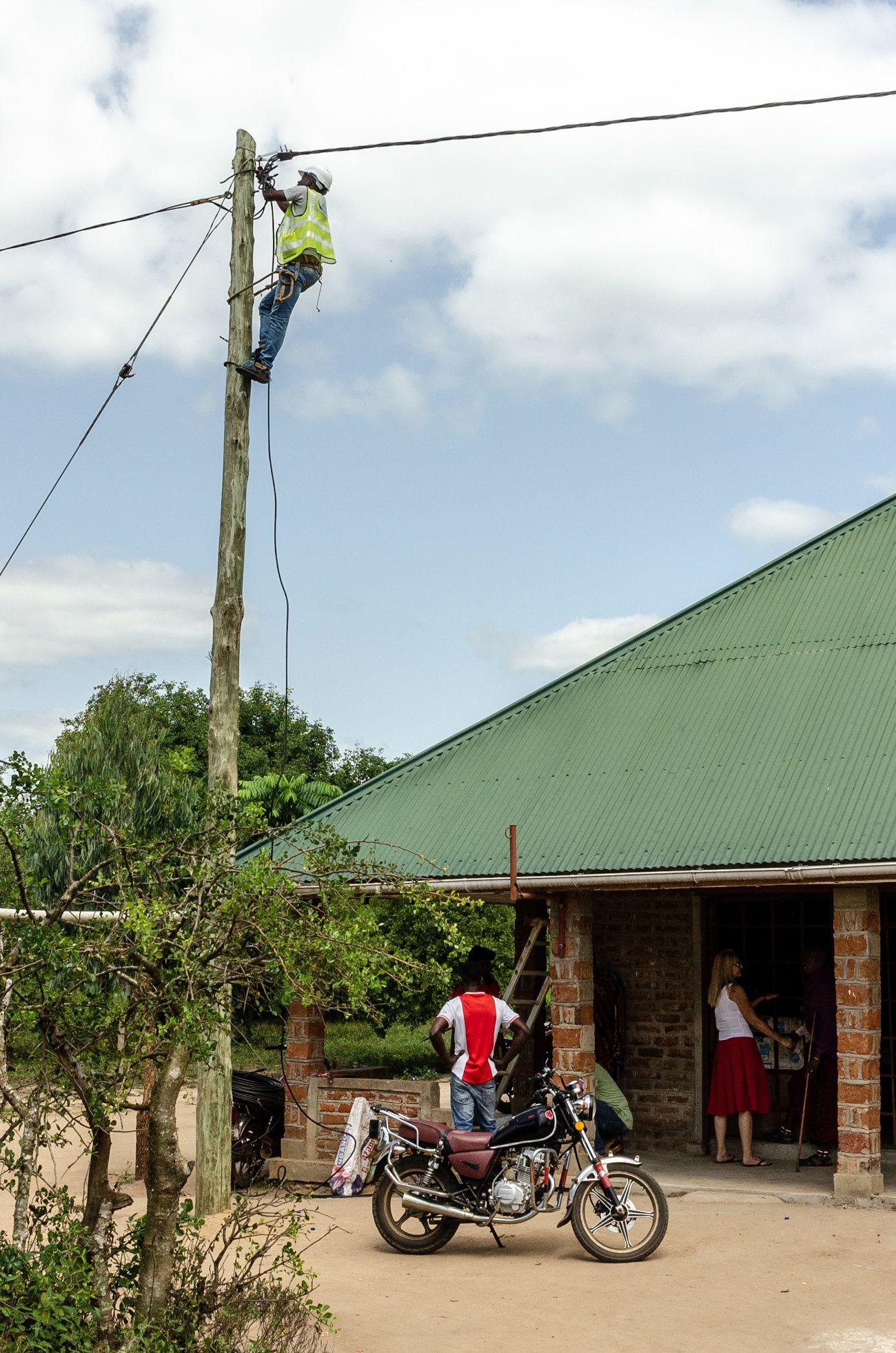
Just as Russia began its electrification in 1920, 104 years later, at the end of 2023, electrification arrived in Mbogoi. In Russia, this unstoppable progress was greeted with fear, gratitude, joy, and anxiety. In Tanzania, it was met with indifference. Electric poles appeared in the village, often in the most nonsensical locations. Power lines scribbled across the sky, while locals went on with their lives, unfazed. I missed the moment electricity came to Mbogoi, but when it was installed in the house—Renča’s house—at the start of June, I witnessed it myself.
The umeme fundi and their meticulous approach to detail.

Men in overalls arrived, climbed the poles, and installed electrical cabinets in places where they weren’t needed. They scribbled some nonsensical instructions on them and left. Electricity only worked in half the Since it didn’t work, I climbed up to the attic to check what was wrong. If a spark accidentally ignites at the connection, the explosion will lift the roof about 40 meters into the air. And if we’re lucky, it’ll fall somewhere near the house, so we won’t have to carry it from too far away. The Maasai don’t know when New Year’s is, nor do they celebrate it—not with fireworks or firecrackers. This explosion, however, could mark a precise moment in time, the perfect excuse to blow something up again.

The umeme fundi and the delicate balance between electricity and human life.
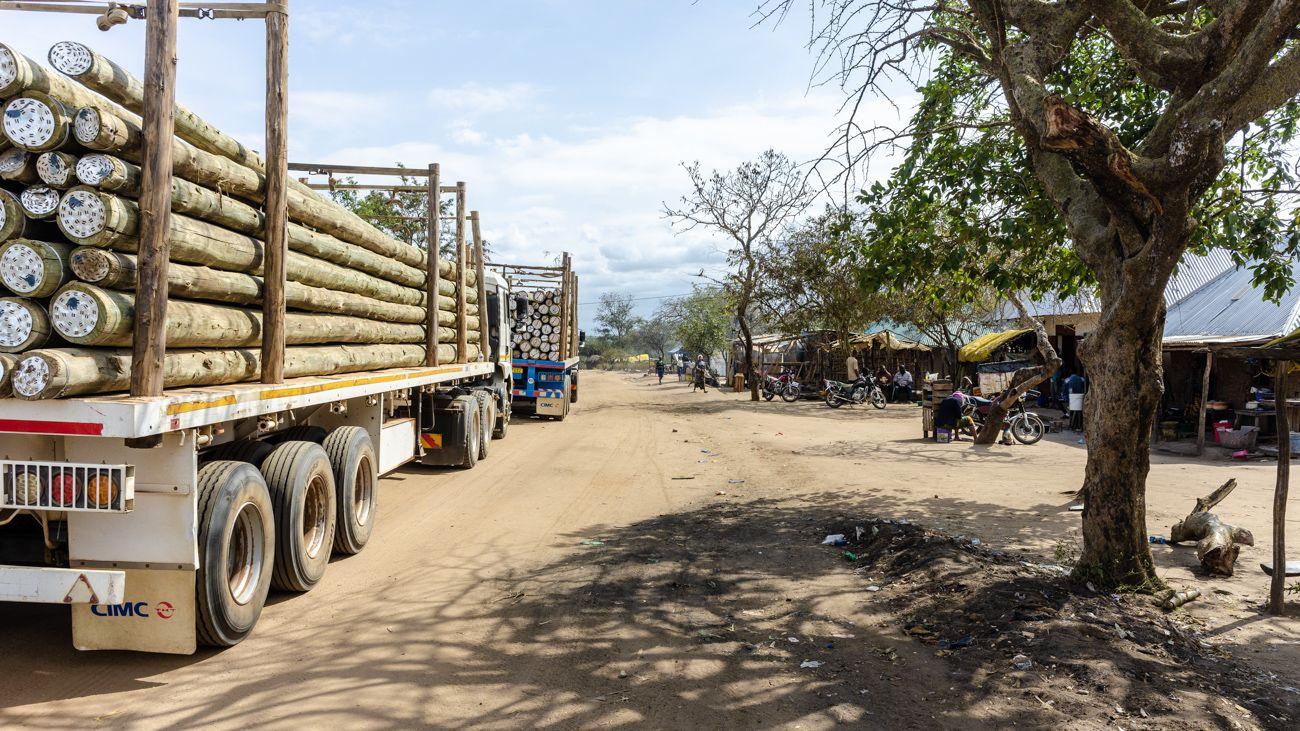
I can’t imagine how the wires in the attic could be repaired. You could only walk on the crossbeams, holding the roof supports with one hand, shining a flashlight with the other, and somehow using a third If I slipped and stepped on the roof instead of the beam, I’d fall straight through the attic into the house below. I know a gift from the heavens is always welcome, but let’s save that for another time. A few days ago, two large trucks loaded with poles were parked in the village, likely destined to become utility poles for extending the power grid. This suggests that they’re planning to bring electricity further past Mbogoi, though I’m not sure where—it’s not like there’s much out that way. Maybe the cows complained that their hair curlers weren’t working in the bush. With their prior experience limited to 12-volt solar systems, no one here has been seriously zapped or killed by electricity yet. I tried to educate them: “Electricity can kill you in a second—treat it like you would a leopard. Electricity isn’t a cow.” It never occurred to me that I’d ever say those words
This is a video taken before the electricity safety training.
This is a video taken after the electricity safety training.

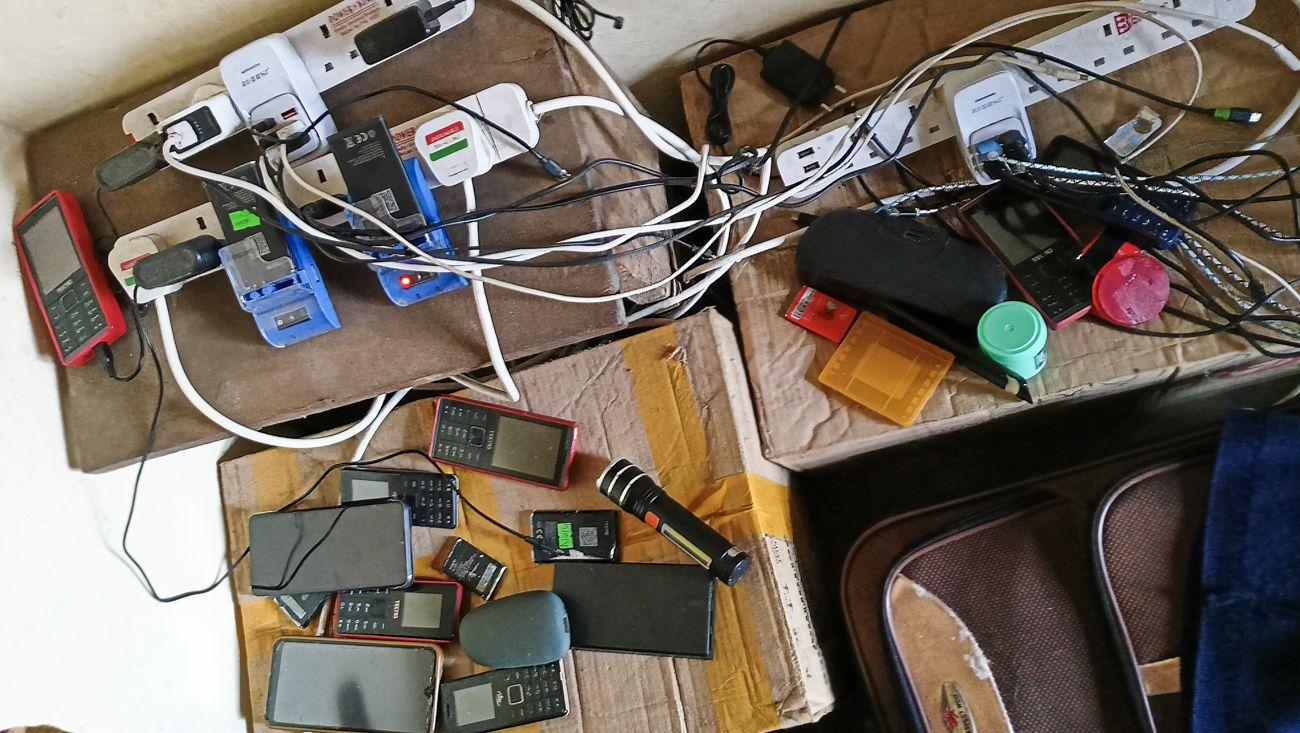
Right after electricity was introduced, our shop began to fill with mobile phones plugged into chargers, though these were just fleeting brushes with umeme. The first notable step of progress arriving at our house was transferring the fridge from Alojz’s. Alojz, ever the pioneer, conqueror of unknown lands, and local avant-garde, was among the first to get electricity. The fridge was used to freeze meat sold in the restaurant. True to tradition, the power was unreliable, and the meat in Alojz’s freezer sometimes defrosted. The freezer reeked from a hundred meters away, like a rendering plant. All the Maasai insisted it didn’t smell, claiming that’s just how proper meat should smell—but let’s not discuss it any further. I can still smell it now.

Mbogoi’s Central Energy and Communication Point.

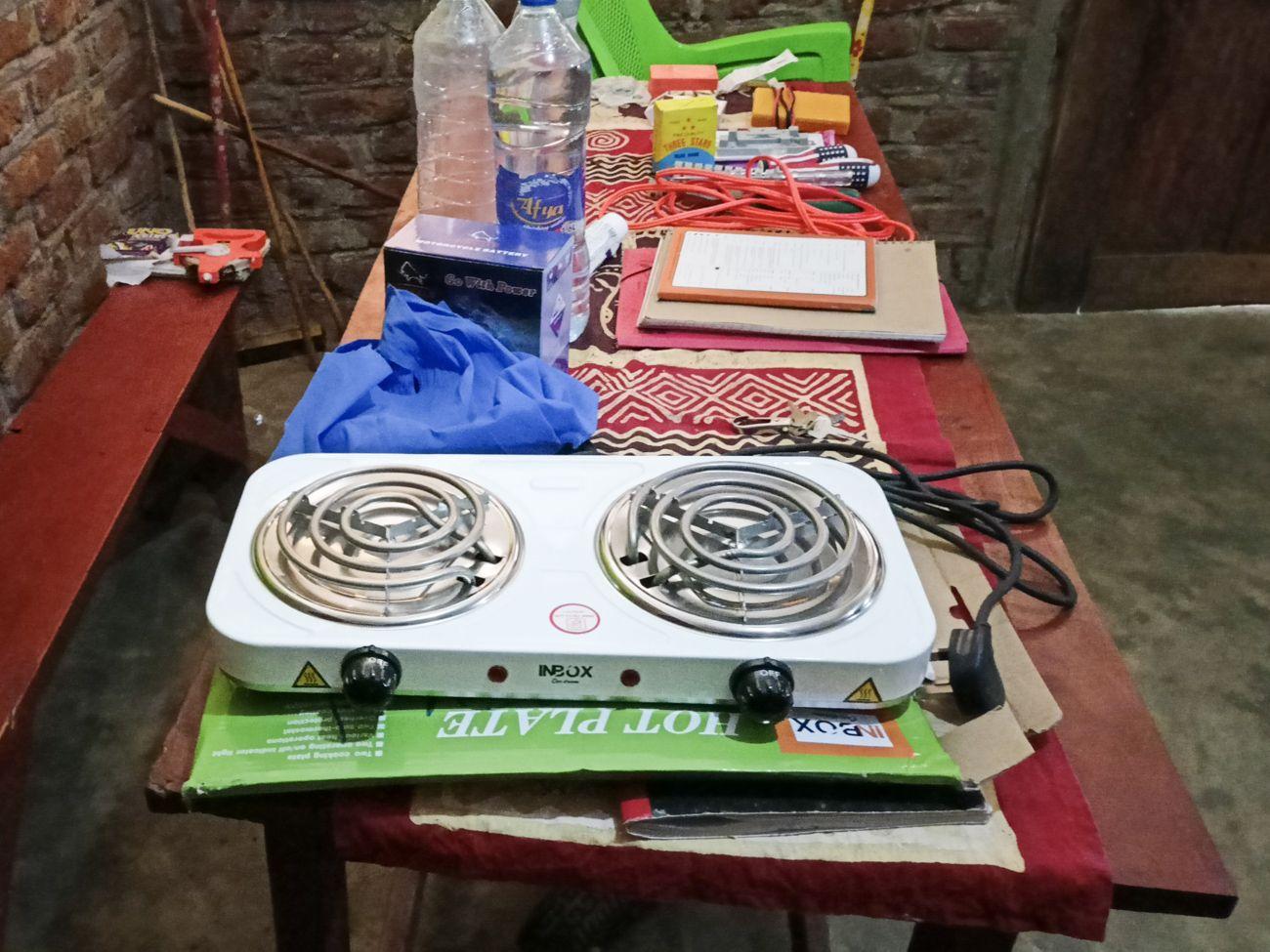
Alongside worldly pleasures like the fridge, umeme also brought a new addition to our home—a two-burner electric stove. After some initial cautious poking to check if it heated when turned on and stayed cool when off, we moved on to other questions. Why didn’t it heat when plugged in but switched off? Or when switched on but unplugged? After these entertaining experiments, we finally realized the stove was meant for making tea. You might think it’s a trivial matter, but brewing tea in the era of progress demanded true concentration and dedication. Since the electricity often failed, the shift from a small djiko stove to an electric burner had disastrous effects on our hydration habits. Despite this, I believe that if Edison had seen it, he would have cried tears of joy.

For now, it’s just a two-burner stove. We’re eagerly awaiting our first full oven.

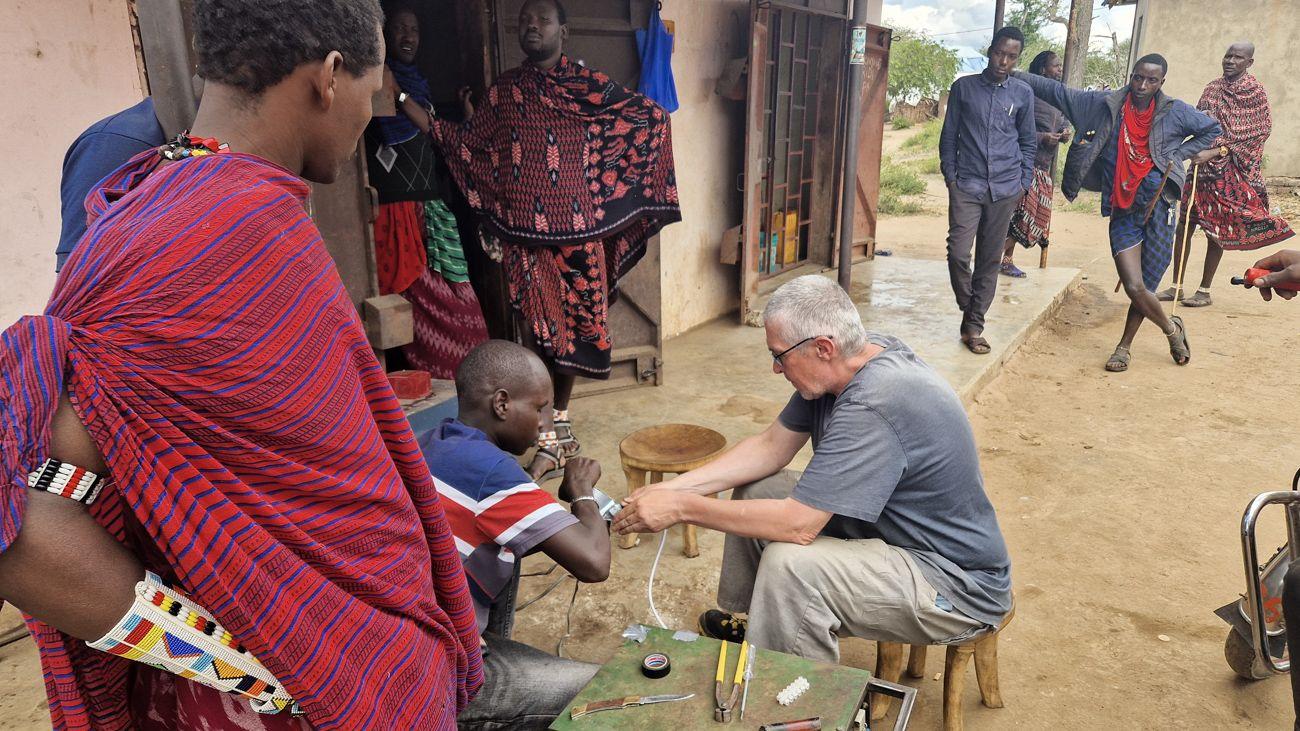
Since they had no respect for electricity and didn’t believe it could actually kill them, I came up with an educational aid. We’d create a lake near Mbogoi, stock it with electric eels, and send the locals for a swim. I figured that direct contact with reality and a few days of tingling limbs would etch a permanent mnemonic But, as usual, it all remained in the realm of fantasy. Since my protective instincts know no bounds, I decided to install a socket on Alojz’s wall. I also added a plug to the welding machine to ensure everyone survived the introduction of electricity. Armed with a screwdriver, pliers, duct tape, and some connectors, I set off to Alojz’s place with the courage of a young lion, a bold gaze, and a vision of a brighter future. After all, who better than me—the mzungu umeme fundi (white guy, electrical expert)? Four hours later, the hooks were still dangling on their hooks, the welding machine hummed cheerfully, The surrounding Maasai watched my failure with eyes full of pity. And yes, they were all there.

Even four-handed synchronized work with Kojkaj didn’t help.

I haven’t yet mentioned the amazing tools we managed to buy in Handeni for working with electricity. For example, a universal measuring device that can gauge current, voltage, resistance, and other nonsense no normal person cares about. This specific gadget could detect voltage even in places it didn’t exist.
When the test electrodes were held in the air, about 20 cm apart, the device measured 10 volts. It was like someone saying, “Do you feel the tension in the air?”—except this tool could actually measure it. Fortunately, after taking ten readings and averaging them, you’d get an approximate value.I also had a magical screwdriver. When it touched a live wire under umeme, the bulb inside it lit up. It was simple: bulb on—electricity present. Bulb off—no electricity. Bulb on—electricity is. Bulb off—it isn’t. Electricity is. Bulb off—it isn’t. You might find my repetition tiresome, but trust me, this is a matter of survival. 
So here’s the quiz: When the bulb in the screwdriver handle lights up—is there electricity? Okay, okay, I’ll drop it now.

The scene was set with trucks, brand-new power poles, and umeme fundi equipped with helmets.

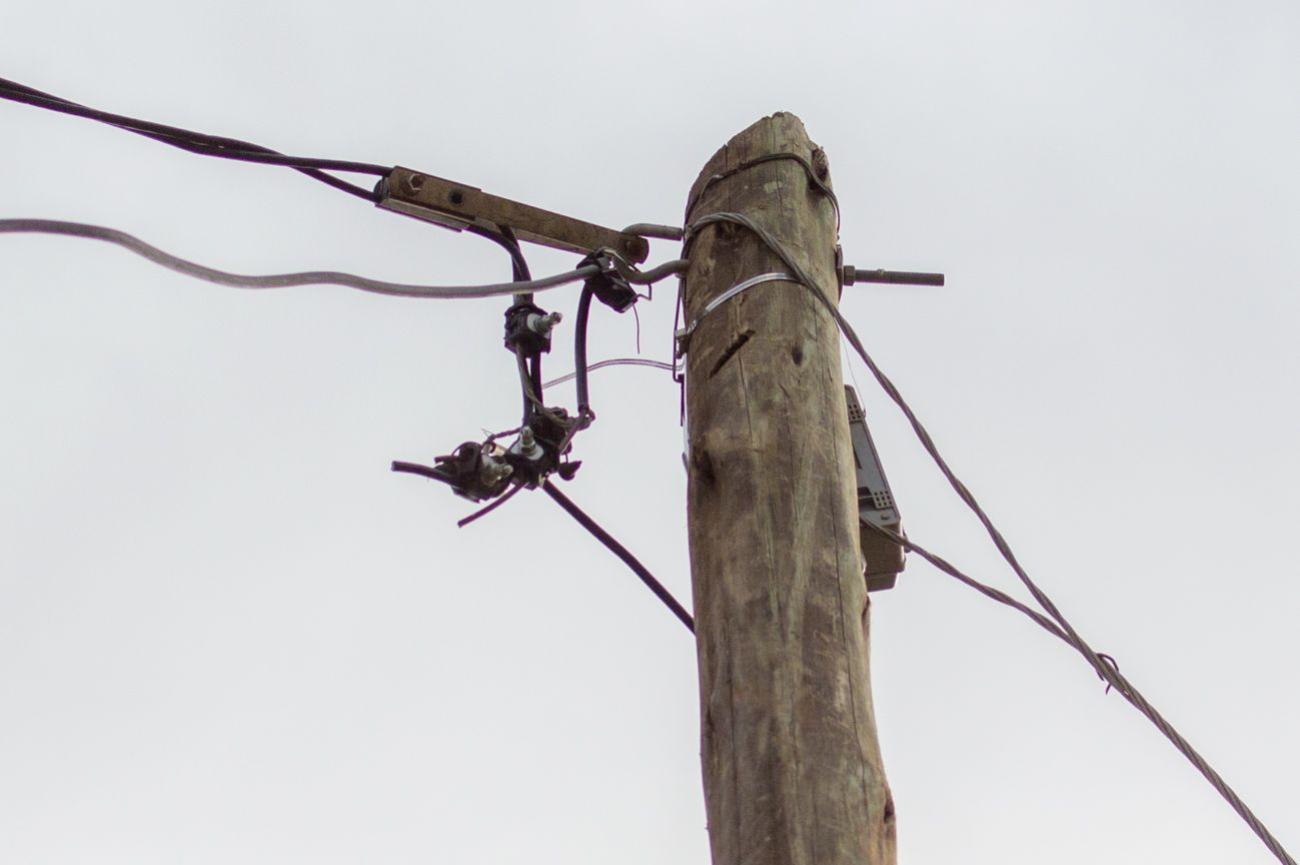
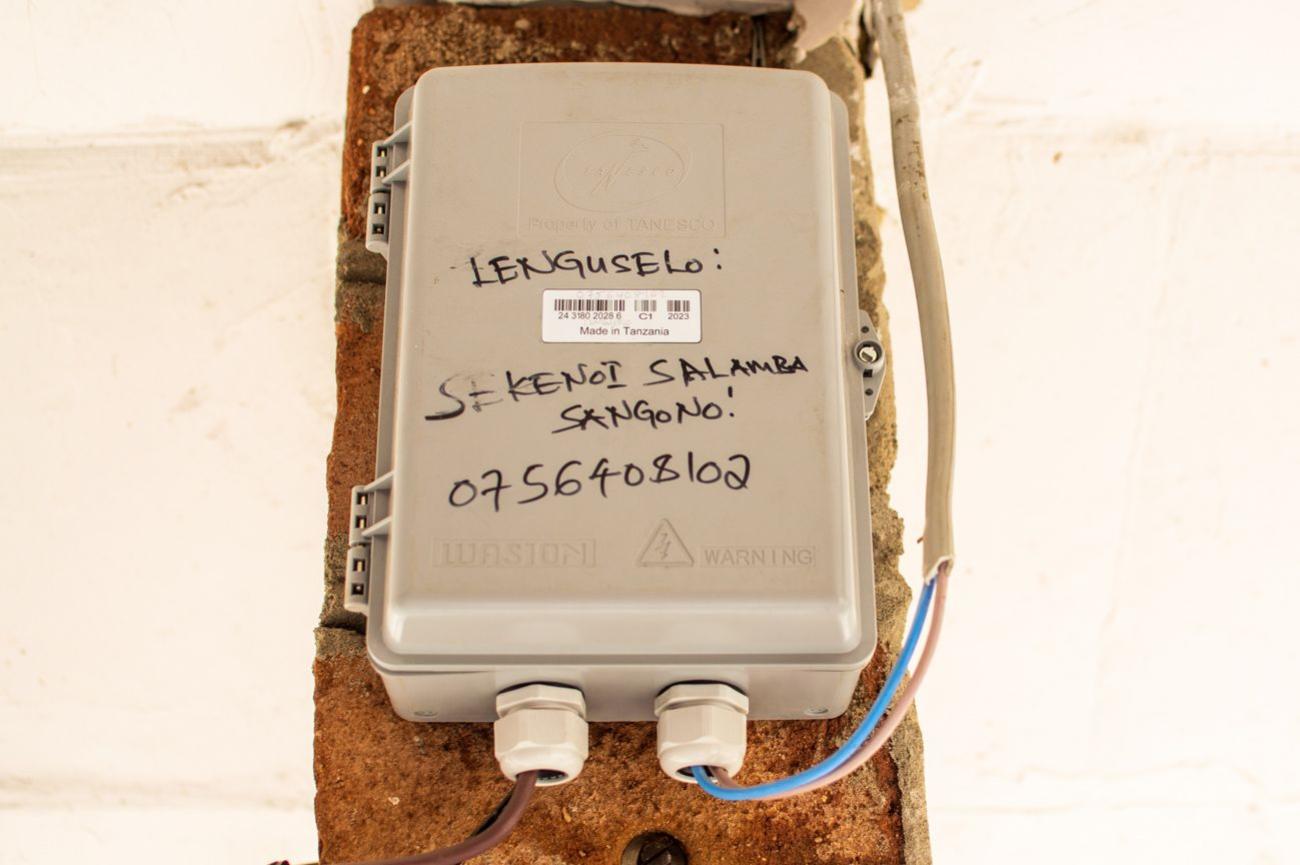
When electricity was introduced into the house, men in overalls and safety helmets arrived, their Equipped with big, vibrant tools, they installed a gray box on the house pole, meant to remotely manage electricity. This box allowed the power company to issue commands to turn electricity on or off remotely. In practice, however, this remote control system proved rather chaotic, as entire branches of wires were cut off regardless of whether payments had been made. But no one minded—it quickly became part of everyday life. They also provided us with a small white box, which could connect remotely to the larger gray box. By entering numerical codes, it would display how much electricity we had left, how much we’d used, the voltage, and other equally irrelevant details.There’s a funny story tied to this. Since most consumers couldn’t read, when the electricity was out for more than a day, everyone assumed their balance was unpaid and rushed to settle it. A queue formed at the wooden shack that managed all cashless transactions—anyone, anywhere, anytime, for anything—a sight never before witnessed.

A remotely controlled box for remote control.

One gray box didn’t go without its own amusing story. Just as they mounted a gray box on the house, they installed one on the restaurant as well, since Renča planned to have electricity there too. She struck a deal with a wise-looking fundi in overalls and a helmet to install a fuse box for the restaurant. He promised to come back and do the job. He was never seen again. The next part of the tale was even more suspenseful. About a month and a half later, two Swahili men appeared, without helmets or overalls, dressed casually. Judging their sharpness under the midday sun was no easy task. Their claim was that the box served no purpose. (Note: Of course, it wasn’t being used—there was no fuse box connected to it.) 

They planned to dismantle and remove it, reasoning that it was unnecessary. Sekenoi, ever the shrewd and worldly-wise Maasai, didn’t trust them. So they all headed beyond the village to where there was mobile signal. The two Swahili men called someone, handed the phone to Sekenoi, and a voice on the other end said, “Yes, they can dismantle and take the box.” Move over, science, particle accelerators, and DNA testing—a phone call is the gold standard for proof. After some yelling and debating, they reached a compromise: the box would be dismantled but left in the house to prevent theft. The trustworthy voice on the phone would come pick it up in person. The best part of the whole operation? When the gray box was removed from the restaurant, they left the bare wires sticking out. These wires provided free electricity.

A remote control for a remote box for remote control.

When they finally got umeme electricity, I came up with a brilliant idea. The Maasai chants sung by the men—“susame umba umba hanba hamba”—are filled with obscure, outdated, and backward words. So, I suggested to Sekenoi that they start singing “umeme umeme umeme” instead. A celebration of progress, of course. He claimed it was silly and assured me it would never catch on. But about two weeks later, I spotted a Maasai standing in the classic singing stance, shrugging his shoulders in that rhythmic way they do while I’m the only mzungu Maasai lyricist.

Share this