Time in our Western culture was simply struggling to survive. Nobody ever had enough of it; people stole it from each other, paid with it, envied it. In short, it wasn’t doing well here. One day, it got properly fed up and left for Africa. The whole lot of it. Here, time became our master, and it didn’t enjoy being a slaveholder at all. It wasn’t the slave-driving type. Many people here don’t even realize that time has left, and that’s why we don’t have it. But I found it in the bush. There’s so much time there that nobody even notices it. They have so much of it, they could throw it at each other, swim in it, breathe it like air, and there’d still be plenty left. Time is thriving there. It no longer has to be a slave driver, nor does it have to hide all day to avoid being stolen. Simply put, we shouldn’t have chased it away.
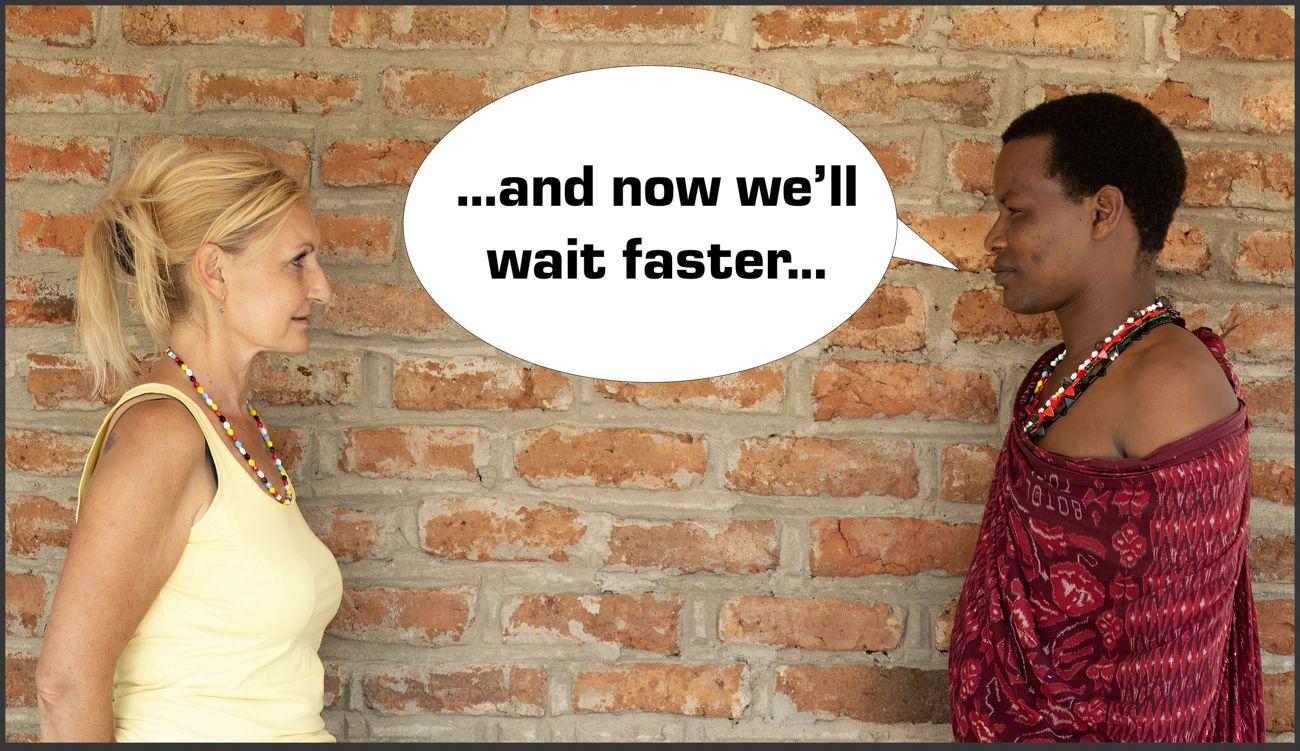
Artificial intelligence also struggles with time, but not so much that it couldn’t generate this image for me
Imagine if there were a god of time in Africa. He’d be like a sloth with a rocket engine strapped to his back. They say there were originally two of them, but one got kicked out for laziness. They wanted to kick out the other one too, but he had a cousin working at the ministry. Young Maasai, for example, didn’t know the names of the days of the week in their own language because they simply didn’t need them. They didn’t have a special day that stood out from the rest.
This approach to time worked the other way around too. The cook at work always stayed as long as needed – sometimes she left at two, other times not until seven. She never complained that it was too long or too late. Once, we joked about it. I told Renča, “Tomorrow morning, we’re going to Handeni.” There was a brief silence, and then we both burst out laughing. Their attitude toward time reflects the great, universal African “maybe.” In this case, it’s more like “maybe yes,” but “probably not now.”
Sekenoi’s English and his quirks gifted us with many memorable lines, and this one summed up African time perfectly.
The closer a person gets to the speed of light, the slower their time becomes. The closer one gets to a Maasai, the more their time also slows down. Is a Maasai the speed of light?