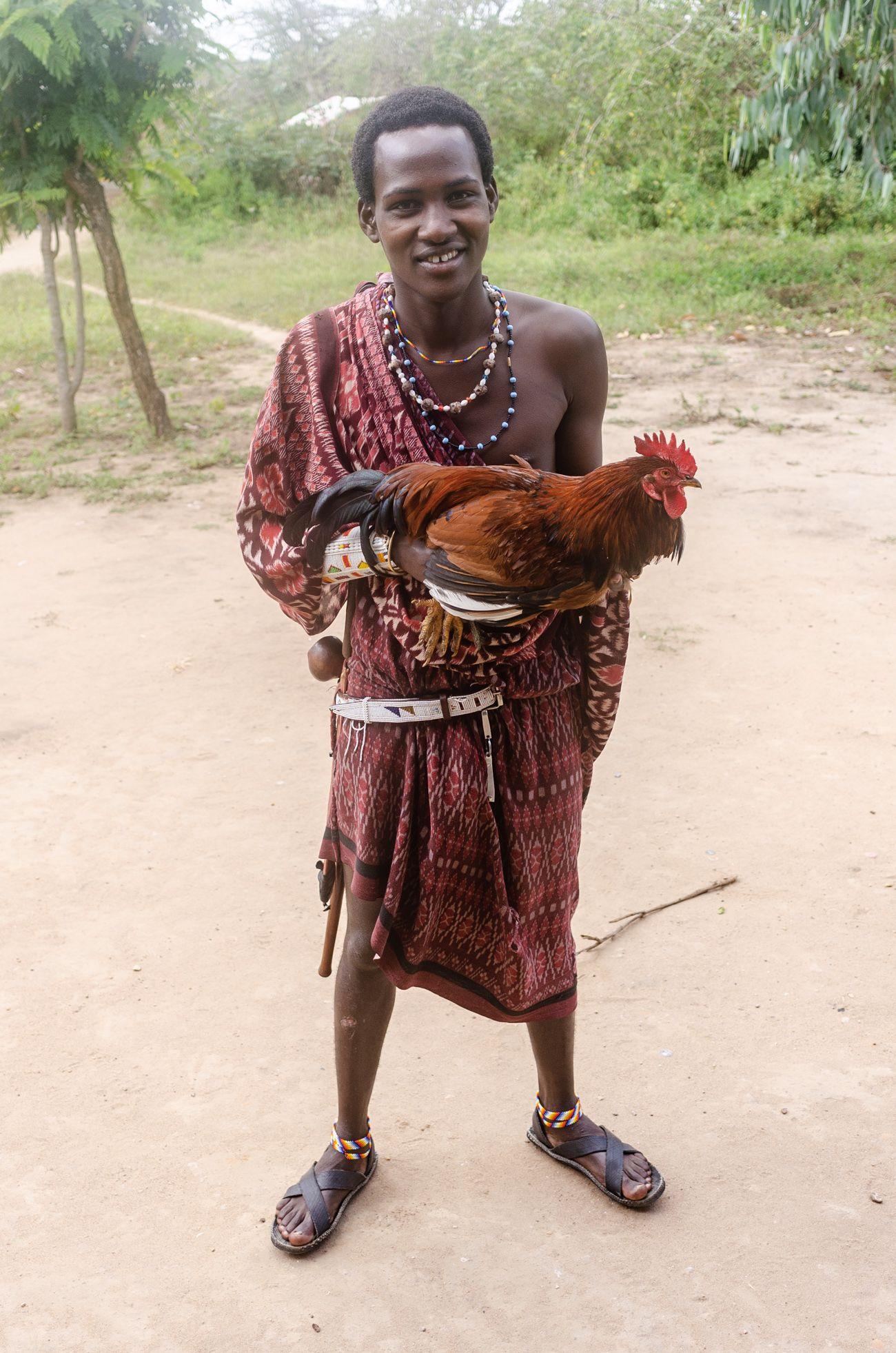
The evening before last, over a cheerful beer session, Munikiti—buoyed by a fine mood—promised us a chicken. Said he had loads. I didn’t believe him, but lo and behold—next morning, there he was at the door, grinning proudly, chicken tucked under his arm.Shame he doesn’t raise sausages. That would’ve thrilled me a bit more than poultry. Still—praise be, praise be, praise be. I do believe goat soup is healthy and all, but I’d like to stay healthy without bleating. Since goat stew was on the menu every single day, I was beginning to sound distinctly four‑legged. The best part? The Maasai don’t eat chickens. Or eggs. For them, it’s like someone in our world saying, “Let’s make rat stew.” But I have a theory. Long ago, the Maasai and chickens made a pact: Maasai won’t eat chickens, and chickens won’t eat Maasai. It didn’t make it into any folklore, but I know it happened. So we put modern science to work, fired up our trusty two‑burner electric stove, and soon the smell of paprika‑chicken was wafting through the house. To the Maasai, this aroma might as well have been a UFO landing. Then—bam—power cut. No more umeme. It got me wondering: why is the Swahili word for electricity umeme, when it doesn’t sound like “electricity” in any other language? The answer is obvious: electricity is something that’s always on. Umeme is something that works when the gods feel like it. So we fired up the little charcoal djiko and resumed cooking an hour later. Well—Renča did.
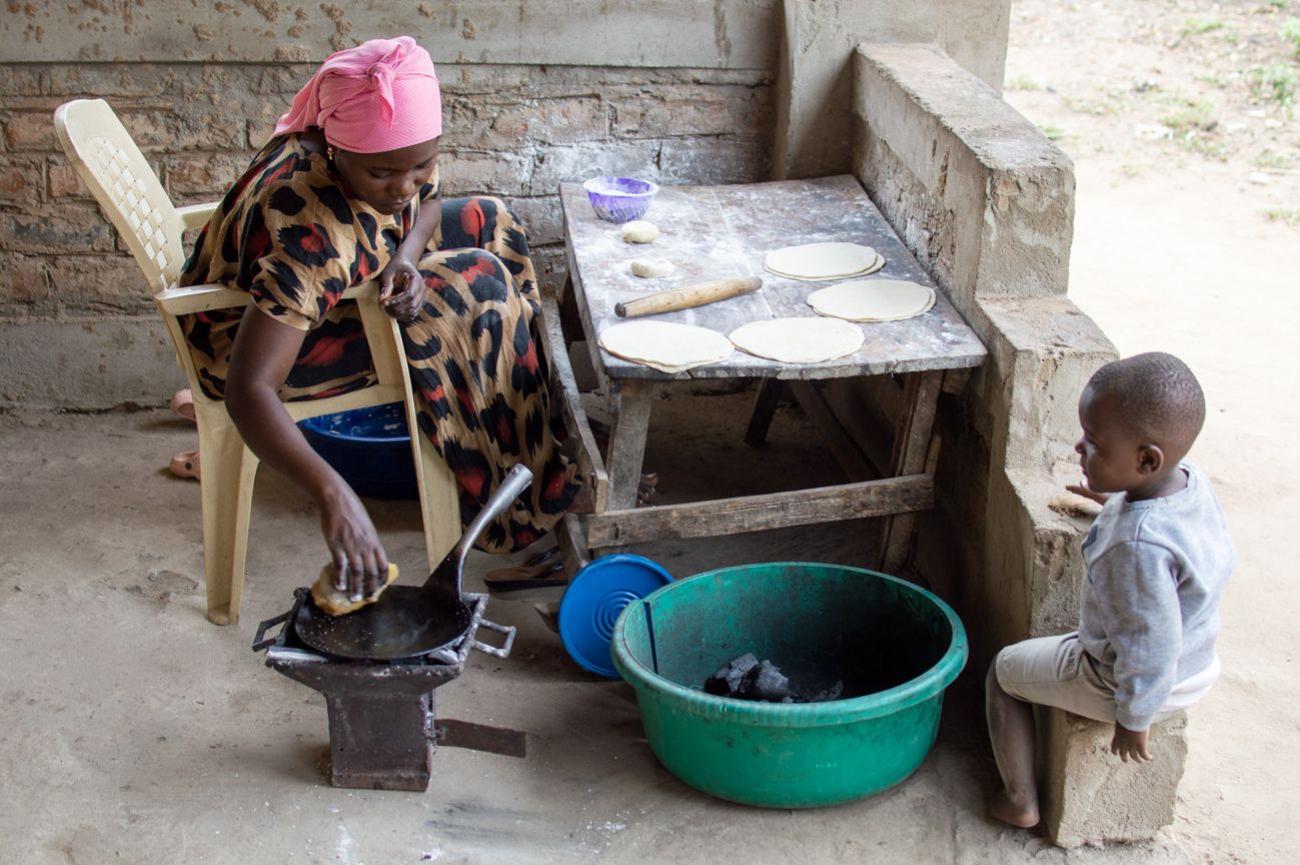
Mama Imlan, Imlan, and a batch of chapati in the making.
Yesterday, Ndari promised me that, despite strict Maasai doctrine, he’d try the forbidden fruit: chicken. So—paprika chicken cooked, pasta boiled, time to plate up.Ndari says he doesn’t want any, that he’ll take the meat himself. He helps himself—sort of. The portion is so minuscule I have to ask him to hold it closer so my ancient eyes can confirm he’s actually holding anything. And yes—on the fork, and swiftly in his mouth, is a morsel of chicken thigh roughly 2 × 2 millimetres in size. His face suggests he’s about five seconds away from projectile regret, but he swallows. Like a hero. “Want some more?” “No, thank you. I’m full.” Ten seconds later—he polishes off the pasta and sauce. Hunger’s a beast. Oh—and pigs? The Maasai don’t eat those either.
Ndari won’t eat the chicken Kuku, and Kuku won’t eat Ndari. Ndari will just have a little taste..
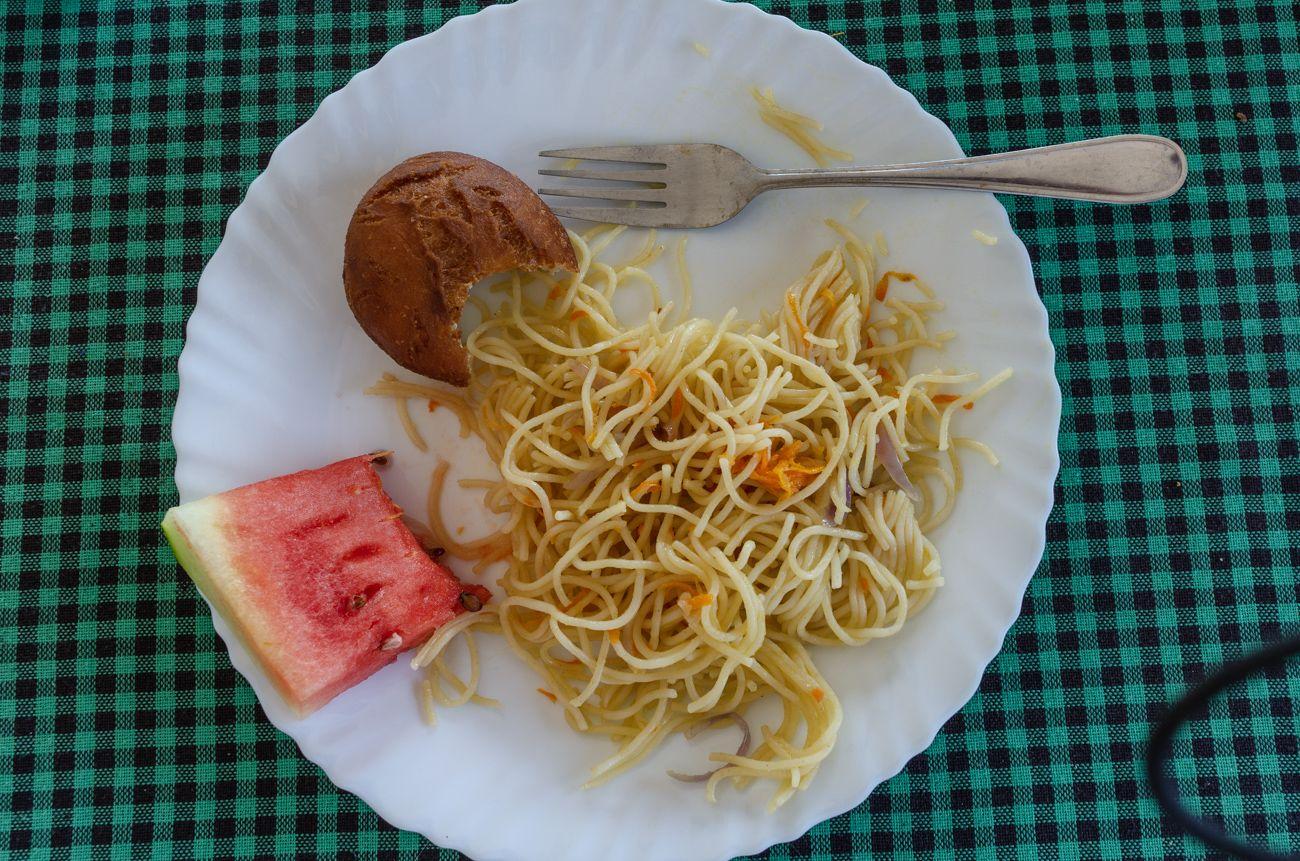
My first encounter with Tanzanian cuisine happened right after I landed in Dar es Salaam, during breakfast at the hotel. It was a buffet, and since I’m a fan of exotic dishes, I was genuinely looking forward to it. The trays held potatoes with peppers, sweet spaghetti, and deep-fried dough balls called mandazi. I loaded up my plate and tucked in eagerly. Well—eagerly might be pushing it. Let’s go with “curiously.” As I later discovered, even by local standards, this was a fairly unorthodox combo—but no one batted an eye. White folks, mzungu, are always up to some nonsense. They do odd things and hand out money, which they apparently possess in infinite supply.
To keep it woke—my first ever Afro‑African meal.
Since we spent a few days in Dar es Salaam, we ended up having dinner at the same hotel each night. I ordered whatever Sekenoi was having—he’d already joined us by then. The part that claimed to be meat proved unchewable by my underperforming European molars. My taste buds are still working through the trauma, trying to figure out what it tasted like, what it might’ve been seasoned with, whether it even had a flavour, and whether the cook was, in fact, a cook. The kitchen was on the rooftop terrace—open air, beer on tap, pleasant breeze. You placed your order by stepping up to a set of imposing metal bars behind which the cook dozed. She’d gesture at the contents of her fridge, and you’d negotiate what she’d cook. Two to three hours later—voilà! Dinner appeared. By then, time had already begun bending. Either that or the beers were working their magic. Hard to say—off the top of my foggy head.
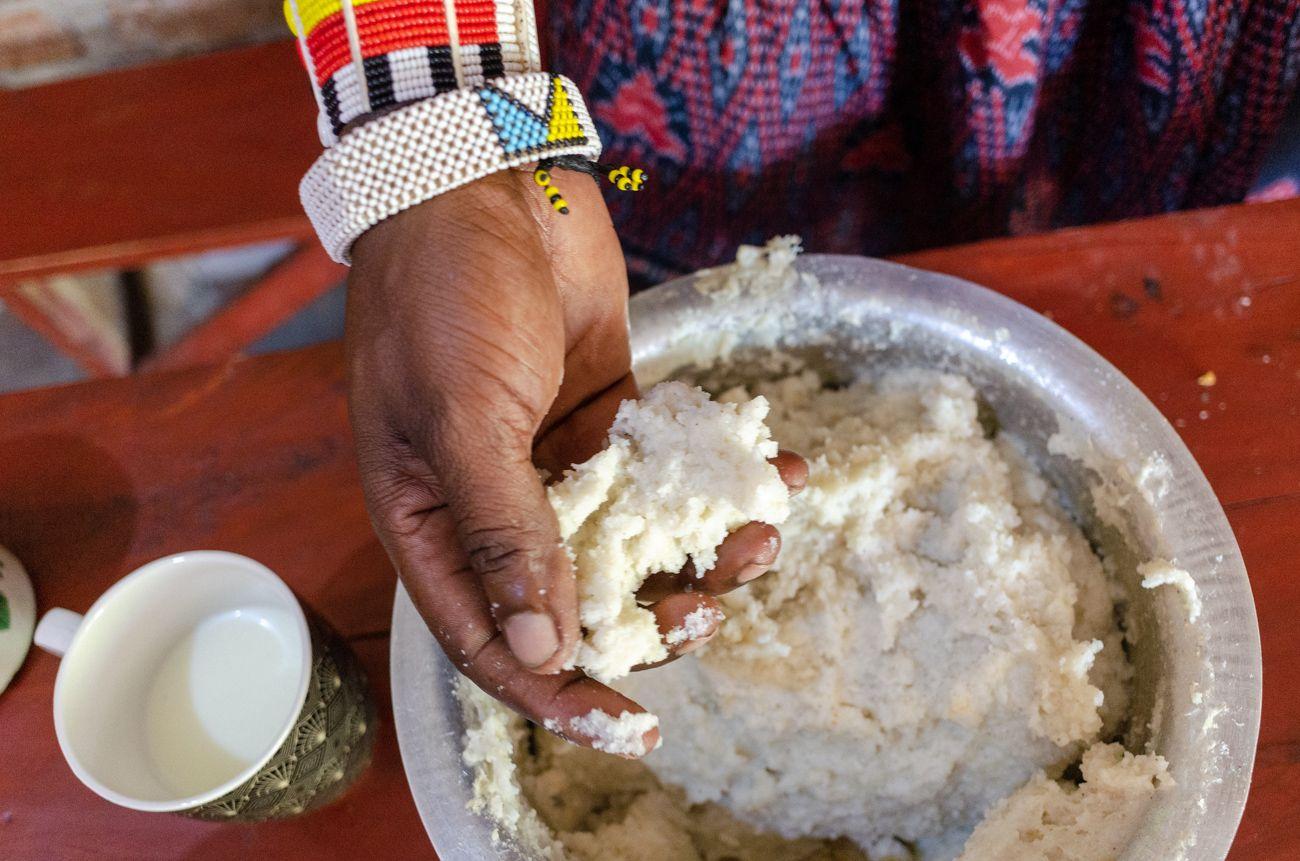
Ugali is eaten strictly by hand. Right or left, your choice. I haven’t seen anyone go at it two‑fisted, but I firmly believe that style exists too—somewhere out there, a true ambidextrous champion of starch.
What do the Maasai eat most? Ugali. I could honestly stop right there. But my deeply twisted sense of irony won’t allow it, so let’s treat that as our beginning.Because fruits and vegetables aren’t exactly bursting from the bush, traditional Maasai cuisine is rooted in meat. Quick detour—Lengusero. The reserve I stayed in is called a reserve for one big reason: you’re not allowed to cultivate the land. Each resident of Lengusero has the right to only one hectare of arable land. Most Maasai use it to grow maize. I did spot the odd sunflower here and there—presumably for oil. And since cows are relatively expensive and maize is relatively cheap, ugali wins. It’s basically cornmeal cooked in salted water until it becomes a stiff, doughy mass. Somewhere in this travelogue there’s even a recipe—look in the Recipes section, though don’t be shocked if it turns up in Motorbikes. We’ll see.
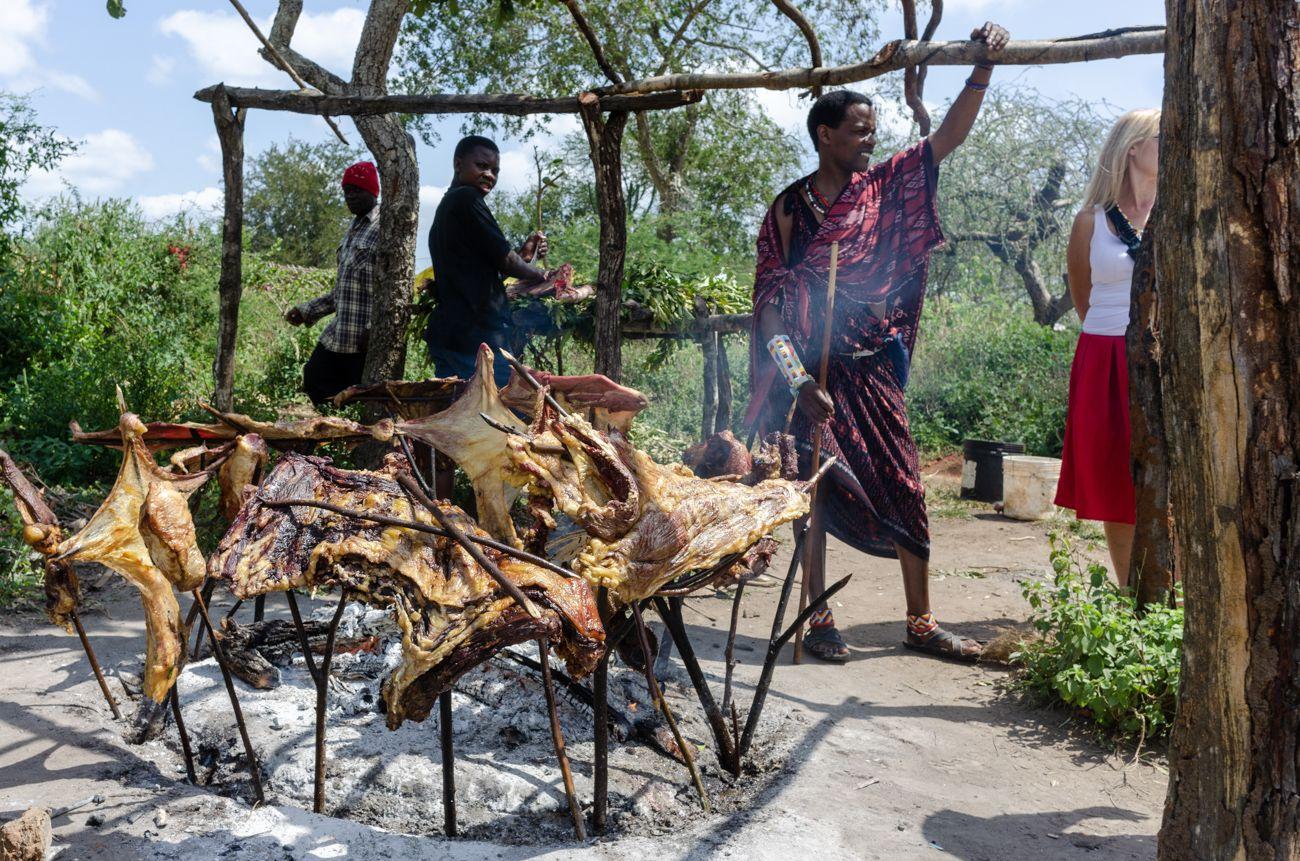
Sekenoi attempts to impress the grilled market meat with a dominant stance. Renča tries to figure out what’s lurking in the tree.
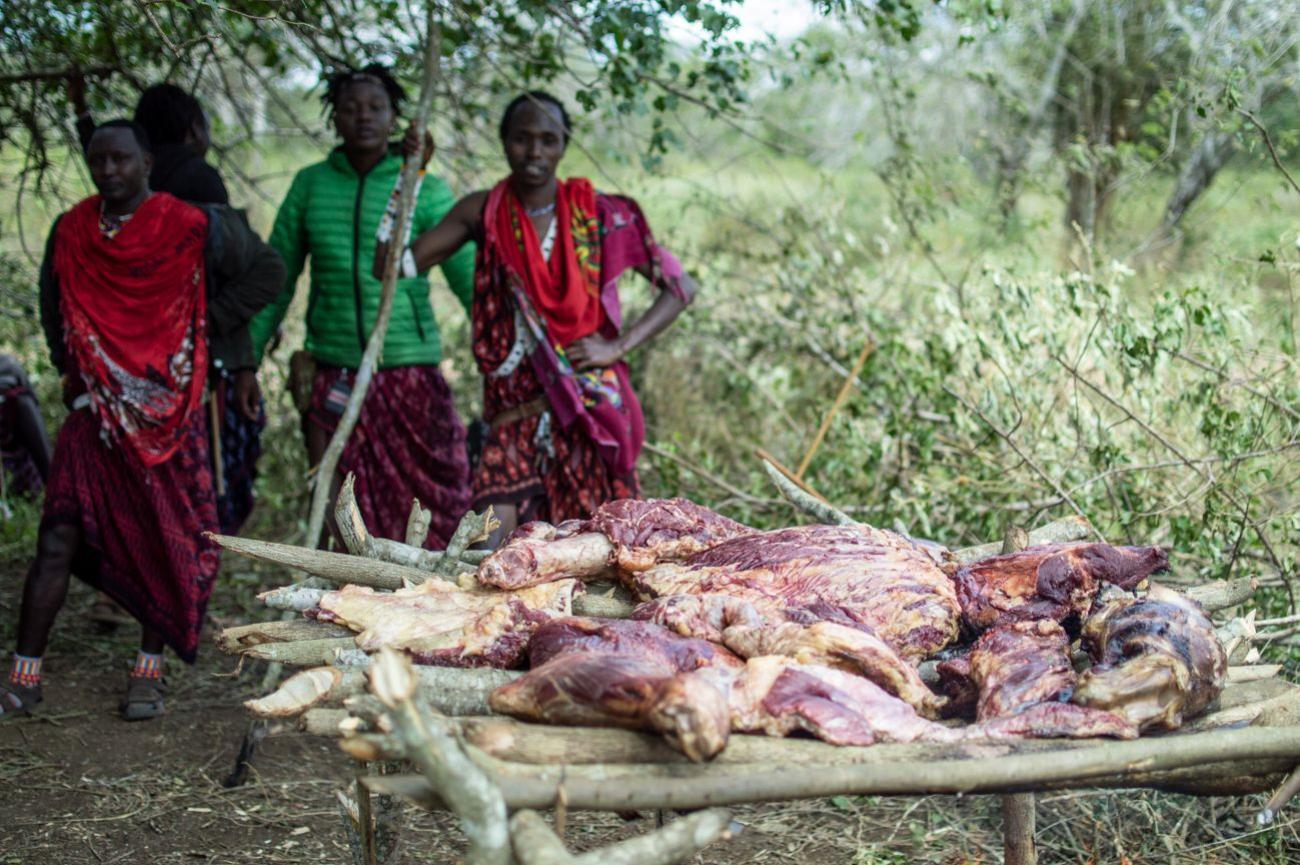
The Maasai are absolutely mad about meat—but only the holy trinity: cows, goats, and sheep. In that order of popularity. They don’t eat chicken, pork, or fish. As I’ve mentioned before, they once made a non‑eating pact with chickens: mutual survival guaranteed. I’m quite sure similar peace treaties were signed with pigs and fish as well. I’d give a lot to know how the fish negotiations went. The Maasai definitely don’t like fish. And it seems the fish feel the same—because they drank all the water in the region and moved to the sea. Their favourite above all is beef roasted over an open fire. Which, in practice, presents a small problem: once a cow is slaughtered, it has to be eaten quickly before it spoils. After all, fridges are still a sizzling novelty. And if the fridge is hot news, then the stove is cool news. So roast cow is reserved for bigger celebrations or, occasionally, for the market. Even then, the meat was grilled only when there was a reasonable suspicion that more people might show up.
Every proper celebration deserves a cow—smoked and very, very, very gently roasted over a wooden rack.
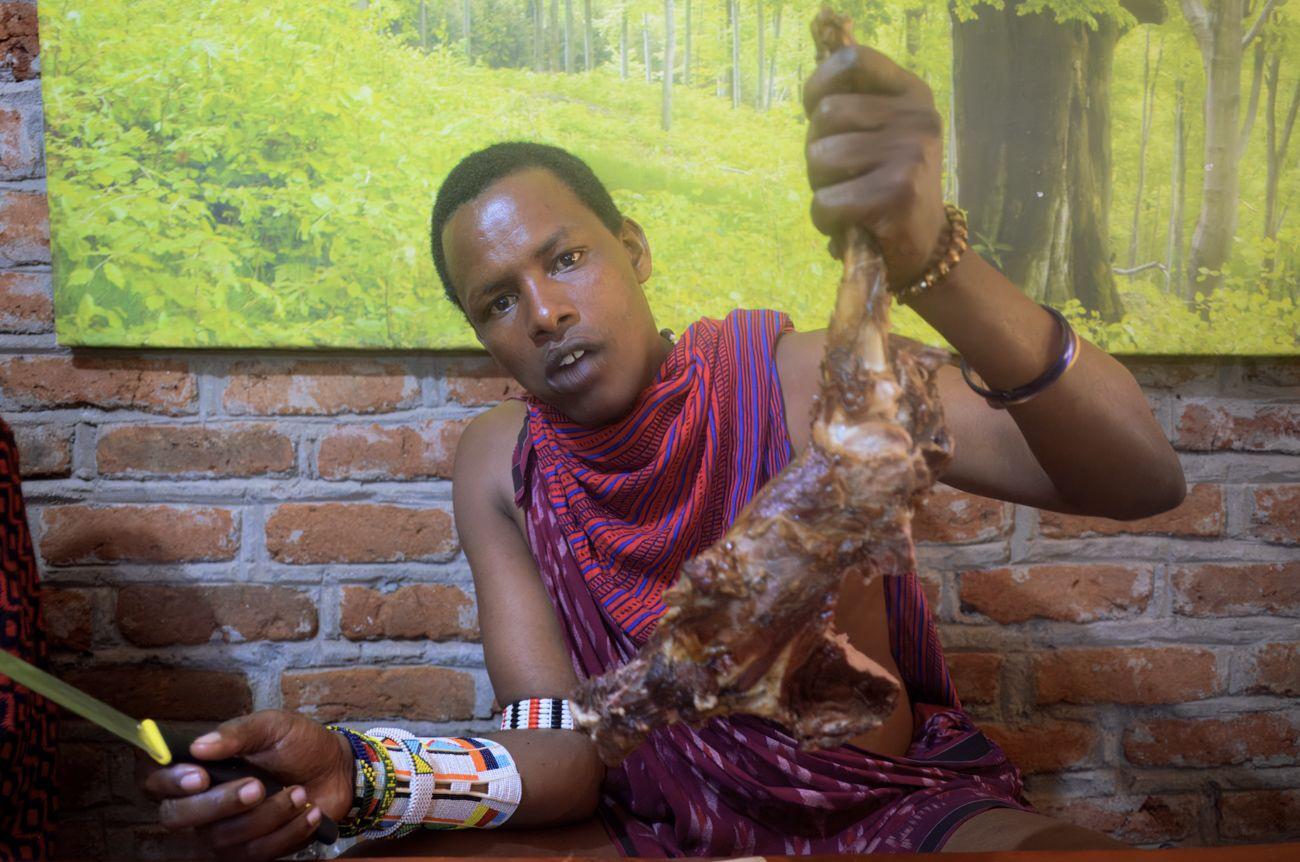
The unifying rule behind every meat recipe was simple: don’t you dare cook it all the way through. Or, alternatively, roast it until it’s good and tough. Just like proper pasta is al dente, proper meat here is al rubber. That’s why all Maasai have massive, powerful teeth. Teeth so white that when a Maasai rides his motorbike at night, he just opens his mouth—and voilà, better visibility. A Maasai can easily down a whole kilo of half‑raw cow or goat meat in one sitting. One person. One kilo. One sitting. No side dishes. Of course, they feel terrible afterwards, so they wash it down with soda. Ginger soda. It was called Tangazi.
Up next on the programme: the desynchronized goat.
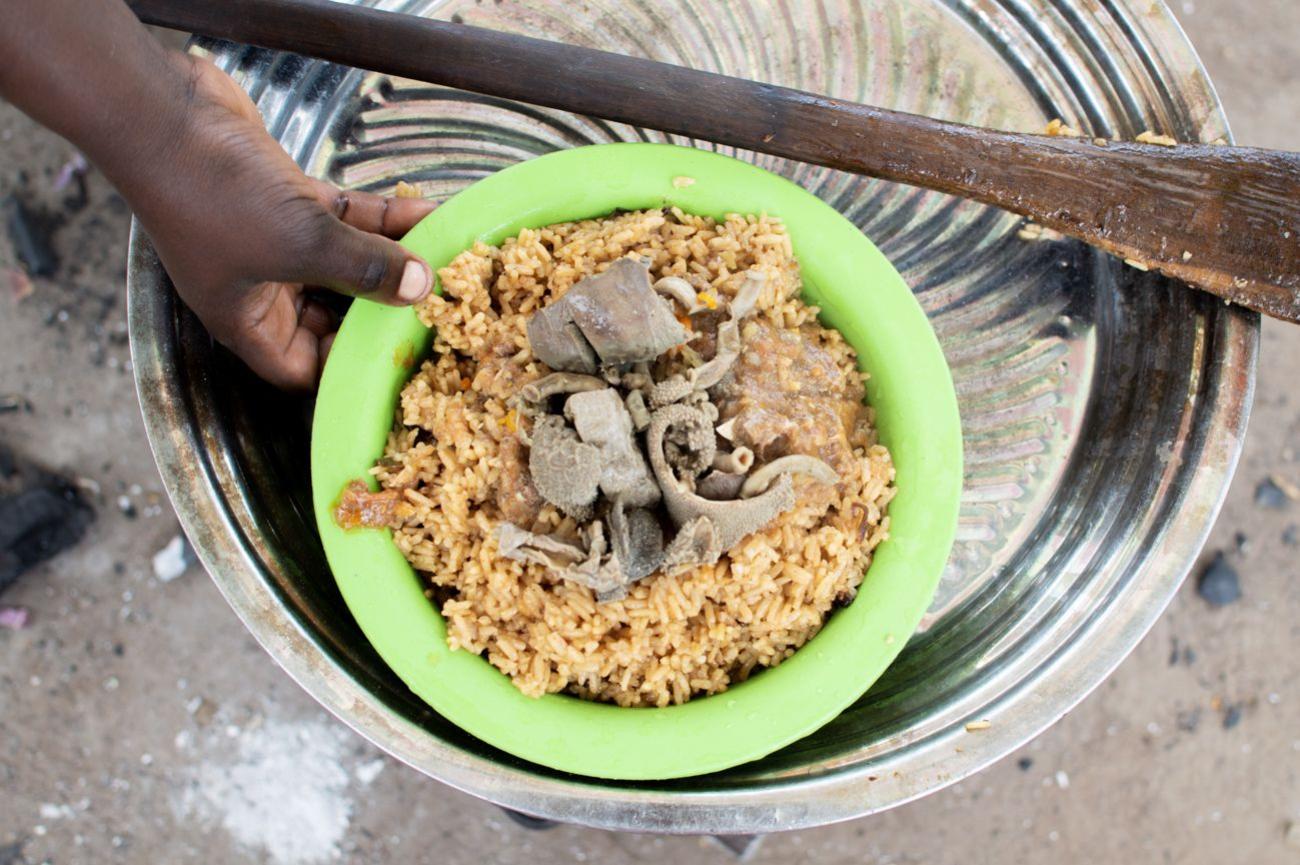
Probably the most beloved mildly fancy dish was pilau. It was rice with oil, sometimes blessed with a few bits of vegetables and generously seasoned with pilau spice mix. The exact recipe can be found somewhere in the chapter about shoes. Or in the recipe section. We’ll see. Pilau was always flavoured with a distinctive, unmistakable blend of spices. It was there every day. Always. Everywhere. For the first month, we got along splendidly. Then we had a falling out.
Something about that spice mix just stopped working for me. I could imagine goat soup without pilau spice, ugali without pilau spice, ice cream without pilau spice, the Mediterranean Sea without pilau spice, the Declaration of the Rights of Nations without pilau spice, the entire planetary system without pilau spice. Everything was better without pilau spice. I didn’t hate it so much that I’d never eat it again. But the magic was gone.
Pilau with tripe. Tripe and pilau. Me and pilau. Me and tripe.