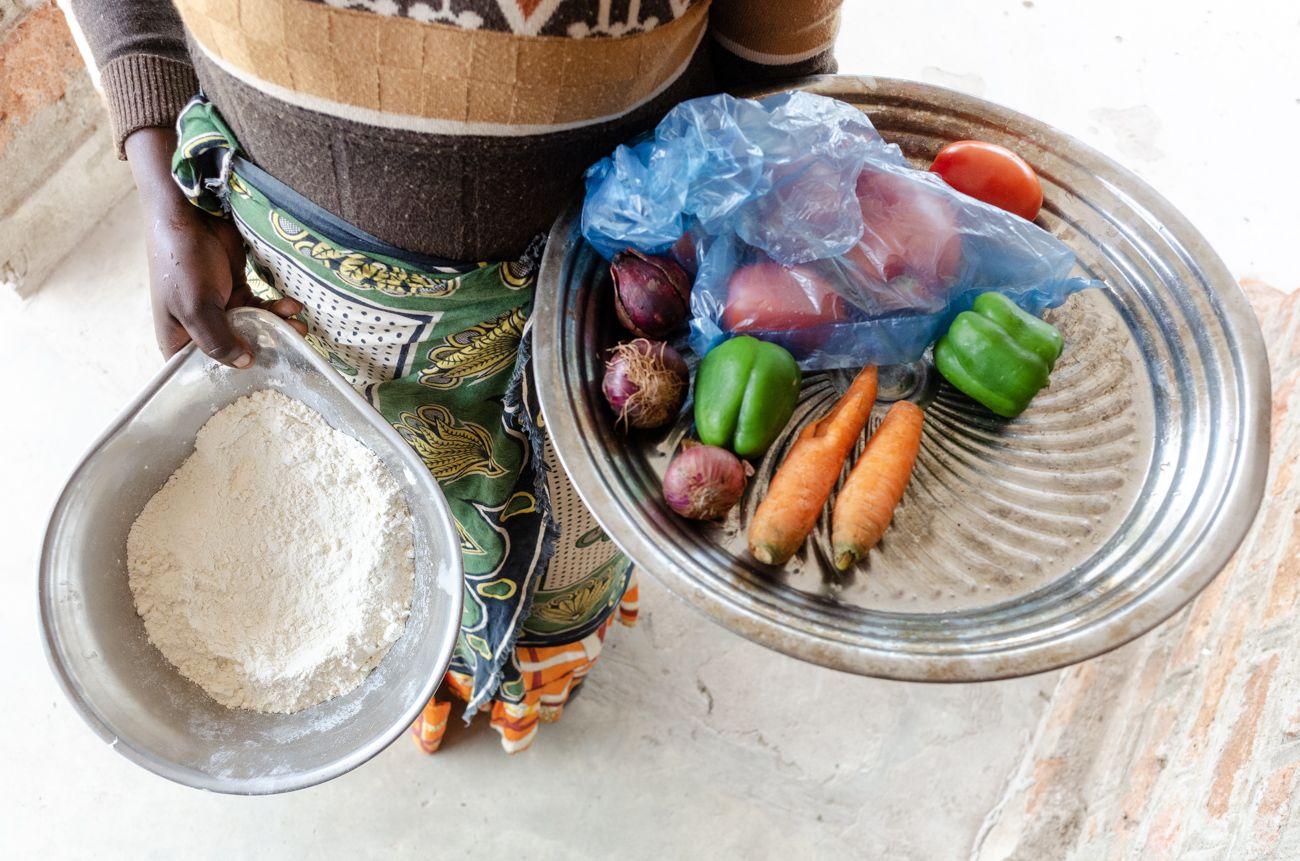
The bush, despite occasionally looking rather romantic—especially at sunset—is a pretty inhospitable patch of land. By the end of winter, it dries into kindling, and if a plant wants to survive, it has to be a true enthusiast. Plants with gentler dispositions just bow out. And never come back. Which basically means: vegetables and fruit don’t grow in the bush. Sekenoi showed us various berries you’re supposed to eat when you’re thirsty. They said you could make a broth from different roots. It tasted roughly like a broth made from roots. And that was about it. That probably also explains the Maasai enthusiasm for vegetables and fruit. Before I went to Africa, I pictured myself buried under baskets and thousands of varieties of cheap exotic fruit. So much fruit that even the locals wouldn’t know it all. They knew all of them. There weren’t many. And they almost never ate them.
No exotic fruit. No exotic vegetables. Nothing to see here.
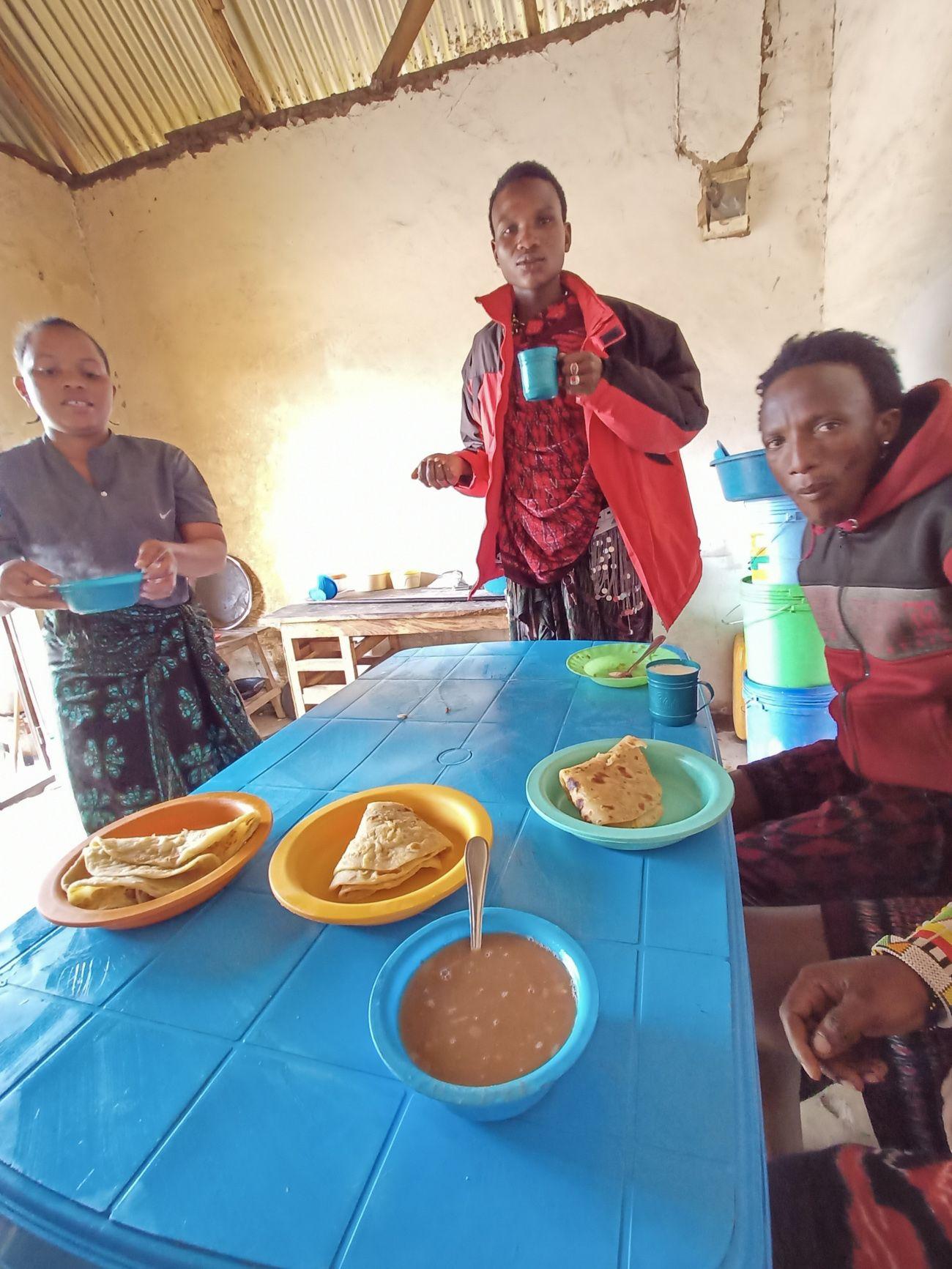
This recipe is out of sequence because it deserves special attention—and absolutely zero skill. Presenting: the recipe for bean soup with sausage. A beloved late‑morning dish. Step one: hop on a motorbike and ride forty kilometres to Handeni, where they sometimes have beef sausages. They do have them fairly often—about every second visit. Then hop back on the bike and return to Mbogoi with your precious sausage cargo. Ideally, complete this mission in real time while only losing half the day to beer and chats with your mates. The next morning, when it’s time for a hearty breakfast and a hot soup, send one of the local Maasai—Logoi or Sekenoi—to the village to buy cooked beans. It’s quite a distance, around fifty metres, so he takes a motorbike and sets off with a joyful sense of duty. In record time—say, thirty minutes—he returns with three portions of beans, boiled in salted water. Since spices are pricey and rarely used, the beans have a distinct local flavour: lightly burnt. But in an artistic way. By now, the beans are cold. So you slice up the sausage and reheat the mix on the electric stove. About three minutes after turning it on, umeme cuts out. Enter the djiko—a little charcoal stove. The full algorithm is detailed in the chapter on tea. But since the process is long and fiddly and you’re starving like a lion, you give up on the djiko and eat the soup nearly cold. I know, it doesn’t sound like a reason to dance with joy, but in a place like this, that faint breeze of something resembling home cooking is priceless.
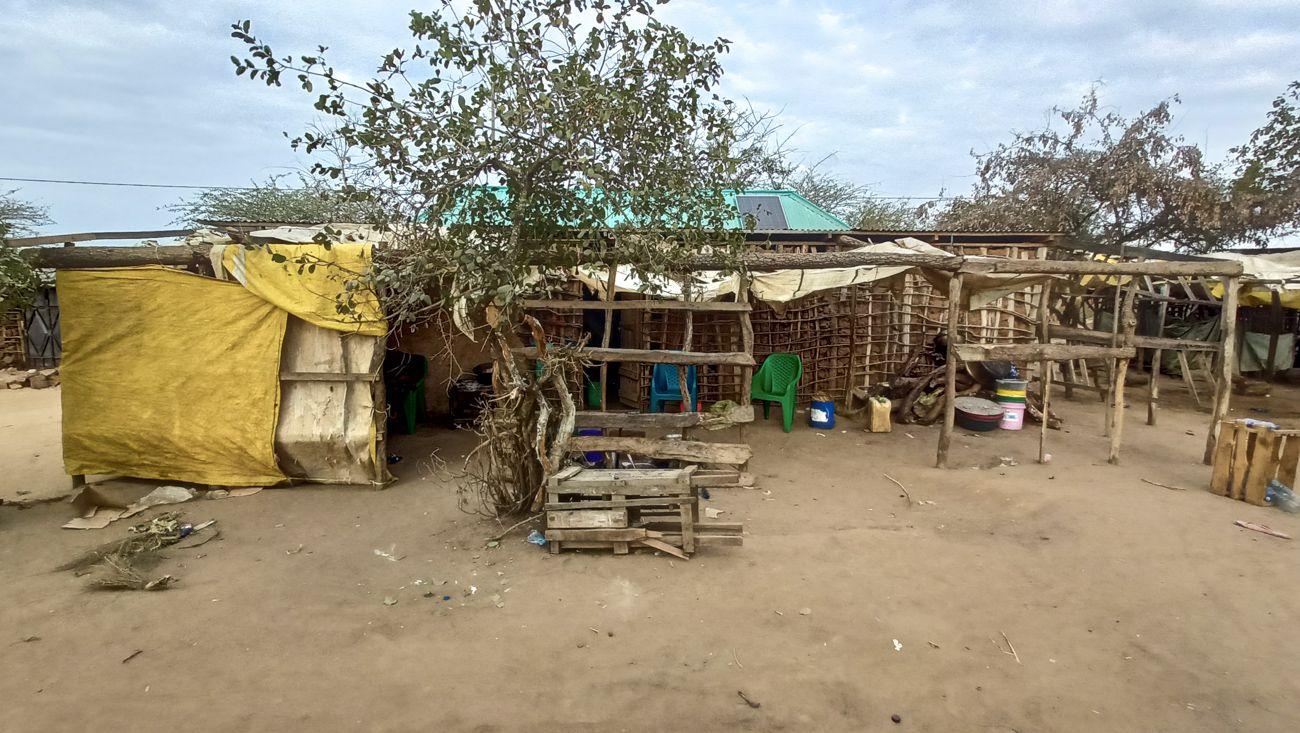
In my not‑so‑humble opinion, the local street food scene deserves its own TV series. Per capita, this place probably has the highest concentration of street food in the world. Although the term “street food” suggests food served in the street, it’s a bit misleading. There are no actual streets here. A “road” or “sidewalk” is basically any patch of land not covered in bushes and slightly longer than it is wide. A more accurate name might be “food served somewhere in the bush where no shrubs happen to be growing right now.” Locals spend most of their time outside. Not necessarily because they adore nature, but when ten people share a five‑by‑five‑metre room, it’s not quite the nonstop party you’d imagine. So they’re always wandering around the village. The Maasai, when they have a free moment, stroll into the village—the local hotspot—where they run into friends and catch up. And in Africa, there are a lot of free moments. Really, a lot. So many that if you added them all up, the total would probably exceed time itself
Probably the most beautiful street food in Mbogoi. The cooks and their far‑flung advisory team are playing hide‑and‑seek with the camera.
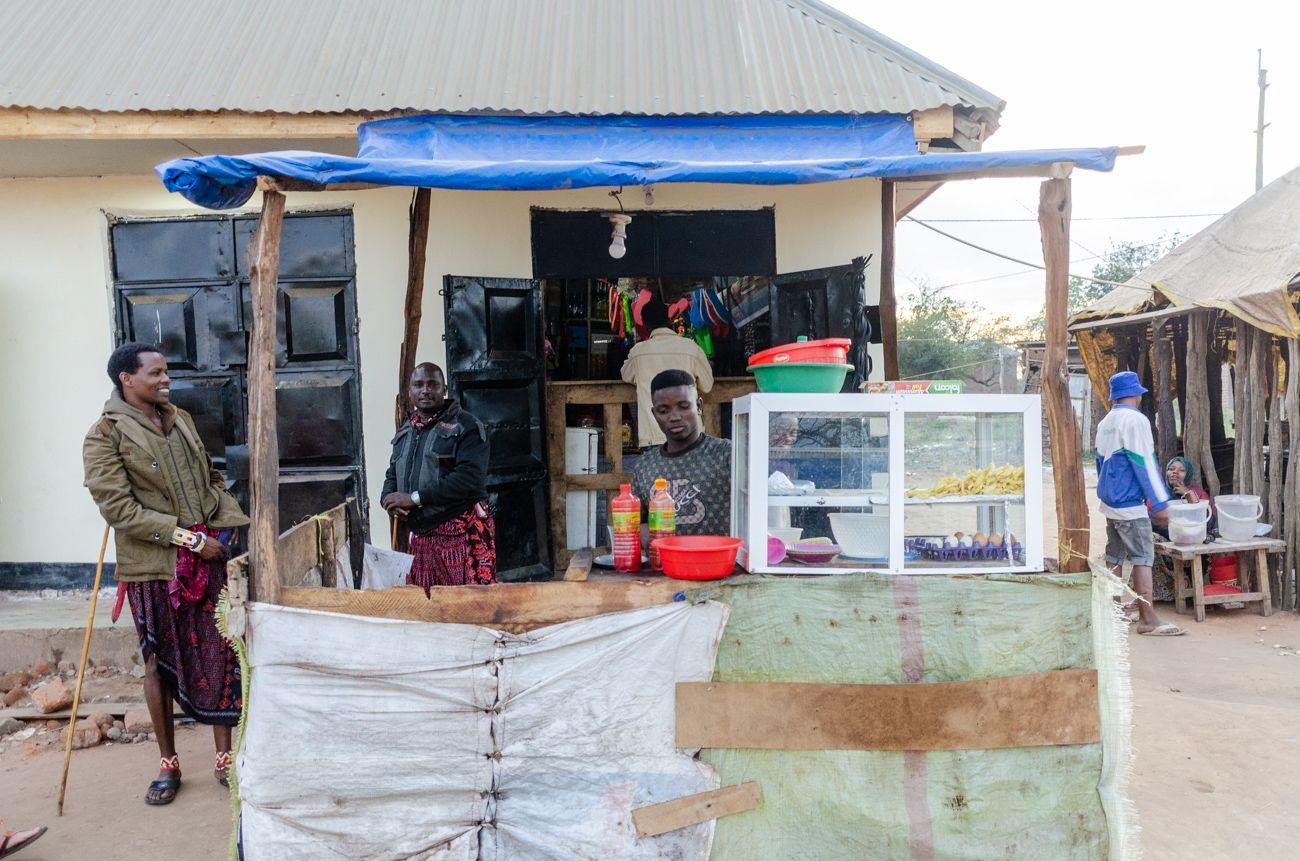
So the kitchens never lacked customers. Naturally, such fierce competition demanded a diverse menu. Which is why everyone offered chapati, pilau, and beans. If you looked at it from the other side, they were cooking beans, pilau, and chapati. When the pilau ran out, it was plain rice—usually in the evening. When the beans ran out, it was pilau or rice. Or chapati. You really didn’t know what to choose. There were, however, two bright exceptions. A couple of Swahili guys had a stall where they made eggs and fries. So if you wanted something other than pilau or beans, you could get an omelette with fries mixed in. The famous jaja na chipsi. One time they even had chicken feet deep-fried in oil. Not thighs or wings—feet. And since they looked like props from a food-themed horror movie, I decided—with the help of my remaining sanity, taste, and survival instinct—not to risk it.
Local avant-garde.
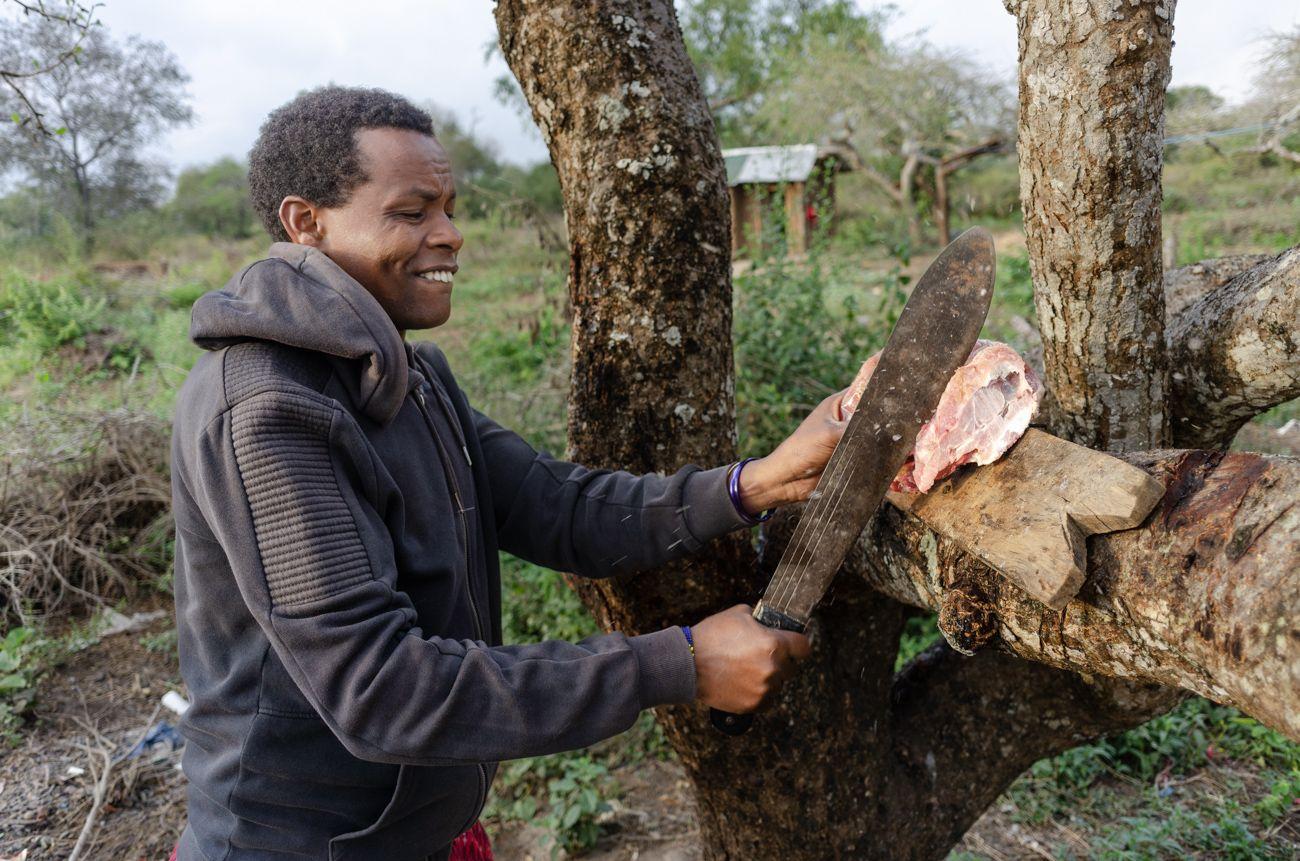
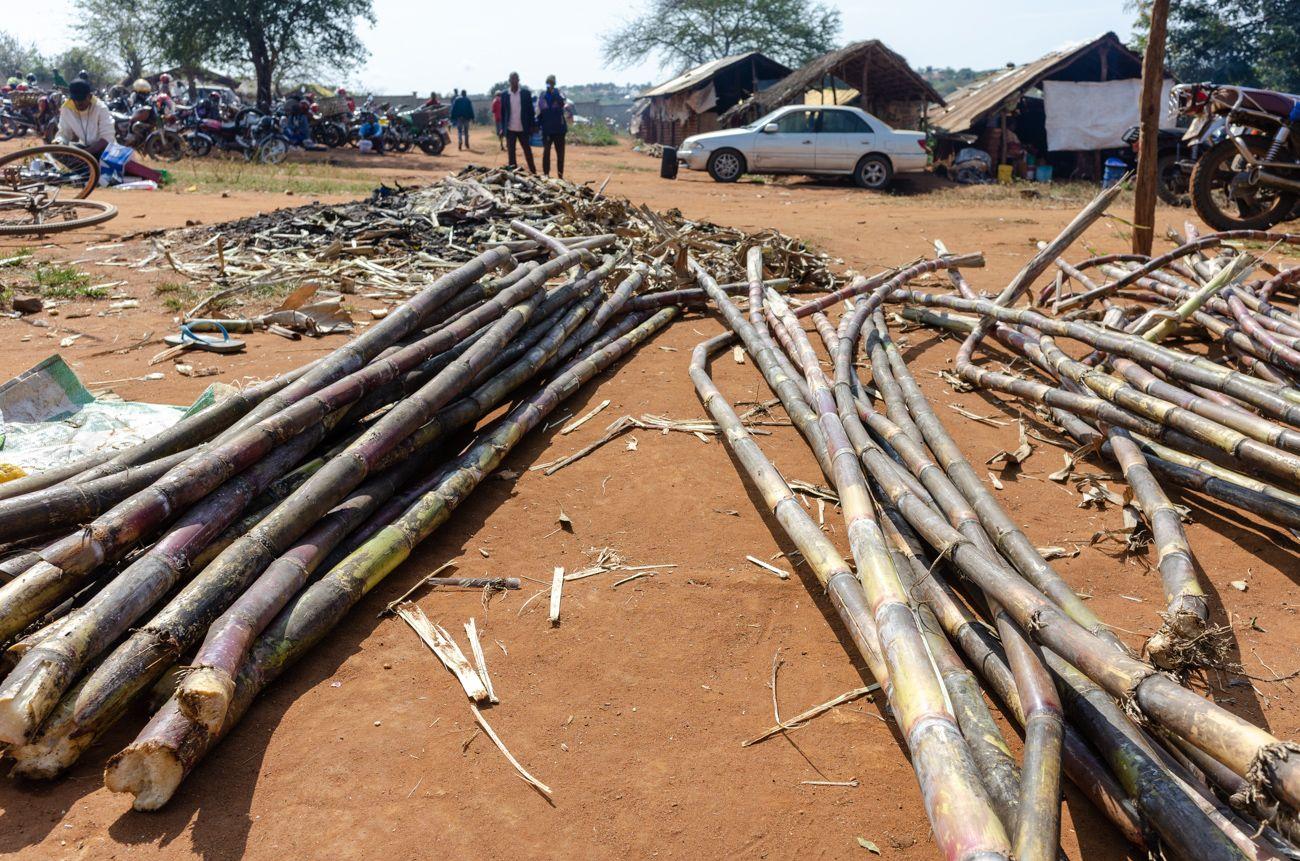
The second exception was Renča’s restaurant, proudly called a “hoteli.” The concept of a restaurant here, however, was something else entirely. The setting felt more like a lunch break for tilers waiting on a delayed delivery at a construction site. But once they got umeme and installed a freezer, the “hoteli” started offering meat. The Maasai’s enthusiasm for meat might have even surpassed their enthusiasm for conversation. As a result, I had goat soup every single day for two months. They also served pilau, surprisingly, with a heap of meat and vegetables on top. And of course—chapati, like everywhere. Once, and I choose to believe it was an accident, they plucked a sheep instead of a goat and tossed it into the pot. It was genuinely hard to tell the difference—they both dressed the same. But to be fair, now and then these canteens had mandazi too. Slightly sweet wheat flour buns, deep-fried over fire. The only sweet thing they had, apart from sugarcane. Sugarcane was a chunk of stick which, when you tried to gently bite it, was incredibly sweet. I’m speaking, of course, from the perspective of my underperforming, tiny, yellow, non-Afro teeth.
The “hoteli” had an almost Euro-Atlantic vibe to it.
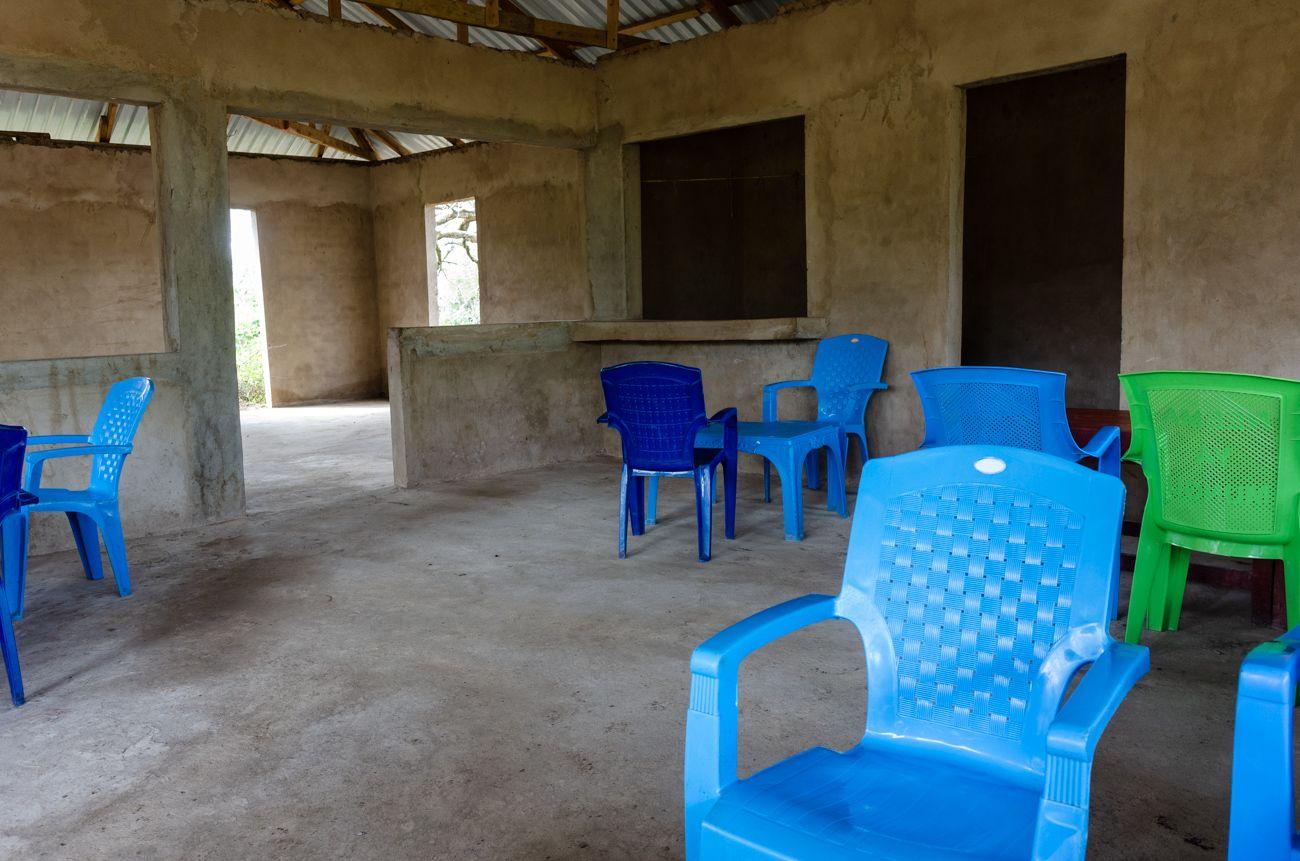
Some of these dining establishments even had indoor seating. Three, to be exact. I tried out two of them, and it was a proper spectacle—watching them watching me. I’m not sure what category a white guy with a camera, surrounded by Maasai and shovelling in pilau, falls into, but I’d guess it’s something like socks. They know what they are, but you almost never see them around here. One more thing. If it can be eaten by hand, it is eaten by hand. I never saw anyone eat soup, but I’m convinced that with the level of local ingenuity and dexterity, it’s absolutely possible. Accordingly, the table looks exactly like you’d expect after lunch. Fortunately, the staff cleaned it up in three swift wipes—done. I was curious about how these canteens functioned organisationally. The variety, like everything in Africa, is wild. Some people cook at home for a large family or group of housemates, so they just make more and sell the leftovers. Others rent a space and start cooking there—especially if they’ve got enough mouths to feed. And then there are the pure investors: they rent a room, hire people to cook, and never touch a spoon.
Indoor street food.
Two food‑related events definitely deserve a closer look. The first was the weekly market held every Thursday, and the second was the big livestock market—goats and sheep—in Nderema, in the Handeni region. The official market time was around ten or eleven, but many food vendors were already setting up by eight in the morning. The admirable dietary variety of households living solely on pilau and chapati was clearly reflected in the fact that they cooked pilau and made chapati. But there were other things on offer too—shelf-stable foods like dried sugarcane juice, chewing tobacco, or fish. And of course, lots of vegetables and fruit. If a big crowd was expected, they’d roast a cow and brew some medisin—a local bush tea I write about elsewhere.
Another chapter in the local dining saga was Nderema—the livestock market held every Saturday in Handeni, about 40 km away. I went once, and honestly, it’s the kind of experience made for tourists. Hundreds of cows, possibly thousands of Maasai, goats, sheep. The eating zone was way down below, and I didn’t see anything on offer except meat. It was grilled over fire, skewered on twigs from local bushes. Naturally, it had to be perfectly undercooked so it could be chewed for hours. The atmosphere was enhanced by concrete platforms where cows were slaughtered and butchered. Around these slabs, intestines and all sorts of inedible scraps lay scattered across the ground, instantly turning fragrant in the local heat. Me, a seasoned African by now, wisely abstained. Based on prior experience, I figured I’d be chewing that meat until Monday. Or possibly still. Who knows what the customs officers would say.
Nderema – vegetarian street food with a side of sugarcane.