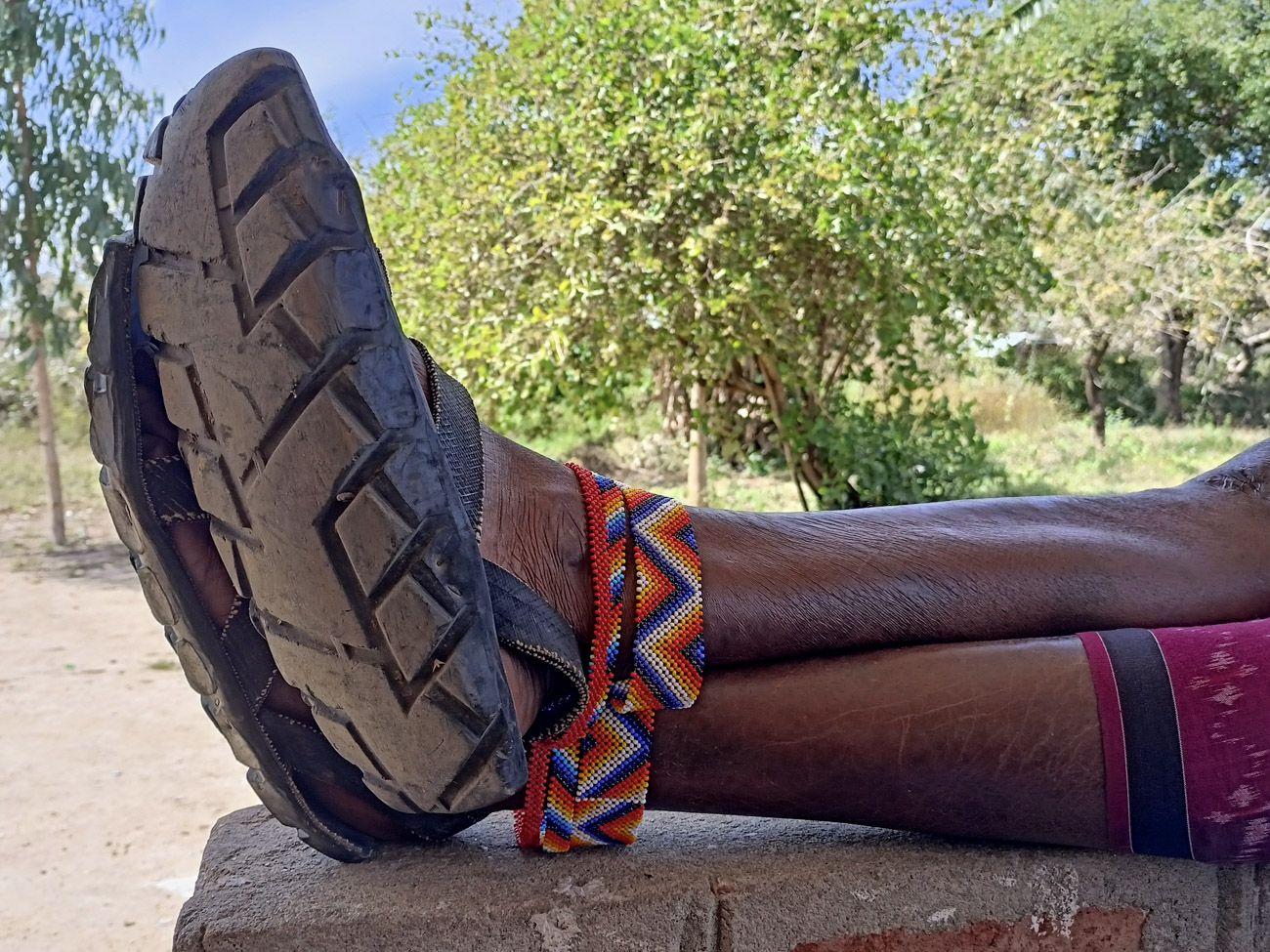
I think Sekenoi has thinking legs—kind of like an octopus that has part of its brain in its arms. Sekenoi seems to have part of his intelligence in his legs. Right now, his left leg is probably thinking, “There’s a motorcycle rumbling in the distance. What if I went for a ride?” Meanwhile, the right leg ponders, “The sun is shining, it feels so nice lying here. Why would I want to move?” And the left leg responds, “Hmm, I wonder what the right leg is thinking. I’d really like to know.” The left leg keeps thinking, “If I went somewhere, I might meet another pair of legs—someone else’s left and right legs. They could chat, and I could just stand there contentedly.” The right leg, however, has a different thought: “Good thing I can’t talk to the left leg. If the Maasai were chatting and I was chatting with the left leg, that would be way too much conversation. Better to just rest here on this little wall.” The left leg hatches a plan: “To Koikai’s workshop! There’s bound to be excitement. Oh, and look, a chicken—I’ll chase it!” And then, the legs fall into a profound silence. Legs usually stay quiet, but this time, they’re profoundly quiet. This silent dialogue continues until nightfall. After all, it gets dark early—around seven. Once more, the right leg muses: “What a pity Maasai don’t use watches. They could wear them on their legs—I’d know the time instantly. What’s on the left leg’s mind now, though?”
Choosing a pair of shoes was really no problem for anyone
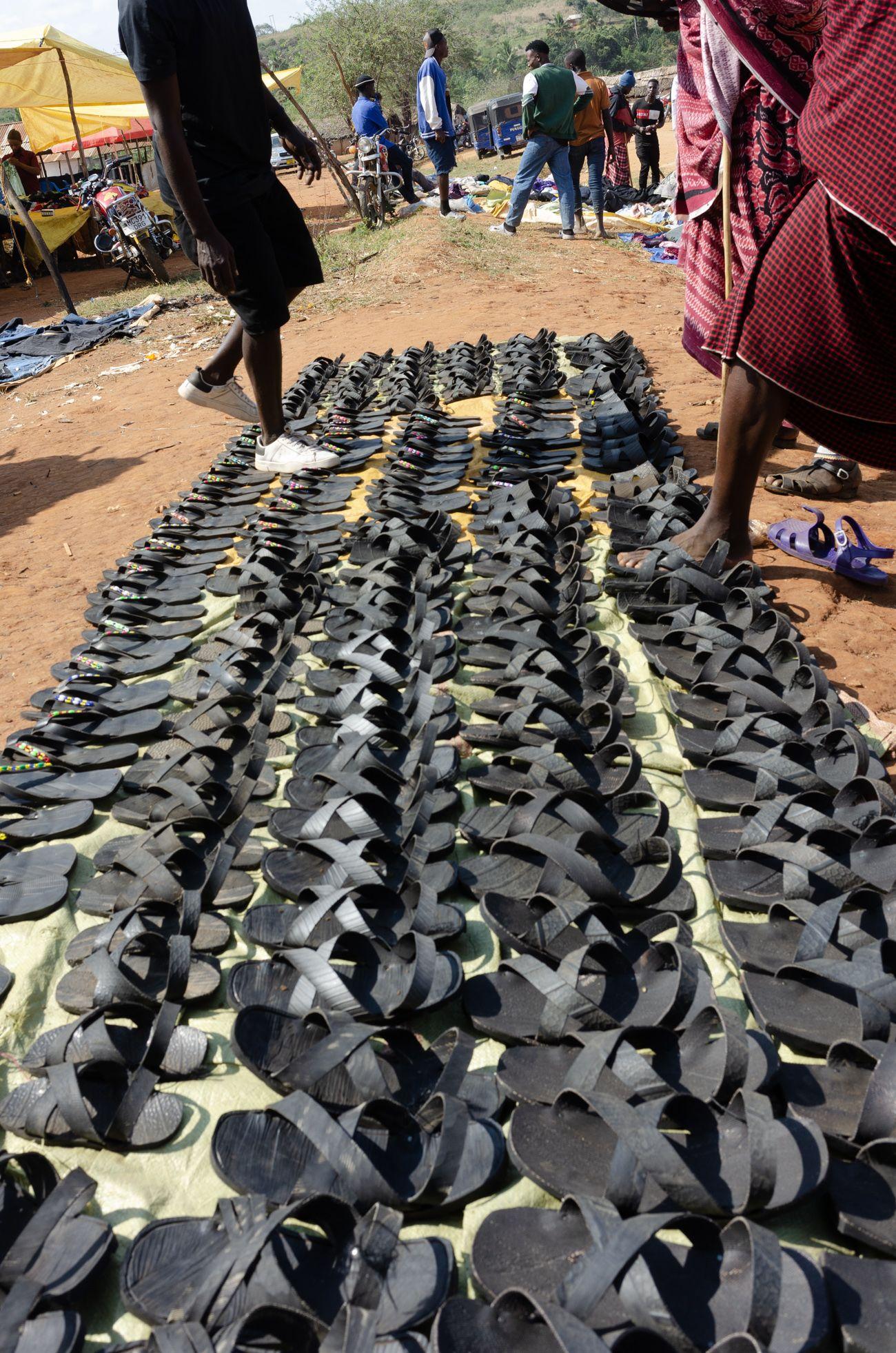
In Mbogoi, cars rarely make an appearance. Every Thursday, a few trucks arrive, bringing goods and vendors for the market. Occasionally, a passenger car shows up, but the potholes on the road make it quite the challenge to get here. That’s why all the Maasai wear sandals made from old car tires—to give the road and bush the impression that there are plenty of cars around. These shoes are crafted by a local artisan and can be bought at the market, where the selection is... colorful. “Colorful” in quotation marks, because they’re all gray. It’s more of a “gray selection,” but at least there are different sizes. I wanted to buy a pair of these shoes, but after trying several, they were all the same small size. Maybe the Maasai are simply born with identical feet. Evolution seems to have stepped in and adapted their feet to the single size of available sandals. That’s why all Maasai wear sandals crafted from old car tires—to make it seem like the roads and the bush are teeming with cars. Perhaps Maasai are just born with identical feet.
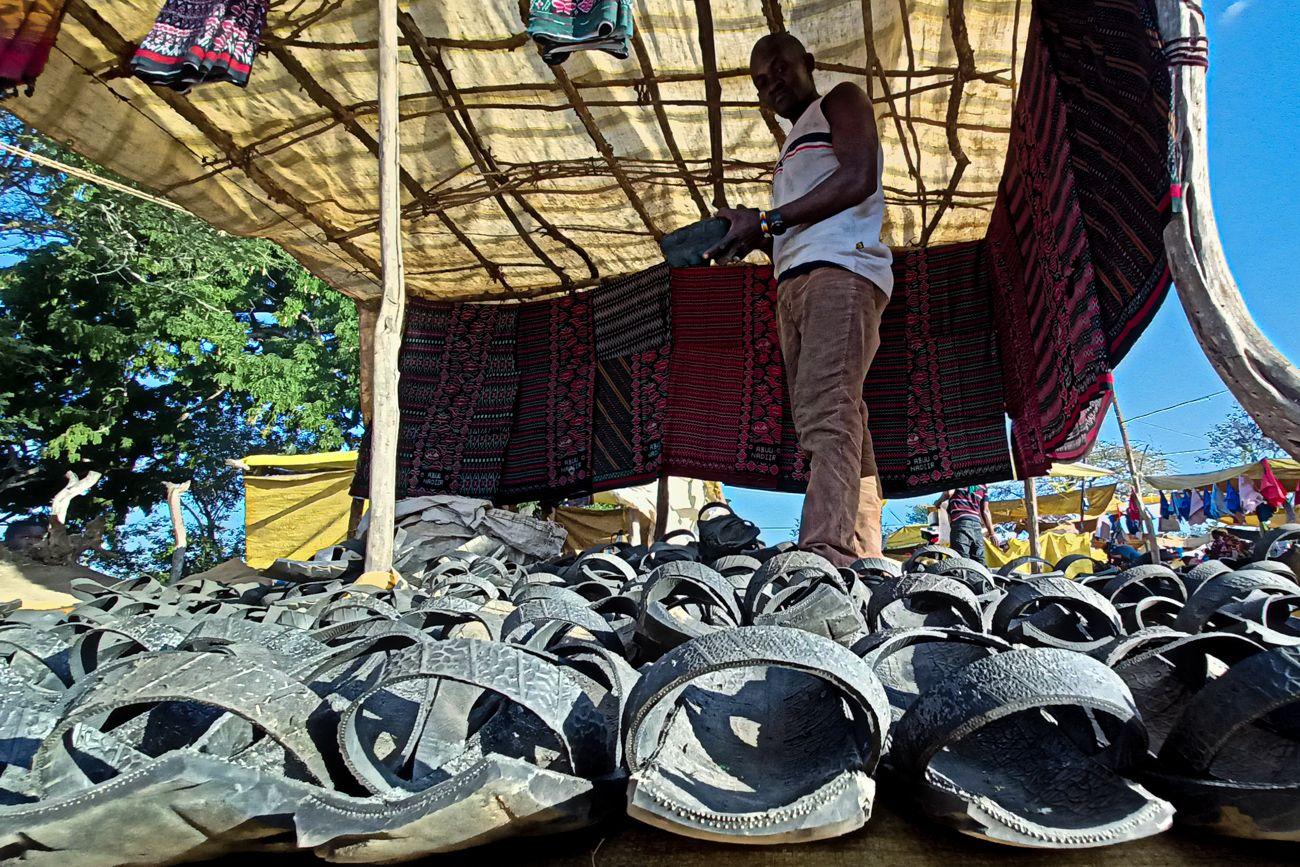
Shoe fundi (master craftsman).
There’s a small issue here. The “Ministry of Transport and Goat Soup of the Republic of Tanzania” issued a regulation on the movement of sandal-wearing Maasai on public roads. According to this regulation, their sandal treads must be deeper than 1.5 millimeters. However, the sandals are made from used tires, which means their treads are already worn down. So, how to solve this? If the police were responsible for checking, they would have to be stationed in Mbogoi, but there aren’t any police there. Officials therefore amended the regulation, and it now states that whenever one Maasai meets another, they must inspect each other’s sandal tread depth. If one of them has a tread depth of less than 1.5 mm, the inspecting Maasai must issue an on-the-spot fine to the inspected Maasai. The sight of two Maasai checking sandal treads often looks like an impromptu Charleston performance. There’s one more minor issue. I made the whole thing up. But I truly believe that once our civilization reaches Tanzania, this is exactly how it will work.
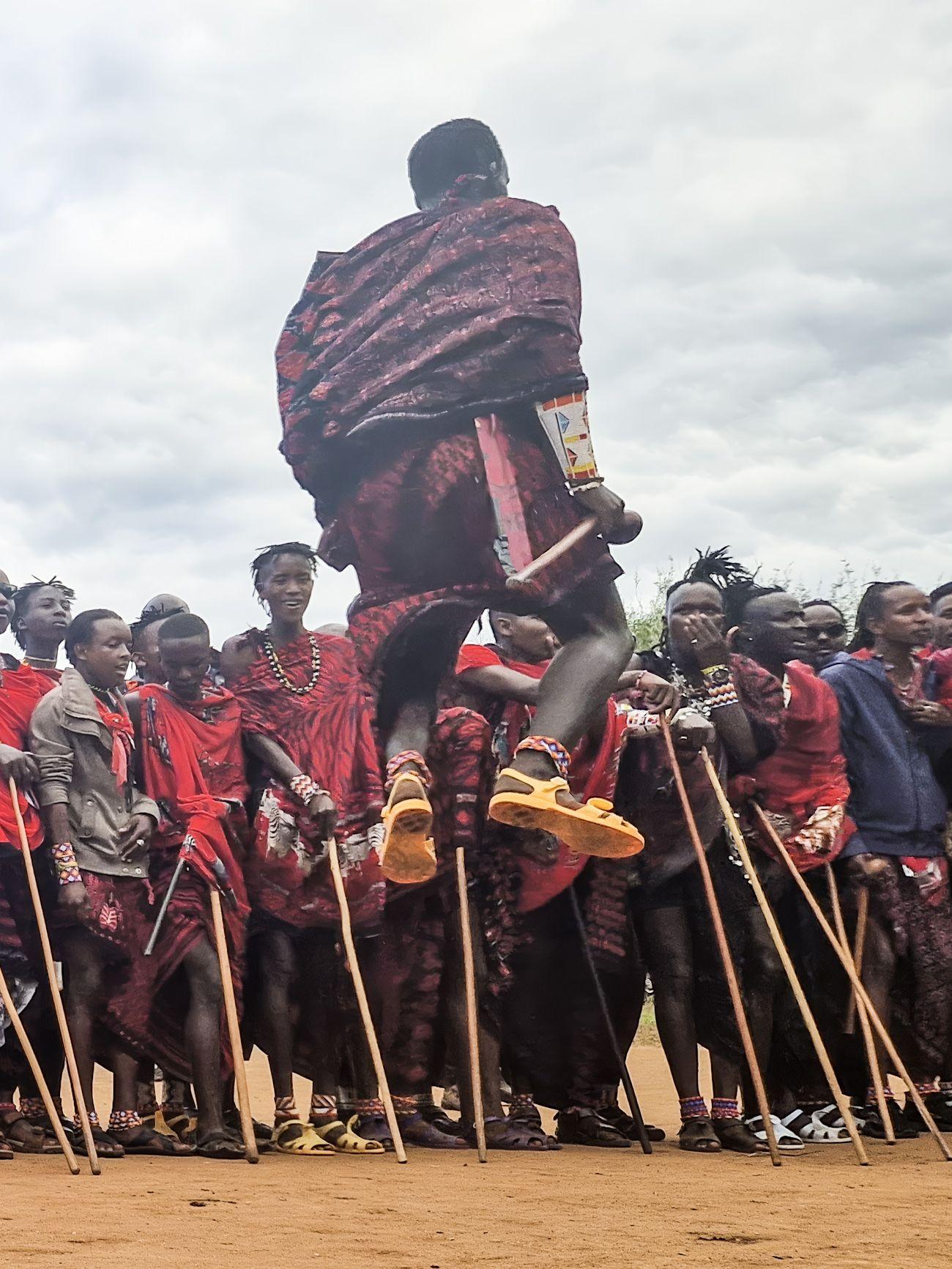
Yellow is a new gray.
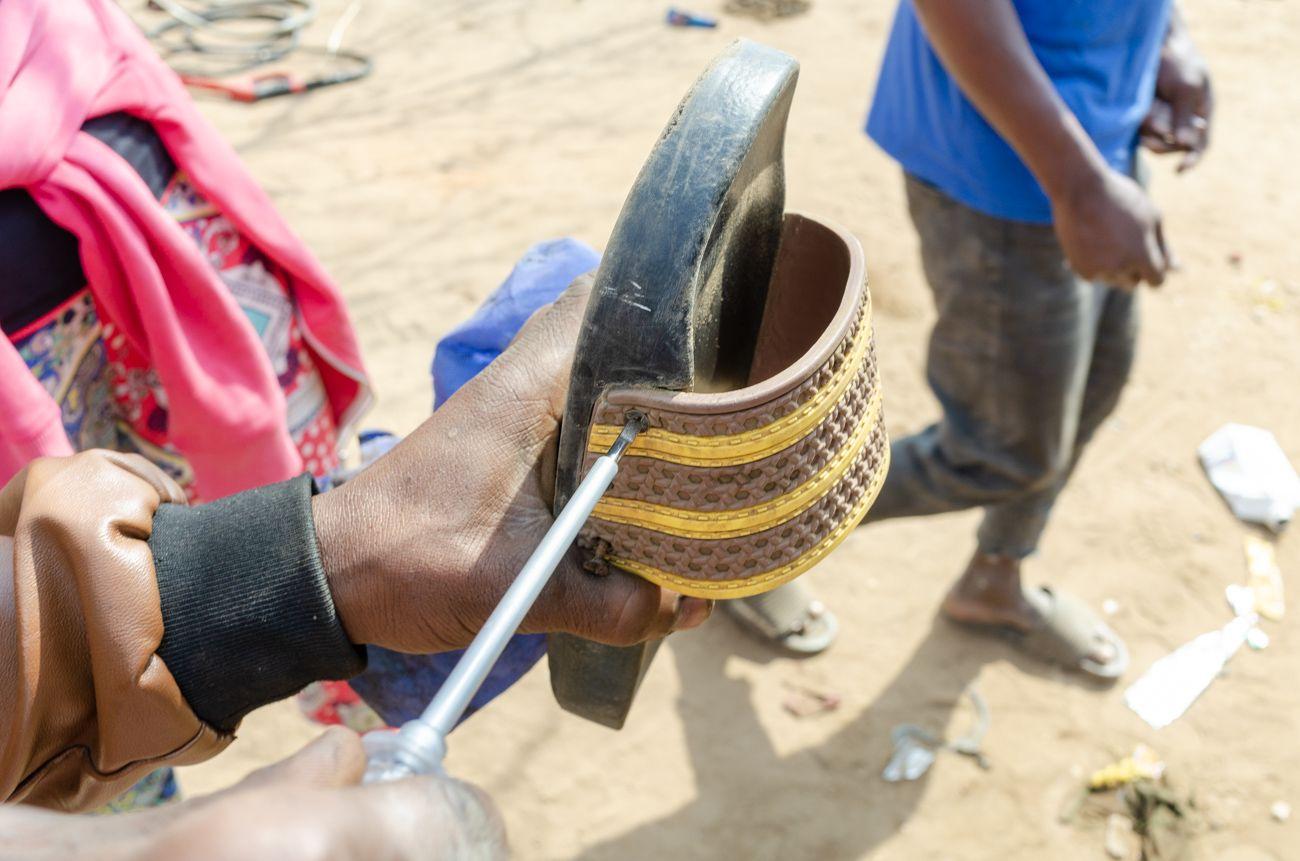
Of course, not everyone necessarily wears sandals made from tires, and looking stylish is one of the most important instincts for a young Maasai. The basic and simplest sandal upgrade involves attaching a plastic zip tie, which then sticks up and cheerfully flaps around. The next level features sandals not made from tires but molded from plastic, usually in yellow or white. I couldn’t quite grasp the symbolism behind which ones are better, who wears which color, or which color is meant for which occasion. I have another very amusing story about footwear, but this one concerns the Swahili people living in the village. They didn’t roam the bush and preferred ordinary flip-flops. When Koikai and I were installing a socket for Alojz, we needed a wood screw. We wanted the socket on the wall to hold better, so the first strong, all-capable fundi wouldn’t yank it out of place. After a short explanation of what a self-tapping wood screw is, I mentally grouped it with things like Eskimos, credit cards, televisions, and pork chops—things that simply don’t exist in the village and likely won’t anytime soon.
Suddenly, Koikai gestured to a friend, someone who spent most of his days loitering around and occasionally lending a hand, and asked him to hand over one of his sandals. On closer inspection, the plain flip-flops revealed an unexpected touch of flair—self-tapping screws used as ornaments. We unscrewed the screws from the sandals and used them to secure the socket. Strangely enough, the sandals didn’t fall apart because they were glued, and the screws had only been there for decoration. Neither did Koikai’s friend fall apart, though maybe he was there just for decoration too. And the socket didn’t fall off the wall either because it was held firmly by the amazing Tanzanian sandal screws.
Self-tapping screw sandals.
Classic tire sandals could be purchased from the shoemaker known as the "Pneumatic Umeme Footwear Fundi," who also sold and repaired them at the market as needed. He always had hundreds of them displayed in front of him—a veritable sea of sandals that, to my untrained eye, all looked identical: gray, with the same shape and size. When a customer arrived, the fundi would expertly estimate their shoe size and almost instantly find a pair that fit them perfectly—like a glove for their feet. However, this wasn’t always the case, especially when a mzungu of my dimensions arrived. None of the sandals fit me. Despite this, I bought a pair anyway. Now they’re sitting at home in a closet, waiting for my feet to evolve into a shape that fits the sandals. The thought of 183-year-old Sekenoi wistfully reminiscing about the good old days of hassle-free shopping crosses my mind whenever I think about Lengusero getting its first shopping mall.