Mzungu Boda-Boda, or Cargo Whitey Part 2 - Back again
Listen to this text
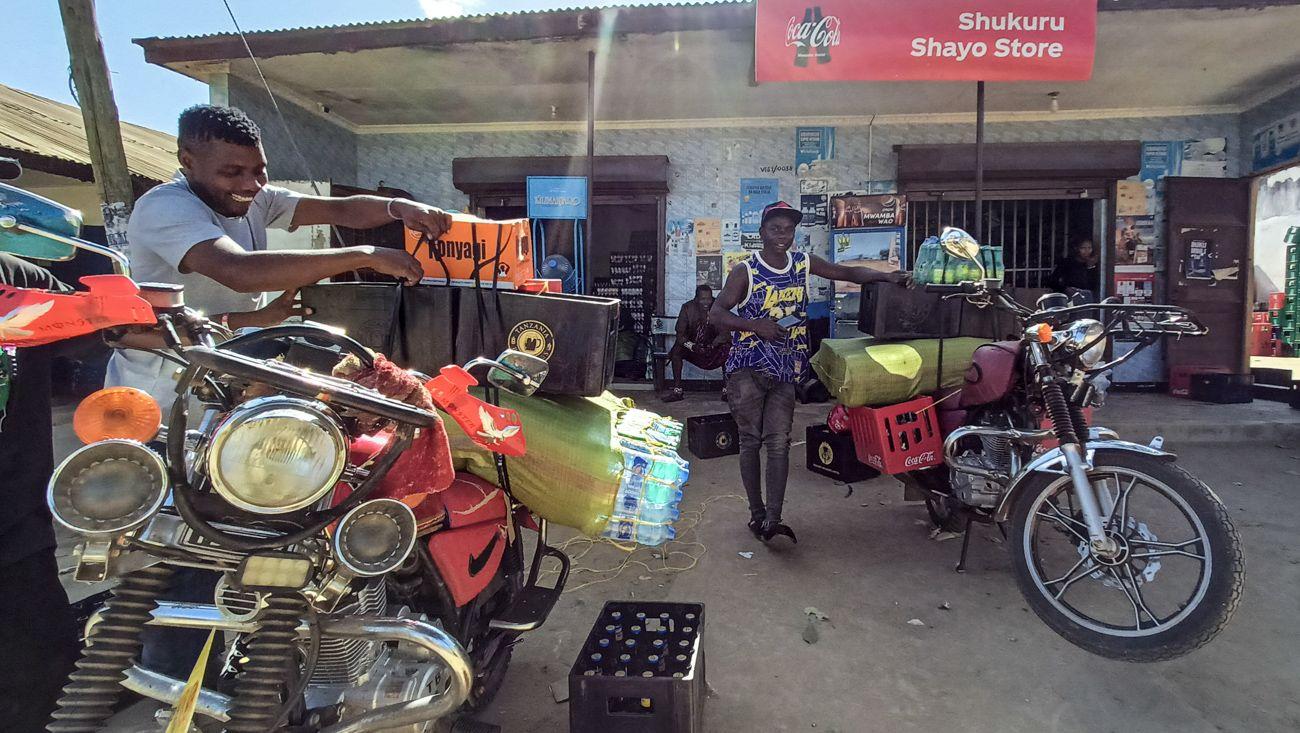
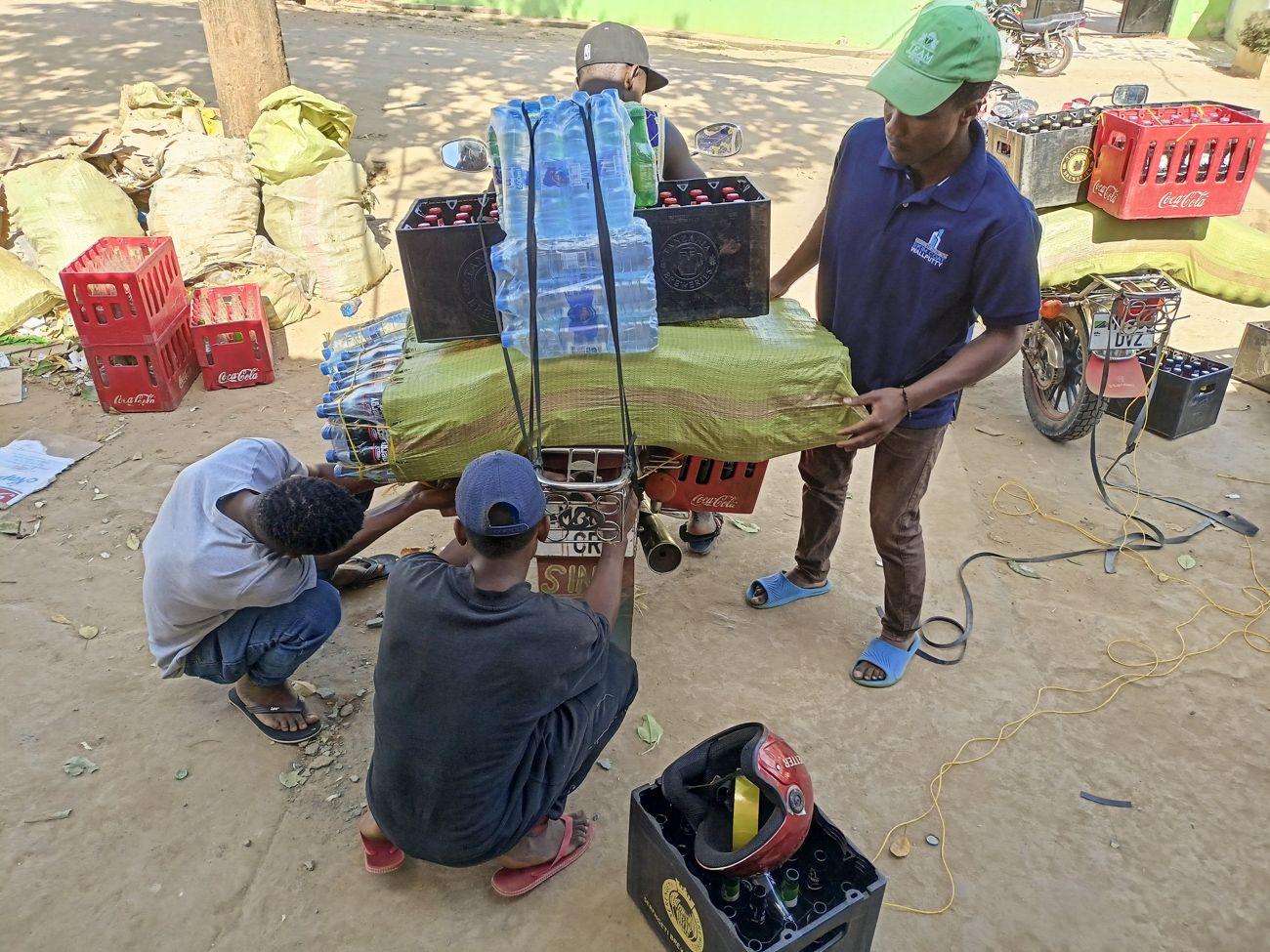
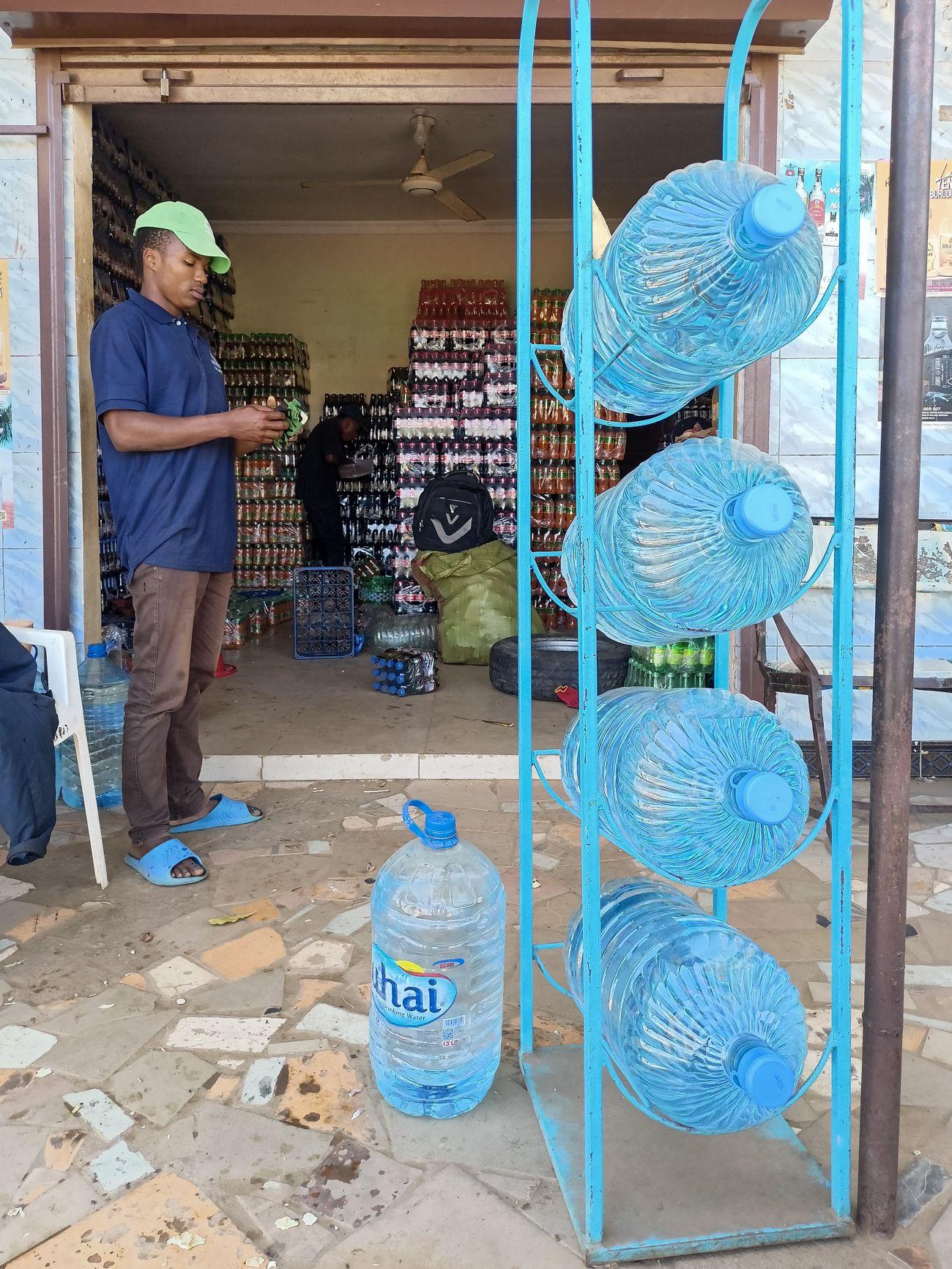
We finally roll up to the wholesale drink depot. At last, I can take a proper gulp of water, and my voice no longer sounds like I’m two minutes post-stroke. While they’re prepping the order, two guys grab our motorbikes and ride off to get them refueled. They return about half an hour later. I don’t know if they went to fill up in New York, but honestly, I couldn’t care less—the world is once again beautiful and glowing pink. With professional flair, they begin strapping crates of sodas and beer onto the motorbikes. For two days straight, I’d been telling everyone—strangers included—not to overload my bike the way they usually do, because riding busted Tanzanian roads on a beat-up motorcycle without a footrest isn’t exactly my strong suit yet. And, to my great relief, they actually load my bike with a reasonable amount. I’m satisfied. Then two guys show up with what looks like a fifty-kilo sack stuffed with sodas and strap it right on top of my motorbike. I’m no longer satisfied. I don’t show it, but somewhere deep inside, a faint twitching begins. The road back has three stretches—each about 100 meters long—of deep sand. Even without any cargo, I’d barely make it through those bits with only minor trauma. No matter. I’m a hero, a man, a rock, a machine. We climb on the bikes and hit the road.
Let’s pile on a bit more—let the mzungu really have some fun.
The asphalt ends right behind the sign that says “Welcome to Handeni.” But that’s not really a problem—we’re riding on a nice, wide road, about three lanes across. Down the middle of it runs a narrow, thirty-centimeter strip, clearly worn in by motorbikes. Cars don’t drive on it—mostly because every two or three kilometers the road is blocked by a giant mound of dirt. You see, when they build such a beautiful wide road, they won’t just let cars go and ruin it. There are small, narrow passages worn into the mound just wide enough for motorbikes, while cars are forced to take a parallel old dirt track—dusty and full of potholes. Honestly, we should adopt this system back home—if no one uses the new road, it stays nice and new for ages. Sometimes, though, there’s no passage at all, and we’re forced to veer off onto the side track. The detour leads us over a half-meter-deep ditch—a proper motocross jump. I’ve got about 120 kilos loaded behind me, no space to sit, and my right leg is mostly just dangling in the air. Tanzanian motocross, baby.
At one of these jumps, I have to slow down, lose balance, and instinctively try to regain it the usual way—by yanking the handlebars. The throttle grip comes off clean in my hand, and I gently, with all the dignity I can muster, lay the bike down into a bush. I already knew the throttle was busted. But everyone around pretended like it’d hold. Hakuna matata. That’s the power of undying African optimism. So here I am, standing next to some bush and a toppled bike somewhere deep in the Tanzanian wilderness, frantically waving at Sekenoi riding ahead of me. I try to signal that if he goes much farther alone, he’s really going to be alone. But there’s one thing that actually cheers me up about the whole situation—I’ve burned my leg on the exhaust pipe. I now carry the most common injury of a Maasai warrior. I feel proud. And oddly enough, I’m starting to feel the urge to go herd some cows.
Some random bystander happened to film my glorious departure, and—by some cosmic accident—the video actually found its way back to me.
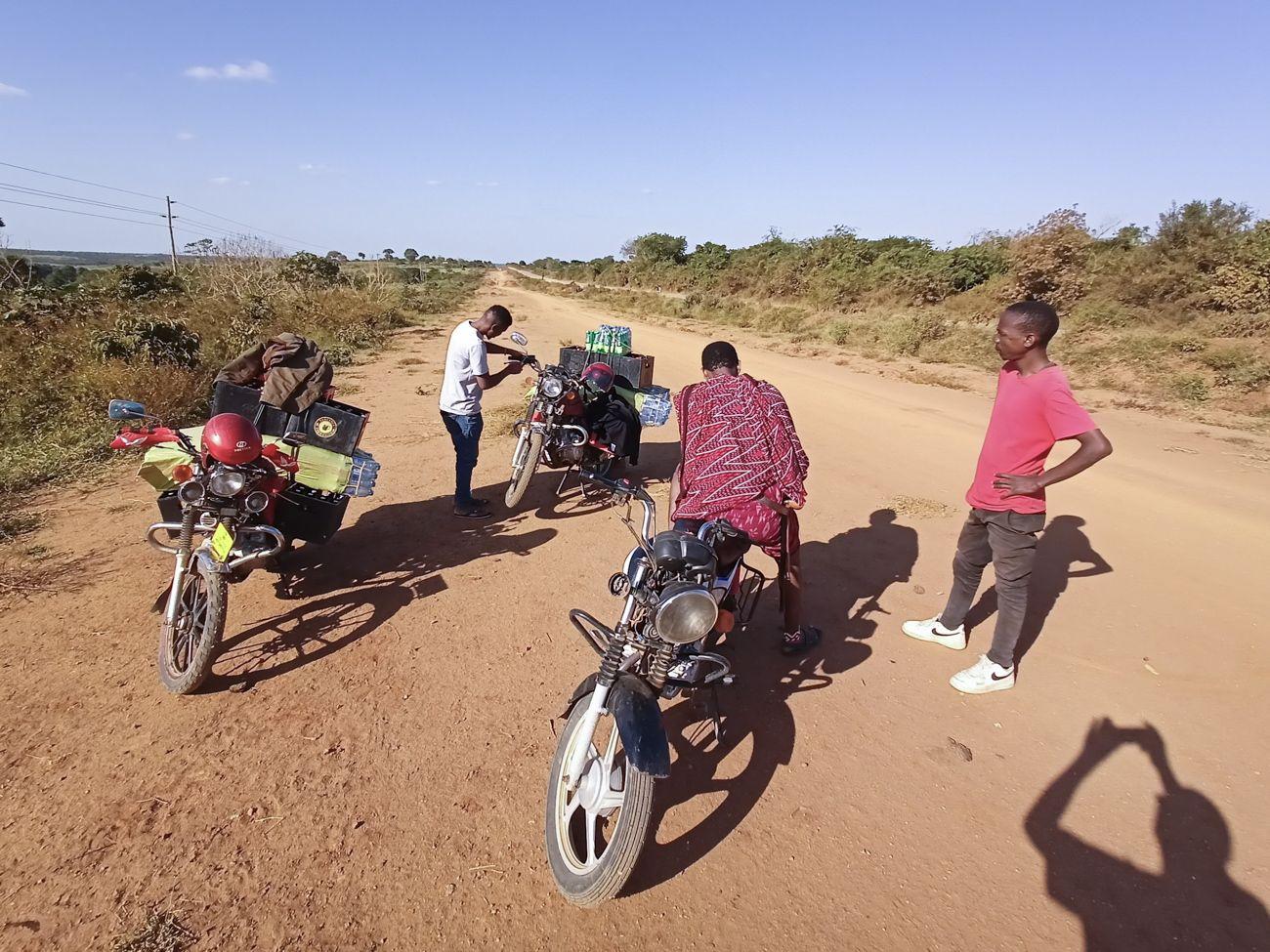
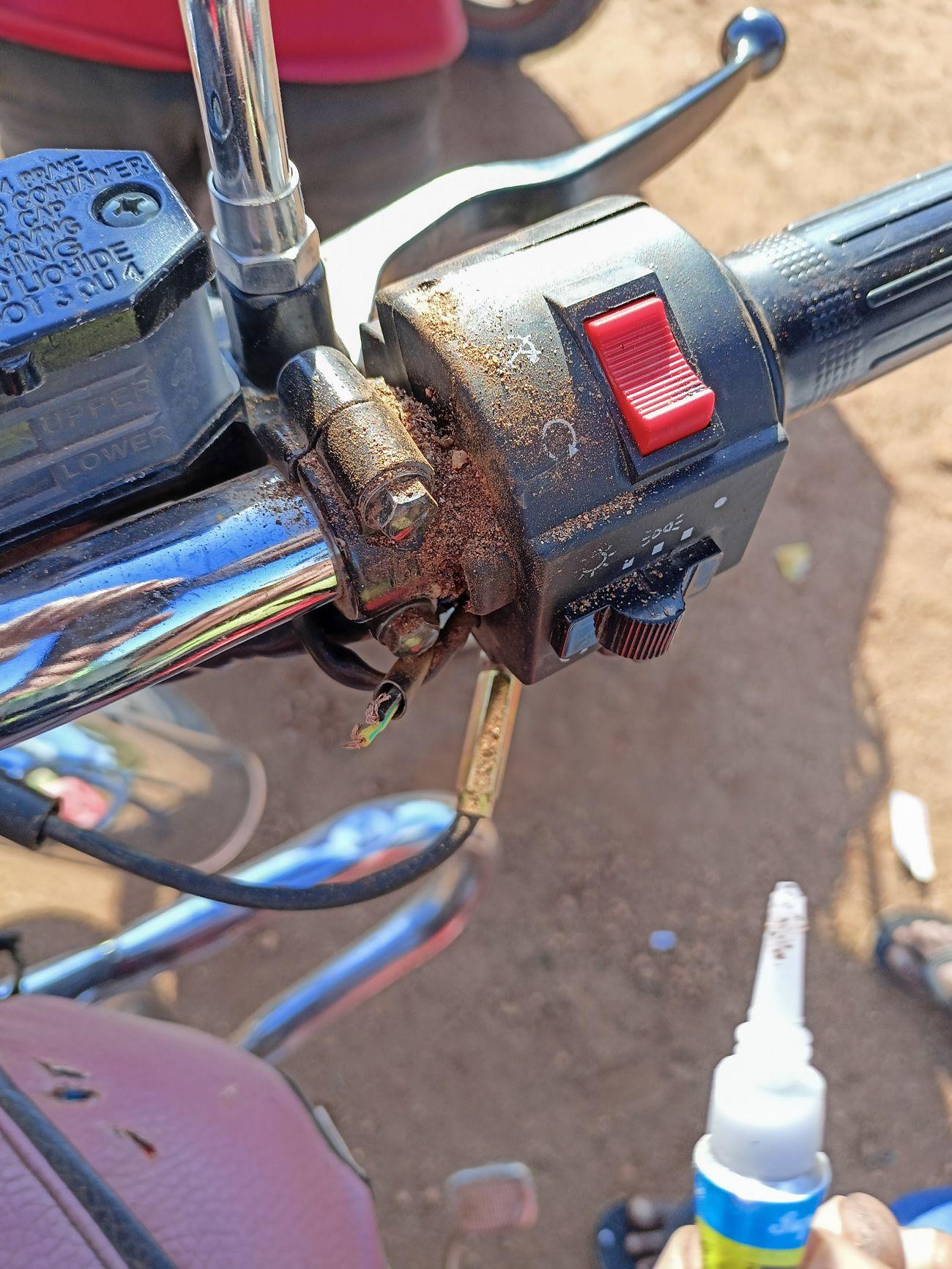
So here we are, sitting by the roadside, waiting for Jafar—the hero who promised to fetch the necessary parts and tools and come to our rescue. I did try to fix the issue myself for a while, but we needed a Phillips screwdriver. Naturally, we didn’t have one. When I suggested we stop a passing motorbike or car and ask if they had any tools, the response was hearty laughter. I take that as proof of yet another African theorem: the older a motorbike or car, the less it breaks down. So we lounged in the shade, and I watched offline YouTube videos on Sekenoi’s phone with him. We started with animal fight mashups—classic interspecies gladiator showdowns. Then came a short clip of two Chinese guys chasing down a green Avatar. Next up, a demonstration of a flying car that openly mocked gravity. When the animal fights showed up again, I lost interest. I didn’t even want to imagine the cognitive soup this kind of programming stirs up. And then—barely an hour and a half later and after a few phone calls—Jafar finally arrived. Our savior. Owner of several motorbikes and a bona fide boda-boda mogul. As soon as he whipped out his service tools, it was obvious this man was prepared for frontline interventions. Rumor had it he had just bought a fresh Phillips screwdriver with a handle decked out in the colors of the American flag and a tube of something grandly named Super Glue. He also had a passenger riding pillion—some friend whose exact purpose remained mysterious both during and after the repair. I wouldn’t have believed it if I hadn’t seen it myself, but Jafar actually mixed the super glue with dust from the road and managed to restore the throttle grip to working condition. And not just barely—it held strong for at least another month. Magnificent. Problem solved. We fire up the engines and move on. After a while, we stop tiptoeing along the main road and take a right turn toward Handeni.
The man in the red T-shirt came and went. Utterly misunderstood.
We’re cruising along, and things are going surprisingly well. I tackle the first stretch of deep sand with surprising grace. There’s just one minor issue—in thick sand, I have to paddle with my legs like a deranged frog on wheels just to keep the balance. Problem is, right behind the foot pegs are crates full of soda or beer. On the way there, the crates were empty, so when I accidentally kicked them, they budged a little. Now, fully loaded with bubbly beverages and topped off with a charming 70-kilo sack, they don’t move an inch. Every time I thrust my legs out for balance, I slam the same exact spot on the back of my calf. I’m pretty sure the bruise is now roughly the size of Greenland. I’m not checking, though—better not to know. We dodge a few broken bridges, and then there’s another long stretch of deep sand ahead. That’s where, with all my signature elegance, I go down. Bike and all. The cargo scatters across the road like we’re in a slapstick heist scene. I’m lying there, my leg trapped under the bike, and I can’t move. Sekenoi fades into the distance. I’ve got a helmet on my head, gloves on my hands, and I’m wearing a black jacket. The African sun is definitely having me for lunch. I once read that the Sahara is spreading fast. Yep—true story. I’ve now got my own personal patch of Sahara lodged in my mouth. I start trying to figure out what actually hurts. I basically fell while standing still, just sinking into the sandy trap. Looks like Sekenoi has finally noticed I’m missing—he’s way off in the distance, trying to prop up his motorbike and making his way back.
I wanted to take a photo of my fall—document it for science, for posterity, maybe even for insurance—but my arm was inconveniently wedged under the motorbike.
It’s really not that easy. The ground is all sandy, and the load is so heavy that without support, the bike would instantly topple. Later, I noticed that all the boda-boda guys delivering goods to shops always leaned their bikes against a wall or a post—never left them freestanding. But back to the present. I’ve been lying there for about five minutes when suddenly—out of nowhere—a Swahili boy, probably around ten years old, materializes next to me. He definitely wasn’t there a second ago—and then, just like that, he is. He stands there for a moment, silently and thoughtfully admiring the sight of an elderly mzungu sprawled out in the sand, pinned under a motorbike, surrounded by a poetic scatter of Coca-Cola and beer bottles. It’s like he’s afraid to disrupt the composition. This new school of art might be called African Mzungu-Boda-Boda-ism. Apparently, he’s soaked in enough artistic inspiration—because he sets me free. At the same time, Sekenoi is approaching fast, having managed to park his bike about half a kilometer away. And suddenly—out of the empty space—more Swahili folks begin to materialize around us. I have no idea how they do it. Probably teleportation. I also don’t know how they know where to teleport to—but honestly, I don’t care. I rush into the shade, peel off my jacket, and pour about two liters of water into myself. From a distance, the whole scene looks oddly picturesque—motorbike on its side, bottles everywhere, soft golden sand. There’s just one thing missing. Me. I seriously consider lying back down just to complete the aesthetic. After a few gulps, the fluids kick in, and my brain slowly crawls back into my head.
The illustrative photo illustrates the situation about half an hour earlier.
I return to the scene of the incident and start helping gather the bottles scattered all over the ground. Some local Swahili folks pitch in too—very carefully and very slowly, because apparently, teleportation is quite exhausting. Sekenoi, upon seeing the chaotic mess, has a brilliant idea. He waves down a passing motorbike, and right before our eyes, we witness a miracle: a humble piki-piki transforms into a full-fledged boda-boda. All it takes is a few thousand shillings. This means my load is now reduced by half, and misadventures like the one we just experienced—unfortunately—probably won’t repeat themselves. At least, that’s what we’re all hoping. The next fifteen kilometers go by without a hitch. With only half the cargo, I glide through the next sandy stretch without incident. Well—apart from the fact that I’m in Africa, on a motorcycle, having recently crashed, handed over enough cash to the police to fund a small house... and I’m somehow in a great mood. To the cheerful backdrop of Romanian folk songs with subtle undertones of collective suicide, we make it back home. Well—except for the part where my motorbike toppled over one more time. But the cargo stayed securely strapped on, and there just happened to be a generous cluster of helping hands nearby who got me upright in no time.
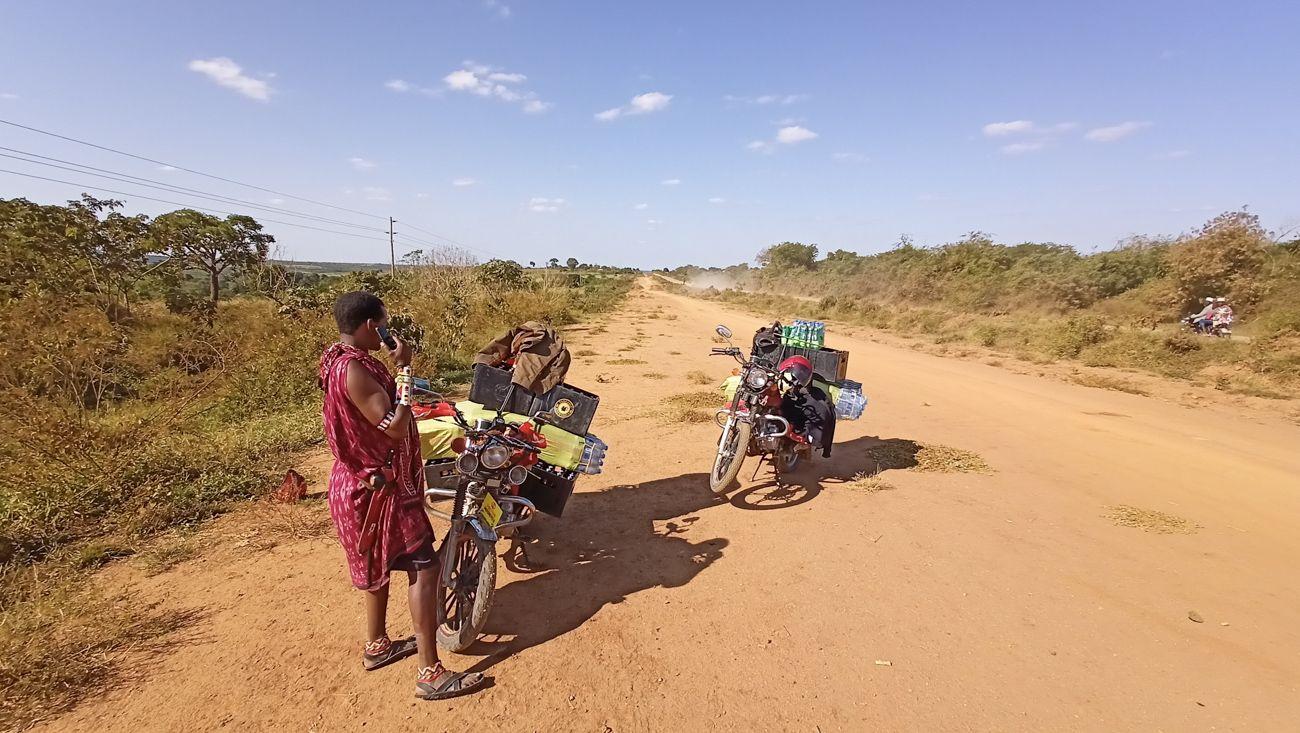
No road movie—just road photo.
In the evening, during the traditional beer-drinking debrief, I try to tally the damage I’ve done. Aside from the fact that the whole delivery ended up costing—thanks to the charmingly corrupt Tanzanian police—about five times more than it would’ve if we’d just had it delivered the normal way… well, nothing too serious happened.I mean—if you don’t count the bruised ribs, the bashed wrist, and the second burn from the exhaust pipe, which I probably acquired while lounging artfully in the middle of the road. But otherwise—totally chill. The postscript was especially entertaining: the burn got infected, my leg swelled up to about twice its usual size. I was a hero for a while, sure—but then I whipped out the heavy-duty, broad-spectrum antibiotics, and a week later I was back in action, all geared up for the next round of glorious self-destruction. But hey, it had its perks. Ever since that day, if a Maasai didn’t know me, I’d just say, “I’m the mzungu boda‑boda”—and bam, instant recognition.
Superglue and road dust—the two most beloved tools in motorcycle repair.