Sikuku ceremonies

Listen to this text

One morning, the mayor of Munikiti came by and borrowed a rake. No laughter? That doesn't strike you as funny? Okay, let me try again: one morning, the mayor of Munikiti came by and borrowed a rake. Still nothing? I get it—this story didn’t seem funny to me either, not until I understood the full context.
Munikity lives in a fairly large boma. I think they own hundreds of cows, not counting sheep and goats. Back home, even people in apartment buildings probably have a rake. Ten million years ago: the Big Bang. And now—rakes! These innovations will be the end of us.
I don’t know if the rake served its purpose. I don’t think it ever came back. It was probably taken by Nagitok—the non-existent spirit-thief. So once more, for the record: one morning, the mayor of Munikiti came by and borrowed a rake.

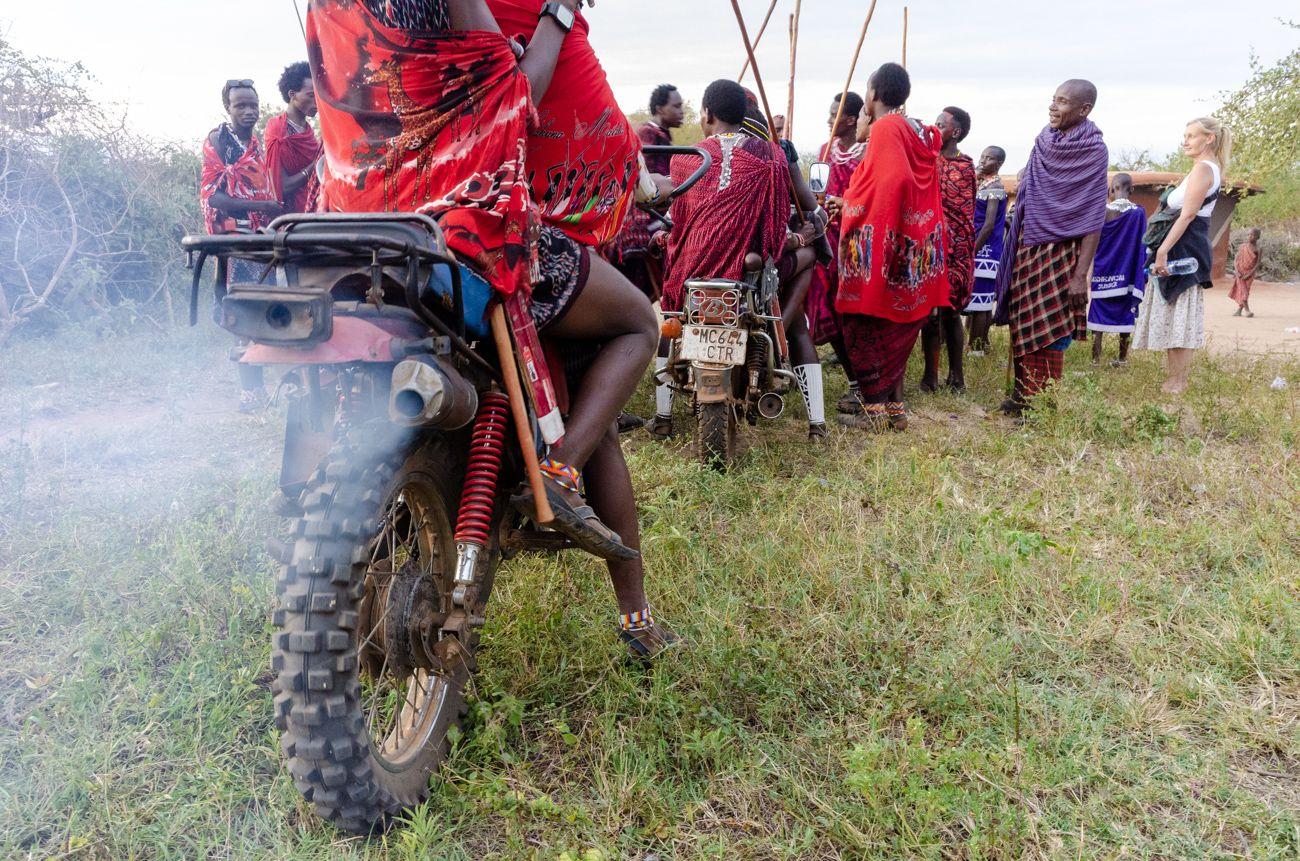
I arrived in Mbogoi right at the start of ball season. Their celebrations, called sikuku, were just beginning—because the heavy rains had finally stopped, the corn had dried, and they had their own maize flour again. The young Maasai hadn’t yet left to work in Zanzibar.Everyone was really looking forward to sikuku, mostly because there would be lots of food—mainly nyama, which is lightly roasted beef—and a show. This show was something like their version of a disco, but without a single musical instrument or recorded music. Everything was created by the Maasai themselves using just their voices. They simply don’t have instruments. No one back home believed me, and to the repeated questions—“Not even a whistle? Not even a drum?”—I kept giving the same answer: nope. But I was slightly wrong. At one sikuku, I saw a motorcycle being used as a musical instrument. The owner sat on it, started the engine, and revved it in rhythm with the music. So it turns out, the only Maasai musical instrument is a motorcycle.

The fact that the celebration season was beginning revealed several signs. As I mentioned earlier, Munikity borrowed the rakes as well as all the chairs that were in the house and around it, along with all the batteries meant to power the solar system. An undeniable sign was when Sekenoi, at nine in the morning, announced, “Get dressed, we're heading to sikuku right away.” Goodness, really. At 12:00, we set off. The three of us went on a motorcycle, as is customary there, but along the way we met another Maasai on a motorcycle, so I was told to catch up with him.

That good man, whenever we encountered someone going to the celebration on foot, felt compelled to talk to them or shout something at them without slowing down. Every time, that meant he was pulled into the bushes. After checking nearly all the bushes along the road to see if any of them wasn’t an acacia, we finally reached a larger local boma where the event was to take place. It's simply a joyful nation whose people have completely worn-out feet.

Since they haven’t discovered the delightful tradition of celebrating things for no reason at all, this particular event was held in honor of Munikiti’s daughter, who had just come of age and was now eligible to marry, and a man named Simba. Simba had come of age long ago—so long ago, in fact, that he had stopped being a warrior and officially become a man. I later tried to find out what that change actually meant in real life, but all I managed to learn was that he could no longer have hair—which meant they shaved his head—and he wasn’t allowed to do as many stupid things as he used to when he was still a warrior.

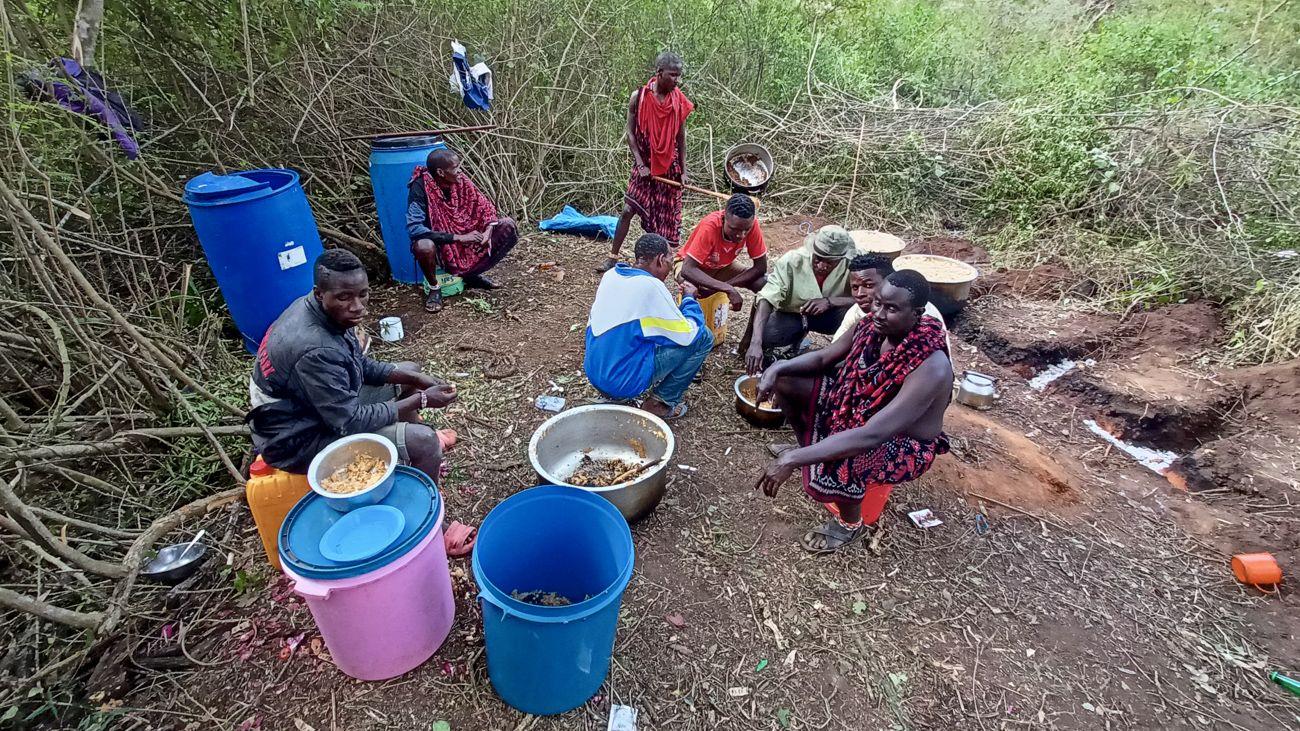
To start off, we were immediately taken around the back, into the trees, where the kitchen was. In this case, “kitchen” meant a narrow, shallow trench dug into the ground with fires burning inside it, and enormous pots placed on top, cooking rice. It wasn’t plain rice, of course, but the ever-popular pilau—rice with special spices. When the rice was done, they poured it into a huge 200-liter barrel. Word was that Munikiti had bought 600 kilos of rice just for this sikuku. Each of us got a big bowl filled with what must have been a full kilo of pilau. And since we were the honored guests, we even got chairs.

There were no tables, and the local habit is to eat everything—anything even vaguely edible—with your hands. The bowl of pilau sat on the ground in front of us, and we scooped up the food by hand and brought it to our mouths. Where else would we bring it? Since the distance from ground to chair is considerable, about half of it ended up on the floor. Everyone else, the civilized locals, sat on the ground and ate with their hands straight from a plate placed on the earth.

Pilau. Pilau. Pilau. Pilau. So much pilau.

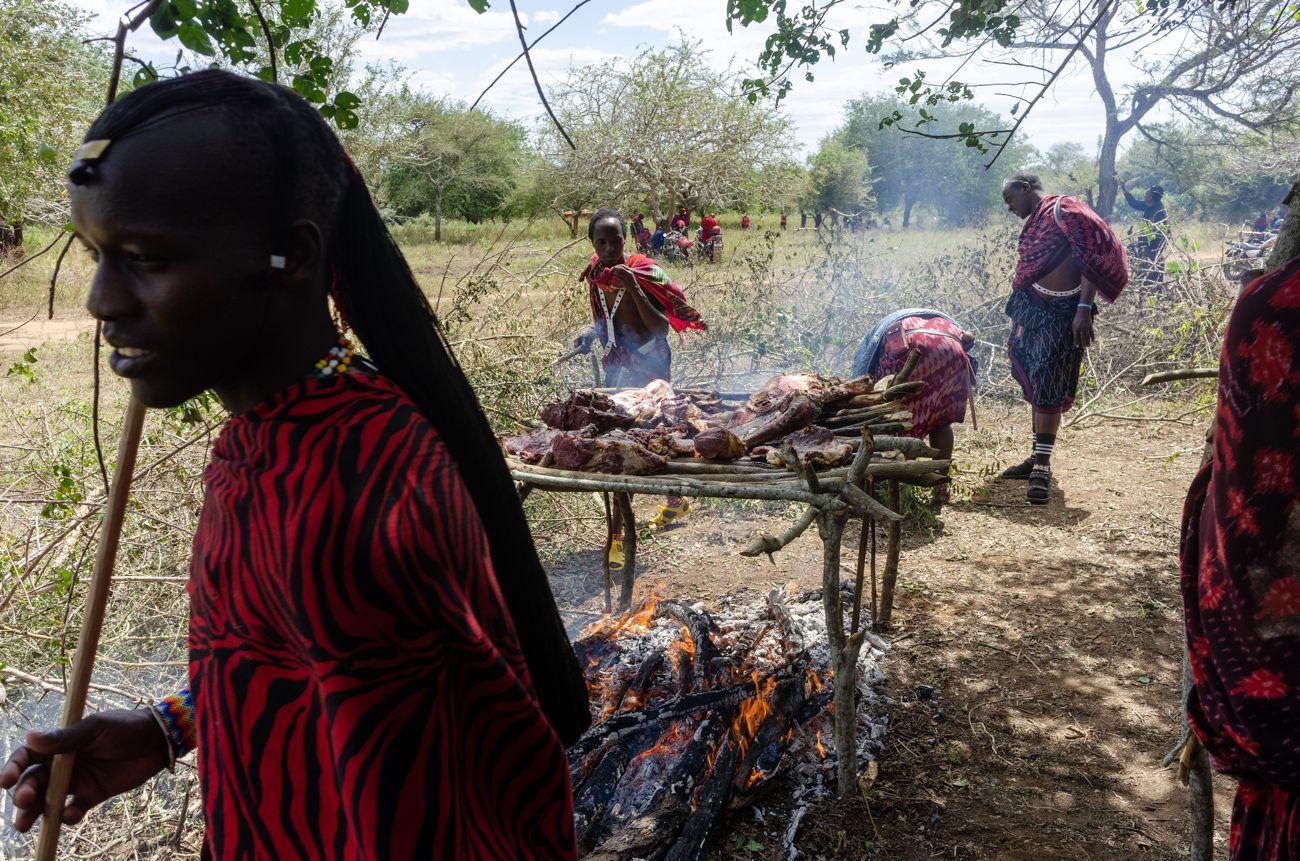
The next course, served only after a several-hour delay, was the golden highlight of every sikuku day. The meat was roasted and smoked on makeshift tables built from bushes, with a fire burning underneath. All the guests had already been waiting impatiently for hours, hoping it would finally be ready.
Personally, I thought “ready” might happen in about four or five days, but eating undercooked, half-raw, chewy meat is a beloved local tradition.
As honored guests of foreign white complexion, we were given the best cut and led aside so nobody else would snatch it from us. After several failed attempts to chew a piece of cow that, in my humble opinion, was still alive and softly mooing, I gave up and we discreetly donated the meat to those who had been looking forward to it the most.

Ňama. Ňama. Ňama. Málo ňama.

The entire cow-roasting operation—people waiting for their lightly grilled nyama and cooks trying their best to lightly grill a cow—took place inside a makeshift enclosure made of acacia branches. It was a circular fence, roughly fifteen meters in diameter. Just like some restaurants display pictures of their dishes, at the entrance to this enclosure, the innards and head of the unfortunate cow were proudly on display. I’ll spare you the photo—those with weaker stomachs might call it quits here. Bon appétit. The enclosure, protecting both the worshippers of nyama and the nyama itself, was placed a fair distance away from the boma, the settlement. Around seventy meters, even though there was plenty of space nearby. I don't need to understand everything—why things are the way they are.
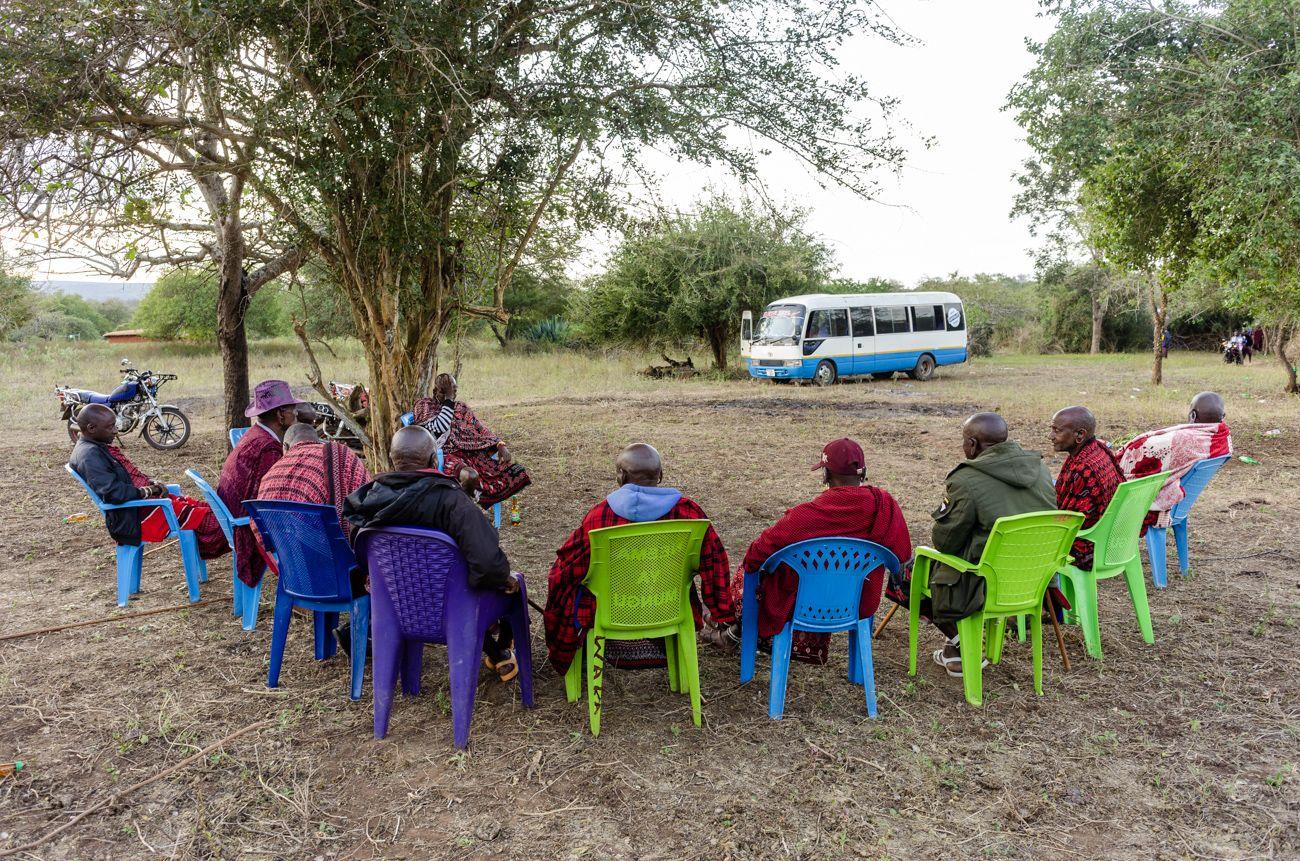
Around the enclosure, at varying distances and under the tallest trees, chairs were arranged in concentric circles. There were about four such circles, and sitting in them were the babas. Baba means an old man, a grandfather. From what I could tell, they were grouped by family ties or who knew whom. And naturally, as always, they were calmly—or passionately—debating matters that definitely called for persistence and a second round of dialogue. Like the composition of Jupiter’s moons, vegetable stew, and—I'm quite sure—my beloved Eskimos.

And it’s getting closer. The guests are on their way. In the distance, the roar of motorbikes can be heard, and those already present are turning their heads toward the noise with curiosity. Just to be clear—everyone here rides the exact same motorcycle: 125 cc engine. Back home, that’s considered a very small bike. Almost laughably small. But it doesn’t sound like an angry mosquito—it sounds like a tractor. To a foreigner, the rumble of those distant engines might resemble a convoy of angry tractors barreling in. You’d think the farmers were coming to protest.
And now they’re here. The first motorbikes enter the boma and perform their ceremonial one to five loops. The Maasai riding them are easily spotted from a distance—they look foreign, dressed in a fashion that’s just subtly off from the usual. And then—an actual bus. A bus. I haven’t seen anything like it here, and I doubt I’ll see another one next year—especially since I won’t be here. The bus carries women and three Swahili guys taking turns trying to drive it.

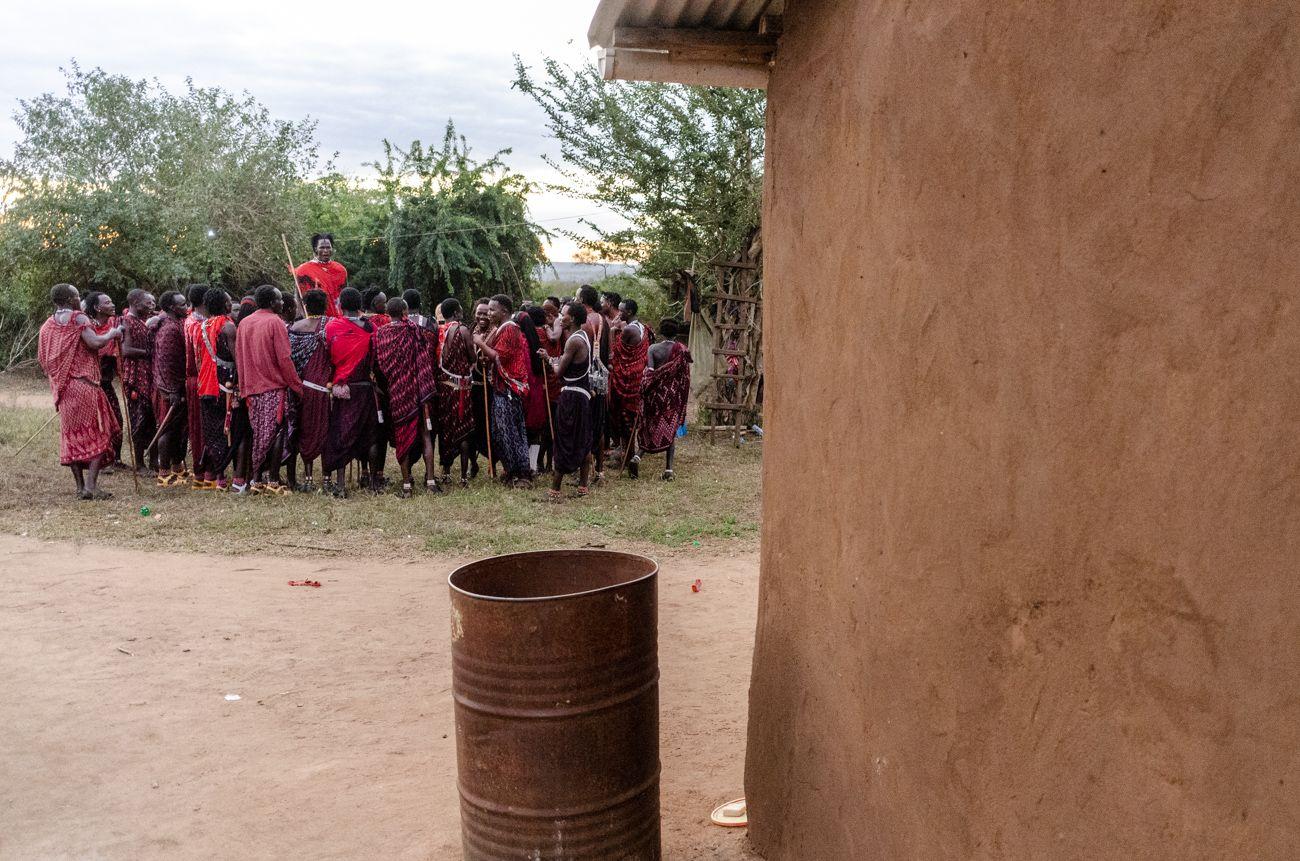
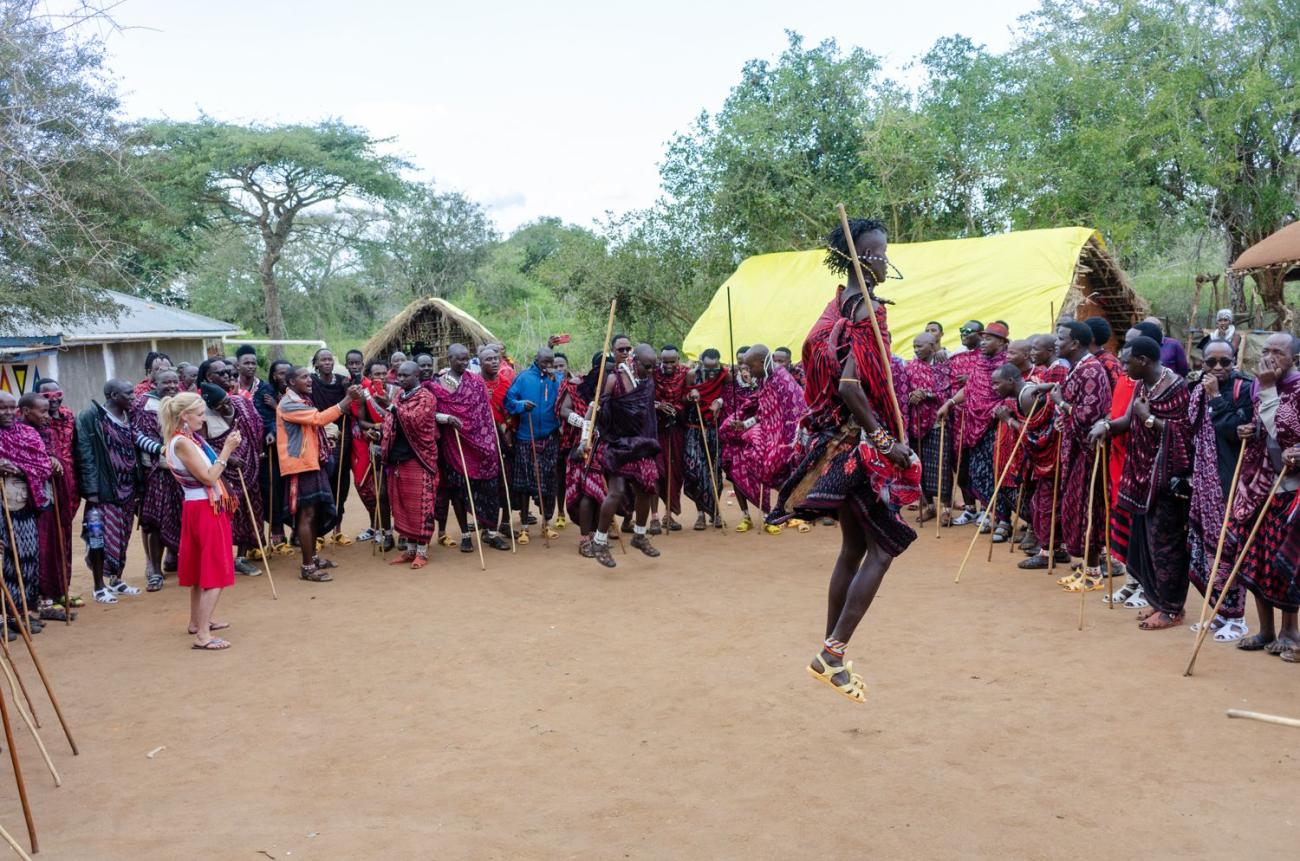
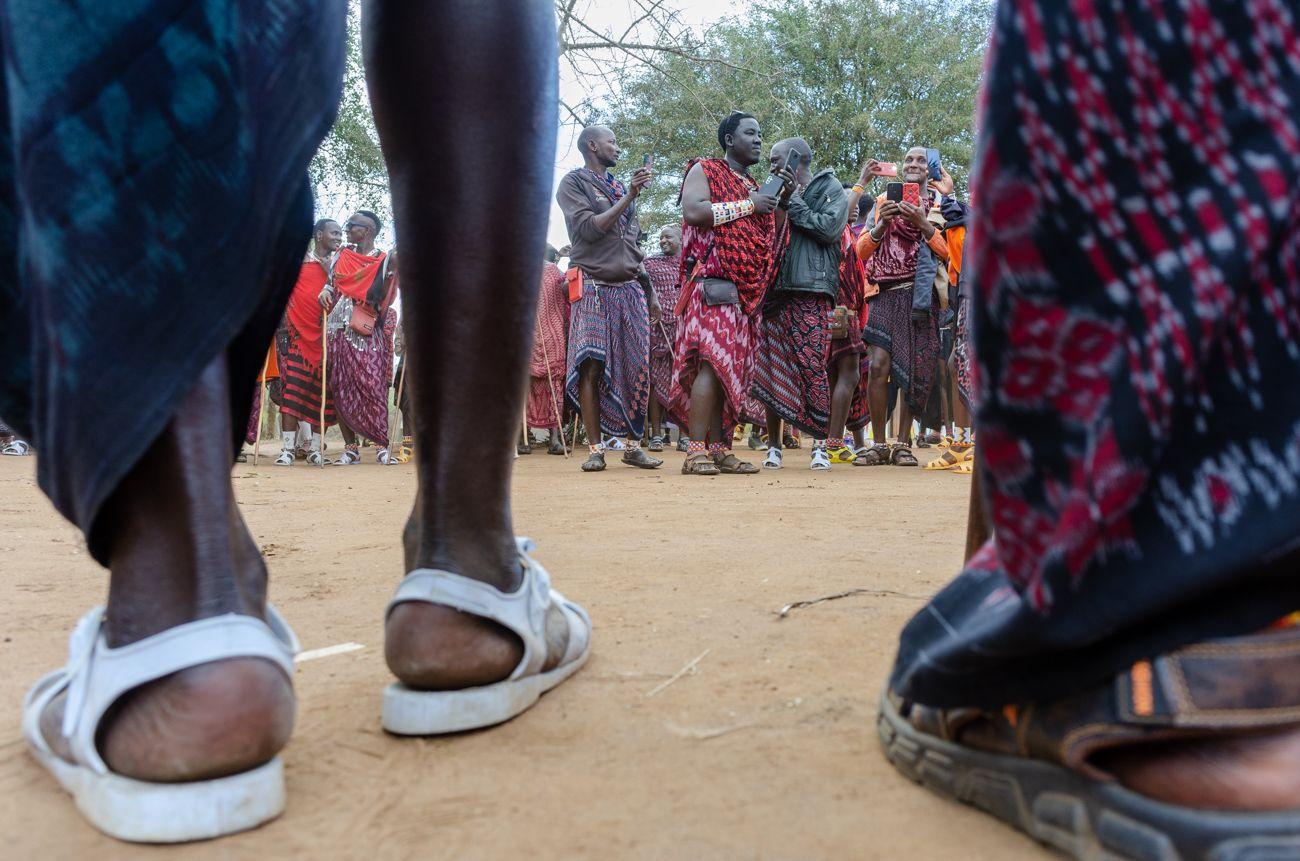
The celebration can begin. The women are still gathered around the bus, dancing, shouting, but sticking close together in a tight group. The men have formed a circle, in the middle of which stands the man of the hour—Simba—with a strip of hide tied around his head. That’s to make him look like a lion, in case someone accidentally confused him with, say, a dentist. Everyone in the circle is happily shouting, occasionally breaking into fragments of song. There are yells, even screeches here and there. The less disciplined ones dash through the circle or jump into it, which prompts the organizer to shout at them, and so on. It’s loud, colorful, cheerful—like something from a tourist brochure.
But we’re the only two mzungu there, so I’d like to believe it’s all real. Eventually, the circle merges and turns into a procession, heading… well, I honestly have no idea where. The procession frequently pauses as everyone sings, squeals, and bursts into laughter.

The ceremony continues with Simba driving a herd of cows somewhere, and then—very dramatically—driving them back. The only symbolism I think I understood was that this marked the end of his days as a warrior, as he was now herding cows for the last time. But I’m probably wrong, as usual.
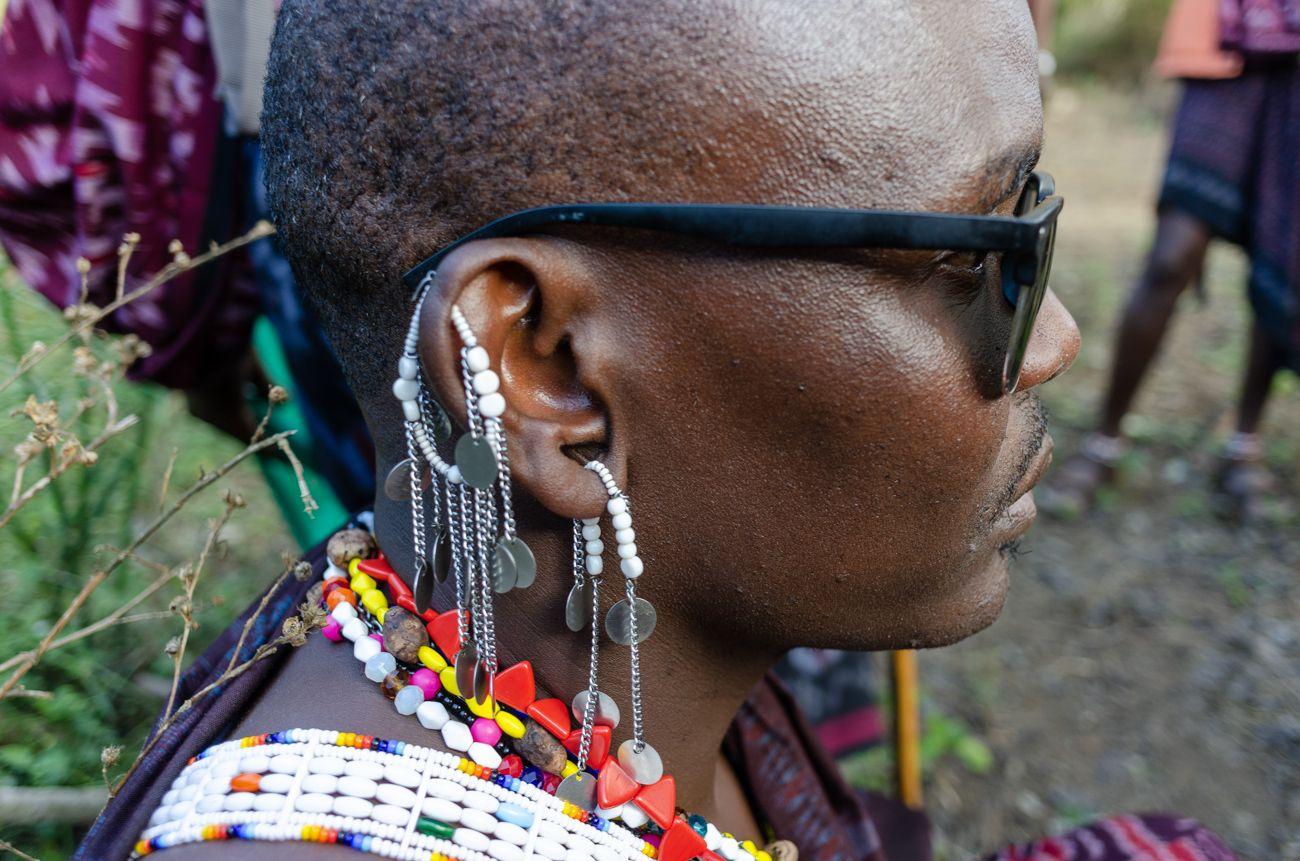
The next part of the tradition was quite intriguing. Inside a cow enclosure roughly 50 by 50 meters, men and women silently walked in slow circles. They made about three laps at that solemn pace, and in the deep silence, everyone wore an incredibly serious expression. Their heads, faces, and necks were boldly painted with red ochre.
Something peculiar happened while I was watching this scene. Like any good mzungu, I was darting around with my camera, trying to capture it from the perfect angle. Suddenly, I couldn’t lift my foot. I looked down—and I had stepped straight into what may have been the largest cow pie in the world. It was about a meter wide and had the consistency of quicksand. Or maybe the cows had set a trap for tourists.
How did they know tourists would be there, when no tourists ever come? I suppose that part of the plan wasn’t very well thought out.

When the circling ended, the men formed a semicircle, and opposite them stood a group of young girls—probably between nine and thirteen years old, maybe even younger. Honestly, I’m terrible at guessing. The young Maasai men stood singing their traditional songs. Across from them, a flock of girls stood watching, and now and then two would step forward and do a funny little shoulder-shaking dance toward the boys. When they got too close, a small cluster of boys would leap out of the semicircle and jump in front of the girls, wildly waving sticks in the air. Both groups—men and women—would then calmly return to their places, and the whole thing would repeat again and again. Meanwhile, I was diligently scraping cow dung off my shoes.

After I personally confirmed that the old saying “You can’t step into the same dung twice” is absolute nonsense, the next stage began. Everyone had to go and eat roughly a kilo of pilau rice. A special tent was set up for serving it. I didn’t manage to get inside. First, there were too many people and too much pushing. Second, I had already eaten my personal kilo of rice for the day. Only men eat here. When they’re done, they have to hide. One of the few Maasai customs still strictly observed is that women must never be seen eating. This rule applies even at home, in private. I hadn’t even noticed it before. Roda, Sekenoi’s sister, helped in the shop for a while. Whenever we ate, she’d take her bowl somewhere to the side and secretly finish her meal there. I expressed myself poorly just now — she didn’t eat the bowl, just the food in it. Once everyone was fed, things calmed down. I thought it was over. It wasn’t — I was wrong.
The best part was still ahead.

Share this