Cats go meow, and other chickens go kuku

Listen to this text

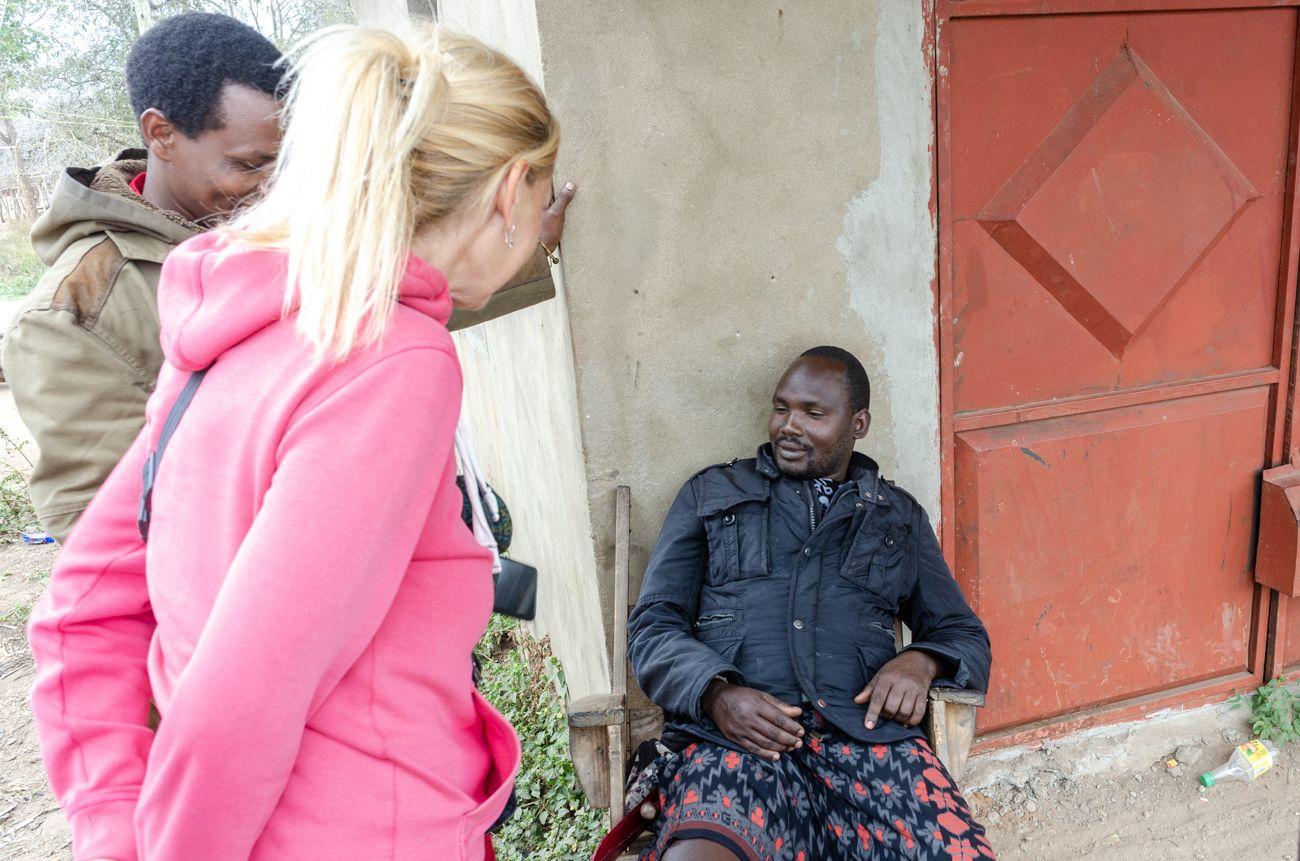
When the Maasai found out that we often compare people to animals, they became curious about what each animal is supposed to mean when used about a person. For them, animals are in a completely different category than for us, because they’re part of everyday life. So expressions like “you pig” or “you work like a horse” caught their attention. But what they liked the most was “you’re such a cow.”

Meow meow kuku.

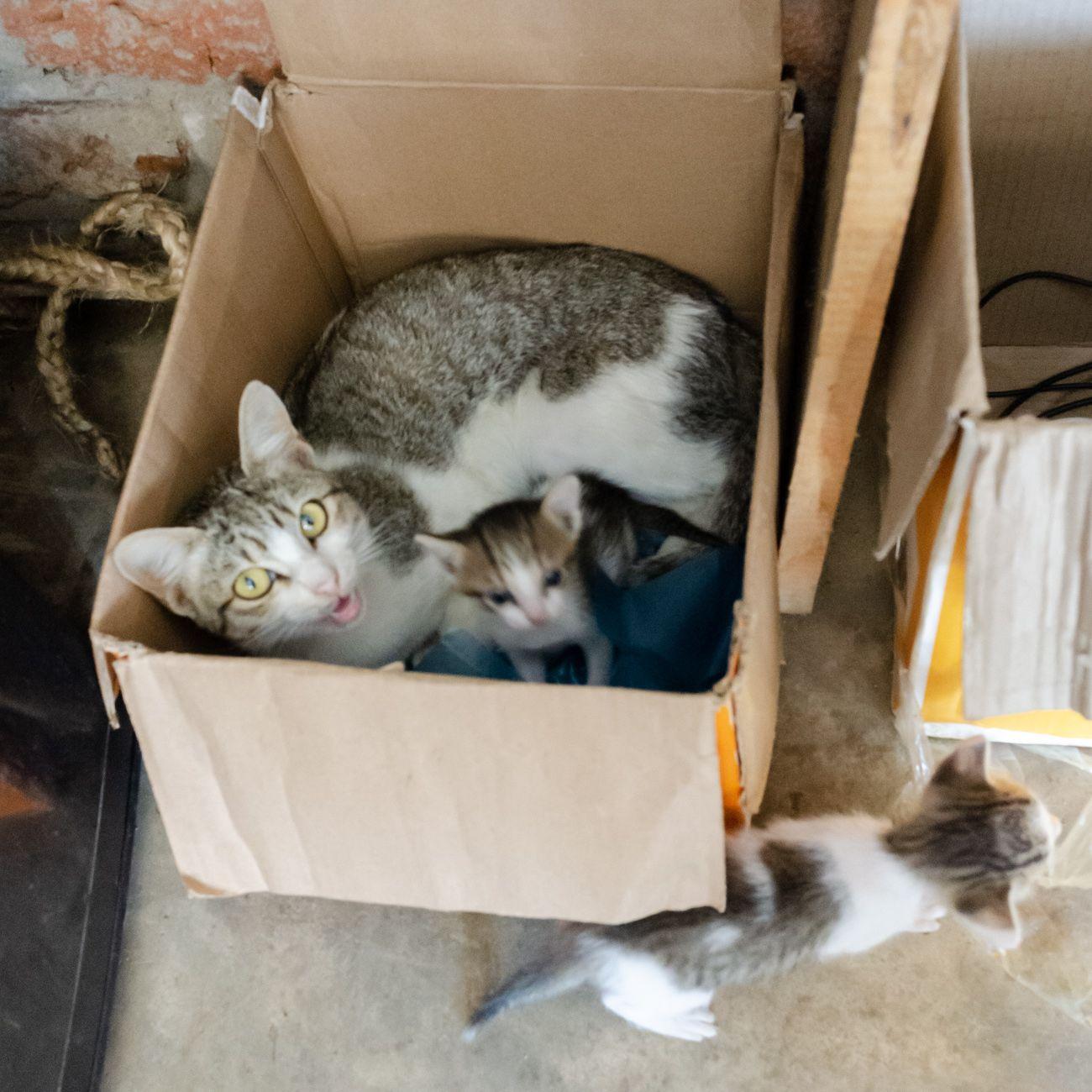
An inseparable part of Renča’s house were the cats, called meow in Masai. There were three of them, so mňau, mňau, mňau. Shortly after my arrival, however, one stopped participating in social life—it had kittens. I suggested names: Orkuči One and Orkuči Two, translating to Dog One and Dog Two. It wasn’t approved. Oh well. Maybe next time I’ll go with Eskimo One and Eskimo Two.Following the model of racially perfectly balanced American movies: What better way to balance an African Masai than with an Eskimo from the North Pole? Suggestions welcome in my mailbox at home.

Without kittens, it probably wouldn’t work.

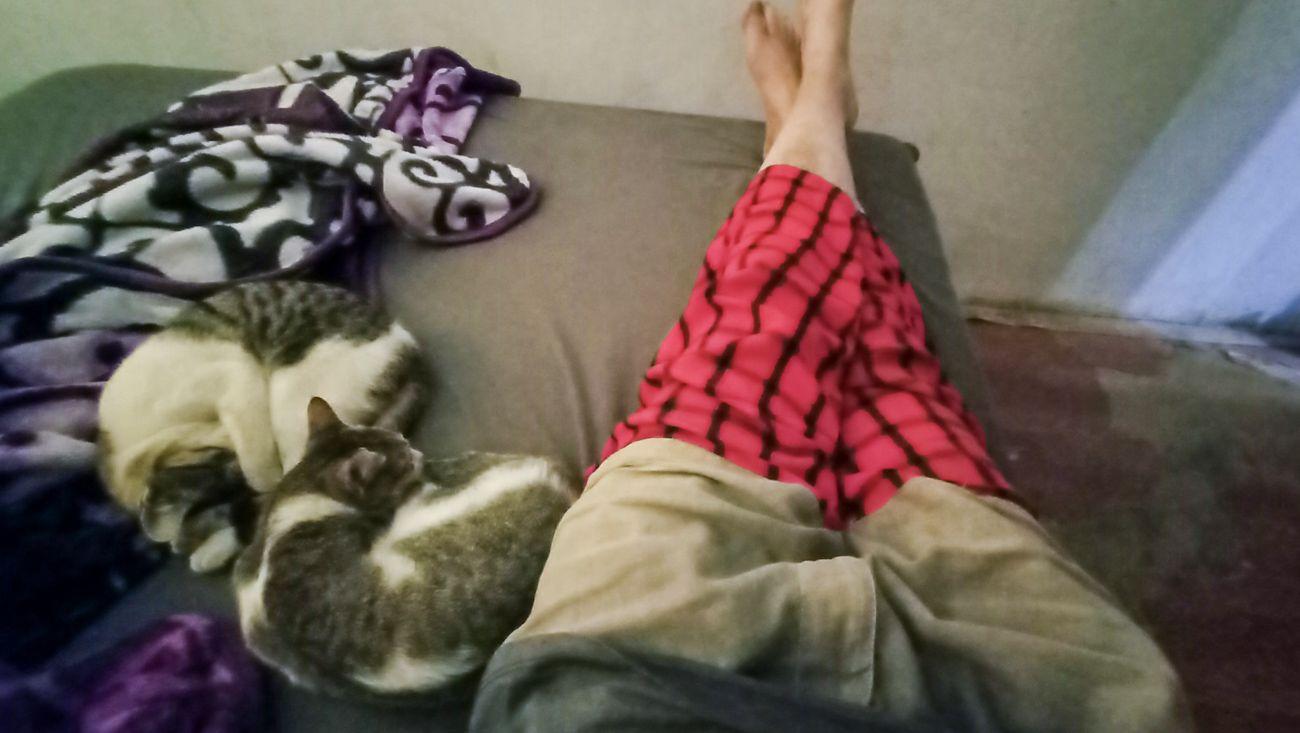
The two remaining cats spent their entire day wandering around the house, searching for something to eat. If they found anything, they devoured it, regardless of whether it was wrapped in a plastic bag or covered in a pot. And if a person made the mistake of not closing the door at night — by person, I mean myself — they would sleep with me in bed. It wasn’t very pleasant, as I kept waking up all night to make sure I didn’t accidentally crush one or both of them. Hungry and freshly awake in the morning, both cats would stomp on me with their front paws, as though demanding food with every step. 

They didn’t think this through, because if they decided to meow me to death, they’d probably succeed about a hundred years sooner. They often meowed loudly, like a jackhammer or a jet engine. A two-kilogram cat could scream so loudly that all the glass windows in the house would shake — if there were any. They could be used as a defibrillator. Imagine a cat stored in a wall cabinet, ready to revive anyone nearby in clinical death with its ear-piercing cry. It screams, the person wakes up, and gladly walks away on their own. This tiny creature, roughly the size of a large rat, could let out a roar as if it had encountered a living Hitler. And, mind you, there were two cats in the house.

A funny story: The cat, as usual, was screaming at the door like her life depended on it. So, I went and let her out, clearly thinking she wanted to go outside. I closed the door, and the cat turned around and screamed from the other side, wanting to come back in. Sometimes, murder doesn’t seem all that inhumane. Masai allegedly keep cats because they are very useful—for example, they can catch mice. I don’t know how I could confirm that since I didn’t see any mice in the house.  According to them, cats can deal with scorpions effectively by eating them. How am I supposed to know if it’s true when I didn’t see a single scorpion during my stay?
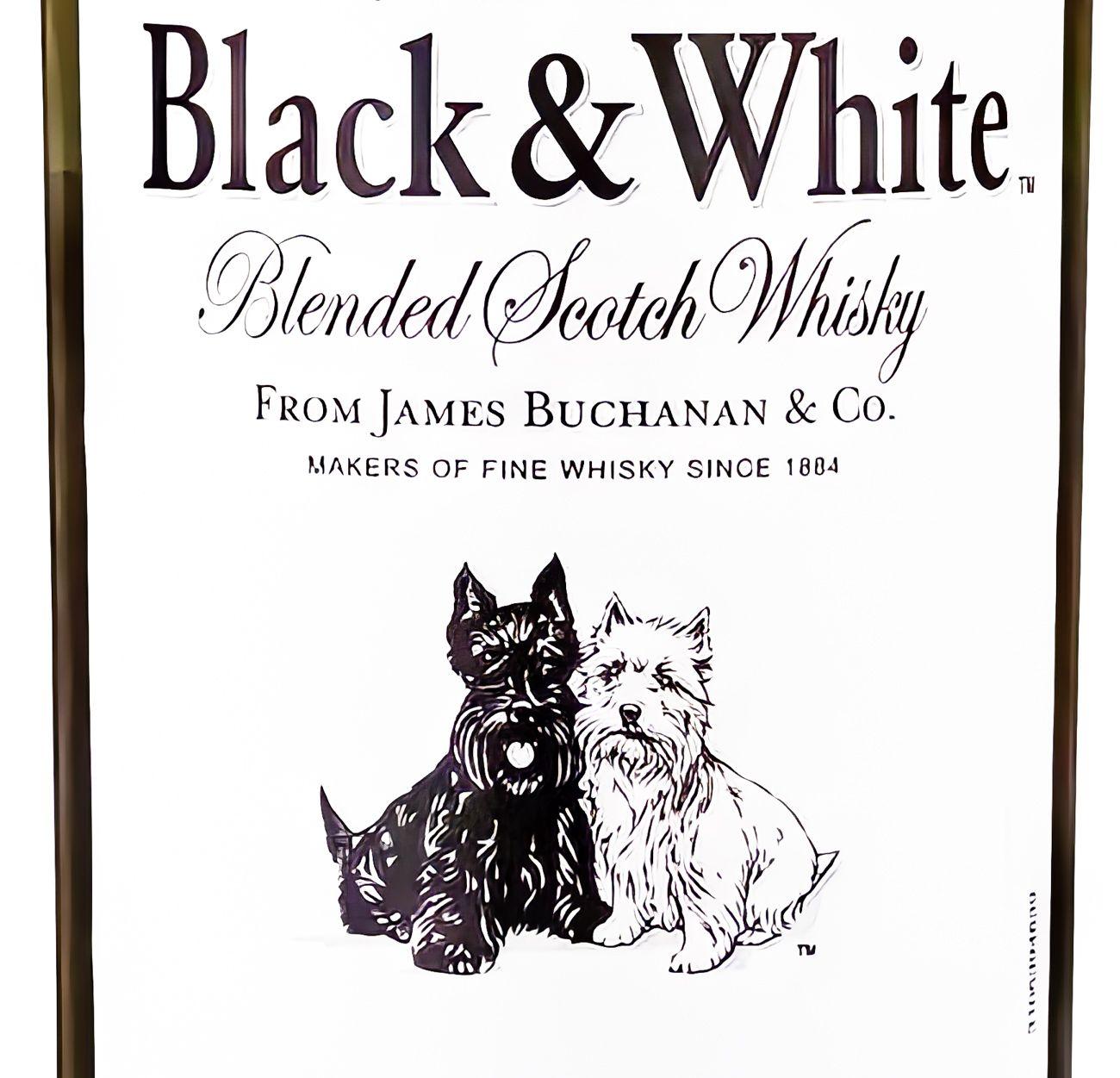
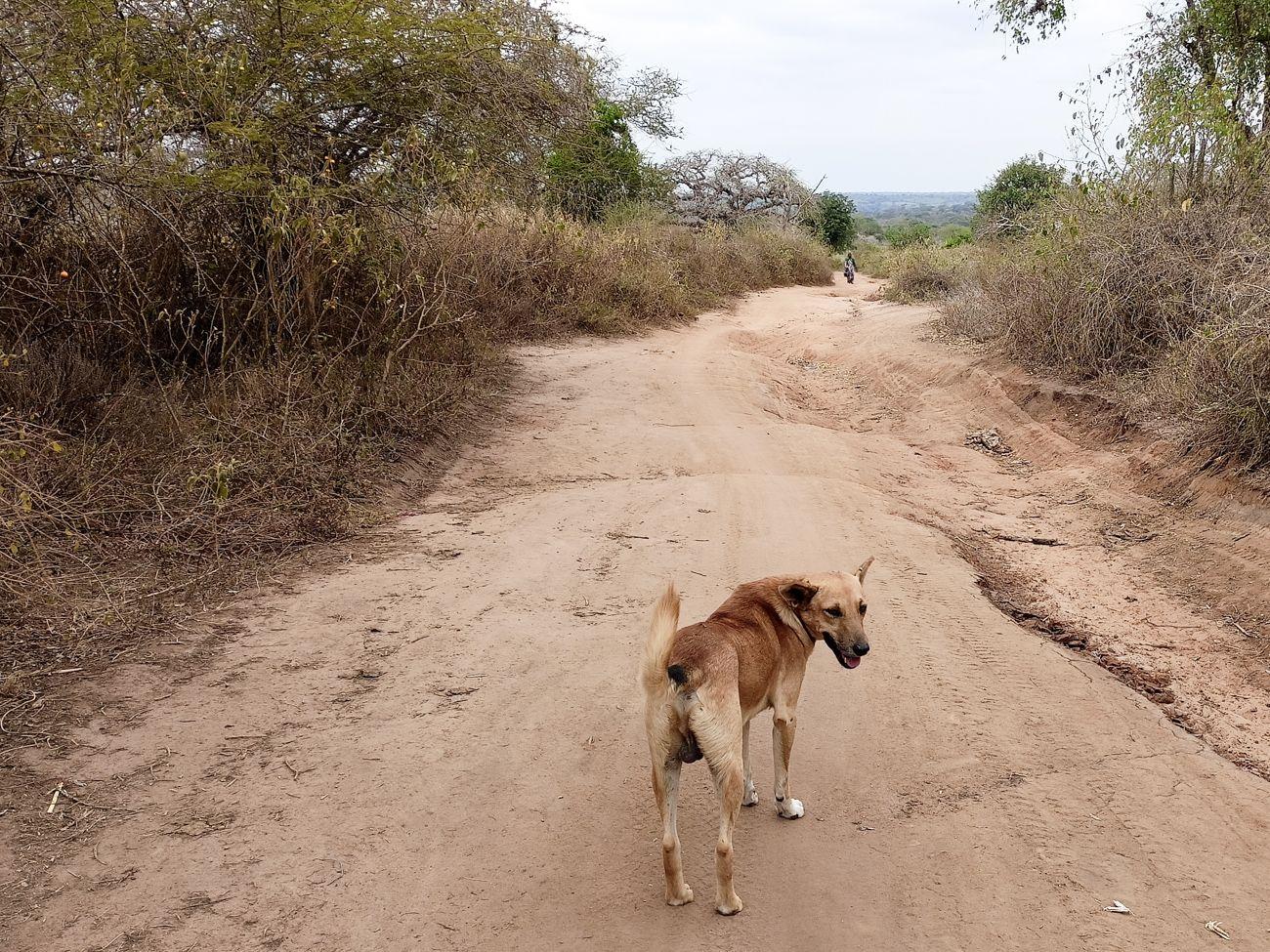
Some claim cats are skilled at dealing with snakes. In my opinion, Masai keep cats as a substitute for radio because they’re constantly yelling. The dogs in Lengusero aren’t very diverse. They’re all about 40 centimeters tall, beige-colored, and of the same build. Since the locals have never seen another type of dog in their lives, they believe this is what all dogs look like. This brings me to the point that I have directly and personally proven the educational benefits of whiskey. I bought a bottle of Scottish whiskey, Black & White, which had two dogs on the label—a black and a white Scottish terrier. But the Masai thought they were some kind of strange cats. Slowly, patiently, day by day, I managed to explain to them that these were dogs. That elsewhere in the world, dogs can look very different, not just like they do here. So, as you can see, whiskey and education go hand in hand.

Cats.

Dogs had almost no practical use, except for their keen hearing, which served to alert visitors long before anyone suspected something was approaching. Masai have no idea that dogs can be trained to search for cows, sheep, or goats, which was likely the favorite sport of the Masai in Lengusero—searching for them at night.
For instance, the idea that a dog can serve as a companion is foreign to them. Once, we decided to take Labko on a trip to the neighboring village of Ndukai. We took Labko along for an outing, thinking it might do him good, since he spent his entire life locked in the open bush. The whole village stared, wondering why on earth the dog was walking with us. Why is it doing that? How is it doing that? Such a thing simply isn’t customary here. Yet, when Labko reached the edge of his known world, roughly halfway, he froze. It took a lot of convincing to get him to continue into unknown territory.

Labko and his Terra Incognita.

So, in Mbogoi and the surrounding bomas, the dogs just wandered around. If they found something to eat, they devoured it, took naps, and stared into the void—just like us. Occasionally, there was trouble because during the day, the dogs were mostly loners or moved in pairs or threes. By evening, however, they would band together into packs and roam around. They hyped each other up until they attacked a donkey, which, fortunately, managed to defend itself. But it was only a matter of time before they would seriously harm it. The solution was simple: locals always eliminated the pack leader, and peace was restored for a few months.
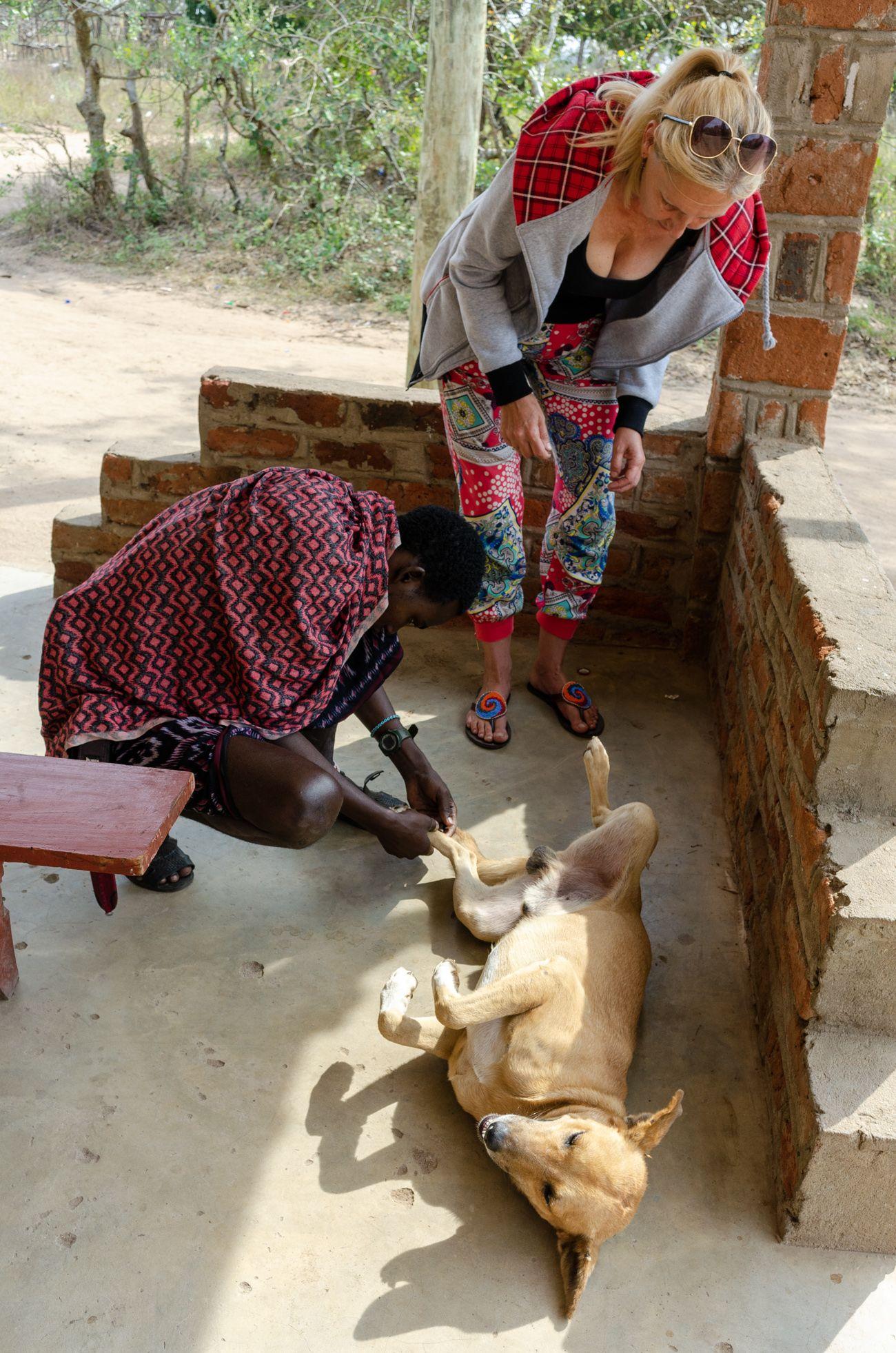
A special case was a dog named Labko. Physically, he looked like any other universal, brown, medium-sized, skinny, aimlessly wandering African dog. But when Renča and her daughter were here a few years ago, Labko was just a puppy, and they took him into their home, fed him, and played with him. This made him more accustomed to people than the other universal, brown, medium-sized, aimlessly wandering African dogs. I even heard that one of the Masai liked the name Labko so much that he gave it to his newborn child. I know I talk a lot about Labko, but after Renča and Sekenoi, he was my third favorite animal. When no mzungu was in Africa, Labko often stayed in the boma. When we were there, he sometimes came by to visit, eat, sleep, and then wander off again. Once, he came limping noticeably on his hind leg—apparently with an acacia thorn stuck in it.
How Labko knew that Sekenoi was skilled at extracting thorns from hind legs, I'll never understand.  Without much protest, he endured the "operation" and happily hopped back to the boma with a smile on his face.

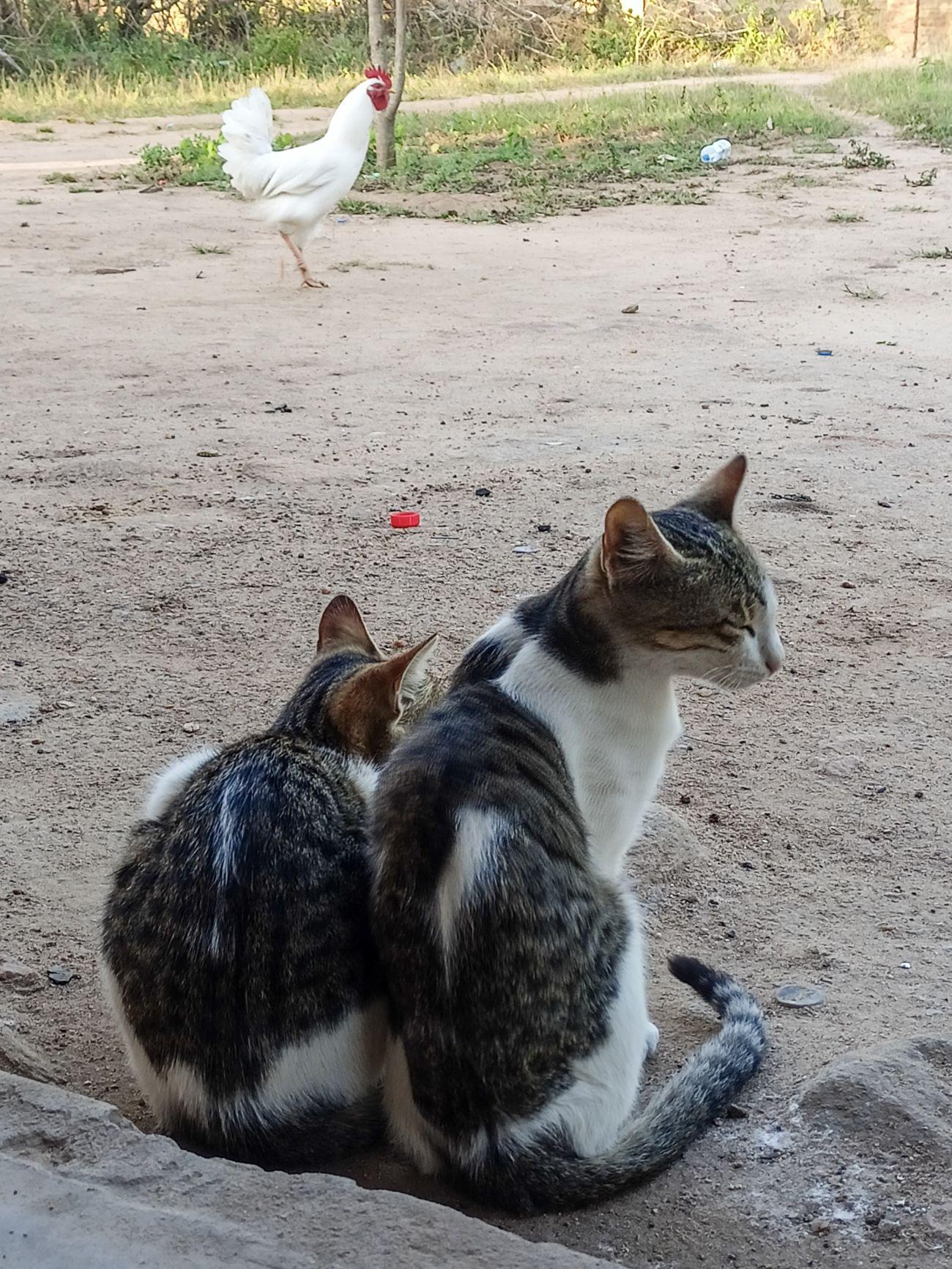
Labko, this time, skipped the anesthesia.

The residents of the village in Mbogoi and the surrounding area have an extraordinary talent for leaving a mess wherever they go. Trash, mostly plastic bottles and wrappers, is simply tossed on the ground. Occasionally, if they find a convenient wall, they’ll throw themselves on the ground for a nap before continuing on their way. Around Renča’s house, however, strict order was maintained, and garbage was gathered in one spot, which we called the dump. In Mbogoi, the term "dump" wouldn’t make sense, as it would describe the entire village—and let’s be clear, Mbogoi isn’t a dump; it’s Mbogoi. Since our trash was concentrated in a single pile, including household waste, chickens from the neighborhood often paid us a visit. Chickens are incredibly useful; they peck through all the mess that can be pecked and even catch scorpions. It was amusing to watch, during our diligent porch sitting, as an African bird of prey—its exact name unknown—circled above the chickens, attempting to catch one.
Once, a chicken made a nest in the shop and began laying eggs there. She clucked as if her life depended on it, though it was really just about eggs. In Masai, a chicken is amusingly called kuku, and eggs are jaja. Masai categorically refuse to eat kuku or jaja. Once, we managed to convince Dary to try some chicken prepared by Renča, with paprika, which was absolutely delicious. He took about a gram of it, thanked her for the excellent dish, and said he’d had enough. We tried to figure out why the Masai don’t eat chickens, pork, or fish. They mostly didn’t know and came up with various excuses.
The most logical excuse seemed to be that chickens just roam the yard and eat whatever they come across, like dung. And surely a person who eats an animal that eats dung cannot be healthy. In their eyes, chickens might be in the same category as rats are to us. Or there’s another possibility—they think chickens are a type of fruit, which they also don’t eat.

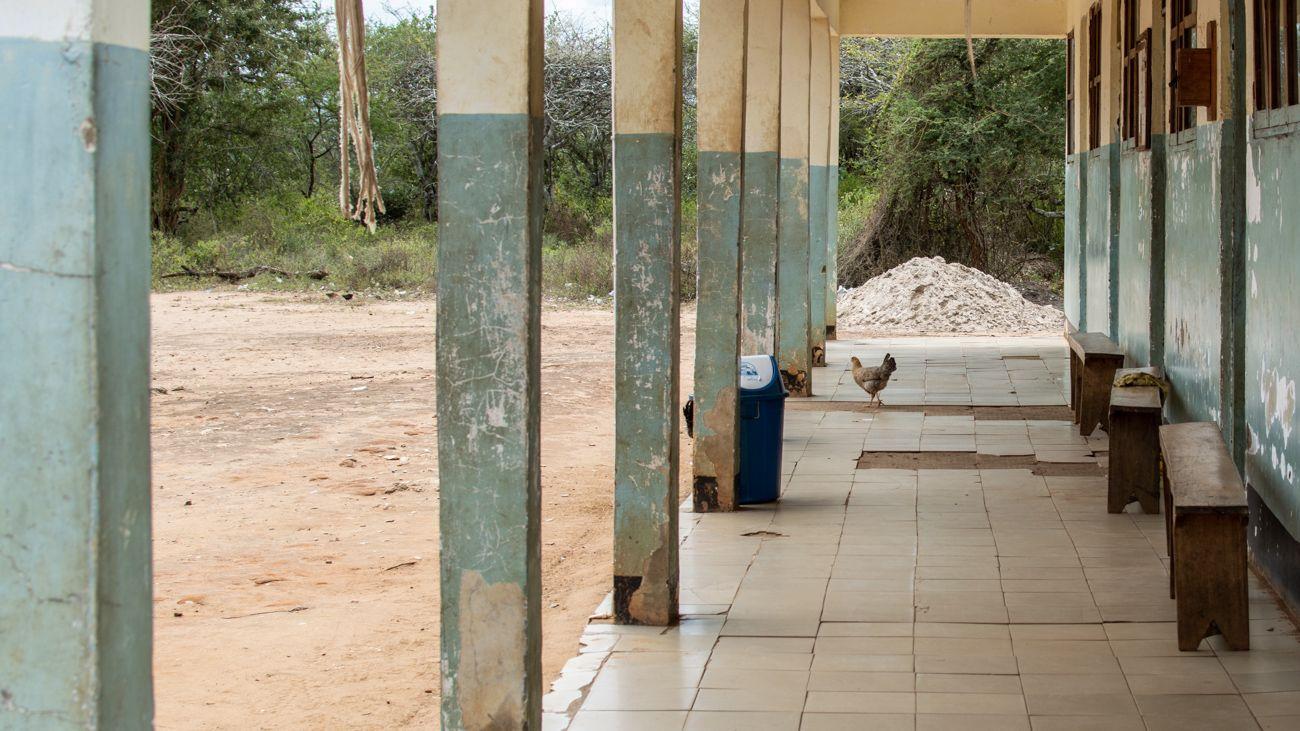
There was even a chicken assisting at the local hospital.

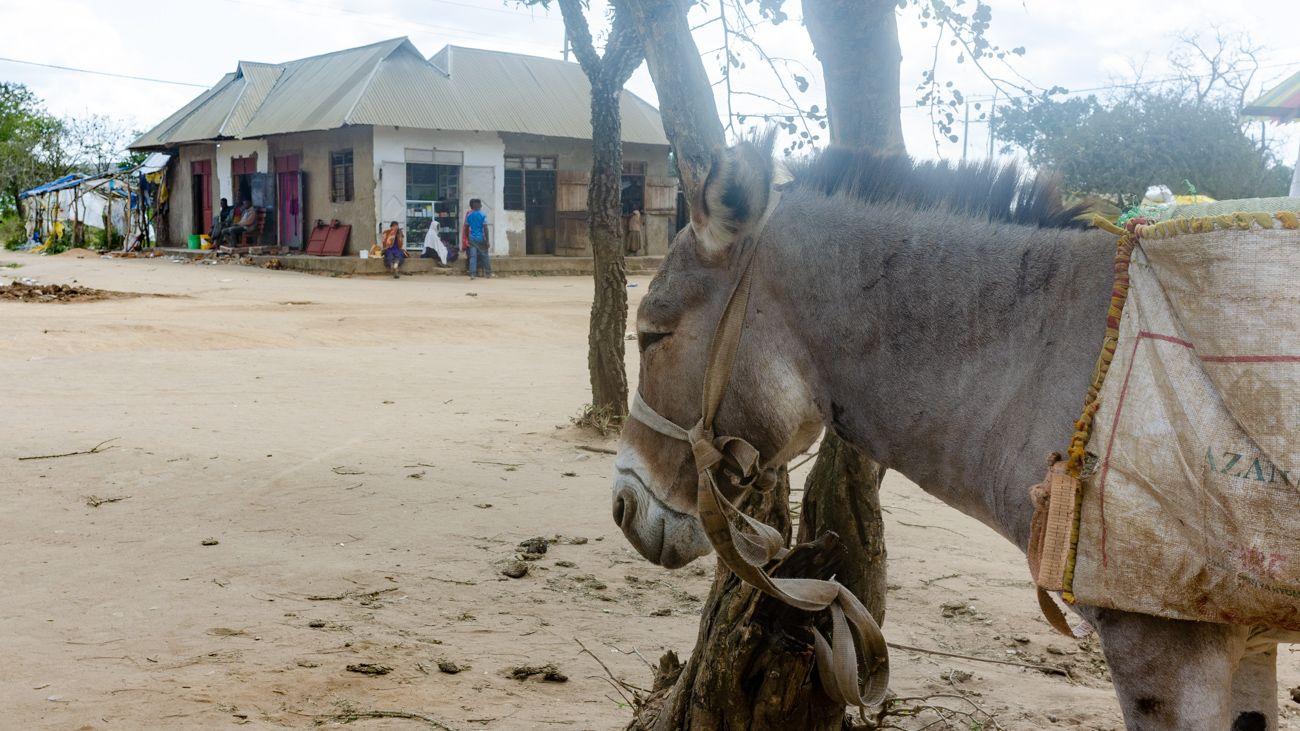
Unmistakable—or perhaps more unmissable by sound than sight—was the donkey. It essentially functioned as a living motorbike that didn’t need fuel—at least, I hope no one tried pouring gasoline into them. Unlike in our culture, where donkeys are often considered stubborn and foolish animals, in Africa, they’re seen as very smart, resourceful, affordable, and hardworking. Except for the fact that at night, they bray as if they just received notice of an in-depth tax audit. The braying sounded terrifying, at least at first, until I realized it was just their version of a bedtime lullaby. Listening to a donkey’s desperate call felt like hearing a cold-stricken opera singer on meth trying to perform The Sorrows of Young Werther in Romanian and in a  C minor. Here’s a closing piece of wisdom about donkeys: Don’t stand behind one unless you have a death wish.

Cows are such an essential part of Maasai life that they deserve half of this story. Unfortunately, I’ve had far more friends among the Maasai than among cows. You know how it is with cows – what can you do with them? The Maasai are known worldwide as nomadic cattle herders. Their relationship with these animals is fascinating, though it took me a while to understand it. Cows aren’t raised for milk, nor for meat—they’re raised to have calves. Considering the meager grazing available in the bush, fattening a cow to the size we imagine would be nearly impossible. Masai cows have humps like camels, presumably to store water. Besides that, they have four legs, a body, a head, and horns—but we’re all familiar with those, so no need to elaborate. 
What’s truly entertaining about Maasai cows is that they’re considered the ultimate form of wealth. //Hravý a pútavejší variant.When we think of wealth, we picture a house, a car, or money. In short, a person’s riches are measured by these things. For the Maasai, wealth means cows. Since the Maasai traditionally lived a nomadic lifestyle, a family’s possessions consist of a few pots, maybe a motorbike, and a couple of mobile phones. Still, the Maasai are relatively wealthy—at least compared to the Swahili people in the villages. Wealth, for them, is measured in cows, sheep, and goats. The richer someone is, the more cows they’ll have grazing. Of course, every now and then, they’ll roast and eat a cow, but cows primarily symbolize wealth and prosperity, and the goal is to breed as many as possible.

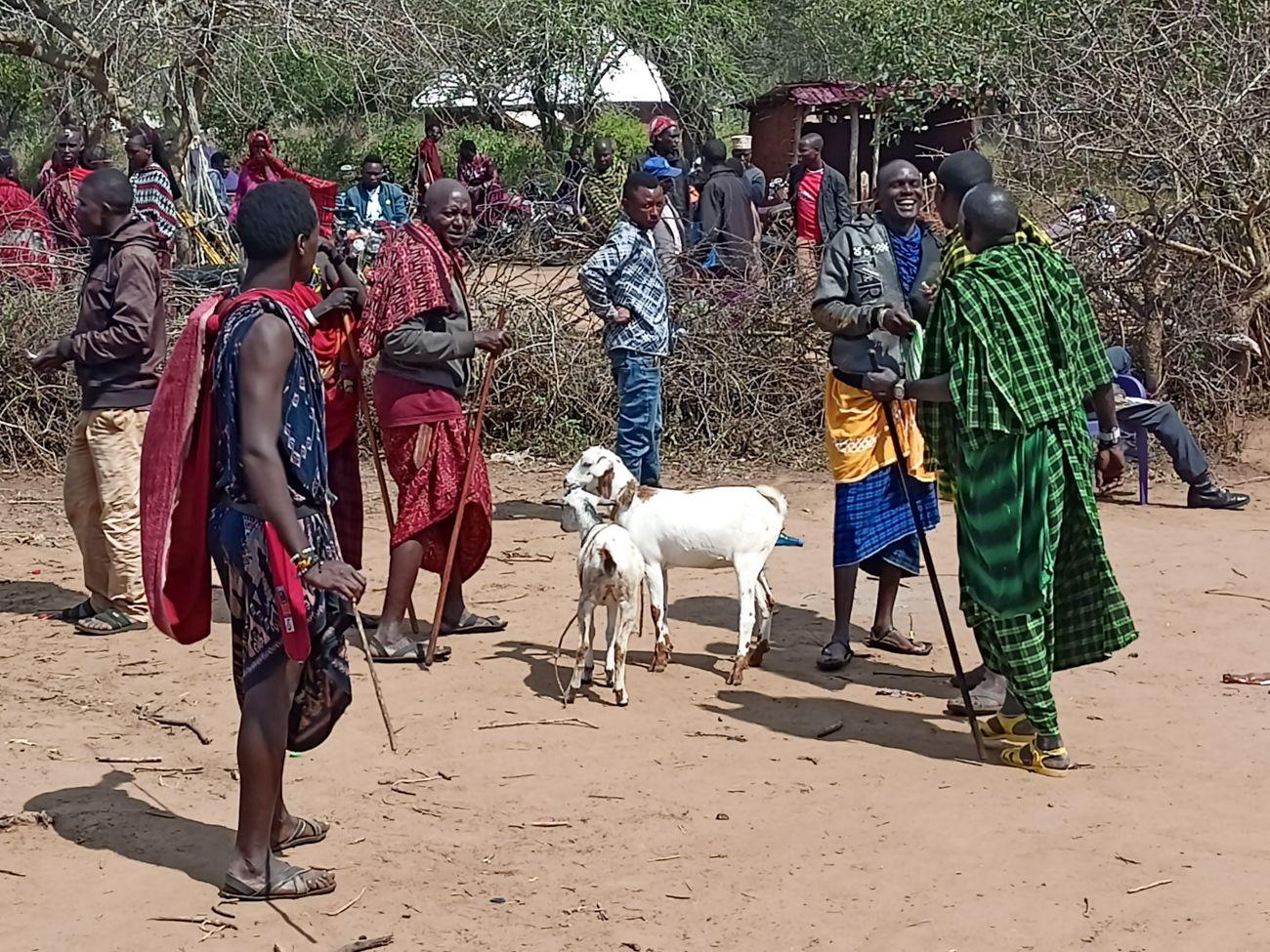
Apart from cows, the Boma is also home to plenty of sheep and goats. They’re not as valuable as cows, but they’re incredibly practical animals. I mean, try turning off your fridge and eating an entire cow in one sitting. Goats and sheep look almost identical here—the only real difference is that sheep have a fluffy, wide tail, while goats sport a slim, narrow, and longer one. My relationship with goats started out strong, but a steady diet of goat soup for a month shifted my loyalty to Sekenoi. Since they’re not as valuable as cows, smaller children often herd the goats and sheep. But you know how kids are—they often manage to lose a sheep in the bush and come back empty-handed.
It happens quite often, even to older children, who sometimes lose a cow in the bush. Afraid to return home after losing a goat, sheep, or cow, the kids stay out late. That’s when the grown-ups grab flashlights and head into the bush to find the missing animals. They often search late into the night, leaving them exhausted the next morning, while the kids head out again with the cows, goats, or sheep. I think this system isn’t exactly perfect and could use a little fine-tuning. 

The first half of the night, Alojz was after the goats. The second half, the goats were after him. Sleep? Not a chance.
Share this