Blog EN

Deep bush songs.

Maasai Music Television - MMTV - song no.1
Maasai Music Television - MMTV - song no.2
Maasai Music Television - MMTV - song no.3
Maasai Music Television - MMTV - song no.4
Maasai Music Television - MMTV - song no.5
Maasai Music Television - MMTV - song no.6
Maasai Music Television - MMTV - song no.7
Maasai Music Television - MMTV - song no.8
Maasai Music Television - MMTV - song no.9
Maasai Music Television - MMTV - song no.10
Maasai Music Television - MMTV - song no.11
Maasai Music Television - MMTV - song no.12
Maasai Music Television - MMTV - song no.13
Share this

William, another local character, a Maasai who, by local standards, spoke fairly decent English and even knew twenty words of Polish, which is about the entire vocabulary a person needs in life. As was the general rule, he spent the whole day moving from one place to another, staying here a bit longer, there a bit less, exchanging a few words, thinking things over, and moving on again. In this same style he would always stop by us as well, we would chat for a while, toss a few words back and forth, and once we had tossed about all the words we happened to have at that moment, he would go and toss words around somewhere else. Once, while he was sitting with us like that, I asked him whether he could read and write. That is not the custom there, literacy is hardly the majority genre. He said he could not. So I asked why he did not learn, since it is not really all that difficult. To that William replied, quite amusingly, that he simply did not have time for such things.

Even Alojz once, very quietly, confided only to Renča and only after a few Konyagis that he too would like to know how to read and write. Although school attendance is compulsory in Tanzania, children usually have to work, and only those from wealthier families go to school, and only some of them at that. They could count, true enough, but that too was nothing to write home about. For instance, when goods were delivered to the shop, they wanted to work out how many fizzy drinks there were in a crate. The bottles were arranged in four rows and five columns. As they were counting them one by one, Renča came along and said twenty. Ever since then they have regarded her as a mathematical genius, because no one before had managed to count it that quickly. After all, the magic known as the multiplication table belongs to mysterious institutions such as a university of mathematics, not to the bush. I even once tried to teach Ndari the absolute basics of multiplication, things like two times two, but when he started giving off smoke, I understood that this arithmetical art could also be a deadly weapon.

The biggest question was this: why should they learn to read and write when they have managed for hundreds of years without this particular art? Civilization is coming, roads are being built, mobile phones are being introduced. Just as every kind of progress brings positive changes, such as better medicines or higher incomes, it also brings negative ones. In the front line come thieves and swindlers. For instance, the village already had three slot machines. Literacy therefore always comes in handy, so a person can tell the difference between someone who wants to rob him and someone who genuinely means well by him. The reasons, then, are perfectly clear: rapidly advancing progress and civilization, all without anyone ever asking the Maasai whether they actually want it or not.

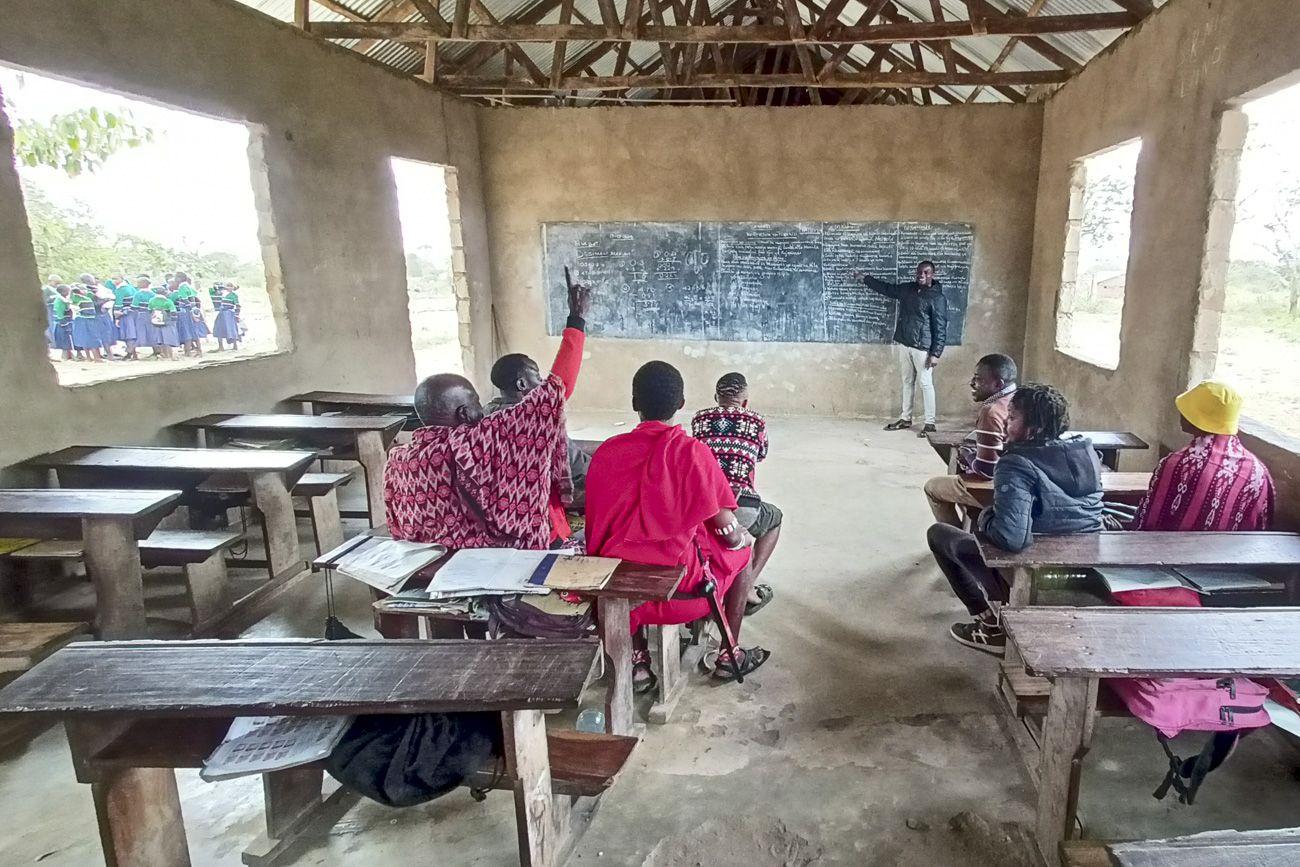
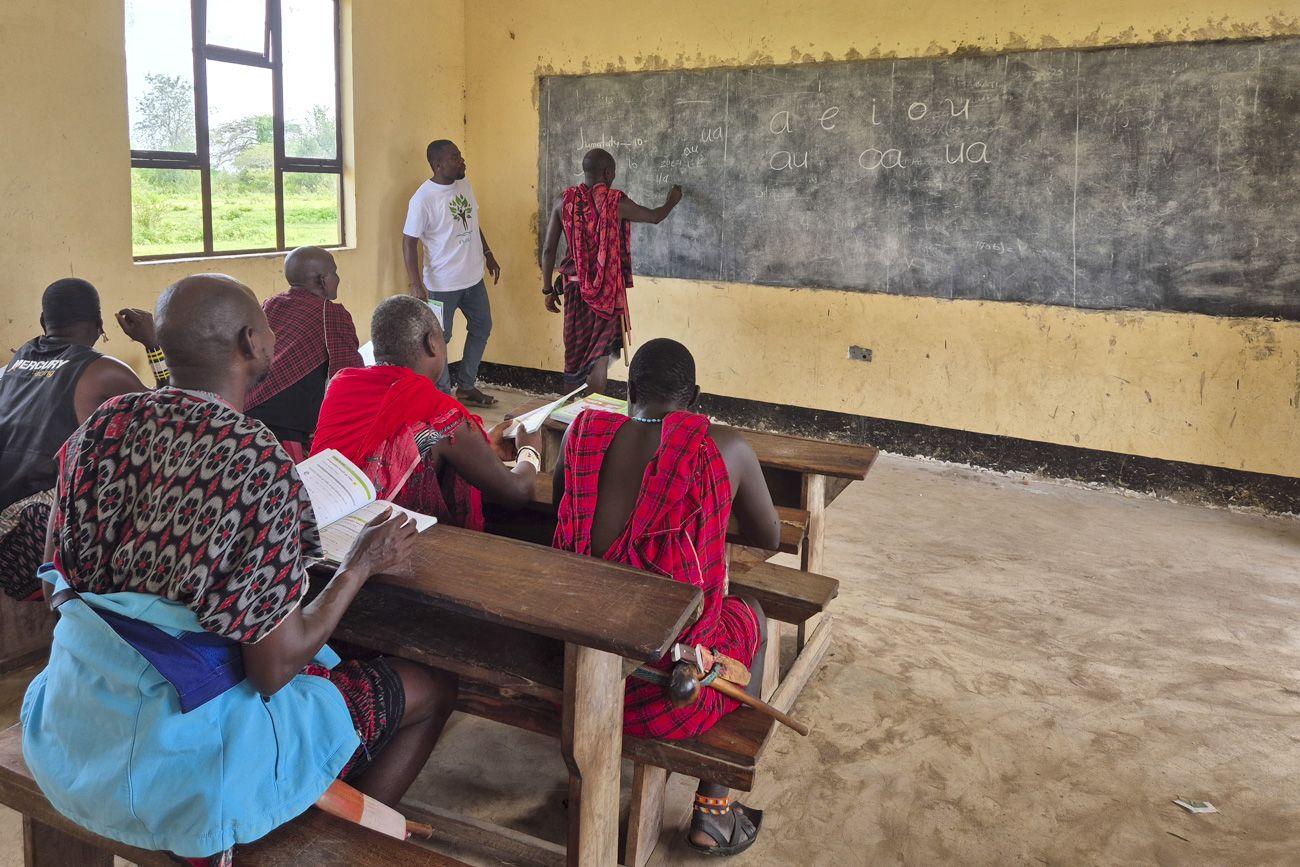
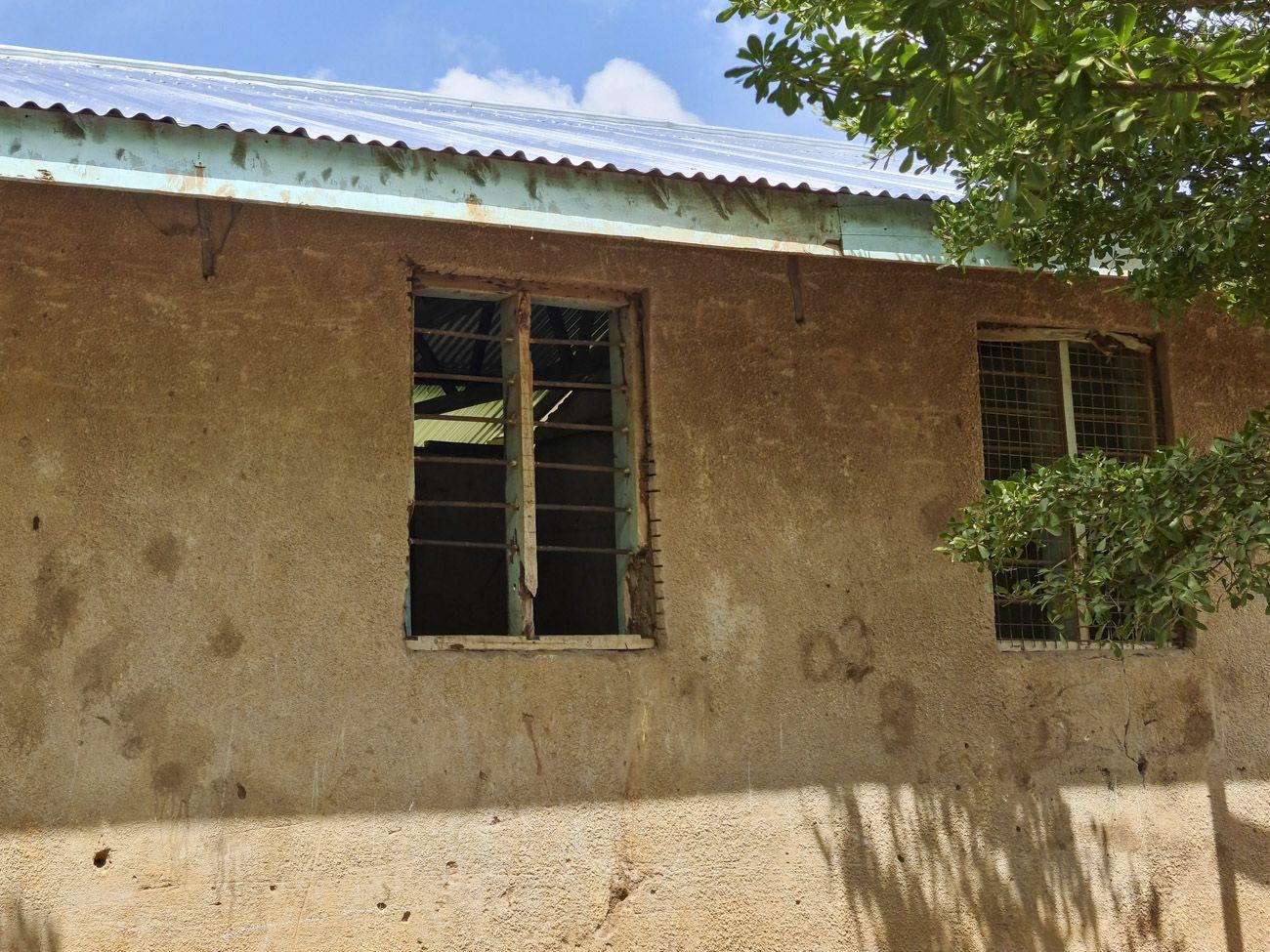
So the idea was clear enough: we had to start adult education. When I revealed this novelty to Renča, she surprisingly did not have twenty reasons why it could not be done. She even said the thought had occurred to her too, and that if I really wanted to, we could try thinking it over. After several weeks of trial thinking, action began. The first victim of our civilizing project was Mayor Munikity. That is to say, we were trying to work out whether it made any sense at all, whether people would come, and whether they would keep coming. The idea thrilled him. He even promised that if we found a teacher, he would find people who would, entirely voluntarily, of their own accord, and very gladly, learn to read, write, and count in their old age. The next man marked for destruction was the teacher Msabaha. Renča lured him to this secret conspiratorial meeting under the pretext that he would get free beer. And once there was more than one beer, he happily and enthusiastically, and naturally for a regular fee, agreed that he would teach in the afternoons. Then again, in a village of a hundred and fifty to two hundred inhabitants, there is not much to do after lunch anyway. So we have people, we have a teacher, and now we need a place. Off we go to the school. It is not very far, about a hundred metres from the house, so the preparations took a few days. The school is a building in which children sit. It has holes for windows, holes for doors, but there are no doors, and the windows are not glazed. It has a roof through which it usually does not rain.

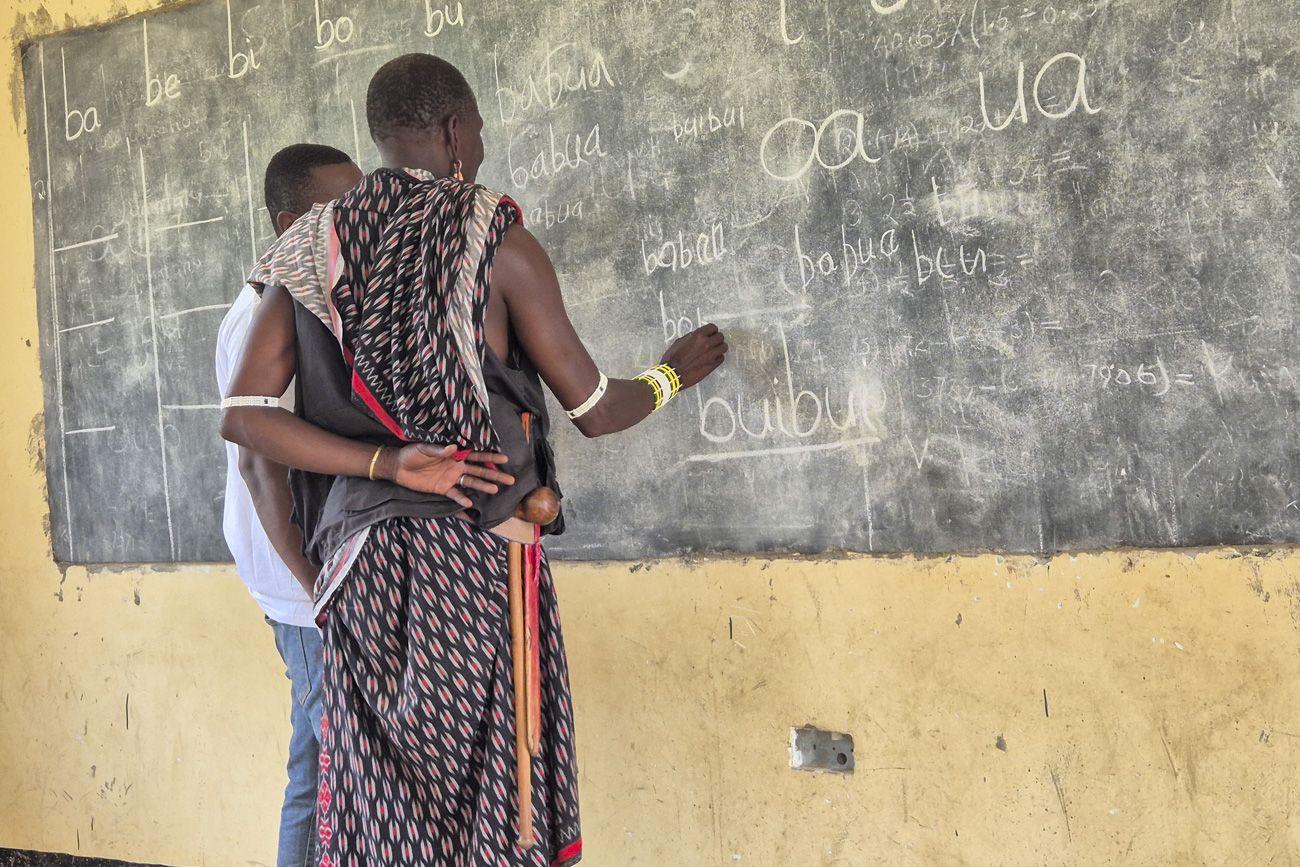
The implementation of this project, that is, the first lesson, unfortunately began on exactly the day we were leaving Mbogoi for home. But the first reports were positive: eight people had turned up. That was in the summer of 2024. Since then, Renča has been in Africa several times, and attendance has been growing nicely, even reaching the grand total of twenty people. When I saw photos from the classes, it struck me that a few improvements were still missing. For example, when Maasai talk or listen, they stand in a very, I repeat, very elegant way, leaning on a stick and nodding wisely. We could introduce that posture in the classroom instead of sitting at desks, which must surely feel unnatural to them. Nor would the idea of compulsory Kyrgyz lessons, or founding a figure-skating club for talented children - pardon, adults - be likely to catch on in the bush. The diseases of civilization, as one of the blessings of progress, are not yet a problem, because they only arrive in the second, third, or fourth wave. So including them as a school subject would probably be just as pointless. Even so, I think John Amos Comenius would be weeping with joy.

Share this

The motorbike is growling, the wind is in our hair. Alois is driving and I am sitting on the back. Alois is a local Maasai who just happens, by sheer accident, to have the Czech name Alois. I am on the back because whenever I am at the handlebars of a motorbike, I turn out to be incompatible with the local policemen in the town of Handeni, which is where we are heading. We are not going straight into Handeni, though, but just alongside it, to a part called Nderema. Strangely enough, Alois seems to have brought his common sense with him today, which he normally leaves at home whenever he gets on a motorbike. The bike is not whining as if it had twenty-eight seconds left to live. We even slow down a little over the bumps.

I am beginning to wonder whether it really is Alois sitting in front of me, or perhaps a peaceful cow. No, there are no horns sticking out from the head some twenty centimetres in front of my face. Everything is fine. There is one more reliable way to tell a human being from a cow. A cow has four stomachs, a person one. I am not going to dissect him here and now, though. Perhaps the real reason for Alois’s unusual behaviour is that he too is going to sell cows. He does not have to drive them there himself. The herders set out yesterday already, so the cows would arrive at the market today nicely rested and in cheerful spirits. We are getting closer to Nderema and the traffic is becoming unbelievably heavy. Roughly every hundred metres there is already one motorbike on the road.

Here it is. We are riding past a concrete wall. Shy figures are standing along the road, looking over the new arrivals. The big gate is shut, so we go in through the little gate for people. Apparently there is no entrance fee, though only at the very end do I find out that they collect the money at the exit rather than at the entrance. I suppose that means if we did not pay when leaving the market, they would simply keep us there, or perhaps list us among the cows that had been sold. It is a highly inspiring system, one I would happily introduce, say, in a cinema. You would not pay on the way in, only at the end when leaving. Once you realised they would not let you out and you would be stuck sitting in the dark all day until the next film, you would gladly pay even some outrageous amount. The exact opposite happens with paid public toilets. There, if you are desperate, you will pay whatever they ask on the way in, especially when you think through the consequences. On the way out, by contrast, you suddenly have plenty of time to get inventive. Well, it was not that good in there. And I did not actually do anything there. And a host of other unbelievable excuses. Another stroke of African genius.
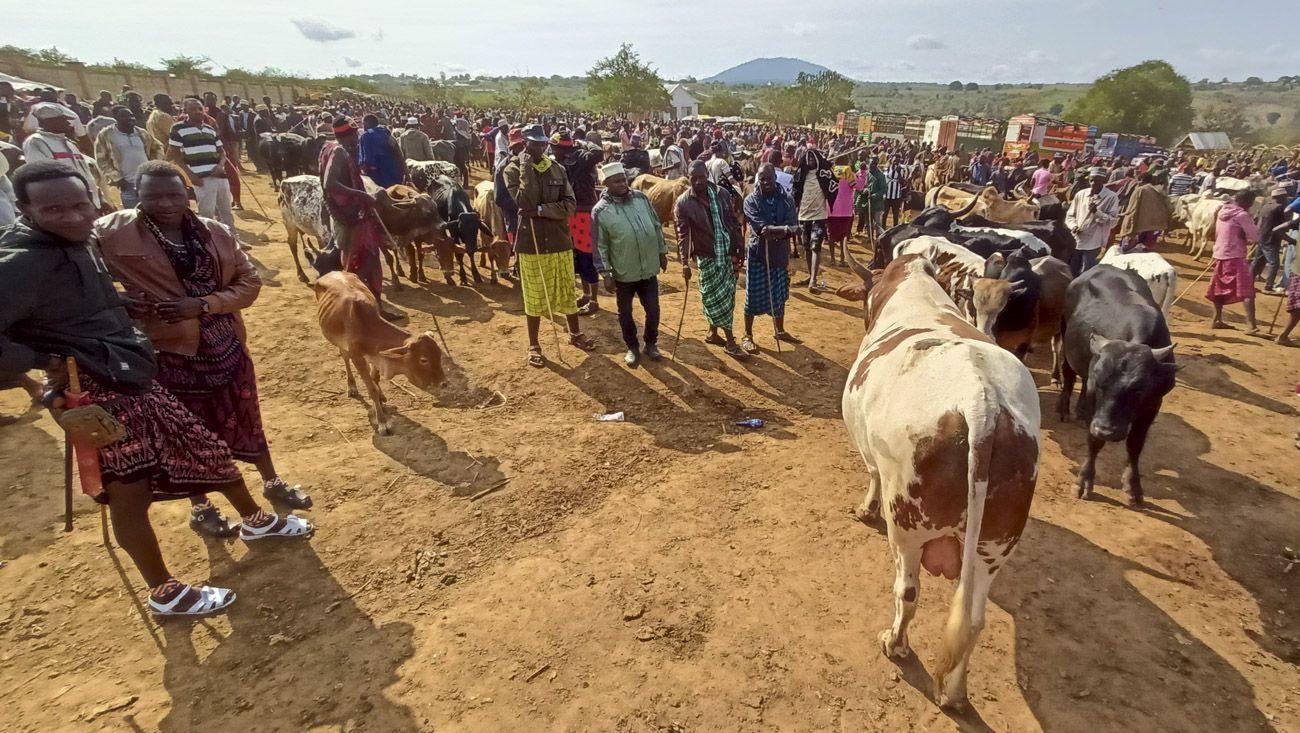
Beyond the little gate, there appeared hundreds of parked motorbikes, with lorries in the background. I get the impression we are at a motorcycle exchange rather than a cattle market. If a person thinks long and hard enough, the difference between a motorbike and a cow is really not all that great. At the moment I cannot think of a single one. Well, that is not quite true. We park our own bike among the herd of motorbikes, get off, and I see an enormous mass of cows and people. It looks as though it stretches on to infinity.

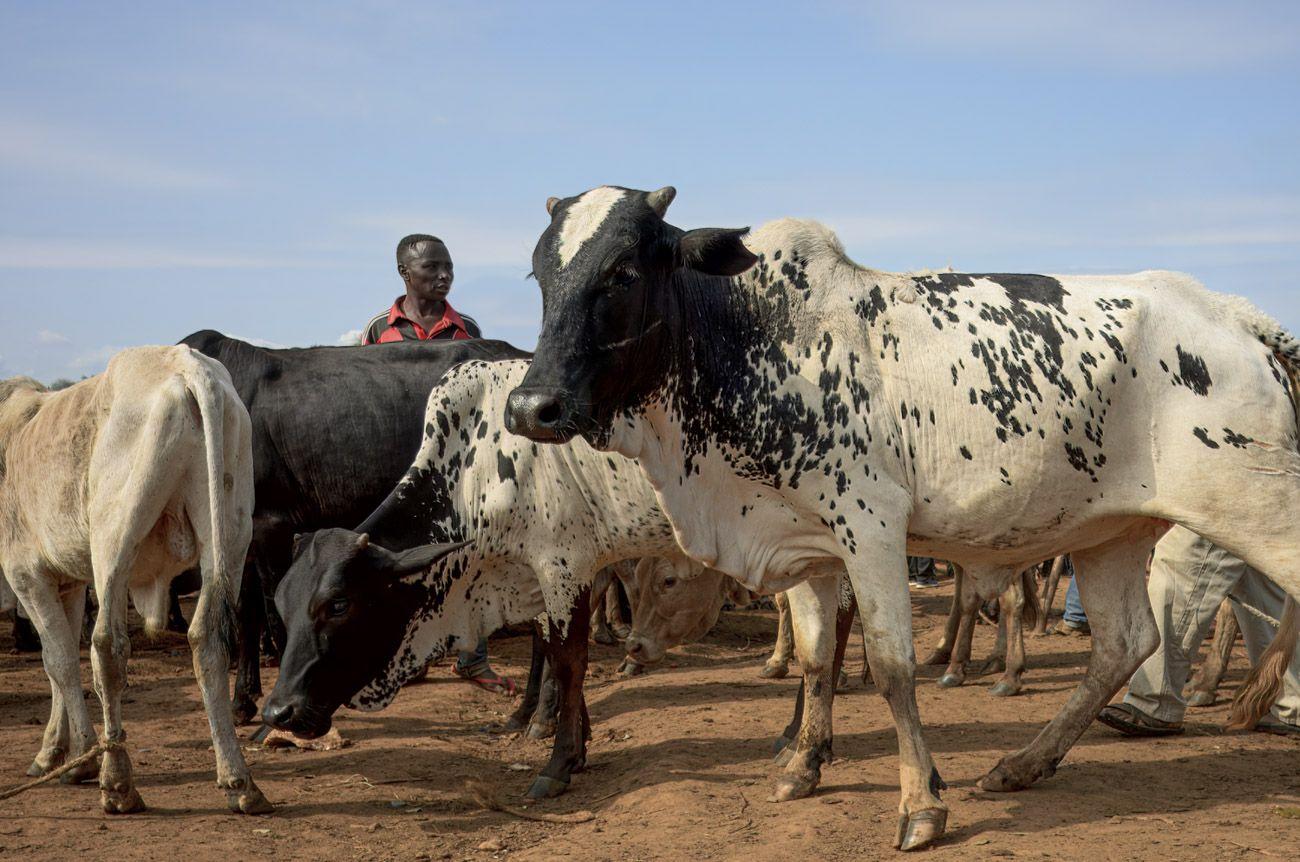
We blend in among the traders. There are hundreds, perhaps thousands, of people, cows, and goats here. Some stand about calmly, some glance around nervously, some are deep in lively debate, and some move shyly from place to place at that ultra-slow African pace. By that I mean the people, the cows, the sheep, and the goats. Renča and I are the only two mzungu here, which is to say white people. I begin to worry that Alois may have brought us here because he wants to sell us. On the one hand, that would have one advantage. I might get to see other parts of Tanzania besides the little village of Mbogoi, where we spend almost all our time. On the other hand, I am not at all keen on a village called Slaughterhouse.
I scan the crowd for Alois, who has already vanished somewhere. That is good news, because if he really meant to sell us, he would probably be keeping a closer eye on us. Then again, perhaps he has only plunged into the crowd to find the right buyer. We shall see. Let us allow ourselves to be surprised.

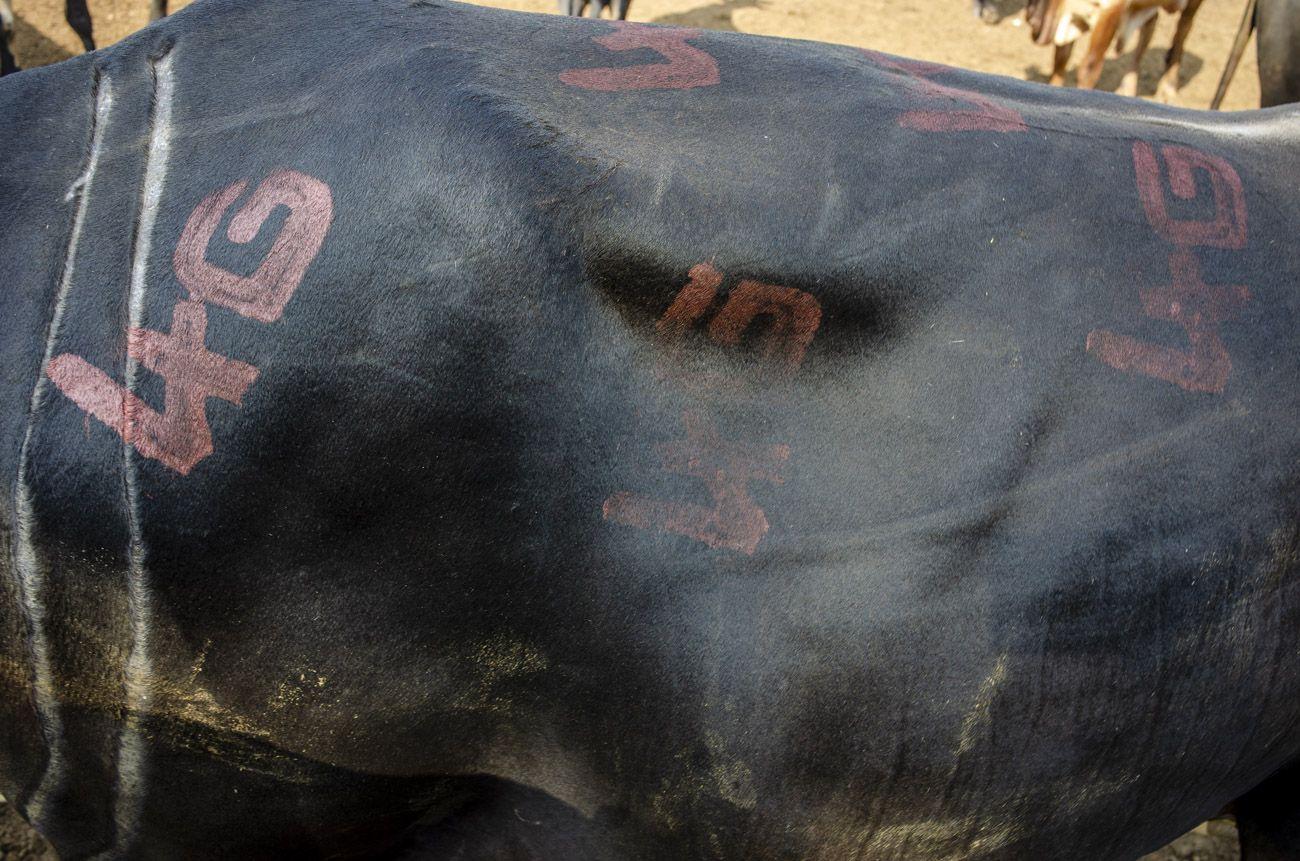
That must surely have caused the network to overload. I found the solution down in the pen where the sold cows had already been gathered. Last year, the Tanzanian Institute for Mobile Signal and Cows really rose to the occasion. They replaced the mobile transmitters normally used to boost signal at large events with genetically bred bulls. Allow me to present the latest triumph of genetic modification: the 4G bull. And to any nosy questions about why it is not already a 5G bull, I have a simple answer. It would have to wear a tinfoil hat, and that would just look ridiculous.

The whole circus was spread across a gentle slope: cows at the top, sheep and goats in the middle, and at the bottom the star attraction, the dining section. Here they kept to a fine custom: they did not sell a single gram of vegetables, nor a single gram of fruit. Well, they did sell sugar cane, but in my view sugar cane is neither a vegetable nor a fruit, but a cake. Perhaps one day in the future some worthy man will get the idea of founding a penal camp, a gulag for vegetarians. This is exactly the place for it.

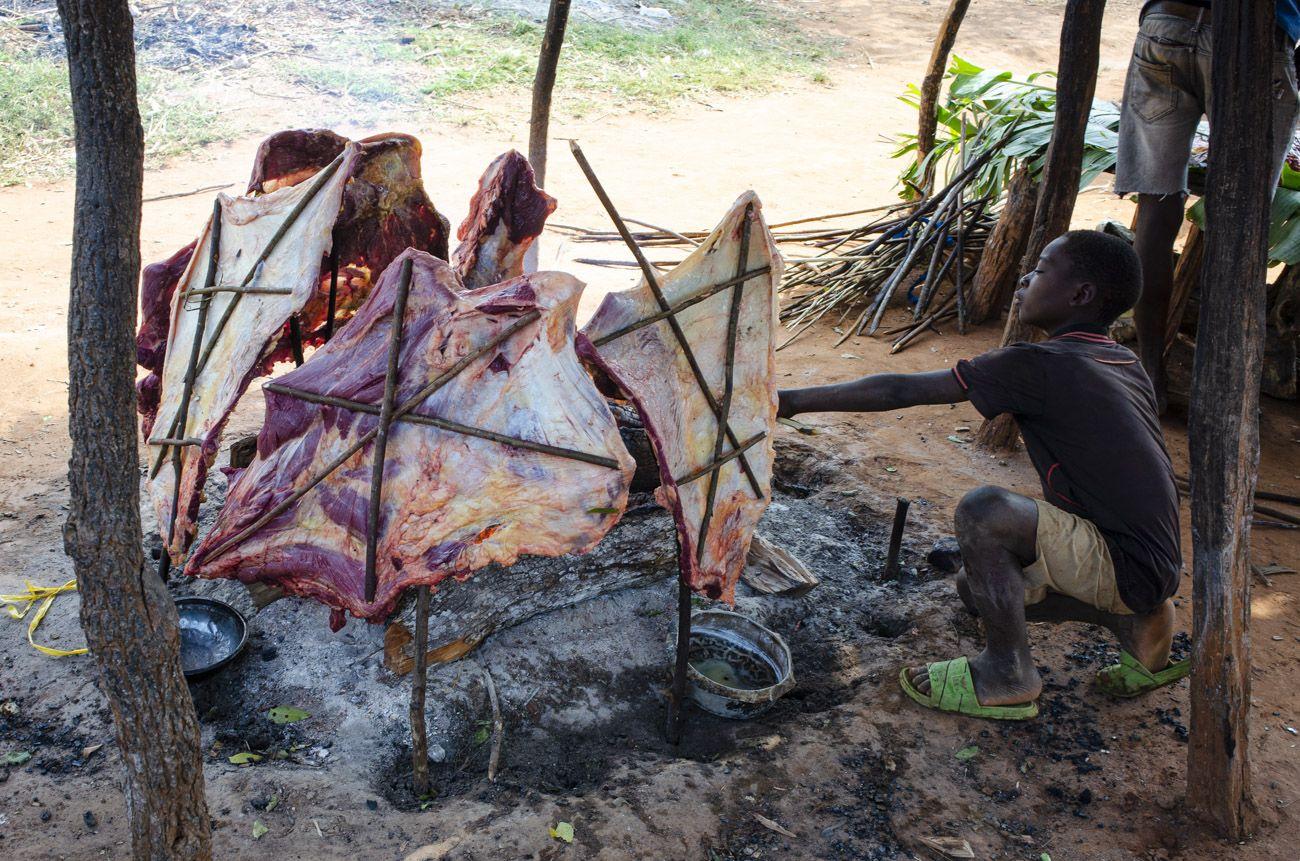
All the meat was roasted over an open fire, at a safe enough distance from it that the heat would not accidentally do the meat any harm. By then I was already familiar with their favourite method of preparing meat, known as endless chewing gum, so I did not order anything, because I would have been chewing it at least until I died. And very likely for a while after that. The picturesque backdrop to this meaty street food was completed by concrete slabs on which, presumably, cows and other edible beasts had already been slaughtered and butchered that very morning, so the meat would be fresh and properly firm. And of course there were bits of cow lying around all over the place.

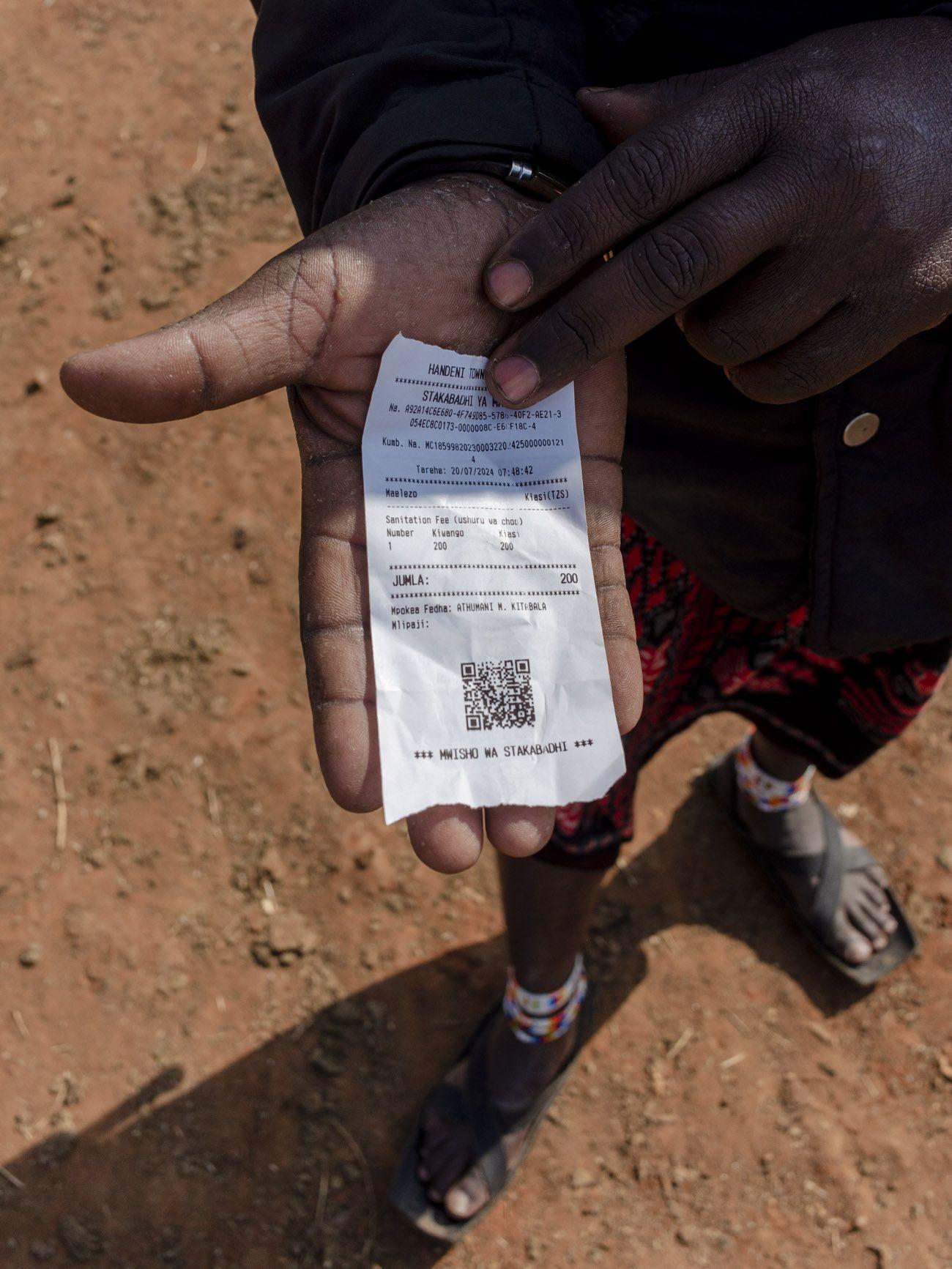
Besides the cows and sheep and goats and Maasai and Swahili and motorbikes and food, there was another fine attraction here – a public toilet. A nice one, brick-built. Next to it sat a smartly dressed Swahili man collecting money. I do not know whether he was brick-built too, but that is not essential to our story. And here one of the loveliest incidents of my stay in Tanzania happened to me. I naturally made hearty use of the toilet and paid. The smartly dressed, non-brick-built Swahili man gave me a receipt from the cash register, complete with a QR code.

I had not reckoned with that. Getting a receipt in a Tanzanian toilet belongs in the same category as meeting an alien. I took a closer look at the toilet man doing the charging, but he looked perfectly normal, so no, those two things did not happen to me at once. Because had he by any chance been an alien, I might have spent the rest of my life doing interviews on the radio, on television, and on a single-topic podcast.

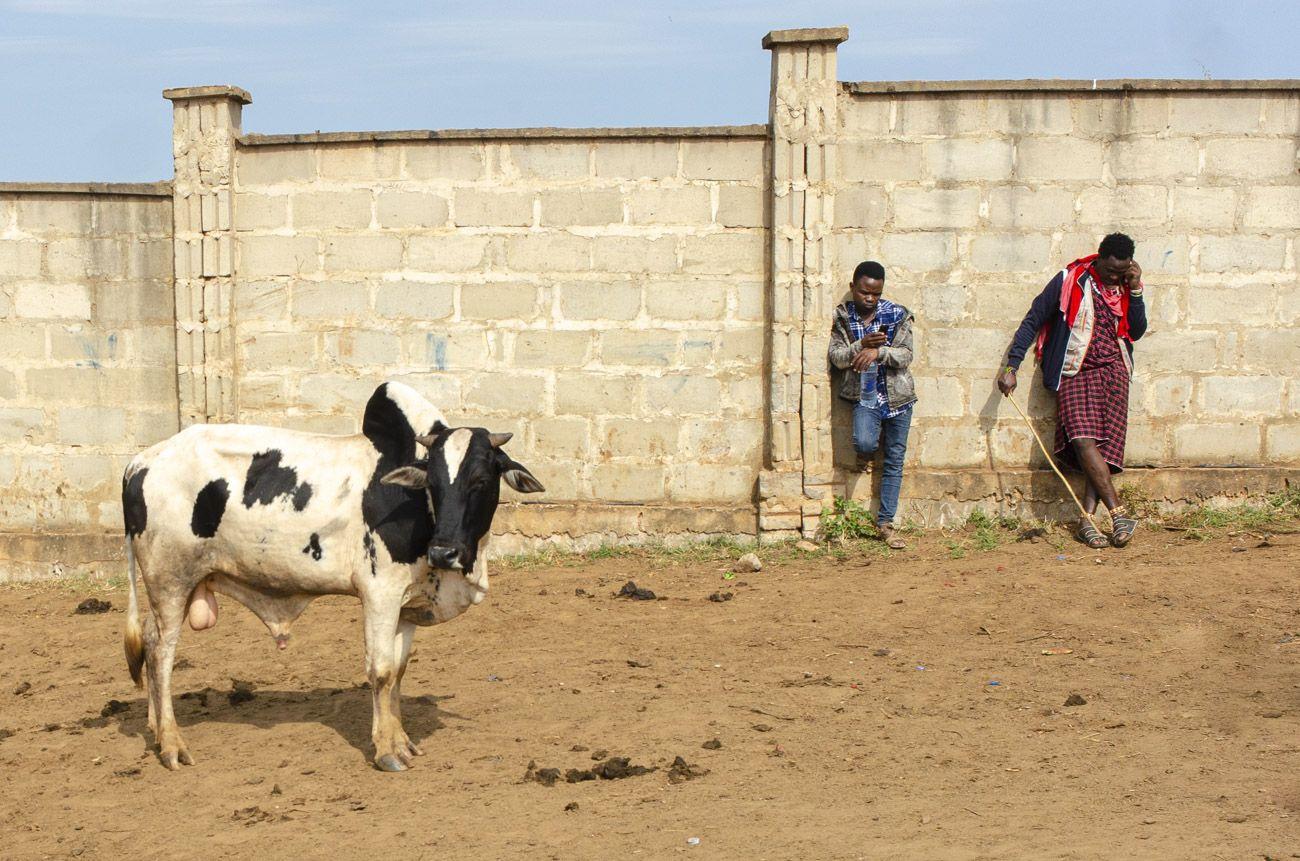
A revolutionary cow decided to overthrow the old order and brought a Maasai man and a Swahili boy to market for sale.

Share this

My romantic notions of life out in the wild came true to the very last dot in 2020. I ended up in the Tanzanian bush, in a mud hut with a thatched roof. The bush has a curious talent - it takes away your signal, but gives you your head back. The silence got to me so naturally that after two days I had completely forgotten I had ever dealt with morning traffic jams or whether my phone was charged. But romance in the bush has its limits, and they end exactly where the reality of water begins.

A Tin Mug Full of Reality


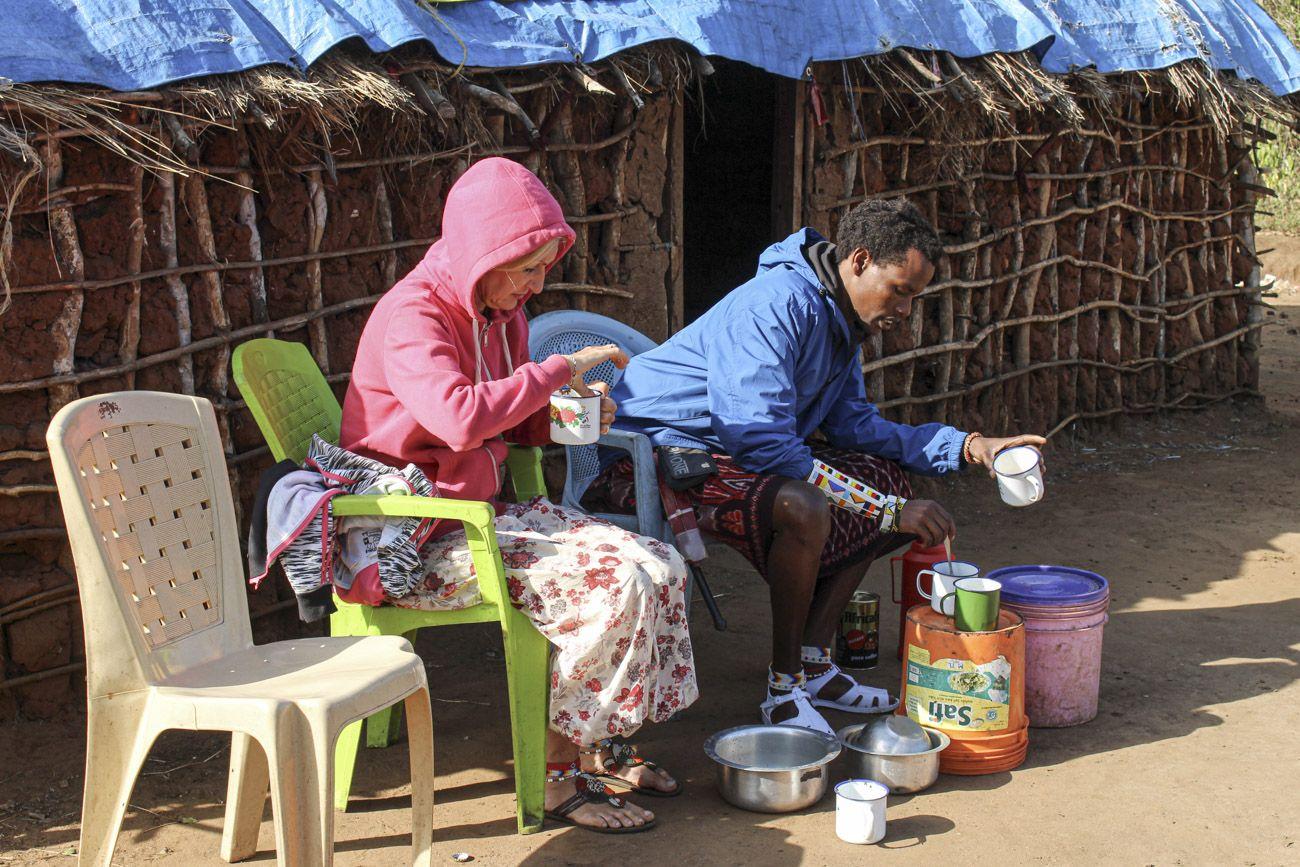
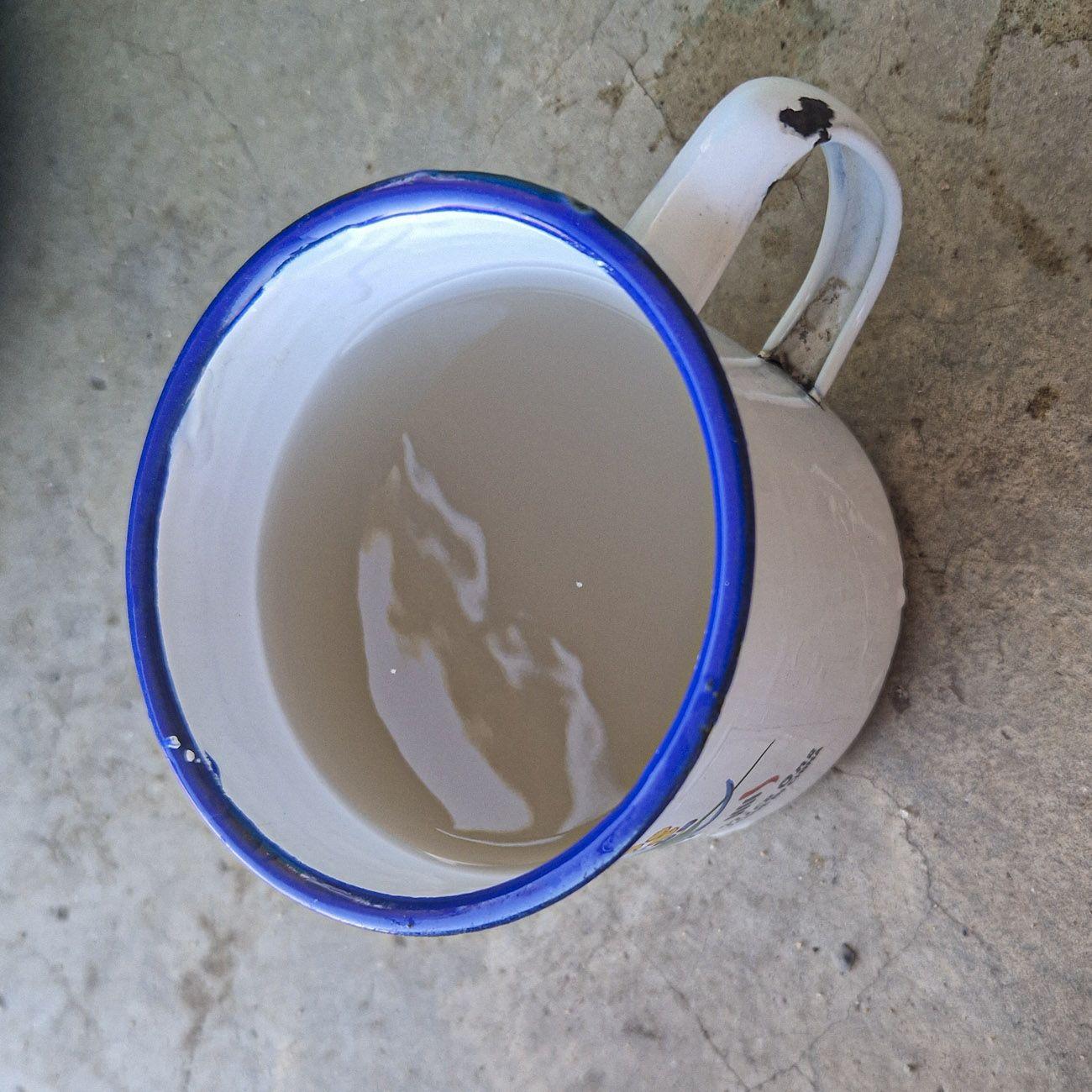
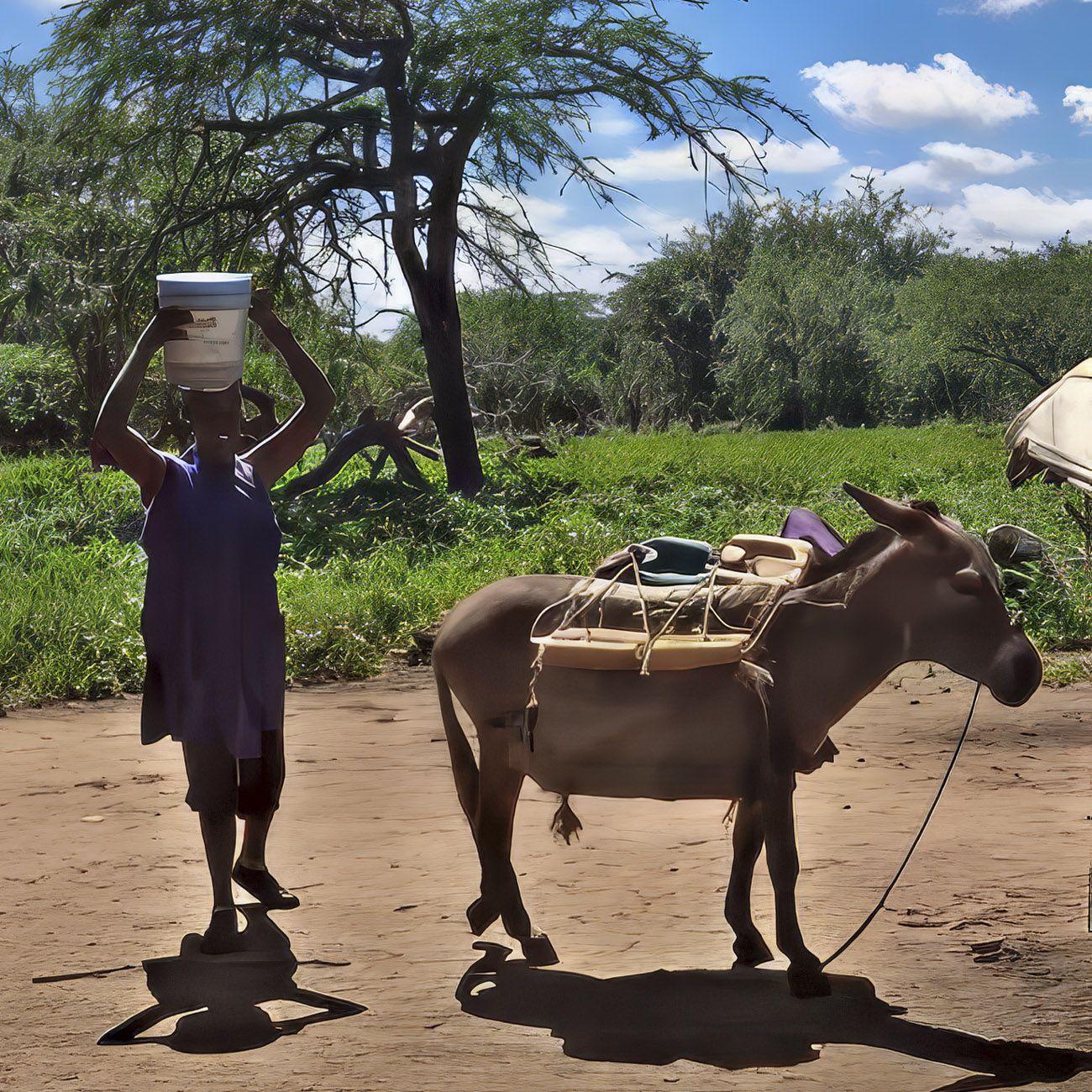
The real picture of life in the settlement reveals itself in the morning. Watching women and children set off with donkeys on a journey of several kilometres to the lake brings you back down to earth faster than any coffee ever could. It is the very same water they walk for hours to fetch, only to drink it later or cook with it. I sat there with a tin mug of some oddly coloured drink in my hand, mentally calculating whether I had enough activated charcoal in the first-aid kit and whether my stomach would survive this particular all-inclusive experience. While the locals go on living whole generations quite calmly with this water, I was quietly wondering whether I would ever manage to wash in it at all, clutching a bottle of sanitiser in my pocket just in case. But my host was standing there waiting for me with a smile, so I simply drank. In that moment, caffeine beat self-preservation.
 

When Life Forces You to Start an NGO


At first, it was small things: medicine for children, a few goats, maize to survive the drought, or school desks so pupils could finally stop sitting in the dust. Bit by bit, I realised that the local goats move about with a kind of calm we, in our city rush, can only envy. But once I could no longer keep putting out everything that was on fire in the settlement from my own pocket, the time came for official paperwork. So in February 2022, the civic association Engarre was founded in Slovakia - in Maasai, “Water” - and a year later we “did it all over again” directly in Tanzania. Slovak bureaucracy is a hard nut to crack, but the Tanzanian kind is a coconut - harder, bigger, and every now and then quite happy to drop on your head. For all the paperwork, the name still reminds me every single day why we went into this fight in the first place.
 

Look for the Signal on the Football Pitch


Today, Engarre is a bridge between Slovakia and Mbogoi. We try to repay Maasai hospitality in the form of school repairs and better education. Our communication does stall now and then - if you want enough signal for a video call, you have to run out to the village football pitch and wave your phone above your head with proper commitment. I felt like a deranged mzungu (white person), chasing invisible waves while the Maasai watched with smiles and took bets on whether I would catch the signal first, or whether some passing goat would beat me to it. Even so, I would not trade it. Mbogoi taught me that the best things in life are free. It is only rather sad that, in the bush, clean water is not yet one of them.
 

Share this

My first trips to Tanzania came with very clear rules: ice in a drink was suspicious, and I brushed my teeth exclusively with bottled water. But in Mbogoi, those European certainties dissolve faster than you can pull out a bottle of sanitiser.

Today’s Special: Rain and an Old Roof


When the longed-for rain finally came, Mbogoi erupted in pure, unfiltered euphoria. Everyone ran outside clutching buckets and basins. What we, in our part of the world, would consider dirty roof water fit for little more than watering the garden, the Maasai respectfully call “fresh water.”
I will admit that, although the water splashing into the basins looked perfectly clear, I could not quite muster the courage to drink it straight from beneath a dusty roof. I stood there with the uneasy feeling that my hygiene standards were little more than a running joke in this place, while the locals happily enjoyed this gift from the heavens. Seeing that kind of genuine joy teaches you humility far more effectively than any motivational course ever could.
 

Mathematics for the “Happily Born”


My desire to bring water here that does not depend on the mood of the clouds ran into hard reality. Drilling a well in this terrain costs thousands of euros. For someone in Mbogoi earning a euro or two a day, that is a sum from the realm of science fiction - rather like me buying a private jet.
In our world of the “happily born,” water is just an invisible backdrop to the morning tea. Here in Mbogoi, every sip is either a gift from the heavens or the result of a “million-dollar” project. Water here is not a given, but a goal you walk towards slowly.
 

From the Gutter to the First Sip


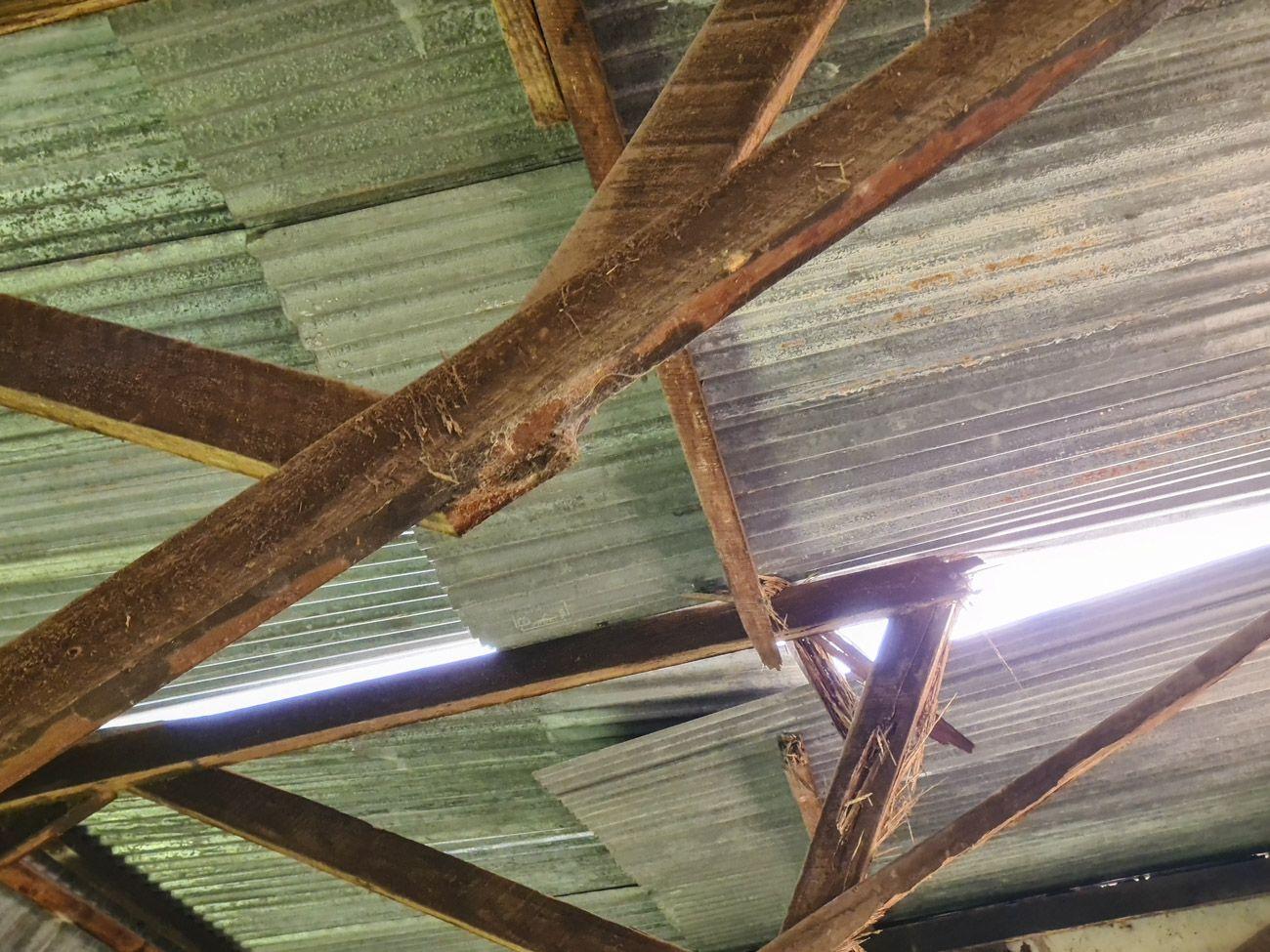
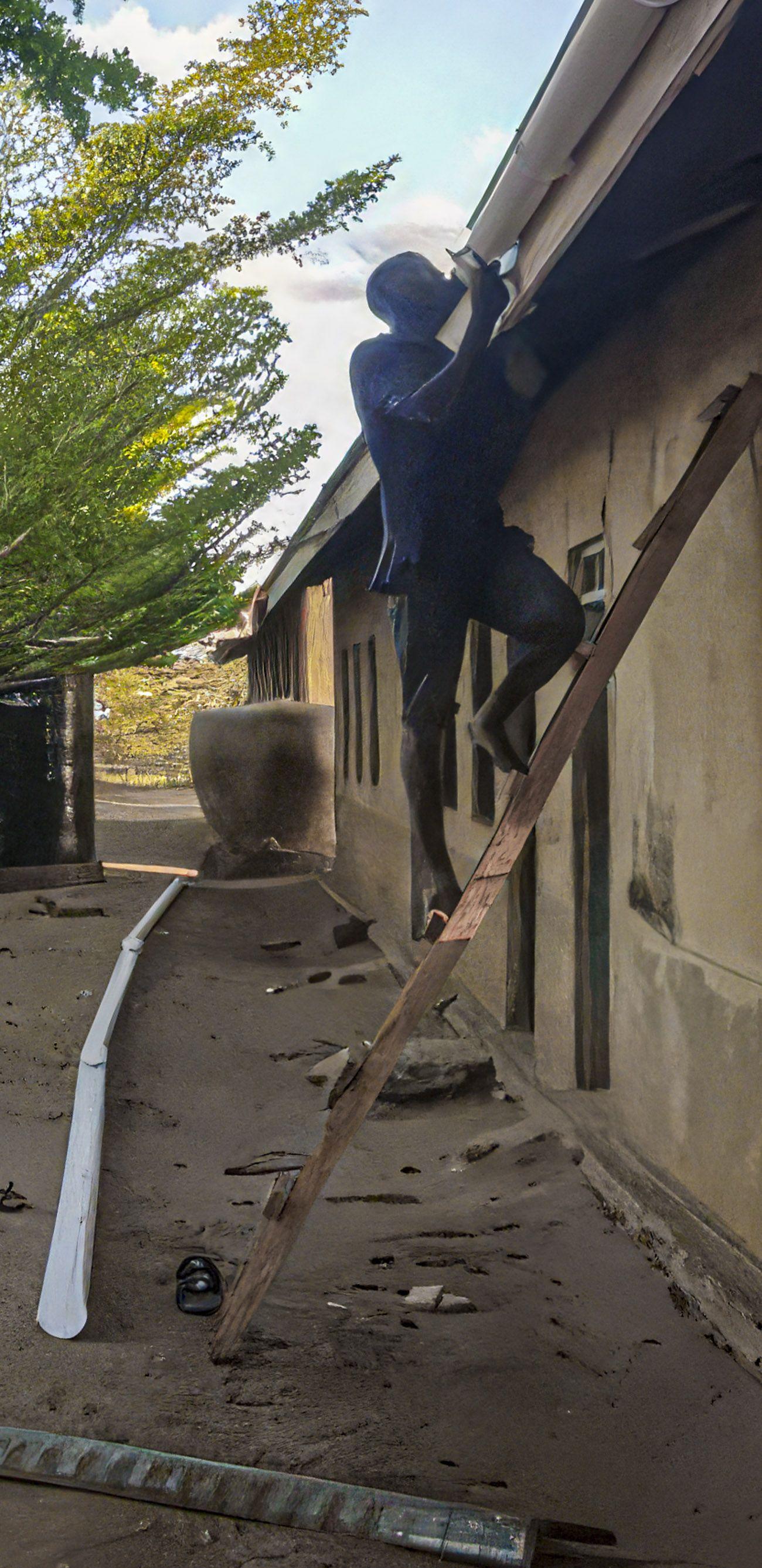
Since we are still gathering the strength for a deep well for the whole community, we decided on a pragmatic first step. The local school needed a new roof - the rotten beams were being held together more by willpower than by nails.
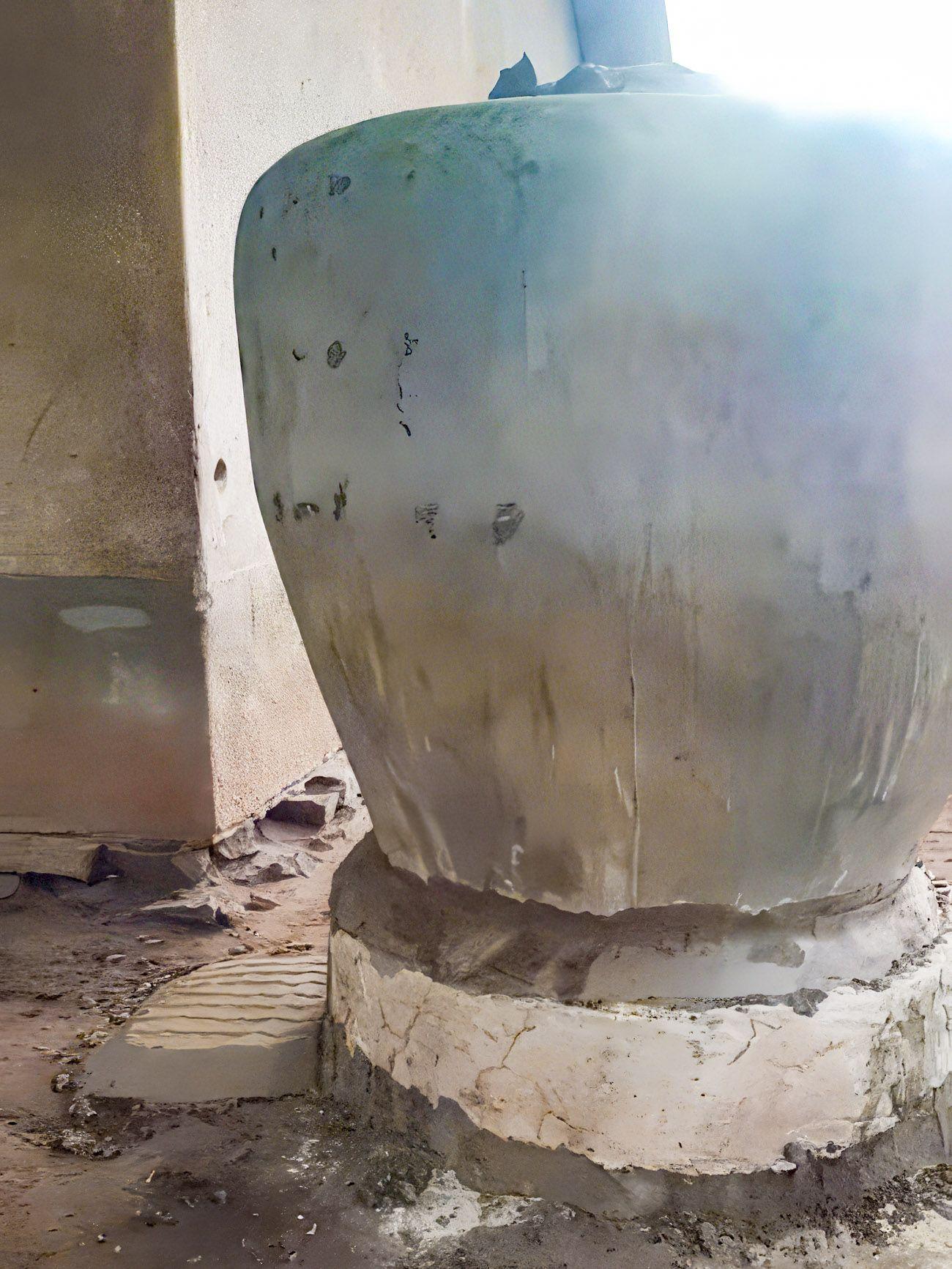
Today, the new roof is finished. We fitted gutters, and the old concrete tanks right on the school grounds were repaired with joined forces. Those tanks had been leaking for years, but after the work of the local craftsmen, they are watertight again and ready for the dust of Mbogoi.
We may not have solved the thirst of the whole area, but the pupils at the school now have something to wash the dust from their throats with during the heat, without having to wonder whether their water is more wet or more muddy.
Sometimes the biggest changes begin with an ordinary gutter. Because in Mbogoi life teaches you one thing: even a few litres in a tank mean more than the grandest promises in the dust.
 

Share this

If you expect that after all these years in Mbogoi I can now hold a fluent conversation in Maa about the condition of the cattle and the weather forecast, I am sorry to disappoint you. I cannot. My Swahili has roughly the life expectancy of an open yoghurt in the African sun, but compared with my Maa, I am practically an expert.

A Linguistic Trap in the Bush


Right at the start, Sekenoi gave me a strategic piece of advice: “Learn Swahili first and foremost.” It sounded sensible enough. It is the key to offices and to the market in town. The trouble is that in Mbogoi, Swahili is almost useless to me. I spend 90 percent of my time among the Maasai, and they speak to each other exclusively in Maa.
Out in the bush, one merciless rule applies: if I am alone with a Maasai and the person speaks English, we talk in a broken patchwork of English and Swahili. The moment a second Maasai joins us, my conversation is over. They automatically slide into Maa, and I become a silent observer who can do little more than sit there peacefully pondering the immortality of the maybug.
Of course, that only applies in the better-case scenario. If the Maasai person does not speak English, I am thrown straight into the muddy waters of Swahili and Maa and do my best not to drown.
Once, we tried an experiment. There were five of us sitting together, and we agreed that only Swahili would be spoken. The fine for every Maa word was 1,000 shillings. The game ended after ten minutes. There were 5,000 shillings lying on the table, and everyone carried on in Maa with visible relief. I cannot really blame them, though. If there were five Slovaks and one Maasai, we would probably slaughter him with Slovak after five minutes as well. In the bush, your mother tongue is simply stronger than any agreement.
 

My “Elite” Vocabulary (Survival Maasai for Beginners)


My Maa vocabulary is thin, but for survival it is, almost, enough. The basics are Kaitaa (How are you?) and the universal reply Sidai (Good). I spin that pair round and round like a record with a scratch in it.
Then there is the ritual for us women. When men greet me, it goes like clockwork:
They call out Yeyo.
I answer Eo (something like “I hear you”).
They say Takwenya.
And I round it off with a triumphant Iko.
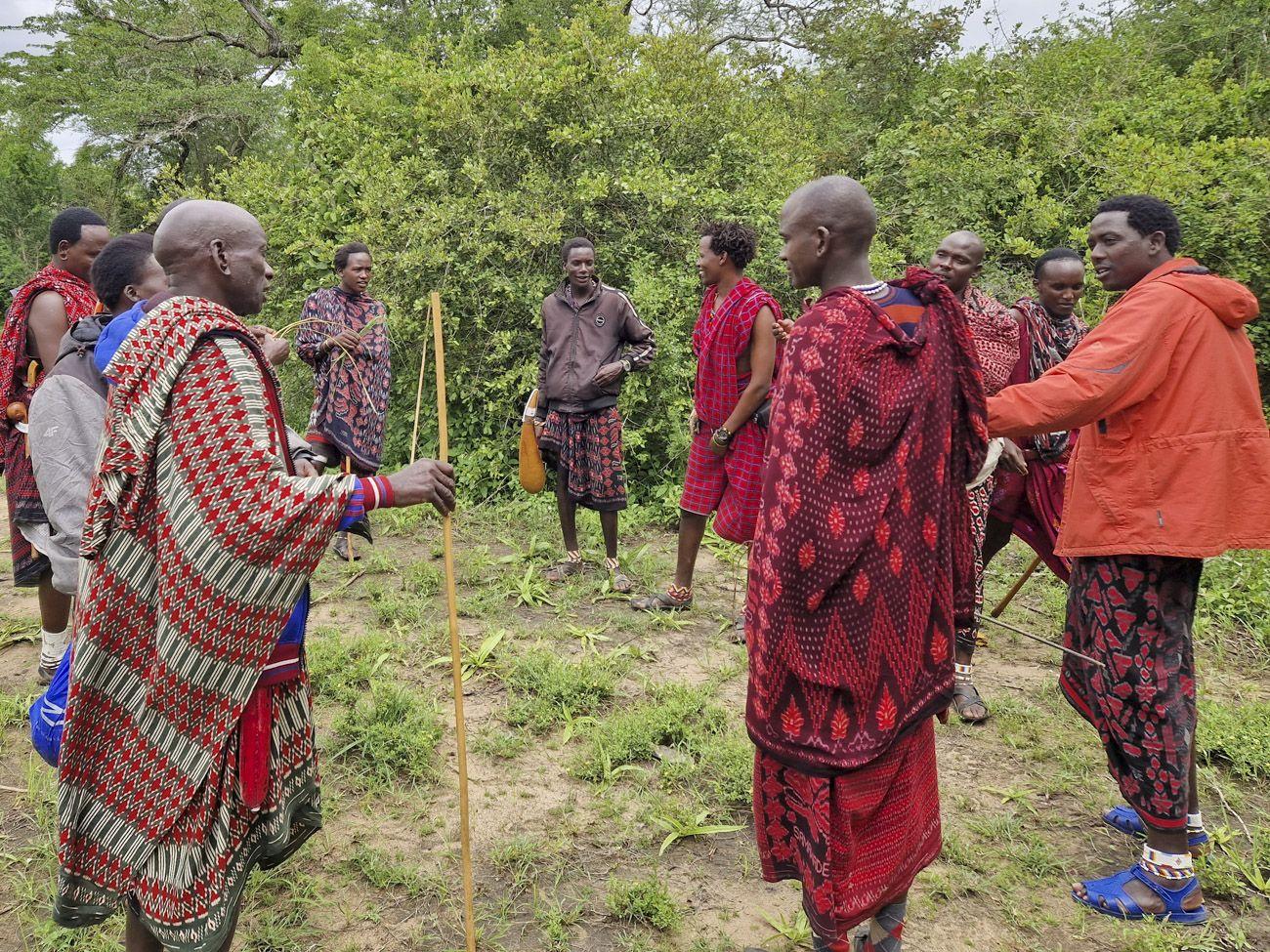
The best bit is that every man in the group greets me separately. If there are ten of them sitting there, I go through the whole routine ten times. Once, in a fit of European educational efficiency, I made a grand circle in the air with my hand to include the entire group and declared one collective “EO - IKO.” They laughed warmly at the latest invention of the mzungu, but that was the first and last time my “efficient shortcut” got through. In the bush, time is simply not there to be saved.
The rest of my vocabulary is pure pragmatism: Ou ene (come here). When I am handing someone something, a brief Ngo (here you go) is enough, and when I want something, even the possibly rather cheeky, by our standards, simple Au (give) does the job. My favourite word is dog - Orkushi, which sounds like an expensive sushi set - and cat, which is called, quite simply: Meow. At last, a language I can understand without a textbook.
The very first word I understood was Ashe (thank you). Right behind it in my private ranking comes my life motto: Mayolo (I don’t know). I use it as a universal answer to 90 percent of all questions about life, the universe, and the current state of the cattle. But then there is the word that carries the greatest weight for me - Engarre (water). Since water is the narrowest bottleneck in the bush, it was out of respect for that very fact that we gave our civic association that symbolic name. In the hope that one day we really will bring it to Mbogoi in full force.
 

My Strictest Trainers


My Swahili is progressing at the pace of a lame chameleon. My teacher has the patience of a saint, but I would bet good money that after our lessons he secretly goes off to bang his head against the nearest baobab. Whatever I painfully learn from the textbook on Monday, I manage to let evaporate from my head by Wednesday in the dust of Mbogoi.
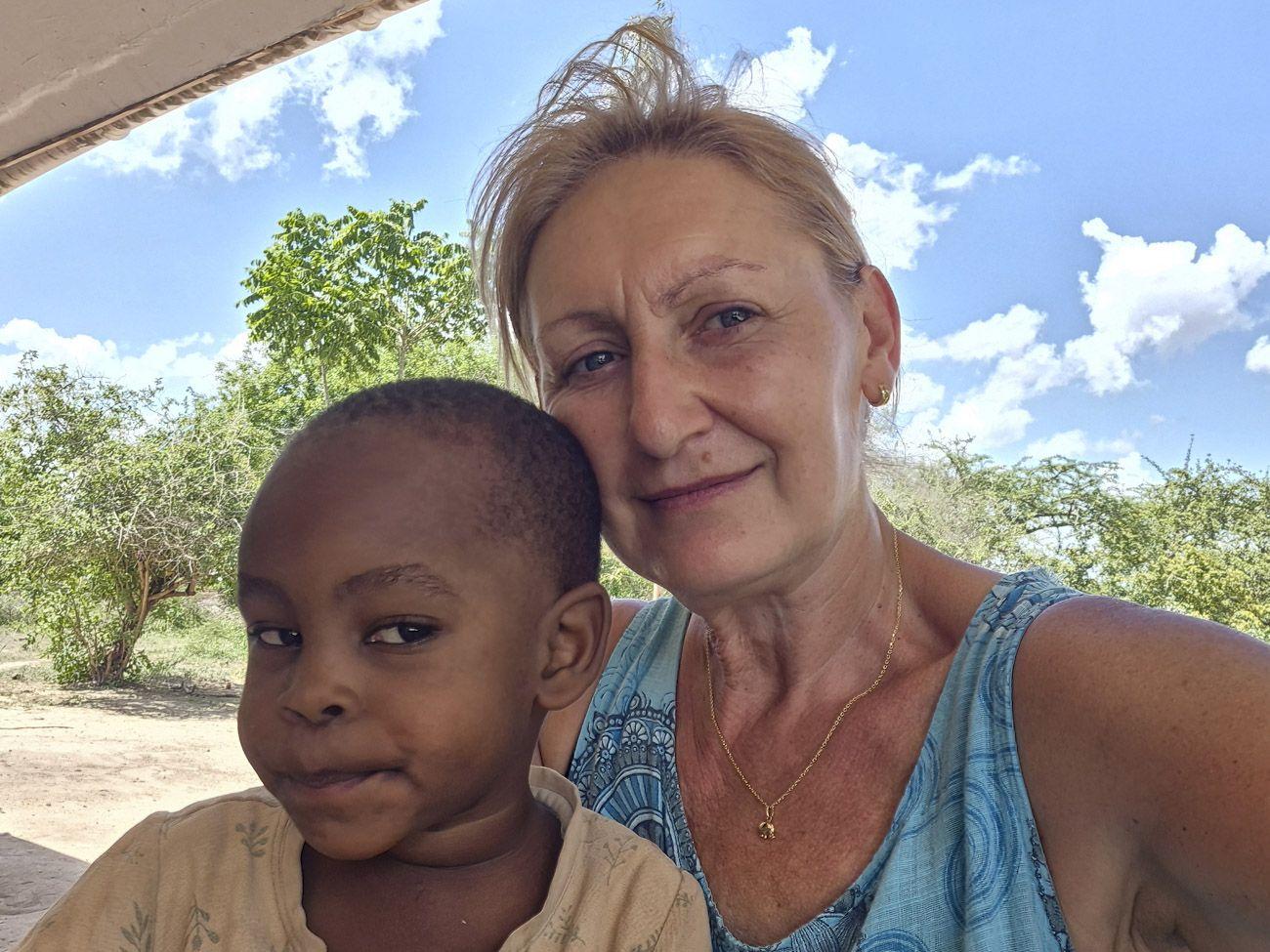
Luckily, I have neighbours - Ali, Rukia, and their two-and-a-half-year-old son, Shabani. My conversations with the adults are pure pantomime. Sometimes we spend an hour waving our arms about, trying to work out whether we are discussing a broken fence or an approaching storm, and in the end we just laugh helplessly over tea.
My real Swahili coach, however, is little Shebi. He has no respect for gestures or diplomatic smiles. He plants himself in front of me in the dust and launches into a continuous Swahili monologue. No simplified vocabulary, no patience, no mercy. I stand there desperately fishing in my head for at least one familiar verb while he explains something terribly important with a perfectly serious face. Then, after about a minute, he realises that all he is getting from me is a blank stare, turns on his heel in resignation, and walks off. His back says it all: “There is simply no having a sensible conversation with you today.”
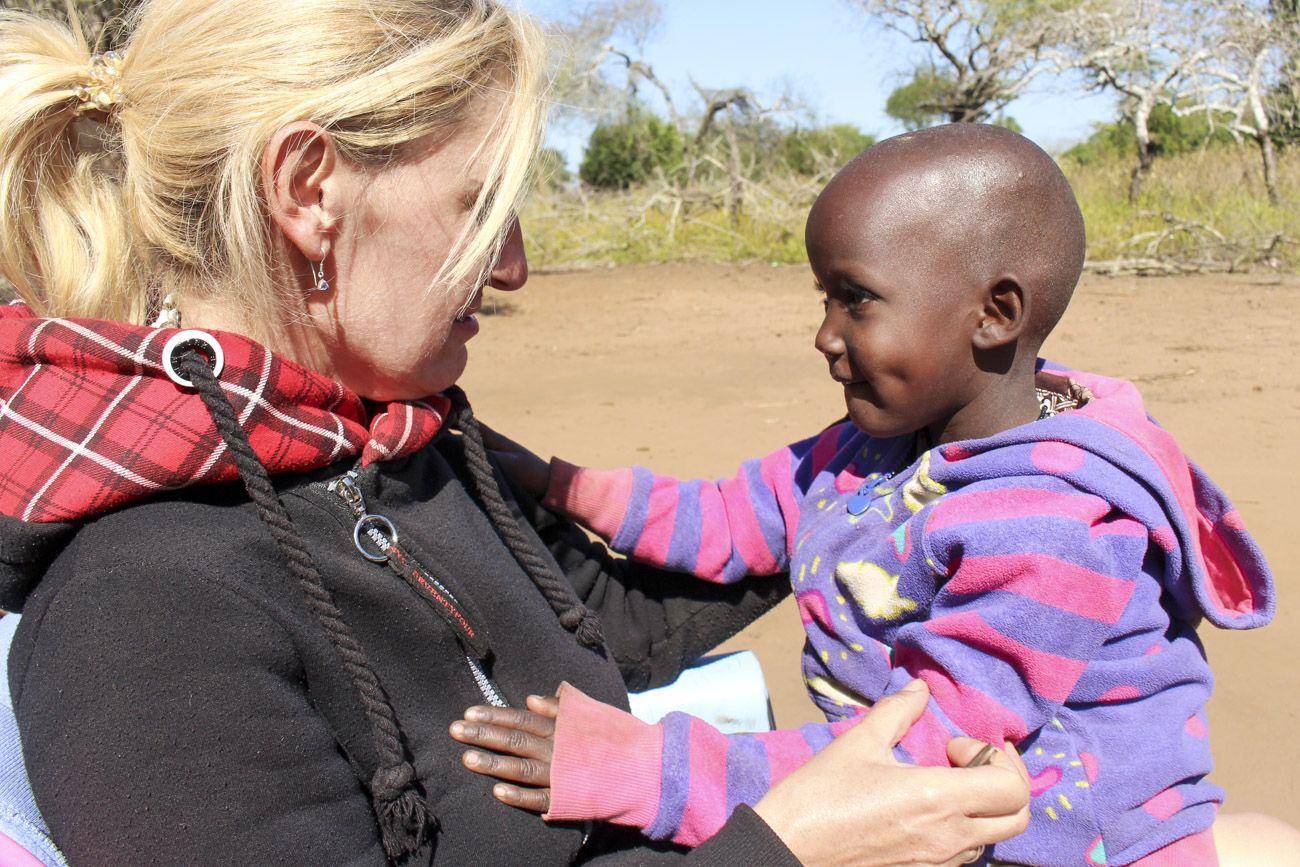
And if Shebi is my uncompromising instructor, then little Silora is my evening news bulletin in Maa. Every evening, without so much as asking permission, she jumps onto my lap, looks me straight in the eye with a solemn expression, and begins. With enormous dedication, she gives me a full account in Maa of everything that happened in the boma that day. Who went where, what the children were doing, and what pressing matters the cattle had on their minds. I do not understand a single word, but at that moment it does not matter. Silora does not need my grammar. She just needs a listener. And I am grateful that, at least in that respect, I count as an expert.
I may not be leading deep conversations in Maa for quite a while yet, and my Swahili may remain at the level of a three-year-old, but I have known for a long time now why I am here, and why we do what we do at Engarre. Every day I learn something new here - sometimes a word, sometimes patience, sometimes simply that it is enough just to be present. And if you are curious where this journey for water is taking us, you will find it on our website.

 

Share this