Cattle Market in Nderema

The motorbike is growling, the wind is in our hair. Alois is driving and I am sitting on the back. Alois is a local Maasai who just happens, by sheer accident, to have the Czech name Alois. I am on the back because whenever I am at the handlebars of a motorbike, I turn out to be incompatible with the local policemen in the town of Handeni, which is where we are heading. We are not going straight into Handeni, though, but just alongside it, to a part called Nderema. Strangely enough, Alois seems to have brought his common sense with him today, which he normally leaves at home whenever he gets on a motorbike. The bike is not whining as if it had twenty-eight seconds left to live. We even slow down a little over the bumps.

I am beginning to wonder whether it really is Alois sitting in front of me, or perhaps a peaceful cow. No, there are no horns sticking out from the head some twenty centimetres in front of my face. Everything is fine. There is one more reliable way to tell a human being from a cow. A cow has four stomachs, a person one. I am not going to dissect him here and now, though. Perhaps the real reason for Alois’s unusual behaviour is that he too is going to sell cows. He does not have to drive them there himself. The herders set out yesterday already, so the cows would arrive at the market today nicely rested and in cheerful spirits. We are getting closer to Nderema and the traffic is becoming unbelievably heavy. Roughly every hundred metres there is already one motorbike on the road.
Here it is. We are riding past a concrete wall. Shy figures are standing along the road, looking over the new arrivals. The big gate is shut, so we go in through the little gate for people. Apparently there is no entrance fee, though only at the very end do I find out that they collect the money at the exit rather than at the entrance. I suppose that means if we did not pay when leaving the market, they would simply keep us there, or perhaps list us among the cows that had been sold. It is a highly inspiring system, one I would happily introduce, say, in a cinema. You would not pay on the way in, only at the end when leaving. Once you realised they would not let you out and you would be stuck sitting in the dark all day until the next film, you would gladly pay even some outrageous amount. The exact opposite happens with paid public toilets. There, if you are desperate, you will pay whatever they ask on the way in, especially when you think through the consequences. On the way out, by contrast, you suddenly have plenty of time to get inventive. Well, it was not that good in there. And I did not actually do anything there. And a host of other unbelievable excuses. Another stroke of African genius.
Beyond the little gate, there appeared hundreds of parked motorbikes, with lorries in the background. I get the impression we are at a motorcycle exchange rather than a cattle market. If a person thinks long and hard enough, the difference between a motorbike and a cow is really not all that great. At the moment I cannot think of a single one. Well, that is not quite true. We park our own bike among the herd of motorbikes, get off, and I see an enormous mass of cows and people. It looks as though it stretches on to infinity.

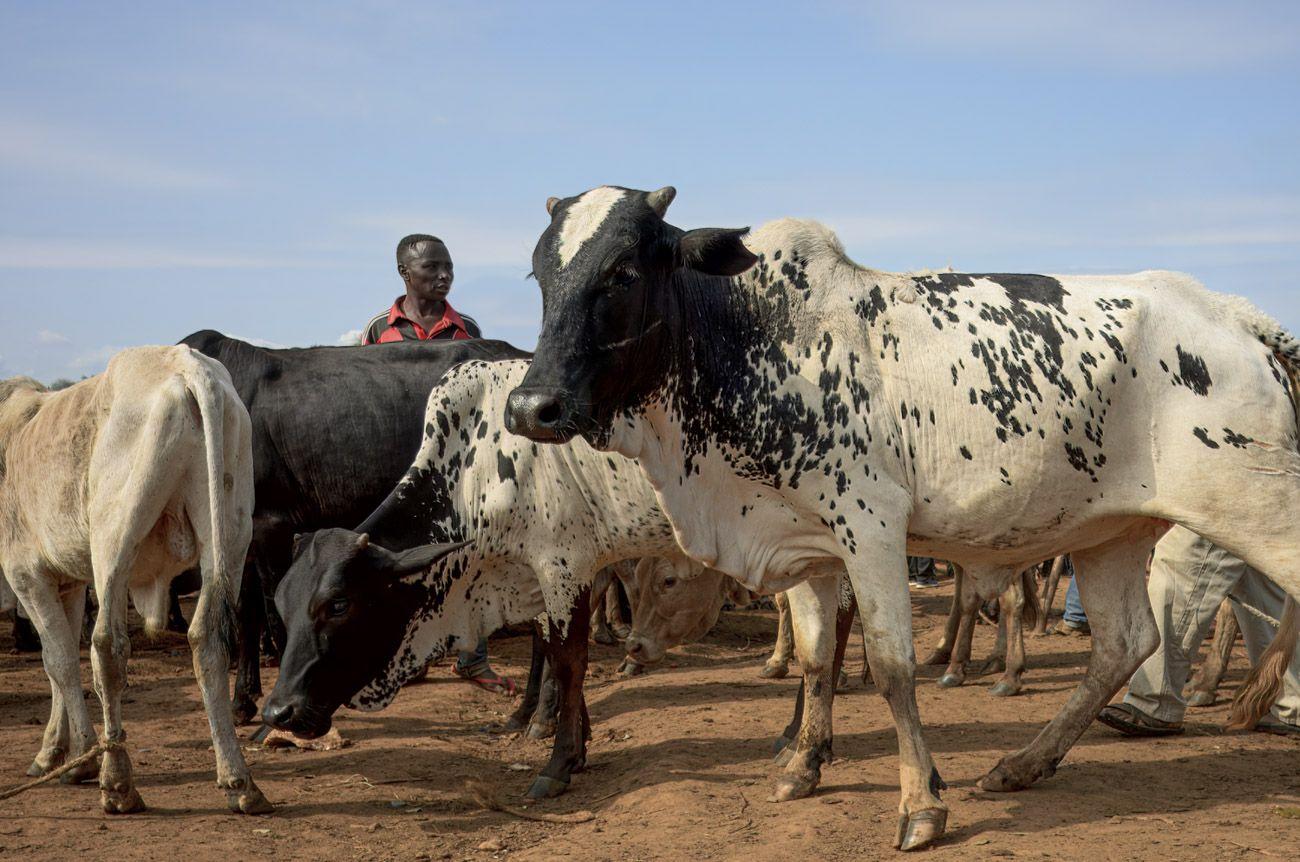
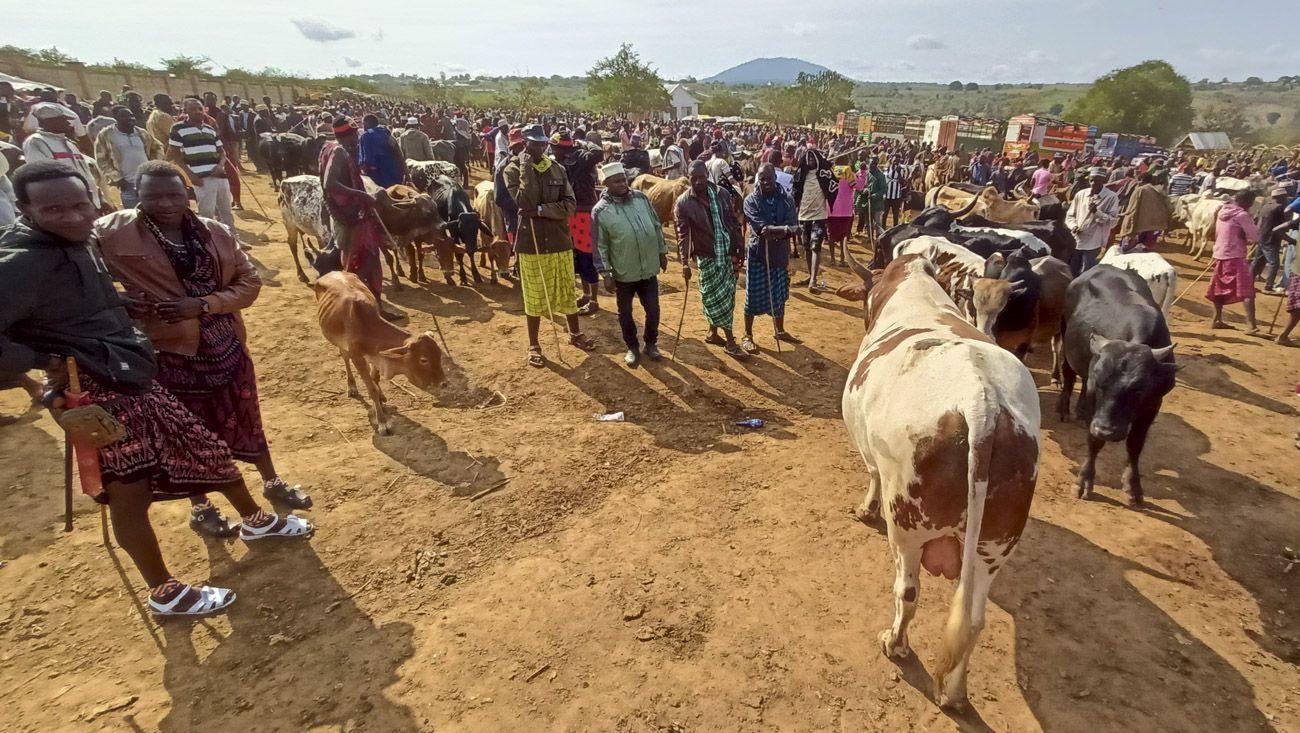
We blend in among the traders. There are hundreds, perhaps thousands, of people, cows, and goats here. Some stand about calmly, some glance around nervously, some are deep in lively debate, and some move shyly from place to place at that ultra-slow African pace. By that I mean the people, the cows, the sheep, and the goats. Renča and I are the only two mzungu here, which is to say white people. I begin to worry that Alois may have brought us here because he wants to sell us. On the one hand, that would have one advantage. I might get to see other parts of Tanzania besides the little village of Mbogoi, where we spend almost all our time. On the other hand, I am not at all keen on a village called Slaughterhouse.
I scan the crowd for Alois, who has already vanished somewhere. That is good news, because if he really meant to sell us, he would probably be keeping a closer eye on us. Then again, perhaps he has only plunged into the crowd to find the right buyer. We shall see. Let us allow ourselves to be surprised.

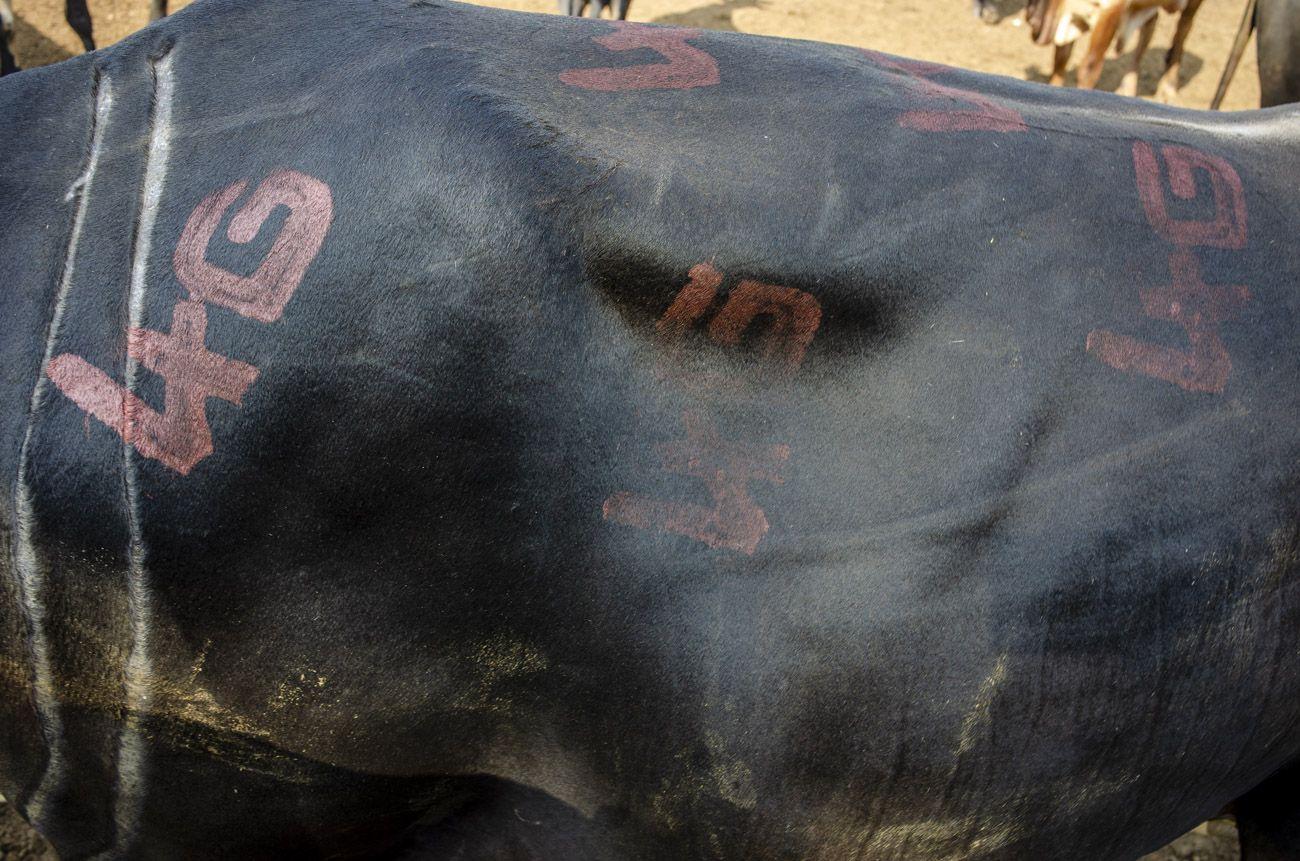
That must surely have caused the network to overload. I found the solution down in the pen where the sold cows had already been gathered. Last year, the Tanzanian Institute for Mobile Signal and Cows really rose to the occasion. They replaced the mobile transmitters normally used to boost signal at large events with genetically bred bulls. Allow me to present the latest triumph of genetic modification: the 4G bull. And to any nosy questions about why it is not already a 5G bull, I have a simple answer. It would have to wear a tinfoil hat, and that would just look ridiculous.

The whole circus was spread across a gentle slope: cows at the top, sheep and goats in the middle, and at the bottom the star attraction, the dining section. Here they kept to a fine custom: they did not sell a single gram of vegetables, nor a single gram of fruit. Well, they did sell sugar cane, but in my view sugar cane is neither a vegetable nor a fruit, but a cake. Perhaps one day in the future some worthy man will get the idea of founding a penal camp, a gulag for vegetarians. This is exactly the place for it.

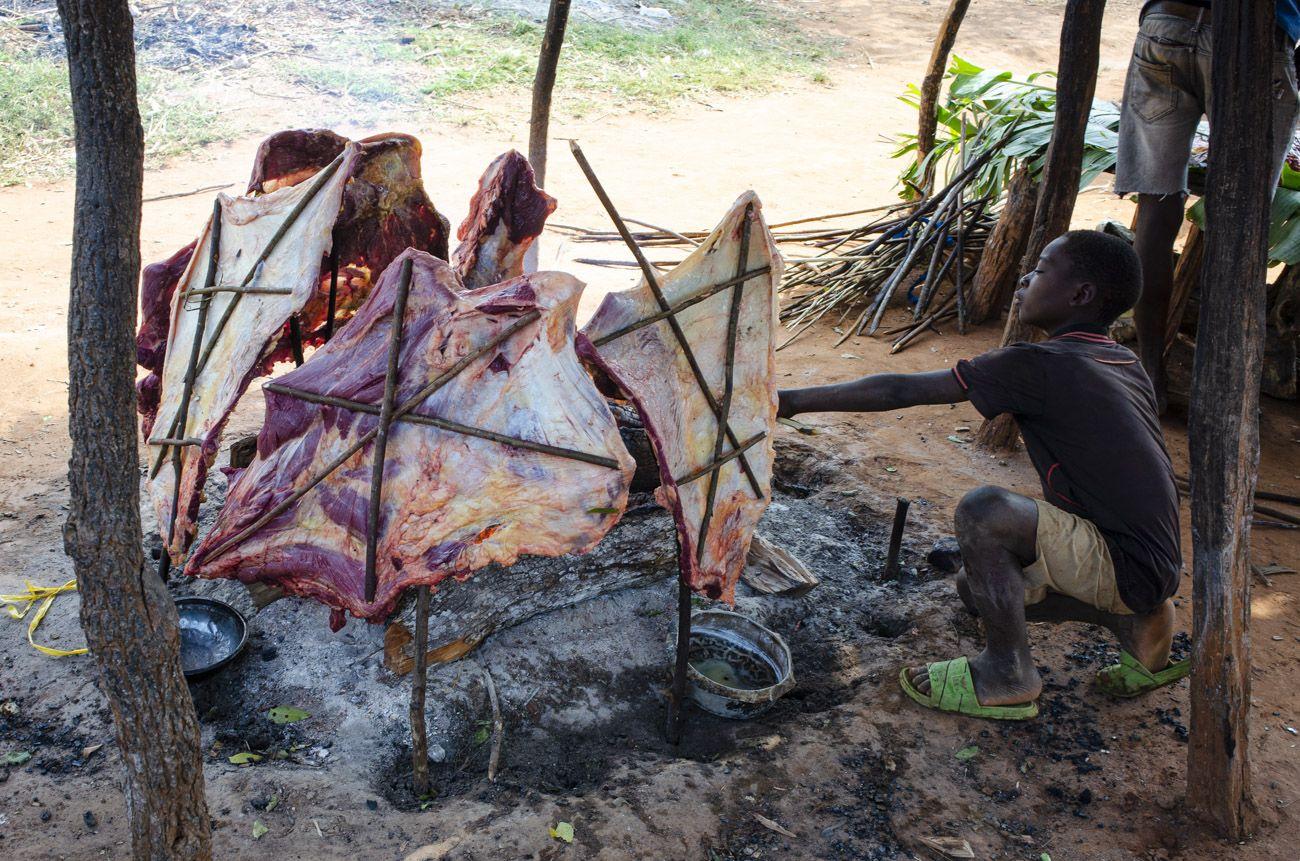
All the meat was roasted over an open fire, at a safe enough distance from it that the heat would not accidentally do the meat any harm. By then I was already familiar with their favourite method of preparing meat, known as endless chewing gum, so I did not order anything, because I would have been chewing it at least until I died. And very likely for a while after that. The picturesque backdrop to this meaty street food was completed by concrete slabs on which, presumably, cows and other edible beasts had already been slaughtered and butchered that very morning, so the meat would be fresh and properly firm. And of course there were bits of cow lying around all over the place.

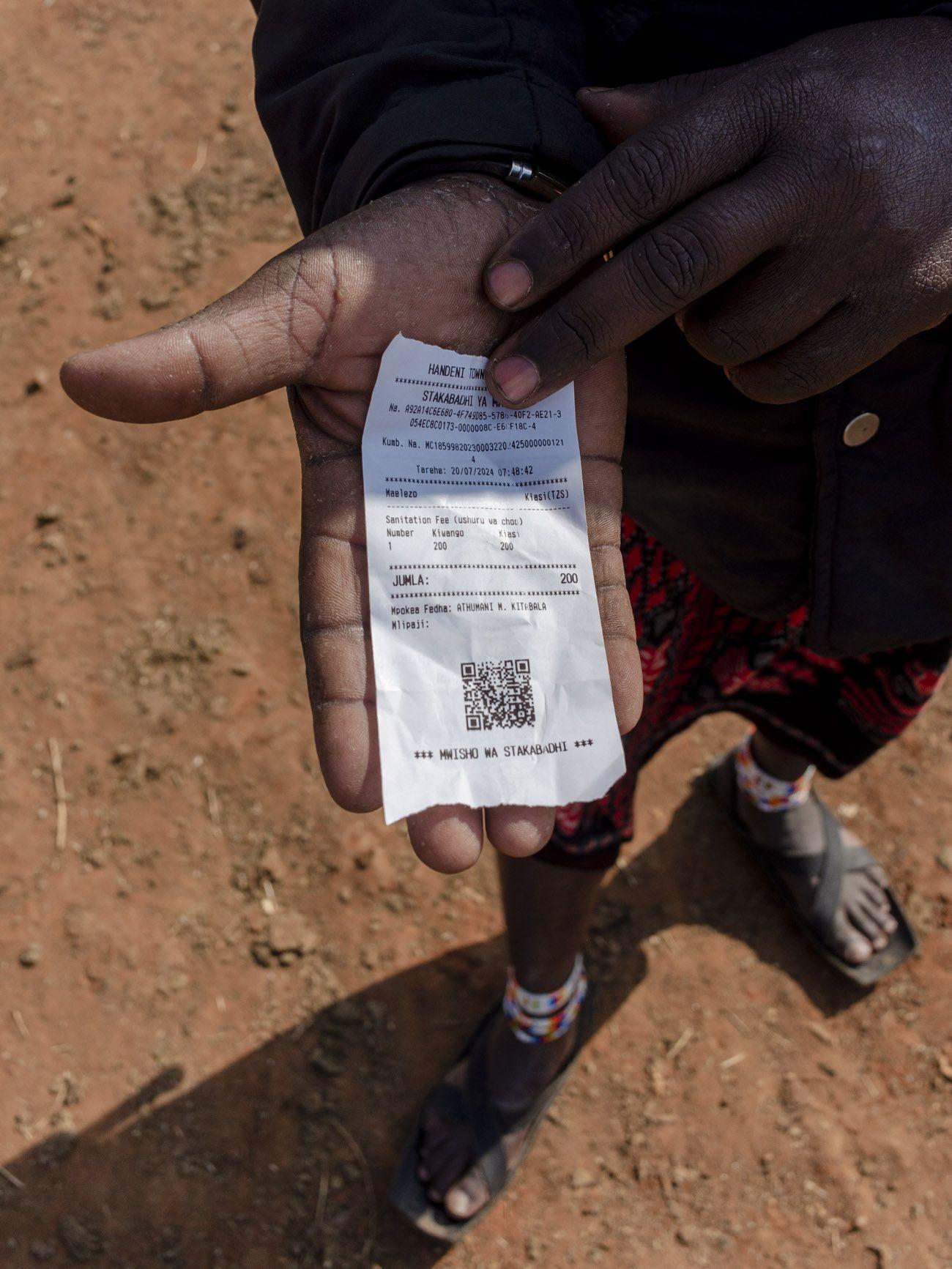
Besides the cows and sheep and goats and Maasai and Swahili and motorbikes and food, there was another fine attraction here – a public toilet. A nice one, brick-built. Next to it sat a smartly dressed Swahili man collecting money. I do not know whether he was brick-built too, but that is not essential to our story. And here one of the loveliest incidents of my stay in Tanzania happened to me. I naturally made hearty use of the toilet and paid. The smartly dressed, non-brick-built Swahili man gave me a receipt from the cash register, complete with a QR code.

I had not reckoned with that. Getting a receipt in a Tanzanian toilet belongs in the same category as meeting an alien. I took a closer look at the toilet man doing the charging, but he looked perfectly normal, so no, those two things did not happen to me at once. Because had he by any chance been an alien, I might have spent the rest of my life doing interviews on the radio, on television, and on a single-topic podcast.

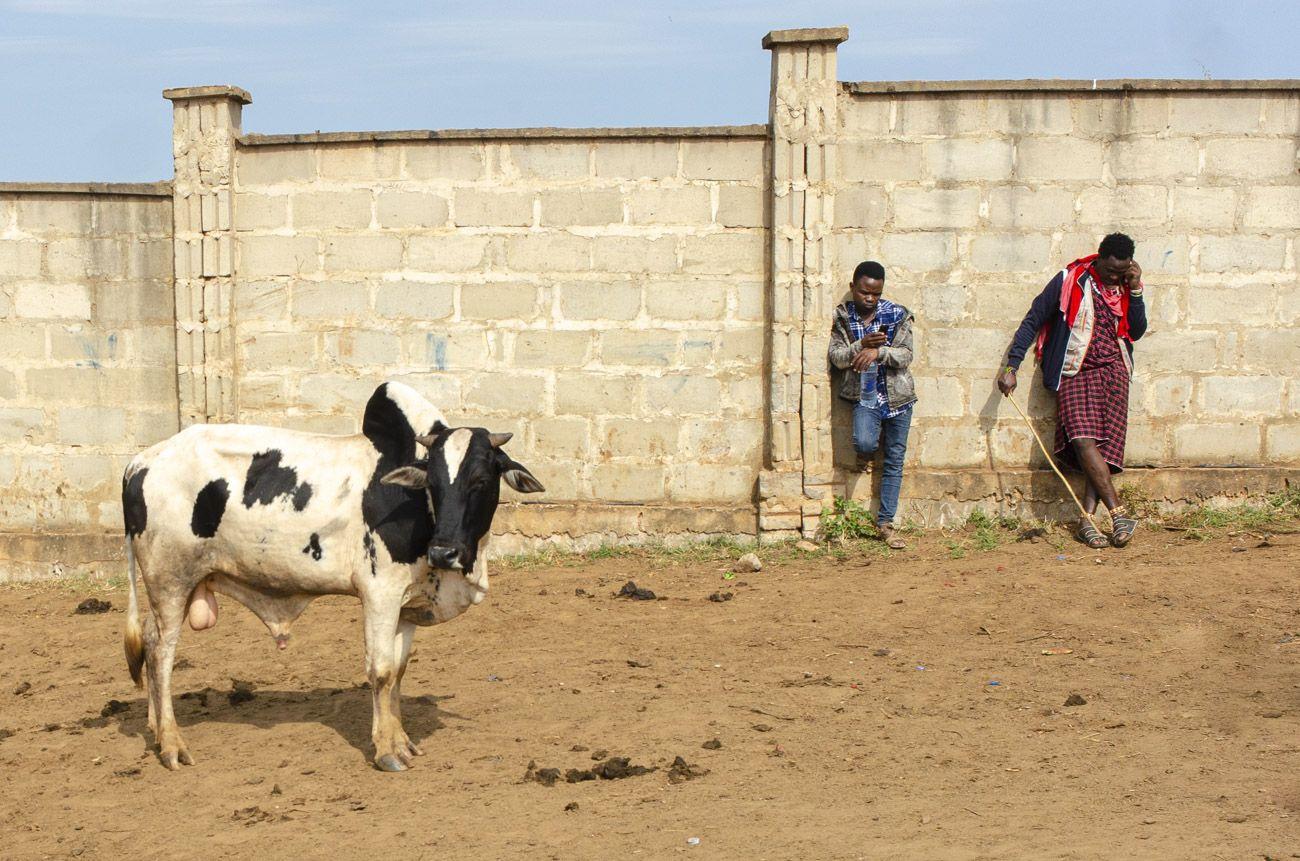
A revolutionary cow decided to overthrow the old order and brought a Maasai man and a Swahili boy to market for sale.

Share this