If you expect that after all these years in Mbogoi I can now hold a fluent conversation in Maa about the condition of the cattle and the weather forecast, I am sorry to disappoint you. I cannot. My Swahili has roughly the life expectancy of an open yoghurt in the African sun, but compared with my Maa, I am practically an expert.
A Linguistic Trap in the Bush
Right at the start, Sekenoi gave me a strategic piece of advice: “Learn Swahili first and foremost.” It sounded sensible enough. It is the key to offices and to the market in town. The trouble is that in Mbogoi, Swahili is almost useless to me. I spend 90 percent of my time among the Maasai, and they speak to each other exclusively in Maa.
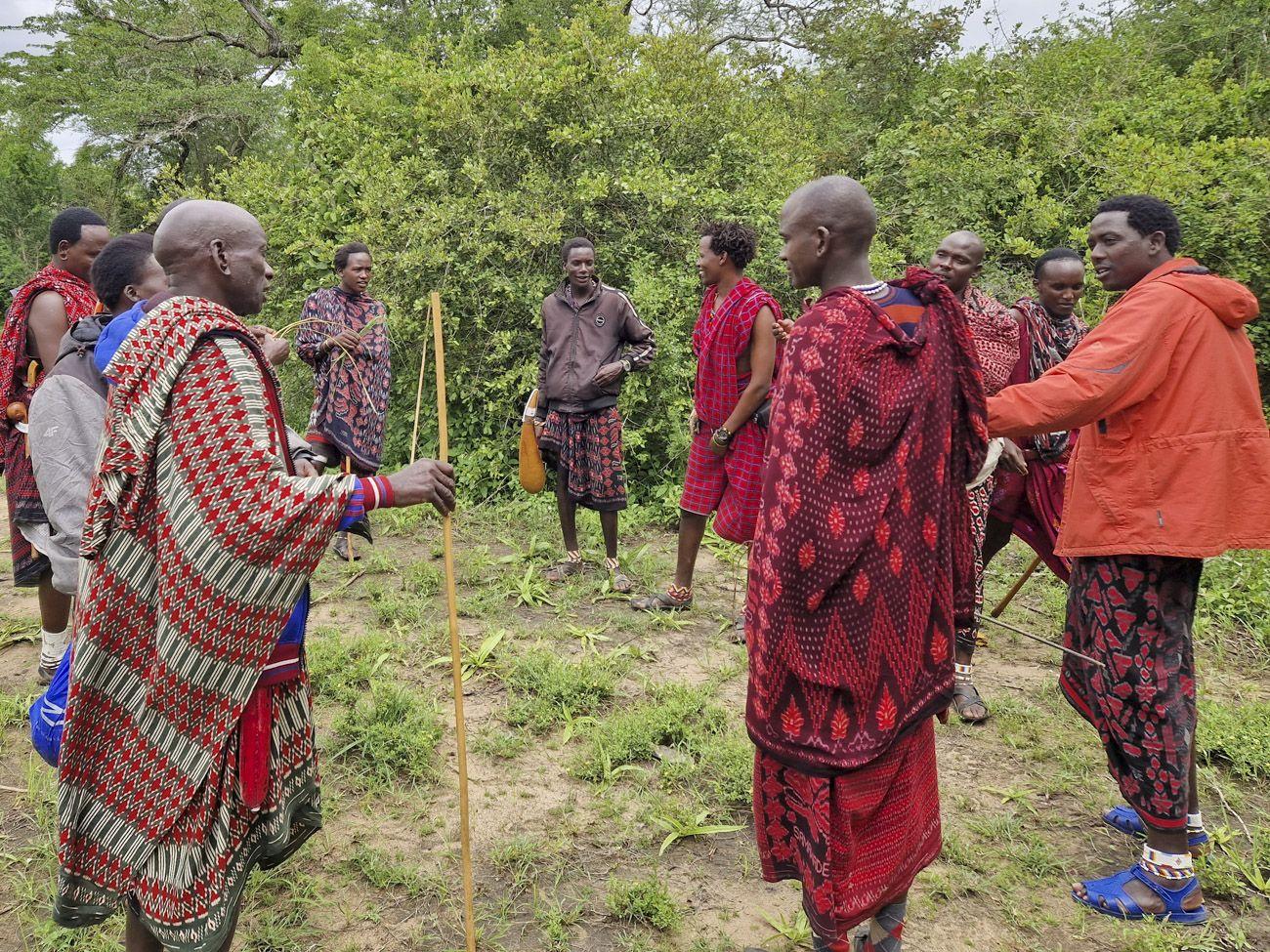
Out in the bush, one merciless rule applies: if I am alone with a Maasai and the person speaks English, we talk in a broken patchwork of English and Swahili. The moment a second Maasai joins us, my conversation is over. They automatically slide into Maa, and I become a silent observer who can do little more than sit there peacefully pondering the immortality of the maybug.
Of course, that only applies in the better-case scenario. If the Maasai person does not speak English, I am thrown straight into the muddy waters of Swahili and Maa and do my best not to drown.
Once, we tried an experiment. There were five of us sitting together, and we agreed that only Swahili would be spoken. The fine for every Maa word was 1,000 shillings. The game ended after ten minutes. There were 5,000 shillings lying on the table, and everyone carried on in Maa with visible relief. I cannot really blame them, though. If there were five Slovaks and one Maasai, we would probably slaughter him with Slovak after five minutes as well. In the bush, your mother tongue is simply stronger than any agreement.
My “Elite” Vocabulary (Survival Maasai for Beginners)
My Maa vocabulary is thin, but for survival it is, almost, enough. The basics are Kaitaa (How are you?) and the universal reply Sidai (Good). I spin that pair round and round like a record with a scratch in it.
Then there is the ritual for us women. When men greet me, it goes like clockwork:
They call out Yeyo.
I answer Eo (something like “I hear you”).
They say Takwenya.
And I round it off with a triumphant Iko.
The best bit is that every man in the group greets me separately. If there are ten of them sitting there, I go through the whole routine ten times. Once, in a fit of European educational efficiency, I made a grand circle in the air with my hand to include the entire group and declared one collective “EO - IKO.” They laughed warmly at the latest invention of the mzungu, but that was the first and last time my “efficient shortcut” got through. In the bush, time is simply not there to be saved.
The rest of my vocabulary is pure pragmatism: Ou ene (come here). When I am handing someone something, a brief Ngo (here you go) is enough, and when I want something, even the possibly rather cheeky, by our standards, simple Au (give) does the job. My favourite word is dog - Orkushi, which sounds like an expensive sushi set - and cat, which is called, quite simply: Meow. At last, a language I can understand without a textbook.
The very first word I understood was Ashe (thank you). Right behind it in my private ranking comes my life motto: Mayolo (I don’t know). I use it as a universal answer to 90 percent of all questions about life, the universe, and the current state of the cattle. But then there is the word that carries the greatest weight for me - Engarre (water). Since water is the narrowest bottleneck in the bush, it was out of respect for that very fact that we gave our civic association that symbolic name. In the hope that one day we really will bring it to Mbogoi in full force.
My Strictest Trainers
My Swahili is progressing at the pace of a lame chameleon. My teacher has the patience of a saint, but I would bet good money that after our lessons he secretly goes off to bang his head against the nearest baobab. Whatever I painfully learn from the textbook on Monday, I manage to let evaporate from my head by Wednesday in the dust of Mbogoi.
Luckily, I have neighbours - Ali, Rukia, and their two-and-a-half-year-old son, Shabani. My conversations with the adults are pure pantomime. Sometimes we spend an hour waving our arms about, trying to work out whether we are discussing a broken fence or an approaching storm, and in the end we just laugh helplessly over tea.
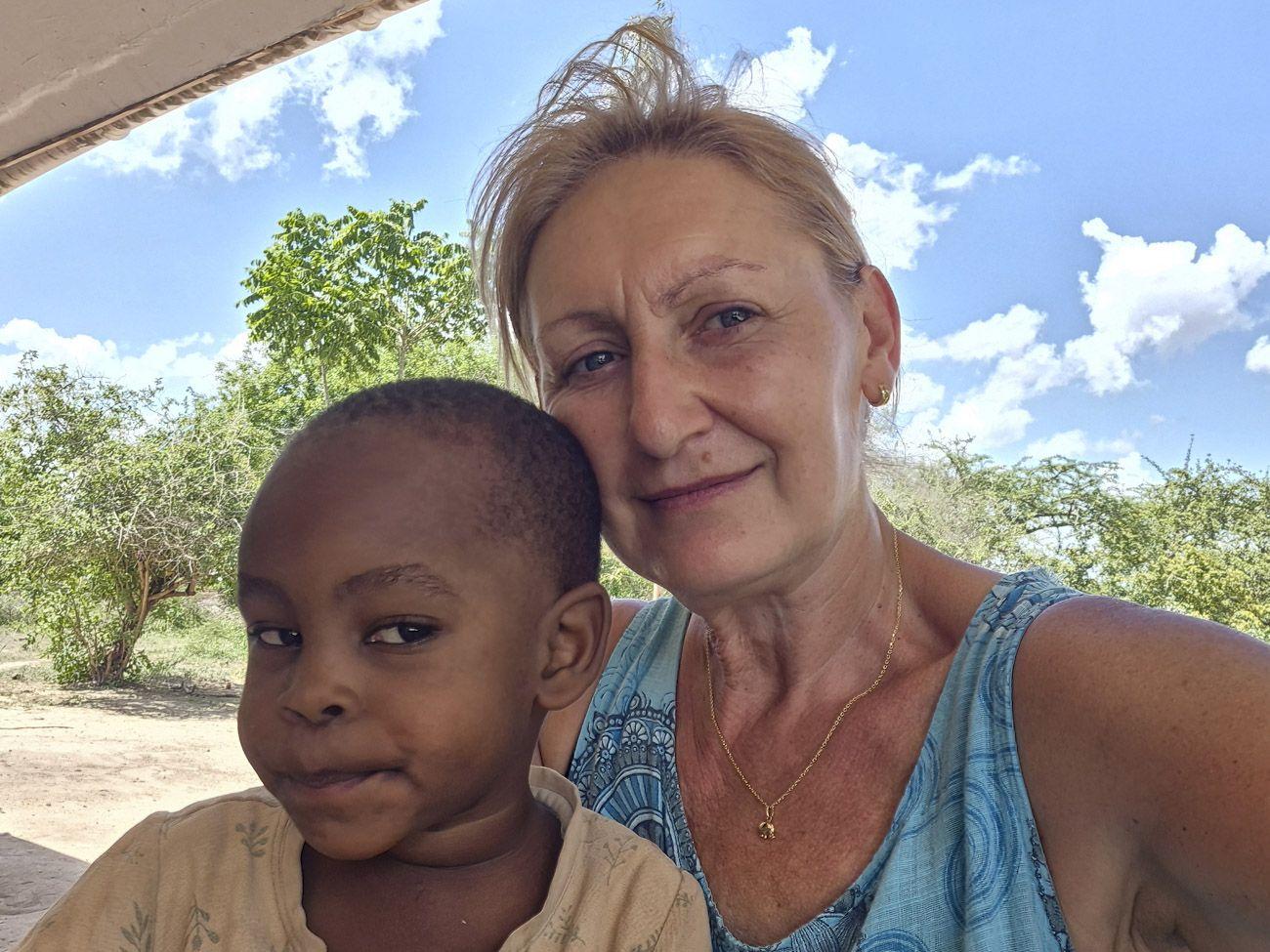
My real Swahili coach, however, is little Shebi. He has no respect for gestures or diplomatic smiles. He plants himself in front of me in the dust and launches into a continuous Swahili monologue. No simplified vocabulary, no patience, no mercy. I stand there desperately fishing in my head for at least one familiar verb while he explains something terribly important with a perfectly serious face. Then, after about a minute, he realises that all he is getting from me is a blank stare, turns on his heel in resignation, and walks off. His back says it all: “There is simply no having a sensible conversation with you today.”
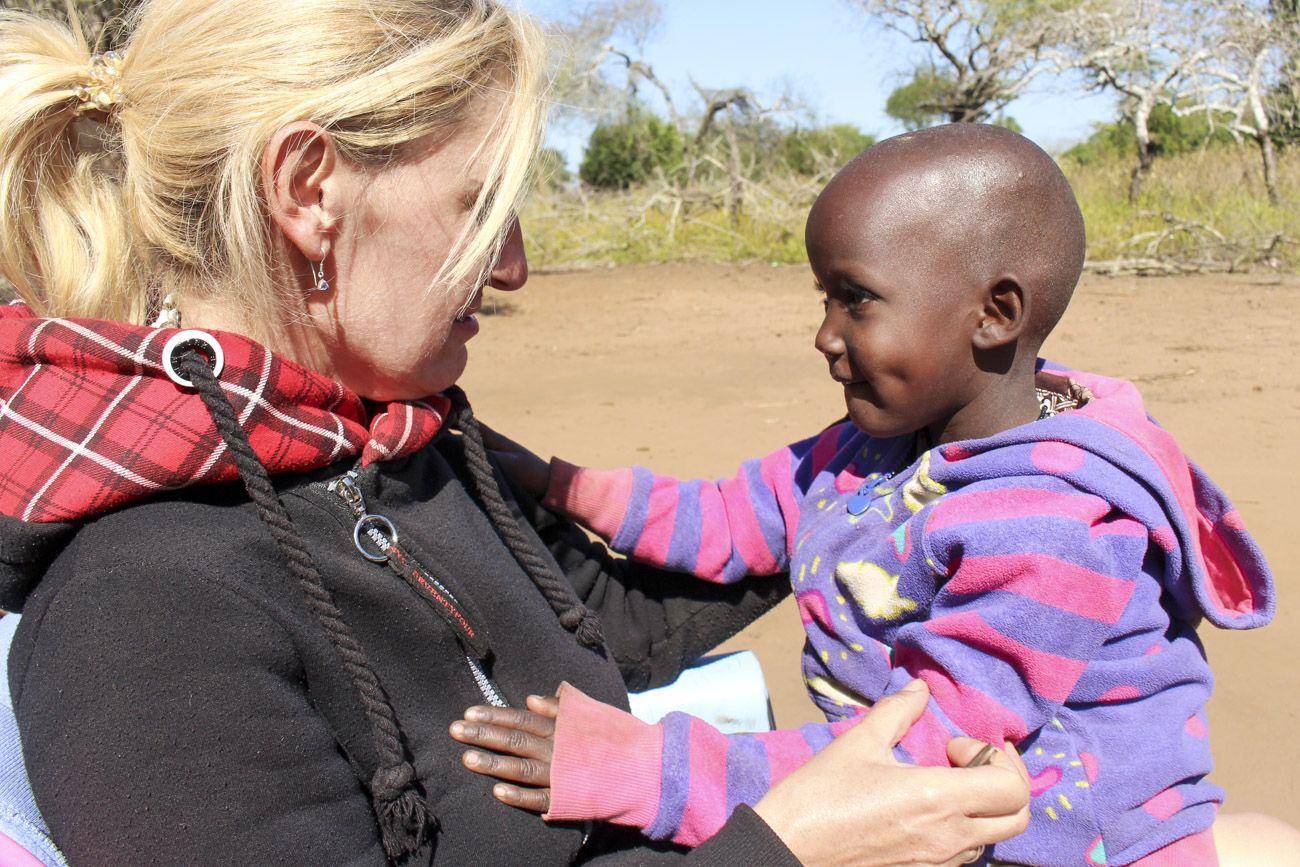
And if Shebi is my uncompromising instructor, then little Silora is my evening news bulletin in Maa. Every evening, without so much as asking permission, she jumps onto my lap, looks me straight in the eye with a solemn expression, and begins. With enormous dedication, she gives me a full account in Maa of everything that happened in the boma that day. Who went where, what the children were doing, and what pressing matters the cattle had on their minds. I do not understand a single word, but at that moment it does not matter. Silora does not need my grammar. She just needs a listener. And I am grateful that, at least in that respect, I count as an expert.
I may not be leading deep conversations in Maa for quite a while yet, and my Swahili may remain at the level of a three-year-old, but I have known for a long time now why I am here, and why we do what we do at Engarre. Every day I learn something new here - sometimes a word, sometimes patience, sometimes simply that it is enough just to be present. And if you are curious where this journey for water is taking us, you will find it on our website.