Maasai warriors wrestle with the alphabet
William, another local character, a Maasai who, by local standards, spoke fairly decent English and even knew twenty words of Polish, which is about the entire vocabulary a person needs in life. As was the general rule, he spent the whole day moving from one place to another, staying here a bit longer, there a bit less, exchanging a few words, thinking things over, and moving on again. In this same style he would always stop by us as well, we would chat for a while, toss a few words back and forth, and once we had tossed about all the words we happened to have at that moment, he would go and toss words around somewhere else. Once, while he was sitting with us like that, I asked him whether he could read and write. That is not the custom there, literacy is hardly the majority genre. He said he could not. So I asked why he did not learn, since it is not really all that difficult. To that William replied, quite amusingly, that he simply did not have time for such things.
Even Alojz once, very quietly, confided only to Renča and only after a few Konyagis that he too would like to know how to read and write. Although school attendance is compulsory in Tanzania, children usually have to work, and only those from wealthier families go to school, and only some of them at that. They could count, true enough, but that too was nothing to write home about. For instance, when goods were delivered to the shop, they wanted to work out how many fizzy drinks there were in a crate. The bottles were arranged in four rows and five columns. As they were counting them one by one, Renča came along and said twenty. Ever since then they have regarded her as a mathematical genius, because no one before had managed to count it that quickly. After all, the magic known as the multiplication table belongs to mysterious institutions such as a university of mathematics, not to the bush. I even once tried to teach Ndari the absolute basics of multiplication, things like two times two, but when he started giving off smoke, I understood that this arithmetical art could also be a deadly weapon.
The biggest question was this: why should they learn to read and write when they have managed for hundreds of years without this particular art? Civilization is coming, roads are being built, mobile phones are being introduced. Just as every kind of progress brings positive changes, such as better medicines or higher incomes, it also brings negative ones. In the front line come thieves and swindlers. For instance, the village already had three slot machines. Literacy therefore always comes in handy, so a person can tell the difference between someone who wants to rob him and someone who genuinely means well by him. The reasons, then, are perfectly clear: rapidly advancing progress and civilization, all without anyone ever asking the Maasai whether they actually want it or not.
So the idea was clear enough: we had to start adult education. When I revealed this novelty to Renča, she surprisingly did not have twenty reasons why it could not be done. She even said the thought had occurred to her too, and that if I really wanted to, we could try thinking it over. After several weeks of trial thinking, action began. The first victim of our civilizing project was Mayor Munikity. That is to say, we were trying to work out whether it made any sense at all, whether people would come, and whether they would keep coming. The idea thrilled him. He even promised that if we found a teacher, he would find people who would, entirely voluntarily, of their own accord, and very gladly, learn to read, write, and count in their old age.
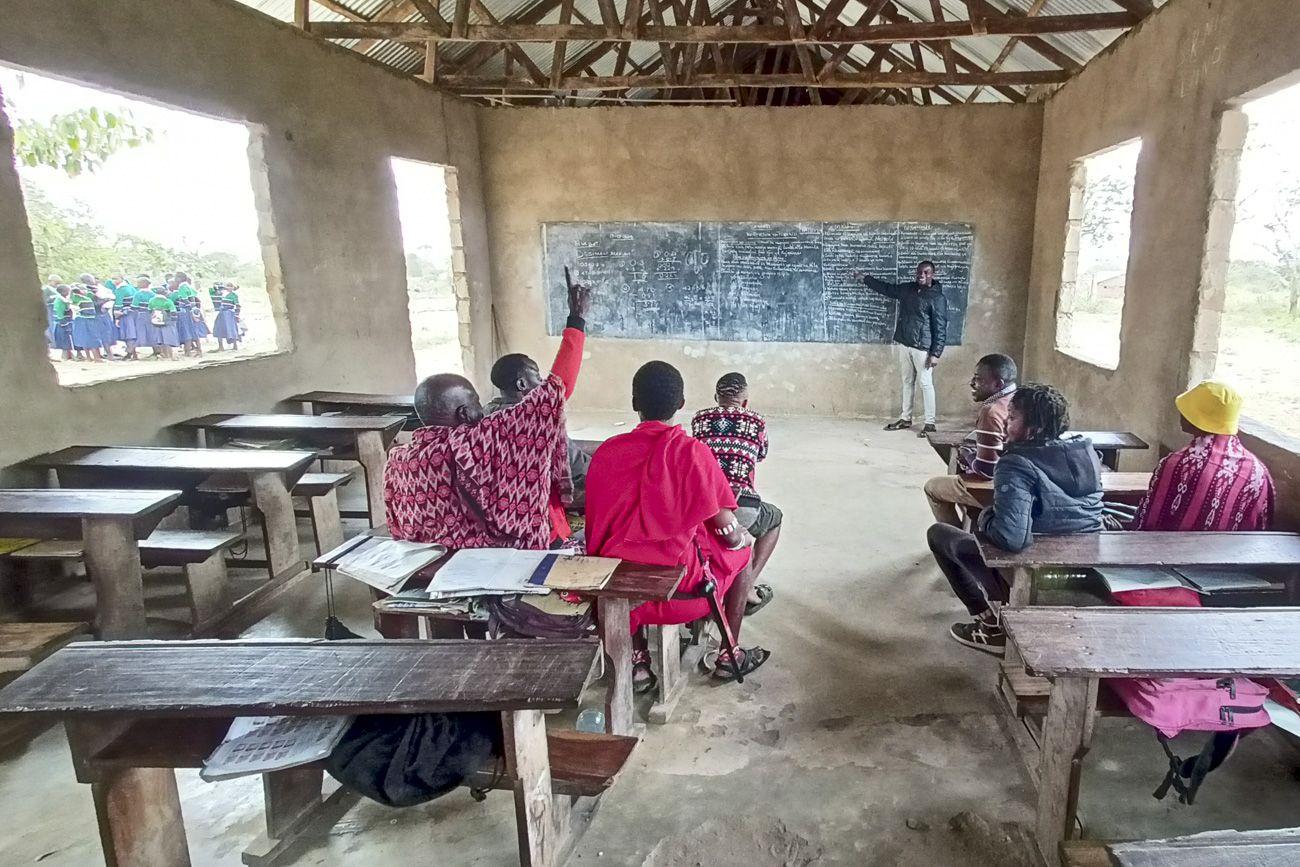
The next man marked for destruction was the teacher Msabaha. Renča lured him to this secret conspiratorial meeting under the pretext that he would get free beer. And once there was more than one beer, he happily and enthusiastically, and naturally for a regular fee, agreed that he would teach in the afternoons. Then again, in a village of a hundred and fifty to two hundred inhabitants, there is not much to do after lunch anyway. So we have people, we have a teacher, and now we need a place. Off we go to the school. It is not very far, about a hundred metres from the house, so the preparations took a few days. The school is a building in which children sit. It has holes for windows, holes for doors, but there are no doors, and the windows are not glazed. It has a roof through which it usually does not rain.
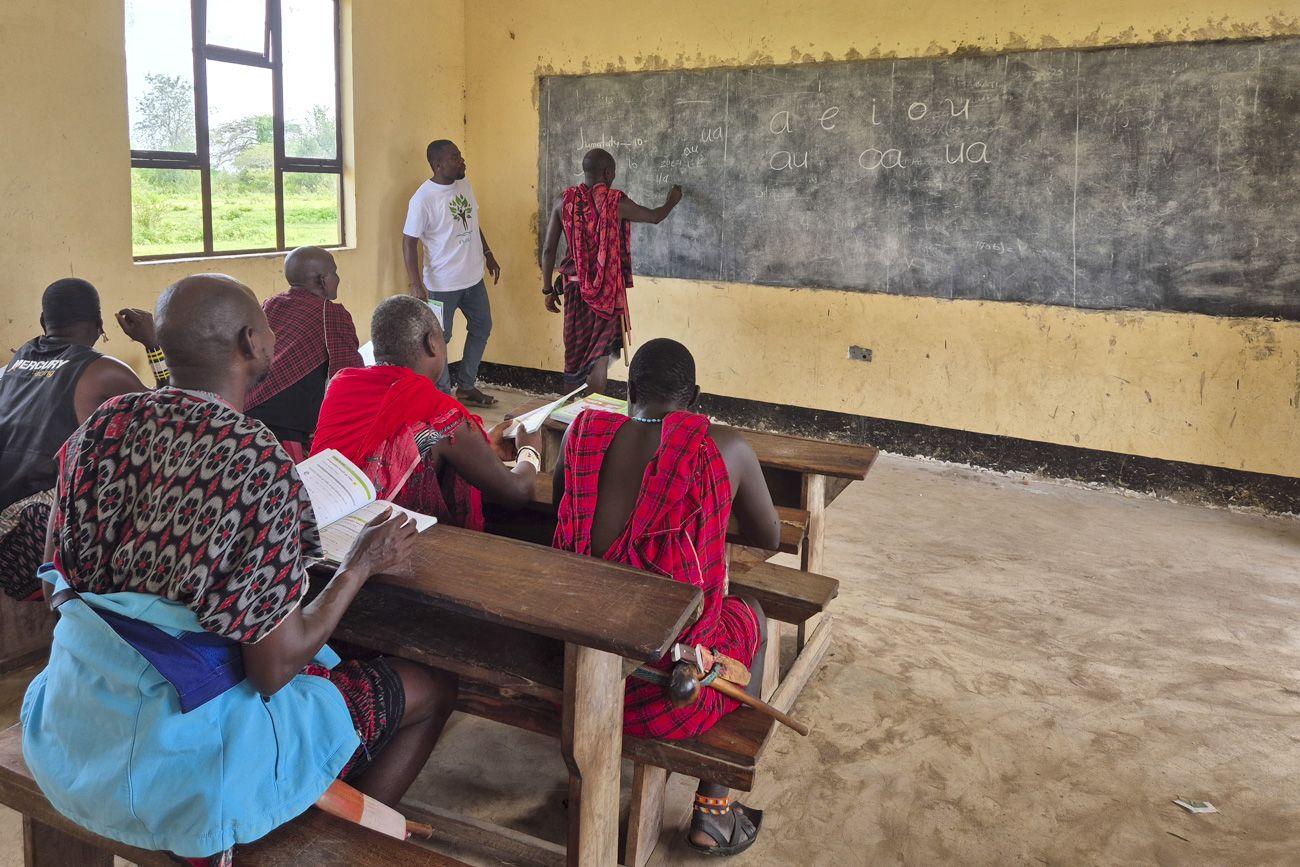
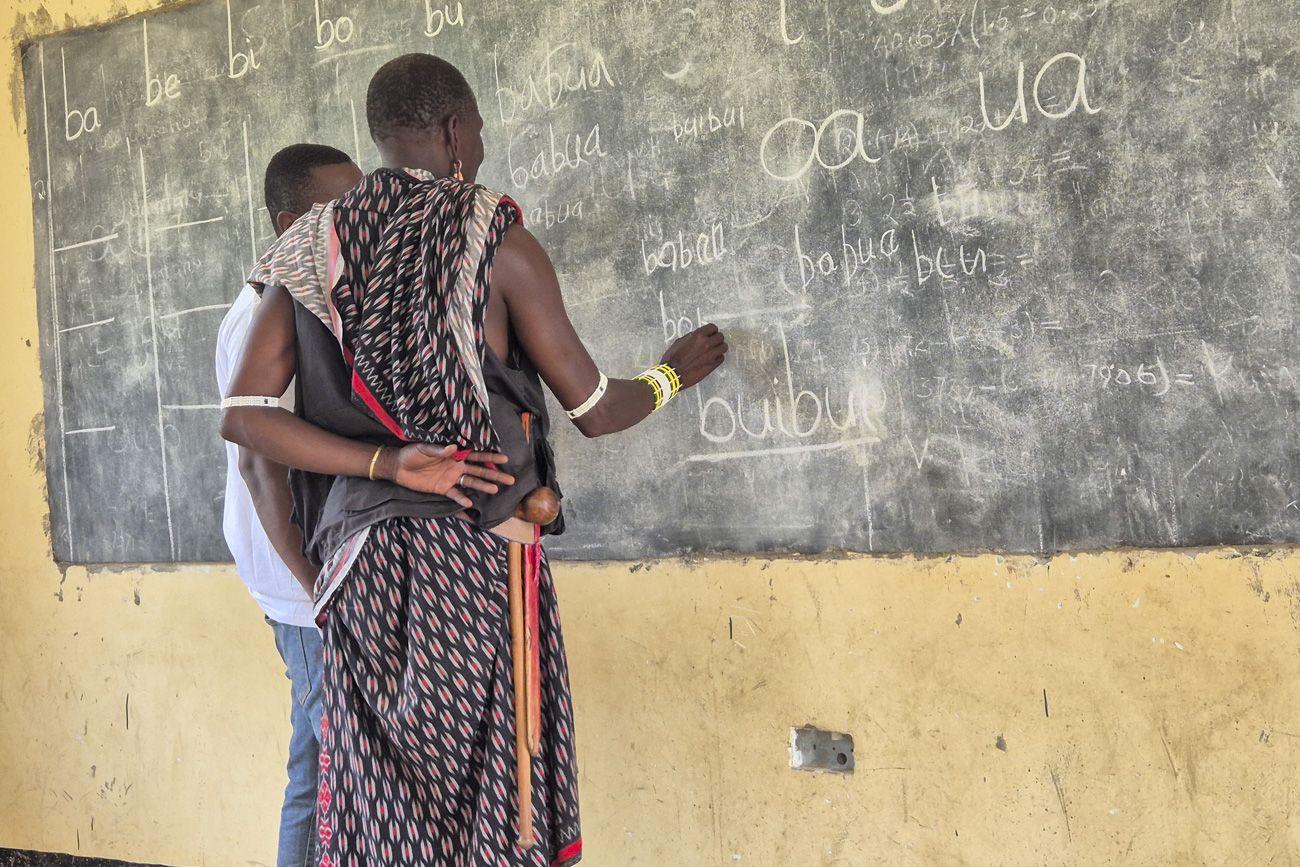
The implementation of this project, that is, the first lesson, unfortunately began on exactly the day we were leaving Mbogoi for home. But the first reports were positive: eight people had turned up. That was in the summer of 2024. Since then, Renča has been in Africa several times, and attendance has been growing nicely, even reaching the grand total of twenty people. When I saw photos from the classes, it struck me that a few improvements were still missing. For example, when Maasai talk or listen, they stand in a very, I repeat, very elegant way, leaning on a stick and nodding wisely. We could introduce that posture in the classroom instead of sitting at desks, which must surely feel unnatural to them. Nor would the idea of compulsory Kyrgyz lessons, or founding a figure-skating club for talented children - pardon, adults - be likely to catch on in the bush. The diseases of civilization, as one of the blessings of progress, are not yet a problem, because they only arrive in the second, third, or fourth wave. So including them as a school subject would probably be just as pointless. Even so, I think John Amos Comenius would be weeping with joy.