It was a joy to watch how people here mix a random beverage in a mug with such enthusiasm. Stirring sugar into tea, however, is no simple task—it requires passion, energy, and absolute determination. Mixing sugar into tea is a high-energy task—you need to stir so vigorously that about a third of the tea inevitably escapes the confines of the cup. At that moment, a triumphant expression appears on your face—as if manna had fallen from the heavens, the North Pole had just been discovered, a time machine had popped up in your closet, and the table is now thoroughly soaked with the mug’s contents. A victorious grin spreads across your face—as if the heavens opened, the North Pole surrendered its secrets, a time machine appeared in your wardrobe, and the table was baptized in tea.
Tea Chai
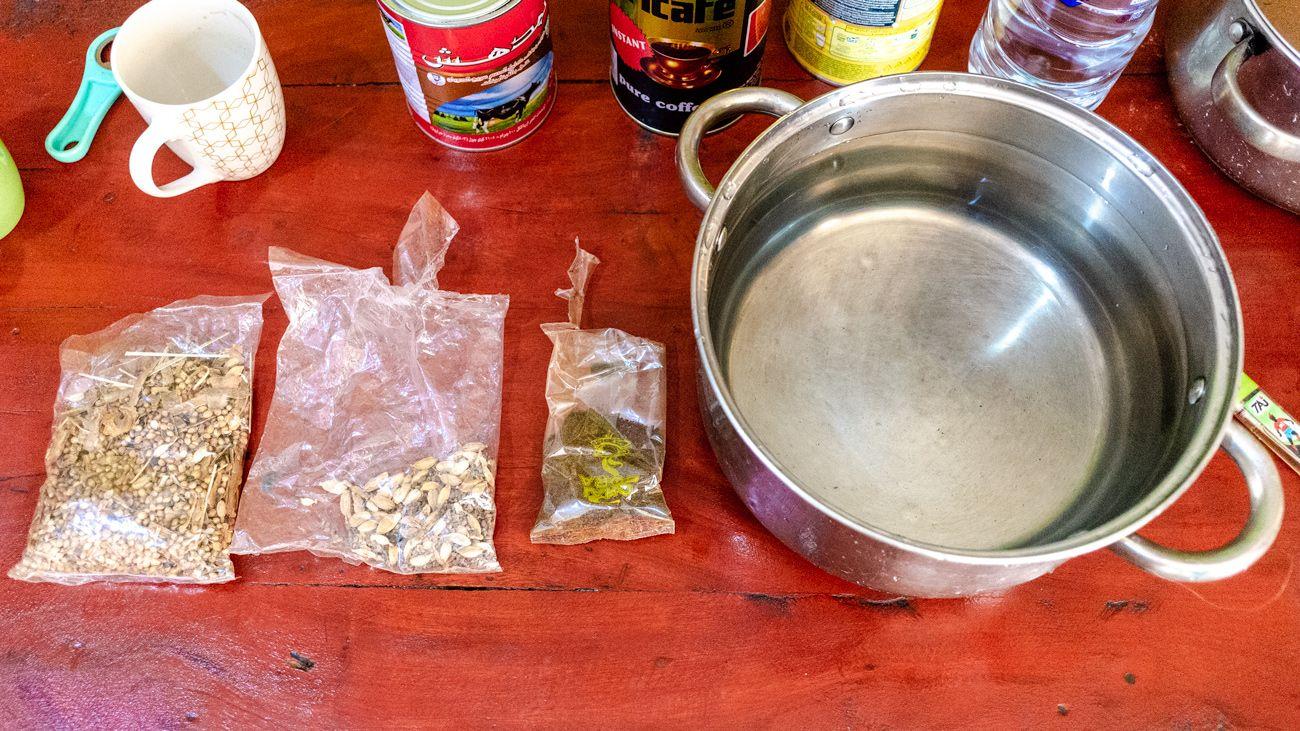
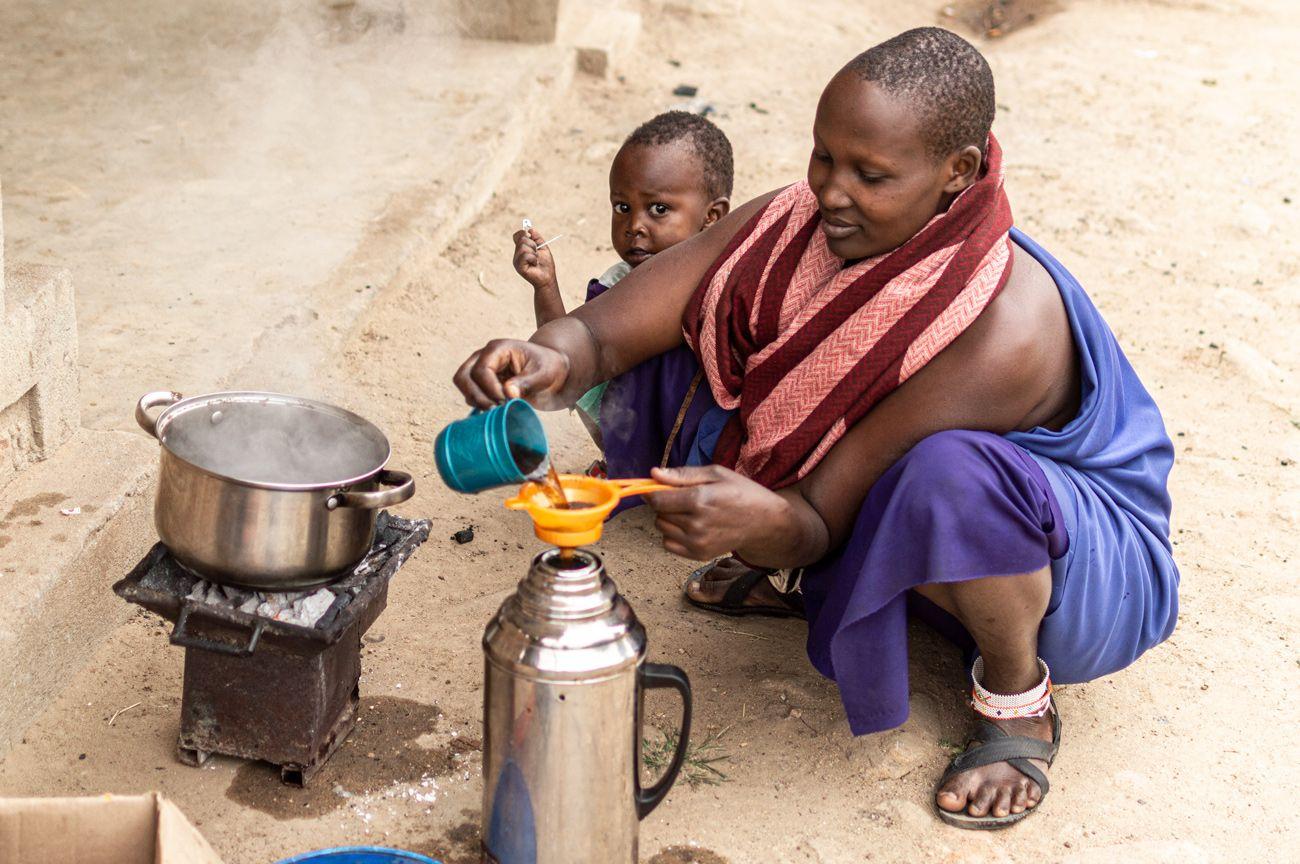
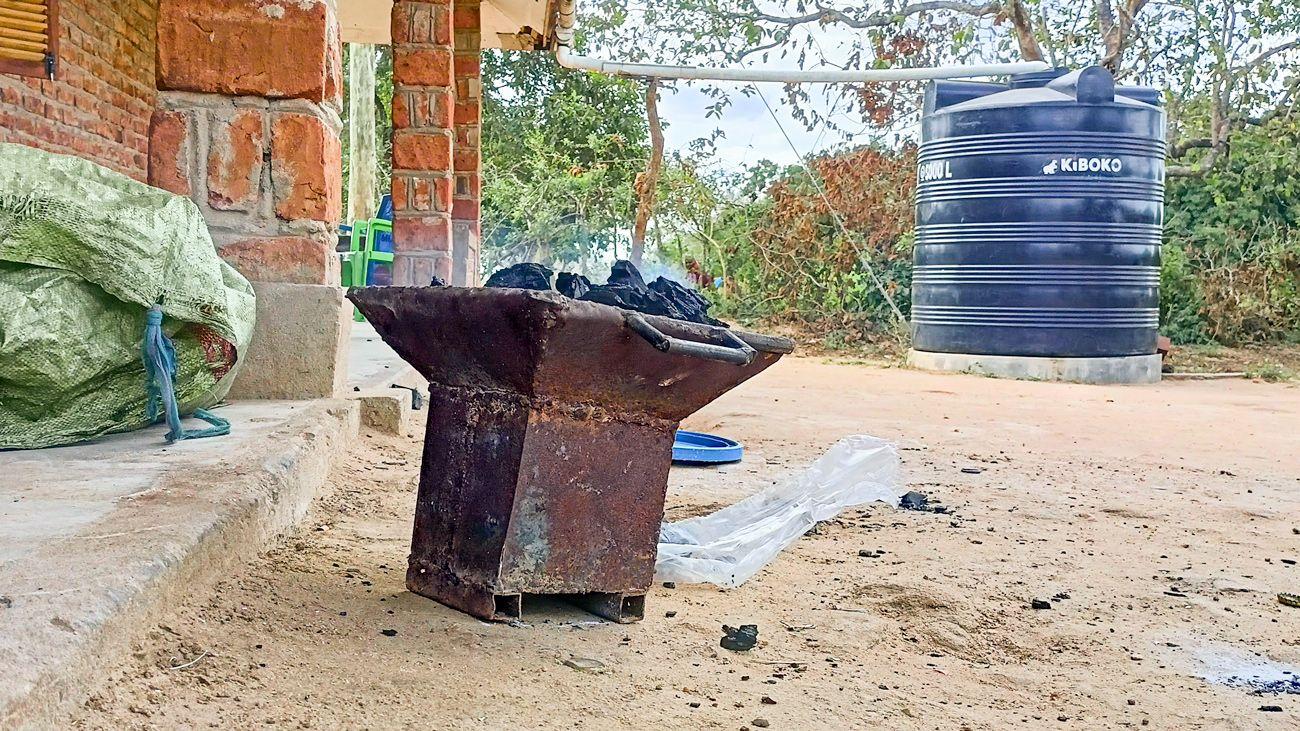
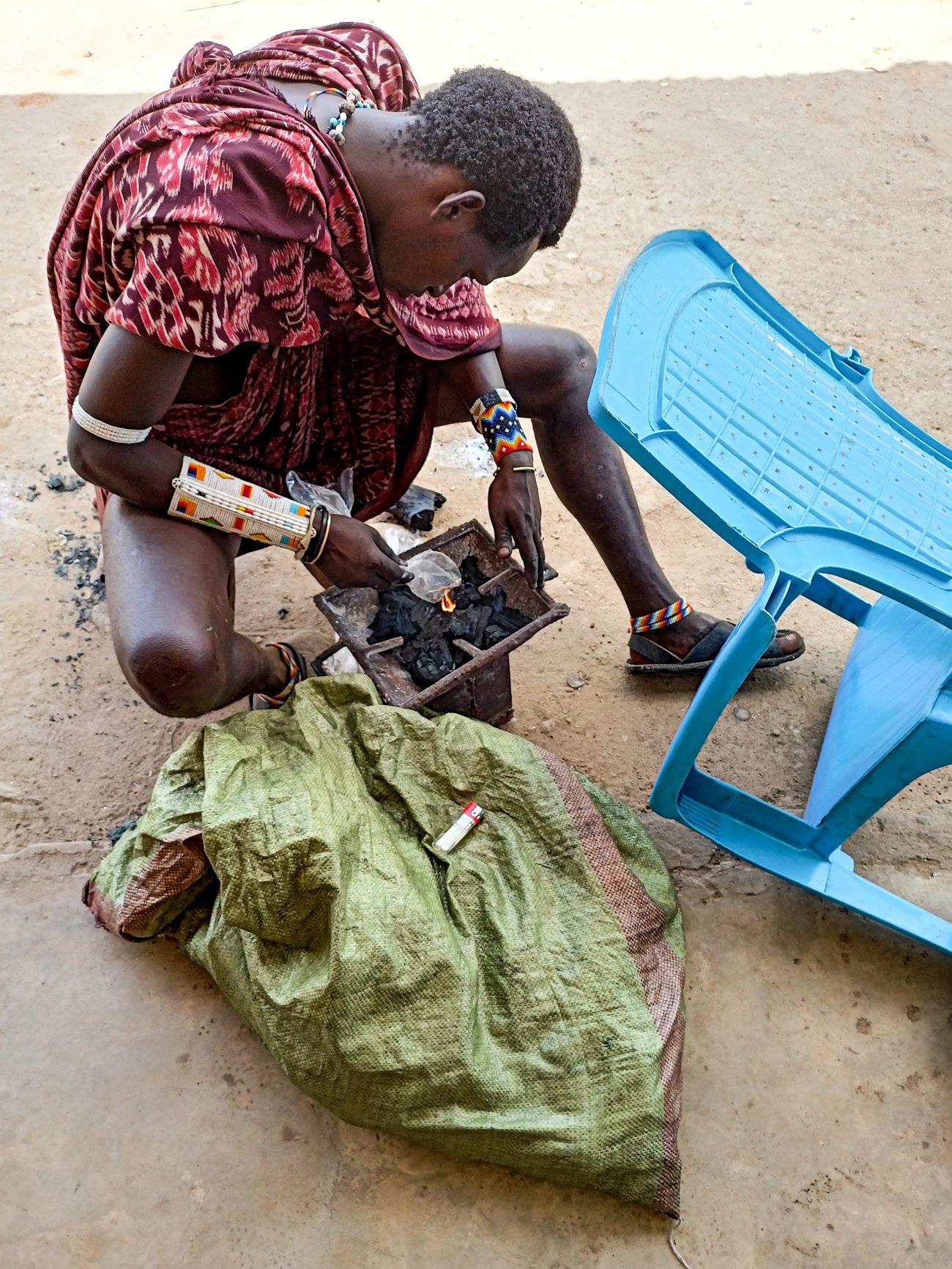
Making tea in local conditions wasn’t exactly straightforward. First, you needed to light the jiko—a small iron stove powered by charcoal. It had one sneaky trait: it only worked with charcoal. And charcoal was never, ever where the jiko was. I invite you to join me on an adventure of tea-making. It begins with Renča cheerfully shouting that tea needs to be made and ends with wiping spilled tea off the table. At the start of this theoretically well-thought-out but practically haphazard operation, Renča discovers that we’re out of tea. The discovery is simple: open the two-liter thermos, where tea is usually kept, turn it upside down, and if nothing comes out, it’s clear—there’s no tea.
At this dramatic moment, Renča decides that someone has to make tea. Since I’m the older European ignoramus and Sekenoi is a kind, non-confrontational young African, guess who gets the job. And so, the mission begins! This moment might deserve a movie clapperboard, but we’ll do without one. The second Sekenoi hears the assignment, he leaps out of his chair, and in five minutes, the tea is ready.Of course, that’s just a joke. Take two! The first attempt flopped; let’s move on to the next scene. If the thermos has any tea left, he dumps it into the nearest glass and nonchalantly delivers the news to Renča.
After a passionate discussion about whether the thermos is full or half-empty (one day, I might write a book titled Pointless Questions in Culinary Arts), Sekenoi finally concedes that any resistance is futile and gets to work. I would like to emphasize the word "slowly." Very slowly. Fortunately, the small iron stove powered by charcoal, known as the djiko, is usually not a problem. It’s exactly where it’s supposed to be—sitting in its spot, approximately 50 meters from the house. Officially, the mission is underway: the thermos is empty, the running shoes are laced, the shorts are ironed, and the djiko is within reach. Which brings us to the start of Chapter 2—Charcoal.
As I’ve mentioned before, charcoal is sneaky—it has a habit of hiding underground, where it’s nearly impossible to find. Thankfully, ours is wooden, African, and most definitely not buried. Unfortunately, charcoal has other ways of being problematic—it’s hard to use it when there’s none to be found. There’s no charcoal in the kitchen, none in the shop, and not even a trace of it anywhere in the house.
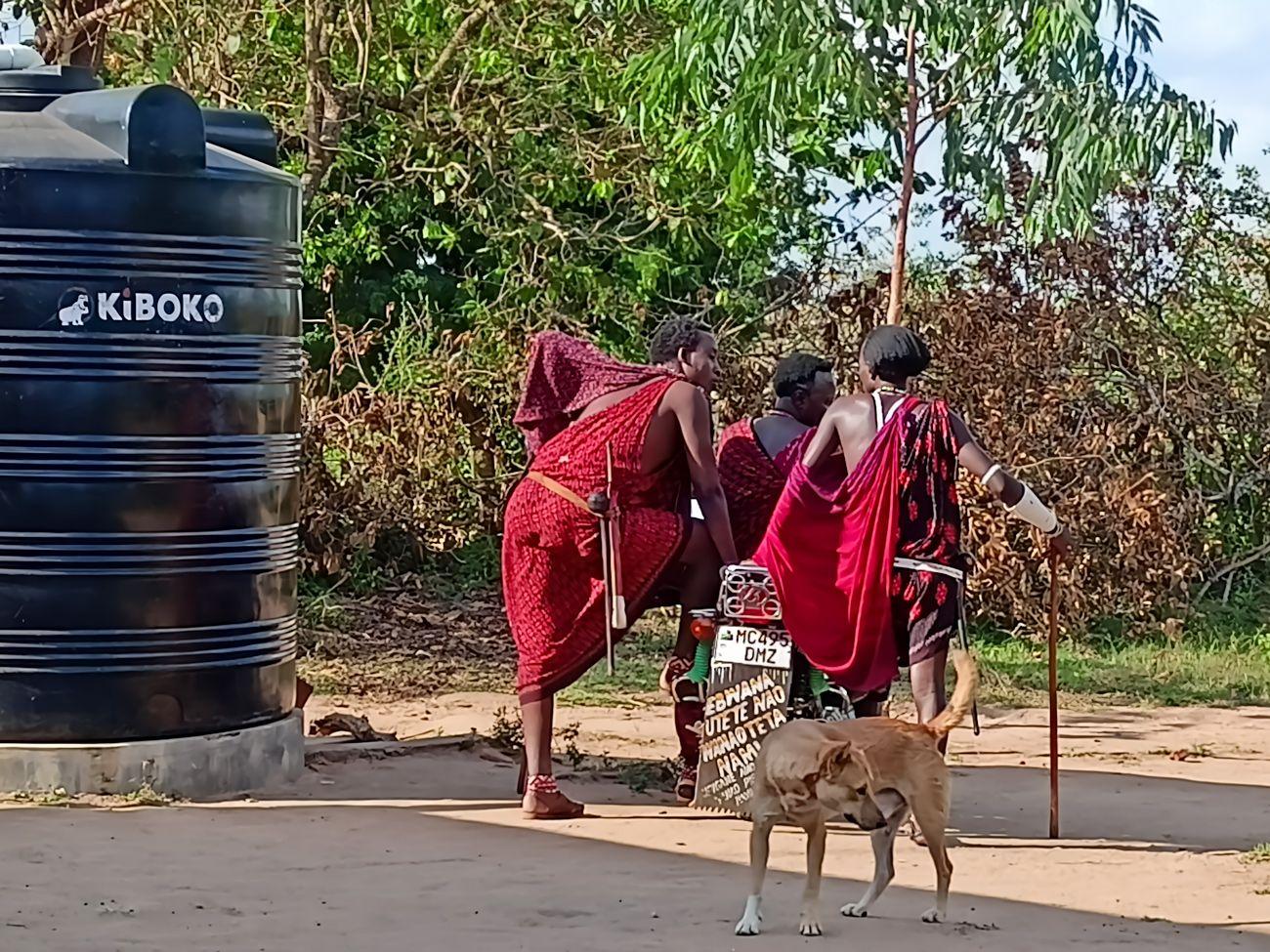
Sekenoi hops onto the motorbike without hesitation. Once he’s on it, it’s immediately clear who’s in charge. With confidence and style, he rides about 50 meters to the person selling charcoal. On his way, however, he bumps into a group of Maasai with “breaking news”—events from the past hour, during which they stood around discussing what had happened. Sekenoi would love to stay and chat about events that are yet to unfold in the next hour, but he’d have to wait for those.
In the end, he realizes Renča would yell at him. And since Maasai generally have sensitive ears, they might lose part of their hearing. Sekenoi returns home about an hour later, still without charcoal. He couldn’t find the seller, but he met someone who knows a guy who sells it. That guy promised to let him know when he finds him. The timing is perfect—Sekenoi comes back about an hour after he left, just five minutes before the man on a motorbike arrives with a sack of charcoal.
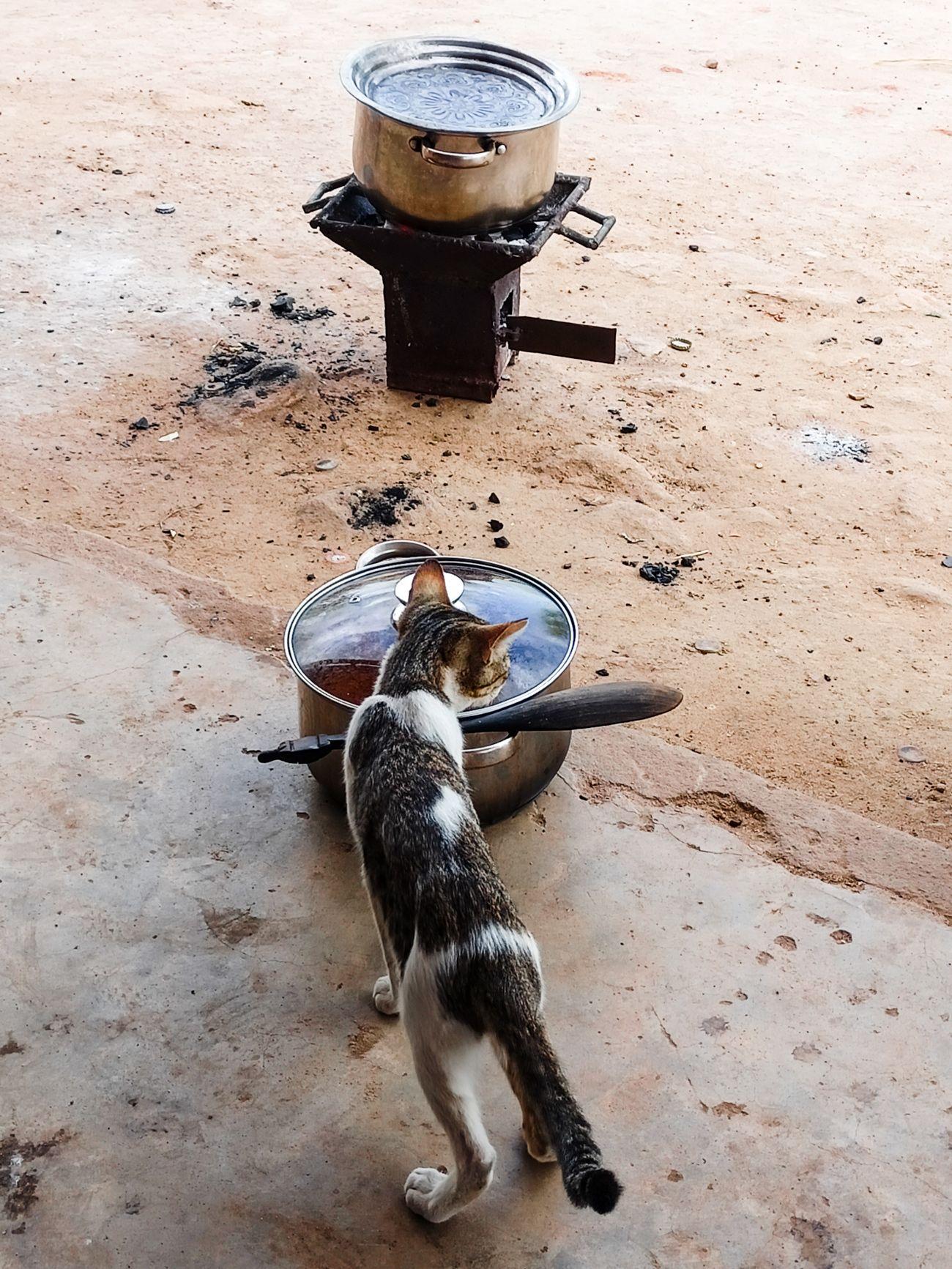
So now we have Sekenoi, charcoal, the djiko, Renča, and me, though I still have no idea what purpose I serve here. Pouring charcoal into the stove and crushing it slightly is no problem at all. It’s a moment of tension: the djiko is placed outside to avoid the smell indoors, but with no flat ground around, it has to be balanced just right to keep the tea pot steady. The tension stems from Sekenoi’s firm belief that the djiko is steady, contrasted with Renča’s certainty that it’s so off-kilter it will take both the stove and the pot down with it. To me, the whole thing is pure fun, and I can’t help but throw in a bit more fuel to the fire.
Only later did I realize that for the Maasai, building something perfectly upright and perpendicular to the ground might truly be a challenge. In the bush, everything is skewed, and right angles are a rarity. Branches, trees, shrubs—they all grow at an angle, making it genuinely difficult to find a right angle. Back home, it’s the exact opposite—a paradise of right angles and vertical lines. Everything is square and upright; from childhood, we’ve been used to how things “should” look. So the djiko and the Leaning Tower of Pisa are my two favorite slightly less-than-perpendicular things. Renča twists the djiko on the ground in various directions, trying to find the flattest spot possible. When she finally succeeds, she proudly shows it off to everyone.
This is the magical place where the djiko creates a perfect right angle with the earth, the house, the sky, the sun, and, naturally, a passing donkey. The Maasai look at this in confusion, unable to understand what difference the djiko’s position now makes in comparison with the one before.. The whole situation reminds me of a computer game where you carry various items from one place to another, only to have a giant rock fall on your head and kill you in the end. And you still don’t understand why. The djiko isn’t lit yet. The next step is to get it burning. For this, a thick, sturdy plastic bag is used. You light it, and fiery drops start dripping onto the charcoal below. The drops keep falling until the plastic is entirely consumed. The smell of burning plastic spreads everywhere, and the charcoal begins to smolder gently.
Since this process would take too long on its own, you need to fan the flames using the lid of a bucket. And not just any lid—it has to be a blue one. Nothing else would work. The djiko is finally burning. The operation has been underway for two hours with unwavering intensity. And so, the concluding step—both triumphant and near the finish: placing a 2.5-liter pot of water on the djiko, then waiting with bated breath to see the result.
Making tea at home in Europe, after experiencing the Maasai algorithm, feels like a task designed for people with dull minds and weak muscles. The European algorithm is far too simple:
- Turn on the electric kettle (a one-click operation).
- Place a tea bag in a cup (manageable for most without instructions).
- Wait two or three minutes for the water to boil (time complexity: laughably low).
- Pour the tea, and you’re done (skill level: equivalent to a worm with five minutes of training).
The Maasai algorithm is a world apart. Each step is an adventure: tracking down the charcoal, bringing it over, crushing it, igniting it, balancing the djiko, and eventually placing a pot of water on it. The whole operation has countless variables, and each one has the potential to cause complete disaster.
I envy their ability to turn even the simplest of tasks, at least for us, into a grueling journey full of obstacles and adversities. In the end, though, despite great sacrifices in lives, morale, and fuel, they manage to overcome the journey. And it doesn’t matter that at its conclusion there isn’t a Holy Grail but just a simple cup of tea.
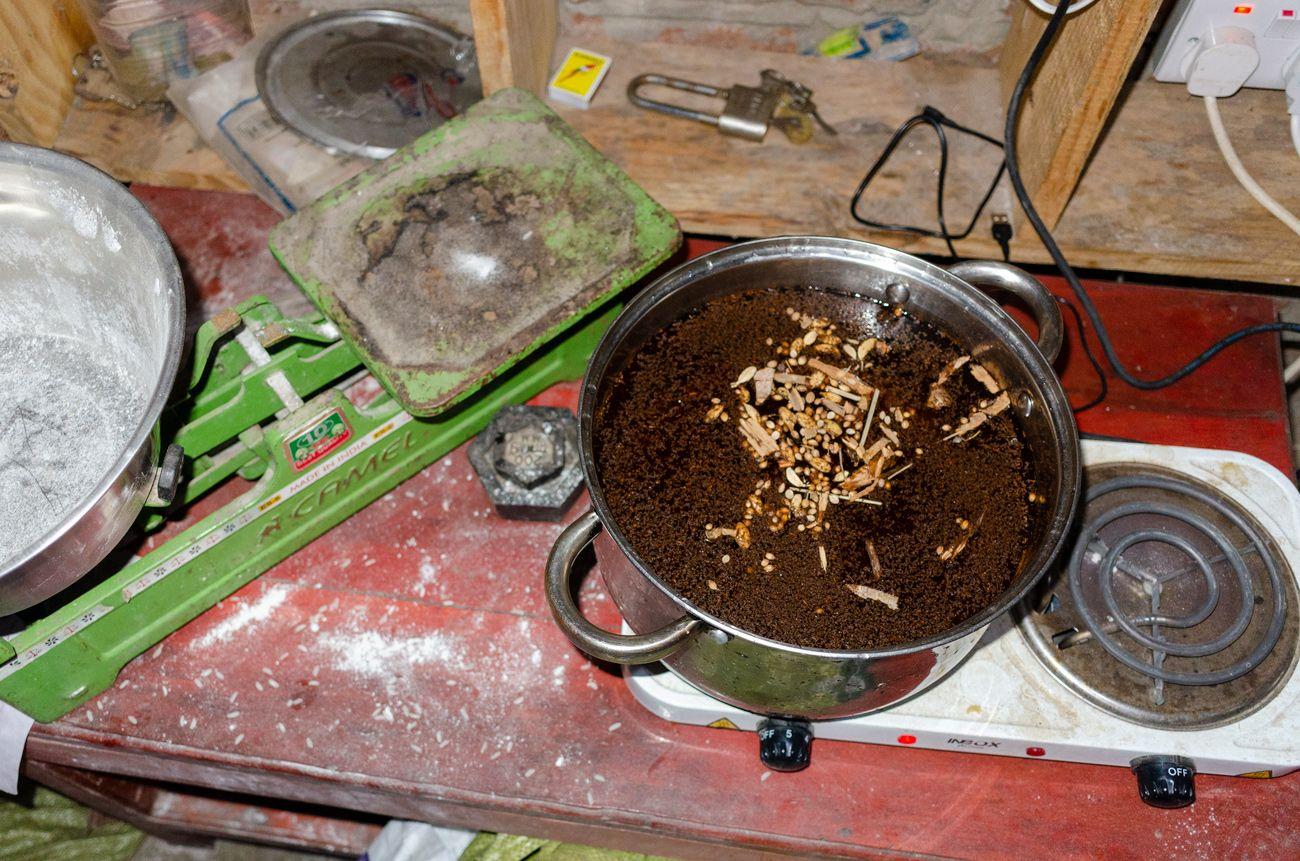
But since misfortune doesn’t only befall people but also the Maasai, this story doesn’t have a happy ending. Electricity, known as umeme, was introduced into our house. And, of course, Renča bought a classic two-burner electric stove (though I was the one who wanted it—but don’t tell anyone). At first, the locals eyed it with suspicion—after all, electricity had only been in the house for a short while. They touched the burners, which were indeed hot when switched on. Questions arose, like why the burners didn’t heat up when the cable wasn’t plugged in, and other beginner inquiries about the electric world.
In just a few hours, however, they got used to it, and the djiko rested peacefully in the corner while the electric stove hummed away, often at full capacity.
But don’t worry, dear children, this story doesn’t have such a bad ending. The electricity worked about as often as it didn’t, which meant the stove wasn’t in constant operation. Cooking on the djiko wasn’t an option either—it was just too much work, so we often ended up without tea altogether.