I’m sitting at home, sipping coffee at my computer, when the phone suddenly rings. After ten years, Renča called. She wasted no time surprising me: she wanted an animation for her website. Apparently, she’s raising money for Africans and wanted the site to show her progress. She envisioned an animation where a glass would gradually fill up, showing how much money she had collected and what it could accomplish. "Great, wonderful," I thought to myself, "another do-gooder raising money for Africa. Meanwhile, we barely have enough for ourselves." Images of Africa raced through my mind. Shots of sleeping children with flies crawling across their faces, cheerful kids shouting in school, thousands of hungry hands, and sorrowful gazes. I pictured the bush, where lions lounged lazily on every tree and happy antelopes leapt around. And then, at the end of the day, everyone would cuddle together and fall asleep peacefully, unbothered by tourists, worn out from a full day of leisurely activities. Fast forward five months and several Turkish soap operas later, I found myself in the middle of nowhere in Tanzania, in the Lengusero region, the village of Mbogoi. I sat there, thinking about how to raise money for them and use it as wisely as possible. I have great respect for people with firm principles.
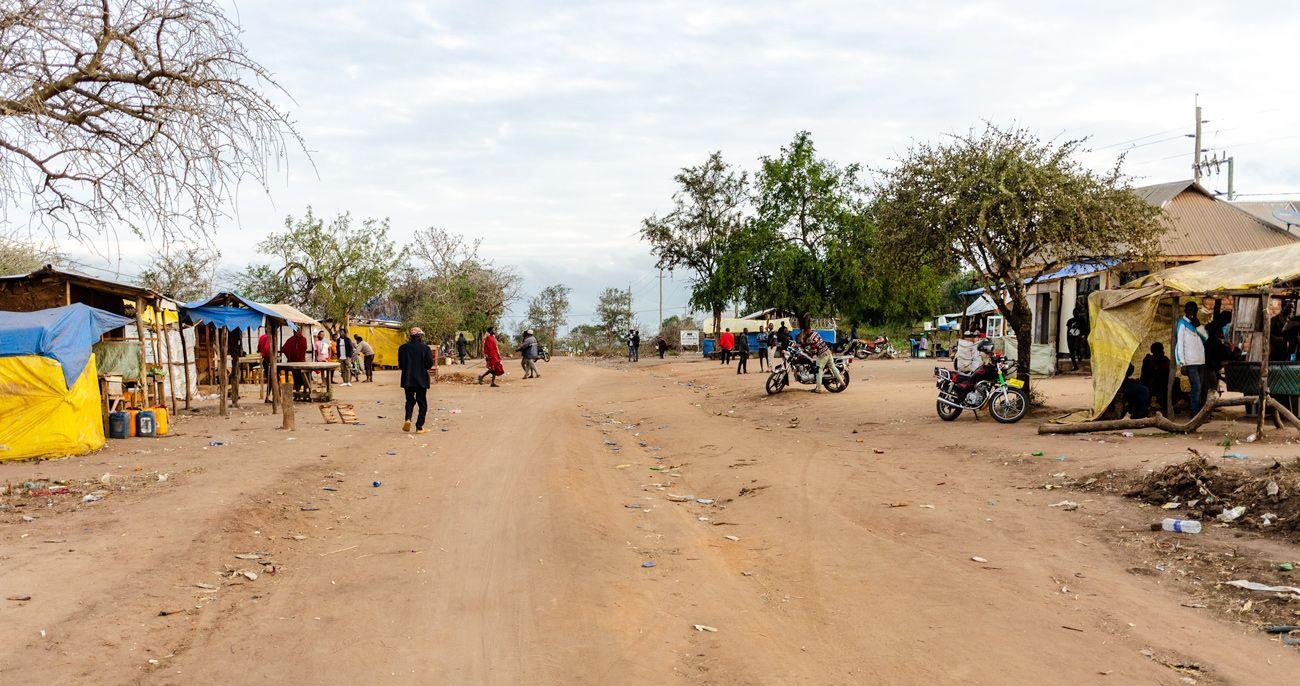
The main street of the village of Mbogoi.
If anyone is bothered by the fact that I’ll be referring to the people of Mbogoi and its surroundings as black, they’d better stop reading now. I asked several of them directly if I could use this term. They were surprised and wondered what else I should call them since they are black, just as I am Mzungu (Swahili for "white person") and I’m not offended when they call me that. So, I’ve got explicit permission from the target group. Other Afro-Africans and people of very dark skin can rest easy.
So, Mbogoi. A picturesque inland Tanzanian village with a population of 100–150. Even the mayor, Munikity Julius, couldn’t give me an exact number—not even after ten beers. The population is rising rapidly; who can keep track? Every second house here is a shop, a street food stall, a pharmacy, or a tailor. There’s a hospital and a school too. And in every house, Swahili people. The most notable features of Mbogoi? Extremely low incomes, ranging between 50,000 and 100,000 Tanzanian shillings per month (about €15–45 at the current exchange rate), and possibly the highest number of street food joints per capita in the world.
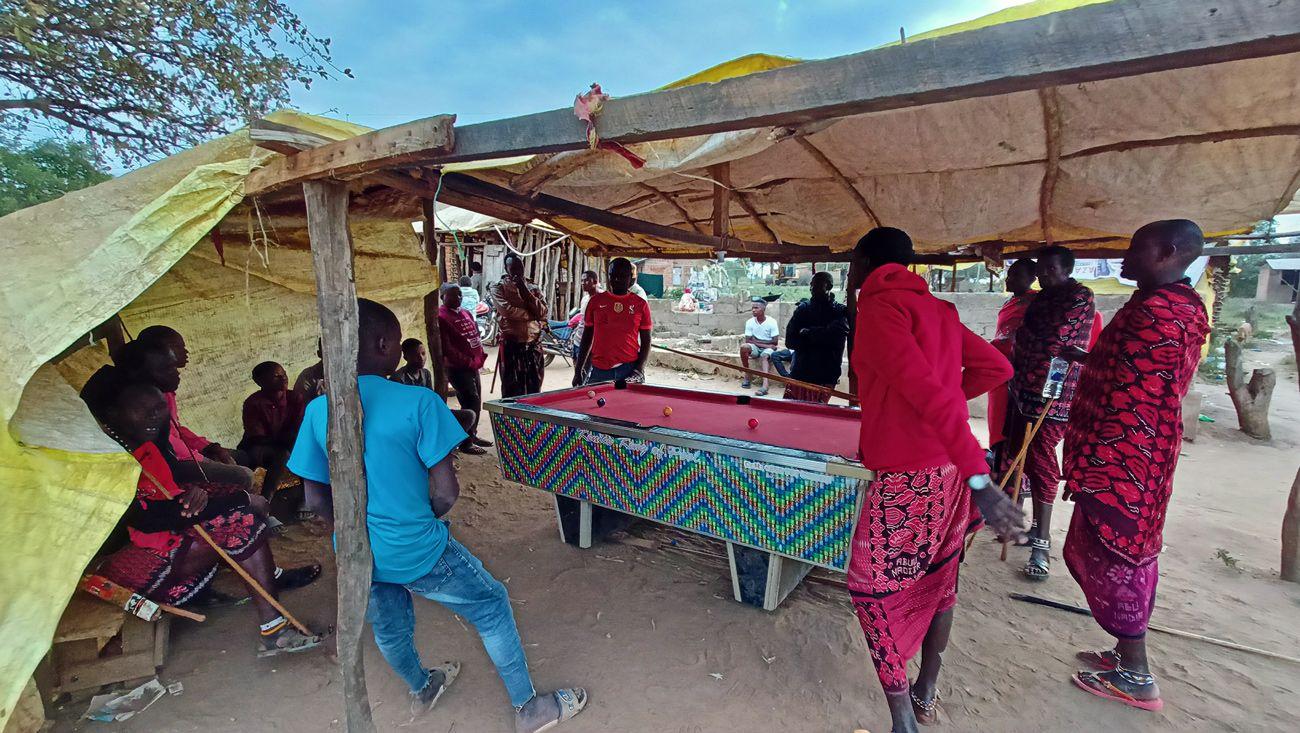
Social and cultural life here in general.
This idyllic little village is located in Tanzania, about 40 kilometers from the town of Handeni, which you can even find on a map, and roughly 150 kilometers from Africa’s eastern coast, near the Tropic of Capricorn. From Handeni, if you’re traveling by road, head west, and in Mafulete, turn right through Mkindy. You can’t get lost—there’s no other way to go. When I say road, I mean road, but I picture an African road.
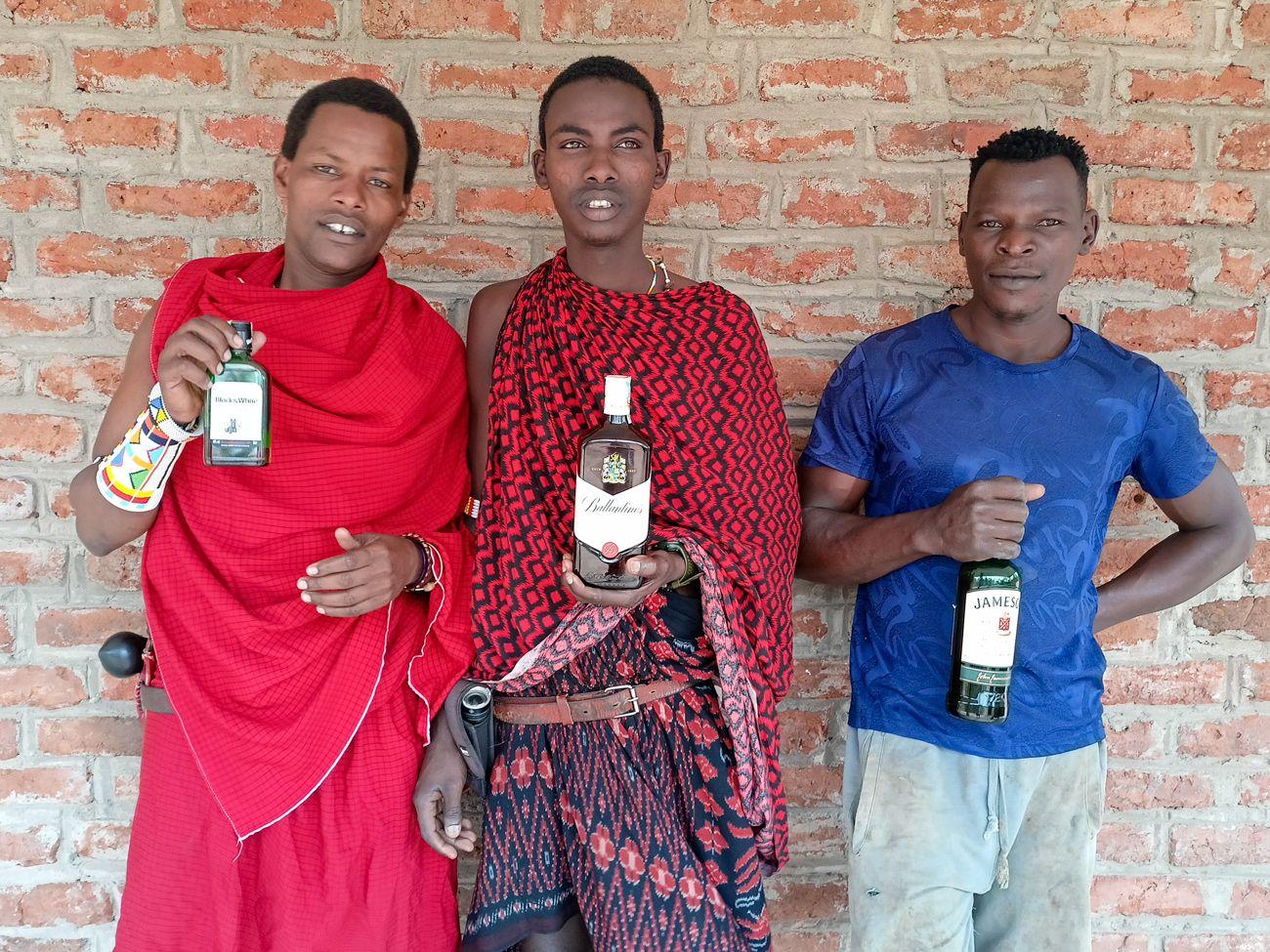
From left to right: Maasai - Maasai - Swahili. From right to left: Jameson - Ballantine's - Black & White.
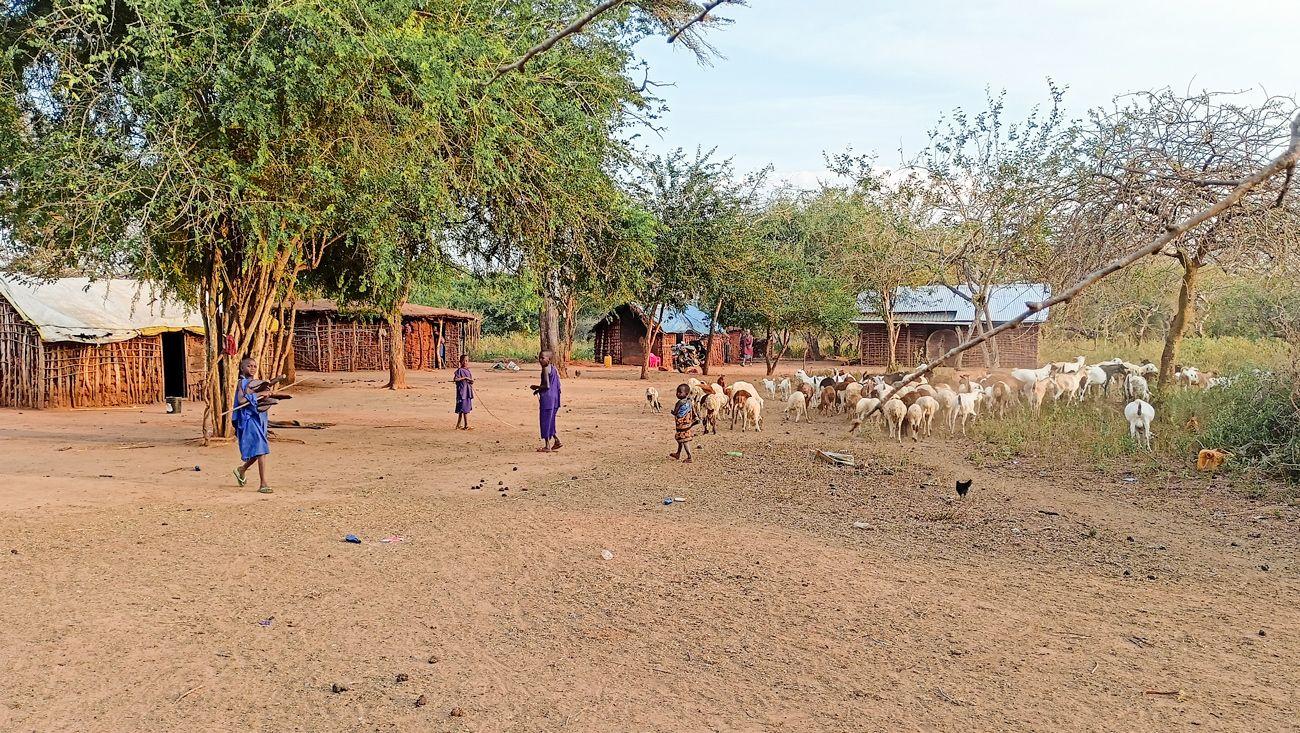
The Maasai divide people into Maasai and other black people – Swahili speakers. And mzungu – white people. In the village, Maasai don’t usually live or sleep, except for a few exceptions that can be counted on the fingers of a disabled hand missing two and a half fingers. The exceptions are, namely, Sekenoi, Koikai, and Alojz when he drinks too much Konyagi. The Maasai only come to the village when they feel an urgent need to discuss something – which, basically, is always. They live in a boma – a small settlement consisting of three, four, five, or six mud houses, and enclosures for cows, sheep, and goats. Every evening, they return there to sleep. Bomas around here come in all shapes and sizes: big and small, poor and rich, far and near.
Uncle Boma's cabin.
An important note: Africa is one big "maybe," so I can’t say for sure that what I experienced, heard, or am writing about applies even 10 kilometers away. Things could be completely different there. And they very likely are. Africa.