Coffee and medisin go home

Listen to this text

Coffee exists in many shapes inside the Maasai mind. None of them, however, come even remotely close to anything you’d dare call actual coffee. And yet—Tanzania produces some of the best beans on Earth! As a mildly obsessed home roaster, I decided to take a kilo of green Tanzanian beans home. Home, naturally, meaning back to Tanzania—straight to the source, as if returning a prodigal child to its ancestral soil.

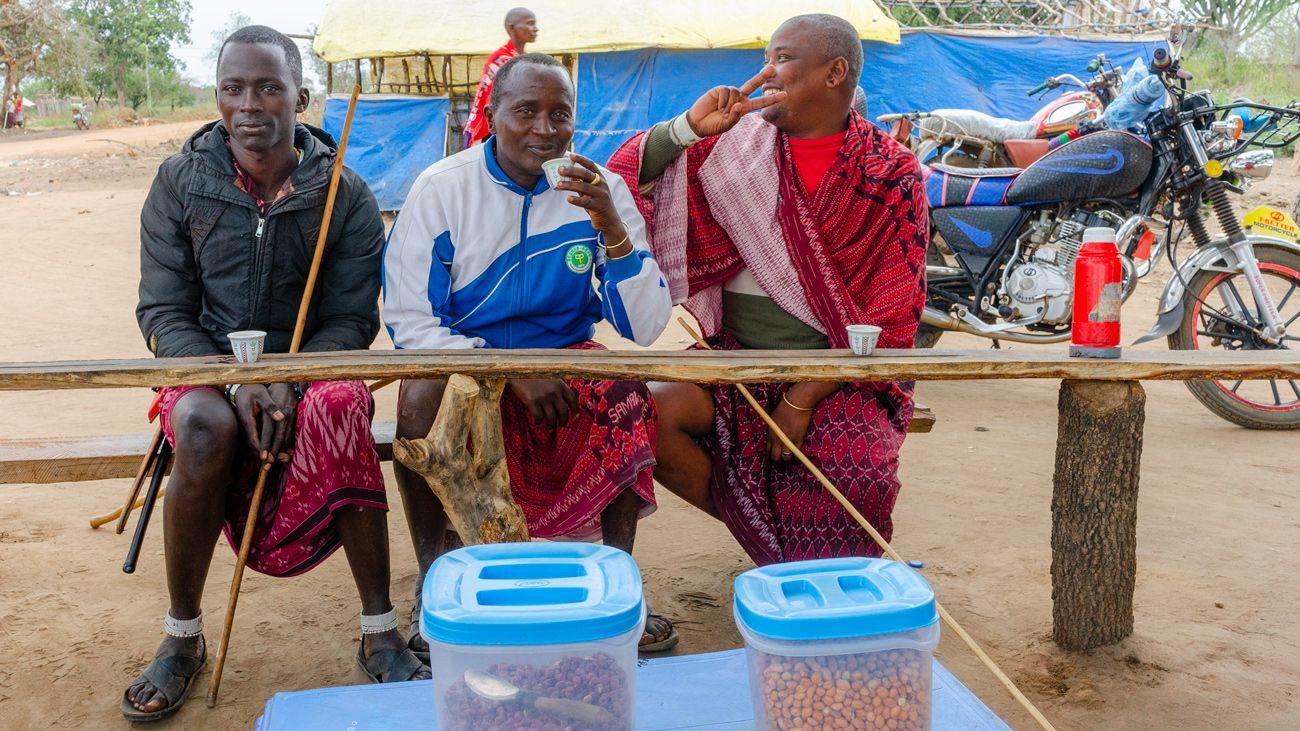
The way they serve coffee here is strange, but it doesn’t hold a candle to the flavor—it tastes like boiled charcoal. It’s not the popular instant coffee, but rather coffee brewed right in a café in Mbogoi.

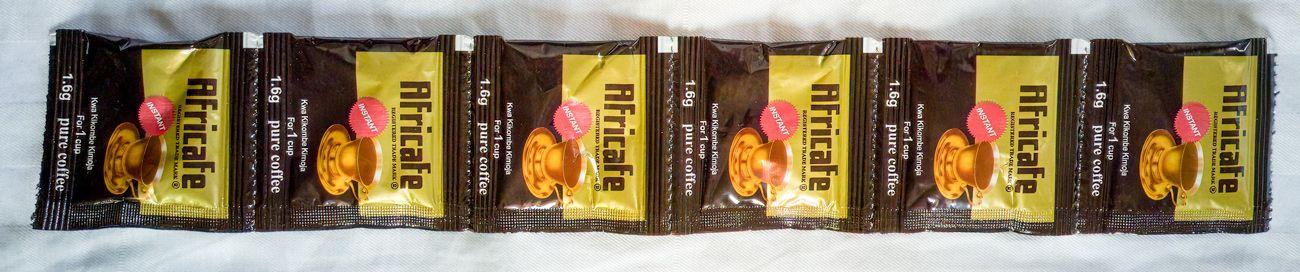
I thought I’d do a big comparison: our imported coffee versus their local coffee. After all, we were just 150 to 200 kilometers away from the regions in Tanzania where this world-famous coffee is grown. I expected to find it everywhere—to see people throwing it around, spreading it over roads, and swimming in giant barrels full of green beans. I imagined homemade roasting techniques and exotic aromas. The reality? They didn’t even know coffee existed, let alone how it tasted or where it came from. The only thing that remotely resembled coffee there was instant coffee. And even that was over-roasted, with a taste further removed from coffee than our cheapest instant alternative. It was usually sold either in cans or in small single-use sachets. Once, we even bought sachets that were completely empty.
And cafés? They’re more of an idea than a real thing in Tanzania. Getting an espresso somewhere? That’s a task for someone with nerves of steel and a lifespan of at least 150 years. So, we solved it in our own way. With Renča and Sekenoi, we drank instant "coffee", over which we poured tea. The tea had cardamom, lemongrass, cinnamon, and somewhere in the distance, a hint of actual tea. If anyone dares to call this coffee, they’d have to have taste buds and brain cells completely out of sync. Since I quite like coffee, in situations like this, I find it helps to convince myself that it’s not actually coffee. And it worked.

Instant coffee? More like coffee-not.

In Mbogoi, among the numerous street food stalls offering the same fare, there was one café. Essentially, it consisted of three narrow tables made from narrow planks, three equally narrow benches, a charcoal stove (djiko), a large aluminum coffee kettle, a few thermoses, and a handful of small glasses.
I was curious about how it all came together and the steps required to set it up. The owner had approached the landowner, as the café was located near the main street, and asked if he could set up a café there. They agreed on a sum, and the rental was settled. Then he procured a few planks and hired a craftsman to turn them into tables and benches—narrow and simple ones. The djiko, charcoal, and his own tea kettle were brought from home or purchased at the market. The café was ready.

What about the health approval, local citizen council clearance, and national committee paperwork? Where are the inspectors checking the proper thickness of tables, the appropriate speed of the staff, the exact height and sturdiness of chairs? Where are the noise level regulators, the food preparation guidelines for astronauts?
What about gender-neutral bathrooms? And where’s the harmony in the color scheme?After all, only Black people come here, and you'd have to transport white folks straight from the North Pole to balance it out. When the officials in charge of all this entertainment finally stand on the street like the Maasai, debating heatedly and staring aimlessly into the distance, I think things here might just start working a little better.

The latest café craze: all it takes is ten planks, and you’re good to go.

When I decided we were going to roast green coffee, the house erupted in joy and celebration. Or, well, I think it went a bit differently—nobody even looked at me, calmly staying seated, so I started explaining what coffee is, why it’s good, why I brought it here, and so on. After a while, the djiko was finally lit, the pot was ready, and Sekenoi and Ndari were thrilled about roasting coffee. They competed over who would stir first.
In minutes everything changed dramatically. The initial excitement turned into severe, chronic limb fatigue combined with incurable depression, and both of them felt an overwhelming and irresistible urge to leave. Both Maasai vanished, and Renča called Mama Penny, who happened to be around, to roast the coffee for us.

Sekenoi and MamaPeny are giving their home-style Maasai coffee roast a rehearsal spin.

So, the coffee is roasted, rested for a few days, and the time has come to brew the beverage with a capital B. I asked the local Maasai—if I remember correctly, it was Sekenoi and Ndari again—whether they’d like some coffee. They leaped to the ceiling in excitement, racing around the house, joyfully yelling: “Hooray, coffee! At last, at last!” Seeing them like this, I joined in, and as the great dancer I am, I performed a few solos from Swan Lake. Since everyone here has sensitive ears, people from the surrounding area heard it too. They gathered en masse around the house, chanting: “Kahawa, Kahawa!” Between my graceful leaps, I shouted back: “You’ll get coffee too, you’ll get coffee! Vivat Kahawa Tanzania!”
Naturally, that was just another story I invented.Their actual reaction was their traditional approach to food they don’t know. Which, apart from ugali, meat, rice, and beans, includes all food. After some intense convincing, they agreed that if they had to, they’d try it, but only a little.

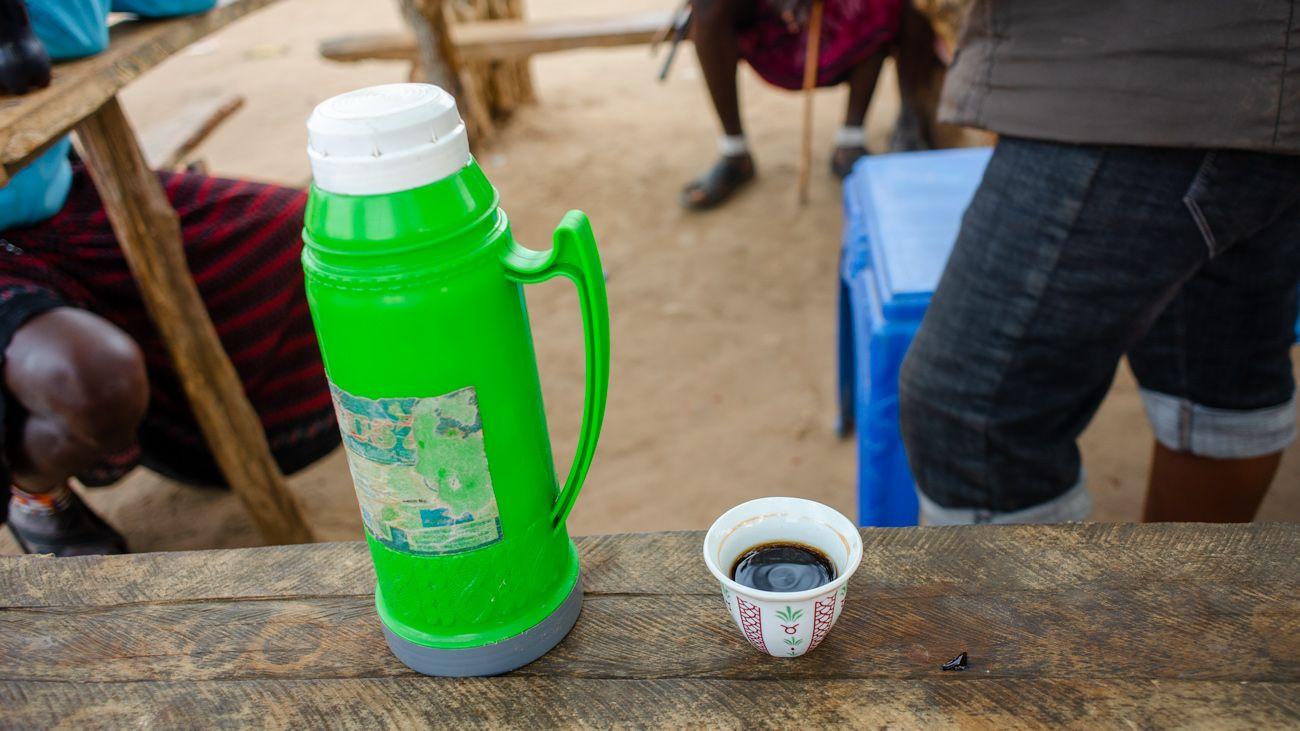
A glorious mental party for my grand coffee premiere, swiftly followed by an AI-led encore. Actual reality? Big fat zero.

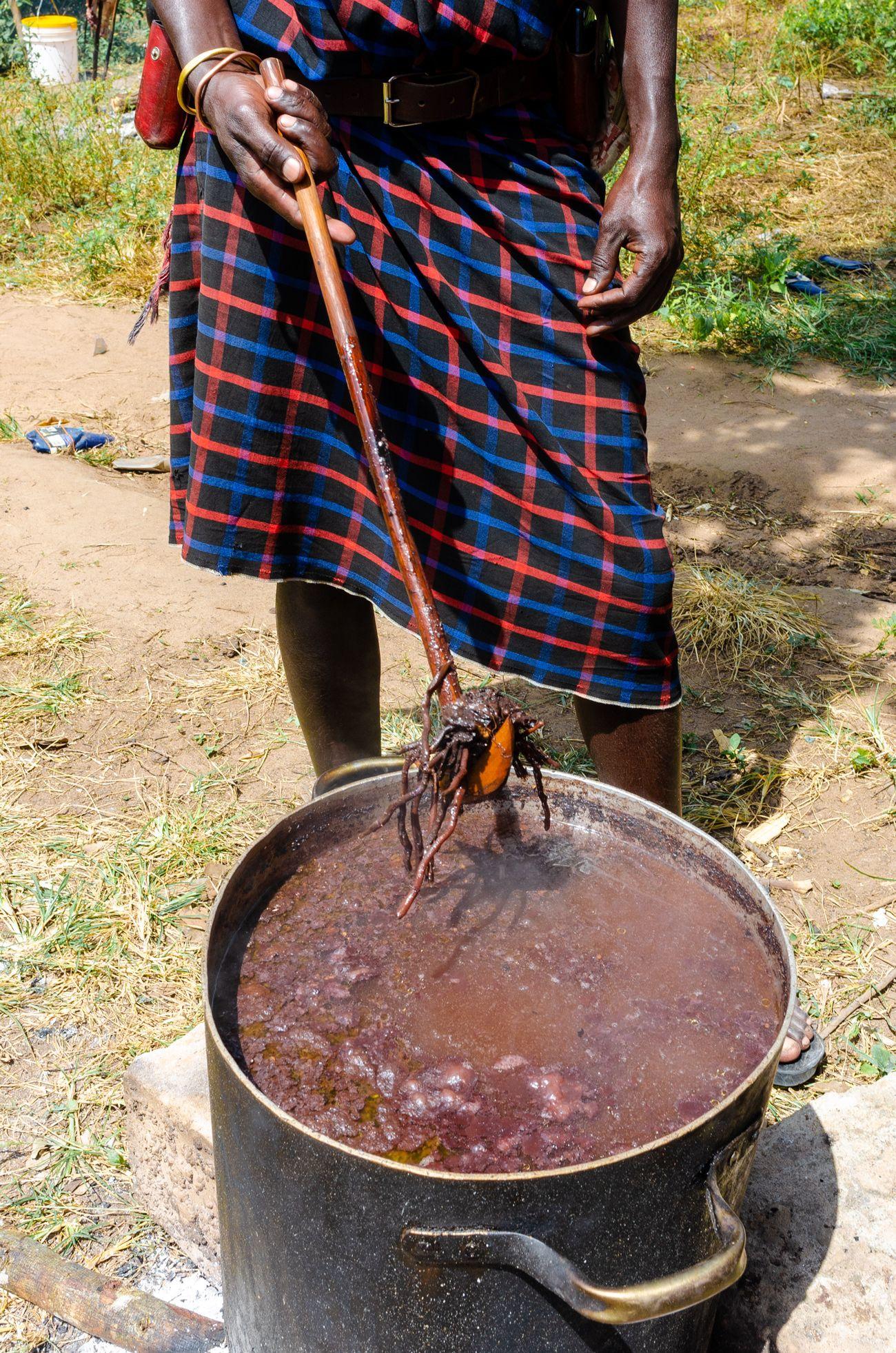
Over time, however, they discovered that coffee contains a stimulating substance. When I asked if they’d like some coffee, they all responded enthusiastically and with a smile, “Maybe.” After about two hours of persuasion, they finally said, “Well, if we must, then yes.” They said coffee reminds them of a drink they make when they’re out with the cows for a long time. They call it "medisin" (medicine), and it’s made from various roots they find in the bush. It has effects very similar to coffee, is equally bitter, but tastes entirely different.
Of course, I couldn’t resist, and at the market, held every Thursday, a local man was brewing "medisin" in a large pot so that vendors and visitors could get a little boost. It reminded me of old engravings of alchemists bent over their bubbling potions. Besides, since the locals aren’t skilled in wood engraving, spotting an alchemist would be nearly impossible. Naturally, I had to try it myself, and as you can see, I’m still alive. It tasted almost like coffee, only it was far from being coffee.

The Maasai Alchemist & “Medisin”

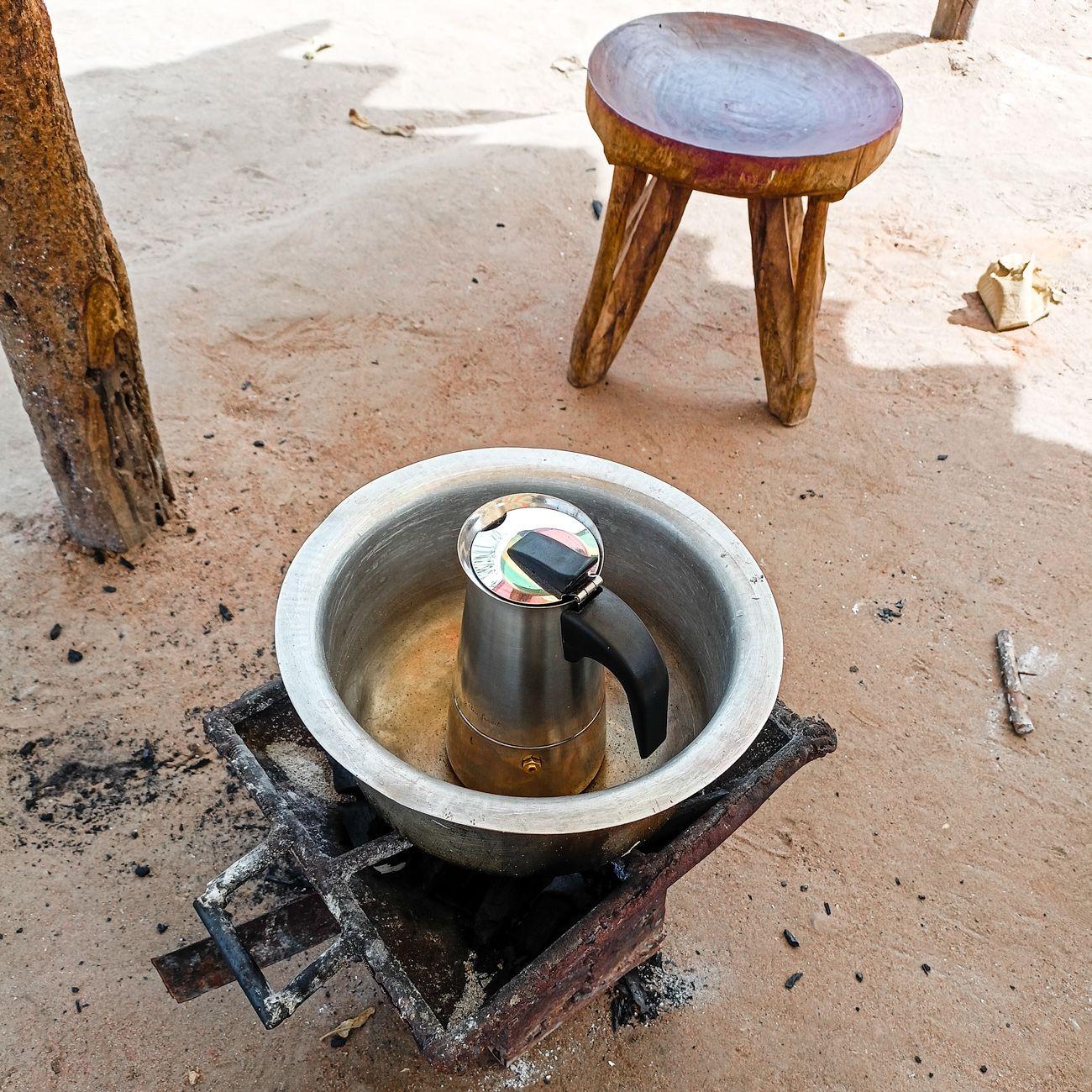
My first attempt at brewing coffee took place in the pre-electric era, back before the double-burner stove entered the house. The epic adventures of starting up the small charcoal stove, known as the djiko, can be found in the section on tea. Life is full of foolish decisions. For example, trying to explain the concept of heat capacity to a local Maasai. Or teaching kids in an African school how to pronounce "endoplasmic reticulum" correctly. I decided to add another crazy idea to the list—explaining to passersby, bystanders, and nearby onlookers how a moka pot works as I brewed coffee. 

The moka pot, thermal capacity, and “endoplasmic reticulum.
Share this